Author: Clint

  • North Carolina Announces Delivery of Personal Protection Equipment for Agricultural Workers

    The North Carolina Department of Health and Human Services (NCDHHS) is taking further action to prevent and respond to COVID-19 outbreaks among the agricultural workforce, delivering critical personal protection equipment for use by agricultural workers across the state.

    Roy Cooper

    “Agriculture is vital to our economy and food supply and it is critical that we protect farmworkers and their families from this virus,” said Governor Roy Cooper.

    Farmworkers are deemed an essential workforce and it is imperative that people who cultivate and harvest North Carolina’s wide variety of crops are protected. To support prevention efforts that are proven to help reduce the spread of COVID-19, NCDHHS is implementing its plan this week to deliver over 900,000 masks and other infection control supplies to North Carolina Cooperative Extension county centers across the state for distribution to farms and agricultural operations. In addition to masks, the deliveries included hand sanitizer and cloth face coverings for workers to take home.

    Thirty-one counties have been selected to receive the first delivery, including: Alamance, Alleghany, Ashe, Avery, Bladen, Columbus, Cumberland, Duplin, Durham, Edgecombe, Forsyth, Franklin, Granville, Greene, Guilford, Harnett, Henderson, Johnston, Lee, Lenoir, Lincoln, Martin, Mecklenburg, Nash, Pender, Pitt, Robeson, Sampson, Wake, Wayne, Wilson.

    “Many of our farmworkers live in group housing, putting them at higher risk of exposure to COVID-19. Providing masks is one way we are helping to protect workers,” said NCDHHS Secretary Mandy Cohen.

    NCDHHS is partnering with N.C. Cooperative Extension, the N.C. Department of Agriculture and Consumer Services (NCDA&CS), the N.C. Department of Labor (NCDOL) and the N.C. Agromedicine Institute to expedite a delivery plan and raise awareness about this resource among the farming community.

    “Some of these supplies have been difficult for farmers to source as demand has exceeded supply. I am grateful that farmworkers and farmers have been prioritized for these much-needed materials,” said Agriculture Commissioner Steve Troxler. “The health of our farmers and farmworkers is very important because we all rely on them every day.”

  • Sweet Grown Alabama Day Produces Sweet Results

    Picture submitted by Ellie Watson/Gov. Kay Ivey declared July 22, 2020 as Sweet Grown Alabama (SGA) Day. The proclaimation recognizes the state’s new branding program and honors farmers who grow food across the state. Gov. Ivey was joined by SWG Director Ellie Watson, Alabama Farmers Federation President Jimmy Parnell, Alabama Agriculture Commissioner Rick Pate, PowerSouth’s Horace Horn, and Montgomery Mayor Steven Reed.

    Sweet Grown Alabama Day will forever be July 22.

    Kay Ivey, Alabama Governor; Rick Pate, Commissioner of the Alabama Department of Agriculture and Industries; and other agriculture leaders and farmers joined forces at the Alabama State Capitol on Wednesday to celebrate the launch of a new online searchable database, which connects Alabama farmers and families.

    The celebration was highlighted by a special farmers market and Gov. Ivey issuing a proclamation that declared July 22, 2020, Sweet Grown Alabama Day.

    “Alabama’s farmers have a significant impact on our great state with over 580,000 Alabamians working in agriculture and related industries,” said Ivey in a press release. “Connecting with local farmers through Sweet Grown Alabama is a great opportunity to show your support for our neighbors and enjoy the wonderful products grown right here at home.”

    Picture submitted by Ellie Watson/Alabama Agriculture Commissioner Rick Pate speaks during Sweet Grown Alabama Day.

    Membership Database

    Originally launched in September 2019, Sweet Grown Alabama’s online membership database includes more than 150 farmers and businesses that sell Alabama-grown products directly to consumers.

    Nearly 30 vendors and Sweet Grown Alabama members joined the celebration on Wednesday with a farmers market on Bainbridge Street. They sold produce, meat, honey, pecans and other locally produced items.

    “We feel like we had a great morning. We just wanted to serve those farmers and do everything we can to make sure they had a good morning. That was the whole goal,” Sweet Grown Alabama Director Ellie Watson said. “We were glad to have them all in Montgomery today.”

    Industry leaders continue to preach the importance of buying locally grown produce and supporting Alabama farmers.

    “People are asking different kinds of questions about their food. They want more information about where it’s grown; who grew it; how it’s grown. We knew that’s what people wanted,” Pate said. “You don’t talk to anybody that doesn’t say, they want to know that the tomatoes that they’re buying at the grocery stores or the tomato they’re buying at the road-side stands are actually from Alabama.”

    Consumers can go to the Sweet Grown Alabama website and find local farms in their area. It also lists a harvest calendar so consumers can know when specific fruits and vegetables are ready to be picked. Anything from satsumas and watermelons on the fruit side to bell peppers and kale on the vegetable side are listed.

  • Vidalia Onion Farmers Ready to Plant 2021 Crop

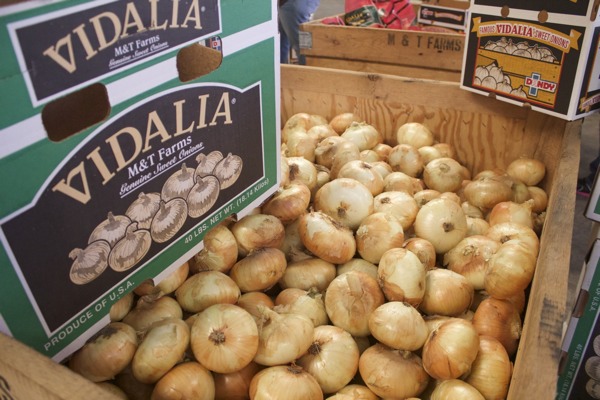
    Vidalia onion farmers will soon be planting next year’s crop.

    Chris Tyson, University of Georgia Extension Area Onion Agent at the Vidalia Onion & Vegetable Research Center in Lyons, Georgia, said producers have already ordered seed and will prepare land with fumigation and treatments in August. Seedbeds will be planted in September through the first of October.

    Low Supply in 2020

    Growers are hoping for a better growing season in 2021. The onion supply was shorter this year, due in large part to different weather events. Storms came through Southeast Georgia in April and delivered hail damage to some of the onion crop.

    “What the growers put on the shelf was a quality product, there just wasn’t as much of it to go around. Then the COVID pandemic created some extra challenges. It actually created a higher demand for a lot of food staples, and onions are one of those items. Fortunately, the Vidalia onions, most of those items end up on the retail shelf for direct to the consumer; the majority of them do, whereas some of other types of onions may go to food service,” Tyson said. “With the COVID going on, I think it hurt the food service industry, but it was good for the retail industry. Consumers, they’ve still got to eat, and they were going to the grocery store and eating at home more. That worked into our favor. When you have less to go around, the crop was short to begin with and when you have that, it makes it even shorter.”

    The growing season also provided abnormally high temperatures in March. Tyson said a “heat wave” basically moved through the region that did not set well with the onion crop.

    “To an onion that’s not used to that or that’s trying to grow a bulb, it created some stress for the crop. That was one reason for the shorter supply this year,” Tyson said.

  • Scientists to Study Crippling Tomato Disease to Lay Groundwork for Prevention

    UF photo shows bacterial spot in tomatoes.

    By: Brad Buck, 813-757-2224 (office); 352-875-2641 (cell); bradbuck@ufl.edu

    A destructive disease known as bacterial spot can ruin tomatoes anywhere it strikes. That’s why University of Florida scientists want to understand how the pathogen that causes the disease spreads and evolves on farms.

    A couple of quick statistics illustrate the importance of tomatoes to Florida’s agricultural economic sector: Fresh market tomatoes bring in $400 million to $500 million annually in Florida, according to the U.S. Department of Agriculture. Further, UF/IFAS economists reported tomato losses due to bacterial spot of almost $900,000 in the 2007-08 growing season. Those are the most recent dollar figures for the cost of the disease to Florida tomatoes.

    Erica Goss

    Erica Goss, an associate professor of plant pathology at UF/IFAS, was awarded a $455,000 grant by the National Institute of Food and Agriculture, an arm of the U.S. Department of Agriculture, to study the epidemiology of bacterial spot in tomatoes.

    “Through this research, we hope to more quickly and effectively respond to changes in the bacterial spot pathogen that cause more disease problems in the field,” Goss said.

    “We’re studying epidemics. Plant disease epidemiology does not often include the possibility that the pathogen evolves within or between seasons,” said Goss, who works from the main UF campus in Gainesville, Florida. “We are going to look at the effect of pathogen evolution — including the gain and loss of genes that we have observed to have occurred in Florida — on the spread of the pathogen from plant to plant in a given field.”

    Bacterial spot of tomato is especially severe in the southeastern United States, where hot weather, high humidity and rain can induce disease development, according to a UF/IFAS Extension document.

    A pathogen called Xanthomonas perforans, which constantly changes, causes bacterial spot in Florida tomatoes.

    Goss and her team want to find out how quickly the pathogen changes — and how it changes — so they can keep track of bacterial spot in tomatoes.

    “We see lots of types of this pathogen in Florida tomato fields,” Goss said. “We are going to determine which types of changes happen in the pathogen’s genome over the course of a tomato-growing season in a field. We are also going to determine how specific changes in the genome affect how the pathogen moves from plant to plant during a season in a field.”

    To find the problematic pathogen strains, scientists will use high-throughput genetic testing.

    “We will send a genome-sequencing center the extracted DNA from hundreds of bacterial strains, and the technology will send us data we can use to study the genomes of these strains,” Goss said.

    Other UF/IFAS researchers will work closely with Goss as she investigates bacterial spot as an epidemic. They include Gary Vallad, professor at the UF/IFAS Gulf Coast Research and Education Center in Balm (Hillsborough County), Florida; Mathews Paret, associate professor at the UF/IFAS North Florida Research and Education Center in Quincy, Florida; Jeff Jones, distinguished professor at UF/IFAS in Gainesville and Sujan Timilsina, a post-doctoral researcher – all in the plant pathology department at UF/IFAS.

    Click here to learn more about bacterial spot and tomatoes.

  • Federal Agencies to Hold Virtual Hearings on Seasonal and Perishable Produce

    Washington, DC — The Office of the United States Trade Representative (USTR), the United States Department of Agriculture (USDA), and the United States Department of Commerce will convene virtual hearings next month to discuss foreign trade policies that may be harming American growers of seasonal and perishable produce. At the hearings, officials from the federal agencies will hear from interested persons on how the Trump Administration can support these producers and redress any unfair harm.  

    The hearings, which were originally scheduled to take place in Florida and Georgia in April, will take place virtually in light of the ongoing pandemic caused by COVID-19. USTR will continue to evaluate additional opportunities to engage directly with stakeholders in Florida, Georgia, and elsewhere on this important issue.

    The virtual hearings are scheduled for the following dates:

    (1)    August 13, 2020 at 9:00 a.m. EDT

    (2)    August 20, 2020 at 9:00 a.m. EDT

    The Federal Register notice with instructions on how to submit requests to participate in the hearings and written materials can be viewed here.

    NOTE: The hearings will be made public and viewable online, and further details about viewing the hearings will be provided ahead of the hearing dates.  Full transcripts of the hearings will also be posted online after the hearings. 

    Office of the United States Trade Representative

  • FWA Annual Meeting Postponed Until 2021

    In an email sent to Florida Watermelon Association members, President Mark Bryan confirmed that this year’s annual convention scheduled for November has been postponed until 2021.

    Next year’s convention dates will be Oct. 27-29 at the Rosen Hotel in Orlando, Florida.

  • More U.S. Fruit Being Exported, Temporarily Importing Less

    Pictured are blueberries.

    We are now exporting more fruit from the United States than we were last year. According to a story from Gary Crawford, we are also importing much less fruit.

  • Florida Citrus Growers Have New Tool to Fight Greening

    University of Florida photo.

    By: Ruth Borger, 517-803-7631, rborger@ufl.edu

    LAKE ALFRED, Fla. — If information is power, Florida citrus growers have a new asset in their fight against citrus greening disease which has been impacting the state’s multi-billion dollar citrus industry.

    The University of Florida Institute of Food and Agricultural Sciences statewide citrus program launched a major revision of a website, providing instant access to a portfolio of information valuable to growers.

    The citrusresearch.ifas.ufl.edu website underwent a major revision, making it easier to navigate, adding new access to research trials, publications and presentations.

    “We know growers are busy and don’t have time to search multiple sites for information,” said Michael Rogers, professor and director of the UF/IFAS Citrus Research and Education Center in Lake Alfred, Florida.  “We put the most current research in one website where growers can search for and find what they need to be successful in today’s challenging growing situation.”

    The new site includes special features of interest to growers including:

    • Data from over 20 rootstock trials conducted by the UF/IFAS plant improvement team. Growers can review the data collected from the trials and compare data from sites across the state.
    • UF/IFAS researchers share their ongoing research priorities in citrus economics, grove management, new varieties, nutrition/water management, psyllid management and root health.
    • A resources section includes current production and nutrition guides and Extension documents (edis.ifas.ufl.edu) on citrus-related topics from 2016 to the present that are easily linked to from the website and are also presented by researcher for easy searching.

    “This website is just one of the ways that the UF/IFAS citrus team is working to support growers with the latest science to best battle citrus greening. We are working to get this information directly to growers as soon as it is available so that they may be able to put it into action as soon as possible,” Rogers said.

  • What to Look for With Corn Earworm

    According to a University of Florida/IFAS blog, the corn earworm is especially concerning to corn and tomato growers. It causes serious damage when it feeds on corn silk and kernels and tomato fruit.

    Corn earwom adult. Photo credit: J. Capinera, University of Florida

    In corn, eggs are laid on silk and the caterpillar hatches and feeds on silk and kernels. In tomato, eggs are laid on leaves, flowers or fruit. The caterpillar feeds by burrowing into tomato fruit. The corn earworm prefers warmer climates. Adult moths migrate north from southern states and can overwinter as far north as Ohio and Kansas.

    Caterpillars are a common pest of vegetable plants. They can reduce fruit quality and yield by feeding on leaves or fruit. One important caterpillar pest is the corn earworm (Helicoverpa zea). This caterpillar develops into a relatively harmless nondescript moth, but the caterpillar causes major crop damage in corn and tomato. It is also known as the tomato fruitworm, cotton bollworm, soybean podworm, and sorghum headworm. Some experts consider it one of the most damaging pests in the United States.

    Identification

    Identification of caterpillars can be difficult and may require the assistance of an expert. Caterpillar body color is variable and can change as it grows older. They can be brown, green or even pink. There is usually a pair of narrow stripes that run down the back. There is also usually a white net pattern on the head. Adults are also difficult to identify. They have brown to yellow forewings with a dark spot in the center.

    Lookalike

    The corn earworm is established in the United States, but it looks identical to the old world bollworm (Helicoverpa armigera) which is considered an invasive pest. In order to distinguish the two species, DNA molecular analysis or dissections must to be performed by an expert. If you find a caterpillar that you are unsure is the corn earworm or the invasive old world bollworm, contact the FDACS-DPI help line at: DPIHelpline@FDACS.gov or 1-888-397-1517.

    By Benjamin Waldo

  • Water Needs Essential for Pecan Trees

    Pecan producers will soon enter a critical point in this year’s production season in ensuring their trees have adequate moisture. If the current dry period continues as expected into August, water needs will be even more essential.

    According to UGA Extension Pecan Management calendar, water needs increase from 120 to 158 gallons per tree per day in July to 300 to 350 gallons per tree per day in August. The needs increase from 1,440 to 1,896 gallons per acre per day in July to 3,600 to 4,200 gallons per acre per day in August.

    “If we turn off really hot and dry in August and September, which we have seen happen many times in the past, if you’re not watering adequately during that time, mid-August through September, you can lose a lot of your crop,” University of Georgia Cooperative Extension pecan specialist Lenny Wells said. “Especially when they’re really loaded, there’s a huge water demand there. If they get stressed at all for water in a situation like that, they’ll start aborting nuts. It would be a big problem.

    “We really need to get really good kernel fillings. We do need a few timely rains during that mid-August to that mid-September period to really help us get kernels filled like we need. Especially when the trees are this loaded.”

    Irrigation will be critical. According to Pam Knox, UGA Extension Agricultural Climatologist, hot and dry conditions are expected to persist throughout the Southeast for the next month.