Author: Clint

  • Narrow Escape: North Florida Watermelons Dodge Significant Frost Damage

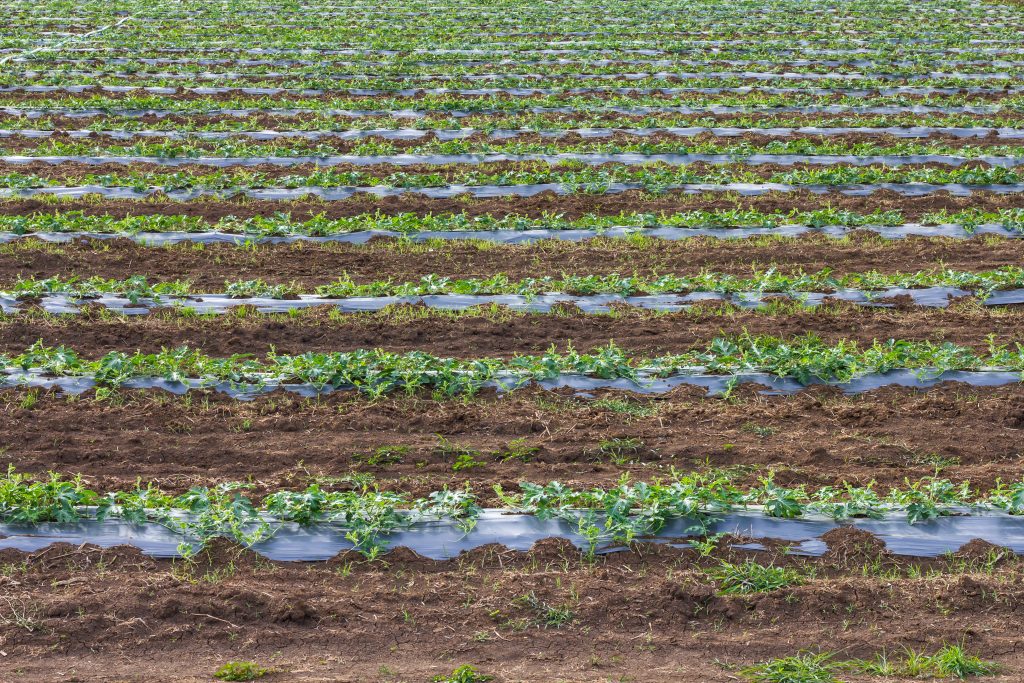
    File photo shows watermelon field.

    Watermelon farmers in Northeast Florida escaped significant damage this weekend during frost and prolonged cold temperatures, believes Bob Hochmuth, UF/IFAS Regional Specialized Extension agent in Live Oak, Florida.

    “The way that I characterize it is we escaped narrowly. I think if we had another degree or two colder or if the event had been a couple of hours longer, any one of those, I think we would have had a big mess on our hands in the case of watermelons and other vegetables,” Hochmuth said.

    He believes that though watermelons incurred some frost damage in the Suwanee Valley area, they should make a full recovery.

    “We feel like going into this cold, the root systems were well established and advanced. I think the plant is going to push back pretty rapidly. I think the recovery on those fields is going to be pretty rapid because of the warm soils, big root systems. It’ll already start to push new growth,” Hochmuth said. “In fact, from 8 o’clock to 5 o’clock on Saturday, you could actually see that growth. Maybe two or three inches of new growth just on Saturday at the beginning of that recovery.”

    Just How Cold Was it?

    Hochmuth estimates that temperatures in the Suwanee Valley area – Levy County, Gilchrist County, Alachua County – on up to the Georgia line, the temperature range was 32 degrees Fahrenheit to 37 degrees. Most of the temperatures centered around 33 degrees or 34 degrees. Heavy frost was also constant throughout most of the area.

    Hochmuth

    “We were 95% to 98% planted. A lot of those were 3- or 4-foot-long vines, with the earliest ones planted in late February, those watermelons were setting fruit. It’s a very unusual scenario,” Hochmuth said. “It’s not crazy unusual to get a freeze event in the first few days in April. But I think the thing that made it especially precarious this year is that it was so warm in February, there was a lot of acreage that was planted that normally wouldn’t be planted that early. That put the crop at an advanced state in comparison to normal for the first week in April.”

    He rode around to fields on Saturday and observed that 50% of the fields appeared untouched, while 50% ranged from slight frost damage to pretty severe damage.

    “The temperature over a plastic mulch field of vegetables is much warmer than a bare ground/pasture type of a field. As the air mass moves into the watermelon field, it’s pushing against the warm air mass over top of that field. That means where the cold air wins, you get damage on that first 50, 100, 200 feet,” he added. “That was very commonplace to what we saw around the perimeter of the fields. That’s where we saw the most damage. Where the fields are relatively protected, we didn’t see a whole lot of damage.”

    Protect Against Disease

    Hochmuth cautions watermelon producers that frost damage predisposes the crop to additional disease pressure. Producers need to return to their usual fungicide program and protect the plant from leaf tissue that’s been damaged.
  • Chilly Outcome: Cold Temperatures Damage Some South Georgia Crops

    watermelon
    File photo shows a young watermelon field.

    Cold temperatures and a late-season frost could lead some South Georgia vegetable producers to replant some of their crops, namely watermelons and cantaloupes.

    Bill Brim, part owner of Lewis Taylor Farms in Tifton, Georgia, said his plants survived most of last weekend’s temperature drop, other than some cantaloupe plants in Worth County.

    “Cantaloupes got burnt a little bit in some low areas as well. We’re probably going to have to reset some of those. It was over in Worth County at that real sandy farm that we’ve got. It got a little colder over there I believe than it did over here,” Brim said. “We’re going to have to reset some of those. We’re probably going to go in there and put a little extra fertilizer on them to see if we can get them going.”

    Squash was also not immune to frost damage.

    “Anybody that had any squash planted, it burnt it too. Tender vegetation just can’t take it,” Brim said.

    How Cold was it?

    According to the University of Georgia Weather Network, temperatures dropped as low as 35 degrees Fahrenheit in Tifton, Georgia on Saturday morning; 34 degrees in Valdosta, Georgia on Saturday; and 33 degrees in Moultrie, Georgia on Saturday.

    It was just as bad in other areas.

    “We’ve already had some calls. East Georgia, I think, and north Florida got hurt worse than we did. We had calls from north Florida to save all the plants that we had,” said Brim, whose farming operation also includes LTF Greenhouses that has over 900,000 square feet of production space with the capability of producing more than 350 million transplants every year. “East Georgia was the same way over around Jesup, over that way. They got hurt pretty bad, too, with the plants that they had already set out. It’s mostly watermelons.”

    Especially since South Georgia vegetable plants are still in their infancy stage at this time of year, they are vulnerable to cold temperatures.

    “If it burns that bud out, you might as well go ahead and pull it up. It just won’t ever come back, it doesn’t seem like. It splits off, and it just doesn’t work,” Brim said.

  • Smart Investment: Prosperous Season Leads Farmer to Save, not Expand

    What is it like to be an American farmer in 2021? In an era when success should spark expansion and growth, producers are content with saving money for the next rainy day that is bound to come along.

    That’s the impact imports are having on producers like Matt Parke. The Parkesdale Farms strawberry farmer in Plant City, Florida enjoyed a bumper crop this year. Prices remained steady, and he enjoyed a prosperous season.

    So how does he celebrate? By putting the profits into savings in preparation for those years that are not as prosperous.

    “Over here in Parksdale, we know what the bad looks like. This is awkward for us to have a good year. It’s not like, okay we’ve got some money now, lets go grow,” Parke said. “I plan next year not to have a good year, so I’m not going to go spend any money. I’m going to put it in the bank and wait for that bad one, so I don’t owe the bank any money.

    “But Mexico’s on the other end of that deal. Mexico’s going, ‘Oh we had a good year, lets put in another 5,000 acres.’”

    University of Florida Associate Professor Zhengfei Guan said the Mexican government subsidizes its fruit and vegetable industry. From 2006 to 2016, the average annual budget for subsidies was $4.5 billion. Approximately 95% of Mexico’s protected acreage (those in macro-tunnels, shade houses and greenhouses) is for fruits and vegetables.

    Mexico can expand its acreage, which it has done exponentially over the previous decade. Guan said strawberry imports from Mexico were one-third of the total production in Florida in 2000, while in 2019, Mexican imports were two times higher than the Florida production.

    American farmers don’t have that luxury of expanding, which is why they are advocating to consumers to buy local.

    “I would love to grow. I have dreams of growing, but I don’t want to grow because I know what happens. You get too big, and we have some bad years, and then the bank calls the chickens home. You know what happens after that,” Parke said.

  • Watermelon Production Decreased in 2020

    Prices were High

    Watermelon production in the United States decreased in 2020, while prices remained strong. According to the USDA Fruit and Tree Nuts Outlook, domestic fresh-market watermelon production totaled 3,419.9 million pounds in 2020, which is a decrease of 4.4% from the previous season.

    The USDA National Agricultural Statistics Service (NASS) reported that production in 2019 was 3,579.2 million pounds, and in 2018, it was 3.914.9 million pounds.

    Production in Florida and Georgia decreased, while North Carolina increased. The USDA NASS also reported that the average price per pound was 17 cents in 2020, up 10% from the previous year.

    Watermelon imports decreased 4.1% in 2020. Mexico is once again a huge exporter of watermelons, supplying 85% of the imports into the U.S. in 2020.

    Imports were down 6.9% in January 2021, compared to 2020. Mexican shipments of watermelons in January were also 8.4% lower.

    Watermelon exports increased 11.5% in 2020.

    It was one of the few commodities not impacted by the COVID-19 pandemic. After the initial shock that did impact South Florida producers in March 2020, retail demand picked up.

    The February 2021 freeze in Texas may impact domestic watermelon supplies in future months.

  • CFAP2 Reopening and Growing

    By Mary Leigh Oliver

    AUBURN UNIVERSITY, Ala. – Alabama farmers continue to be impacted by the ongoing coronavirus pandemic. To help offset some of that financial loss, the United States Department of Agriculture’s (USDA) second Coronavirus Food Assistance Program (CFAP) is reopening for enrollment on Monday, April 5.

    The first CFAP began with 13,386 applicants. The USDA provided more than $94 million in payments to Alabama producers. CFAP 2 began in the fall of 2020. A total of 13,561 applications were approved in Alabama for payments totaling more than $92 million.

    CFAP 2

    The same CFAP 2 program from last fall will be reopening out of concerns that not all producers were aware of the program’s details and eligibility. According to Alabama Cooperative Extension System Specialist and Assistant Professor Adam Rabinowitz, some producers received insurance and other disaster loss payments in 2019 that affected their initial eligibility.

    “To account for these issues, the program will be reopening to allow new applicants and revised applications,” Rabinowitz said.

    Agricultural producers of more than 250 commodities who share in the risk of producing a community are eligible for this program.

    Registration

    Applications will be available online beginning April 5. For producers who do not currently have a relationship with FSA, there will be additional information to complete.

    Source: Alabama Extension

  • Crop Progress: What’s Happening in Southeastern States?

    The United States Department of Agriculture released its crop progress reports for each state this week.

    Alabama: Temperatures in March were comparable with or up to 7.9 degrees Fahrenheit warmer than historical averages. Rainfall ranged from 2.6 inches to 14.6 inches, though heavy rain was recorded during the latter part of the month. It improved drought conditions but also halted field work.

    Photo by Clint Thompson/Shows Georgia peach tree in bloom.

    Producers impacted by Hurricane Sally last September continue to repair fields and damaged structures.

    Florida: March temperatures were on average 2.2 degrees warmer compared to historical averages. Rainfall was as high as 6.5 inches in Okaloosa County. But at the end of the month, the state was 49% abnormally dry and 1% in moderate drought conditions, according to the U.S. Drought Monitor.

    Various fruits and vegetables were planted and marketed. Whiteflies and pest pressure were noted on vegetable crops in South Florida. Citrus fruit harvested for the fresh market included white and red grapefruit, Valencia oranges, as well as Honey, Tango and Royal tangerines.

    Georgia: March temperatures were on average 3.4 degrees warmer than historical values. Total rainfall was as high as 13.5 inches in Rabun County. According to the U.S. Drought Monitor, 21% of the state was abnormally dry. Frequent rain showers in latter March saturated fields and reduced field activities.

    Producers in South Georgia noted fields started to dry out, which allowed them to continuing planting. Peaches and blueberries were in full bloom. Vegetable growers planted some fields. Onion harvesting will begin soon. Pecan trees are also budding in multiple counties.

  • The Pecan State: Georgia Once Again Top Producer with 142 Million Pounds

    Georgia is no longer second fiddle when it comes to pecan production. According to the USDA Fruit and Tree Nuts Outlook, Georgia is once again the largest pecan producer after being bested by New Mexico the previous two years. Production rose 95% to 142 million pounds last year. It is showing signs of recovery from Hurricane Michael in 2018.

    Statewide bearing acreage remained steady at 129,000 acres, with yield per acre is estimated at 1,100 pounds per acre, an increase 534 pounds from the 2019-20 season.

    U.S. pecan production was at 302 million pounds utilized in-shell. It’s an 18% increase and 4% higher than the October 2020 forecast of 292 million pounds.

    While production exploded last season, prices imploded. The USDA reports that the average grower price for pecans dropped from $1.84 per pound in 2019 to $1.32 per pound in 2020. This is likely attributed to an increase in supply and high beginning stocks.

    As a result, the value of production dropped from $471 million to $398.8 million.

    China remains one of the top markets for U.S. pecans with more than 70% share of in-shell exports, from October 2020 to January 2021.  

    Source: USDA Fruit and Tree Nuts Outlook

  • Weather Alert: N.C. Strawberry Farmers Encouraged to Protect Crop

    N.C. State Extension

    N.C. State Extension cautions strawberry producers to apply row covers to their plants in anticipation of freezing temperatures that will linger into the weekend.

    A freeze warning started Thursday night and will continue Friday night. But conditions will improve on Saturday, though there still is a chance for a frost from Saturday night to Sunday.

    According to N.C. State Extension, the morning of highest concern is Saturday morning. A high pressure system will allow winds to decrease and ground temperatures to cool. It is likely to be several degrees below freezing in many areas. This frost and ground freeze will extend into Georgia as well.

    Farmers are encouraged to apply double covers in areas where temperatures are forecast to be below 20 degrees. It’s also important to have sprinklers set up and in place in case they’re needed.

  • Making Sense of Biologicals: Crop Optimization With Seaweed

    Sometimes vegetable and specialty crop growers must think outside the box to remain sustainable amid high input costs and devastating diseases.

    What if seaweed could be used to aid in the quality of strawberries, bell peppers or tomatoes? Seaweed is a biostimulant that is part of the biological crop protection products that vegetable and specialty crop producers are increasingly using this year.

    Biostimulants like seaweed are valuable components of agricultural production. If used in concert with regular chemical applications that growers are already utilizing, biostimulants can provide additional protection against unwanted pests, diseases and weeds that impact plants. Growers know they are going to encounter these challenges every year, and Florida’s environment is already conducive to these obstacles occurring. Adding another layer of protection with biostimulants can bring your crop to the next level.

    Proven Positive Effects

    “Numerous studies have revealed a wide range of beneficial effects of seaweed extract applications on plants, such as early seed germination and establishment, improved crop performance and yield, elevated resistance to biotic and abiotic stress, and enhanced postharvest shelf-life of perishable products,” states the research paper. “Seaweed components such as macro and micro-elements nutrients, amino acids, vitamins, cytokinonines, auxins and Abscissic acid (AB-A)-like growth substance affect cellular metabolism in treated plants leading to enhanced growth and crop yield.”

    Seaweed extracts’ biochemical composition consists of different minerals, vitamins, oils, fats, acids, antioxidants and hormones. While the makeup is extremely complex, it has led to success for growers in agricultural uses for centuries.

    According to the research paper titled “Trends in Seaweed Extract Based Biostimulants: Manufacturing Process and Beneficial Effect on Soil-Plant Systems” (EL Boukhari MEM, Barakate M., Bouhia Y., Lyamlouli K., 2020) published in Plants scientific journal, the use of seaweeds in agriculture dates back thousands of years ago.

    “During the ancient Roman times, plant seedlings were covered with algae to promote their growth,” states the Plants paper. “In the coastal area of Europe, farmers incorporated seaweeds in the soil or used it as a compost. Starting from 1948, 18 countries had developed their seaweed resources for fertilizers.”

    The Plants paper explains that plant biostimulants, are “any substance or microorganism applied to plants with the aim to enhance nutrition efficiency, abiotic stress tolerance and/or crop quality traits, regardless of its nutrients content.”

    Seaweed extracts comprise a major portion of the biostimulant market around the world, resulting in its high value. “Seaweed extracts constitute more than 33% of the total biostimulant market and are predicted to reach a value of $894 million euro in 2022,” states the Plants research.

    Biostimulant Boosts Production

    C Green has identified specific active compounds capable of generating more solid and safer cell differentiation and division. Once the fertilization process occurs, differentiation and division of cells occurs. The goal of any grower is for their crop to achieve its maximum genetic potential, thus producing the highest possible yield. The better the cells are differentiated, the better the cells will be divided. This will help the grower to obtain more marketable fruit, including not only higher yields, but also improved size and more uniformity.

    The compounds that actively contribute to assure these crucial metabolic functions are phytohormones (including auxins, gibberellins, cytokinins, brassinosteroids and polyamines) and/or specific carbohydrates such as beta glucan, more commonly called laminarin.

    These compounds are contained in the VEGRO® biostimulant product. The purpose of this product is to help growers enhance the quality of their production by producing a healthier crop with natural active compounds capable of improving the efficacy of fungicides and/or bactericides. In addition, VEGRO® can be used to produce healthier crops when vegetables are faced with pressure from diseases such as bacterial spot, anthracnose, botrytis and powdery mildew.

    Hungry for Disease Help

    VEGRO® has proven to aid in the efficacy of fungicides against those diseases while also enhancing the quality yields of those commodities.

    If growers understand that their crop will face high disease pressure every year, they are more likely to apply additional chemical inputs as part of their management program.

    However, as more fungicides and pesticides are applied, this makes resistance more likely to develop. Resistance occurs when a disease or pest becomes immune to a chemical application because it has been overused. That is why growers are currently encouraged to rotate chemistries so that resistance is less likely to happen.

    To learn more about C Green Ag Biotechnology’s VEGRO®, see the U.S. agronomic data available here. Growers will discover more at the website on how they can reduce the negative impacts of diseases that affect their production.

    Sponsored Content

  • Florida Strawberry Farmer: H-2A Program Needs to be Simplified

    A farmworker cuts romaine for harvest.

    Farmers agree: H-2A is needed but it can be improved. Foreign workers are needed because of the lack of a domestic workforce. It needs improvement because it is a cumbersome and very expensive process.

    “It needs to be simplified. It is just the hardest, most complicated thing to do and to stay legal,” said Matt Parke, farm manager of Parkesdale Farms in Plant City, Florida. “If you just stumble a little bit of a hiccup, it will cost you a boat load of money.

    “It’s scary because you’re working with the government and you really have to walk the line. Even if you’re walking the line, you can always just mess up easily. Paperwork can mess you up, and it’ll cost you a boat load of money.”

    What is H-2A?

    The H-2A program allows U.S. employers to bring foreign nationals to the United States to fill temporary agricultural jobs. But the program is complicated and can result in delays of workers arriving to their destinations on time.

    “It could definitely be streamlined a lot more. We’re constantly fighting delays is probably my biggest concern with it,” said Justin Corbett of Corbett Brothers Farms in Lake Park, Georgia.

    Florida and Georgia are two of the states who use the program the most. Florida was the largest user during the first three quarters of 2020. It listed 28,005 certified positions. Georgia listed a little more than 23,000 certified positions.

    Lack of Domestic Workers

    The lack of a domestic workforce leads to the program’s necessity. People are not working on the farm. They have no desire to, now more than ever.

    “Unfortunately, there’s just not enough domestic labor that’s incentivized to do this work,” Florida farmer Eric Hopkins said. “There’s unemployment and government handouts and everything right now. I’m reading in the paper today, even restaurants can’t find people to work in the restaurants because people are making money not to work. We’re going to have to change our mindset and get everybody back to functioning in this country.

    “For a good reason sometimes, people have grown accustomed to not working. We’ve got to get retrained back into hustling again.”

    The latest attempt at reform is the Farm Workforce Modernization Act. It has already been passed by the House and now resides in the Senate, though some agricultural organizations insist modifications need to be made.

    High Costs

    Maybe the most concerning part of H-2A is its high costs. The new Adverse Effect Wage Rate (AEWR) that was recently approved increased Florida’s wages by 3.2% to $12.08 per hour. Georgia and Alabama’s rates increased by 0.9% to $11.81. That does not account for housing and transportation costs.

    Then there’s the concern of a potential $15 an hour minimum wage that is the wish of the Biden Administration. Florida just passed a minimum wage increase that will increase by $1 increments until 2026 when it is $15 per hour.

    “It’s going to make it very tough. H2A will go up in accordance with it,” Hopkins said. “A lot of times these programs are set up to have people make more money. What we’re going to have to do is cut back on their hours and find ways to get more mechanized, unfortunately.”

    Georgia farmers are hopeful a similar increase is not adopted across the country.

    “Labor is our No. 1 input cost. To talk about where AEWR is now to $15 an hour without an increase in sale price, it would put us out of business,” Corbett said.