Author: Clint

  • Hemp Industry Primed for Growth in Florida

    Photo courtesy of Treadwell Farms/Shows hemp plants ready to be planted.

    One of the first commercial hemp growers in Florida believes the industry is primed for growth in the Sunshine State.

    “All of the skills and experience and ability to make what you need, to observe and adapt to your environment, those are crucial skills to being successful with the crop and Florida farmers are going to know how to grow plants in Florida and crops in Florida better than anybody else,” said Jammie Treadwell, co-owner of Treadwell Farms in Eustis, Florida. “We always encourage farmers that, they know more than they think they do and they’re going to come with new and innovative ideas for the hemp industry that aren’t new and innovative to them.”

    Photo courtesy of Treadwell Farms/Shows co-owner Jammie Treadwell standing in front of a hemp field.

    Treadwell said the first of her greenhouse-grown seedlings went into the field last week, more than a year after Gov. Ron DeSantis signed the State Hemp Program into law. The signing in 2019 allowed the Florida Department of Agriculture and Consumer Services to regulate a state hemp program.

    Since Treadwell Farms produces hemp in a greenhouse setting, Jammie is confident they will be able to produce a crop in three, if not, four different growing cycles over the course of the year. Supplemental lighting allows hemp to grow during the winter months.

    “We’re starting small this first season, just because we want to make sure everybody has a good season and that they have their infrastructure dialed in, that they can get a handle on things before they expand. For us, we are approved for just over 4 acres. I know compared to some farmers out there that’s pretty small, but we can go multiple cycles,” Treadwell said.

    Working with Other Farmers

    Her farm also assists other growers in the Central Florida region with germinating seeds and rooted cuttings. The healthier the plant is going into the ground and more acclimated it is to the environment equates to a better chance for success.

    Another reason for optimism about the crop’s future in Florida is the constant flow of information being shared among farmers who want to see hemp sustainable.

    “We’re working with other farmers in our community as each one of them has something to add. We’re working with large vegetable growers. They have ideas that they’re sharing with us. We’re working with other nursery men and women. We’re working with citrus growers,” Treadwell said. “My family has a peach grove, we have citrus. All of those crops have ideas and skills and techniques that can be applied to this new crop. One of the things we’ve really been trying to create is a community among these different farmers to share ideas. That’s the great thing about Ag, most people are willing to help each other.”

  • Georgia Peaches Nearing End to ’20 Season

    Photo taken by Clint Thompson/Shows a box of recently purchased Georgia peaches.

    Time is running out on Georgia’s peach crop this year. Jeff Cook, University of Georgia Cooperative Extension Agriculture and Natural Resources agent for Peach and Taylor counties, confirmed that the state’s producers only have about a week left before they are done harvesting this year’s crop.

     “We’ll still ship, maybe for another week. We’re getting to the end here,” Cook said.

    Cook said Georgia peach producers normally harvest through the second week in August. Some varieties were harvested earlier this season. High temperatures in the springtime were a likely factor.

     “I think a lot of it was the heat in March, the heat directly after bloom,” Cook said. “But it wasn’t across the board that everything acted the same. Some things were early, some things were normal time. Some things held on.  I’ve got a Scarlet Prince (variety) in my research orchard that we usually pick the last couple of days of June and first of July. We were picking the second week of June through the first week in July. We picked them for three weeks and they were good, commercially acceptable peaches.”

    Good Year Overall

    He added that it has been a good year overall for farmers.

    “We had some speedbumps early on with some early varieties that got a little cold damage,” Cook said. “It looks like quality has been good because I haven’t seen a lot of dump trucks leaving packing sheds.

    “I was actually at Lane’s yesterday with my son and he was like, ‘What is that thing coming out of the packing shed?’ I was like, ‘That’s the conveyor belt that takes all of the bad peaches.’ All that was coming off the conveyor belt was leaves, that’s all that was falling through. That’s always a good sign.”

    According to UGA Extension, Georgia produces more than 130 million pounds of peaches every year. There are two commercial peach-growing regions in Georgia. The central region is the largest with about 1.6 million peach trees, which comprises 75% of the state’s production. The southern region produces about 30 million pounds of peaches annually.

  • Organic Management Methods for Squash Pests

    A squash bug lays its eggs in a crop.

    By Ayanava Majumdar, Rammohan Balusu and Neil Kelly

    Many pests feed on squash from seedling to harvest. They are generally broken down into two groups: the chewing insects and the sucking insects. Chewing insects of squash consist of common pests like cucumber beetle, squash vine borer larva and pickleworm. Sucking insect pests consist of aphids, squash bugs and whiteflies. The pests a squash grower experiences may depend on location.

    PREVENTION STRATEGIES
    Remember that prevention of pests is the No. 1 goal of organic integrated pest management (IPM) systems. Rapid control after pest establishment becomes a difficult aim later in the production season. Cultural control tactics that include selecting virus-resistant varieties, timely planting and harvest (reduces pickleworm buildup), crop rotation and timely removal of crop debris after harvest (reduces squash vine borer buildup), consistent irrigation and trap cropping are some basic preventive approaches, also called Level 1 control.

    Perimeter trap cropping with Baby Blue and New England Hubbard squash in a mixed system is effective in reducing cucumber beetle and squash bug damage to yellow squash (main crop).

    PEST EXCLUSION FABRIC
    For Level 2 control, growers should use temporary or permanent pest exclusion fabric to create a barrier between insect pests and the main crop. Two lightweight materials tested in Alabama include the Super-Lite Insect Barrier (Gardens Alive, Inc.) and AgroFabric Pro 19 (Seven Springs Farm, Inc.). Both these materials look like lighter versions of the common row cover used for frost protection, but these materials are much lighter with 85 to 95 percent light and rain penetration.

    The trick is to put these light fabrics on low hoops (inverted loops) almost immediately after transplanting or after the seeds have germinated. These materials deflect much of the aphids and squash vine borers that fly early in the season. Squash plants can be grown inside the fabric for several weeks and removed or partially opened when flowering begins. Growers can also release beneficial insects like lacewings and lady beetles under the fabric for controlling accidental pest infestations.

    For both trap crops and pest exclusion tactics, check out the short IPM videos on the Beginning Farm Project channel at www.youtube.com/playlist?list=PLkNoAmOtt___MKj6IBxvWzOdWP0btBq4D.

    INSECTICIDE USE
    Growers also have a wide range of organic insecticides to choose from (Level 3 control). See the Organic Materials Review Institute website (www.omri.org) to find hundreds of approved organic products.

    Remember to scout squash crops for timely pest detection and identification, then use insecticides per the label with equipment that gives good coverage. For example, highly mobile squash bug adults are difficult to control with natural pyrethrin and spinosad, but the flightless small nymphs are far better targets for organic spray applications.

    Several premix insecticides are available commercially today in a variety of packaging, making them affordable for farmers. Squash vine borer and pickleworm larvae are internal pests, which are difficult to manage with topical spray applications. Initiate timely sprays with targeted placement where insect pests are hidden.

    Don’t quit spraying too soon since weather patterns can reduce insecticide persistence. Always spray in the evening hours when bees are not around and so that the solution can dry out overnight. Stop spray applications of organic materials when pests become inactive. You can save on the cost of insecticides and protect natural enemies this way.

    Finally, it is recommended that growers get in touch with Extension personnel in their state to develop an IPM strategy suitable for their farm. Producers in Alabama can download the Farming Basics mobile app to keep in touch with Alabama Extension. Subscribe to the Alabama IPM Communicator e-newsletter (www.aces.edu/ipmcommunicator) to stay informed throughout the season.

    Ayanava Majumdar is an Extension professor and Rammohan Balusu is a research fellow, both at Auburn University. Neil Kelly is a regional Extension agent with the Alabama Cooperative Extension System.

    This story was from the July edition of VSCNews Magazine. To subscribe, see http://vscnews.com/subscribe/.

  • Technology to Improve Vegetable Production

    Initial design of the low-cost robotic sprayer for precision weed control in vegetable production: main components of the smart sprayer (A) and self-reconfigured and self-adjustable design for easy field deployment in a variety of vegetable fields (B).

    By Yiannis Ampatzidis

    Vegetable growers face a variety of challenges, including pest and diseases, labor shortages and climate change. How can new advancements in technology help growers address these challenges? Can technology improve crops, reduce production costs and protect the environment? How can technological innovations be incorporated into traditional farming to improve production practices?

    In the last few decades, several “smart” technologies have been developed for vegetable production and processing. However, growers are confronted with a variety of challenges when considering adopting new technology or adjusting existing technology. Growers are being offered solutions that might not work in their specific production system or might not be economically feasible. This article presents examples of state-of-the-art technologies that may be used in vegetable production today or in the near future!

    SIMPLIFY SURVEYING
    Field surveys for disease/pest scouting and to assess plant stress are expensive, labor intensive and time consuming. Since labor shortage is a major issue in vegetable production, small unmanned aerial vehicles (UAVs) equipped with various sensors (remote sensing) can simplify surveying procedures, reduce the labor cost, decrease data collection time and produce critical and practical information.

    For example, recently UAVs and remote sensing have allowed growers to constantly monitor crop health status, estimate plant water needs and even detect diseases. The precision agriculture team (@PrecAgSWFREC) at the University of Florida Institute of Food and Agricultural Sciences (UF/IFAS) Southwest Florida Research and Education Center (SWFREC) developed a cloud-based application called Agroview (http://agroview.farm/login.php).

    Agroview can process, analyze and visualize data collected from UAVs and other aerial platforms (e.g., small planes and satellites). This technology utilizes machine learning (an application of artificial intelligence) to detect single plants and assess plant size and stress. Agroview and UAVs were initially used to create plant inventories in citrus (see a video demonstration at https://twitter.com/i/status/1202671242647490560) and to detect specific diseases in vegetables with high accuracy. Early detection and eradication of infected plants is crucial to controlling disease and pest spread throughout the field.

    SMART SPRAYERS

    Most conventional sprayers apply agrochemicals uniformly, even though distribution of pests and diseases is typically patchy, resulting in waste of valuable compounds, increased costs, crop damage risk, pest resistance to chemicals, environmental pollution and contamination of products. Contamination can be related to run-off after application, discharge from drainage and off-target deposition of spray due to wind (spray drift). This contamination can be significantly reduced through optimization of spraying technology.

    Spray drift of agrochemicals occurs during every application and accounts for a loss of up to 50 percent of the agrochemical used. Minimizing the negative impacts of agrochemicals (and spraying technologies) is a major global challenge.

    More than 90 percent of the acreage of crops in the United States are being sprayed with herbicides. It is estimated that $26 billion is spent on herbicides (more than 3 billion pounds) each year. This overuse of chemicals creates herbicide-tolerant weeds and approximately 250 known species of resistant weeds.

    In recent decades, several smart technologies have been developed for pest detection and for optimizing spraying applications. These new spraying technologies have shown an important improvement in efficiency and safety by adopting the latest advances in electronics, artificial intelligence (AI) and automation.

    One example is the See & Spray machine developed by Blue River Technology (www.bluerivertechnology.com) for weed control in arable crops. See & Spray utilizes computer vision and AI to detect and identify individual plants (such as cotton) and weeds and then applies herbicide only to the weeds. See how this technology works at https://youtu.be/gszOT6NQbF8. This machine can reduce the required quantity of herbicide by more than 90 percent compared to traditional broadcast sprayers. However, this technology was designed for arable crops and might not be a cost-effective solution for specific vegetable production systems.

    Another low-cost smart sprayer has been designed and developed by the UF/IFAS team for precision weed management in vegetables. In the initial evaluation experiments, smart technology was able to accurately detect and distinguish weeds from crops and apply chemicals only on specific weed(s), thus avoiding crops and areas without weeds. See a video demonstration of this technology at https://twitter.com/i/status/1045013127593644032.

    Recently, the precision ag team, in collaboration with Abhisesh Silwal (Carnegie Mellon University) and Panos Pardalos (UF), received funding from the U.S. Department of Agriculture and the National Research Foundation (award #2020-67021-30761) to improve and fully automate this smart sprayer. This novel robotic sprayer (or fleet of sprayers) was designed to be self-reconfigured and self-adjustable for easy field deployment (Figure 1). With this design, the robot can reconfigure itself (Figure 1b) to manage weeds in a variety of vegetable fields (e.g., with different row spacing and raised bed sizes).

    ROBOTIC HARVESTING

    Fresh-market vegetables are quickly perishable and virtually 100 percent are hand-harvested. Vegetable growers face increasing shortages of laborers, which in turn, drive up harvest costs. Mechanical and robotic harvesting systems for vegetable growers could simultaneously decrease their dependence on manual labor, reduce harvesting costs and improve overall competitiveness in the market.

    In one example, Harvest Croo Robotics, a Florida company, is developing a robotic harvester for strawberries that does not require growers to radically change the way they currently grow crops. This technology successfully harvested berries during the 2019–20 season. It could address the labor shortage problem and increase grower profit. 

    Yiannis Ampatzidis (i.ampatzidis@ufl.edu) is an assistant professor at the UF/IFAS SWFREC in Immokalee, Florida.

    This story was from the July edition of VSCNews Magazine. To subscribe, see http://vscnews.com/subscribe/.

  • Mystery Seeds Could Pose Real Threat

    Photo submitted by Alabama Department of Agriculture and Industries/Shows bag of unsolicited seed sent to an Alabama resident.

    By Maggie Lawrence

    AUBURN UNIVERSITY, Ala. — How much harm could a package of mystery seeds do? Scientists with the Alabama Cooperative Extension System agree that unsolicited seed packets being delivered in Alabama and across the country could pose a real threat to native ecosystems and possibly to people.

    Threat of Invasive Species

    Nancy Loewenstein, an invasive plant expert with Alabama Extension, said the seeds could be potentially invasive.

    “These seeds could be from a known invasive species, like kudzu or cogongrass or they could be a weedy species with invasive potential,” Loewenstein said. “While it’s possible these seeds do not pose a threat, people should never plant seeds received in this fashion.”

    Invasive species (flora and fauna) threaten the environment in the following ways: reduce productivity of forests, rangeland and crop land, become weeds in gardens and lawns, reduce native biodiversity and wildlife habitat, limit land access for recreation (hiking, birding, fishing, hunting), can be poisonous and/or injurious to humans and livestock, can potentially hybridize with native species alter ecological processes (e.g., water cycling, nutrient cycling, fire cycles) and cost time and money to manage and control.

    “Invasive species can cause a great deal of damage to native ecosystems and agriculture, including significant economic damage,” she said. “A 2005 study estimated costs associated with invasive species totaled $120 billion a year, and those costs have likely risen since that time.”

    Threats of Pathogens and Insects

    Kassie Conner, an Alabama Extension plant pathologist, said these mystery seeds could be harboring diseases, among other things.

    “Plant pathogens can be transmitted through seed,” Conner said. “They can be inside the seed, on the outside of the seed or be present in the seed lot without obvious damage. These pathogens can include fungi, bacteria, viruses and nematodes.”

    Conner said people could introduce a plant disease into their garden if they planted these seeds. “Depending on the pathogen and the plant species, one infected seed planted in an otherwise healthy garden can cause complete yield loss,” she said. “Once a pathogen is introduced, many can survive for one to more than 10 years in the environment. Some can survive for longer than that.”

    If disease and invasive potential are not bad enough, Extension entomologist Charles Ray said these seeds could contain damaging insects.

    “There are a number of insects that feed in seeds as larvae,” Ray said. “In these seeds, you might find any one of a large number of pests that entered during seed storage.”

    What to Do with Mystery Seeds

    According to Ray, seed shipments normally would be subject to inspection and quarantine procedures. For example, in 2017, USDA-APHIS cleared more than 17,000 shipments containing over 1.6 billion plant units and approximately 1,874 tons of seeds, intercepting 817 quarantine pests. Packaging on these mystery seeds has indicated that it contained jewelry rather than seeds.

    Officials believe this is an effort to avoid inspection, which is a form of agricultural smuggling. Loewenstein, Conner and Ray all agree that it is extremely important that people DO NOT OPEN the package, DO NOT PLANT the seeds and DO NOT DISCARD them. They also say it is important people report receiving these packages.

    The Alabama Department of Agriculture and Industries (ADAI) continues to receive reports from citizens who received unsolicited packages from China containing seeds. ADIA is currently collecting seed packages from recipients and is testing their contents for unknown compounds, noxious weed seed and also invasive species. This testing will determine if they contain anything that could be of concern to U.S. agriculture or the environment.

    Reporting Seeds

    ADAI has established an on-line reporting system for Alabama residents who received suspicious seeds they did not order. Visit www.agi.alabama.gov/reportseeds and provide the requested information. At the end of the on-line form, there are directions for consumers on how to store the seeds properly until an ADAI representative contacts them. People should hold onto the seeds and the packaging, including the mailing label, until someone from ADAI contacts them with further instructions.

    More Information

    Currently, there is not any evidence indicating this is something other than a brushing scam where people receive unsolicited items from a seller who then posts false customer reviews to boost sales. For further information, contact the ADAI’s Ag Compliance section at 334-240-7304.

  • Alabama Hemp Producers Need to Protect Against Caterpillar Damage

    cannabis
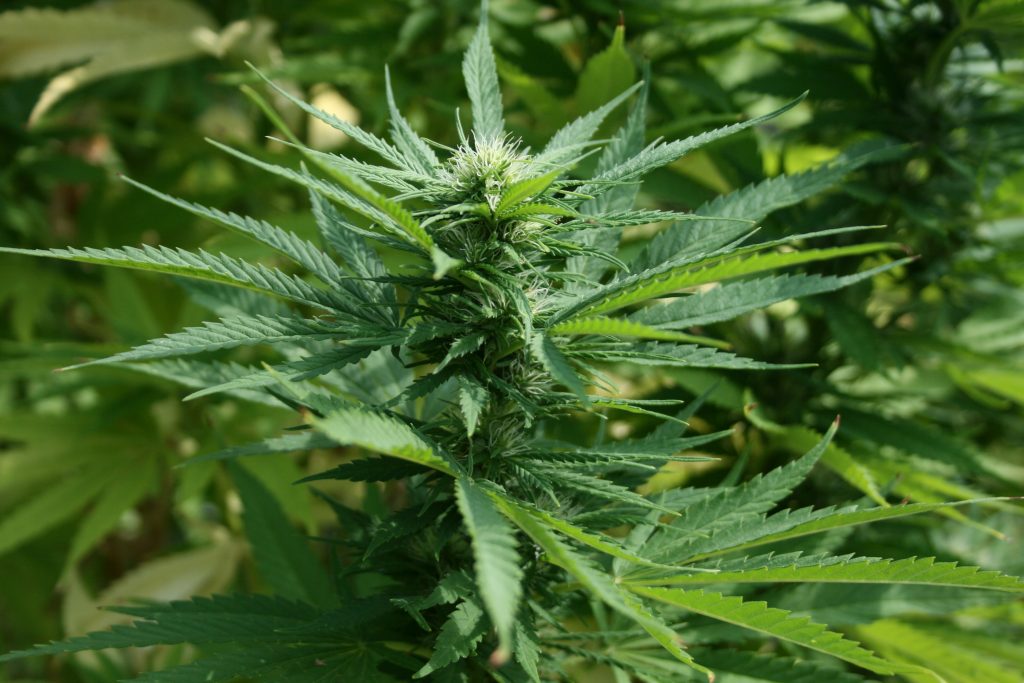
    File photo shows a hemp plant.

    Alabama hemp is at a stage in the growing season when it is vulnerable to caterpillar damage, says Katelyn Kesheimer, Auburn University Assistant Professor and Extension Specialist. She said a lot of the hemp in the state is starting to flower, which is when it is most susceptible.

    “We’re gearing up for corn earworm for caterpillars. A lot of the hemp int he state is starting to flower and that’s really when it’s vulnerable to caterpillar damage. We’re waiting on some boll worm flights and scouting the flowering of the hemp plants, especially pretty regularly to make sure there aren’t any small caterpillars so we can get rid of them before they get too big,” Kesheimer said.

    The caterpillars feed on the buds and can cause significant yield loss just because they eat a lot as they grow. As they are chewing on it, they are also opening up that plant and some pathogens can get in and you could end up with bud rot.

    “The other issue is because they’re caterpillars and just walking stomachs, they’re going to be eating and defecating on the plant. Then you have reduced quality if you’re growing raw flower and it’s covered in caterpillar poop,” Kesheimer said. “I’m telling growers to scout and check and make sure they don’t have any caterpillars especially as they go into flower.”

    The other concern right now for Alabama hemp producers is the dry weather. According to the U.S. Drought Monitor, various parts of the state are classified as abnormally dry, specifically along the Alabama-Georgia border in Barbour, Dale and Henry Counties. Kesheimer is confident that Alabama could receive significant showers soon.

    “It got real dry, real quick. It was a shock to the ground, the plants, everybody because it hadn’t been too hot all summer. Then (last) week it was pretty miserable,” Kesheimer said. “I think there is some (plants) stressed out there,” Kesheimer said. “They need water, depending on what stage they’re in. I think we’re headed for some storms. It’s cloudy where I am right now. That certainly should help.”

  • Dry Temperatures Not Bad Thing for Georgia Hemp Producers

    File photo shows hemp growing in a field.

    Hot and dry temperatures are not necessarily a bad thing for Georgia’s hemp producers, according to Tim Coolong, University of Georgia Cooperative Extension specialist. What the crop will not do well in is when the soil is wet.

    Tim Coolong

    “Every single grower that I’ve met with is irrigating their hemp anyway. Actually, a little bit drier is probably fine, because if they do need some water, they will irrigate,” Coolong said. “The only negative thing is some people are planting pretty late because they’re just getting their licenses. Some of the heat we’re having may make it a little bit harder to establish plants. Just like planting fall vegetables, if you’re planting and it’s 95 degrees out, sometimes it helps to have a little bit of a shower to cool things down.”

    According to the US Drought Monitor, various parts of the state include areas that are classified as abnormally dry. It is especially concerning for middle Georgia and east Georgia along the coast.

    It is a critical point for hemp producers since hemp is expected to begin flowering in early August. Coolong said the handful of growers that are still planting are in danger of producing a crop with reduced yields.

    “Hemp for the most part, when you get below 14 hours of day length will start to flower. That’s right about now when we start getting below that threshold. Most of the plants will start flowering around the first week of August,” Coolong said. “The idea is if you plant too late, you’ll have this relatively small plant that could start flowering. Your yield would be lower than if you planted in late May or June when you can build a larger frame on a plant.”

  • UGA Pecan Specialist: Fruit Thinning a Hard Sale

    Fruit thinning will likely be a hard practice for pecan producers to follow through on in the next couple of weeks. But University of Georgia Cooperative Extension pecan specialist Lenny Wells believes it is the right course of action to take, especially considering the quantity of this year’s pecan supply.

    Lenny Wells

    “This is going to be a hard sale because a lot of growers have gone without much of a crop for a couple of years. They’re wanting to make all they can. But in a situation like that with a crop that’s really loaded, especially if they’re calling for dry weather late in the season, it would not be a bad idea right now to fruit thin your trees,” Wells said. “That would take some of that pressure off the tree where it would be better able to manage and make those nuts with good quality that it has left.”

    Wells said growers only have another week or two to thin their trees, except for Pawnee variety, which should have already been done. There are various advantages to thinning your tree, though, you would be affecting this year’s crop.

    “It’s a tough call, it really is. It’s certainly hard to do,” Wells said. “It definitely does help. It helps with a lot of things; it helps with quality; it helps with return crop next year; it helps with the size of the nuts; it helps with that if we do get some kind of storm late in the season, if you lighten that crop load, then trees don’t take such a beating. There’s a lot of advantages to it, but it is hard to do.”

    According to the UGA Extension pecan blog, Wells said Georgia’s crop is projected at 87 million pounds.

  • Alabama Pecan Crop Projected at 2.5 Million Pounds

    File photo shows pecans.

    Alabama’s pecan trees are progressing with a strong crop this year. Alabama Extension Research Associate Bryan Wilkins believes the fungicide Miravis Top’s has worked well against scab disease and believes producers in his state should be in good shape come harvest time, barring a hurricane.

    “I think Alabama will be up there around 2.5 million pounds, maybe a little bit more. That’s more than what we’ve had the past few years,” Wilkins said. “That Miravis Top has done real well. I’ve got Desirables here in Fairhope that are clean right now. Normally, by now, it doesn’t matter how many times I spray them, they’re eat up (with scab disease).”

    The majority of Alabama’s pecan crop is produced in the southwest part of the state, in Mobile County, Baldwin County and Covington County. It has been an up-and-down growing season with regards to weather. In April and May, that region of Alabama got extremely dry. Now, it is experiencing seasonable rainfall.

    Wilkins estimates his growers will make two more fungicide sprays against scab this season.

    “We’ve had a fairly good growing season. Scab hasn’t been terrible. We haven’t had any major insect problems,” Wilkins said. “Last year, I think black aphids just ate everybody up across the Southeast. But we haven’t had any major insect problems. As long as we don’t get a hurricane, I think we’re going to be in real good shape.”

  • Clemson Extension Agents Provide Crop Updates

    Downy mildew looks a little different on zucchini and pumpkin. Photo from Zack Snipes.

    Clemson Extension agents provided updates in The South Carolina Grower this week about the status of various crops being produced throughout the state.

    Coastal

    Zack Snipes reports, “It has been a hot week in the Lowcountry. Most spring and summer crops have finished up. Ground is being prepared and planted for fall crops. I have received a few texts from growers that have yellow dots on their zucchini plants, which is downy mildew. Even in this heat downy can still be an issue. I have also had some reports of green-colored squash in fields which is an indication of a viral pathogen. The crop handbook has recommendations for cultivars that are resistant to these viruses that cause this discoloring. Fall is notoriously bad for cucurbit viruses, so plan accordingly.  I have also seen some flea beetle damage on crops as of late.”

    Midlands

    Justin Ballew reports, “It’s been hot in the midlands and we’ve gotten to the point where there isn’t much relief at night. We had some scattered rain throughout the week, but overall we’re still quite dry. Lots of land is still being prepped for fall crops. We’ve had some fall brassicas and cucurbits planted already and they’re looking good so far. Last week I got to watch a pecan grower in Lexington thin some pecan trees. Without thinning, he would have seen a massive yield this year, which would result in a significantly diminished yield next year. Pecan growers aim for nuts on just 70% of the terminal buds.”

    Pee Dee

    Tony Melton reports, “Pickles are still being harvested and planted. We still have hundreds of thousands of bushels in contract to be planted and harvested.  Peas for processing are being rapidly harvested and replanted; some seed is short.  Sweet potatoes are starting to swell and size.  Processing peppers are being harvested, but we have a shortage of labor and multi-millions of pounds left to harvest. Processing tomatoes will be finished harvesting this coming week. Spring planted fresh market butterbeans and peas are mostly harvested, but seed is short to plant the fall crop. Still have some flooded fields and drowned crop.”

    Upstate

    Kerrie Roach reports, “Spotty rain across the county again last week has led to continued issues for growers without irrigation. Fall planting for vegetables is in full force. Peaches are looking good, and apples are coming along. Most growers will be putting on a fungicide cover spray this week before significant rains are forecasted.”

    Andy Rollins reports, “Bacterial speck and bacterial spot of tomato are major problems in plum tomato varieties in the upstate right now.  They were not able to control this disease even with a vigorous spray program using mancozeb + copper on several farms. In nearby plantings of large fruit varieties, the disease is present but not a problem. Samples have been sent to researchers at Auburn University where they have confirmed the presence of copper resistant isolates from other farms. Call on your extension agent for assistance with identifying and controlling this problem.”