Author: Clint

  • Fall Vegetable Crops Susceptible to Whiteflies

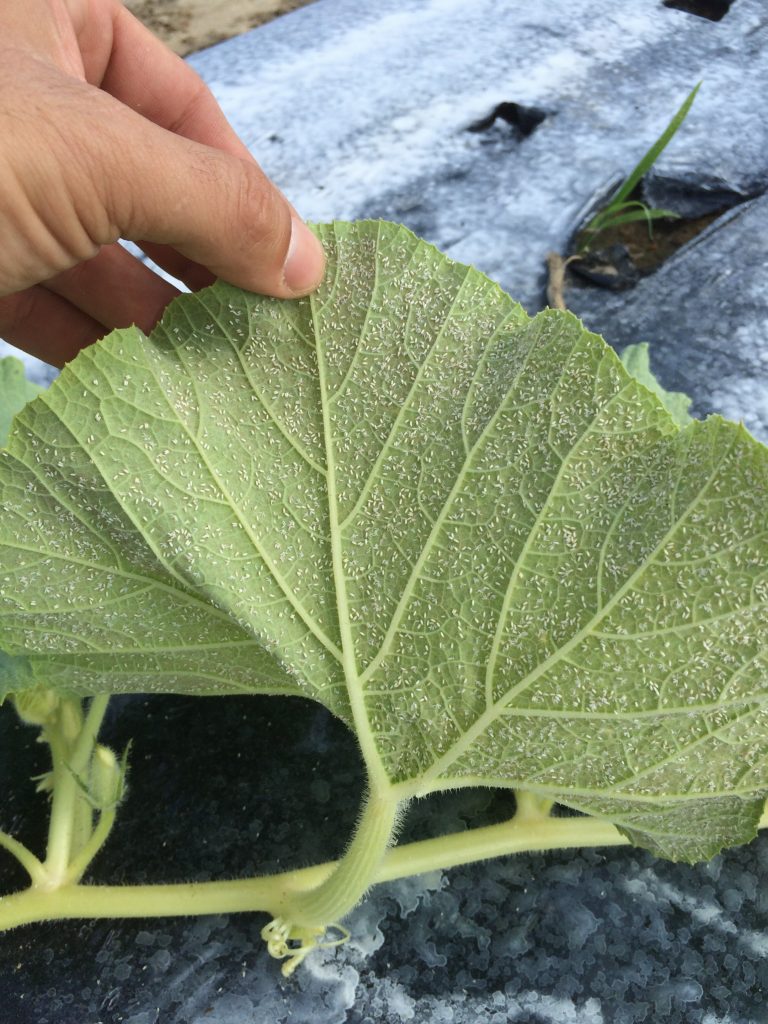
    File photo shows how whiteflies infest fall cucurbits.

    Unless more rain in the upcoming weeks can knock back populations, whiteflies are a huge concern for fall vegetable growers, according to Stormy Sparks, University of Georgia (UGA) Extension vegetable entomologist.

    “Right now, it’s looking pretty bad. It could be devastating. The populations are really high, and we’re just now getting started,” Sparks said. “I’ve got squash where the adult counts are 200-plus per leaf. We’re just starting to see some virus. It’s pretty low, but that can increase rapidly.”

    According to the most recent release of the US Drought Monitor, about half of Georgia’s counties are classified as ‘abnormally dry,’ including Tift County where Sparks is based at the UGA Tifton campus.

    “They love hot, dry weather. I saw some cotton the other day. I haven’t seen cotton that looked that bad since I was in Rio Grande Valley of Texas,” Sparks said. “Those bad spots are very spotty right now, but if we stay hot and dry, it can get ugly in a hurry. It’s already ugly in some spots.”

    Rainfall is needed to, not only help the crops grow, but knock back some of the whitefly populations.

    Whiteflies Everywhere

    Alabama Extension cotton entomologist Ron Smith said they’re finding whiteflies as far north as Quitman County (Georgia), which is just across from Eufala, Alabama. There’s also some in the Panhandle of Florida and in some fields in the corner of Alabama down in the extreme tip between Georgia and Florida. For more information about whiteflies’ impact in cotton, click here.

    Crop Devastation

    Whiteflies are especially dangerous since they can also transmit cucurbit leaf crumple virus and cucurbit yellow stunting disorder virus. According to UGA crop loss estimates for fall 2017, these viruses caused between 30% and 50% of crop loss in squash and cucumbers and nearly 80% of crop loss in snap beans. While this year’s whitefly infestation does not rival 2017 yet, the numbers are still bad and a concern for growers in the middle of planting this fall’s crop.

    “We can battle the whitefly, it gets real ugly and real expensive but we can battle the whitefly in most crops. It’s those crops where we have virus problems where we don’t have resistance to that are the greatest concern,” Sparks said. “The yellow squash is extremely sensitive. Zucchini is tolerant but not really resistant. Cucumbers, you can produce a crop despite the virus. Tomatoes, we’ve got tomato yellow leaf curl, if you’re not growing a leaf curl resistant variety, you have the potential to losing the crop. But most people now are growing leaf curl resistant varieties in the fall.”

    Lack of Cold Winter Temperatures

    While colder temperatures do not eliminate whiteflies, they do kill many of their wild hosts. They also slow population development in cultivated hosts. Warmer temperatures this winter allowed for larger whitefly populations to overwinter and become mobile earlier.

  • USDA Announces More Eligible Commodities for CFAP

    Application Deadline Extended to Sept. 11

    (Washington, D.C., Aug. 11, 2020) – U.S. Secretary of Agriculture Sonny Perdue announced today that additional commodities are covered by the Coronavirus Food Assistance Program (CFAP) in response to public comments and data. Additionally, the U.S. Department of Agriculture (USDA) is extending the deadline to apply for the program to Sept. 11, and producers with approved applications will receive their final payment. After reviewing over 1,700 responses, even more farmers and ranchers will have the opportunity for assistance to help keep operations afloat during these tough times.  

    Perdue

    “President Trump is standing with America’s farmers and ranchers to ensure they get through this pandemic and continue to produce enough food and fiber to feed America and the world. That is why he authorized this $16 billion of direct support in the CFAP program, and today we are pleased to add additional commodities eligible to receive much needed assistance,” said Secretary Perdue. “CFAP is just one of the many ways USDA is helping producers weather the impacts of the pandemic. From deferring payments on loans to adding flexibilities to crop insurance and reporting deadlines, USDA has been leveraging many tools to help producers.”  

    Background

    Background: USDA collected comments and supporting data for consideration of additional commodities through June 22, 2020. The following additional commodities are now eligible for CFAP:

    Specialty Crops – aloe leaves, bananas, batatas, bok choy, carambola (star fruit), cherimoya, chervil (french parsley), citron, curry leaves, daikon, dates, dill, donqua (winter melon), dragon fruit (red pitaya), endive, escarole, filberts, frisee, horseradish, kohlrabi, kumquats, leeks, mamey sapote, maple sap (for maple syrup), mesculin mix, microgreens, nectarines, parsley, persimmons, plantains, pomegranates, pummelos, pumpkins, rutabagas, shallots, tangelos, turnips/celeriac, turmeric, upland/winter cress, water cress, yautia/malanga, and yuca/cassava.

    Non-Specialty Crops and Livestock – liquid eggs, frozen eggs and all sheep. Only lambs and yearlings (sheep less than two years old) were previously eligible.

    Aquaculture – catfish, crawfish, largemouth bass and carp sold live as foodfish, hybrid striped bass, red drum, salmon, sturgeon, tilapia, trout, ornamental/tropical fish, and recreational sportfish.

    Nursery Crops and Flowers – nursery crops and cut flowers.   Other changes to CFAP include: Seven commodities – onions (green), pistachios, peppermint, spearmint, walnuts and watermelons – are now eligible for Coronavirus Aid, Relief, and Economic Stability (CARES) Act funding for sales losses. Originally, these commodities were only eligible for payments on marketing adjustments.

    Correcting payment rates for onions (green), pistachios, peppermint, spearmint, walnuts, and watermelons.  

    Additional details can be found in the Federal Register in the Notice of Funding Availability and Final Rule Correction and at www.farmers.gov/cfap.  

    Producers Who Have Applied: To ensure availability of funding, producers with approved applications initially received 80% of their payments. The Farm Service Agency (FSA) will automatically issue the remaining 20 percent of the calculated payment to eligible producers. Going forward, producers who apply for CFAP will receive 100% of their total payment, not to exceed the payment limit, when their applications are approved.  

    Applying for CFAP: Producers, especially those who have not worked with FSA previously, are recommended to call 877-508-8364 to begin the application process. An FSA staff member can help producers start their application during the phone call.  

    On farmers.gov/cfap, producers can: Download the AD-3114 application form and manually complete the form to submit to their local USDA Service Center by mail, electronically or by hand delivery to their local office or office drop box. Complete the application form using the CFAP Application Generator and Payment Calculator. This Excel workbook allows customers to input information specific to their operation to determine estimated payments and populate the application form, which can be printed, then signed and submitted to their local USDA Service Center.  If producers have login credentials known as eAuthentication, they can use the online CFAP Application Portal to certify eligible commodities online, digitally sign applications and submit directly to the local USDA Service Center.  
    All other eligibility forms, such as those related to adjusted gross income and payment information, can be downloaded from farmers.gov/cfap. For existing FSA customers, these documents are likely already on file.  

    All USDA Service Centers are open for business, including some that are open to visitors to conduct business in person by appointment only. All Service Center visitors wishing to conduct business with FSA, Natural Resources Conservation Service or any other Service Center agency should call ahead and schedule an appointment. Service Centers that are open for appointments will pre-screen visitors based on health concerns or recent travel, and visitors must adhere to social distancing guidelines. Visitors are also required to wear a face covering during their appointment. Our program delivery staff will be in the office, and they will be working with our producers in the office, by phone and using online tools. More information can be found at farmers.gov/coronavirus.  

  • House Ag Committee Seeks Specialty Crop Relief

    House Agriculture Committee members seek more Coronavirus Food Assistance Program relief for specialty crop growers. The group recently sent a letter to Agriculture Secretary Sonny Perdue with the request.

    Led by Congresswoman Stacey Plaskett, a Democrat from the U.S. Virgin Islands, the lawmakers say, “The direct payment program under CFAP has failed to provide equitable relief to the specialty crop sector.”

    Plaskett

    The lawmakers say the funds have been particularly difficult to access for specialty crop farmers who are young, socially disadvantaged or rely on local markets with diversified production practices.

    As of August 3, 2020, USDA had provided more than $6.8 billion in direct payments to domestic farmers and ranchers. Out of that total, only $270 million has been provided to specialty crop producers, representing less than 4% of overall assistance.

    To remedy the issue, the lawmakers requested, “USDA must do more to assist the specialty crop sector, particularly those farmers who are young, socially disadvantaged, or sell into local markets.”

    (From the National Association of Farm Broadcasters)

  • Alabama Extension Offices Serving as Drop-Off Points for Mystery Seed Packages

    Package of unsolicited seed mailed out.

    MONTGOMERY, Ala. – The Alabama Cooperative Extension System is partnering with the Alabama Department of Agriculture and Industries (ADAI) to assist in collecting unsolicited seed packages being sent to Alabama residents from China. The packages often indicate that they contain jewelry rather than seeds. ADAI field inspectors are currently collecting these seed packages to test their contents for unknown compounds, noxious weed seed and invasive species.

    Gary Lemme, Alabama Extension director, said each county Extension office will serve as a drop-off point for residents who may have received these mystery packages containing seeds.

    “This partnership will allow inspectors at ADAI to process these seed samples more quickly,” Lemme said. “Alabama Extension is proud to take part in this process to continue serving Alabama residents.”

    Commissioner of Agriculture and Industries Rick Pate said, “We appreciate Extension’s offer to assist our department by providing a designated drop off point in each county. We will continue to collect packages as along as we receive reports that they are being delivered to Alabama citizens.”

    How to Drop Off Seeds

    Those who have received unsolicited seed packages should not open the package containing the seeds or plant the seeds. Deliver these packages to the county Extension office nearest you. Find the address and contact information to county offices in the Alabama Extension directory at www.aces.edu/directory. When you deliver the package, professionals at that office will assist in filling out the ADAI Mysterious Seed Package Report. (www.agi.alabama.gov/reportseeds).

  • Florida Farmer: Administration Needs to be Real Careful with Upcoming Hearings

    Paul Allen, president of R.C. Hatton Farms in Belle Glade, Florida and chairman of the Florida Fruit and Vegetable Association, believes the outcome of the upcoming virtual hearings about unfair trade practices with the U.S. Trade Representative’s Office could have significant ramifications come November.

    This file photo shows Florida Agriculture Commissioner Nikki Fried visiting with farmer Paul Allen, Palm Beach County Commissioner Melissa McKinlay and Tom MacVicar of MacVicar Consulting.

    “This administration better realize that the American people are very well aware of this Florida deal. They need to think hard about it. You’re in an election year, and it isn’t just the people in Florida, it’s people all over this country are aware of this deal,” said a frustrated Allen, referring to the competitive imbalance with Mexican imports. “They’ve been made aware of it through the pandemic. I think the administration needs to be real careful about what they’re doing here. They need to help the Florida farmer, and I think it could probably assure another term, to be honest with you. If not, I don’t know.”

    Hearings Scheduled

    The hearings, scheduled for Aug. 13 and Aug. 20, will allow the U.S. Department of Commerce and Trump Administration the chance to hear from seasonal produce growers in Florida and Georgia. Farmers such as Allen and Georgia producer Bill Brim are pleading for federal action to be taken regarding unfair trade, specifically with respect to Mexican imports.

    “I think we’ve got to challenge this administration to realize this is bigger than just push and pull. This is about national security. In World War II our country understood what that was about, they didn’t require farmers to go into the draft. They understood the importance of being able to feed our country. Our government needs to be reminded of that,” Allen said. “The fact that the Mexican administration is putting out such a big to-do about it, a big fight, shows you how important it is. They know it’s going to put the Florida farmers out of business. That’s why they’re really reacting strong to the fact that we’re even considering doing something different.”

    Unfair Trade

    The reality of unfair trade was especially harsh this year against the backdrop of the coronavirus pandemic. Farmers disposed of harvested produce just because there wasn’t a market, while Mexican produce was constantly being brought into the country.

    The idea of fair trade is a fantasy more than reality when it comes to Mexico says American farmers.

    “This pandemic when it came last March and April, we asked the government to pull a force majeure on the trade deal because of what was going on. We were destroying food. They wouldn’t do it. We begged them and begged them, had our representatives call but they wouldn’t close the border down, and we just kept destroying food,” Allen said. “We put a cry out to the American people, and the American people started supporting us and started doing what they could to buy American food and not food from other countries. It really bailed us out and helped us.”

    Real Change?

    Allen is hopeful and confident these hearings will lead to real change.

    “We’re farmers, we’re people of faith. We’ve got to believe, and we’ve got to think positive,” Allen said. “I’m not thinking we’re wasting our time.

    Additional information on USTR field hearing dates, deadlines, and submission instructions can be found in the Federal Register notice.

  • Clemson Extension Agents Provide Crop Updates

    Clemson Extension agents provided updates in The South Carolina Grower this week about the status of various crops being produced throughout the state.

    Coastal

    Rob Last reports, “Across the area fall plantings are growing on and developing well. Scouting for pests and diseases will remain critical to ensure timely applications are made where necessary. For those without fall planted crops thoughts are turning to next year with soil sampling. One key thing to consider at this point in the year is the use of cover crops. Not only will cover crops help to prevent erosion or loss of soil they also capture nutrients. In addition, as these crops are incorporated, they act as a source of organic material to aid in nutrient cycling in the soil as well as moisture retention.”

    Zack Snipes reports, “We were spared from the worst of Hurricane Isaias.  We clocked 21 MPH wind gusts and 1.66 inches of rain at the Coastal Research Station in Charleston. Most growers are working their fields after the much needed rain and are laying plastic for the fall crops. This is the time of year when insects, diseases and weeds usually have parties in fields if they are left unattended. Remember to clean fields, remove crop residue, turn under weeds, and, if possible, plant a cover crop. I would recommend buckwheat, sorghum-sudan or cowpeas this time of the year to build soil, suppress weeds, improve nutrient capacity and increase beneficial insect habitat.”

    Midlands

    Justin Ballew reports, “Most areas received at least a little rain last week, and we had a temporary break from the heat. The increased moisture in some areas has led to an increase in powdery mildew and downy mildew in cucurbits. Folks are still busy preparing fields and planting fall cucurbits and brassicas. What’s been planted is growing well. Some of the earliest planted fall crop tomatoes are already being staked.”

    Sarah Scott reports, “Peach season is winding down along the Ridge. Late varieties like Big Red are being harvested, and end of season tasks are starting like summer pruning. Usually this is done to open up tree centers and remove any damaged or dying wood. Cuts at this time should be made no larger than a quarter. Late season peppers, eggplant and squash are being planted. Greens like collards and kale are being seeded as well. Afternoon storms have provided some much needed rain in some areas while others remain dry still.”

    Upstate

    Kerrie Roach reports, “Things in the ‘Golden Corner’ are in full force when it comes to tree fruit. Peaches are still coming off and we about 60%-70% of the way through the season. Asian pears and nectarines are coming off now, and apples are beginning to gain steam with early varieties starting to ripen. Late season rot issues are showing up in orchards where afternoon rains have prevented cover sprays. Merivon has been a consistent player for disease control, but a timely Pristine application has been shown to have much more efficacy on these late season rots.

  • Bringing Technology to Specialty Crops

    United States Department of Agriculture

    Posted by Greg Astill, Markets and Trade Economics Division, Economic Research Service and Suzanne Thornsbury, Senior Advisor for Agricultural Economics and Rural Communities, Office of the Chief Scientist in Research and Science

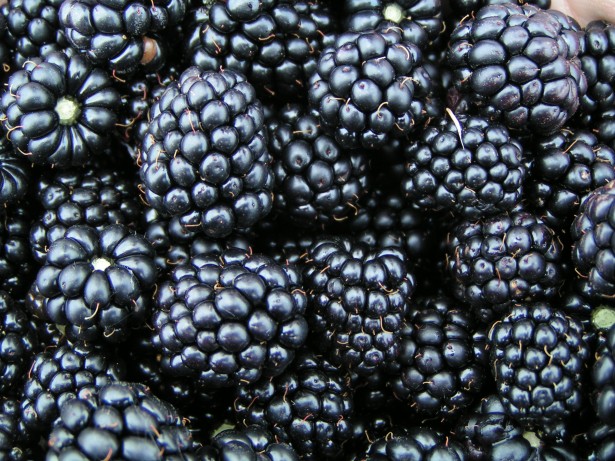
    File photo shows blackberries.

    Advances in technology, automation, and remote sensing is a cross-cutting, macro movement in science impacting agriculture outlined in the USDA Science Blueprint (PDF, 2.6 MB). The Science Blueprint guides USDA’s science priorities for the next 5 years, building from past success. Relative to other crops, many specialty crops are more dependent on agricultural labor for production, harvesting, and processing. This is part of a blog series that highlights research investments to advance automation and mechanization for specialty crops.

    Each day we use technologies to solve problems and accomplish tasks that once would have taken much longer. Whether facial recognition software, a smart thermostat, or a robotic vacuum, technology has changed the way we live and work. Farmers are also using technology to make production of specialty crops, such as fruits, vegetables, and tree nuts, more efficient. These crops make up one third of U.S. crop production sales and one sixth of U.S. agricultural sales.

    Between 2008 and 2018, USDA funded $287.7 million towards diverse research projects to develop and enhance the use of automation or mechanization in specialty crop production and processing. Most of these projects focused on precision agriculture, which includes a set of complex or “smart” technologies that tailor the needs of the plants to its specific environment or growing conditions, such as precise water, fertilizer, or pest or weed control. For example, a smart sprayer identifies individual trees in an orchard, their size, shape, and leaf density to adjust spray and reduce herbicide use. A smart irrigation system provides water only to the plants that need it, when they need it, continually adapting to crop conditions as the weather changes.

    Some USDA projects focus on development of specific components that will eventually be combined into more complex technologies. Sensors generate high-quality data on crops, weather and soil. Remote sensing data, gathered by satellites, includes information like crop growth, soil moisture, or weather conditions while drones gather more localized data on weed, pest, or disease prevalence. Machine learning algorithms convert the data into useful forms of information to help manage the farm.

    Other projects include development of job aids or automated machinery to help farm workers work more efficiently, such as an adjustable trellis system to make harvesting blackberries easier or mechanical thinners and pruners for vineyards and orchards. And some automation or mechanization technology helps with harvesting and processing, such as a flash freezing system or a mobile, in-field computerized apple sorter.

    USDA funded $287.7 million toward a diversity of research projects to develop or enhance the use of automation or mechanization in specialty crops between 2008 and 2018

    USDA funding for research into mechanization or automation for specialty crops, 2008-2018 chart
    Source: USDA, Economic Research Service, based on data provided by USDA’s Agricultural Marketing Service, Agricultural Research Service, and National Institute of Food and Agriculture.

    For more information, see the recent ERS report Developing Automation and Mechanization for Specialty Crops: A Review of U.S. Department of Agriculture Programs.

    This research supports the “value-added innovation” theme outlined in the USDA Science Blueprint and moves us closer to meeting the goals outlined in USDA’s Agriculture Innovation Agenda.

  • New Pesticides Approved for Use on Alabama Hemp

    File photo shows a hemp field.

    By Katelyn Kesheimer, Alabama Extension

    According to an Alabama Extension blog, new pesticides have been approved for use on hemp production in Alabama.

    The Alabama Cooperative Extension Service worked with the Alabama Department of Agriculture and Industries (ADAI) to release an approved pesticide list for use on hemp in Alabama. Several more products have been recently approved for legal application to hemp. It is the sole responsibility of the grower to verify processor requirements for chemical applications on hemp.

    For a complete list, click here.

  • Cowpea Curculio Troubling for Alabama Producers

    A tiny insect continues to take a bite out of the southern pea crop in Alabama.

    Ayanava Majumdar, an Auburn Extension Professor in Entomology and Plant Pathology, believes insecticide resistance is a huge issue in why farmers in Alabama and Georgia cannot get a handle on cowpea curculio.

    “I think many people just don’t believe that resistance is an issue or at least in their backyard, but it’s a pest you cannot kill with any traditional conventional insecticide. You have to think out of the box when you’re trying to manage this cowpea curculio. It’s been like that for many years,” Majumdar said.

    Where It’s Located

    Majumdar said the insect has been spotted in Alabama counties below the I-85 corridor, moving in a west-southwest direction.

    “I have plots in Headland and also in Brewton. We started in both of these places, and very soon within a few years we had a population you cannot control,” Majumdar said.

    According to UGA CAES story in 2018, cowpea curculios are small, dark weevils that originated in Mexico. They feed and lay eggs in the pods of Southern peas, making the peas unmarketable. 

    “It is an insect that’s limiting our bean area production. I’m telling farmers not to increase any other production unless you know how to manage this pest for cowpeas or southern peas. That’s a big limiting factor across south-southeast,” said Majumdar, who said there’s two generations of this pest. “It’s the second generation that completely ruins the crop for us. It increases the pressure so much you can’t even manage it.”

    Majumdar implores farmers to be timely with their early plantings and then with their harvests.

    “Often times the later plantings will be the worst hit. Timing is very critical,” Majumdar said. “Crop rotation is critical, but crop rotation may be difficult for a small farmer.

    “If you are using insecticides, there are a few choices but none of them will give you 100% control. The point is, the cultural practices; timing, crop rotation, these things are more important to manage it right now.”

  • Georgia Farmer: What’s Right is to Help Support Us

    Brim

    Tifton, Georgia farmer Bill Brim is ready to voice his concerns about unfair trade practices during one of the two virtual hearings scheduled for Aug. 13 and Aug. 20 with the U.S. Trade Representative’s Office.

    The hearings will provide the U.S. Department of Commerce and Trump Administration an opportunity to hear from seasonal produce growers in Georgia and Florida on the urgent need for federal action regarding unfair trade.

    “I feel like if we don’t do it, we’re not going to get anywhere, so we might as well do what we can do even if we make them mad,” said Brim, co-owner of Lewis Taylor Farms. “They’re either going to do what they feel like they’re going to do or they’re going to do what’s right. What’s right is to help support us and our farming operations to allow us to be able to compete with the rest of the world.”

    Competition Against Mexico

    Competition against Mexican imports is tough, though, if not impossible, for specialty crop growers in the Southeast.

    “We can’t grow this product cheaper than they can grow it. Their wages are so much cheaper than ours. They’re making $8 or $9 a day, maybe, if they’re lucky. We’re paying $11.77 an hour for ours, plus all of our input costs are a lot more than theirs too,” Brim said. “They don’t have food safety to deal with like we do. They don’t have all the other items to have to deal with like we do, from FDA and EPA and everybody else.”

    He estimated that costs increase to $15 per hour per worker since Lewis Taylor Farms houses the workers as well. The high costs that specialty crop farmers already deal with was amplified this year because of the health and safety protocols needed for workers during the coronavirus pandemic.

    “This COVID-19 has cost us a fortune to keep them where they can work; spraying houses every day. We’re spraying buses every day, we’re spraying the kitchen every day, we’re spraying tractors every day, the trucks every day,” Brim said.

    Additional information on USTR field hearing dates, deadlines, and submission instructions can be found in the Federal Register notice.