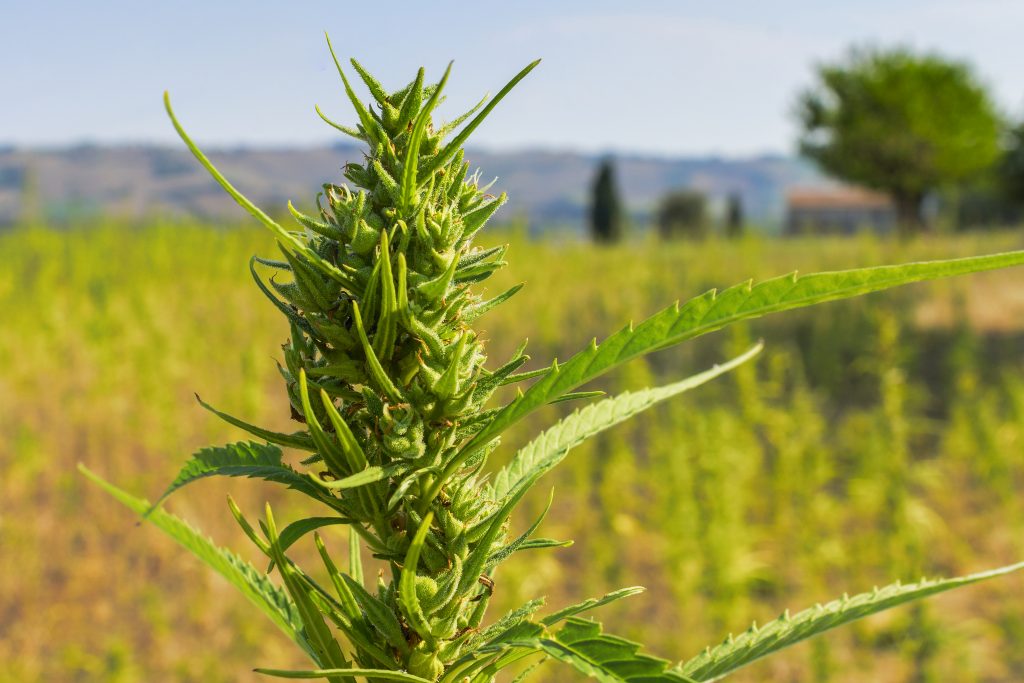
Georgia’s hemp crop is beginning to flower and could be ready for harvest starting in a little more than a month, says Tim Coolong, University of Georgia Cooperative Extension specialist.
“I’ve got trials that started flowering about (2 weeks) ago on some of the early material. We’re seeing that around the state. I suspect we’re going to continue to see more of that,” Coolong said.
Hemp harvest in Georgia should commence around late September or early October.
Coolong said the crop is doing well despite the hot and humid temperatures this summer.
“Right now, the crop overall, we’ve got some disease here and there, but I would say overall it’s looking okay,” Coolong said. “I was in some fields in South Georgia actually and the plants were 7 and 8 feet tall. They looked really good. And the stuff we have up here (north Georgia), even though it’s not quite as hot as south Georgia, it’s still pretty warm; the stuff here is growing pretty well, too.”
Coolong estimates between 300 and 400 acres were planted this year with 108 licenses issued by the Georgia Department of Agriculture. Some of those, though, may be processors and others may be farmers who decided not to plant.
“While we do have some bigger growers, particularly in South Georgia, a lot of them are pretty small,” Coolong said.
Pecan scab fungus (Fusicladium effusum) is the most destructive disease of pecans in Georgia.
By Emily Cabrera for UGA CAES News
University of Georgia faculty will begin a series of pecan trials this winter to help identify better management practices for growers.
New pecan trees will be planted at the UGA College of Agricultural and Environmental Sciences’ Vidalia Onion and Vegetable Research Center in Toombs County for research and demonstration purposes. Andrew Sawyer, southeast Georgia area pecan agent for UGA Cooperative Extension, is spearheading several research projects with a team of UGA researchers. He will be looking at factors that impact the pecan industry such as variety selection, insect pest management, disease resistance, herbicide application rates and other input requirements.
This research is funded by a Pecan Commodity Commission grant that was awarded last year.
Sawyer, who began this new position in May 2019, is based in Statesboro, Georgia and supports pecan growers throughout southeast Georgia. The position is funded by the Georgia Pecan Grower’s Association and UGA Extension to support Extension pecan specialist Lenny Wells at the UGA Tifton campus.
Primary Study
The team will primarily study the effects of pecan scab fungus on various cultivars that grow well in the southeast. Pecan scab begins in the tissues of the tree trunk, and at bud break in the spring, the disease begins to rapidly spread through the limbs, leaves and eventually the nuts. It’s the most detrimental disease to pecans in Georgia, causing severe economic losses each year. Currently, trees must be treated with several applications of fungicides annually in order to produce a marketable crop, as it only takes 25% scab on shucks to minimize quality.
‘Desirable,’ ‘Pawnee’ and ‘Stuart’ are some of the most common pecan varieties grown in Georgia, valued for their excellent yield and nut quality. Of the three cultivars, growers have shown a preference for ‘Desirable,’ which is the most susceptible variety to pecan scab.
“The most susceptible cultivars to this disease also happen to be the industry standards used here in the southeast,” explained Sawyer. “We didn’t use to see pecan scab in these cultivars, but over time, as the pecan industry became more or less a monoculture of ‘Desirable,’ the disease has gained a foothold in orchards throughout the state. We are at a point that we shouldn’t be planting this cultivar in new orchards anymore. There may be some situations where growers are located in more northern areas of the state where this disease isn’t as hard-hitting, but most pecans are grown in warmer parts of the state where spraying from bud break to shell hardening requires an unsustainable amount of labor and money.”
Sawyer hopes that through his research program, other low-input, marketable varieties will prove to be just as valuable as the current industry favorites. His recommendation for growers who are interested in establishing new orchards is to use a variety of cultivars to help minimize the risk of disease and pest issues.
“Since 2008, UGA researchers in Tifton have been working with alternative cultivars that are resistant to pecan scab, have low input requirements, are high yielding and produce great quality nuts. Some of the best varieties we’ve seen are ‘Excel,’ ‘Lakota,’ ‘Gafford,’ ‘McMillan,’ and ‘Kanza’ — a cold-tolerant variety that may be better suited for growers in north Georgia as well,” said Sawyer.
Low-Input Cultivars
Low-input cultivars provide an economic benefit to growers, especially in southeast Georgia, because orchards in this region tend to be managed through commercial practices but on a much smaller scale than found elsewhere in the state.
“When you have a smaller operation, but still have to shell out a lot of time and money into your crop, the cost-benefit ratio sometimes doesn’t work to your advantage,” said Sawyer. “That’s why these low-input cultivars are so attractive. It means growers can save more time and money and end up with a great quality, high-yielding product without all the heavy investments. So, the Vidalia Onion Research Farm will be a great location in this part of the state to observe these low-input cultivars,” he added.
As research plots are established this winter, trees will be planted in such a way to accomplish both long-term variety research and short-term applied research goals. Sawyer and his team will host several demonstrations at the research farm over the next few years to allow Extension agents and growers to participate in hands-on training about topics including planting, pruning, grafting, irrigation, pest and disease prevention strategies, and making herbicide treatments using different chemistries and rotations.
Alabama hemp producers are tackling one pest after another this growing season. They started with fire ants not long after the crop was planted. Now, according to Katelyn Kesheimer, Auburn University Assistant Professor and Extension Specialist, the key insect is corn earworm.
Photo shows corn earworm adult.
“They’re really hard to control because they start small. Then they’ll be eating and eating and eating and you don’t see them until you see the damaged buds, or you really do some destructive sampling to get at those tiny first n-stars. Instead of having one big egg lay, it’s kind of like a sustained egg lay that we’ve seen in the last couple of weeks,” Kesheimer said.
The caterpillars feed on the buds and can cause significant yield loss, because they eat so much as they grow. As they chew, they also open that plant and some pathogens can get it and farmers could end up with bud rot.
Hemp is flowering throughout the state, which makes it most susceptible to infestations. It is the perfect time of year for corn earworms to be a problem as well. They move from crop to crop.
“Corn is being harvested, cotton is drying down and it’s the same flights that started a few months ago. They start in corn and they move to cotton and now they’re going to hemp,” Kesheimer said. “It’s a nice, lush green crop for them to lay eggs in. I think it’s just the timing and we have just a lot of insects in the system. It was kind of slow for a little bit but the last couple of weeks have really picked up.”
Kesheimer noted that producers have a plethora of products to utilize but spray coverage remains the key factor in managing the worms.
“Here in Alabama we have probably almost 100 products labeled for hemp. But the most important thing for the worms is getting really good coverage. You have to get really high volumes to get into those dense canopies where the buds are where the worms are hiding,” Kesheimer said.
So, it seems fitting that an Egyptian-American scientist is leading an effort to facilitate the expansion of production of UF/IFAS-bred strawberries internationally.
UF/IFAS strawberries are adapted to the unique conditions of central Florida. As a result, they include low chilling, high early yield, excellent shelf life and outstanding flavor, UF’s Vance Whitaker said. Those traits make these varieties useful outside of Florida, particularly in regions of the world where strawberries are grown in the winter and early spring.
That’s where Fahiem Elsayeed Elborai comes into play. Elborai, an assistant research scientist of entomology and nematology at the Gulf Coast Research and Education Center, has been hired as director of international outreach for the UF/IFAS strawberry breeding program. He helps expand overseas markets for UF/IFAS-developed varieties.
“My main focus starts in the Middle East region, because, as an Egyptian, I know the culture and can facilitate all UF/IFAS activities in the region,” Elborai said. “I urge all who utilize UF/IFAS strawberries to comply with intellectual property rights, among other activities.”
Elborai led a Zoom webinar last week, during which researchers and growers from Africa and other continents learned the latest strawberry findings from UF/IFAS faculty. Those findings included the latest strawberry cultivars that have been released commercially – ‘Florida Brilliance’ and ‘Florida Beauty’ – as well as primers on diseases and pests that can plague the fruit.
Vance Whitaker, associate professor of horticultural sciences and a strawberry breeder at GCREC, recently hired Elborai to his new position.
“As an accomplished agricultural researcher from the region, Fahiem is unique in his ability to work with emerging markets in the Middle East,” Whitaker said. “He has made significant progress in increasing compliance with UF intellectual property rights.”
For example, Elborai tries to make sure farmers are not growing UF/IFAS varieties without permission.
“Fahiem has also done considerable work for people in developing countries,” Whitaker said. “Last year, we visited Egypt together, and it was great to see the jobs that have been created from the growth of the industry there.”
Among many duties, Elborai communicates with officials, growers, exporters and other stakeholders who use UF/IFAS strawberry varieties.
Elborai also connects researchers worldwide to introduce the UF/IFAS program to help open new markets and extend knowledge to strawberry growers in developing countries. “Lately we have supported emerging markets and even developed new markets around the world in places such as Costa Rica, Ethiopia, India and Malaysia,” he said. “Also, we are working to offer our cultivars this season to the growers in West African countries such as Gambia, Benin, Mali and Mauritania.”
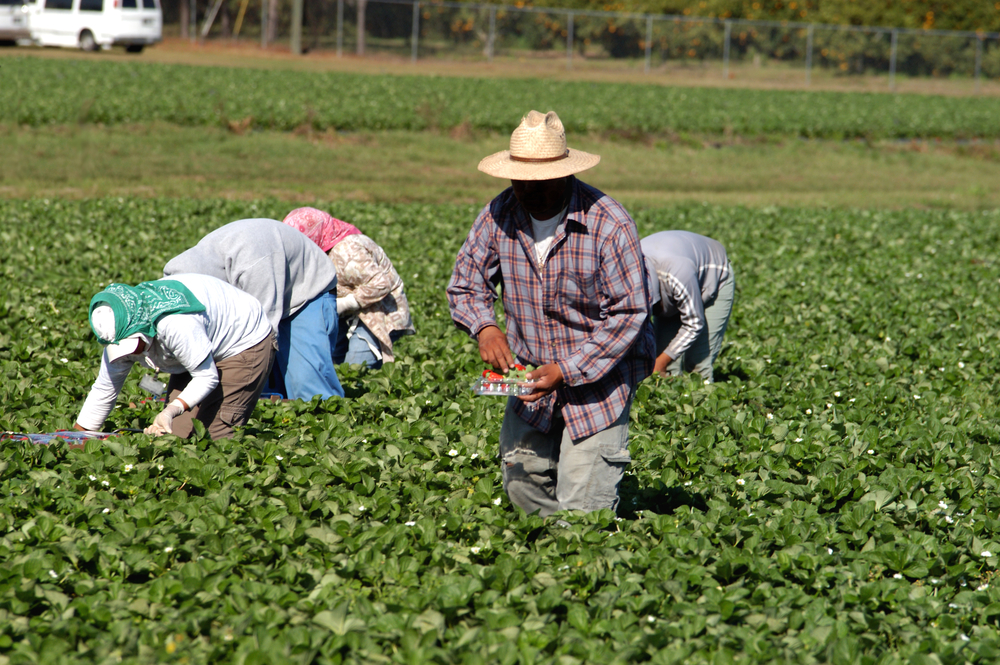
WASHINGTON, DC – The U.S. Department of Labor announced the award of $80,684,142 in grants through the National Farmworker Jobs Program (NFJP) to provide career services, training services, youth services, related assistances and housing services to eligible migrant and seasonal farmworkers and their dependents.
These awards fall into two categories: NFJP Career Services and Training Grants, aimed to help farmworkers retain their current jobs in agriculture and to acquire new skills to start careers that provide higher wages and stable-year-round employment, and NFJP Housing Grants, which help create safe and sanitary housing for farmworkers.
The Department will award $74,562,142 for Career Services and Training Grants to fund 47 grants. The Department is also awarding $6,122,000 in NFJP Housing Grants to fund nine organizations in regions needing farmworker housing services.
“The Department of Labor is focused on investing in quality career services and training opportunities that lead to industry-recognized credentials in agriculture or other sectors, and ultimately better earnings and quality of life,” said Assistant Secretary for Employment and Training John Pallasch. “Communities that invest in their farmworkers are investing in America’s economic strength.”
ETA administers federal job training and dislocated worker programs, federal grants to states for public employment service programs and unemployment insurance benefits. These services are provided primarily through state and local workforce development systems.
The mission of the Department of Labor is to foster, promote, and develop the welfare of the wage earners, job seekers, and retirees of the United States; improve working conditions; advance opportunities for profitable employment; and assure work-related benefits and rights.
Avoid planting potatoes in the fall in Alabama, says Alabama Extension vegetable specialist Joe Kemble.
Alabama farmers and gardeners have planted or are currently planting their fall vegetable crops. One crop that Joe Kemble, Alabama Extension vegetable specialist, says producers need to avoid are fall potatoes. They simply don’t do well in any part of the state, due to the high soil temperatures.
“Fall potatoes in Alabama do not do well at all. The reason is potatoes are really sensitive to temperatures again,” Kemble said. “They get a condition called heat necrosis where the vascular tissue in the tubers will get an off color. They’ll actually almost look like they’ve been cooked inside. Usually the stands are pretty bad. You will get some production. But they are cool season plants, they do not like hot weather.
“We only grow varieties that mature by early seasons. They all tend to be early season varieties like Atlantic or Potomac or any of the red potatoes or Yukon Golds. They all tend to be early maturing varieties. Varieties like the Fingerling varieties, those tend to be mid-season to late-season varieties; those tend to be a little bit hit and miss because they may take too long to mature and then you end up with all kinds of weird problems on the tubers because the soil temperatures got too warm. Fall potatoes don’t work well in Alabama.”
Kemble said producers grow a lot of Irish potatoes in Alabama. But normally in the southern part of the state, the growers will sew them around Christmas time. Farmers in northern Alabama will plant them a little bit later. A little light frost does not hurt.
Florida fruit and vegetable growers are acutely aware of the negative impacts that Mexico’s exports have had on their ability to remain competitive. In a recent virtual presentation on the subject, Florida Fruit and Vegetable Association President Mike Joyner shared some shocking statistics from a Florida Department of Agriculture and Consumer Services (FDACS) report. Published in July, the report looked at 24 specialty crop commodities in Florida and found that 83% suffered market share loss due to competition from Mexico.
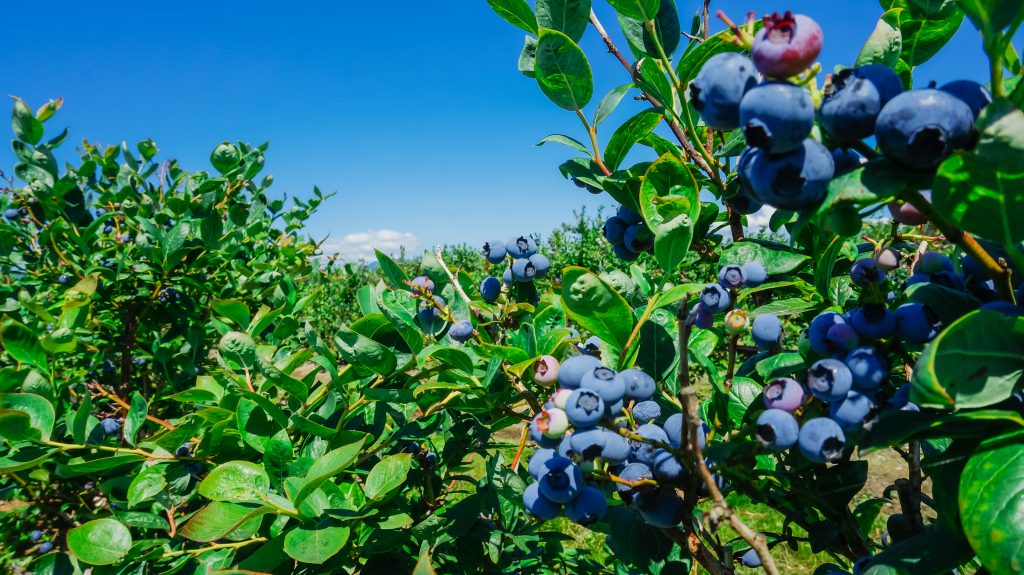
Perhaps most alarming were the blueberry numbers. From 2000 to 2017, Mexican imports in the United States have increased from 150,000 pounds to 48 million pounds. The latest projections show 60 million pounds of blueberries coming to the United States from Mexico in 2020.
The report shows that from 2000 to 2019, the value of Mexican produce shipments to the United States surged by 551 percent. “Between 2017 and 2019, the value of produce from Mexico jumped from $12.92 billion to $15.04 billion,” said Joyner.
Joyner said Mexican government subsidies are a big reason for the country’s growth in produce market share. He added that Mexico is targeting eastern United States markets with lower prices than western markets, despite higher transportation costs to the eastern markets.
Joyner explained that for a country to bring a trade case before the International Trade Commission, it first must prove it makes up 25 percent of the total market share for a product during a 365-day period. With many of Florida’s specialty crops being highly seasonal with short market windows, U.S. growers are not able to meet this requirement.
Federal legislators and Florida agricultural associations are working closely together to draft legislation that would change the 365-day requirement to a shorter time period while considering regions instead of the whole country. Joyner said all 27 congressional members from Florida support changing the existing legislation. “Both senators have been extremely strong on this issue,” he said.
In addition, Joyner said U.S. Trade Representative Robert Lighthizer made a commitment to help growers within 60 days of the United States-Mexico-Canada Agreement (USMCA) going into effect. The USMCA, a successor to the North American Free Trade Agreement, became effective July 1.
Hear Joyner’s full presentation, which was part of the Citrus Expo/Vegetable & Specialty Crop Expo general session held virtually on Aug. 19–20.
Florida and Georgia seasonal produce farmers who testified in hearings regarding unfair trade practices the past two weeks should not have to wait long to see how the U.S. Trade Representative’s Office will respond to their concerns with Mexico.
Charles Hall, executive director of the Georgia Fruit and Vegetable Growers Association and who testified in the virtual hearing on Aug. 20, said Ambassador (Robert) Lighthizer has provided Sept. 1 as the date he would have a plan available to begin implementing.
“They are to announce a plan Sept. 1. I don’t know that we’ll have it on Sept. 1 or not but I think certainly within the next 2 to 4 weeks; we should have a plan based on what their recommendations are as far as how they plan to address the issues that were discussed during the hearings. We’ll wait to see what that plan is,” Hall said.
Action Needed
Florida farmers and Georgia farmers agree that action needs to be taken. The major concerns for seasonal producers are with the government-funded subsidies and cheaper labor that allow Mexican farmers to flood the U.S. market and drive down prices. U.S. growers can’t compete when Mexican farmers only have to pay less than a dollar per hour as a minimum wage.
Producers who testified also agreed that a Section 301 Investigation needs to happen. This provides the United States with the authority to enforce trade agreements, resolve trade disputes and open foreign markets to U.S. goods and services.
“That’s what we recommended although they may have other tools available through them through the USTR or Commerce or some other area. They may see some other areas which they could work in different than a 301 but would help us with a solution to the problem,” Hall said.
“I think based on the hearings, they clearly understand what the problem is and what we feel like is causing the problem. Hopefully, they will have some tools available where they can look into and give us some relief.”
Peach producers need to be mindful of Phony peach disease. According to the UGA Peach Blog, Phil Brannen, University of Georgia Cooperative Extension plant pathologist, cautions growers that if a tree is diagnosed with the disease, they need to destroy the tree immediately. They also need to remove it from the orchard to prevent further spread of the Xylella fastidiosa bacterium by sharpshooter insects, the predominant vector of the pathogen in the Southeast.
Infected trees are initially stunted due to shortened internodes between the leaves and limited growth. Less fruit are produced over time, and the fruit size diminishes as well. Given enough time, the tree will die as a result of the pathogen or indirectly due to stress and other factors.
AUBURN UNIVERSITY, Ala. – As blueberries and other summer fruits begin to grow out of season, gardeners may be looking for ways to extend the growing season. While there are many factors that affect the output of fruit crops, there are several things people can do to put their plants in the best situation possible for a long, bountiful growing season.
Proper Growing Conditions
Chip East, an Alabama Extension commercial horticulture regional agent, said a key component that can potentially extend the growing season is making sure the plant is subjected to the proper growing conditions.
“For the success of the plant, ensure that proper planting, weed management, disease management, insect management as well as adequate irrigation is in place,” East said.
The first step to extending the growing season happens before the season even starts. Planting blueberries and other fruits in the proper environments is crucial to overall success. While it is too late to perform this now, East said people can always plan ahead for next year’s fruit crops.
“The best way to help extend the season is by first choosing a planting location that is in full sun and where the soil is well drained,” he said.
During the growing season, management practices, such as proper irrigation and insect and disease management, comes into play. For proper irrigation, most crops require 1 to 1.5 inches of rain per week during the growing season. Drip irrigation is recommended for summer blueberries and many other crops. This method is affordable and can make a huge difference in production for the plant.
When it comes to managing insects, one of the first steps is scouting the crop. Knowing and identifying which insects are common on the particular fruiting plant helps to know how to manage the insects.
“It is much easier to manage insects earlier before they do damage to the plant or fruit,” East said. “This same concept applies to diseases and weeds as well.”
Knowing when to harvest a particular fruit is also an important factor in extending the growing season. Picking a fruit too early can not only affect the taste, but will affect the timeline of the growing season. The longer the fruit hangs on the plant, the sweeter the taste. However, the shelf life of the fruit will be shortened.
Different blueberries ripen at different times, depending on the species. This is the case for peaches, apples, blackberries and other fruits as well. In order to measure the ripeness of the fruit and know when they’re ready to harvest, some farmers invest in a refractometer. This instrument measures the sugar content of the fruit. East said another way to determine if the fruit is ready to harvest is by looking at the color of the fruit as well as eating the fruit to see how it tastes.
Mix it Up
East said by planning ahead, people can make it where as one fruit is going out of season, they have another one coming in season.
“I like the idea of extending the picking season by adding different crops,” East said. “If one fruiting season is about to end, I can look forward to another fruit about to begin.”
As the blueberry season comes to an end, people can begin to transition to harvesting muscadines. Some of the other common fall fruit crops include apples, pears, figs and persimmons. Kiwi and citrus fruits are less common but can also be grown during the fall season.