UF photo shows Brilliance variety of strawberries.
Dover, Fla.- The Florida Strawberry Growers Association (FSGA) is grateful to USTR Ambassador (Robert) Lighthizer, USDA Secretary Sonny Perdue, and Secretary Wilbur Ross at the Commerce Department for keeping their word to find a way to bring meaningful trade relief to Florida strawberry growers who have suffered legitimate injury from subsidized imports from Mexico.
“This administration has embraced an issue that has historically been ignored. It is abundantly clear that this administration has a desire to find solutions to help level the playing field for the Florida strawberry industry and other seasonal fruits and vegetables,” said FSGA Executive Director, Kenneth Parker.
FSGA will continue to work with the administration to ensure that timely, effective and durable solutions are in place that will keep Florida strawberry growers viable and competitive. The significant actions outlined in the USTR plan specifically for strawberries include:
•USTR will pursue senior-level government-to-government discussions with Mexico over the next 90 days to address U.S. industry concerns regarding U.S. imports of Mexican strawberries, bell peppers, and other seasonal and perishable products.
•USTR will work with domestic producers to commence an investigation by the International Trade Commission to monitor and investigate imports of strawberries and bell peppers, which could enable an expedited Section 201 global safeguard investigation later this year.
•USDA and the Commerce Department have committed substantial support as well. FSGA appreciates the grower members and the entire Florida congressional delegation for standing shoulder to shoulder in defense of Florida’s agricultural families, and recognizing the importance of the economic impact our growers have on Florida’s economy.
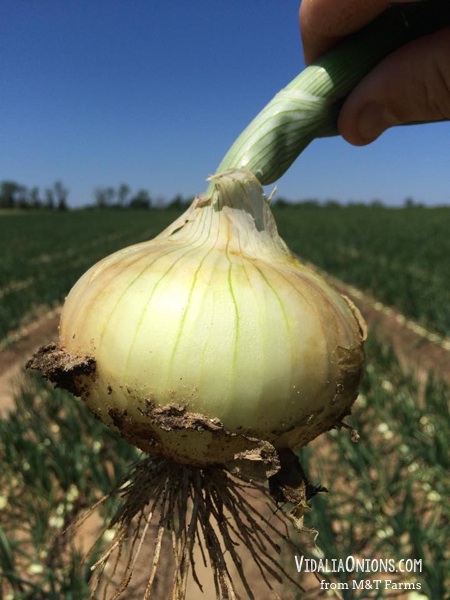
Photo courtesy of M & T Farms, Lyons, GA, and Vidalia Onions.com
The annual Vidalia Onion Production Meeting will be held virtually this year on Friday, Sept. 11, beginning at 9:30 a.m.
The topics that will be covered include variety trial review, flavor updates, nitrogen fertility management and onion disease management.
Everyone who wants to attend the meeting online will need to register before. Registered participants will receive a link the day before the meeting to log on.
One economist in the Southeast is encouraged by the plan to address the threat of increased foreign imports to U.S. producers of seasonal fruits and vegetables.
Adam Rabinowitz, Auburn University Assistant Professor and Extension economist, believes the hearings held in August for Florida and Georgia producers opened communications and led to a report released by the Office of the U.S. Trade Representative, the Department of Agriculture and the Department of Commerce, that could produce substantial change.
Adam Rabinowitz
“It’s really encouraging to see that these hearings were not just a one off if you will, that produced a report and ended up going nowhere and closing communications. That did not happen,” Rabinowitz said. “It actually opened up the doors for continuing communications in the outreach programs, but also it mentions formal channels for stakeholders to actually provide information on where they’re seeing seasonal imports coming into the U.S., including those from Mexico; explicitly listed there, as being hurtful to U.S. production and U.S. producers. Opening that communication, creating those channels certainly has to feel like a win for Southeast fruit and vegetable producers.”
USTR Press Release
Rabinowitz
According to the USTR press release, the public hearings allowed more than 60 witnesses to testify, in addition to more than 300 written submissions.
The plan’s highlights include, the USTR will request the International Trade Commission to initiate a Section 201 global safeguard investigation into the extent to which increased imports of blueberries have caused serious injury to domestic blueberry growers. The same 201 investigation could be implemented later this year for strawberries and bell peppers.
Section 201
“Section 201 is part of the Trade Act of 1974. It really allows the International Trade Commission to look at where domestic producers have been harmed by imports. They have to be seriously injured, meaning that level of injury to their marketing opportunities,” Rabinowitz said. “Typically, it must be completed within 120 days after filing. I don’t know if the initial report here was the day of filing, or if that’s going to follow.
“I think we can expect within the next 4 to 6 months to see not just the report from the International Trade Commission, but also the president has a limited time after that report comes to actually respond to that and either adopt remedies or make a decision from that. I think within the next 4 to 6 months we should see some activity that occurs, on the blueberry side at least.”
The plan also states that the USTR will pursue senior-level government-to-government discussions with Mexico over the next 90 days to address U.S. industry concerns regarding U.S. imports of Mexican strawberries, bell peppers and other seasonal and perishable products.
Georgia Agriculture Commissioner Gary Black is pleased farmers and agricultural leaders have a seat at the decision-making table again.
Black
The agreement to have the August hearings that focused on unfair trade practices involving foreign produce and included testimonies from farmers and industry leaders from Florida and Georgia was a “positive step,” he said.
This led to a plan of action, announced on Tuesday by the Office of the U.S. Trade Representative, the Department of Agriculture and the Department of Commerce. There will be further investigations surrounding certain commodities at the center of the trade dispute Southeast growers have with Mexican imports, specifically blueberries, strawberries and bell peppers.
Gary Black
“The one thing that has to go out over your air waves is the unmatched support from this administration; the president, secretary, Ambassador Lighthizer and others; agriculture is a priority to Donald Trump. Again, are you always going to agree on everything? No you don’t, but I think most people in agriculture are just encouraged to be a part of the conversation; to be a front-burner issue as opposed to the fine print at the end of the credits,” Black said. “That’s where we’ve been for way too long. There’s a commitment by the ambassador, trade representative to step up, to listen. They did.
“I think it’s incumbent upon us to stay hitched up, try to look at this agreement and this plan they put forth in a positive way. As I said in my testimony, we want a strong agreement, but we want one that’s enforced. American farmer, the Georgia farmer, their responsibility is as important a part of our homeland security and national defense strategy than anything else that we do. We’ve got to have a healthy agriculture to have a healthy America and a healthy Georgia. Trade’s the lifeblood. Lets just hope these steps wind up being very positive. We’re going to be supportive and keep the communication lines open as we move forward.”
USTR Press Release
According to the USTR press release, the public hearings allowed more than 60 witnesses to testify, in addition to more than 300 written submissions.
As outlined in the plan, the USTR will request the International Trade Commission to initiate a Section 201 global safeguard investigation into the extent to which increased imports of blueberries have caused serious injury to domestic blueberry growers. The same 201 investigation could be implemented later this year for strawberries and bell peppers.
The plan also states that the USTR will pursue senior-level government-to-government discussions with Mexico over the next 90 days to address U.S. industry concerns regarding U.S. imports of Mexican strawberries, bell peppers and other seasonal and perishable products.
MAITLAND, FL (Sept. 1, 2020) – The Florida Fruit & Vegetable Association commended the Office of the U.S. Trade Representative, the Department of Agriculture and the Department of Commerce on Tuesday for their plan to begin remedying the immense harm to produce growers in Florida and elsewhere caused by unfair trade practices and harmful import volumes from Mexico and other foreign sources.
“As (Tuesday’s) announcement makes clear, this plan will launch the first – but not the last – steps needed to solve this longstanding and growing threat to the produce industry in Florida and elsewhere,” said FFVA President Mike Joyner. “The unfair trading practices and harm to our industry, which are exhaustively documented in (Tuesday’s) report and on the record, demand a timely, effective and lasting solution.”
August Hearings
After listening during two August hearings to industry leaders and producers from Florida, Georgia and other states, the three agencies on Tuesday unveiled a report on the hearings and a plan to support producers of seasonal and perishable fruits and vegetables.The plan outlines the specific actions each agency will take. Among other things, the USTR will pursue “senior-level government-to-government discussions with Mexico over the next 90 days to address U.S. industry concerns regarding U.S. imports of Mexican strawberries, bell peppers and other seasonal and perishable products.”
In addition, USTR will ask the International Trade Commission to initiate a Section 201 investigation into whether increased imports of blueberries have seriously harmed U.S. blueberry growers. During the hearings, industry leaders and producers pointed to a heavily subsidized Mexican produce industry and unfair pricing practices as primary causes of the decline in Florida’s market share and production during the past 20 years. Researchers from the Florida Department of Agriculture and Consumer Services and the University of Florida testified about data showing explosive growth in imports of Mexican fruit and vegetable crops to the United States since 2000.
More Work to do
FFVA will continue to coordinate closely with the Administration and elected officials during the negotiations and other proceedings announced (Tuesday) to deliver the trade relief that Florida specialty crop growers need and deserve.
“Mexico and other foreign suppliers should be on notice that all of our affected fruit and vegetable sectors, working with the Administration and elected officials, are committed to ensuring that every trade remedy tool available is used to correct the unreasonable foreign trade practices that have caused persistent losses in market share and revenue, shuttered farms, and growing job losses throughout our state,” Joyner said. “We won’t allow our industry’s survival to continue hanging in the balance, and we intend to solve this longstanding problem once and for all.”
Joyner expressed appreciation to Florida’s congressional delegation for its leadership and unanimous commitment.
“The fact that every member of Florida’s congressional delegation – the third largest in the country – has remained united in strong support of Florida producers on this issue demonstrates the importance of agriculture to Florida. We are thankful for their unwavering support.”
Tallahassee, Fla. – After Tuesday’s announcement from the Office of the United States Trade Representative (USTR) on the administration’s plan to address the threat posed by unfair trade practices and increased foreign imports, FloridaAgriculture Commissioner Nikki Fried issued the following statement:
“I appreciate the USTR’s recognition of the decades-long suffering endured by both Florida and America’s seasonal producers due to unfair Mexican trade practices — this is another step towards making an impact on this major problem. After hearing testimony from farmers struggling every day to compete, the urgency of this issue cannot be denied.
“We are hopeful that (Tuesday’s) announcement signals a commitment from the administration to stand with Florida farmers and hold Mexico accountable for their unfair trade practices. It’s clear there is still a lot of work needed to provide the relief our farmers desperately need — the Florida Department of Agriculture will continue pushing for solutions, and we look forward to working with the administration to enact timely and effective remedies.”
Mexico’s growing market share: Last month, Commissioner Fried and FDACS released a report highlighting the up to $3.7 billion in Florida farm losses due to unfair trade from 2000-2019. The report can be viewed in full at FDACS.gov/USMCAReport, top findings include:
Mexico has expanded their share of the U.S. domestic market by 217% since 2000 — while Florida’s market share dropped by 40%
Mexico’s seasonal crop imports have increased by 551% from 2000 to 2019
An $11 billion gap exists between Mexican agricultural-exports and Florida’s total agricultural market value
Florida producers lost sales of up to 20% due to Mexico’s agricultural export expansion since 2000. This accounts for up to:
$3.7 billion in total economic losses for Florida’s economy
37,180 lost jobs in Florida
$205 million in lost indirect tax revenue for Florida’s economy
$2.2 billion in annual losses of Florida cash receipts to multiple agricultural sectors
20 Florida commodities examined experienced declines in market share, while 13 Mexican commodities increased their share by 100% or more
Background: Since taking office, Commissioner Fried has been a leading voice in opposition to USMCA’s failure to address the dire situation facing Florida’s seasonal crop growers. On August 13, Commissioner Fried testified at a virtual hearing held by the USTR regarding Mexico’s distorting trade policies. As the USMCA came into force, she released a report highlighting up to $3.7 billion in Florida farm losses from unfair trade. Commissioner Fried has visited Washington D.C. numerous times to request Congress include provisions to protect seasonal producers and was the nation’s only Agriculture Commissioner to vote against a resolution supporting the USMCA.
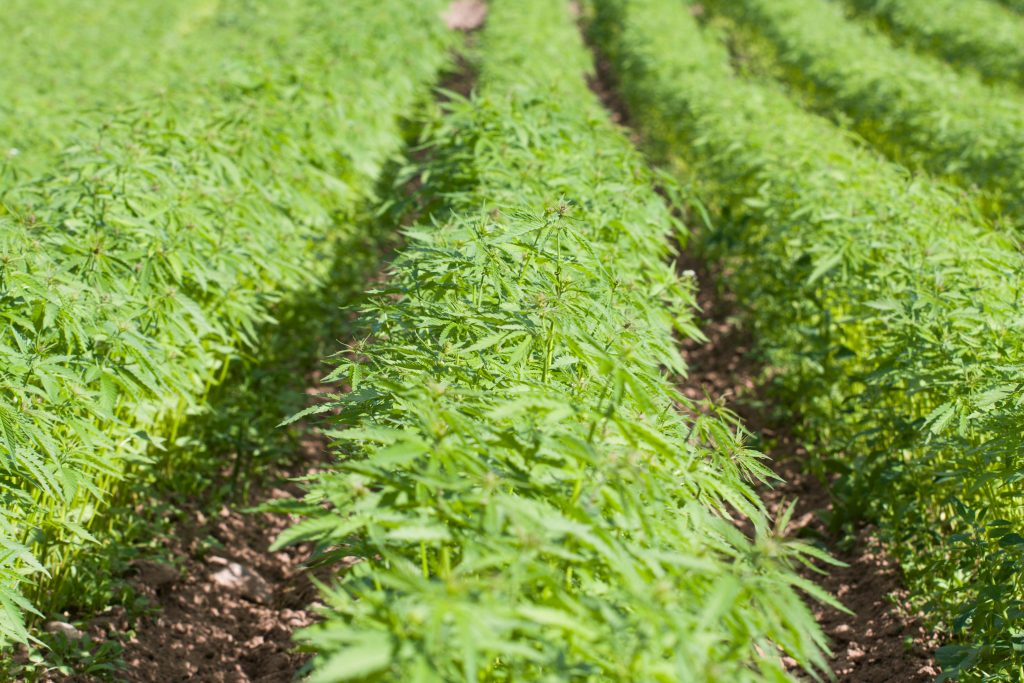
The number of Alabama hemp producers has tripled this year. However, that does not necessarily mean acreage has increased as well, says Katelyn Kesheimer, Auburn University Assistant Professor and Extension Specialist.
“Last year we had, just for comparison, about 150 licensed growers approved for 10,000 total acres. According to the (Alabama) Department of Ag, they think about 7,000 of those acres got planted. This year we have closer to 500. I think it’s 450 approved growers,” Kesheimer said. “I don’t have an estimate on approved acres. I’m sure I’ll get those numbers from the Department of Ag soon but a lot of people, from last year, they downsized.
“Also, I think with the uncertainty with getting your seeds and you’re planting right when COVID started; some people were approved and got the license but decided not to move forward with any plantings. Even though we had triple the number of growers, I’d be surprised if there was the same increase in acreage.”
Starting to Flower
Some of the hemp acreage in Alabama has plants that are starting to flower, which means harvest time will not be too far behind.
“There’s quite a bit out there flowering. We did have some auto-flower varieties go in so those are much quicker to flower than the standard day-length dependent. But yeah, we certainly have some crops where the plants are 6 or 7 feet tall; they’re in full flower,” Kesheimer said. “I imagine we’ll start to see some harvests not too long from now depending on how early people got their plants in. There are certainly some good-looking flowering hemp out there.
“I know some growers that are quite far along, they planted in May and are getting ready to harvest probably at the end of September/October.”
According to a recent interview with VSCNews, Kesheimer indicated that corn earworms remain a problem for all hemp producers. The caterpillars can feed on the buds and cause significant yield loss if not managed correctly. Since hemp is flowering across the state, that makes the crop more susceptible to infestations.
Photo submitted by Vance Whitaker/UF: Shows basket of Brilliance variety strawberries.
Florida producers will soon be planting strawberries in a few weeks. The popular variety choice this year is expected to be Brilliance, says Vance Whitaker, strawberry breeder at the University of Florida Gulf Coast Research and Education Center, .
Released in 2017, Brilliance provides growers fruit early in the season. It’s a desirable trait not all varieties are able to offer.
“It produces fruit very rapidly and very high yields in November and December. That’s the most important thing for the industry in central Florida,” Whitaker said. “This variety quickly became a leader. It also doesn’t suffer from the problem Radiance has of having elongated fruit early in the season.
“If you’ve grown Radiance, you’re definitely recommended to switch over to the Brilliance variety.”
Brilliance’s Impact This Year
Word has quickly spread about the effectiveness of Brilliance. Whitaker expects more than half of the estimated 10,000 acres in Florida to be comprised of the Brilliance variety. The main reason is its ability to produce fruit early in the growing season which is when the market is most profitable for Florida farmers.
“As far as just a big picture of the breeding program, fruit quality always has to be right up there at the top. You can have high yields and poor fruit, and it won’t do anybody any good. That’s always right there at the top, but I would say early yield is right up there at the top; probably the second or first most important trait as well,” Whitaker said. “Again, you have can have good quality fruit but if you don’t have fruit at the right time in Florida, then you’re not making any money either.
“In recent years with the market the way it is, getting good volume in late November or early December is just super important just because of how much fruit can be on the market. It feels like in recent years that the money has to be made by the end of January or at least before Valentine’s Day; that’s just the nature of the Florida strawberry deal. Early varieties are absolutely the key.”
Whitaker said growers are bedding right now with planting estimated to begin around Sept. 25 and will continue through the middle of October.
A yellow squash plant is infected with whitefly-transmitted cucurbit leaf crumple virus. Discolored fruits are typical following infection with this virus.
One of the best management tactics for vegetable growers when dealing with whitefly infestations is to get rid of any plants left in the field once harvest season is done. University of Georgia Cooperative Extension vegetable entomologist Stormy Sparks continues to preach proper sanitation to producers amid the worst whitefly outbreak in Georgia since 2017.
“This is really for all pests but definitely for whiteflies, when you get done with a crop and if you’re not managing that crop for whiteflies and it’s a crop that hosts whiteflies, you need to get rid of it as soon as possible,” Sparks said. “It needs to be destroyed so it cannot harbor or produce any more pests. That really should become a priority. In vegetables, getting a crop in on time is just paramount, nothing stops that. We really need to move towards that as far as getting crops out as well.”
Huge Problem This Year
Whiteflies are a greater problem this year due in large part to the mild winter. While colder temperatures do not eliminate whiteflies, they do kill off many of their wild hosts and slow population development in cultivated hosts. Warmer temperatures allowed for larger whitefly populations to overwinter and become mobile earlier this summer.
Whiteflies migrate from winter vegetables to spring vegetables to agronomic crops, like cotton, to fall vegetables and back to winter vegetables. Whiteflies cause feeding injury issues in vegetables and transmit two new viruses: cucurbit leaf crumple virus and cucurbit yellow stunting disorder virus.
Washington, DC — The Office of the U.S. Trade Representative, the Department of Agriculture, and the Department of Commerce released a report today outlining the Trump Administration’s plan to address the threat posed by increased foreign imports to American producers of seasonal and perishable fruits and vegetables.
Robert Lighthizer (Official White House Photo by Stephanie Chasez)
The plan follows public hearings held in August where more than 60 witnesses testified, in addition to over 300 written submissions.
“President Trump recognizes the challenges faced by American farmers and is committed to promoting and securing fair trade and a level playing field for all American producers. Secretary Perdue, Secretary Ross, and I are fully engaged in this effort. We would like to thank all of the elected officials, agricultural leaders, and dozens of farmers who participated in these hearings and helped make this plan a priority,” said U.S. Trade Representative Robert Lighthizer.
Based on information collected from these hearings, the agencies commit to the following actions to support America’s seasonal and perishable fruit and vegetable producers:
Plan to Support American Producers of Seasonal and Perishable Fruits and Vegetables
1. USTR will request the International Trade Commission to initiate a Section 201 global safeguard investigation into the extent to which increased imports of blueberries have caused serious injury to domestic blueberry growers.
2. USTR will pursue senior-level government-to-government discussions with Mexico over the next 90 days to address U.S. industry concerns regarding U.S. imports of Mexican strawberries, bell peppers, and other seasonal and perishable products.
3. USTR will work with domestic producers to commence an investigation by the International Trade Commission to monitor and investigate imports of strawberries and bell peppers, which could enable an expedited Section 201 global safeguard investigation later this year.
4. The Department of Commerce will
(a) establish an outreach program to connect with Southeastern and other growers of seasonal and perishable fruits and vegetables, to enhance understanding of applicable trade remedy laws and processes; and
(b) establish a formal channel for stakeholders to provide information related to unfair subsidies for foreign producers and exporters of seasonal and perishable fruits and vegetables, including those in Mexico – building on ongoing efforts to partner with U.S. industry to identify such subsidies.
5. The Department of Agriculture will
(a) increase targeted outreach to producers of seasonal and perishable fruits and vegetables to maximize the use of existing Department of Agriculture programs; and
(b) develop a market promotion strategy for domestically produced produce; and
(c) initiate conversations with relevant federal partners to better understand the extent to which imports of seasonal and perishable products are utilized to enable criminal activity.
6. USTR, the Department of Commerce, and the Department of Agriculture will establish an interagency working group to monitor seasonal and perishable fruit and vegetable products, coordinate as appropriate regarding future investigations and trade actions, and provide technical assistance to Members of Congress in developing legislation on this issue.
This plan does not foreclose additional actions and investigations by the Trump Administration to support producers of seasonal and perishable fruits and vegetables. The Administration is dedicated to supporting America’s hardworking farmers across the country and recognizes the importance of preserving and enhancing a diverse and homegrown food supply.