A challenging season for Georgia grape producers is nearing an end as harvest is in full swing across the state. Grapes have been harvested for a month now with others maturing and ripening up.
Phil Brannen, University of Georgia Cooperative Extension Fruit Disease Specialist, said the excess rainfall has not impacted the quantity of the crop but the quality remains a question mark.
“It’s been a challenge because of the rainfall. We still have continued to get a good bit of rain and a good bit of cloud cover. I know that the grapes I have looked at, most of them have done pretty well as far as keeping diseases off. Some are better than others, as far as keeping rots at bay and that kind of stuff,” Brannen said. “The vast majority of them have pretty good production. We’ll have to see what the quality of the grapes are; trying to get the sugars up and the acidity balanced in the grapes before you bring them in is challenging in a year like this.”
Hurricane Sally
The challenge is expected to continue throughout the state this week as Hurricane Sally makes landfall and churns towards the northeast. In Athens, Georgia, where Brannen is located, there are high chances of rain all this week, including 100% on Thursday, according to weather.com.
While most crops like peanuts, cotton and pecans can use additional rainfall this time of year, that’s not the case for grape producers.
“The last two years have been wet, up to a point. It’s been a while since we’ve had a really dry harvest year. I think the last two have been challenging,” Brannen said. “I think it was about four years ago we had a dry harvest. That’s always just welcomed for us in the grape area. We’re always at odds with people that are like peanut producers and cotton producers where they need rainfall through the summer. When you get into August, we like to see everything shut down. It’d be great if it was bone dry for grape production at that point.”
Tough Region to Produce Grapes
When you factor in rain events, it is a lot more difficult to produce grapes in Georgia compared to California.
“It’s a challenge. You compare growing grapes in California where all the water is added through irrigation below the vine. They just don’t have the number of diseases to contend with,” Brannen said. “They really control their water flow. When they get into the harvest phase, they control that water and they can back it down. They can make a grape that has the sugars and the concentration of the acidity and everything that they want. For us, we’re just much more at the mercy of nature.”
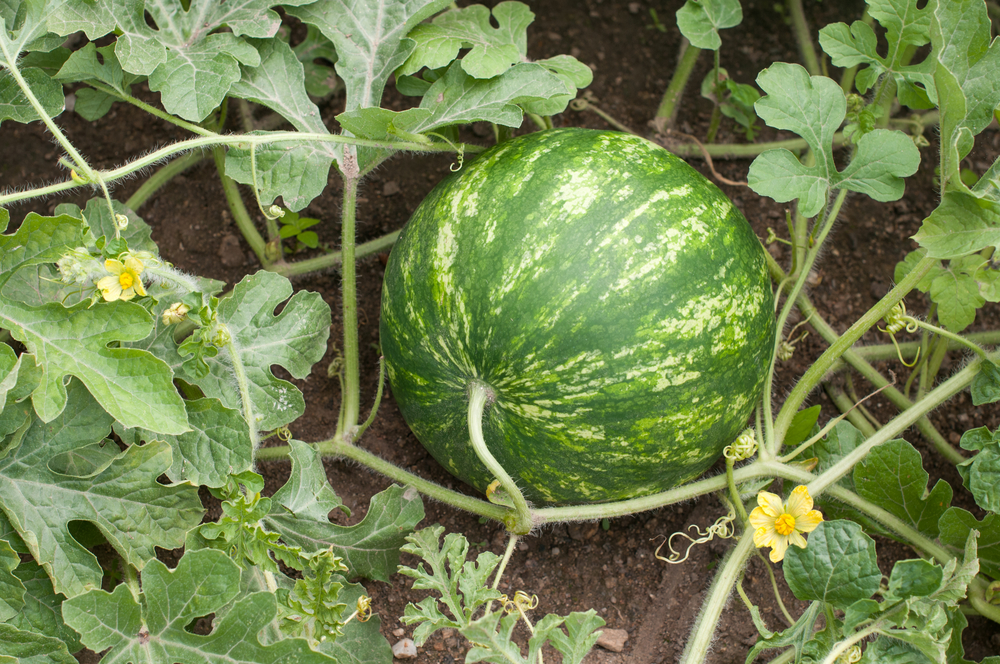
Watermelon season is winding down in Alabama this week. Just like its southern counterparts, north Alabama producers enjoyed a successful season, according Eric Schavey, Alabama Regional Extension agent in Northeast Alabama
“Overall, watermelons in our area, in Northeast Alabama was good,” said Schavey, who serves Blount County, Cherokee County, Cullman County, DeKalb County, Etowah County, Jackson County, Madison County and Marshall County.
“We got a premium price for them. Up until the last 20 days, 15 days, the watermelons, you were getting a premium. The wholesale side of it went down to $3.25, $3.50, depending on what you had. I’m talking about a good marketable, large watermelon; that 20-pound and even getting up in that 30-pound watermelons.”
Crazy Start
Watermelon producers in North Alabama had to overcome challenges throughout the growing season, starting when seed were put in the ground. Schavey said the northern part of the state experienced a frost on May 26. Normally, seed are in the ground way before that. Growers had to wait, and subsequently, the plants were put in the ground late.
It didn’t impact the fruit’s quality, however.
“As far as quality, everything was really good. We didn’t have a lot of stunted melons or odd-shaped melons. We had real good marketable watermelons this year,” Schavey said.
Production in Alabama
Watermelon production is divided between the southern and northern portions of the state. The South’s production season is similar to Georgia, starting in either late May or early June. Growers in north Alabama are about a month to a month and a half behind, says Schavey.
“We have to wait on those soil temperatures. You’re right on the foothills of the Appalachians when you get into my area. It’s very mountainous up in Etowah, Cherokee, DeKalb and even over in Blount County. You get a lot of terrain change. We can get some cool temperatures,” Schavey said.
He estimated that there are at least 600 to 700 acres of watermelons in his region with most being grown in less than 10-acre plots.
COLUMBIA — There are about 2,700 produce farms in South Carolina – and many are potentially exempt from the Produce Safety Rule, meaning they would not have to undergo routine inspections by the South Carolina Department of Agriculture’s Produce Safety team. But unless a farm has applied for an exemption and received a certificate from South Carolina Department of Agriculture (SCDA), they are not exempt. Exemption certificates are only good for one year, so farms must re-apply every year for exemption.
Fortunately, SCDA has made the process easier with a new digital application tool for Produce Safety Exemptions.
The Produce Safety Rule is part of the FDA Food Safety Modernization Act (FSMA) passed in 2011. This regulation focuses on setting federal regulatory standards for the production, harvest, and handling of fruits and vegetables, in an effort to prevent microbial contamination and reduce foodborne illnesses associated with fresh produce.
Questions? Contact Brooke Horton, SCDA’s Produce Safety Outreach Coordinator, at bhorton@scda.sc.gov.
Organic food sales topped $50 billion in the United States in 2018. Statistics from the Organic Trade Association tell part of the story of this growing market: Fruits, vegetables and other specialty crops combined to make up 36.3% of total organic sales — up 5.6% from the previous year.
Naturally, farmers want to meet consumer demand. But they may need to use essential oils to battle pests and diseases that often accompany organic crop growth.
That’s why the U.S. Department of Agriculture National Institute of Food and Agriculture awarded a nearly $2 million grant for a project led by Ali Sarkhosh, a UF/IFAS assistant professor of horticultural sciences at the main campus in Gainesville.
Sarkhosh and a team of 14 other scientists from five universities and the USDA Agricultural Research Service (USDA-ARS) will study the degree to which essential oils can help suppress certain pests and pathogens.
Researchers from the University of Florida, Clemson University, the University of Georgia, the University of California-Riverside, the University of Hawaii at Manoa and the USDA-ARS will collaborate on the project.
“Due to long periods of warm temperatures and high humidity that are characteristic of Florida, Hawaii, Southern California, Georgia, South Carolina and other parts of the southeastern United States, diseases are common,” Sarkhosh said. “Therefore, organic production of fruit crops in these regions is difficult because diseases cannot effectively be controlled without synthetic pesticides. This project will evaluate the plant safety and horticultural impact of essential oils (EOs) for disease management and will begin to test plant disease efficacy claims of EO products currently marketed for organic producers.”
Funding for the four-year research program will support scientists with expertise in fruit crop management and physiology, plant pathology, entomology, postharvest biology and organic production.
In the project, scientists will:
Evaluate the plant safety and horticultural impact of essential oils in managing diseases in fruits including blueberries, peaches, mangos and avocados.
Begin to test plant disease efficacy claims of essential oil products marketed for organic producers.
Evaluate organically certified plant essential oils on targeted pathogens such algal stem blotch, anthracnose, brown rot, scabs, gray mold and powdery mildew.
Determine the efficiency of essential oils on fruit shelf life through postharvest testing.
While arthropod pests are not the primary focus of this research, researchers also will test the efficacy of essential oils against insects including scales, thrips and mites.
Included among the 15 scientists who will work on the project nationwide are nine UF/IFAS researchers. They’re based at the UF/IFAS campus in Gainesville and Tropical Research and Education Center (TREC) in Homestead:
Jeffrey Brecht, professor of horticultural sciences.
Philip Harmon, professor of plant pathology.
Danielle Treadwell, associate professor of horticultural sciences.
Jeffrey Williamson, professor of horticultural sciences.
Daniel Carrillo, assistant professor of entomology (TREC).
Jonathan Crane, professor of horticultural sciences (TREC).
Romina Gazis, assistant professor of plant pathology (TREC).
Bruce Schaffer, professor of horticultural sciences (TREC).
Among other duties, Crane will bring data from the research to the tropical fruit industry.
“This research is important because there is little to no science-based information on the efficacy and safety of most essential oils in pest management of fruit crops, including mango and avocado,” Crane said. “Only armed with sound data we can make recommendations to commercial producers on their use and crop safety.”
After they gather their new data, scientists will communicate results of their research to those who grow organic fruit as well as those who grow conventional crops so those producers can rapidly adopt the practices. Scientists will also evaluate the effectiveness of the project through continuous feedback from stakeholders.
“Organic fruit growers in the United States are often hesitant to embrace organic practices due to the shortage of tools for disease management,” Sarkhosh said. “The long-term goal of this project is to provide U.S. organic fruit growers with safe, organically certified compounds for disease management, and consequently improve their confidence in plant-based fungicide, bactericide and insecticide applications.”
UF photo/More than 70% of Florida’s large farms sell to the service industry which includes theme parks, hotels, restaurants and cruise lines. When COVID-19 brought the tourism industry to a crashing halt this spring, farmers around the state quickly pivoted to sell the bounty of fruit and vegetables that were at peak harvest.
More than 70% of Florida’s large farms sell to the service industry which includes theme parks, hotels, restaurants and cruise lines. When COVID-19 brought the tourism industry to a crashing halt this spring, farmers around the state quickly pivoted to sell the bounty of fruit and vegetables that were at peak harvest.
In a recently published journal, Catherine Campbell, a UF/IFAS assistant professor and community food systems specialist and Gene McAvoy, a UF/IFAS Emeritus Extension agent specializing in stakeholder relations and vegetable crops, describe the impact COVID-19 had on these farms and how they overcame these impacts with partners around the state.
Florida farms took losses that are hard to comprehend. One grower plowed under 2 million pounds of green beans and 5 million pounds of cabbage because there was nowhere to send the produce before it spoiled. Another farm dumped 100,000 pounds of tomatoes in one week. There are many more examples of losses like this or larger from around the state.
“I don’t think people know how large Florida’s agriculture industry is and that COVID-19 hit these growers at the worst possible time,” Campbell said. “It was our peak harvest season, and the market fell out. Florida supplies most of the produce east of the Mississippi River in the spring and it all just stopped. It was bad for everyone, but producers in other parts of the country were at planting time, not harvest time. For our producers, they had already reached the maximum investment on those crops – paid to plant, maintain (spray, irrigate, fertilize, etc.) and in many cases they already harvested crops – then they couldn’t sell them.”
While the losses were huge, farmers and industry organizations put their heads together to quickly find a home for fresh fruit and vegetables around the state that were on the cusp of waste.
The University of Florida, industry groups, and state and regional organizations such as the Florida Department of Agriculture and Consumer Services and the Florida Farm Bureau Federation developed a variety of programs and resources to connect Florida growers to buyers.
“The vegetable industry has always been very volatile with rapid changes in price and demand, even in normal years, in addition to challenges imposed by weather, pests and diseases,” McAvoy said. “In many ways they are used to making changes in how they operate. The growers made rapid course changes and sought alternative markets out of necessity.”
Retailers around the state committed to purchasing more Florida and U.S.-grown produce, which was large in part to consumer demand generated from public awareness of the issues Florida farms faced.
Direct-to-consumer sales were another mode farmers utilized. By promoting through partner organizations and social media, farmers marketed their produce directly to their local communities. One packing house in Homestead opened on weekends for consumer sales and sold more than 120,000 pounds of vegetables. While this was still far less produce than what would normally be sold to traditional markets, it helped consumers and growers alike.
“The losses were heartbreaking,” Campbell said. “This event was a ‘cue to action’ to develop support systems that make it possible for producers to make these kinds of changes in market channels. For some growers, they are just too large to be able to exclusively sell direct-to-consumer, but it can help mitigate events like COVID-19. Their profits were probably not even close to breaking even, but at least it’s a help.”
Despite substantial losses, producers harvested and transport produce to food banks and other hunger-relief organizations to meet the increased demand from those in the community who recently lost their jobs or were furloughed. One sugar producer donated 42,500 pounds of sugar to a rum distillery to make hand sanitizer for donation to first responders, hospitals, nursing homes and essential food supply employees.
“We were building the plane while we were flying it,” Campbell said. “These programs can help producers, large and small, find buyers when their traditional supply chain breaks down. The hope is that this strategy will provide a foundation to support food system resilience in the event of future public health emergencies and natural disasters. It can also help move product instead of it going to waste. If we know where there is food and where people need it, we can mobilize it and get it to those in need.”
For many Florida growers, summer is the off-season, but growers plan to plant for the spring as they normally would each year, McAvoy said.
“Markets have rebounded nicely since May and acreage will likely be back to normal,” he said. “Many growers plan to continue direct sales to local consumers in addition to their wholesale channels that have reopened. With some markets still down, such as cruise lines, buyers and brokers are looking for ways to continue to diversify their sales.”
To support Florida farmers year-round, buy seasonal Florida-grown produce at your local retailer and when available, purchase directly from farmers in your area.
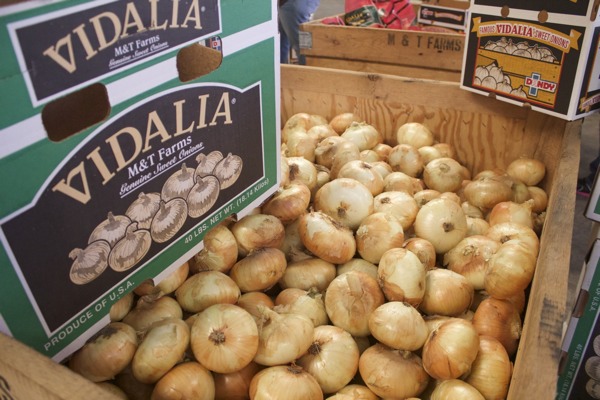
Vidalia onion farmers are expected to begin planting the crop this week. Disease management is already on the minds of Georgia growers, following last year’s tough season with bacterial diseases, according to Chris Tyson, University of Georgia Extension Area Onion Agent at the Vidalia Onion & Vegetable Research Center in Lyons, Georgia.
“We had some bacterial disease issues this past season,” Tyson said. “That’s one of those things, that’s something that really didn’t show its head until the end of the season. It was hard to foresee that.
“Bacterial diseases are tough to control. They’re probably the most challenging pest we have in onions period. It’s a big deal for everybody.”
Systems-Wide Approach
According to the UGA Vidalia Onion Extension Blog, bacterial diseases cause more economic losses in Vidalia Onions than any other pest. Tyson recommends growers take a systems-wide approach, which includes fertility, variety selection, maturity, weed control, insect control, bactericides and post-harvest management.
“With it fresh on their memory like that, they’re probably going to take into consideration anything they can do; any management strategies to help with that. That could be a lot of things. It could be variety selection to a certain extent or what maturity class of onions they try to grow,” Tyson said. “Sometimes for instance, typically, bacterial diseases that we see at harvest are worse the later you get in the season, so sometimes, earlier maturing varieties may miss some of that disease pressure.”
Center Rot
According to a UGA Extension publication highlighting bacterial diseases, by Bhabesh Dutta and Ron Gitaitis in the Department of Plant Pathology, center rot remains a huge issue for onion producers. Foliar symptoms initially consist of water-soaked lesions that cause the leaf to become bleached and blighted. Center rot management requires an integrated approach that aims at reducing potential sources of inoculum to count the spread of the bacteria.
Unfortunately, there are not any commercially available onion cultivars that are resistant to the disease.
“This past year we saw a good bit of center rot but we also saw some other bacterial disease that looks very similar to center rot that the management strategies would be very similar to that too,” Tyson said.
Growers are advised to plant early-maturing or mid-maturing cultivars. Thrips vector the spread of the bacteria among plants and fields. Controlling thrips pressure can be a successful management option. Weed management is also recommended. By reducing weeds, growers can potentially reduce the initial inoculum.
Sour Skin
Sour skin was also worse last year for producers. It is usually more of a problem during harvest in the latter part of the growing season. As it thrives in warm conditions, symptoms can manifest earlier in the season depending on temperature. The disease can progress from the upper foliage to the leaves in the lower part of the plant and then to the bulb’s outer scales.
Bulbs that are infected with sour skin usually have an acrid, sour odor and other foul odors that are associated with secondary organisms. Bulbs will turn reddish-brown to brown in color over time, as the tissues rot and copious amounts of fluids are produced.
Crop rotation may help with sour skin management. Avoid using overhead irrigation near harvest season will also reduce yield losses. Also, tactics that reduce the chances of irrigation becoming contaminated with sour skin bacteria will be beneficial.
Irrigate from wells or clean ponds that are weed-free can reduce inoculum levels.
Photo submitted by Edgar Vinson/Alabama Extension: Shows row cover in place on strawberries.
Row Covers in strawberry fields can protect the crop from cold temperatures, fierce winds, devastating frost and persistent wildlife. But it can also potentially increase yields, according Edgar Vinson, assistant research professor and Extension specialist in the Department of Horticulture at Auburn University.
In research conducted this past year at the Wiregrass Research and Extension Center in Headland, Alabama, Vinson tested the effects of row cover applications on late plantings of three strawberry varieties: Albion, Camarosa and Sweet Charlie. Treatments were set for fall applied (Nov. 20-Dec. 20), fall and winter applied (Nov. 20-Dec. 20 and Feb. 11-March. 11) and control (applied for frost protection only).
Research Results
Comparisons were made in marketable yields, total yields and leaf surface areas. In marketable yields, the treatments for fall applied and fall and winter applied row covers were higher than the control treatment for all three varieties. In Sweet Charlie, the control treatment led to a little more than 6,000 pounds per acre. But in the fall treatment for Sweet Charlie, it was nearly 9,000 pounds.
There was nearly 10,000 pounds per acre for Camarosa in the control treatment, but approximately 11,000 in the fall and winter treatment.
“Each time it appeared that the more times that the row cover was applied, the more yield we actually had with the exception of Sweet Charlie,” Vinson said. “Sweet Charlie increased with the fall cover but seemed to fall off with the fall/winter application. I think that’s probably because Sweet Charlie is an early variety. It begins to really sputter around three weeks. It’s a really a great tasting berry, early berry. A lot of people have it in their operations because it’s so early and get on the market early. But you really can’t expect much out of that after three weeks.”
The first weeks of harvest is where growers could potentially see the most benefit. In week one, there was less than 100 pounds per acre for the control treatment of Camarosa but more than 350 in the fall/winter treatment. In the Sweet Charlie variety, there were more than 100 pounds per acre in the control treatment but approximately 225 pounds in the fall/winter treatment.
The yields continued to increase in weeks two and three of harvest for Camarosa and Albion but Sweet Charlie dropped off during the third week.
Cost Effective?
The use of row covers may increase yield but is it cost effective? Vinson compared each cost of the traditional row cover, fall row cover and fall/winter row cover. He estimated expenses based upon how many applications and the man-hours each treatment accounted for. With each treatment, Camarosa was profitable; $14,885.82 in the fall/winter compared to $10,455.41 for traditional. Sweet Charlie was much more profitable in the fall treatment ($9,611.98) compared to the traditional treatment ($2,375.82). Albion was only profitable in the fall-winter treatment ($2,127.12).
Summary Points:
Row covers can effectively improve the growth of strawberries and improve yield.
The effectiveness in row covers on the different varieties depends on the location.
Strawberries receiving row covers in the fall and again in the winter had increased yields over the fall only and non-treated control treatments.
Profits increased when row cover was applied during the fall and in the fall-winter periods.
Row Covers Essential in Winter
While strawberries are a winter crop, they are vulnerable to freezing temperatures, which is the main row covers are applied. Vinson said if temperatures drop to 20 degrees F, this could result in plant injury. However, if the plant is flowering or producing fruit, it can only withstand temperatures as low as 28 degrees F.
“Buds are dormant and as long as that tissue is not quite as susceptible as a plant that’s developing and about to bloom,” Vinson said. “The more the flowers progress, the more they are susceptible to cold damage.”
Strawberries Growing in Popularity
Alabama’s strawberry production is growing in popularity throughout the state. Vinson said in 2012, there were 74 farming operations on 150 acres. While acreage has not increased, the number of operations has increased to 126.
Use of Row Covers on Strawberries
Row covers should be applied ahead of a predicted frost and should be removed after threat of damage has passed, though this does require a lot of workers/bags of weight to keep row covers down. They need to be replaced when the frost threat returns.
Clemson Extension agents provided updates in The South Carolina Grower this week about the status of various crops being produced throughout the state.
Coastal
Zack Snipes reports, “The talk of the Lowcountry this week is transplant die off. We see lots and lots of transplant die off and the culprits are usually mole crickets, ants, or cutworms. Tunneling near the base of the plant is very common when mole crickets are present. Dr. Ayanava Majumdar from Auburn University has done some trials with parasitic nematodes and has seen very good results. For more information on the parasitic nematode, visit https://www.arbico-organics.com/category/mole-cricket-controls?gclid=CjwKCAjw19z6BRAYEiwAmo64LSCtnQy6Dd1mx7TLTiNwB0-o7BBZ-XZd54LdBCtYuf2Jm6abINhyKRoChFIQAvD_BwE. Ants are very common culprits of plant die off as well. Timely applied baits are the best method for control. Drench treatments make growers feel better but are not as effective as the baits. Baits should be applied a few times a year between April and October. A few options to check out are Seduce Bait, Monterey Ant Control Pellets, Come and Get It and PayBack.”
Transplant die-off can occur from cutworms, mole crickets, ants or disease pathogens. Be sure to correctly identify before treatments are made.
Pee Dee
Tony Melton reports, “Harvesting sweet potatoes as fast as processing plant can handle them. Getting good yields. Army worms are bad!!! Collards, turnips, and mustard are up and hauling butt. Dry in some areas and wet in others. Fall peas and butterbeans are doing well except where damaged by too much rain. Cucumber for pickles are yielding well except where they were not sprayed for downy mildew. Watermelons are yielding well where farmers where able to control the gummy stem and drowning during all the rain even then some plants were lost.”
Upstate
Andy Rollins reports, “Fall pepper crop is looking very strong. Cool milder weather conditions have set us up for a very high yielding and high quality pepper crop. I found some plants on this farm that died from being waterlogged in the lowest spot of one field. I also found some fruit with side wall issues. It was worse in the larger fruited varieties as is normal. Many times this is mis-diagnosed as sunscald but if you examine fully by doing leaf tissue tests you may find out as I did that this is a slight calcium deficiency or imbalance in the plant. Yes, it is also called blossom end rot in tomato. In pepper it shows up on the sidewall not just the bottom or blossom end. Supplying the right amount of calcium is only part of the treatment as normally the problem is more often caused by the plant not being able to move the calcium not that it is missing. Calcium is a large molecule and requires energy on the plants part to be taken up and distributed. Careful frequent and regular watering has helped this farm keep this problem to a minimum.”
Pepper fruit with sidewall issues.Pepper field with waterlogged area causing dieback.
Sally, now a tropical storm, is predicted to become a hurricane and impact the Southeast.
The latest tropical system to impact the Southeast is expected to bring lots of rain to Georgia this week.
Tropical Storm Sally is forecast to become a hurricane by tonight, according to Pam Knox, University of Georgia Cooperative Extension Agricultural Climatologist.
In her blog, Knox said Tropical Storm Sally is bearing down on the Southeast and is expected to become a hurricane by tonight. It is expected to be a Category 2 hurricane when it makes landfall just east of New Orleans sometime on Tuesday. Sally is moving very slowly, which means opportunity for storm surge to develop and for winds to cause damage.
Georgia farmers need to be wary that the major impact from this storm will be rain. In some areas, there is potential for lots of rain. In western and northern Georgia, some areas could receive 4 to 6 inches as the storm slowly wanders and dissipates to our west and then moves back over Georgia as a post-tropical depression later this week.
Everywhere in the state can expect to receive at least 1 to 2 inches over the next five days. The western half of the state does have a chance of seeing some gusty winds, which could start as early as today but are more likely to start on Tuesday. With the saturated soil, that means any wind is more likely to blow over trees, leading to power outages and damage to roofs and buildings.
You can follow updates at the National Hurricane Center at https://www.nhc.noaa.gov/. Don’t focus on the center of the forecast cone. With slow-moving storms, the direction is very uncertain. Rain will spread far out from the center anyway.
A central point of the federal agencies’ plan to investigate unfair trade practices is the focus on blueberries. The crop has been widely impacted by Mexican imports, which growers attest drove prices down this year amid the coronavirus pandemic.
The plan’s highlights include, the USTR (Office of the U.S. Trade Representative) will request the International Trade Commission to initiate a Section 201 global safeguard investigation into the extent to which increased imports of blueberries have caused serious injury to domestic blueberry growers. But the question is, what defines serious injury?
“That is going to be an interesting question, what the International Trade Commission views as serious injury,” said Adam Rabinowitz, Auburn University Assistant Professor and Extension economist.
He cautions Southeast blueberry growers that Section 201 will look at the blueberry industry as a whole, meaning across the country.
“They’re going to be looking at the entire industry, not just Southeast blueberry growers, but also those that are in Maine, Washington and other states where there is significant production. The question is, to what extent has the U.S. market for blueberries been harmed by imports? You start talking about Peru and Canada and other areas where there is significant blueberry imports coming into the U.S. Has any of that harmed domestic producers?”
The USTR will work with domestic producers to commence an investigation by the International Trade Commission to monitor and investigate imports of strawberries and bell peppers, which could enable an expedited Section 201 global safeguard investigation later this year.
“I think to really tell right now what’s going to happen on the strawberry and bell pepper side, we really need to see what happens on the blueberry side and what kind of response occurs,” Rabinowitz said. “That response from the International Trade Commission is a combination of how they look at those markets and determine and really define that serious injury and then what kind of remedies they can come up with.”
Section 201 allows the International Trade Commission to look at where domestic producers have been harmed by imports. They have to be seriously injured, meaning that level of injury to their marketing opportunities. It must be completed within 120 days after filing.