Author: Clint

  • New AI Technology ‘Agroview’ Named UF Invention of the Year

    Yiannis Ampatzidis with agricultural drones in the laboratory. Photo taken 09-23-19.

    September 23, 2020

    By: Brad Buck, 813-757-2224, bradbuck@ufl.edu

    Yiannis Ampatzidis and his research team combined their collective minds to find the artificial intelligence technology to best help farmers save money and better care for their crops.

    Out of that process, they invented a system known as Agroview.

    The system utilizes images from drones and satellites and from the ground – along with artificial intelligence — to assess plant stress, count and categorize plants based on their height and canopy area and estimate plant nutrient content. Agroview can reduce data collection and analysis time and cost by up to 90% compared to the manual data collection, Ampatzidis said.

    “Florida and U.S. growers can use this novel technology to count plants and predict yield, to detect stressed plant zones earlier and to develop maps for precision and variable-rate fertilizer applications,” said Ampatzidis, a UF/IFAS assistant professor of agricultural and biological engineering. “The maps can optimally apply fertilizers, reduce application cost and reduce environmental impact.”

    Agroview captured the eye of UF Innovate | Tech Licensing, which recently recognized the technology as a UF Invention of the Year.

    “I am extremely honored to receive this award,” said Ampatzidis, a young scientist who just entered his fourth year at UF/IFAS. “We truly believe that this AI-based technology could help Florida and U.S. producers improve crop productivity and management.” 

    He thanked his research team at the Southwest Florida Research and Education Center (SWFREC) in Immokalee for helping devise Agroview. He also expressed gratitude to his colleagues from the center and his academic department at the Gainesville campus for their input.

    “I would like to thank UF Innovate | Tech Licensing and especially Dr. John Byatt and Dr. Jackson Streeter for their great help to commercialize this invention,” Ampatzidis said.

    A spinoff company called “Agriculture Intelligence Inc.,” was created, which provides Agroview’s services to growers.

    His bosses are also impressed with the work of Ampatzidis and his team.

    “The Agroview product developed by Dr. Ampatzidis’ program provides the key for connecting UAV imagery to grower decisions. This product bridges a gap that existed between research and on-the-ground, everyday use,” said Kati Migliaccio, chair of the UF/IFAS agricultural and biological engineering department. “Dr. Ampatzidis uses AI in his programs to automate processes that have been traditionally been completed in more resource-expense ways. These efforts will allow for greater efficiency and optimization of the agricultural production process, which is necessary to meet future global food needs.”

    Ampatzidis’ center director, Kelly Morgan, said SWFREC has a long history of supporting vegetable and citrus production.

    “We have typically worked on standard inputs such as fertilizer, water and pesticides,” Morgan said. “Agroview is an example of the new emphasis on precision agriculture by the research center. This program will make growers in Florida much more efficient and result in far less environmental impact. This product of SWFREC should result in lower inputs of fertilizer, water and pesticides.”

  • FFVA’s Joyner: Government’s Self-Initiation of 201 Investigation Speaks Volumes About Importance

    The Florida Fruit and Vegetable Association (FFVA) is pleased with the USTR’s decision to implement a Section 201 investigation into blueberries. Mike Joyner, president of FFVA, said the investigation was best for blueberry producers, mainly because of its global approach.

    florida fruit
    Joyner

    “When you watched the testimony of the two hearings, there were a number of blueberry growers. We knew this already but when you look at blueberries and the impacts that they’re seeing, yes Mexico is having an impact on them, but other countries are probably having a bigger impact; Peru, Chile,” Joyner said. “It became very apparent that a Section 201 was probably going to be best for blueberries. The thing about Section 201 is it’s a global approach. It looks at all the countries.”

    Hearings

    Florida and Georgia blueberry producers were able to state their concerns about imports from other countries and the impact they have had domestic production, especially market prices, during two days of hearings in August. Joyner said the government’s decision to initiate a 201 investigation speaks to the magnitude of how it perceives the concerns brought forth by farmers.

    “When the government self-initiates, when they bring it to the International Trade Commission, it sends a signal that this is an important issue. The blueberry growers still have to put on the case. But just the fact that the U.S. Trade Reps Office said we’ve seen enough here that we’re going to self-initiate a 201, it just speaks volumes,” Joyner said. “I do think the 201 is the right trade tool for blueberries.”

    Section 201

    A Section 201 investigation is part of the Trade Act of 1974. It allows the International Trade Commission to investigate where domestic producers have been harmed by imports. They must be seriously injured, meaning that level of injury to their marketing opportunities. Typically, it must be completed within 120 days after filing.

    To read the plan, click here.

    Click here to read the full transcript of the virtual hearing held on August 13, 2020.

    Click here to read the full transcript of the virtual hearing held on August 20, 2020.

    To view all submitted comments to the public docket, click here.

  • UGA Vegetable Entomologist More Optimistic About Whiteflies Following Rain, Cooler Temperatures

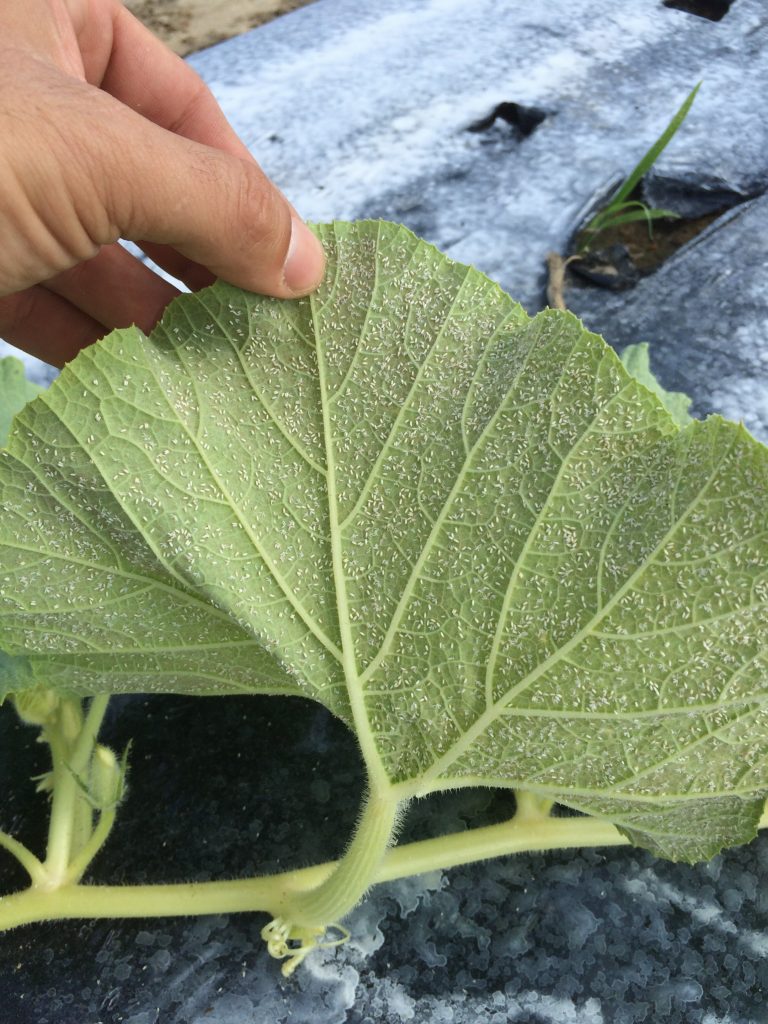
    File photo shows how whiteflies can infest fall cucurbits.

    University of Georgia Cooperative Extension vegetable entomologist Stormy Sparks is more optimistic about the ongoing whitefly problem that farmers are facing this fall – especially more than what he was feeling two weeks ago. His reason for optimism? Remnants from a hurricane and a drop in temperatures.

    Remnants from Hurricane Sally and cooler weather this week should help knock back some of the whitefly populations, which were wreaking havoc on fall vegetable crops.

    The rain amounts were extreme in certain places last Thursday when the storm moved across the state. More importantly, the rain was widespread.

    “I would anticipate that the weather knocked down the adult populations and this cool weather will greatly delay or reduce the amount that they rebound. That’s what I would think would happen,” Sparks said. “The main thing was (the rain) was everywhere. We got some everywhere. That probably has much more impact than those local heavy rains that we normally get.”

    Weather Conditions

    According to the UGA Automated Weather Network, Cordele, Georgia received 5.3 inches on Thursday, Sept. 17, while Moultrie, Georgia received 2.36 inches.

    Temperatures also dropped from 81 degrees Fahrenheit on Sept. 16 to 67 degrees F on Monday, Sept. 21 in Moultrie.

    Whitefly Infestations

    Whiteflies have been a problem all year, dating back to early spring. An abnormally mild winter did not kill off many of the wild hosts that whiteflies overwinter on. The result was they became mobile earlier this past spring.

    Whiteflies cause feeding injury issues in vegetables and transmit two viruses: cucurbit leaf crumple virus and cucurbit yellow stunting disorder virus. Vegetables like squash, zucchini, cucumber, cantaloupe and snap beans are highly susceptible to these viruses. Commercial cultivars that have resistance or tolerance to these pathogens are not available.

  • UGA professor receives $5.4 million grant to combat destructive Asiatic fly

    UGA CAES photo/Ashfaq Sial is leading a multistate team of researchers to develop and implement long-term sustainable strategies to control spotted wing drosophila.

    By Emily Cabrera for CAES News

    The University of Georgia College of Agricultural and Environmental Sciences (CAES) has been awarded a $5.4 million grant by the U.S. Department of Agriculture’s National Institute of Food and Agriculture to develop long-term, sustainable methods for controlling the spotted wing drosophila (SWD).

    Native to Asia, SWD is a tiny fly that was first detected in California in 2008 and has since emerged as a devastating pest of small and stone fruits throughout the U.S., valued at $5.8 billion in damage annually. It affects soft-skinned fruits such as blueberries, blackberries, raspberries, strawberries, cherries and others.

    Blueberry entomologist and coordinator of the UGA Integrated Pest Management Program, Ashfaq Sial is leading a multistate team of researchers from 10 land-grant universities and the USDA to develop and implement long-term sustainable strategies to control SWD.

    The pest has caused blueberry crop losses of up to 20% annually. Blueberries are Georgia’s top fruit crop and ninth-largest agricultural commodity with an estimated $300 million in value, according to UGA agricultural economists.

    This project builds on previous work to develop control strategies in response to the crisis situation created after the detection and widespread distribution of this devastating invasive pest in all fruit-growing regions of the U.S. The team made substantial progress by refining monitoring tools, developing effective insecticide-based management programs, identifying effective cultural controls, and screening native and exotic biological control agents to address the drosophila invasion.  

    “The progress we’ve made is great, but SWD management is still highly insecticide dependent and is further challenged by secondary pest outbreaks, insecticide resistance and increased input costs,” explained Sial. “Because SWD has become established as a keystone pest throughout the U.S., it’s critical to develop more sustainable strategies to manage it.”

    The goal of this new project is to pivot away from crisis response to build a long-term, integrated and systems-based approach to managing SWD. The team will work with region- and crop-specific teams of growers to implement best management programs, evaluate alternatives to insecticides, assess and reduce the risk of insecticide resistance development, and develop and disseminate actionable recommendations that enable producers to optimize pest management decisions for sustainable SWD management. They will also develop economically based decision aid tools to increase profitability and evaluate the impact of these initiatives.

    The team aims to develop and deliver systems-based integrated management programs to berry and cherry growers that are cost effective and environmentally sustainable for long-term management of SWD in the U.S. Ultimately, implementing these solutions will directly contribute to the long-term profitability and sustainability of farms and farmers nationwide.

    Joining Sial on this project is Kay Kelsey, a professor and evaluation expert in the CAES Department of Agricultural Leadership, Education and Communication. Other collaborators and their institutions include Hannah Burrack, North Carolina State University; Kent Daane, University of California Berkeley; Rufus Isaacs, Michigan State University; Greg Loeb and Miguel Gomez, Cornell University; Cesar Rodriguez-Saona, Rutgers University; Philip Fanning, University of Maine; Elizabeth Beers, Tobin Northfield, Karina Gallardo and Gwen Hoheisel, Washington State University; Vaughn Walton, Oregon State University; Joanna Chiu and Frank Zalom, University of California Davis; and Kim Hoelmer and Xingeng Wang, USDA Agricultural Research Service in Newark, Delaware.

    To learn more on pest management strategies and research, visit site.extension.uga.edu/ipm.

  • Using Reflective Mulch Films to Optimize Strawberry Production

    File photo shows strawberries growing.

    By Ashley Robinson

    Although a winter crop, strawberry production in Florida still falls victim to heat stress. With extreme heat during establishment, cool temperatures during the early and mid-harvests, and high temperatures during the late harvest, the crop is subject to dramatic seasonal temperature variations.

    Traditionally, the state’s strawberry growers have used black plastic mulch to achieve adequate wintertime soil warming and optimal fruit production. However, black mulch can intensify the negative impacts of high temperatures, leading to greater heat stress, especially when growers advance planting dates (e.g., late September) to improve earliness. Some of the negative effects of heat stress on the plant include greater susceptibility to pests and diseases, nonuniform growth and soft fruit.

    On the other hand, reflective mulch films don’t provide enough soil warming during the winter for the plant, so researchers have had to look for a happy medium.

    To resolve this issue, researchers at the University of Florida Institute of Food and Agricultural Sciences (UF/IFAS) are looking at the effects of using reflective mulch films; essentially, adding a black center stripe to reflective silver mulch.

    Shinsuke Agehara, assistant professor of horticulture at the UF/IFAS Gulf Coast Research and Education Center (GCREC), gave an overview of his research on reflective mulch for strawberry production at the recent Vegetable & Specialty Crop (VSC) Expo.

    “The idea is to have the dual benefits of black mulch and reflective mulch,” Agehara says.

    According to Agehara, metalized mulch films have the potential to improve early-season fruit development by alleviating heat stress conditions during the establishment period.

    Field trials at the UF/IFAS GCREC showed significant early-season yield increases of up to 59% and total season yield increases by up to 30% with reflective mulch films. Other beneficial effects of reflective mulch films include reduced damage from rot, total season yield increases and fruit size increases. 

    Although there are many benefits to the reflective film, one drawback that Agehara warns growers about is what can happen if your water from your sprinkler irrigation has a high pH.

    “Sprinkler irrigation with high pH water, when the pH is greater than 7.5, it can fade aluminum coatings on metalized films,” he says.

    If fading of aluminum coatings are an issue, Agehara recommends trying white-on-black mulch, which should perform better than black mulch and nearly as well as metalized mulch.

    To view Agehara’s full presentation from VSC Expo, click here.

  • Trap Cropping Effective in Reducing Unwanted Insect Populations

    Pictured is a stink bug, an insect that farmers can target with trap cropping.

    Ayanava Majumdar, Extension Professor in Entomology and Plant Pathology at Auburn University, touts trap cropping as being effective in controlling unwanted insect pests while also significantly reducing insecticide applications.

    “Not all insects will trap crop work. Trap crop works for insects that typically stay in clusters or have a strong border effect. For example, our sucking insect pests like the stink bugs, aphids; they all show a very clumped distribution and have a very high edge effect and then they spread,” Majumdar said. “Those are the insects, especially the migratory insects, that you can arrest; stopping them from going into the main crop.”

    Trap crops are sacrificial crops planted around a field that are not meant to be harvested. Producers plant them to draw pests away from the real crop. There is no universal trap crop available. Different insects require different trap crops.

    Insects love different kinds of plants. Stink bugs will attack tomatoes, so if farmers provide a distraction like sorghum, they will go to that distraction and stay away from tomatoes.

    Majumdar said the trap crops evaluated in Alabama include sorghum and sunflower for leaffooted bugs; sunflower, browntop millet and pearl millet for stink bugs; okra, bell peppers and ornamentals for aphids; New England Hubbard squash for squash insects.

    He recommends growers plant a trap crop two weeks ahead of a main crop, for a perimeter trap crop where it envelops an entire field.

    Some advantages include farmers can use existing farm equipment; there is minimum new investment (seed); producers can reduce damage to the main crop; and it attracts and conserves beneficial insects.

    “The challenge is to become efficient in doing it, not devoting more than 10% or 15% of the total area in trap crop so that you don’t cut back on the land and main crop,” Majumdar said.

  • Tropics Continue to be Active

    Graphic taken from National Weather Service.

    According to the UGA Extension Climate and Agriculture blog, the tropics continue to be active with different systems expected to impact the Southeast this week.

    Pam Knox, University of Georgia Cooperative Extension Agricultural Climatologist, said the latest map shows several tropical centers of activity. Wilfred has declined to a tropical depression and should not be a threat to anyone. Alpha (off the map to the east) made landfall in Portugal, bringing rain to that region. Hurricane Teddy is still a category 2 hurricane and is moving northward. It may cross over Bermuda before hitting the Canadian Maritime Provinces later in the week. At the moment the only impact we see from Teddy is very high waves along the East Coast. Post-Tropical Storm Paulette is still hanging out in the eastern Atlantic and has a chance of making a comeback there. And there is a small area of rotation over the Florida peninsula moving west which has a small chance of developing into a tropical depression as it moves over the Gulf.

    Tropical Storm Beta is our next biggest issue. It is currently in the northwestern Gulf and is expected to make landfall in Texas before making a sharp right turn and following the coast into Louisiana and then swinging northeast through Mississippi later in the week. It will be another big rainmaker for the areas it passes by. In the Southeast, we are currently seeing some high-level clouds from the storm in southern Alabama and Georgia. By Thursday, we could see some rain from the storm in northern Alabama and Georgia as it moves out to the northeast.

  • Southeast Regional Fruit and Vegetable Conference to be Virtual in 2021

    The Southeast Regional Fruit and Vegetable Conference includes a trade show of hundreds of exhibitors. Photo courtesy of the Georgia Fruit and Vegetable Growers Association.

    It has proven almost impossible to hold in-person conferences and trade shows amid the coronavirus pandemic. The Southeast Regional Fruit and Vegetable Conference is the latest to announce its intention to transition to a virtual event in 2021.

    Charles Hall, executive director of the Georgia Fruit and Vegetable Growers Association confirmed in an announcement on Monday that the event scheduled for Jan. 5-7, 2021 will be held virtually.

    “The Savannah conference is a unique conference, and everybody enjoys that conference because of the networking and the opportunities to see folks and the education quality and tradeshow and industry folks there. It became quite obvious that as we worked through how we do the conference in this Corona-19 guideline, it just became an impossibility,” Hall said. “If you look at one of our classrooms where we expect to have 100 people in there, if you social distance, you can get 19 people in that room. What happens is if we work to go forward with that, you’ve got 19 people getting an education and 80 people not getting an education.

    “The effectiveness and ability with the conference to function is just not possible to have it.”

    Normal Attendance

    A normal attendance for the conference is between 3,200 and 3,500 people. The event targets fruit and vegetable crops like watermelons, peaches, blueberries and hemp with educational sessions led by University of Georgia Extension specialists.

    Over the next two weeks, the organization will provide more information on exhibiting, sponsoring and attending the virtual event in January.

    One benefit of this virtual format is that educational sessions will stay online for four months.

    “There’s a lot of positives to the change but the networking and atmosphere of the Savannah conference is going to be missed this year,” Hall said.

  • Clemson Extension Agents Provide Crop Updates

    Clemson Extension agents provided updates in The South Carolina Grower this week about the status of various crops being produced throughout the state.

    Weekly Field Update-9/21/20

    Coastal

    Zack Snipes reports, “Cooler temperatures have finally arrived in the Lowcountry! We had a good bit of rain in certain areas last week, and some fields are soggy. I saw lots and lots of silverleaf disorder in squash this past week. Silverleaf disorder is caused by whiteflies.  The nymphs of the whitefly feed on the newly developing tissue which causes the upper epidermis of the leaf to separate, thus giving the plant a silver appearance.  I am still seeing heavy whitefly pressure in most crops throughout the Lowcountry so keep up with spray programs and remember to rotate chemistries. For more information on the whitefly, click here.

    Silverleaf of squash is a symptom of whitefly feeding. Photo from Zack Snipes.

    Midlands

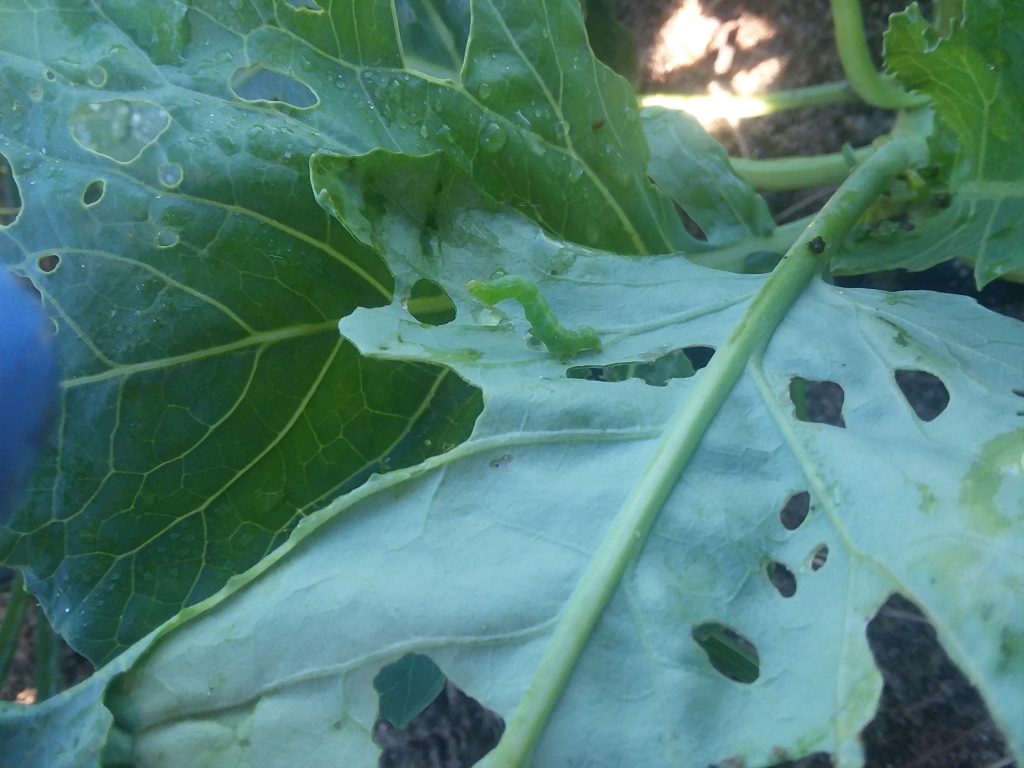
    Justin Ballew reports, “These cooler temperatures that have arrived following the rain feel great, but they are going to slow crop development some. Folks are already picking fall brassicas, though some may be a little small. Just trying to keep up with demand. There are plenty of caterpillars out there. I’m seeing diamondback moths (of course) as well as cabbage loopers and a few corn earworms. Be sure to rotate your insecticides when spraying for caterpillars. Folks are continuing to prep fields for the rapidly approaching strawberry season.”

    Cabbage loopers are showing up. Loopers frequently rear up like a cobra when disturbed. Photo from Justin Ballew

    Pee Dee

    Tony Melton reports, “Rain, rain, rain. It came quickly, so most drained off quickly, if drainage was adequate. Need to dig sweet potatoes as quickly as possible to keep down the amount of rot. Greens, pickles, and peas are struggling to survive the rain – some are drowned. Ponds are back in the fields. Some strawberry plastic is already down, but the rest of the folks are just beginning this week. Transplants are scarce and most likely will be late getting here this year. 

    Upstate

    Kerrie Roach reports, “There has been a significant rise in wine grape production interest over the last month or two in the Upstate. Each week seems to bring another caller asking for recommendations. While climates here are relatively good for grape production overall, high humidity and heat make disease control difficult. Pierce’s Disease is one of the deadliest to deal with; prevention requires intense insect vector control and control means the complete removal of the affected plant. Recent studies have brought new cultivars to the forefront which are helping southern growers become more successful in this niche industry.

    ‘Traminette’ with leaf scorch symptom of Pierce’s Disease. Photo from Kerrie Roach.
  • Sally’s Impact on Alabama, Georgia Pecan Production

    UGA photo/Shows flooding in a pecan orchard.

    Georgia pecan farmers escaped serious damage last week following Hurricane Sally’s trek through the Southeast. Alabama producers were not so lucky, however.

    University of Georgia Extension pecan specialist Lenny Wells said Baldwin County, the heart of Alabama’s pecan production, was one of the counties hit hardest by Sally’s Category Two Hurricane status. According to the UGA Extension pecan blog, Wells said he has spoken with growers and pecan specialists in the area. The damage is worse than Hurricane Ivan in 2004.

    “From the ones I’ve talked to down there, they’re going through the same thing we went through with Michael (in 2018) and the same thing they’ve been through before with Ivan and so many other storms,” Wells said. “It sounds pretty bad over there. I think it’s worse on one side of the bay than the other. I think the east side of the bay got the worst of it. But it’s pretty bad.”

    Growers reported 25% to 75% of their trees down. That area received more than 20 inches of rain with 100 mph winds. Trees were laid on the ground and leaves and nuts were knocked off trees.

    Impact on Georgia pecans

    While Alabama producers were dealt a double whammy with excessive rainfall and high winds, Georgia’s pecan orchards experienced mainly flooding. There was between 6 to 8 inches of rainfall in some areas, according to the UGA Extension pecan blog.

    “There wasn’t a lot of wind damage that I’ve heard about or seen yet,” Wells said.

    Wells said this development may delay some growers from getting into orchards where Pawnees were ready for harvest. That is normally the earliest variety that is harvested. The remaining varieties will be ready in a few weeks.

    “We’re probably three weeks away, maybe two, but two to three weeks away from really getting started with Elliott and some of the early October varieties that we harvest. Probably by mid-October, I imagine everything will be ready this year,” Wells said. “Crop is a little early.”