According to Georgia Farm Bureau, Rep. Sanford Bishop (D-Ga. 2nd District) and Sen. Kelly Loeffler (R-Ga.) each announced funding for Georgia agricultural research.
On Oct. 16, Bishop, chairman of the U.S. House Appropriations Subcommittee on Agriculture, Rural Development, Food and Drug Administration, and Related Agencies, provided funding for pecan and peanut research in the FY2021 Agriculture Appropriations bill.
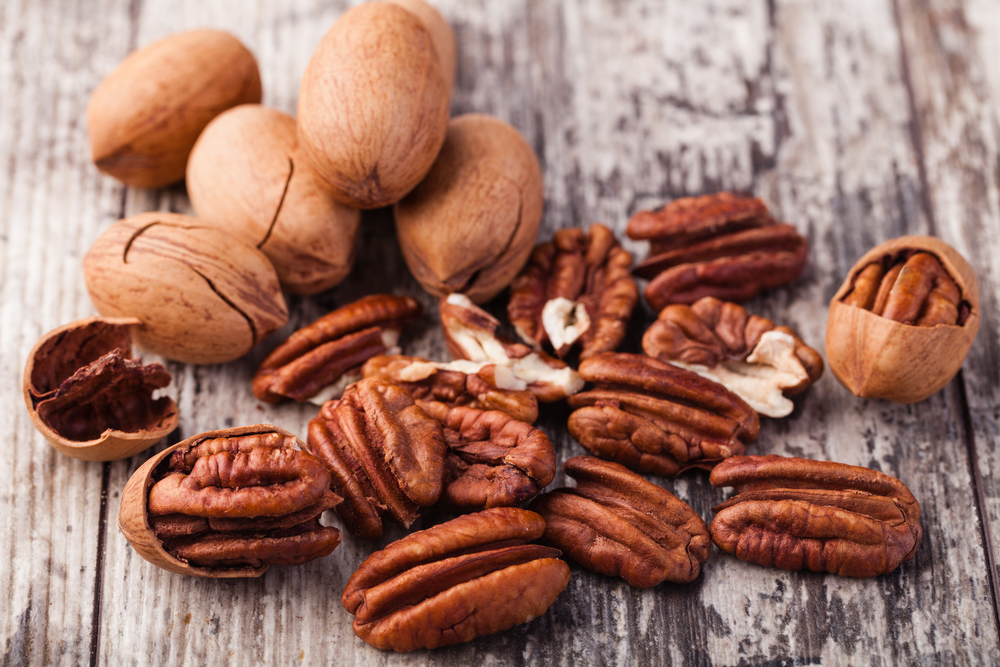
The bill included 1.5 million for research on pecan cracking and pasteurization technology, $1.5 million for pecan breeding and genetics research and $1.51 million for aflatoxin research at the ARS Peanut Lab in Dawson and Fort Valley State University.
“One of the most important things to me as the agriculture appropriations chairman is making sure the crops we grow here in Georgia continue their massive contributions to our local, state, and national economies while also feeding our citizens nutritious food,” Bishop said. “Pecans and peanuts are very healthy and are also two of our largest agricultural exports as a state.”
Loeffler
On Oct. 22, Loeffler, a member of the U.S. Senate Committee on Agriculture, Nutrition and Forestry, announced the University of Georgia will be receiving $323,834 from the USDA National Institute of Food and Agriculture to research and improve crop protection and pest management. The grant will allow UGA to study and develop tools to resist the diamondback moth, which causes severe damage to crops in Georgia’s agriculture regions.
“Farmers are the backbone of Georgia and this nation, and they deserve all the help and resources they can get to ensure their crops are protected,” Loeffler said. “I applaud USDA for awarding UGA with this grant, which will bolster its premier agriculture research program – which is already a leader in the nation – and help safeguard Georgia crops from the diamondback moth and other threats for years to come.”
When Patricio Muñoz developed the University of Florida’s newest blueberry variety, he wanted to name the fruit in honor of Alto Straughn, a longtime, strong supporter of UF’s blueberry breeding program.
Muñoz decided to call the new variety the ‘Sentinel.’
“A ‘sentinel’ is a watcher or guardian,” said Muñoz, a UF/IFAS assistant professor of horticultural sciences. “It is symbolic. We came up with the idea to name the blueberry after Alto because he ‘watched and guarded’ the blueberry breeding program for many years.”
For years, Straughn, an alumnus of the UF/IFAS College of Agricultural and Life Sciences and a former UF/IFAS Extension administrator, owned blueberry farms near Waldo, Florida, northeast of the main UF campus in Gainesville.
Now in his 80s, Straughn still meets regularly with the UF/IFAS blueberry breeder.
“Since I arrived at the program, Alto and I have discussed much about blueberries: cultivars, production, packing, marketing and more,” said Muñoz. “Alto has seen the industry from the beginning, and I am glad he has shared all that information with me and the blueberry breeding program team.”
Scientists first tested the new UF/IFAS variety on Straughn’s farm in Waldo, and later in fields stretching as far south as Arcadia, Florida.
“So, we have determined that the best area for its production is the central and northern parts of Florida,” Muñoz said.
Blueberries are about a $60 million-a-year industry in Florida. To put the impact of blueberries into further economic perspective, Florida’s blueberry farmers produce about 10 to 12 million tons annually in Florida, according to the U.S. Department of Agriculture’s National Agricultural Statistics Service.
The new blueberry variety ‘Sentinel’ increases the farmers’ yield for central and northern Florida. It’s a low-chill southern highbush variety. UF/IFAS breeds southern highbush blueberries, which are synonymous with low-chill and can be grown in the South, Muñoz said.
It’s a higher quality fruit than previous UF/IFAS cultivars. It also gives the grower fruit at the best market window, Muñoz said.
And it tastes good. This variety was tested in multiple flavor panels at UF, and they rated ‘Sentinel’ “high” regarding flavor, Muñoz said.
The release of the new blueberry variety couldn’t come at a better time, Muñoz said.
“While 2020 has been a tough year – with hurricanes and COVID, among other issues — some good things are still happening, including a new blueberry that farmers and consumers will both enjoy,” Muñoz said.
According to Alabama Extension, the demand for organic crop production has experienced an upward trajectory in recent years. This increasing demand means there is a need for more farmers to produce organic vegetables at a reasonable cost, while also being environmentally sustainable.
For these producers, insect pest management is one of the aspects where they must watch their costs and consider the environmental impact of the management strategies they implement. Luckily, there are several integrated pest management (IPM) practices that can help producers do both.
Pest Exclusion Systems
Vegetable production in the Southeast already comes with risks, as insect pests threaten crops from seedling to harvest. According to surveys of specialty crop producers, potential crop losses from pest feeding average 55%. Crop contamination from insect excrement and other factors can also affect farm profits. These are referred to as the yield-limiting and yield-reducing factors, which all depend on how the crop is managed.
IPM practices, such as pest exclusion, can help with these factors.
Pest exclusion is based on the practice of physically blocking insects from reaching their host plants and is often overlooked by producers. Moths and large pests, such as stink bugs or leaffooted bugs, can be good targets of a well-designed pest exclusion system, especially on small acres with intensive vegetable production. There are two types of pest exclusion systems; temporary and permanent.
Temporary, or time-limited, systems are suitable for early season pest management to protect seedlings.
Permanent pest exclusion systems are a more intense use of pest exclusion fabric that provides season-long crop protection in high tunnels. This is called the high tunnel pest exclusion (HTPE) system, which is being intensively evaluated at 14 farm locations across Alabama.
There are numerous benefits that a pest exclusion system can offer in an organic vegetable production.
Short-term or season-long pest reduction.
Variable cost depending on material and design of the system.
Minimal training for implementation.
Growth and season extension from use of insect barrier fabric.
Overall reduction in the use of biorational insecticides with increase in natural enemy activity.
It’s important to note that not all crops and varieties may lend themselves to pest exclusion systems. Contact the Alabama Extension commercial horticulture regional agent in your area before making a major purchase decision. It is recommended that pest exclusion systems be integrated with the use of insect monitoring systems or traps and natural enemies for practicing true IPM.
Organizers of the Florida Ag Expo, an annual trade show with educational seminars for vegetable and specialty crop growers, have decided to forego this year’s event amid COVID-19 concerns.
“While we see businesses re-open and people are returning to a sense of normalcy, we know that has only been made possible by everyone doing their part. Therefore, we made the decision not to go forward with this year’s show,” said Robin Loftin, president of AgNet Media.
“The Florida Ag Expo brings attendees from across the state and beyond. While we would love to host those attendees for another great event, we believe attendees’ health and safety must come first.”
Event Details
Rechcigl
Hosted at the Gulf Coast Research and Education Center (GCREC) and managed by AgNet Media, the Florida Ag Expo is an annual gathering of growers and industry leaders. The one-day educational and networking event includes a full schedule of field tours, research presentations and a trade show.
“Due to the pandemic, we are unfortunately having to cancel this year’s Florida Ag Expo,” says Jack Rechcigl, professor and director of the University of Florida Institute of Food and Agricultural Sciences Gulf Coast Research and Education Center and Fort Lauderdale Research and Education Center.
“However, next year, we will have the expo at the regularly scheduled time (Nov. 17, 2021).”
The Florida Ag Expo began in 2006 after the GCREC opened in 2005 in Wimauma, Florida. AgNet Media managed the first Florida Ag Expo in 2019 when record attendance was achieved.
Mark your calendars for the 2021 Florida Ag Expo on Nov. 17, 2021. More details will follow.
According to N.C. State Extension, North Carolina State University experts will lead a national project for COVID-19 research and outreach to the food sector with a $1 million grant from the U.S. Department of Agriculture.
“We really want to help the food sector make decisions based on the best available science, fill knowledge gaps and provide specific training,” said Ben Chapman, NC State University professor and Food Safety Extension Specialist. “This project will allow us to expand on work we started in March, coordinating a response to investigate virus persistence and other topics including the efficacy of face coverings for workers such as cashiers.”
The two-year grant through the National Institute of Food and Agriculture will support FoodCoVNET, a network of researchers at NC State University, Rutgers, the State University of New Jersey, the University of Florida, and the University of Nebraska-Lincoln.
Focus of Study
Scientists will focus on understanding the risks and best practices to address virus transmission between people in food settings like restaurants, produce packing facilities, and food manufacturing settings. FoodCoVNET collaborators will quantify viral transfer to and from hands, foods, and surfaces, as well as testing the effectiveness of disinfecting strategies. The team will test the viral persistence on foods, packaging, and food preparation surfaces under a range of pH levels, temperatures, humidities, and storage conditions.
“While we understand generally that the biggest risks in SARS-CoV-2 transmission are person-to-person, the food sector has challenges in physical distancing, managing airflow, and disinfection of high-touch surfaces,” said Michelle Danyluk, University of Florida professor of food science. “Evaluating the effectiveness of strategies with specific situations in mind, such as in produce packing facilities or in transport can hopefully lead us to help manage the devastation this pandemic has created within the food industry.”
Research Results
Results of the research will be used to develop COVID-19 training and educational materials for food handlers at each step from the farm to the final consumer. The grant team, which includes experts in food safety, virology, food production, microbiology, and science communication, began working together early in the pandemic to fill a critical need for information on how to keep food handlers and customers safe.
“There was a lack of food sector-specific information in March that led to our team to come together to evaluate messages that were being distributed by others and create our own,” said Don Schaffner, extension specialist in food science and distinguished professor at Rutgers, the State University of New Jersey. ”There continues to be a huge need to screen, distill, and translate the firehose of data on viral persistence and transfer into usable recommendations for the food industry.”
Research-based practices helped the restaurant industry reopen at a time when an estimated 8 million restaurant employees were out of work, said the National Restaurant Association’s Lawrence J. Lynch, who serves as president of the National Registry of Food Safety Professionals and senior vice president for certification and operations.
“As this virus continues to impact lives, it is critical to partner in finding scientifically valid responses to reduce or eliminate the risk of the virus while allowing businesses the opportunity to rebuild, for employees to return to work and for the public to safely dine,” Lynch said.
The project will study and share recommendations to prevent transmission of the novel coronavirus at every stage of food production, “from the farm to the consumer and all the steps in between,” said Byron Chaves, assistant professor and food safety extension specialist at the University of Nebraska-Lincoln. “We will conduct laboratory-based studies to better understand viral behavior under different conditions and what that means for producers, food processors, and retailers.”
Other Industry Partners
Other industry partners the team works with include the Food Marketing Institute and the American Frozen Food Institute.
“Through this grant, we’ll continue to work closely with our industry partners to find and fill the gaps in data and offer practical guidance to help prevent the spread of COVID-19,” Chapman said. “This pandemic is most certainly a watershed moment for the world of public health, health, science, communication, and epidemiology, and that has spilled over into the world of food safety.”
WASHINGTON, Oct. 28, 2020 – The U.S. Department of Agriculture (USDA) is reminding communities, farmers, ranchers and small businesses in the path of Hurricane Zeta that USDA has programs that provide assistance in the wake of disasters. USDA staff in the regional, state and county offices stand ready and are eager to help.
Perdue
“Our neighbors in the Gulf have endured a devastating Hurricane season this year, and I’ve been awed by their resilience,” said U.S. Secretary of Agriculture Sonny Perdue. “We ask everyone in the path of the storm to again prepare, and to rest assure that this Administration will stand by them to provide all the assistance we can, for as long as they need.”
USDA has partnered with FEMA and other disaster-focused organizations to create the Disaster Resource Center, a searchable knowledgebase of disaster-related resources powered by subject matter experts. The Disaster Resource Center website and web tool now provide an easy access point to find USDA disaster information and assistance.
Food Safety During an Emergency
Power outages from severe weather could compromise the safety of stored food. USDA encourages those in the path of the storm to take the following precautions:
Store food on shelves that will be safely out of the way of contaminated water in case of flooding.
Place appliance thermometers in the refrigerator and the freezer to ensure temperatures remain food safe during a power outage. Safe temperatures are 40°F or below in the refrigerator, 0°F or below in the freezer.
Freeze water in small plastic storage bags or containers prior to a storm. These containers are small enough to fit around the food in the refrigerator and freezer to help keep food cold.
Freeze refrigerated items, such as leftovers, milk and fresh meat and poultry that you may not need immediately — this helps keep them at a safe temperature longer.
Consider getting 50 pounds of dry or block ice if a lengthy power outage is possible. This amount of ice should keep a fully-stocked 18-cubic-feet freezer cold for two days Group foods together in the freezer – this ‘igloo’ effect helps the food stay cold longer.
Keep a few days’ worth of ready-to-eat foods that do not require cooking or cooling.
Protecting Livestock During a Disaster
USDA’s Animal and Plant Health Inspection Service (APHIS) is urging everyone in the potential path of the hurricane to prepare now – not just for yourselves, but also for your pets and your livestock.
Plan for evacuation – know how you will evacuate and where you will go. If it is not feasible to evacuate your livestock, be sure to provide a strong shelter and adequate food and water that will last them until you can return.
If you are planning to move livestock out of state, make sure to contact the State Veterinarian’s Office in the receiving state before you move any animals. You may also contact the Animal and Plant Health Inspection Service (APHIS) Veterinary Services state offices for information and assistance about protecting and moving livestock.
Listen to emergency officials and evacuate if asked to do so.
Helping Producers Weather Financial Impacts of Disasters
Livestock owners and contract growers who experience above normal livestock deaths due to specific weather events, as well as to disease or animal attacks, may qualify for assistance under USDA’s Livestock Indemnity Program. Livestock, honeybee and farm-raised fish producers whose mechanically harvested or purchased livestock feed was physically damaged or destroyed; or who lost grazing acres or beehives due to an extreme weather event may qualify for assistance. Producers of non-insurable crops who suffer crop losses, lower yields or are prevented from planting agricultural commodities may be eligible for assistance under USDA’s Noninsured Crop Disaster Assistance Program if the losses were due to natural disasters.
A Center for Produce Safety grant will fund University of Georgia (UGA) research aimed at studying human norovirus and its impact on leafy vegetables, in particular, lettuce.
Malak Esseili, an Assistant Professor at the Center for Food Safety on the UGA Griffin campus, is the lead investigator in the project, which spans from Jan. 1, 2021 through Jan. 1, 2023. Her objective is to study the survival rate of human norovirus in river water, which is commonly used in agricultural irrigation; analyze its die-off rate in relation to E. coli (a standard water quality fecal indicator organism); determine the survival of infectious virus on lettuce under pre-harvest; and on post-harvest lettuce following chlorine washes.
Human Norovirus Top Food-Borne Pathogen
Esseili
“Norovirus in the U.S. is the No. 1 food-borne pathogen; 58% of foodborne illnesses are caused by human norovirus. It’s very prevalent, but there is unfortunately no vaccine or antiviral drugs to treat norovirus infections. Most of the foodborne outbreaks, historically, are associated with leafy greens, particularly lettuce or frozen berries, such as strawberries. If it’s frozen, the virus will likely be preserved,” Esseili said. “It’s really important to understand whether norovirus on leafy greens, such as lettuce, remains infectious or not and to what level.”
Understanding Norovirus
She said that the human norovirus is excreted with feces. If infected, sick people can shed the virus in their feces, and all the feces travels down the sewer to a treatment plant. But the treatment plant is not 100% effective in removing this virus. This leads to contaminated river water, which can be used in watering crops like lettuce.
“The water that comes out after the treatment of human waste, that water is called effluent, and it goes into a river. Many studies around the world have detected genetic material of the virus in river water. However, because we did not have a cell culture method for norovirus, we could not determine whether finding virus-specific genetic materials indicate the presence of infectious virus or not. We don’t know how long the virus remains infectious in river water and this is what my grant will also be looking at,” Esseili said.
Esseili’s Experiment
Esseili said that her experimental work will consist of growing lettuce in greenhouses and adding drops of the virus on the lettuce leaves in small quantities. Then, she will monitor the infectivity of the virus using a recently discovered cell culture method for human norovirus. Some of the basic questions she wants to answer are, does the pathogen survive and for how long? And will regular water clean it off or does it require a sanitation step such as chlorine washings.
This research will help prevent illnesses associated with norovirus. It’s such a dangerous pathogen that even a low dose can be problematic.
“If you have even low quantities of the virus on the leafy greens or berries and the person eats it, there is a chance the person will get infected,” Esseili said.
Zeta, a tropical system and an expected hurricane once it reaches the U.S. by Wednesday, is churning in the Gulf of Mexico and is expected to move across the Southeast later this week. According to the UGA Extension Viticulture Blog, Pam Knox, University of Georgia Cooperative Extension Agricultural Climatologist, said there will be some rain and gusty winds from that system as it moves through the area after making landfall in Louisiana.
Knox
At the same time, a low-pressure center is expected to move through the Southeast region. This would bring more rain to the Ohio and Tennessee River valleys. It could include up to several inches of rain in the more mountainous regions of the region.
“Cooler temperatures are expected this week due to the cold fronts that are now starting to move through the region. However, the coldest air, which is bringing snow and single-digit temperatures to the northern Plains, is not expected to get to the Southeast. I don’t see any signs of frost in the next couple of weeks,” Knox said.
This would be welcomed news for vegetable growers, like Sam Watson in Moultrie, Georgia, who are still harvesting their fall crops.
Chances are, if you live in northeast Georgia you’ve come across an East Asian Joro spider this fall.
At almost 3 inches across when their legs are fully extended, they’re hard to miss. While they’re roughly the same size as banana spiders and yellow garden spiders, the distinctive yellow and blue-black stripes on their backs and bright red markings on their undersides are unique. Their enormous three-dimensional webs are a striking golden color and tend to be located higher off the ground than those of other spiders.
“We’ve been getting lots of calls and emails from people reporting sightings,” said Byron Freeman, director of the Georgia Museum of Natural History. “They seem to be really common in riparian areas and in urban areas around people’s houses, but they’re also in the deep woods.”
Joro spiders have spread widely since they were first spotted in Hoschton, Georgia, in 2013. They probably arrived by hitching a ride in a shipping container from China or Japan, according to Freeman. He and Richard Hoebeke, associate curator of the museum’s arthropod collection and a research professional in the University of Georgia College of Agricultural and Environmental Sciences Department of Entomology, confirmed the identity of those early arrivals based on genetic analysis in 2015.
Now, five years later, Joro spiders appear to have successfully established themselves in the area, with recent confirmed reports from as far afield as Blairsville, Georgia, and Greenville, South Carolina. But there is still much that remains unknown about them.
One important question is how they might affect the local ecosystem. Will they out compete other orb weaving spiders? Will they reduce insect populations through predation?
“We don’t know what the impact is going to be,” said Freeman, a faculty member in the University of Georgia Odum School of Ecology. “Right now, we’re trying to learn as much as we can about them.”
So far, early observations indicate that Joros are coexisting with the area’s other orb weaving spiders, with webs close to, and in some cases even attached to, one another.
And Joro spiders also appear to be able to capture and feed on at least one insect that other local spiders are not: adult brown marmorated stink bugs, an invasive pest that can infest houses and damage crops. In turn, Joro spiders are vulnerable to predators like mud dauber wasps and birds.
Freeman noted that dewdrop spiders, a kleptoparasite—as the name implies, they steal food from others—have been spotted in Joro webs.
“They may be switching from what we thought was their principal host, the banana spider, to this new kind of orb weaver,” he said. He pointed out that banana spiders, a relative of the Joro, are native to the Caribbean and Central America. They were first recorded in the U.S. in 1862 and have since naturalized.
“My guess is that this will be no different than the banana spider, and I don’t know that we can assess what the effect of the banana spider has been at this point,” he said.
Another question Freeman hopes to answer is how the males find their mates.
Joro spiders travel by ballooning, letting the wind carry them on a strand of gossamer.
“The male has to drift in and find the female,” Freeman said. “Sometimes there’ll be four or five males on a web, sometimes there’ll be one, so the males are moving between webs. When you have a large population it seems feasible that a male could just drift from one spot to the next, but when you don’t have a lot of webs around, how does the male show up?”
Freeman is also conducting further genetic analysis to determine what causes some Joro spiders to have a different color pattern. While most have distinctive black and yellow striped legs, some have legs that are solid black. These black morphs have other physical differences that are only apparent when viewed under a microscope, and Freeman has determined that they are genetically distinct members of the species.
Despite their size, Freeman said that Joro spiders don’t pose a threat to people.
“All spiders have venom that they use to subdue prey,” he said. “If you put your hand in front of one and try to make it bite you, it probably will. But they run if you disturb their web. They’re trying to get out of the way.”
Freeman said that Joros can be shooed away with a broom if they’re in a location that puts them too close for comfort.
But as for removing them permanently, he compared such efforts to shoveling sand at the beach.
“Should you try to get rid of them?” said Freeman. “You can, but at this point, they’re here to stay.”
If you spot a Joro spider — especially if you can provide a photo tagged with date and location — please contact Hoebeke at rhoebeke@uga.edu.
The time to plant pecan trees is nearing for Georgia producers. Shane Curry, University of Georgia Appling County Extension Agriculture and Natural Resources agent, offers a plethora of options for growers to choose from.
According to Appling County Crop E News, there are multiple varieties that are very popular and viable options for any farmer in Georgia.
Avalon is one of the newer varieties that was bred by University of Georgia scientist Patrick Conner and became available around 2017. It has excellent percent kernel, about 47 nuts per pound and is about the size of the Desirable variety. Maybe most importantly, it is highly resistant to scab disease.
Curry
Lakota is another popular option that requires very little input. However, Pawnee is one of its best pollinators and is one of the most scab susceptible cultivars available on the market. Pawnee can require as many as 15 sprays for scab during the growing season. Lakota and Pawnee are also the earliest varieties we plant in Georgia, which can bring the highest prices on the market at that time of year, which is in late September and into October.
Curry said Cape Fear is one of his favorites, though, it is not a low input variety. It will require spraying but yields and quality make it a variety worth planting. It is susceptible to bacterial leaf scorch, and quality can be affected when the tree overloads as it matures. But fruit thinning can help with that problem.
Excel is another variety that requires low inputs and has good scab resistance. Pecan planting is usually done during December and January when the trees are dormant.