Author: Clint

  • UF/IFAS Extension Farm Labor Education Program Online in English, Spanish

    UF/IFAS photo/Combines harvesting a crop of peanuts. Photo taken 08-22-19.

    By: Lourdes Rodriguez, 954-577-6363 office, 954-242-8439 mobile, rodriguezl@ufl.edu

    FLORIDA. – The fall crop season is underway in Florida and over the next few months, an increase in the farmworker population will help plant, maintain, and harvest our crops in the Sunshine State. Agriculture is an essential industry where farmworker safety is paramount to the successes underlying timely and efficient crop production activities.

    For the first time, free online resources along with a required certification course are also available in Spanish, putting safety in the hands of non-English-speaking agricultural workers and pesticide handlers through a statewide program led by the University of Florida Institute of Food and Agricultural Sciences (UF/IFAS) Extension.

    The program, UF/IFAS Extension Farm Labor Education, is part of UF/IFAS Extension Online Learning, is a central source for online training and professional development opportunities related to agriculture, natural resources, youth and families, and communities. These continuing education and non-credit courses and educational modules are developed by UF/IFAS experts in a variety of fields throughout the year. New research-based courses and modules are continually added to the catalog of offerings.

    For the first time, the Worker Protection Standard Train the Trainer (WPS TTT) certification course is available online in both English and Spanish as part of the Farm Labor Education program. This course provides the WPS TTT Certificate that is required by the Environmental Protection Agency (EPA) to train agricultural workers and pesticide handlers. The program also provides a free, self-paced, online review option that allows one to download the “How to Comply” WPS documents.

    The Farm Labor Education Program also offers farm safety videos. These training videos are designed to comply with safety standards and enhance agricultural worker learning experiences. Videos promoting safety with tractors, ladders, citrus harvesting, tomato production, field sanitation, food safety, and sugarcane harvesting are also available in Spanish.

    “This is the first-ever online and EPA-approved Worker Protection Standard Train the Trainer certificate for Florida, which we have developed in partnership with the Florida Department of Agriculture and Consumer Services (FDACS),” said Cesar Asuaje, a UF/IFAS regional specialized extension agent in farm and pesticide safety based at UF/IFAS Extension Palm Beach County.

    “Given COVID restrictions that prevented traditional in-person group trainings over the past seven months, the opportunity to earn the FDACS-approved WPS Train the Trainer Certificate through the on-line platform is timely,” added Asuaje. “With the crop season up and running, it is also the time when the agricultural community is challenged with getting their workforce trained up for the upcoming growing season, which makes the timing of this on-line WPS training opportunity particularly relevant.”

    For more information, visit the UF/IFAS Extension Farm Labor Education site at https://ifas-farmlabor.catalog.instructure.com/ or contact Cesar Asuaje at 561-233-1727 or by email at crasuaje@ufl.edu.
  • Georgia 2021 Hemp Applications to Be Accepted in January

    hemp
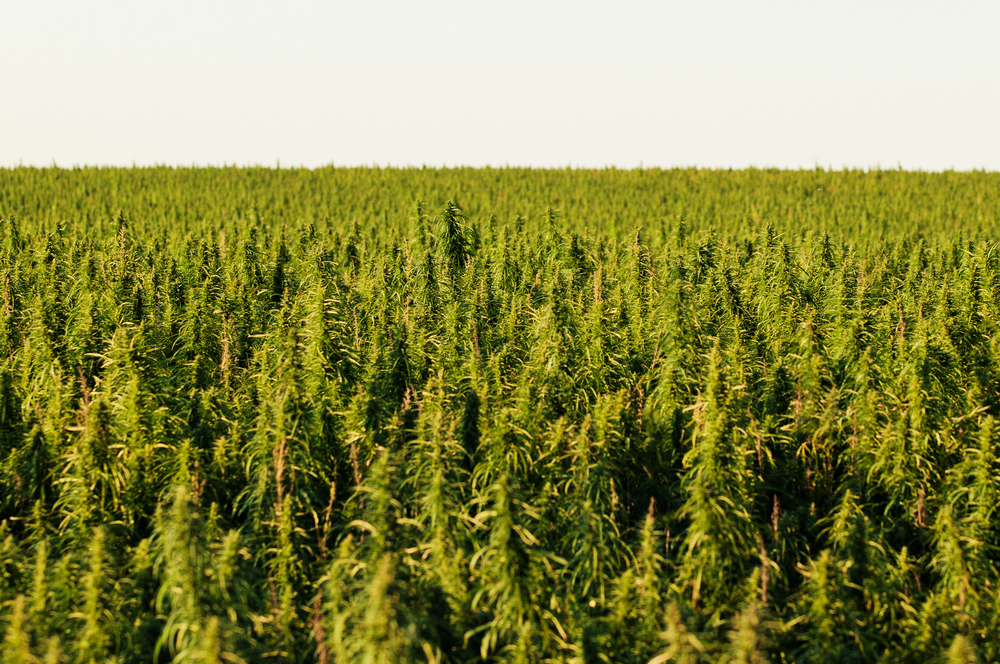
    File photo shows hemp field.

    Georgia’s 2020 hemp season is nearing an end as harvests wind down across the state. It’s never too early, though, to start thinking about next year’s production season.

    According to the Georgia Department of Agriculture (GDA), applications for new Georgia hemp grower licenses and hemp processor permits will be accepted beginning in January, 2021.

    Growers licensed by the GDA are authorized to grow and handle hemp in Georgia.

    For More Information

    Current Georgia hemp grower licensees and hemp processor permittees can contact hemp@agr.georgia.gov for renewal information.

    Under the authority of the Georgia Hemp Farming Act, the Georgia Department of Agriculture is authorized to regulate the cultivation and processing of hemp in the state of Georgia.

    Mike Evans, the director of plant industries who oversees the hemp program at the GDA, said they had received 166 applicants from farmers who were interested in growing hemp in early April.

    Within Legal Limits

    According to Tim Coolong, associate professor in the University of Georgia College of Agricultural and Environmental Sciences, the state’s hemp producers stayed within the legal parameters of hemp production.

    What distinguishes hemp from marijuana is the amount of THC or tetrahydrocannabinol present in the plant. It is the main compound in cannabis that produces the “high” sensation.

    Legal hemp must contain no more than 0.3 percent of THC. Otherwise, the THC is at an unacceptable level, and the crop must be destroyed. That doesn’t appear to have been the case this year, though.

  • Hemp Research Key to Industry’s Growth in Alabama

    hemp program
    File photo shows hemp.

    Hemp research is still in its infancy across the Southeast. But as more data is developed and information is processed, an already growing market could continue to explode in popularity.

    “If you look around the country, there’s now a Professor of Cannabis position open in Illinois. There’s one in Tennessee. There is money and energy going to research,” said Katelyn Kesheimer, Auburn University Assistant Professor and Extension Specialist.

    More Years of Research Needed

    More years of data are needed to provide growers the information they need to be successful long term.

    “In Alabama, we’ve had one year. It’s going to be a long road,” Kesheimer said. “Once we start working with fiber or grain, I think that’s going to be a whole another set of questions and information we can get out.”

    Kesheimer’s Research Focus

    Kesheimer said some of the research studies she has been a part of this year include a focus on fertility, plant spacing trials, phytotoxicity and insecticide efficacy research in the greenhouse; and weed control and ant control.

    It’s been a difficult growing season for Alabama hemp farmers. Fire ant swarms were a problem throughout the summer and into early fall. Low hemp quality has also been a concern with farmers, who just concluded harvesting their crop.

    Kesheimer said between disease, insects and late plantings, they contributed to the crop being less-than-stellar quality.

    She expects producers to be more aware and cautious moving forward. 

    “I think instead of just diving in head first they’re just waiting through and seeing. We don’t have all the answers yet, but I think people realize there are resources and to be more cautiously optimistic than anything, which is good. I hate for people to lose money,” Kesheimer said.

  • Mild, Wet Weather Leads to Rise in Downy Mildew Disease in Alabama This Year

    File photo shows downy mildew disease on melon leaf.

    Weather conditions in Alabama this year were conducive to plant diseases impacting the state’s vegetable crops. One disease, downy mildew, has been especially prevalent in fields across the state, according Ed Sikora, Alabama Extension Specialist and Professor in Entomology and Plant Pathology at Auburn University.

    “I put out about eight cucurbit downy mildew sentinel plots around the state. Most of these are at research stations, but I will monitor commercial fields occasionally. We were seeing it all year, from June up until, I was just in a field in the Dothan area and downy mildew was just hammering those crops. That disease probably pushed back yield on unprotected crops quite a bit,” Sikora said.

    He added that the mild and wet year, starting in the spring and continuing through the summer, contributed to a rise in downy mildew, as well as other diseases.

    “We’ve had adequate amounts of rainfall right throughout. We’ve seen a lot of disease pressure on a number of different crops; if it’s soybeans or corn or diseases of vegetables. About 85% of all plant diseases are caused by fungi, and about 99% of those like it warm and like it wet,” Sikora said. “Downy has just been a problem all year.”

    What is Downy Mildew?

    Cucurbit crops — like cucumbers, melons, squashes and pumpkins — are susceptible to downy mildew disease. It can destroy plant foliage and cause the leaves to curl and die. Without healthy leaves and vines, a plant is vulnerable to blisters and sunscald during hot days.

    “In the fall, we saw it mainly on pumpkins, probably winter gourds like butternut squash, it was very effective on. That disease will defoliate the plants and cut down on the photosynthetic area that helps build up those fruit,” Sikora said. “You lose foliage, too. You get sunscald on those fruit as well, which doesn’t help the marketability.”

    Alabama growers need to be aware of what downy mildew symptoms look like and the damage it can inflict on vegetable crops. The pathogen thrives in wet, humid conditions. It needs moisture on the surface of the plant for successful spore germination and further infection.

  • Hurricane Eta a Threat to South Florida Vegetables

    Graphic courtesy of weather.com.

    The latest hurricane activity to threaten the United States could impact South Florida vegetable production early next week.

    According to weather.com, Hurricane Eta is threatening to approach South Florida this weekend and bring rain, high winds or a combination of both as early as Monday morning.

    Vegetable producers are feeling anxious right now, says Gene McAvoy, University of Florida Regional Vegetable Extension Agent IV Emeritus, especially since they’re at the height of the fall season.

    “We’re watching it anxiously. No matter what happens, I’m sure we’re going to get a bag of rain out of it,” McAvoy said. “Even if it doesn’t directly hit Florida and we don’t have any wind; right now it looks like it will remain a tropical storm and not a hurricane; but there’s one model that has it coming into Southeast Florida as a Category 3 (hurricane) or more.

    “We’re anxious about it because we’re at the stage now where our crops are pretty far along.”

    What’s Being Harvested?

    McAvoy said farmers are harvesting eggplants, peppers, squash, cucumbers, herbs and specialty vegetables. They’ll begin harvesting tomatoes next week.

    “It’s a little different than if they’re baby plants and you can replant rather quickly. Even if (Eta) misses Florida completely, I’m sure it’s going to result in a lot of rain, and we don’t really need any. The past several tropical systems that went through the Gulf, while they didn’t directly impact us, they’ve pumped a lot of moisture into Florida and we’ve had a lot of heavy rains and flooding,” McAvoy said.

     “We’re approaching the height of the fall season. Our big market in the fall is Thanksgiving. The next couple of weeks are critical in Florida.”

    The state’s citrus crop could also be impacted.

    “Citrus, we’re not harvesting yet, but the fruit is big enough that if you do get a lot of wind, the fruit is big enough it could start swinging around on the trees and you’ll have a lot of fruit dropping on the ground,” he added.

  • Falling Pecan Prices Dishearten Growers Amid Bumper Crop

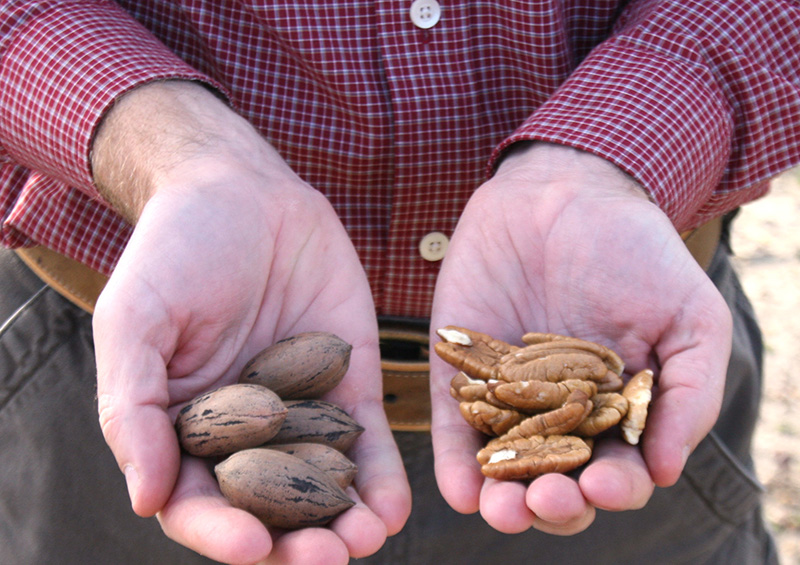
    Photo courtesy of UGA College of Agricultural & Environmental Sciences.

    It’s a disheartening feeling to know you have your best pecan crop in years only to face the worst market prices in at least the last 20 years. But that’s what pecan growers in Georgia are facing this fall, according to Lenny Wells, University of Georgia Cooperative Extension pecan specialist.

    As states like Georgia are currently harvesting a bumper crop, they’re encountering prices that have been a shock to farmers this fall.

    According to the latest USDA Pecan Report that was released on Tuesday, prices ranged anywhere from 70 cents to 75 cents per pound for Stuart varieties to Sumners that were selling for $1.30 to $1.41 per pound (nut count 50-60) with meat yield 52% to 54%. Even Desirable varieties that did not have to overcome heavy scab disease pressure this season are selling for just $1.35 to $1.40 per pound.

    Totally Unexpected

    “We knew (prices) would be lower, but I don’t think anybody expected it to go this low. I don’t know that it’s finished going down (either). I hope it is, and I hope we see some turnaround. There’s no way to know,” Wells said.

    How much farther can prices drop? There could potentially reach a point where pecans are not selling at all.

    “I think that’s probably the next step. I hope we don’t get to that point. It’s a scary situation for growers out there,” Wells said. “I think most all of them know about it now. But even as harvests were first starting, I think there were a lot of growers that didn’t realize that this was coming. Some did but most that did didn’t think it was going to get this bad.”

    Especially Frustrating for Growers Recovering from Michael

    It’s especially troublesome for producers considering the quantity of pecans there is this year. Some growers had pegged this season as a rebound year just two years removed from Hurricane Michael.

    “It’s especially frustrating for those guys down in Albany, Mitchell County, Bainbridge and that southwest corner who took such a hit from Michael. They dealt with that for two years; had their crop wiped out that year and not having much of any crop last year,” Wells said.

    Losing Scenario for Farmers?

    If you consider the input costs it takes to produce pecans every year, growers are going to lose money this year. It’s just a question of how much.

    “I did some crunching of some numbers the other day, just looking at the UGA pecan budget. It looked like to me that if you factored in your variable costs, your harvest costs, all of that added in together, the break-even price on pecans based on the UGA budget at around $1,800 per acre to grow pecans, was $1.53,” Wells added.

    “Last week, the average price (of pecans) was $1.44. I ran the numbers (Wednesday) morning with the new report that just came out (Tuesday) and it’s at $1.17 across all varieties. That includes Moneymakers and Seedlings and stuff like that.”

    “(Farmers) are hurting right now. They’re losing a lot of money right now.”

  • Commodity Commission for Wine & Grapes Accepting Nominations for Board Member Positions

    ATLANTA, GA– Nominations are currently being accepted to fill five board positions of the newly created Georgia Agriculture Commodity Commission for Wine and Grapes. Persons nominated must be active producers of wine and reside in the State of Georgia. The deadline for submissions is Friday, Nov. 27, 2020.

    Those interested may submit a nominee information form found at agr.georgia.gov/cpf, to Andy Harrison at andy.harrison@agr.georgia.gov or by fax at 404-656-9380.  Forms may also be mailed at:

    The Georgia Department of Agriculture

    Attn: Andy Harrison

    19 MLK Jr. Drive S.W.

    Room 320

    Atlanta, GA 30334

    The nominees will be vetted and certified to ensure they are active Georgia producers of this commodity in the appropriate geographic areas. Interested producers with questions may contact the Georgia Department of Agriculture at 404-586-1405.

    On August 3, 2020, Governor Brian Kemp amended the Georgia Agricultural Commodities Commissions Act by signing HB 1093 to establish an Agricultural Commodity Commission for Wine and Grapes. Georgia Agriculture Commodity Commissions are created by the Georgia Legislature. Furthermore, a market order of each commission is passed by the growers of that respective commodity which allows for assessments on the commodity to be paid by each of the producers of such commodity. These funds are used for research, education and promotion of the commodity. Members of the commissions make decisions on how funds are spent and programs the commission supports.

  • Very Low Prices for Georgia Pecan Producers

    Photo shows pecans being cleaned.

    Georgia pecan prices remain discouragingly low for farmers as harvest season is in full swing across the state. According to the USDA Pecan Report that was released on Tuesday, ranged anywhere from 70 cents to 75 cents per pound for Stuart varieties to Sumners that were selling for $1.30 to $1.41 per pound (nut count 50-60) with meat yield 52% to 54%.

    Elliott varieties (nut count 65-75) sold for $1.20 to $1.38 per pound with a meat yield of 50% to 53%.

    It’s important to note these prices are for in-shell pecans of good quality in lots of 20,000 pounds or less.

    For lots over 20,000 pounds, including truckloads; Desirable varieties sold for $1.25 to $1.46 per pound (nut count 45-51) with meat yield between 50% to 52%. Elliott varieties sold for $1.20 to $1.30 per pound (nut count 65-75) with a meat yield of 50% to 52%. Sumner varieties sold for $1.30 to $1.41 per pound (nut count 50-60) with a meat yield of 52% to 54%.

    The release stated that, “Growers are preparing their pecans to be tested and offering them for sale this week with many not making any deals or sales. They are either reoffered for sale or put into storage waiting until a price can be established and accepted by both sides. Purchases by shellers and domestic buyers are moderate to slow as well as retail gift pack purchases and it is expected to pick up before the Thanksgiving push for holiday sales. The export market is slow as compared to past years, especially the movement going to Asia.”

  • Alabama Extension Research Associate: Pecan Producers Took a Good Kick in the Guts

    Hurricane Sally damaged crops and structures along Alabama’s Gulf Coast when it hit Sept. 16. Cassebaum Farms in Lillian in Baldwin County sustained damage to its pecan crop during Hurricane Sally.

    What was potentially Alabama’s best pecan crop in years has been drastically reduced by two hurricanes.

    Alabama Extension Research Associate Bryan Wilkins estimates after Hurricanes Sally (in mid-September) and Zeta (last week), the state’s crop has been reduced to about 25% or less for this year.

    “This was the best crop we’ve had in years. We were probably looking at a heavy alternate bearing year next year, too. They’re going to be down for two years,” Wilkins said.

    That’s not even counting the future losses that are a result of trees being uprooted from heavy winds.

    “Zeta came right up through along the edge of Mobile County and into Washington County, down around Grand Bay…I had one guy tell me, ‘I’m going to put my shaker up because I sure don’t need it the rest of the year, they’re all on the ground,’” Wilkins said.

    “The further up in the state you get, the further east you get, they haven’t lost as much crop wise, but the quality has gone down. Some of them couldn’t get in to harvest, they got beat up in the wind.”

    Total Loss to Baldwin County

    Hurricane Sally delivered a total loss to pecan producers in Baldwin County, the state’s top pecan-producing county.

     “Baldwin and Mobile are the two major areas (of production). We’ve got some areas coming on like back over in the Wiregrass that got hammered with Hurricane Opal back in 1995. They’re recovering over there but they still don’t have the trees that we had over here,” Wilkins said.

    “It’s going to knock Baldwin County out of being the major producing county in this state, I think. We’re still trying to get counts right now.”

    But the biggest concern remains the impact these storms will have on the state’s pecan industry long-term. It’s a “generational” impact.

    “I’ve got one guy who lost, in one orchard, he lost 120 of them 90-year-old Stuarts. It’s generational. These guys that had those big trees, those 90-year-old trees or even 40-year-old trees, they’ll never see that yield again,” Wilkins said.

    “Their grandkids might or their kids. I don’t know how many of them are going to replant. I had a couple of them tell me they’re going to tend to what they’ve got left, but they’re not going to replant just because, right now they’re in their 60s, and by the time (the pecans) come online, they’ll be in their 70s.

    “They took a good kick in the guts. This one hurt.”

  • What a Difference a Year Can Make for Vidalia Onion Producers

    University of Georgia Extension photo/Some mid-September sown seedbeds in Toombs County growing nicely.

    What a difference a year makes for Georgia’s Vidalia onion producers. Last year’s weather conditions consisted of hot temperatures when growers were planting their seedbeds. That’s not been the case this year, however.

    “It’s been a real quiet year. Everything’s been going very well. This time last year we were dealing with really hot temperatures, some extreme. We think the plants have suffered some, but we’ve had really great conditions this year,” said Chris Tyson, University of Georgia Cooperative Extension Area Onion Agent at the Vidalia Onion and Vegetable Research Center in Lyons, Georgia.

    “Until (last Thursday) when we had some rain from the hurricane (Zeta) that came through; we actually got over an inch of rain in some places which was actually much needed; but we haven’t had a lot of rain to promote disease in the last several weeks.

    “We haven’t had much rain. We’ve had mild temperatures, everything has been going really good.”

    All Seedbeds Planted

    Tyson said all of the seedbeds have been planted. Some were planted as early as the first week in September, and it continued all the way to the end of September. The first seeds that were planted are likely to be transplanted this week on a limited scale. However, during the second or third week in November, transplantings will pick up and continue in December.

    Vidalia onion seeds are planted in a separate field from where they’ll be transplanted. Tyson said growers want the diameter of the plants to be as big around as a pencil. When they get to that size, farmers will pull them out of the ground off the seedbed and transplant them into the fields.

    High Population Density of Plants

    They grow seedbeds at a high population density with about two million seeds per acre. They’ll transplant between 85,000 and 100,000 plants per acre. An acre of seedlings leads to between 18 and 20 acres of transplanted fields. Vidalia onion producers utilize this planting strategy to protect against weed pressure.

     “When those plants are very small, we have a lot of weed pressure. We don’t have a lot of good herbicide options for those really small plants. What we do on our seedbeds, we use a type of fumigant to fumigate the soil and sterilize the soil to help kill off a lot of weeds and a lot of weed seeds,” Tyson said.

    “That’s expensive. That’s the biggest obstacle to just planting the seed in the field one time and being done with it is weed control. The costs and the labor to grow them that way, it’s a lot more intensive.”