Author: Clint

  • Hemp Production in Georgia a Success Despite Few Orders That Exceeded Legal Limit

    agriculture
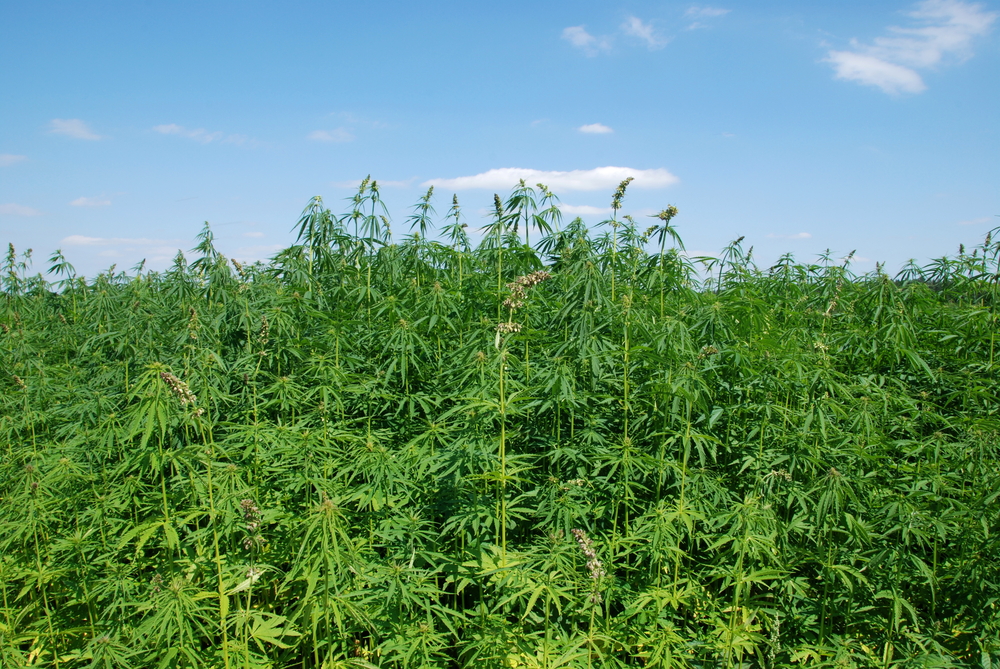
    File photo shows industrial hemp

    Georgia’s first year of commercial hemp production was a success, though, there were some growers who had plants that exceeded the 0.3 THC level required for crop production.

    Mike Evans, director of plant industries who oversees the hemp program at the Georgia Department of Agriculture (GDA), expects a big change next year to come with more frequent testing from the growers throughout the summer.

    “One thing I think the growers are looking at, they’re going to do more testing of their crop as the crop progresses and starts getting closer to maturity. Unfortunately, we had 17 disposal orders, where the hemp had been tested and found over the limit,” Evans said. “The retest said the same thing, so that cannabis needed to be disposed of. That was 11 growers, but that was a lower percentage than what several other states had their first year.

    “A lot of the growers said they’re going to be testing more frequently.”

    Hemp Statistics

    Evans said there 144 licenses issued in 2020 with 1,450 acres intended for hemp production and 186 greenhouses.

    “Talking with the growers, and I didn’t talk with everyone but a fair number, several of them were planting small acres. There were a lot of one to two acre plots. There were some others that had larger. But a lot of them were of the mindset, ‘I want to figure out how to do this in 2020, and then I’ll decide what I want to do after the season,’” Evans said.

    2021 Applications

    Renewal applications are being accepted now from farmers who grew hemp this year and are interested in producing it again in 2021. The deadline to renew a current license is Dec. 1. The Georgia Department of Agriculture (GDA) will begin accepting new applications for 2021 in January.

     “Overall, I think the first year was successful. From our perspective, we were able to issue licenses, and the growers were able to get the licenses and they were able to get a crop in the ground,” Evans said.

    According to the Georgia Department of Agriculture, under the authority of the Georgia Hemp Farming Act, the GDA is authorized to regulate the cultivation and processing of hemp in the State of Georgia.

  • Pruning tips for ornamental plants

    UGA CAES photo/Each plant in the landscape has its own growth habit and a different requirement for pruning. Some shrubs have dwarf growth habits and may never require pruning, while vigorous large-growing shrubs may require frequent pruning.

    By Brandon Crumsey for UGA CAES News

    To prune or not to prune, that is the question. Pruning is an important part of maintaining plant health and maximizing plant productivity. This is often a topic that brings fear and confusion, but pruning is, in fact, a beneficial and routine task.

    Ornamental plants in the home landscape are pruned for several reasons, including maintaining a desired size or shape; promoting healthy, vigorous growth, flowering or fruiting; and removing sections damaged by insects, disease or weather. Each plant in the landscape has its own growth habit and different requirements for pruning. Some shrubs have dwarf growth habits and may never require pruning, while vigorous, large-growing shrubs may require frequent pruning. Anyone can prune, but not everyone prunes properly.

    Improper pruning, or pruning at the wrong time of the year, can result in misshapen plants, reduced flowering or plants that are more likely to be damaged by insects, diseases or winter cold. Because flowering ornamentals form their flower buds at different times of year, pruning times must be adjusted accordingly.

    Many spring-flowering plants such as azalea, dogwood, forsythia, redbud and rhododendron set flower buds in the fall, so pruning during the fall or winter months eliminates or decreases their spring flower display.

    Plants that typically flower during the summer form flower buds on new growth and can be pruned during the winter with no effect on their flowering. However, sometimes plants may need to be pruned outside of these ideal windows to remove damaged or dead plant parts, to remove obstructions from windows or buildings, or to help stop the spread of diseases.

    As a general rule, plants that flower before May should be pruned after they bloom, while those that flower after May are considered summer-flowering and can be pruned just prior to spring growth.

    One exception to this rule is the oakleaf hydrangea, a summer-flowering shrub that forms flower buds the previous season.

    Another exception are late-flowering azalea cultivars, which bloom during May, June or July. Prune both the oakleaf hydrangea and late-flowering azalea cultivars after they bloom. Newer azalea varieties like the ‘Encore’ line, which bloom in the spring, summer and fall, don’t require much pruning — if any at all — as long as they are planted in the right place. At most, you may need to prune taller shoots back into the body of the plant immediately after spring flowering. ‘Knock Out’ roses start flowering in spring up until frost, but should be pruned back to about 12 inches to the ground in early spring, after the threat of last frost has passed, to help stimulate vigorous growth throughout the season.

    Other types of plants, like broadleaf evergreen shrubs, generally require little or no pruning at all because they usually develop a naturally symmetric growth habit when left alone, but late winter when they are dormant is usually a good time if pruning is desired.

    Pruning is only harmful to a plant if done incorrectly or at the wrong time. With the right information and confidence, pruning should become a normal part of your landscape maintenance routine.

    To learn more about pruning ornamental plants, see University of Georgia Cooperative Extension Bulletin 961, “Pruning Ornamental Plants In The Landscape,” and Bulletin 949, “Basic Principles of Pruning Woody Plants,” which can be found at extension.uga.edu/publications.

  • Prize-Winning Pumpkin Weighs in at More Than a Quarter Ton

    UGA CAES photo/Peyton Collins of Union County had the prize-winning pumpkin, weighing 548 pounds.

    By Austin Clark for CAES News

    More than 25 pumpkins were submitted to Georgia 4-H’s 2020 statewide pumpkin-growing contest, with the largest pumpkin, cultivated in north Georgia’s Union County, weighing in at a whopping 548 pounds.

    All Georgia 4-H youth were encouraged to participate by submitting one pumpkin for consideration. Participants took their entries to their local University of Georgia Cooperative Extension office for weighing. This year, the Georgia Fruit and Vegetable Growers Association sponsored the contest, donating prize money of $100 for first place, $50 for second place and $25 for third place.

    The winners of the 2020 Georgia 4-H Pumpkin Growing Contest are:

    1. Peyton Collins, Union County, 548 pounds
    2. Natalie Payne, Union County, 432 pounds
    3. Ava Sharp, Union County, 316 pounds

    Georgia 4-H empowers youth to become true leaders by developing necessary life skills, positive relationships and community awareness. As the largest youth leadership organization in the state, 4-H reaches more than 242,000 people annually through UGA Extension offices and 4-H facilities. For more information, visit georgia4h.org.

  • Popular UF/IFAS Vegetable Gardening Guide Available in Spanish and as an App

    Robbie Griffin of the Family Nutrition Program harvesting leafy greens being harvested from a vegetable garden. Photo taken 02-02-20.

    November 10, 2020

    By: Brad Buck, 813-757-2224, bradbuck@ufl.edu

    With COVID-19 lingering, it might be a good time to use your green thumb to grow some vegetables in your garden. While you’re at it, you can get help from the UF/IFAS Florida Vegetable Gardening Guide — now also in Spanish — and as a downloadable web app.

    Because we’re nearing the holidays, let’s look at some vegetables you can grow in November and December throughout Florida: beets, broccoli, Brussels sprouts, carrots, collards, kale, spinach and others.

    “It’s a great time to be growing veggies in Florida,” said Sydney Park Brown, co-author of the Florida Vegetable Gardening Guide. A just-released Spanish version is also available.

    The Vegetable Gardening Guide is a collaborative effort of faculty from three UF/IFAS departments: horticultural sciences, environmental horticulture and entomology and nematology. Danielle Treadwell, associate professor of horticultural sciences and Francisco Rivera, an agent for UF/IFAS Extension Hillsborough County, spearheaded the new Spanish translation.

    The Florida Vegetable Gardening Guide was created in the 1970s by Jim Stephens, a UF/IFAS professor emeritus of horticultural sciences. It has proven to be the most popular UF/IFAS Extension document year after year. Park Brown led an effort in 1999 to substantially revise the original guide, and it’s undergone several revisions since then.

    But the app really refreshes the approach to residential vegetable-gardening efforts.

    “The Florida Fresh web app offers a modern-day way to access the information in the vegetable gardening guide,” said Park Brown, a retired UF/IFAS Extension educator. “Gardeners simply enter their zip code, and the app generates a list of the vegetables that can be planted at that time of year and in that part of the state – whether that’s north, central or south Florida.”

    The free app also offers detailed information on each vegetable links to a host of helpful publications in the UF/IFAS Electronic Data Information Source (EDIS), and refers gardeners to UF/IFAS Extension experts in their county, and lots more, Park Brown said.

    “It also lists the Florida-grown veggies and fruits that are in markets at that time of year,” Park Brown said. “This part of the app was a collaboration with the Florida Department of Agriculture and Consumer Services’ ‘Fresh from Florida’ campaign.”

  • Clemson Extension Agents Provide Crop Updates

    Clemson Extension agents provided updates in The South Carolina Grower this week about the status of various crops being produced throughout the state.

    Weekly Field Update – 11/9/20

    Coastal

    Zack Snipes reports, “It seems like we experience fall and summer in the same day this time of year. I visited a few farms and saw residual damage from whiteflies (silver leaves, virus, and stunted plants). The good news is that overall populations of whiteflies are down this week. The armyworm numbers are still high in a lot of crops so keep an eye out for those. We have lots of good products for them so choose something other than a group 3 or 4 insecticide. I have seen some white mold (Sclerotinia sclerotiorum) in some brassica crops this week. I have some great reports from strawberry fields and other not so great reports. If you have issues, please call me so we can fix them before they get out of hand.

    White mold symptoms on Brussel sprout. Photo from Zack Snipes.

    Midlands

    Justin Ballew reports, “We had some very warm afternoons this past week. The air has been much drier as well. Young strawberries are responding well and have put out a good amount of new growth. Weak plants caused by J-rooting and deep planting are making themselves evident now. The drier air has allowed some growers to get a handle on the disease issues that have plagued us for the last few weeks. However, there is lots of warm, wet weather in the forecast, so plan your fungicide applications accordingly and rotate modes of action. Other crops are still growing well and we have folks picking tomatoes, squash, beans and various brassicas.

    All the strawberry plants in this small area were J-rooted and subsequently died. Photo from Justin Ballew.

    Sarah Scott reports, “Patchy frost brought an end to some fields of summer crops like squash and zucchini, however, most areas did not see damage from cold temps. Cole crops are progressing nicely, but insect populations are high this fall, including aphids and imported cabbage worms. Strawberry plants have gone in and are taking root and getting established.”

    Caterpillar populations have been high around the ridge this fall. Photo from Sarah Scott.

    Pee Dee

    Tony Melton reports, “Getting dry. Hope we get some rain later in the week. Greens are growing very fast with warm weather. Frost burned the very tops of some crops like sweet potatoes, tomatoes and peas but did not really hurt them much. Very little grasshopper pressure for some reason this fall.” 

  • Lobbyist: We Have to Send a Common Message

    Growers take steps to protect farmworkers’ health so they can continue to ensure an abundant, safe food supply is available to U.S. consumers. Image source: The Pajaronian

    One governmental lobbyist believes agricultural groups and organizations need to tackle issues together and not depend on Congress to devise its own playbook with topics that are trending across the country.

    This would lead to more touchdowns rather than missed opportunities.

    Bob Redding, who works for the Redding Firm and serves as a lobbyist for agricultural groups in Washington, D.C., believes agricultural groups from the west and southeast need to work cohesively on topics like H-2A reform especially during a time of transition in Congress and in the White House.

    Redding Comments

    Bob Redding with the Redding Firm speaks during the Ag Forecast meeting in Lyons, Georgia in 2018. By UGA CAES.

    “Every time we get into a new Congress and we start talking about an immigration reform package or Ag labor or H2A reform package, we have groups spring up to work on these things. This sends a very mixed message to members of Congress, particularly those who haven’t been around a while and haven’t been involved in this debate,” Redding said. “As you know, the frequency of members coming and going in Congress, not staying very long, staff coming and going; (there’s) less seniority and less tenure. It’s very confusing. We have each side come up. They do their fly-ins at the beginning of Congress, first or second quarter, and the messages are all different. Some are weighted heavier for the west. Some are heavier for the southeast.

    “We have to get together and send a common message. We can’t go to Congress and say, ‘We can’t figure out what to do. You fix it for us.’ That’s just not going to work. It hasn’t worked. We have a multi-year track record of failing on these initiatives. Until we figure that out from an industry perspective, we really aren’t going to make any progress on it.”

    H-2A

    H-2A refers to the temporary agricultural employment of foreign workers. According to the U.S. Department of Labor, Section 218 of the Immigration and Nationality Act Authorizes the lawful admission into the United States of temporary, nonimmigrant workers to perform agricultural labor or services of a temporary or seasonal nature.

    Redding said the administrative burden on H-2A is getting worse for employers who utilize the program.

    “If the new administration takes a different view on H-2A than the current administration, the administrative piece is going to get worse. We may see some reforms. We went from the (President Georgia W.) Bush administration to (President Barak) Obama’s first term, there were some reforms that were reversed at the Department of Labor,” Redding said. “This part could get more problematic for Ag employers if we don’t address something from the employer side through Congress. The pitch is in the first couple of quarters that growers from these two regions need to work it out.”

    According to a previous story in VSCNews, Florida was the largest user of the H-2A program during the first three quarters of the year with 28,005 certified positions. Georgia, another major user of the program, listed a little more than 23,000 certified positions.

    Updated Methodology

    Just recently, the Department of Labor updated the methodology for determining the annual Adverse Effect Wage Rates (AEWRs) in the H-2A program. The new rule improves the consistency of the AEWRs, provides stronger protections for workers and establishes better stability and predictability for employers in complying with their wage obligations.

  • GATE Renewal Now Open

    File photo shows spraying being done in the field.

    Annual renewal for the Georgia Agriculture Tax Exemption (GATE) program is now open. Eligible farmers can renew their GATE card for 2021 online starting Friday, November 6, 2020, by visiting https://forms.agr.georgia.gov/GATE/.

    GATE cardholders who are to renew in 2021 will automatically be placed on the new three-year renewal program and will receive their renewal invoice in 2024. All current cards will expire December 31, 2020. Cardholders currently on two and three-year renewals will receive their 2021 cards with the new expiration date of December 31, 2021, and do not need to renew or apply for the 2021 year.

    The GATE program was created through legislation to offer qualified agriculture producers a sales tax exemption on agricultural equipment and production inputs. Qualified farmers and agricultural producers can apply to receive a certificate showing that they are eligible for this exemption. Farmers are required to present the current year GATE Card at the time of each purchase.

    Producers needing assistance can contact the GATE program team at 855-FARMTAX or farmtax@agr.georgia.gov.

  • ADAI Offers Reimbursement Program for Organic Certified Growers

    Alabama producers who get certified organic between Oct. 1 and Dec. 15 are eligible for reimbursement from the Alabama Department of Agriculture and Industries.

    Farmers would be eligible to receive 50% of certification costs, up to $500. Those growers interested in recouping some of those expenses need to apply by Dec. 31.

    “That’s what makes it a little different than other cost-sharing programs is instead of them giving you the money beforehand, the farmer goes through basically the whole process; they have to go get certified and have people come look at their area and get certified organic, pay that fee. Then they reimburse you up to $500 on that fee,” said Jessie Boswell, Alabama Regional Extension agent, who specializes in commercial horticulture and farm and agribusiness management.

    Alabama Department of Agriculture and Industries

    According to the Alabama Department of Agriculture and Industries, application forms and additional details can be obtained by calling Johnny Blackmon with the ADAI at 334/240-7257 or by email at Johnny.Blackmon@agi.alabama.gov. Applicants may also apply at local USDA Farm Service Agency offices. To locate the office nearest you search https://offices.usda.gov/.

    “I do think (organic production has) become more popular. I know a lot of farmers that grow organic, they’re just not certified organic. It does cost so much to get certified organic. I think this program is just to make it easier to become certified. It’s kind of taken away that little bit of a barrier for the producer,” Boswell said.

    “They want people to become certified because that’s better branding for everyone and helps keep track of it. People have a little bit more faith, I believe, in certified organic, something that’s done through an organization that’s officially federally checked.”

  • How Low Are Pecan Prices Compared to Previous Years?

    Alabama Extension Photo shows pecan emerging out of its shell.

    Pecan prices are devastatingly low for Georgia producers. But how low are they compared to what farmers are used to this time of year? South Georgia pecan farmer Randy Hudson puts it in perspective.

    “We’re seeing prices anywhere from 30% to 50% less than what they’ve been the last three years,” Hudson said. “It makes a big difference. Of course, the expense of growing pecans is a very critical issue here. The expense of growing pecans has not been any cheaper, although, we have seen prices on the fuel side and there have been some prices that have gone down in other areas.

    “The production costs are still pretty high. Fixed and variable costs are running over $2,000 an acre. You’ve got a lot of expense in pecans. These low prices make it very difficult to be able to pay your bills.”

    USDA Pecan Report

    Following the release of the USDA Pecan Report that was released last Tuesday, prices ranged anywhere from 70 cents to 75 cents per pound for Stuart varieties to Sumners that were selling for $1.30 to $1.41 per pound (nut count 50-60) with meat yield 52% to 54%. Even Desirable varieties that did not have to overcome heavy scab disease pressure this season were selling for just $1.35 to $1.40 per pound.

    The next USDA Pecan Report will be released this Tuesday. Growers will be able to see if prices are stabilizing or continuing to freefall, which is a fear of University of Georgia Extension pecan specialist Lenny Wells. It’s especially disheartening since this is one of Georgia’s best pecan crops in recent memory. 

    Big Crop for Georgia

    “The reality is Georgia has a really big crop. The demand over the last few years has been reduced by the fact that the China tariffs increased to a point that China consumption has gone well down on pecans. We’re in a cycle where we may see reduced prices until we get consumption back up to a point that it would support higher prices,” Hudson said.

    “I personally think that after this election settles out, we may see a little firmness move into the market, I hope so. I think a lot of the bigger growers are counting on it. For the most part, there’s not a lot of nuts moving right now other than yard crop and maybe some small growers that don’t have the input costs of the bigger growers. There’s not a large volume of pecans that’s actually being traded right now. There’s a lot of pecans being held.”

  • Farm Share Wants to Buy Your Produce

    covid
    File photo shows fresh produce.

    Farm Share, a nonprofit organization that distributes food to those in need, is looking for Florida farms with bulk produce available for purchase immediately. The organization received funding from the CARES Act to use for food purchases for distribution to families affected by the pandemic.

    If you have bulk produce available for purchase, contact John Delgado, Farm Share’s inventory operations manager, at 786-261-7907 or by email at John@farmshare.org.