The Alabama Farmers Agriculture Foundation (AFAF) is accepting applications through Jan. 15 from farmers who suffered losses related to Hurricane Zeta.
The application for Hurricane Zeta assistance and a link for contributions are available at AlabamaFarmersFoundation.org.
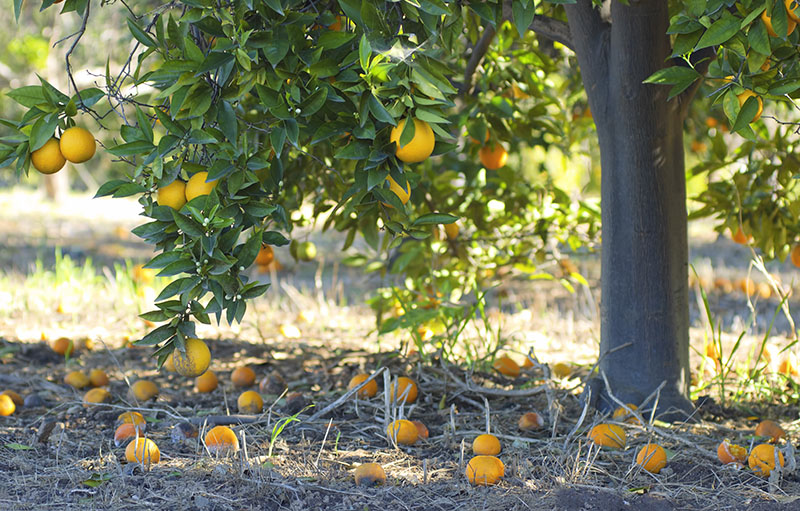
Numerous Florida citrus growers are experiencing heavy fruit drop this fall. “For some growers, it’s the worst fruit drop they have experienced; 50%-plus,” says grower Lee Jones with Cross Covered Caretaking.
Grower Jim Snively, with Southern Gardens Citrus, said he is hearing talk of around 30 to 50%-plus fruit drop. “I’m hearing pick-outs that are 20% to 70% below last year; the drop is the culprit in the areas with the greatest reduction,” says Snively.
According to Snively, the drop in South Florida started in late August and has been continuing. “In other areas of the state, Polk County and the west side of the state, it seems that the drop has just started and is not as intense.”
Jones reported seeing fruit drop across the state. “However, it appears that areas that had less rain and (groves that are) on a good root-health program are doing better,” he says.
“Hamlin and Midsweet are the varieties that are experiencing the drop at this time,” says Snively. “We are starting to see some early drop in Valencia.”
“Unfortunately, not only is the drop a concern, but the fruit quality is well below what we as an industry would like to see,” Snively, president of the Highlands County Citrus Growers Association, wrote in the recent association newsletter. “There are many areas that continue to have blocks that are not meeting the USDA minimum standards.”
“The minimum Brix requirement for processed oranges is 8.00,” Snively explains. “We are seeing field tests that are showing Brix levels below 8.00. In most cases, you have to wait to let the Brix build before you harvest. But in the meantime, fruit continues to drop and it starts to lose juice weight, which equates to a loss in pounds solids per box.”
Jones also weighs in on the failure of some fruit to meet USDA standards. “If the Brix/acid minimums are not met, then harvest is delayed,” he says. “However, the longer they (growers) wait, the worse the fruit drop.”
“At this point, all a grower can do is get his or her fruit harvested as quickly as possible,” Snively adds.
“But we all know we can’t send it all in at one time. I do feel that part of the reason for this phenomenon this year and last year is the multiple bloom that we experienced the last two years. Last year, we had bloom from November 2019 through March 2020. The warm weather that followed the moisture brought in by the cold fronts causes the tree to prematurely flush and bloom. This is even intensified on HLB-infected trees. There are researchers working on this issue, and I hope they figure it out soon. We know that HLB has a lot to do with this drop, but what is HLB doing that causes the tree to react in this way, and if we figure out what that is, is there anything we can do to prevent or offset this manifestation?”
“Anything a grower can do to increase root health will help,” Jones adds. “Also, getting the bloom synchronized; the late/early bloom increases the fruit drop percentage and decreases fruit maturity.”
The Georgia Fruit and Vegetable Growers Association (GFVGA), in collaboration with the Georgia Department of Public Health, Georgia Department of Agriculture and the University of Georgia Extension, has developed a practical and comprehensive COVID-19 handbook for growers and farm labor contractors in the specialty crop industry.
Written specifically for Georgia growers, Protecting Yourself Against the Coronavirus, focuses on maintaining a safe and healthy workspace on the farm. This resource, available in both English and Spanish, contains science-based information to help growers maintain a safe and healthy environment for their workforce.
“As employers, we come to value our employees and see them as members of our own extended family,” said Aries Haygood, GFVGA president. “Protecting them and their families during this ongoing pandemic is our number one priority and this handbook will help employers find answers to their questions.”
All the information in the handbook is based on CDC and Georgia Department of Public Health guidance.
“We are always excited to work together with our industry partners to better serve the specialty crop industry,” said Charles Hall, GFVGA Executive Director. “We think this handbook provides valuable information to help growers and their employees during the ongoing pandemic.”
Entomologist Lauren Diepenbrock is seeking Florida citrus growers’ help in determining information gaps and future directions for her research on pests. To get that help, she’s asking growers to participate in a survey, which is available here.
Diepenbrock
Diepenbrock, a University of Florida Institute of Food and Agricultural Sciences researcher, would like to have growers take the survey by March 31, 2021. The survey should take 15 minutes or less to complete. The anonymous survey begins with questions about what counties growers farm in, what varieties they are growing, and the pests that have been problems for them during various times in the past. It also asks about insecticide and miticide use history with relation to Asian citrus psyllid establishment and frequency of sprays. In addition, the survey aims to determine what growers believe are the top five priorities for pest management research.
“Since arriving at the CREC (Citrus Research and Education Center) in 2018, I have had the pleasure of interacting with many of you,” Diepenbrock states. “From these interactions and reading through my predecessors’ work, I’ve come to realize that we have some large gaps in information which we need to better understand changes over the past two decades of insect and mite management in citrus.”
“I just hope that people will take the time to provide this information,” Diepenbrock says. “I want to both do research that is interesting to me and to meet the needs of our growers.”
Asked what pests already concern her, Diepenbrock responds, “Well this is part of what I want to learn. Obviously ACP (Asian citrus psyllid), CLM (citrus leafminer) and lebbeck mealybugs come up a lot, but we’ve seen some pests popping up that haven’t been problematic for decades, like woolly whitefly. So I’m hoping to learn if these are a huge concern for growers or not.”
“Grower information is critical to identify the information gaps and help determine future directions of research in my program,” Diepenbrock adds. “My goal is to always provide useful, research-driven data to our growers, and their input enables this.”
She plans to share the survey results in future webinars and industry publications.
Photo courtesy of Bugwood/Shows sour skin on disease on an onion.
Vidalia onions are famous for their mild-sweet flavor and are a favorite of consumers and chefs across the U.S. Due to this popularity, there is also significant demand for organically-grown Vidalia onions.
Soil-borne bacterial diseases like sour skin and slippery skin caused by Burkholderia sp. impact quality and yield of organic onions in Georgia. The pathogens are soil-borne. Current organic management practices do not eliminate or eradicate them from the soil.
This makes management extremely challenging, according to Bhabesh Dutta, University of Georgia (UGA) Cooperative Extension plant pathologist.
“Conventional onion production is itself challenging, and organic onion production is more challenging,” Dutta said. “We do have some grasps on managing those issues in conventional ag, whereas in organic ag, we don’t have those options. The No. 1 issue we’ve been facing in any onion industry, especially in organic onions, is sour skin and slippery skin diseases.”
Conditions Favorable for Disease Development
Warm temperatures and intermittent rainfall during the spring can predispose organic onions to infection with these bacterial pathogens. Vidalia onion growers experienced similar weather conditions (warm and wet) this past spring. This led to considerable yield losses both in the field and in storage.
Sour skin was also worse last year for producers. It is usually more of a problem during harvest in the latter part of the growing season. As it thrives in warm conditions, symptoms can manifest earlier in the season depending on temperature. The disease can progress from the upper foliage to the leaves in the lower part of the plant and then to the bulb’s outer scales.
Bulbs that are infected with sour skin usually have an acrid, sour odor and other foul odors that are associated with secondary organisms. Bulbs will turn reddish-brown to brown in color over time, as the tissues rot and copious amounts of fluids are produced.
Appropriate Management Strategies
Organic onion growers need management strategies that are not just effective but also economically and environmentally sustainable. The UGA Vidalia Onion Research and Extension Group is researching organic and physical soil-amendments that can reduce soil-borne pathogens including Burkholderia sp.
The amendments like soil solarization, soil-biofumigation (wild mustard), soil-applied biological controls and cover crops will be evaluated in certified organic fields at UGA.
“With respect to sour skin, which is one of the worst diseases you can ever have on onion; on organic onion, this disease is particularly bad. The pathogen survives in the soil and stays in the soil. Any management options, like the use of copper or use of any chemicals, which you cannot use; you can use some kind of copper in organic (production), but it doesn’t have much efficacy on management of sour skin,” Dutta said.
“What we are thinking, unless we do some kind of soil amendments – physical, cultural, biological soil amendments – we may not be able to reduce the pathogen in populations of this sour skin pathogen.”
UGA scientists also plan to evaluate the impact of these amendments on reducing weeds, plant-parasitic nematodes and other soil-borne fungal and oomycetes organisms. Researchers will also focus on studying the impact of these amendments on soil-microbiome and prevalence of insect natural predators and enemies. The aim is to foster the “systems approach” without negatively altering the diversity and prevalence of both beneficial microbes and natural enemies.
“We have to think outside of the box, but we also respect the stewardship of organic certification. Whatever we do, it should be within the limits of that organic certification or organically approved methods,” Dutta said. “This method with which I talked about is within that limit.”
GAINESVILLE, Fla. — The coronavirus pandemic occupied space in everyone’s minds this year, prompting online searches about any variety of topics related to it. The year’s most popular UF/IFAS Extension EDIS publications were no exception, with two of the top 10 being brand-new documents related to food safety and the coronavirus.
In all, the Electronic Data Information Source, which hosts peer-reviewed publications from UF/IFAS Extension professionals, saw 17.5 million pageviews this year across the nearly 6,500 publications hosted.
Here are 2020’s 10 most-visited EDIS publications:
The 4-H Plant Connections curriculum, “What Makes Plants Grow?,” is also a popular how-to. Plants need many of the same things people do: light, water, air, nutrients and proper temperature. For more, visit: edis.ifas.ufl.edu/4h360 (103,833)
“Common Poultry Diseases” include respiratory and nonrespiratory viral and bacterial diseases. Learn how to tell the difference: edis.ifas.ufl.edu/ps044 (72,837)
Perhaps related to renewed interest in hygienic practices, “Basic Elements of Equipment Cleaning and Sanitizing in Food Processing and Handling Operations” jumped 15 spots from last year’s ranking. Rinse, clean, rinse and sanitize those contact surfaces, and more tips at edis.ifas.ufl.edu/fs077 (68,808)
Central Florida residents: Looking for what to plant and when? The “Central Florida Gardening Calendar” not only provides this info, but also explains specific concerns at certain times of the year, including irrigation, pests and pruning: edis.ifas.ufl.edu/ep450 (50,846)
The document “COVID-19 and Food Safety FAQ: Is Coronavirus an Issue in Produce Production?” opens addressing a concern: The CDC, FDA and USDA have no reports of human illnesses that suggest coronavirus can be transmitted by food packaging. The document details best practices for facilities: edis.ifas.ufl.edu/fs351 (48,073)
“COVID-19 FAQ for Grocery Stores: Receiving and Food Packaging” addresses similar concerns and is available as a one-page guideline for grocery stores: edis.ifas.ufl.edu/fs331 (40,666)
About 50 species of snakes live in the states along the Atlantic and Gulf coasts, from Louisiana to North Carolina. They are predators and prey, and thus form important links in natural food webs. “‘Black Snakes’: Identification and Ecology” helps distinguish the easily confused snakes of this region that share a primarily black coloration characteristic: edis.ifas.ufl.edu/uw251 (39,640)
Although “Diversity in the Workplace: Benefits, Challenges, and the Required Managerial Tools” has appeared in the top 10 before, this year’s social justice movement could explain an increase in clicks this year. Managerial skills must adapt to a more diverse workplace: edis.ifas.ufl.edu/hr022 (37,467)
North Florida residents can learn what ornamentals and vegetables grow well in the region, when to plant them and other important information with the “North Florida Gardening Calendar”: edis.ifas.ufl.edu/ep451 (36,365)
EDIS, a free service of UF/IFAS Extension, celebrates its 25th anniversary in 2021. Find information at edis.ifas.ufl.edu on topics relevant to you: profitable and sustainable agriculture, the environment and natural resources, 4-H and other youth programs, Florida-friendly landscapes, communities that are vibrant and prosperous, economic well-being and quality of life for people and families.
“In a year filled with uncertainty and unexpected changes, we see the value in the public services of UF/IFAS Extension, including EDIS,” said Nick Place, UF/IFAS Extension dean. “We hope the public continues to rely on the expertise of this top-notch, science-based research.”
Peach trees need chill accumulation every fall and winter to produce a substantial crop the following season. Edgar Vinson, assistant research professor and Extension specialist in the Department of Horticulture at Auburn University, is concerned Alabama producers may be lagging behind.
“We’re still a little concerned about having enough chill by the end of this month. Typically, we’d like to have about half of the recommended chilling for our area by the end of the year,” Vinson said on Friday. “So far, we have about 172 hours, I think last time I checked. Looking at the extended forecasts, we don’t really see as many opportunities to collect chill as we’d like.”
Optimal Chilling Temperature
Vinson said peach growers long to have between 450 and 500 chill hours by the end of the year. He added that temperatures do not need to reach below freezing for chill accumulation to occur. Optimal chilling is at 42 degrees Fahrenheit.
“Just as an example, you can have a relative warm winter and still get the recommended chilling for your area. The temperature does not have to be at freezing. In fact, anything below freezing, you’re not getting much chill at all. Anywhere below 29, you’re not getting any chill accumulation,” Vinson said.
“You’re not losing any, but you’re not gaining any. You can have a relatively warm winter where you’re hovering around mid-40s, low 50s; somewhere around there and still get the recommended amount of chilling. It doesn’t have to be bitter cold to get chilling.”
Peaches need chill hours to mature. The required chill hours depend on the peach variety, but most growers hope to get around 1,000 chill hours before spring.
Temperatures were relatively warm in Alabama towards the end of last week and weekend which did not help with chill accumulation.
“Warm days like that, especially at 24-hour cycles at a time like that tend to be pretty detrimental to chill accumulation. Looking at extended forecasts, at least right now, we’ll keep checking extended forecasts and they’ll likely change, but as we look now at the extended forecasts, there doesn’t appear to be as much of an opportunity to collect chill,” Vinson said. “Not saying that there won’t, but we’re a little bit concerned about that.”
Georgia’s fall vegetable crop did not produce profits like growers had hoped for. Mexican imports had a lot to do with that, says Charles Hall, executive director of the Georgia Fruit and Vegetable Growers Association.
“It certainly was not as good for us as the spring was. While we had good early prices on squash and cucumbers, once the Mexican crops hit, (prices) just dropped. There’s nothing the grower can do about it,” Hall said. “They either have to decide to plow up and not harvest or they just take a bad beating. Squash were selling and cucumbers were too, they were selling below our cost of production, about half our cost of production.
“It’s not been a good fall. (And) later in the season broccoli fell out.”
Unfair trade practices have the been the source of Georgia producers’ discontent for some time. It led to virtual hearings by the U.S. Trade Representative’s (USTR) Office with farmers in Florida and Georgia. Congressional support helped lead to potential action regarding the imports of cucumbers and squash.
The USTR has requested investigations from the U.S. International Trade Commission into the imports of both commodities and the effect on domestic seasonal markets.
“A farmer can control labor, and a farmer can control pesticides and he can control rain to some extent because of irrigation, but the one thing he can not do anything about is trade. When he puts his product on the market and those prices drop out, it’s a goner,” Hall said.
The U.S. Department of Agriculture Farm and Ranch Stress Assistance Network Program connects farmers, ranchers and others with agriculture-related jobs to programs designed to combat stress.
The University of Florida/IFAS is one of more than 50 partners joining the effort in the Southeast.
Kendra Zamojski, family and consumer sciences regional specialized Extension agent, will lead the UF/IFAS team which encompasses Extension agents, economists, agriculture teachers and communicators.
National Weather Service graphic shows projected path of Hurricane Eta when it moved across Florida in November.
“With University of Florida Extension being the land-grant university and arm of the Extension Service, we have agents in every county working, not only with farmers and growers and producers but also with the citizens in the counties. Florida has been pretty heavily impacted by hurricanes recently. We have seen the stress that farmers are under and wanted to be a part of this project to determine what the needs are and figure out strategies to address them and inform the research going forward,” Zamojski said.
Tragic Statistics
She noted that according to a 2016 CDC report, the suicide rate among farmers, fishermen and forestry workers was the highest for all occupations. In 2015, a CDC report also showed suicide rates were higher, almost double, in rural regions compared to urban.
It is especially stressful for Florida producers, who have to deal with hurricanes every year and a COVID-19 pandemic this year that shut down restaurants in March. It took away a huge chunk of Florida’s vegetable and specialty crop business in the process.
Coronavirus Impact
“I live here in the Panhandle, so I know the stress from hurricanes that farmers face. Having been through (Hurricane) Michael and the devastation of that, I have definitely seen some of the stress first-hand. But now with the COVID-19 pandemic, there’s definitely stress in how supply chains have changed,” Zamojski said.
UF/IFAS will also provide a financial planner to assist farmers with economic decisions.
“So much of it is economics. So on the team we have going forward with this grant, we do have a certified financial planner who will be helping us do some trainings with farmers on economic issues and planning that they can do in such an uncertain environment,” Zamojski said.
Needs Assessment
The three-year grant includes plans for a needs assessment; reaching out to the community and understanding what the needs are and tailoring resources to meet those needs. Trainings will be held for farmers and Ag students. A hotline will be established to provide immediate access for support.
“I think everybody’s feeling the stress of the pandemic right now but definitely our farmers. Not only on a daily basis where they have to deal with pests, disease and the challenges they face with their crops, but also 2020 was a pretty active hurricane season and weather season. There were a lot of impacts to agriculture from that. Throw in a pandemic and that has thrown our supply chains for a loop. I think 2020 has been a pretty stressful year,” Zamojski added.
Photo courtesy of Wadsworth Christmas Tree Farm/Shows Arizona Cypress.
Christmas tree sales are booming this year, and COVID-19 may be a reason why.
Both Frank Wadsworth, owner of Wadsworth Christmas Tree Farm in Wetumpka, Alabama and Jeremy Pickens, Alabama Assistant Extension Professor in Horticulture at Auburn University, agree that the recommendations that people social distance themselves and stay quarantined has left many with the longing to get outside and start a tradition with the family.
A Christmas Tree farm is the perfect place to do so.
Farmer Testimonial
“I think a lot of people who have been quarantined for 14 days and a lot of people who have just not been out in public for such a long period, they figured we’ll just come to the farm. You can social distance up here fairly easy when you’ve got a wide-open area,” said Wadsworth, who planted his first tree in 1976.
“People can wonder around and look for a tree and keep to themselves and have a good time. I’m sure being indoors and all these mandates have had a lot to do with the success at my farm and the people that I’ve talked to, other growers like me.”
Sold Out Earlier Than Normal
Wadsworth said his farm was sold out and did so about a week earlier than in previous years.
“We opened the Saturday before Thanksgiving and we had a pretty good weekend that weekend. Then of course the Friday after Thanksgiving with Black Friday, we call it Green Friday, we were just wrapped up. Then this past Sunday (Dec. 6) we were out of trees in the field. We tag so many trees each year to sell and we have sold every one of the ones we had tagged,” Wadsworth said.
Earlier the Better
“Everybody comes early because they know if you come early, you’re going to get a good selection of a tree. I’ve convinced everybody, I guess, over the years to come early, don’t wait late,” Wadsworth added. “We sold our first tree on Oct. 31. We had a lady call me and said she had her house decorated on Oct. 1 and she was waiting until the end of the month and she wanted her tree.”