The 2021 Southeast Regional Fruit and Vegetable Conference is underway. The conference, which is normally held in January in Savannah, is being held virtually this year due to COVID-19 concerns. The three-day event will be held through Thursday, Jan. 7.
For more information, or to register for the event, click here.
Clemson Extension agents provide updates in the The South Carolina Grower this week about the status of various crops being produced throughout the state.
Happy New Year! We hope everyone had a great holiday season and is off to a good start in 2021. We have several virtual grower meetings coming up over the next two months, so keep an eye on the “Upcoming Events” page for info. Also, don’t forget the Southeastern Regional Fruit and Vegetable conference kicks off virtually this week and it’s not too late to register.
Coastal
Rob Last reports, “Firstly, I would like to wish everyone a happy ,and successful 2021. Crops in the area have slowed down with the cooler weather, and we are seeing a reduction in caterpillar activity. Strawberries look good, however, it would be advisable in advanced crops to remove any flowers to reduce the botrytis pressure later in the season. Winter vegetables are looking very good with low levels of Alternaria leaf spot in some crops. If in doubt scout.
Zack Snipes reports, “One of my New Year’s Resolutions this year is to be more proactive rather than reactive. I would like to extend that mentality to my field work as well. This year I really want to help growers nip problems in the bud before they become problems. Weekly calls, texts, check-ups, and regular visits can help both of us achieve our goals. Give me a shout in 2021.”
Let’s work together before this happens. Photo from Zack Snipes.
Midlands
Justin Ballew reports, “We’ve had a lot of rain to start off the new year. A day or so after Christmas we saw temperatures down in the low 20’s and ended up with some cold damage on greens. They should grow out of it just fine. Strawberries are coming along. We are seeing spider mites build up in places, requiring treatment. Keep scouting regularly, even though it’s cool outside. Let me know if you need a second pair of eyes. On another note, I noticed daffodils starting to come up in my yard a few days before Christmas. Can’t ever remember seeing them emerge that early.”
Cold damage on mustard greens from the recent dip into the low 20s. Photo from Justin Ballew.The view of spider mites on the underside of strawberry leaf through a 10X hand lens. Photo from Justin Ballew.
Sarah Scott reports, “Field preparation for new peach tree plantings is underway along the Ridge. Some growers are using a plow to make berms to plant trees on to aid in disease management issues such as armillaria root rot. Lots of rain in the past week has made for muddy conditions.”
Freshly plowed peach field with berms for planting. Photo from Sarah Scott.
Pee Dee
Tony Melton reports, “Very few greens undamaged after the cold if they weren’t either covered or protected in some way. Strawberries are doing well. I hope there is not, and I have not seen any cold damage of the crowns in the Pee Dee. I had one account where coyotes were biting through the row-covers to eat ripe strawberries.”
Organic onion production in Georgia is nothing new. But the data is lacking for farmers who are trying to expand and be more efficient in their operations.
That is why Tim Coolong, associate professor in the UGA College of Agricultural and Environmental Sciences, is studying organic onion production.
“Onions have been grown conventionally for decades. That system, I feel like we’ve got it down pretty well, although, we still have issues,” Coolong said.
“Organic onions have also been grown for a little while, but the body of knowledge is so much less. Growers are constantly trying new things. As researchers, we’re trying new things. Sometimes they work, sometimes they don’t. But it’s just trying to build that body of knowledge to draw upon.”
Fertilizer Applications
That knowledge consists of fertilizer applications, which are essential in the development of onions throughout the growing season. Growers who utilize organic fertilizer sources, typically use poultry-litter based. But farmers must apply high levels of organic fertilizer prior to planting to ensure onions have adequate fertilizer levels when they start putting on growth in mid-winter.
Unlike conventional soluble fertilizers, many organic sources continue a slow and steady release of nitrogen throughout the growing season, even later in the year when growers often try to reduce available nitrogen prior to harvest.
“We’re looking at standard poultry litter, which is used a lot less now than it used to be. Then we’re going to be looking at other organic fertilizers that, based on information from folks up here, they found that they have very different release rates,” Coolong said. “With the conventional fertilizer, if you put it out, it’s there. It’s readily available. But with some of these organics, they may take several weeks to release, they may take longer. What we’re hoping to do is evaluate some of these so that our onion growers can be able to time their fertilizer applications better.”
Unfortunately, higher nitrogen levels near harvest may predispose some onions to bacterial diseases if the weather is warm, which is not uncommon in southeast Georgia.
“We’ve done some preliminary work, so we’ve got a little bit of data. We’re hoping to really dial it in this year,” Coolong said.
File photo shows downy mildew disease on a cucurbit plant.
Fungicide resistance remains a concern for Florida vegetable farmers trying to manage downy mildew disease.
Scientists like Gary Vallad, a Professor of Plant Pathology at the University of Florida/IFAS Gulf Coast Research and Education Center, implore producers not to be too reliant on one specific fungicide. It can lead to resistance issues.
“Orondis is one that is kind of the industry standard. It’s probably the most effective product available. But it also is in that category of being high risk for resistance,” Vallad said.
“What we’re trying to do here is show growers there are a number of other products that are very effective and would be very good to rotate them in with your Orondis program. What we want to do is make sure the industry is not just relying on Orondis that they are utilizing these other tools they have in the toolbox as well.”
Consequences of Misdiagnosis
Vallad also cautions growers about the consequences of misdiagnosing downy mildew.
“The symptoms can vary based on the cucurbit host itself. Symptoms on cucumber are very classic, but if you get some of the other cucurbit species, the symptoms can vary. A great example is there were some watermelon samples that came in the lab where folks thought it was gummy stem blight and it actually was downy mildew,” Vallad added.
“If you’re not careful, you can misdiagnose. The bad thing is, a lot of things we use for gummy stem blight, fungicides for that management, are not going to work very well on downy mildew, and vice versa. Like all diseases, getting a proper diagnosis is very critical to properly managing it.”
Downy Mildew Background
Downy mildew disease can destroy plant foliage and cause the leaves to curl and die. Without healthy leaves and vines, a plant is vulnerable to blisters and sunscald during hot days. The pathogen thrives in wet, humid conditions and needs moisture on the surface of the plant for successful spore germination and further infection.
“It is an extremely aggressive pathogen, especially under the growing conditions in Florida. A big reason why we have so many big issues here in Florida is because of our environmental conditions. Most of our varieties don’t have any type of resistance to it, which means we’re highly reliant on fungicides for management,” Vallad said.
“We’re sub-tropical so we always have warm weather. Our relative humidity is really high. Of course, it’s Florida so we get lots of rainfall as well. These are very ideal conditions for this fungus.”
The disease is favored by a temperature range of between 41 degrees F and 86 degrees F; relative humidity greater than 90%; period of near-saturated relative humidity for sporangia formation, which includes heavy morning dew, foggy mornings and rain. Spores are easily dispersed by wind and rain.
With an interest in wildlife while possessing an expertise in food safety, Kristin Woods is concerned about risks bird populations have on fruit and vegetable production in the Southeast.
“It is possible to do both, have safe produce and maintain habitat for birds and other wildlife. But it really is an area we need more research in to know how to do that safely,” said Woods, Alabama Regional Extension agent, who specializes in food safety.
Does clearing habitat around produce fields put vegetable and specialty crops more at risks of birds potentially carrying deadly pathogens? On the other hand, if the natural habitat is left alone, are crops less at risk to be impacted? Those are questions Woods hopes to answer and will talk about further during the Southeast Regional Fruit and Vegetable Conference on Thursday at 4 p.m.
“I’m interested in ways that our commercial produce growers can maintain habitat for wildlife, as well as pollinators that they need for their produce without increasing food safety risks. There has been some line of thinking that clearing habitat is safer. Some of the emerging research is indicating that is not the case. When you clear habitat … you shift the species of birds into species that are more likely to carry pathogens,” Woods said.
“If we can maintain woody areas and habitats around our growing areas, then we attract native species of birds that have lower pathogen prevalence. They’re also species that are less likely to be visiting areas that have livestock. They’re less likely to be carrying things like E. coli and salmonella.”
IPM Strategy
Organic producers can also potentially incorporate birds into their integrated pest management (IPM) strategy if a natural habitat is maintained. It’s similar to how insects are used in an IPM system.
In the age of COVID-19, sanitizer applications are essential for producers to keep their workforce healthy.
Laurel Dunn, Assistant Professor in the Department of Food Science and Technology at the University of Georgia, offers several guidelines for using sanitizers and other cleaning products in facilities where vegetable and specialty crops are cleaned and packaged.
Not All Sanitizers are Appropriate
Dunn
The first step is to realize not all sanitizers are appropriate for equipment or other areas where produce is being handled.
“Sanitizers in general are a bit trickier because it depends on where you’re using them. If you’re using them to clean your floors or your bathrooms or things like that, you can use whatever,” Dunn said.
“If you’re using anything that’ll contact your food contact surfaces; your conveyors, packing equipment and stuff like that, then you have to go through your EPA registrations and make sure you’re using something that’s appropriate and approved for use on the food and is also adequate to inactivate something like the coronavirus.
“You might be trying to deal with your microbial concerns by using that sanitizer, and in doing so, put a chemical hazard right in your food product.”
Other Tips
Another tip to remember is that sanitizers work better on surfaces that are free of dirt. Also, remember that sanitizers need time to work so don’t spray and then wipe off immediately.
“Another thing we see a lot too, and I’m guilty in my own house, is using a sanitizer and spraying it on dirt, which, that doesn’t do a lot of good. You need to have it pretty clean,” Dunn said.
“Then also spraying a sanitizer and wiping it off immediately. A lot of our sanitizers need like 30 seconds to a couple of minutes to work. You have to make sure you’re using the right thing, but also make sure you’re using it correctly.”
Dunn said COVID-19 is a “relatively puny virus” compared to others so it will react quickly to the various sanitizers available.
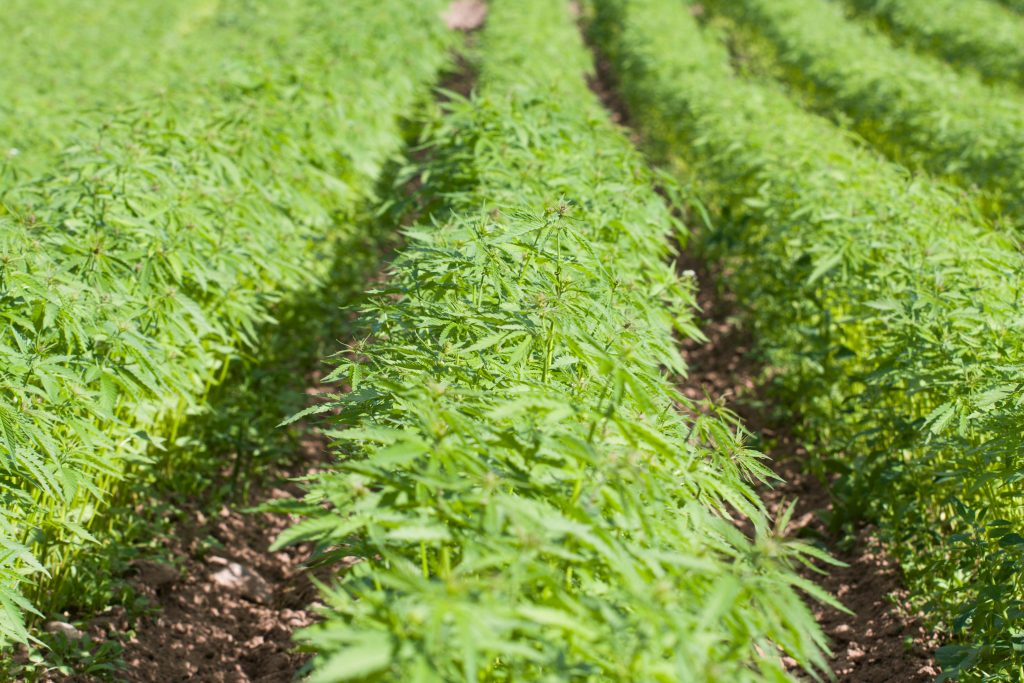
COLUMBIA — The South Carolina Department of Agriculture (SCDA) will accept applications for hemp farming permits for the 2021 growing season from Jan. 1 through Feb. 28, 2021.
The state’s Hemp Farming Program has grown from 20 farmers in 2018 to 265 farmers in 2020 – and each year, the program has changed as state and federal laws changed. When the federal government approved South Carolina’s State Hemp Plan in April 2020, the program entered a new period of regulatory stability, one that SCDA expects to continue in 2021. The agency now has six full-time staffers devoted to hemp regulation.
Requirements to receive a hemp farming permit include:
Proof of South Carolina residency
Criminal background check (A new check is required each permit year.)
FSA (Farm Service Agency) farm number
$100 nonrefundable application fee and $1,000 permit fee
GPS coordinates of all locations on which hemp will be grown
Submitting application and all required materials by the February 28, 2021 deadline
Attending an SCDA orientation and signing a Hemp Farming Agreement before possessing any hemp, including clones and seeds
Online Portal
All farmers must apply through SCDA’s online portal at agriculture.sc.gov/hemp. There are no paper or printable applications. Because it may take several weeks for farmers to obtain FSA farm numbers and background checks, applicants should review requirements and begin the process as soon as possible.
Permits are only good for the current year, so 2020 permit holders who wish to farm in 2021 must apply for a new permit. SCDA will not award a 2020 farmer a 2021 permit unless he or she has reported his or her 2020 hemp acreage to the FSA by the 2021 application deadline.
SCDA is tasked with regulating hemp farming. At present, our agency cannot provide training, information or grants for growing or processing hemp. Those with questions about hemp farming practices should contact their Clemson Cooperative Extension agent.
National Weather Service graphic shows Zeta’s path through Alabama.
The deadline is less than two weeks away for Alabama vegetable and specialty crop farmers seeking financial assistance from Hurricane Zeta.
Producers who suffered losses related to Hurricane Zeta have until Jan. 15 to submit an application to the Alabama Farmers Agriculture Foundation for assistance from a Hurricane Relief Fund.
According to the alfafarmers.org, the relief fund is designed to help offset farmer losses not covered by a farmowner policy, crop insurance or disaster relief programs. An independent committee will evaluate the applications based on need and award grants in February.
The application for Hurricane Zeta assistance and a link for contributions to the fund are available at AlabamaFarmersFoundation.org.
Hurricane Zeta made landfall in Louisiana as a strong Category 2 storm on Oct. 28 and maintained tropical storm winds as it raced across Alabama.
According to the southeastagnet.com, the USDA designated 13 Alabama counties as primary disaster areas, due to damage and losses caused by Zeta that occurred from Oct. 28 to Oct. 29.
A similar Hurricane Relief Fund was extended to victims of Hurricane Sally earlier this year, and applications are now being extended to victims of a second major storm.
Some Georgia hemp producers were victimized this year by having their crop’s THC level exceed 0.3 level. Subsequently, the hemp was destroyed, which was the case for 11 producers.
Tim Coolong, associate professor in the University of Georgia (UGA) College of Agricultural and Environmental Sciences and leader in hemp research at UGA, said he heard farmers in east Georgia who had a crop that tested hot. He believes next year that producers will test their hemp more frequently to avoid instances where the crop must be disposed of.
Testing Benefits
“I think certainly that anyone who tested hot this year that decides to grow again will certainly be doing it. I think for the most part, the growers that I did visit with last year understood the value of testing and how important it was,” Coolong said. “I think going into it next year, depending on how many growers we have, I think they will be a little more targeted perhaps or maybe just have a little bit better plan because they’ll have more time.”
Coolong added that he is still waiting to see how farmers fared financially after the state’s first commercial growing season.
“That’s obviously where, it doesn’t matter how good your yields are or quality, the bottom line is how much profit did growers make. People are still processing their product and all those sort of things right now. I’m not sure the profit levels on some of the growers I worked with,” Coolong said.
According to the Georgia Department of Agriculture, applications for new Georgia hemp grower licenses and hemp processor permits will be accepted, beginning in January, 2021.
According to Alabama Extension, colder temperatures means that it is time to begin planting and pruning certain ornamental plants. These plants, grown primarily for their aesthetic value, benefit greatly from selective cutting. Pruning keeps the plants in shape and growing successfully. Also known as trimming, pruning is a necessary strategy for gardeners and landscapers alike.
Planting Ornamentals
Different times of year are optimal for planting different ornamentals. Paying attention to which plants grow best in colder months is crucial. Note that these do not include semi-hardy and marginal plants that benefit from spring planting.
“Know the plants you are working with to avoid mistakes,” said Hayes Jackson, an Alabama Extension home grounds, gardens and home pests urban regional agent.
The ideal soil for most plants is rich, well-drained garden loam. When planting, it is important to keep in mind not to dig the hole too deep. Taper the planting hole with a wider opening and a large enough bottom to hold the entire root system. Adding a ring of soil around the edge of the plant can help hold moisture when the area is filling with water.
“Planting the right plant in the right place is crucial to avoid unnecessary pruning or maintenance issues,” Jackson said.
Pruning Ornamentals
According to Jackson, pruning ornamentals creates better plant shape, discourages diseases and increases fruiting and flowering. During the pruning process, cutting or trimming overgrown stems or branches is key for optimal plant growth. The time of year to prune is specific to each plant, so researching the proper pruning time for each plant is crucial.
“Some plants need to be pruned after flowering to avoid removing flower buds, such as hydrangeas and azaleas,” Jackson said.
Gardeners and landscapers alike often use a variety of tools for pruning, including hedge shears, floral scissors, hand pruners and pruning saws.
“A proper pruning cut utilizes proper pruning methods and proper tools,” Jackson said. “Proper methods and tools are important because any new growth stimulated by the pruning will develop close to where the cut is made.”
More Information
More information is available in the Alabama Extension content piece Pruning Ornamental Trees. For further information on planting and pruning ornamental plants, visit the Lawn and Garden section of the Alabama Extension website www.aces.edu. People can also contact the home grounds, gardens and home pests regional agent serving their area.