Author: Clint

  • Marketing Your Crop: Be Better Prepared

    As vegetable and specialty crop producers near another spring harvest season, marketing their product remains a focal point of their farming operations.

    Adam Rabinowitz, Assistant Professor and Extension Economist at Auburn University, implores producers to be better prepared this year amid the ongoing coronavirus pandemic.

    “I really recommend producers think about their marketing and distribution earlier and really at the forefront. That was one of the things that really caught a lot of people off guard (last year) when large institutions started closing down, and restaurants were closing down. It became more and more difficult to market through those channels,” Rabinowitz said.

    “Knowing that, seeing these opportunities, seeing where we are right now, just planning ahead and having contingency plans will be highly recommended.”

    Pandemic’s Impact

    When the pandemic first impacted the United States last March, it shut down the country, in particular, restaurants. A lot of which, southeast producers sell their produce to.

    The lack of a food service option crippled certain sectors of the agriculture industry, including tomatoes. Bob Spencer, President of West Coast Tomato in Palmetto, Florida, said last April that his company farms between 3,500 and 4,000 acres every year. But he was losing 90% of his business. About 70% to 75% of the state’s tomato crop is designated for the food service market.

    Florida farmer Paul Allen said in early April that they had left about 2 million pounds of green beans and 5 million pounds of cabbage in the field just because the demand had diminished.

    As the pandemic continues to be problematic across the country, producers should be better prepared for what to expect and know what worked and what didn’t work.

    Farmers like Bill Brim in Georgia boxed their produce and sold direct to consumers to offset decreased demand. While it did not completely offset the decreased demand, it provided consumers a chance to buy local and raise awareness about buying local especially during a time of crisis. Community Supported Agriculture (CSA) was another option that paid off for some producers.

  • Heliae® Agriculture Adds New Seed Treatment Product to Portfolio

    GILBERT, AZ – Heliae® Agriculture is strengthening its product portfolio with the introduction of PhycoTerra® ST, a new seed treatment formulation specifically designed to supercharge the seed microbiome, improving the ability for soil to provide necessary water and nutrients to the developing seed and ultimately improving crop yield. 

    PhycoTerra® ST has a unique formulation that allows growers to tap into the potential of this product with lower user rates without sacrificing performance, providing a more consistent return on investment. The product is aimed at providing a quality carbon source to the seed/microbe interaction, which is the first “real world” point of contact for a seedling. This carbon source drives optimal microbiome around the seed, improving grower results in the field.

    “Our goal at Heliae® Agriculture is to provide growers with the most effective tools to get the job done, and that means offering a seed treatment product that best fits their needs,” said Norm Davy, Chief Revenue Officer at Heliae® Agriculture. “PhycoTerra® ST is an effective product that offers growers a proven increase in yield and return on investment.”

    PhycoTerra® ST has proven results on a variety of crops through testing across the major crop growing regions of the United States and Canada with an average yield increase of 6% and a proven success rate, taking yields and return on investment to the next level. In addition, this new product was designed to work in synergy with PhycoTerra® in-furrow, Heliae® Agriculture’s existing product that provides a balanced food for the soil microbiome to improve plant vigor and crop performance, even under stressed conditions.

    “At Heliae® Agriculture, we believe in delivering solutions to growers to make regenerative agriculture possible today,” said Eric Lichtenheld, President and CEO of Heliae. “We know that success for growers starts with a good seed, and the introduction of PhycoTerra® ST means we can provide that healthy start for plants.”

    To learn more about PhycoTerra® ST, including where to buy, please visit PhycoTerra.com.

  • Blueberry Imports a Complement to Southeastern Producers?

    The Blueberry Coalition of Progress and Health contends that imports of blueberries do not take away markets from southeastern growers but complements their production.

    It made its case to the International Trade Commission (ITC) on Jan. 12 during a virtual hearing and continues to believe there is a big enough “blueberry pie” for all parties to benefit from.

    “That’s why the coalition was formed. We wanted to continue the momentum that the blueberry industry has done over the last few years and the growth and the demand,” said Joe Barsi, President of California Giant, which is a member of the coalition. “The average consumer eats 1.79 pounds of blueberries per year. That’s up significantly. It’s still pales in comparison to a category likes strawberries where consumers eat seven pounds a year of strawberries.

    “We wanted to continue the momentum and we feel like limiting imports will raise prices to the U.S. consumer. It will decrease demand and we’ll lose the momentum the industry has realized. I think the domestic industry has really benefited from the imports in having a consistent supply at retail year-round that’s fairly priced.”

    Section 201 Investigation

    Blueberry imports have been a struggle for growers in the southeast to compete with every year. It was the focus of a Section 201 investigation where the American Blueberry Growers Alliance presented data to the ITC during the Jan. 12 hearing that outlined the imports’ impact on southeast blueberry production, which it believes has resulted in serious injury.

    Statistically Speaking

    According to the American Blueberry Growers Alliance, the U.S. Department of Agriculture Marketing Service reported a 68% increase in imported fruit from Mexico from 2019 to 2020, amounting to more than 15 million pounds of fresh blueberries during a 14-week period. Mexico, along with Peru, Chile, Canada and Argentina account for more than 98% of total U.S. imports. Import values increased from $530 million in 2014 to $1.2 billion in 2019.

    Jerome Crosby, Chairman of the American Blueberry Growers Alliance, testified that imports of fresh blueberries have increased 75% over the past five years and is only expected to worsen.

    Supply and Demand

    Barsi believes that the blueberry demand requires the consistent imports that are coming from places like Mexico and Peru.

    “There’s such a demand in the marketplace for fruit, say in the spring window when Florida is producing, there’s such a demand for fruit that Florida and southern California wouldn’t be able to supply the market for the demand that it requires. That’s why we feel like imports have been a really good complement to that,” Barsi said.

    “For someone like California Giant or another company like ourselves, we’re in the market 52 weeks out of the year. To be able to supply our customers with a supply of blueberries year-round, we have to be able to have both, domestic and imports, to be able to supply those requirements.”

    Who Makes Up the Blueberry Coalition of Progress and Health?

    The Blueberry Coalition of Progress and Health is compromised of a broad range of domestic and international producers as well as distributors. Some retailers are on the coalition as well.

    “It was basically formed, we wanted to continue the progress that the blueberry market has continued to have over the last 15 to 20 years. I’ve been involved in blueberries for 15 years, and there’s been significant growth in the marketplace,” Barsi said. “The coalition was formed to be able to provide data to the International Trade Commission on why we think that imports haven’t been a serious injury to the domestic industry.”

    ITC Investigation Timeline

    Important dates

    • January 12th – Public hearing 
    • January 19th – Post-hearing briefs
    • February 3rd – Staff report (internal)
    • February 11th – Injury public vote (scheduled)

    For the remedy phase (if affirmative injury is determined):

    • February 18th – Prehearing briefs
    • February 25th – Public hearing
    • March 3rd – Post-hearing briefs
    • March 19th – Remedy public vote (scheduled)
    • March 29th – Determination, views and report delivered to the President
    • May 27 as the deadline for the President’s decision

    Blueberry Coalition Members

    • Agroberries S.A.
    • Alpine Fresh Inc.
    • Aneberries A.C.
    • Berries Paradise S.A.P.I. de C.V.
    • California Giant Berry Farms
    • Camposol Fresh USA, Inc
    • Driscoll’s, Inc.
    • Family Tree Farms
    • Fresh Produce Association of the Americas
    • Giddings Berries
    • Hortifruit
    • Andrew & Williamson Fresh Produce
    • Pro Arandanos
    • United Exports Limited
    • Reiter Affiliated Companies
    • Chilean Blueberry Committee
    • Chilealimentos
  • Greenhouse Lettuce Production Has Risks, Rewards

    Greenhouse lettuce production has its risks and rewards in Alabama. Jeremy Pickens, Alabama Assistant Extension Professor in Horticulture at Auburn University, cautions producers to do their homework before diving headfirst into this potentially rewarding venture.

    “It’s a considerable amount of expense compared to field production. You just really need to know what you’re doing before you commit to it,” Pickens said. “The benefits of growing in a greenhouse are, you can turn out a crop faster. It’s going to be a high-quality crop. In many cases, there’s less pesticide use. But the downside is, it costs more money to grow indoors.”

    Greenhouse Expenses

    It is expensive just to build a greenhouse and operate it year-round. Pickens estimates to build and own a greenhouse can cost producers anywhere from $20,000 to $100,000 depending on how many bells and whistles you want to accessorize the greenhouse with. Labor is a major expense as well. Labor can cost as much as 28 cents per head of lettuce.

    Producers must also consider competition from states out west. California and Arizona account for 95% of all the lettuce produced in the U.S.

    “It is a high-quality product and produced very inexpensively and can get shipped across the country in very little time. It is most often for chefs and be available in a bag, chopped product. It’s already triple rinsed, they don’t have to do anything with it but open the bag and go,” Pickens said. “I don’t think you need to compete head-to-head with those guys because you’re going to lose. They can grow it so much cheaper than we can just because of their great climate and economy of scale.”

    Marketing

    Those Alabama producers who follow through on lettuce production need to market their crop as a premium product if they are to be successful. They are selling local, fresh and flavor.

    “There is a certain size pie, and you’re not going to make the pie any bigger. There’s a chance you could, but you’re trying to get a piece of it by maybe convincing a chef to switch over to your product. There are some opportunities in some of the more urban areas with these CSAs coming along for lettuce to make its way into a box. As far as selling it as a farmer’s market, it’s like anything, it’s got its risks. I don’t want to say there’s not an upside to it, but I wouldn’t go chasing for gold with it,” Pickens said.

  • Identification Key in Managing Stink Bugs in Tomatoes

    Stink bugs are a diverse species that can wreak havoc on Florida’s tomato crop. With a piercing-sucking mouthpart, stink bugs pierce the fruit and suck out fluids. They also secrete enzymes while doing so, which damages the cells right under the skin of the fruit. This leads to little spots forming all over the fruit.

    Picture submitted by Craig Frey/Shows a brown stink bug.

    It is more visible once the fruit ripens, but packinghouses can identify it on green fruit as well. Ultimately, the fruit is unmarketable for producers to sell.

    But for farmers, it is important to identify what stink bug species are on their crop. Some are predators, others are minor pests, while a few can cause major economic loss. Life cycles in tomatoes can range from five to 10 weeks, which is another important reason for proper identification.

    “If it’s a 5-week life cycle versus a 10-week life cycle, a producer will have to spray twice as a frequently. It’s therefore critically important to know what species it is so we can know what their life cycle is and make sure our management fits accordingly,” said Craig Frey, University of Florida/IFAS Hendry County Extension Director.

    Two Most Problematic Species

    The two species tomato producers must contend with the most are the brown stink bug, Euschistus servus, and southern green stink bug, Nezara viridula.

    “It was interesting to see that what I found in my master’s research in 2016-2017 correlated with what Dr. Amanda Hodges has seen in her traps over the last couple of years of surveying. There appears to be higher numbers of those two species than anything else,” Frey said.

    Proper identification is key, but it is also essential to start management early and avoid playing catch-up.

    Frey said stink bugs are more of an issue for grape tomatoes. Producers harvest them more frequently, and due to the required intervals between pesticide application and harvest, it is harder to find time to make an appropriate chemical application and keep the pest in check.

  • Slow Start for Georgia Vidalia Onions

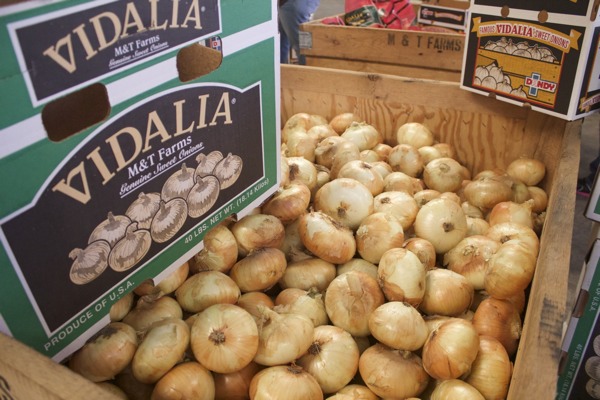
    File photo shows a bunch of Vidalia onions.

    It has been a tale of two winters for Georgia Vidalia onion producers. Last year’s abnormally mild winter was highlighted by warmer temperatures. This season has been characterized by wetter conditions and cooler temperatures.

    It has impacted the growth of the state’s onion crop so far this season, says Chris Tyson, University of Georgia Extension Area Onion Agent at the Vidalia Onion & Vegetable Research Center in Lyons, Georgia.

    “We had some warm weather in December and January last year and it really got the onions up jumping. This year they’re just off to a much slower start. That’s okay. It’s not a problem. It’s just been a cool, cold, slow start. The growth has just been really slow to begin with,” Tyson said.

    Slow Start, Just Not a Bad Start

    A slow start is not necessarily a bad thing either for onion producers.

    “The sooner the onions get big and get growing, the sooner we have to fight disease and manage fertility. I think recent years have been uncharacteristically warmer, above average; we almost have gotten used to that the last few years. But this year it may be more of an average year,” Tyson said. “You talk to these Vidalia onion growers and they’ll tell you about years when we’ve had really cold weather and we’ve had hard freezes. It’s caused problems in the past. We haven’t seen any extremes like that (this year).

    “We don’t want to get the onions too big and have a bad freeze or something like that. When they get big like that, the freeze damage can hurt them worse.”

    Sufficient Moisture

    Moisture is not a problem either for Georgia onion farmers. According to the US Drought Monitor, only a few coastal counties and some in the southwestern part of the state are abnormally dry. Most of the state got saturated during the New Year’s Holiday weekend.

    “A lot of places in the onion belt got 3 to 5 inches. In this time of the year when it’s cold and not much evaporation, it makes things really wet and takes a while to dry off,” Tyson said.

    “As far as moisture goes for the onions, we feel like we’re in pretty good shape right now.”

  • Sneak Peek: February 2021 VSCNews Magazine

    By Ashley Robinson

    The February issue of VSCNews Magazine explores a variety of topics, including America’s changing farming landscape, onion disease management tips, nematode management strategies and tools for tomato production.

    Every five years, the U.S. Department of Agriculture’s National Agricultural Statistics Service conducts a census. The 2017 Census of Agriculture captured in numbers what we see happening all around us: farming is changing. Sarah Bostick, a University of Florida Institute of Food and Agricultural Sciences (UF/IFAS) sustainable agriculture Extension agent in Sarasota, Florida, shares how the industry is working to cultivate the next generation of farmers.

    Southeastern Georgia’s climate is conducive to many Vidalia onion diseases. Bhabesh Dutta, an associate professor and Extension vegetable disease specialist at the University of Georgia (UGA) in Tifton talks about disease seasonality and management strategies.

    Johan Desaeger, an assistant professor for UF/IFAS, is featured in the Organic Corner. According to Desaeger, cover crops are one of the more practical options for nematode management. He discusses various cover crops and their benefits.

    Additonally, Abolfazl Hajihassani, an assistant professor and Extension specialist at UGA, provides readers with tools to solve tomato pathogen issues.

    Finally, readers will get an inside look at the recent virtual Southeast Regional Fruit and Vegetable Conference from AgNet Media’s senior multimedia journalist Clint Thompson. The 25th annual event provided a unique educational experience, as the event was moved to an online format amid COVID-19 concerns. Thompson shares some brief summaries from a few of the educational sessions offered during this year’s event.

    If you would like to receive future issues of VSCNews magazine, click here.

  • UF/IFAS Updates ABT Populations

    According to UF/IFAS, high population densities of Asian Bean Thrips (ABT) continue to appear only in isolated locations.

    ABT populations have reached 1.0 per bloom early bloom plantings across multiple farms in southeastern Hendry County. In some cases, populations reached as high as 1.7 per bloom.

    Populations reached 8.5 per bloom in plantings within a week of harvest. It’s the highest reported outside of Miami-Dade County.

    The late increase in population may affect nearby and/or subsequent plantings.

    In northern Collier County, ABT has not yet been reported in plants at the early bloom stage or younger. The pest was found for the first time at up to 0.3 ABT per bloom in older plantings.

    In eastern Palm Beach County, populations appear to remain low, at less than 0.1 per bloom.

    ABT populations were not reported in southern Glades County and southern Martin County. This indications population density is below sampling threshold.

  • Clemson Extension Agents Provide Crop Updates

    Clemson Extension agents provide updates in the The South Carolina Grower this week about the status of various crops being produced throughout the state.

    Weekly Field Update-1/25/21

    Posted on by Justin Ballew

    Coastal

    Rob Last reports, “Strawberry crops in the area are looking good with good crown development. We are seeing open flowers and some fruit set based on warmer conditions. These crops are cause for some concern as we are likely to see damage from forecast cold snaps. There is evidence of botrytis (gray mold) in crops on cold damaged flowers and fruit. Sanitation can really help to mitigate the spread of the disease. Spider mites remain active and in places are requiring treatment. Remember to avoid pyrethroids for mite control as these can flare mite populations.”

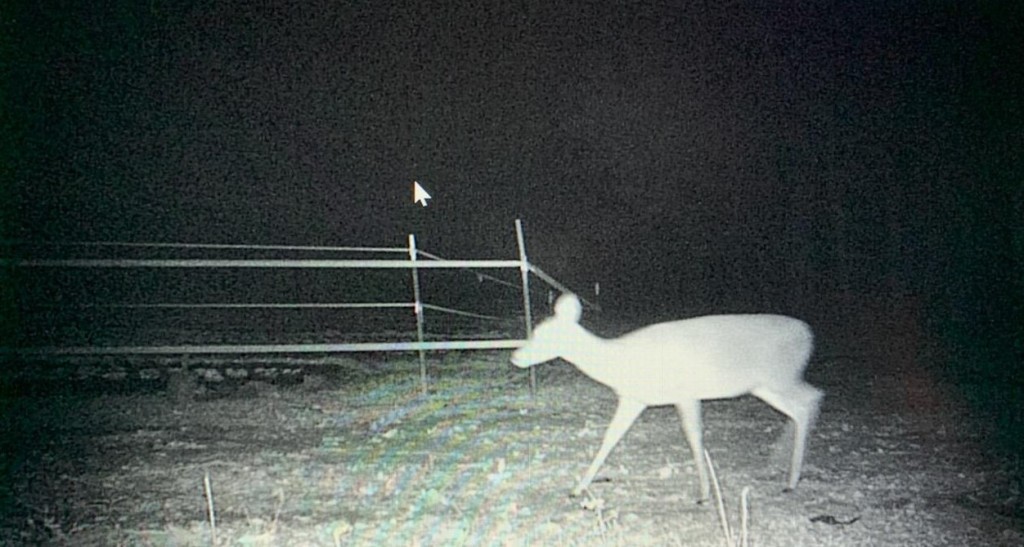
    Zack Snipes reports, “The three components of the disease triangle are a conducive environment, the host plant present and a virulent pathogen.  With that being said; it has been pretty wet as of late. We have warmer weather coming this week, and I have seen pathogens in our fields. I fully expect some diseases to really take hold and start to spread this week. For strawberries, make sure to clean dead tissue (leaves, blooms, fruit, etc) and for other crops removal of dead tissue and a preventative fungicide application (conventional or organic) can really help you get ahead of the fight against diseases. Also, my pet peeve…get your deer fences up!!!! This is the time of year that deer run out of food (and corn piles) and will meander into your strawberries and eat thousands of dollars’ worth of profits.”

    The two-tiered fencing system, like the one shown in this trail cam photo, will keep curious deer out of your fields. Deer Fencing. Photo from Zack Snipes.

    Midlands

    Justin Ballew reports, “This past week was a little warmer and more sunny, but not by much. Crops are still growing slowly as a result. I’m seeing a lot of deer damage in strawberry fields that border the woods. Nothing reduces yield potential in strawberries faster than deer. Once they start nibbling leaves off, those plants will always be behind and they’ll never yield the same as a healthy, undamaged plant. Keep in mind that wildlife in the field is also a significant food safety risk. Once we get into bloom, this will become a major concern. Fencing is the most effective means of keeping deer out of the field. Fencing doesn’t have to be expensive or permanent. Check out this publication.”

    Look at all those stems where leaves used to be. The deer have set these plants way back and they will never catch up. Photo from Justin Ballew.

    Sarah Scott reports, “New plantings of peach trees are going in along the Ridge. A weather station went up in Johnston at one of our variety trials this past fall, and we are watching to see chilling hours accumulated. Currently, we are at 714 chill hours and 43 chill portions, looking at temperatures between 32 and 45 degrees. The upstate at the Musser location is sitting at 773 chill hours and 46 chill portions. It’s looking like we will have no problem meeting all of our chilling requirements for the season.”

    Pee Dee

    Tony Melton reports, “I keep finding more strawberry fields with spidermites. Some fields are damaged or devastated by deer. If you ever let deer get a taste of strawberry plants it is very difficult or almost impossible to stop them.”

    Upstate

    Andy Rollins reports, “Strawberry plants are doing well in the upstate of SC. Some plants are smaller than others mainly due to planting time. Growers need to look for uneven growth within a field which can be an indication of root rot. Also, some growers are spraying Rovral because of early dead blooms producing excessively high amounts of grey mold. Some are using it with Captan; others with Thiram. Thiram would give some deer deterrence. Growers need to be very careful with covers this time of year. They can force even more unwanted early blooms. Remember 18 degrees hurts crown; 30 degrees kill blooms. So, we are still in the protect plant time, not the protect bloom time. There are several farms planting peach trees now and still others finishing ground preparations. We also have a new pecan farm whose trees I was able to inspect and help with last minute details before planting this week. I hope and pray all of you stay safe amid the COVID-19 pressure around us. The loss of a farming friend and leader of men, Mr. Ervin Lineberger, will be greatly missed.”

    Strawberries are looking good in the Upstate. Photo from Andy Rollins.
    Strawberries are looking good in the upstate. Photo from Andy Rollins.
  • Appointments Made to Georgia Wine and Grape Commission

    Five Georgia wine producers have been appointed to serve on the Georgia Wine and Grape Commission.

    North Georgia Region – Eric Seifarth, Towns County; Central Georgia Region – Simone Bergese, Barrow County; South Georgia Region – Gary Paulk, Irwin County; Appointed as at large members – Gary Engal, Gilmer County and Eric Miller, White County. 

    Engal and Bergese will serve terms of three years, and the other appointees will serve terms of two years. These individuals will be eligible to be reappointed following their terms. 

    The Georgia Agriculture Commodity Commission for Wine and Grapes was established by the Georgia General Assembly in 2020 at the request of the Georgia wine industry. The Georgia Wine and Grape Commission can implement a marketing order which will allow for collection of assessment from producers upon approval of the growers. Funds collected must be used for research education and promotion of the commodity.

    For more information please contact Andy Harrison:

    Andy Harrison

    Manager, Commodity Commissions

    Georgia Department of Agriculture

    Andy.harrison@agr.georgia.gov

    (404) 710-1196