Author: Clint

  • Alert: Florida Watermelon Producers Wary of Increased Disease Pressure

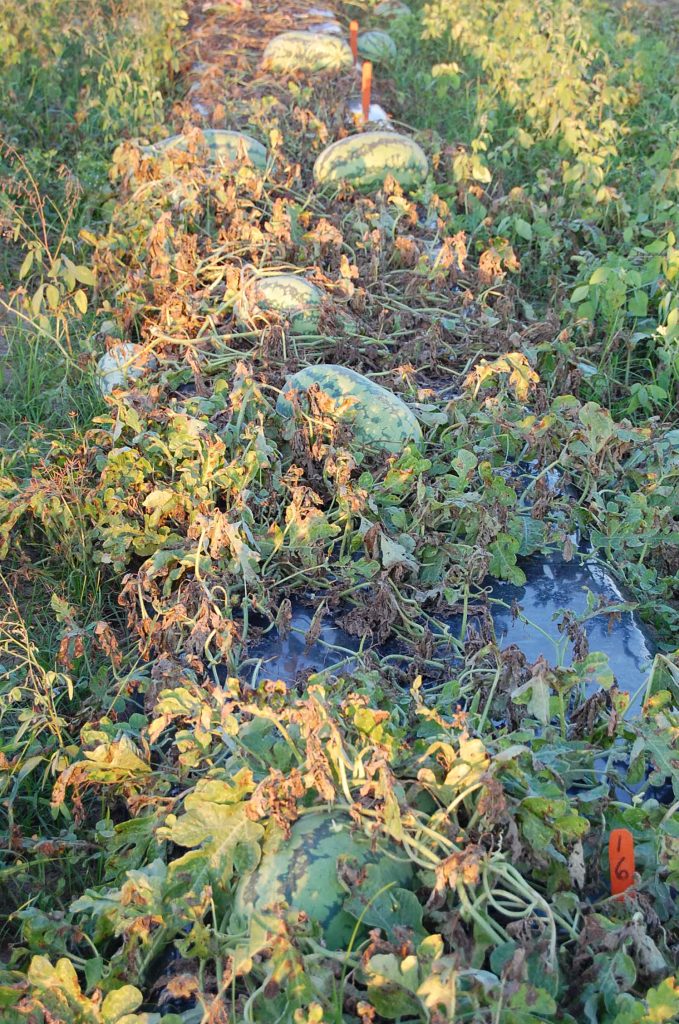
    File photo/Wilting is common in a heavy gummy stem blight outbreak.

    Rainfall over the weekend in north Florida has watermelon producers wary of potential diseases that could potentially occur. Bob Hochmuth, UF/IFAS Regional Specialized Extension agent in Live Oak, Florida, cautions farmers to look for any new symptoms that could occur.

    “Most of our fungicides are in fact preventative. Trying to play catch-up with a preventative fungicide after a disease has gotten started is not the best plan,” Hochmuth said. “There are some systemic fungicides that have good activity once we see the disease start. But for sure, we want to try to stay on a really good, early-season preventative maintenance program. What we try to do as we move into these next few weeks is to keep a close eye on new diseases and then begin to target the fungicide application to the best-case scenario for the diseases that show up.

    “We don’t have a lot of silver bullets to correct a problem once it occurs.”

    Farmers Prefer Dry Conditions

    Florida watermelon producers prefer a dry production season since the crop is vulnerable to various diseases. Farmers utilize drip irrigation to supply ample amount of water. But any extra moisture leaves the crop susceptible to potentially devastating diseases.

    “The drier conditions typically help reduce the disease pressure. The only exception to that is powdery mildew. It can still be a problem, even in dry weather,” Hochmuth said. “But the other diseases, the primary ones being downy mildew, gummy stem blight and bacterial diseases, those are all encouraged by, especially, multi-day rain events.”

    He added that watermelon fields were disease-free heading into the weekend. But chances are that could change this week.

    “There was pretty significant rainfall throughout the watermelon growing region. A little bit on Friday but pretty significant on/off showers over the weekend,” Hochmuth said. “We were clean going into the weekend I feel like. We haven’t really seen anything other than the fusarium wilt, which has nothing to do with rain.

  • USDA Vegetable Outlook

    Fresh cucumber prices were down 44% in the first quarter of 2020.

    Fresh vegetable production value in the United States was down 11% in 2020, according to the USDA Vegetable and Pulses April Outlook.

    Spinach experienced the biggest decline, dropping 28.7% a year after increasing 49.8%. Cauliflower dropped 25%. A year after increasing 22.8%, cabbage production dropped 18.2%. Bell peppers dropped 11.2%, while Carrots declined 7.1%. Dry onions also dropped 14.5%.

    Sweet corn experienced the biggest increase with an 18.5% jump from 2019. Sweet potatoes also increased 9.7%

    First Quarter 2021 Prices Down

    The Producer Price Index (PPI) reveals fresh vegetable producer prices decreased by 8% through the first quarter of 2021. Lettuce was down 23%; sweet potatoes down 8%; tomatoes down 46%; and broccoli down 8%.

    Consumer Preference

    Consumers also demanded more organic vegetables. First quarter non-organic prices for fresh cucumbers were down 44%, while organic cucumber retail prices rose by 138%. Prices for organic white round potatoes increased by 151% from 50 cents to $1.25 per pound. However, prices for non-organic white round potatoes increased by just 1.9%.

    Imports Increased, Exports Decreased

    The U.S. continues to import vegetables, increasing by 3% in 2020. However, exports were down 4% in 2020. The U.S. imported 4.05 billion pounds of tomatoes in 2020, a 1% increase from 2019. There were 2.19 billion pounds of cucumbers imported in 2020, a 2% increase from 2019. Bell peppers also increased 3% to 1.66 billion pounds in 2020.

    Broccoli imports increased by 10% to 542 million pounds in 2020. Lettuce imports also increased by 4% to 821 pounds.

    Stormy Impact

    The National Oceanic and Atmospheric Administration (NOAA) reported $22 billion weather events, which cost the U.S. $95 billion. Wildfires in California, Oregon, Washington and Colorado were devastating.

    Excessive rains at the end of the growing season in 2020 hurt sweet potato yields in North Carolina, the largest producer of the crop.

    A record-breaking number of hurricanes in 2020 affected sweet potato production in Louisiana as well. More than 660 acres of sweet potatoes were lost in the state due to hurricanes/tropical depressions and excessive moisture/rain.

  • Today is Pack Date for Georgia Vidalia Onions

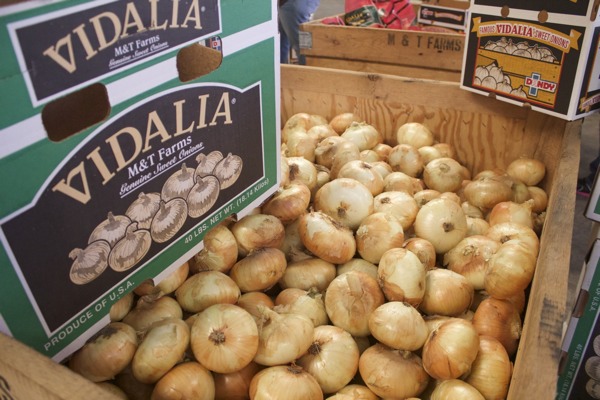
    Today is the pack date for Georgia Vidalia onions. An advisory panel comprised of industry leaders determined that April 19 be the first day of the year consumers could buy Vidalia onions.

    “A lot of growers were getting ramped up with harvest end of (two weeks ago) to really have onions that would be ready to sell for the pack date,” said Chris Tyson, University of Georgia Extension Area Onion Agent at the Vidalia Onion & Vegetable Research Center in Lyons, Georgia. “We’re still digging onions, clipping and grading. We’ve got a little bit of everything going on now. We’re starting to get into full swing of things.”

    Growers in Southeast Georgia also could not have asked for better weather conditions to harvest their crop.

    “It’s been clear and sunny. It hasn’t been too hot, yet We’ve had highs in the 80s, that’s almost perfect weather conditions for field curing onions,” Tyson said. “We start to get a little concerned when temperatures get hot. When it gets into the 90s, it’s harder on the onions. When it’s wet too, it’s the same thing. But it’s been mild and dry. It’s been really nice for them.”

    Growers first dig onions and let them field cure. Then they’ll clip the onions and send to the grading house to be packaged and boxed up.

    “I think we have a good, quality crop out there for the most part. This weather we’ve had up until now has really helped that,” Tyson said. “The weather can make us or break us. It’s been on our side so far. We’ve got a good-looking crop out there. I think the quality’s going to be really good.”

  • Florida Farmer: It’s Going to Take a Movement

    Two farmers. Two states. One message: The government needs to do more to support the American farmer.

    In an era of increasing costs and imports that continue to flood the marketplace, more and more farmers express concern about the decreasing role American farms have in feeding our country.

    “Florida specialty crops is really getting the raw end of the deal here. There are people that are making lots of money off exporting. It’s not us,” said Florida strawberry producer Dustin Grooms. “Our berries are meant to be eaten fresh right here locally and around the U.S. We can’t compete with (Mexico’s) labor. That’s one of the main things is their labor. We just can not compete with their low prices. They know that. Every time it seems that we’re starting to get somewhere with the government, we take one step forward and about 10 steps backwards. It’s a losing battle.”

    Labor Battle

    Labor is at the forefront of this battle and one that Mexico is winning. It was established during the USITC hearing on cucumbers and squash that labor rates in Mexico were just shy of $12 per day; which is comparable or even less than what some American farmers have to pay for workers per hour.

    “I just don’t understand how in America we expect the farmer to grow things under certain environmental regulations and labor regulations and that comes with a cost. If you’re going to regulate the American farmer then you’ve got to protect them against countries that don’t have similar regulations,” said Georgia blueberry farmer Russ Goodman. “If nothing’s done about it, and we’re already starting to feel the repercussions in rural communities across the country, it’s just going to get worse.”

    Increasing Frustration

    Goodman is especially frustrated about the report that says the Biden Administration plans to manage the immigration crisis by asking private U.S. companies to invest in Mexico and Central America.

    “I hope at some point in time our government will recognize it’s a national security issue,” Goodman said. “If you take anybody that has a 90% advantage over something that is 40% of their costs of doing business, they’re going to put their competitor out of business. The sad thing is that competition comes in the form of the American family farm. I just don’t know what the future holds. It’s absolutely amazing to me that our country is not trying to do something to protect farmers.”

    Food security and food awareness need to be heightened in this country. Consumers need to be made aware of how and where they get their food.

    “We need the support of the government. We also need the support of the American people to buy our products and not foreign imports,” Grooms said. “That’s what it’s going to take, a movement.”

  • United Fresh: Organization Critical of USDA’s Food Box Cancellation

    Agriculture Secretary Tom Vilsack told lawmakers this weekend that the U.S. Department of Agriculture is ending the Farmers to Families Food Box program. However, the United Fresh Produce Association was critical of the decision.

    Here’s its statement:
    On behalf of the millions of Americans who gained access to healthy fresh produce throughout the COVID-19 pandemic, we are deeply disappointed in USDA’s decision to end the food box program.

    This decision is shortsighted, and comments disparaging the program are a slap in the face to the thousands of volunteers, non-profits, regional food distributors and farmers who worked together in communities across the country to deliver healthy foods to people in their time of greatest need.

    For a major new program put together rapidly in a time of crisis, the food box program certainly included challenges. Yet, hundreds of community non-profits and nutrition advocates have found delivering fresh produce directly to those in need has great potential to truly make a difference in the health of millions of Americans.

    Speaking personally, United Fresh has worked with small farmers, distributors, food banks and community organizations over the past several months to submit more than 30 recommendations to USDA on ways to improve efficiency, accountability and assured delivery of high-quality produce to people in need.

    Yet, it is apparent that USDA neither considered these recommendations nor listened to the wide range of support for the program in its recent public listening session. This sudden decision seems more a political statement repudiating a program begun in a former Administration than an objective evaluation of the program’s ability to improve Americans’ health.

    Ending the program abruptly rather than looking for ways to continue funding and to improve its execution is a terrible mistake as the COVID crisis has most seriously impacted those with diet-related diseases such as obesity and diabetes, with greater hospitalization rates and even death compared with healthier populations.

    Now that the Administration has ended this program, USDA bears a tremendous responsibility to develop new programs to get fresh, healthy foods to people in need.

    We cannot afford to go back to old, tired feeding programs that do not prioritize nutrition security as much as calorie security.

    It is time for bold action to address the nutrition health crisis facing our nation, and USDA needs to lead the way.

  • New Chair: Gunter to Lead UF Horticulture Programs

    GAINESVILLE, Fla. — The University of Florida Institute of Food and Agricultural Sciences (UF/IFAS) will soon have a new chair of the Horticultural Sciences Department.

    Christopher Gunter will join UF/IFAS, with an official start date of June 7.

    Chris Gunter

    Gunter will lead experts and programs specialize in research, plant breeding and genetics, fruit and vegetable production and related disciplines that continue to shape the future of food in Florida and globally.

    “I’m excited to be part of one of the best – if not the best – horticultural science departments in the country,” Gunter said. “This department is a crown jewel of our profession, and I feel privileged to be joining this group.”

    Gunter comes to UF/IFAS from North Carolina State University, where he was a faculty member for 14 years. His previous role as the director of graduate programs also involved sharing his vegetable production expertise through education and Extension.

    Scott Angle, UF vice president for agriculture and natural resources and leader of UF/IFAS, said Gunter’s background makes him a natural fit to lead the department.  

    “A world-class leader has been hired to support a world-class department,” Angle said. “Dr. Gunter will assure that the department is there for the fruit and vegetable industry as an essential part of the economy of Florida. I know that our teaching, research and Extension programs will flourish under his leadership.”

  • Rainy Forecast: Florida to Receive Heavy Rains This Weekend

    National Weather Service/WPC forecast map

    Florida is on track to receive heavy rainfall thunderstorm activity through this weekend, says Gary England, UF/IFAS Extension Agent Emeritus.

    In his email, England alerted producers that the main precipitation accumulation is expected Saturday through early next week, mainly Monday and Tuesday. Most of north and north central Florida could receive at least two inches of rainfall with some locations receiving between four and five inches during the period. 

    According to the most recent update from the U.S. Drought Monitor, much of central and south Florida is abnormally dry.

  • February Freeze: Event Left Mark on Alabama Peach Crop

    developing
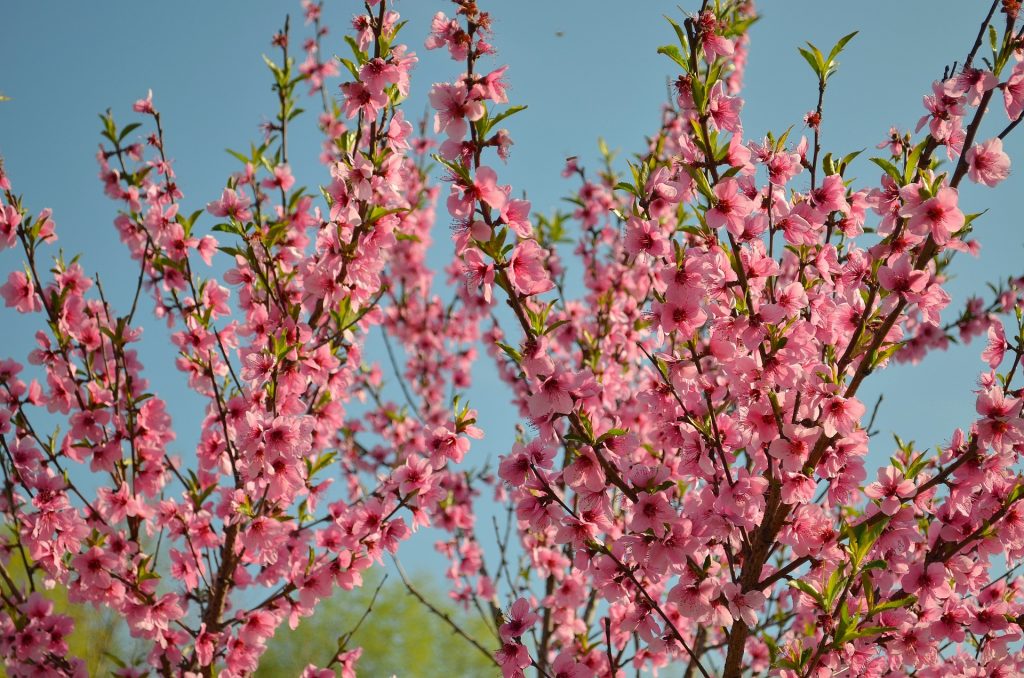
    File photo shows peach trees blooming.

    An Alabama freeze event has left its mark on the state’s peach crop. But it’s not the Alabama freeze event you might be thinking of.

    Edgar Vinson, assistant research professor and Extension specialist in the Department of Horticulture at Auburn University, believes the freezing temperatures experienced in February when the trees were dormant did more damage than the late-season freeze during Easter weekend when the trees were blooming.

    “It’s not the crop they were expecting initially. We did get sufficient chill for most varieties. But the February freeze did do some damage. It did do some fairly significant damage, but we’re expecting a pretty decent crop,” Vinson said. “It didn’t get as cold (Easter weekend) as we had thought initially. I think it got just above freezing. The ambient temperatures got just above freezing. It did do some damage, but I don’t think it did the damage that it did back in February; the freeze that we had in February.

    “If some growers had some wind machines to help protect, they would use them. The wind machines would help in those situations, whereas during the last freeze that occurred in February, it was windy, really cold temperatures; wind machines are not very useful in those cases. A lot of growers would not have even thought to use them because the crop was still so dormant. It was just unexpected that it would do the damage that it did.”

    Vinson expects peach growers to begin harvesting this year’s crop at the end of May, first part of June.

  • Georgia Strawberry Farmer: Disease Wiped Out This Year’s Crop

    Neopestalotiopsis Fruit Rot is not just impacting Florida strawberry producers. It has quickly made its way north. Just ask Georgia strawberry farmer Bill Brim.

    Photo by Natalia Peres/UF: Shows the effect of Neopestalotiopsis Fruit Rot on strawberries.

    “It just wiped (my strawberries) out. As a matter of fact, we sprayed it with roundup (Wednesday),” Brim said.

    Brim’s strawberry production equated to 12 acres.

    “It’s a pile of money, too, the plants; about $60,000 worth of plants,” said Brim, who is in his fifth season growing strawberries at Lewis Taylor Farms, in Tifton, Georgia. “We didn’t have it last year. If we had it, we didn’t know it. It wasn’t noticeable. There might have been a few plants.”

    But that wasn’t the case for this year’s crop.

    Symptoms

    Neopestalotiopsis causes leaf spots on strawberry plants. It develops quickly and produces spores on the leaves. It can cause severe leaf spotting and fruit rot under favorable weather conditions. The disease was first discovered during the 2018-19 season in five farms and was attributed to one nursery source in North Carolina.

    “We’re going to have to change vendors is what I think we’re going to have to do; get them out of California, Canada, somewhere. Can’t grow them in Florida, send them over and plug them out in North Carolina and get a clean plant, don’t look like,” said Brim, who is not the only Georgia strawberry farmer impacted. “It’s not just us, there’s several other growers that have got it, too.”

    Disease instances have increased over the past three seasons. The disease was also discovered in fields that had it the prior season.

    One Florida producer even called it the “Greening of Strawberries.”

  • Breaking Ground: Pecan Trials Planted at UGA’s VOVRC

    UGA CAES photo/County agents Shane Curry, Ross Greene and Zack Williams planting pecan trees at the Vidalia Onion and Vegetable Research Center with Andrew Sawyer, SE District Area Pecan Agent and coordinator of the grant project which includes short-term demonstration plots and long-term research trials.

    University of Georgia Cooperative Extension is conducting pecan research at the UGA Vidalia Onion and Vegetable Research Center (VOVRC) in Toombs County.

    Pecan trees were planted earlier this year and will be the basis for long-term research plots and short-term demonstration plots.

    Research will focus on low-input pecan varieties that can successfully grow in Georgia without incidence of pecan scab. Plots will also serve as hosts for field days for Extension agents and producers.

    Andrew Sawyer, Southeast District Area Pecan Agent, initiated the project last year with a grant from the Georgia Pecan Commission.

    Sawyer compiled a team of specialists, county Extension agents, local growers and growers association representatives to make sure everyone had a hand in the process.

    “This is the essence of true Extension work,” he said of the team effort that helped get more than 140 pecan trees planted in February this year.

    The team planted various low-input cultivars including McMillan, Lakota, Avalon, Excel, Eclipse and Kanza. Sumner, an older variety, was also planted to be used in comparison, due to its susceptibility to pecan scab fungus and popularity among growers in Southeast Georgia. Many seedling trees were also planted which will be grafted with newer varieties in a few years.

    Sawyer and his team will highlight differing management tactics, including fertilizer, pruning, irrigation and spacing regiments and their potential impact on growth and yield.

    “Pruning is a very important cultural practice that is easier to demonstrate than discuss,” explained Sawyer, “so this site will be good for demonstrating the right way to prune pecans within their first four years.”

    Source: UGA Extension