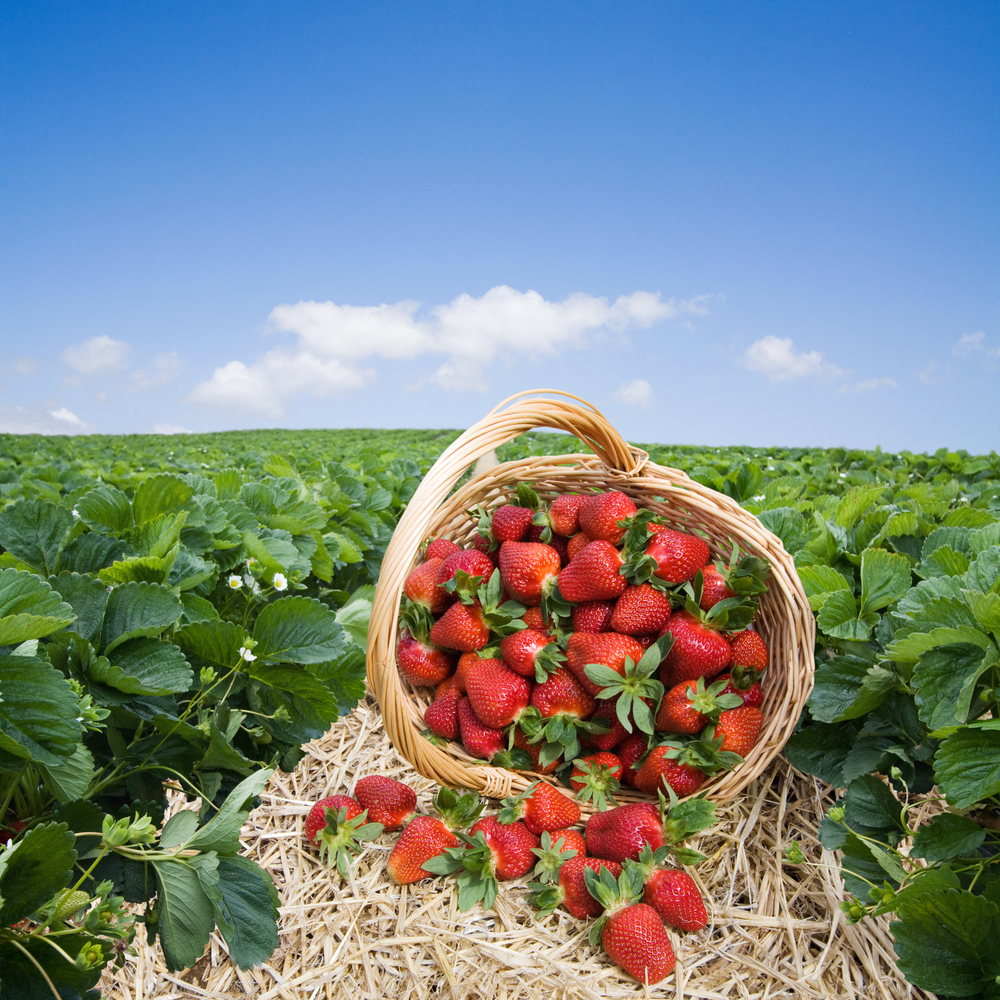
It may be produced only in limited acreage this year, but the Florida Pearl strawberry is already a hot commodity. One of University of Florida (UF)/IFAS strawberry breeder Vance Whitaker’s newest releases is attracting attention from farmers due to its unique whiteish color and pineapple aroma.
UF photo shows white strawberries picked.
“There’s been a lot of media coverage of it. We’ve gotten a lot of calls from people wanting to figure out where they can get them. I would just say the sense from the response is that people are responding well to them,” Whitaker said. “The fact that growers are committing to grow and substantially increase their acreage next year tells me wherever they’re test-marketing them, they’re getting interest. They’re not interested in growing anything they don’t think they can sell.”
Also Known as Pineberry
Whitaker said the white strawberry is also known as the pineberry, since there is a hint of pineapple aroma sometimes when you bite into it. Pineberry is a name that’s been used for some white-fruited strawberries that have existed in small amounts over the years.
The white strawberry’s origin at UF dates to 2012 when strawberry seeds from Japan were sown at the University of Florida. A few small plants recovered. The plants’ pollen was crossed with a Florida variety, and the fruit’s seedlings ranged from white to pink to red.
Leveraging the Market
Whitaker said farmers are looking for a tool to leverage the market, something the other production regions don’t already have. The white strawberry qualifies.
“The 12 acres isn’t a lot, but early returns on the variety have been good. Grower commitments for next season are going way up as far as what they’re wanting to grow and market in the next year. I think it’s been really positive,” Whitaker said.
Strawberries in north Alabama are progressing despite sporadic temperatures and high wind speeds.
File photo shows strawberries picked in a field in a prior season.
“Our cold weather hasn’t been like a constant. It’s been more of a, we’ll have three or four days, maybe seven or eight days of colder weather, and then we’re back up in the 50s and 60s,” said Eric Schavey, Alabama Regional Extension agent in Northeast Alabama. He admits the plants are almost confused when growing through the different spikes or drops in temperature.
“It’s like, I want to work but no I don’t need to. I feel like a plant burns a lot of energy when that happens. We’ve had wet weather. We’ve had wind. We’ve had a lot of days here in the past month or so where the wind has blown 12, 15 miles per hour. You’re just keeping frost cloth on and trying not to damage plants. It doesn’t help the situation.”
Moving Forward
The biggest challenge producers face moving forward is the uncertainty of what February will hold. According to weather.com, temperatures in Gadsden, Alabama are expected to climb as high as 63 degrees on Tuesday before dropping steadily over the next several days to highs that are only in the low to mid 30s next weekend.
“For the most part, strawberries are on track to be good this year; depends on what February brings. You never know about February here in north Alabama,” Schavey said. “February has always been one of the coldest months. It seems like in my lifetime growing up here in north Alabama, February has always been one of the coldest months.”
Photo taken by Jonathan Oliver/UGA: Shows bacterial wilt disease in a blueberry plant.
A blueberry disease that has impacted the Florida industry since 2016 was found in Georgia for the first time in 2020. While there is no cure for bacterial wilt, producers can apply preventative measures to slow down the disease’s progression.
“In Florida, they seem to be having increasing problems with it year after year, probably because the bacteria spreads so easily from farm to farm or even within a farm. It spreads by soil, water, anything that picks up soil or water can move the disease around,” said Jonathan Oliver, University of Georgia (UGA) assistant professor and small fruits pathologist.
Disease Background
Bacterial wilt was first identified in three separate locations in Florida in 2016. The disease was observed for the first time on Georgia blueberries last year at two locations in Clinch County.
Initial symptoms of the disease include marginal leaf necrosis, wilting and plant death, sometimes as quickly as three weeks after infection. Farmers need to be wary that symptoms can resemble bacterial leaf scorch or phytophthora root rot.
Certain Cultivars More Susceptible
Unfortunately, certain cultivars are more susceptible than others, including Arcadia, Indigocrisp and Keekrisp. Cultivars that are moderately susceptible include Emerald, Farthing and Meadowlark.
“It looks like based on what they’ve seen in Florida that certain cultivars have much bigger problems with it. Unfortunately, those are cultivars that are increasingly being grown in Florida and also in Georgia because they have other traits that are good,” Oliver said.
“The more we grow of those cultivars, we definitely will probably see more issues with bacteria wilt. But we may also see it just due to spread. We don’t really have a good handle on what it’s going to look like in Georgia. But in Florida, every year a few more farms are found. I think it’s fairly widespread in parts of Florida now.”
Management relies mainly on prevention; keeping the pathogen out or limiting the movement of infected plants, equipment and soil between farms. Infected plant materials need to be burned.
As disappointing and disheartening last year’s pecan season was for Southeast producers, 2021 has the potential to be worse – if producers don’t take action or if prices don’t improve.
It was a bountiful crop for Georgia with yields projected at 135 million pounds. But considering that pecan trees are alternate bearing (if they produce a good crop one year, they are less likely to produce a similar result the following year), a decreased crop next season will not compensate for the market, if low prices linger.
“If our prices are as bad as they were last year, and we don’t have the volume there, growers are really going to feel the pain then. This year, the prices were low, but it was a really good crop and most growers had enough volume to offset some of the low prices. It may have hurt their feelings but most of them would have gotten enough to pay their bills and keep going,” University of Georgia Cooperative Extension pecan specialist Lenny Wells said.
“If we have a similar situation this year and have a lighter crop as we would expect after such a big year, it could get ugly in that situation.”
Trimming Expenses
Wells is encouraging producers to trim expenses when possible.
“Certainly in the situation that our market is in right now and just not knowing, it may be better than it was last year or it may be the same or it may be worse; we have no way of knowing. In that situation, it would really help to watch your inputs closely,” Wells said.
The two main areas are in fertility and with fungicide sprays. Fertility, which includes lime, potassium, nitrogen, phosphorous and zinc, account for a little more than 10% of variable costs. Fungicides, which include sprays for scab disease, account for about 12%.
“Between those two, if you can find some savings, you can really make a dent in your costs of production,” Wells said.
Soil and Leaf Samples
Soil and leaf samples are crucial in helping producers understand the conditions of nutrients in their orchards. In many instances, nutrient levels in the soil in older orchards don’t need to be replenished every year. That will save producer additional input costs.
“We did a survey back in 2007 that showed for a lot of these nutrients like phosphorus, potassium, zinc, a lot of the older mature orchards, the soil levels are good. There’s going to be some variation based on soil type and location. But some of these nutrients, like phosphorus and zinc especially when you get them to the point they need to be, they’re going to be there for a while. You don’t necessarily have to apply them every single year,” Wells said.
While fungicide sprays for scab disease are essential, especially in production seasons with a lot of rainfall, one alternative is to plant varieties that are much more scab resistant, like Avalon.
Alabama peach trees continue to receive high chill hours to help make a crop this upcoming spring.
File photo shows peaches growing.
According to the Alabama Extension, chill hours remain high at various locations throughout Alabama.
As of early Friday morning, there were 678 standard chill hours at the Auburn University Turf Unit in Auburn, Alabama, compared to 617 last year. There were 860 chill hours at the Chilton County REC in Thorsby, Alabama, compared to 778 last season. There was 781 chill hours at the EV Smith Research Center HQ in Shorter, Alabama, compared to 645 last year. There was 1,182 chill hours at the Upper Coastal Plain Substation in Winfield, Alabama, compared to 1,084 last year.
Cool temperatures are expected to continue through next week. According to weather.com, temperatures are expected to drop in the 20s next Friday (Feb. 12) through Sunday (Feb. 14).
Peaches need chill hours to mature. The required chill hours depend on the peach variety.
Recent work by researchers at the University of Georgia (UGA) has targeted developing more robust smart irrigation scheduling methods for blueberries. Two main methods have been the development of a smart irrigation scheduling app and utilizing an unmanned aerial system (UAS).
File photo shows blueberries growing.
Wesley Porter, associate professor and Extension precision agriculture and irrigation specialist at UGA, discussed these new methods during the 2021 virtual Southeast Regional Fruit and Vegetable Conference.
Irrigation Scheduling App
According to Porter, Georgia blueberry growers now have access to the Blueberry app, a smartphone application to supplement their practical knowledge with technical data on when to irrigate crops.
The Blueberry app runs a model that uses reference evapotranspiration (ET) data and the Penman-Monteith equation to calculate the irrigation needs of blueberries and predicts the crop ET data for the next seven days.
According to Porter, by knowing the total ET for the next seven days and the crop coefficient values of the blueberries, the crop ET of blueberries can be calculated, and irrigation events adjusted accordingly.
Furthermore, the app also eliminates the use of soil moisture sensors, reducing overall expenses.
To download the app, search for ‘SmartIrrigation Blueberry’ in the app store.
UAS Irrigation Research
UGA is also conducting UAS irrigation research. The research trial, taking place in Alma, Georgia, is using UAS to record canopy properties in a field, containing 16 soil moisture sensors and receiving two different irrigation treatments.
According to Porter, the thermal images obtained from the UAS are a valuable tool to quickly detect irrigation related issues. The technology has the ability to present the vigor of the blueberries and compare the effect of different irrigation treatments on the blueberries.
Operating and learning how to use the software on an UAS can come with a learning curve, so knowing how to use them accurately will produce the most accurate results, Porter says.
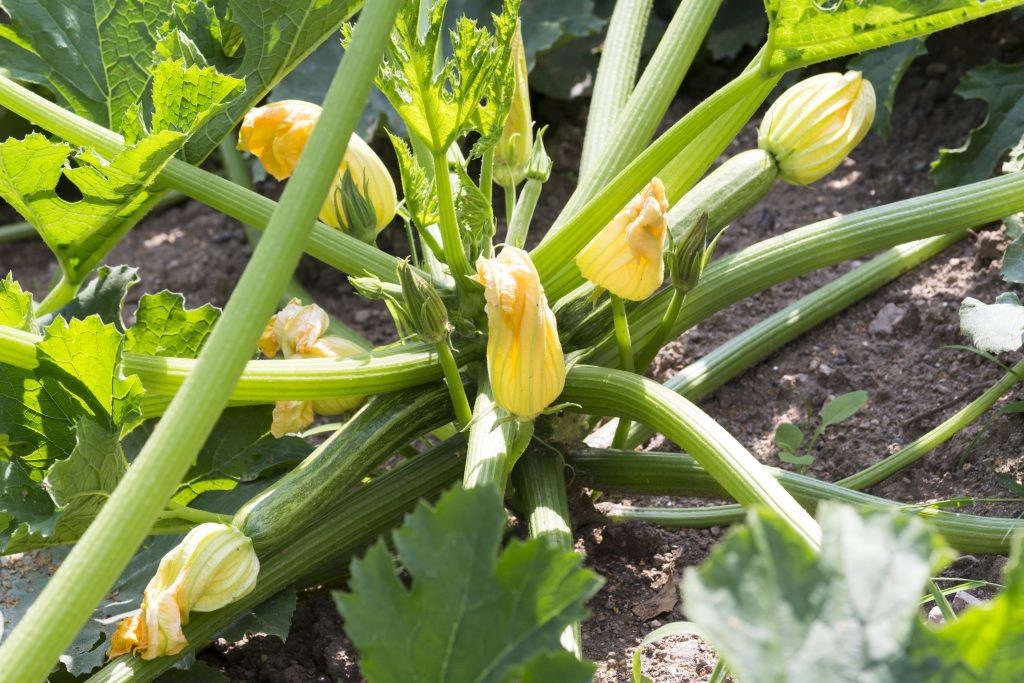
Less than ideal weather conditions this week severely impacted vegetables grown in the South Florida area. Sam Accursio, who’s harvesting green beans and yellow and green squash in Homestead, Florida area, confirmed damage to his crops following this week’s extreme wind speeds.
File photo shows squash. Squash, a crop produced in South Florida, was one of numerous crops impacted by high wind speeds this week.
“What we’ve had the last three days is 30 mile per hour winds,” said Accursio on Wednesday. “That’s what has really hurt us. It has burned the west side of the bean plant. The squash took it a little better, but the beans, the plant is burned.
“It’s just like me and you standing outside, and our faces will just get burned if we stand there long enough.”
Challenging Winter Weather
It continued a pattern of difficult weather conditions for South Floridians trying to produce a crop. Cooler than normal temperatures significantly slowed volumes of produce headed to the market, according to South Florida Pest and Disease Hotline.
The challenging weather conditions started in the fall with extreme rain events, including Hurricane Eta in early November.
“We’ve been behind on everything maturing,” Accursio added. “We have been unseasonably cool. This is the coolest we’ve been in 10 years for the last 45 days. It’s been crazy, because prior to that, the rain devastated us. We grew our crops in October, November and December with 30 inches of rain. When that finally stopped, we had beautiful weather in January, a little bit too cold but it was beautiful; not a drop of water.
“We have some outstanding crops, but now, this three days of wind, it has just devastated the actual squash; not the plant. The plant took it better. But with the beans, the plants took it worse and the beans still look pretty. It’s kind of opposite.”
Accursio said they still harvested the damaged fruit but either had to throw it away or package as a No. 3 for food service.
South Florida producers can take solace in knowing calmer and sunnier days are ahead.
“We are going to see 80 degrees by the weekend here. We’ll get things growing again pretty quick,” he added.
JASPER, Fla. — Green Point Research, an international phytocannabinoid-rich biomass originator and processor, celebrated the official opening of its Hamilton County headquarters and 32-acre Cannabis Center of Excellence (CCoE) with a ribbon-cutting event held in partnership with Hamilton County Board of Commissioners and Hamilton County Economic Development Authority (EDA), and North Florida Economic Development Partnership.
The event came just several weeks after the company announced its purchase of the property, located in an Opportunity Zone in an economic development agreement with the county.
David Hasenauer welcomed attendees and shared his vision for the future of the campus location that he expects will be a Southeast hub for innovation, sustainable agriculture and economic prosperity. Guest speakers included Deborah Tannenbaum, Florida’s Deputy Commissioner of Agriculture; Holly Bell, Florida Department of Agriculture and Consumer Services (FDACS) Director of Cannabis; Randy Ogburn, Hamilton County Board of Commissioners Chairman; and Chadd Mathis, Hamilton County Economic Development Authority Executive Director.
The campus is already serving as a logistics and drying hub for the company. In December 2020, more than 150,000 pounds of hemp biomass were shipped out of the facility to customers across the Southeast, primarily in Florida. The company’s hemp dryer has also been installed at the facility and provides unique large-scale capacity with its ability to dry greater than four input tons of hemp her hour. Extraction and laboratory equipment is being installed this week that will allow the company to extract and process cannabidiol (CBD), and other refined cannabinoid products.
“Our goal has always been to serve farmers by providing them with the hemp services they need to be successful,” said David Hasenauer, Green Point CEO. “The newly-installed dryer and infrastructure additions will help provide farmers with the scale, accessibility, and expertise needed to more productively and profitably farm hemp. We could not be more pleased to be Cultivating A Better Future in Hamilton County, one of the top producing agriculture counties in the country.”
“Florida’s reputation as an agricultural and economic powerhouse is driven by its superior environmental conditions such as abundant sunlight and rich soil, and a culture of growth and innovation, as demonstrated by this facility,” said Deborah Tannenbaum, Florida Deputy Commissioner of Agriculture. “Congratulations to Green Point Research and Hamilton County on the significant progress with this facility and for the agriculture industry.”
Florida’s Director of Cannabis, Holly Bell, provided context on the growth of the hemp industry and the opportunity that exists for the county.
“Florida has over 23,000 acres approved for cultivation, yet in 2020, only 293 acres were planted,” Bell stated. “Over a third of the acres successfully planted in the state in 2020 were in Hamilton County with Green Point Research and local farms. Hamilton County has demonstrated its capacity for agriculture excellence, and we look forward to continued progress with Green Point’s newly expanded capabilities.”
“Hamilton County’s friendly business climate and superior environmental conditions make it an ideal location for agriculture activity,” said Randy Ogburn, Hamilton County Board of Commissions Chair. “We are very excited to see the progress Green Point Research has already made in its infrastructure and facility build out.”
“We continue to be impressed with David Hasenauer’s vision for Green Point Research and the impact the company will bring to our region,” said Chadd Mathis, Hamilton County Economic Development Authority Executive Director. “As a result of this investment, we expect the agriculture and manufacturing interest in this area will continue for decades to come.”
The company successfully yielded two hemp harvests last year, including one that was deemed the largest legal hemp harvest in the state’s history. Green Point is gearing up for a busy hemp planting season this spring as many farmers will be looking for expertise and services as they prepare to expand current hemp farming acreage or add hemp to their existing crop rotations.
Green Point Research (GPR) is a vertically integrated hemp phytocannabinoid-rich biomass originator and processor founded in 2016. GPR controls its supply chain from seed to processing bulk cannabinoids for business-to-business sale. Satividol, a cannabidiol (CBD) softgel, is among the products the company produces. Contact Green Point Research at 954-500-HEMP to learn more about the Green Point Method® and how to purchase seeds, seed starts, and clones. For more information, please visit www.greenpointresearch.com.
Additional coverage provided by Riverbend News and others.
About Green Point Research
Green Point Research (GPR) is a vertically integrated hemp phytocannabinoid-rich biomass originator and processor founded in 2016. GPR controls its supply chain from seed to processing bulk cannabinoids for business to business sale. Satividol, a cannabidiol (CBD) softgel, is among the products the company produces. Contact Green Point Research at 954-500-HEMP to learn more about the Green Point Method and how to purchase seeds, seed starts, and clones. For more information, please visit www.greenpointresearch.com.
Photo by Chris Tyson/UGA; Shows pecan plantings being done at the Vidalia Onion and Vegetable Research Center.
The University of Georgia (UGA) broke ground on Wednesday at the UGA Vidalia Onion and Vegetable Research Center for a new 5-acre pecan research and demonstration plot.
Photo by Chris Tyson/UGA: Shows a hole for a pecan tree to be planted.
The planted trees will highlight research that focuses on new and current varieties and be used as a location for producer demonstrations as well as other research projects.
Virtual Production Meeting
The University of Georgia will host virtual production meetings on Feb. 9 at 9 a.m. and March 9 at 6 p.m. Pecan team members including Lenny Wells (Horticulture), Angelita Acebes (Entomology), Jason Brock (Plant Pathology) and Andrew Sawyer (SE Area Pecan Agent) will provide presentations.