Author: Clint

  • United Fresh Launches 2021 Produce Industry Compensation Survey

    The United Fresh Produce Association launched its 2021 Compensation Survey on Monday for the fresh produce industry. The data collected will be published in a report that will assist produce industry employers in understanding critical compensation benchmarks.

    For 2021, additions to the survey include two new positions focused on sustainability and a series of questions related to how companies have changed their salary and benefit practices in the wake of COVID-19. The survey also will collect compensation and benefits data from produce companies for more than 30 full-time positions.

    The survey is open to any U.S. or Canadian-based produce employer, including grower-shippers, brokers, wholesaler-distributors, importers, exporters and fresh-cut processors. The survey is administered every two years, and the results will be published this June in a detailed report designed to help produce companies directly compare their salaries and benefits for more than 30 full-time positions.

    The survey is open at www.unitedfreshsurvey.com to any U.S. or Canadian-based produce company until March 12.

    (From the National Association of Farm Broadcasters)

  • NASDA Seeks Flexibility to Protect Farm Workers, Specialty Crop Industry

    The National Association of State Departments of Agriculture (NASDA) asked the Department of Agriculture this week for more flexibility in the use of Specialty Crop Block Grants. NASDA seeks additional flexibility in the Consolidated Appropriations Act of 2021 to enhance its response to the continued demands COVID-19 places on the industry.

    NASDA CEO Dr. Barb Glenn stated, “challenges impacting our food supply related to COVID-19 are still present, and continued flexibility is needed.”

    In a letter to acting USDA Secretary Kevin Shea, Glenn outlined additional ways state agriculture departments could use the grants if given approval. Examples included implementing vaccination programs for agricultural and food workers, building COVID-19 related infrastructure and offsetting increased costs to providing safe worker housing and transportation.

    Since the onset of the pandemic, NASDA members have continuously worked to help food producers and workers stay safe and meet their communities’ needs. Through additional and allowed flexibility in funding programs, NASDA members would be able to leverage and maximize local solutions for local recovery efforts.

    (From the National Association of Farm Broadcasters)

  • ITC Blueberry Vote Unanimous

    The U.S. International Trade Commission (USITC) determined on Thursday that fresh, chilled, or frozen blueberries are not being imported into the United States in such increased quantities as to be a substantial cause of serious injury, or the threat of serious injury, to the domestic industry producing an article like or directly competitive with the imported article.

    The Commission’s determination resulted from a 5-0 vote.  Chair Jason E. Kearns, Vice Chair Randolph J. Stayin, and Commissioners David S. Johanson, Rhonda K. Schmidtlein, and Amy A. Karpel voted in the negative.

    The determination was made in the context of an investigation initiated on Sept. 29, 2020, under section 202 of the Trade Act of 1974 (19 U.S.C. § 2252) at the request of the U.S. Trade Representative. Information about this investigation and global safeguard investigations in general can be found here:  https://usitc.gov/press_room/documents/blueberries_factsheet_finalassubmittedforposting.pdf

    As a result of today’s vote, the investigation will end, and the Commission will not recommend a remedy to the President.  The Commission will submit its report containing its injury determination and the basis for it to the President by March 29, 2021.

    A public report concerning the investigation will be available after the Commission submits its report to the President.

  • American Blueberry Growers Alliance Statement on ITC Decision

    WASHINGTON, February 11, 2021 – The American Blueberry Growers Alliance (ABGA) released the following statement regarding the outcome of Thursday’s International Trade Commission (ITC) verdict regarding the global safeguard investigation into imports of fresh, chilled or frozen blueberries: 

    “The American Blueberry Growers Alliance (ABGA) is disappointed with the decision today by the U.S. International Trade Commission (ITC) to find that rising imports of foreign-grown blueberries are not a substantial cause of serious injury, or threat of serious injury, to domestic farmers. We disagree with the outcome of the Commissioner’s investigation.

    “Throughout this case, blueberry growers across the United States provided the ITC with extensive data and personal experiences about the significant harm caused by surging imports on the supply and pricing of blueberries in the U.S. market, especially during our critical growing and harvest seasons. We believed this data and testimony made a compelling case that safeguard measures were critical to the survival of our domestic farmers, and we are disappointed by the Commission’s decision.

    “We actively participated in this investigation because we believe U.S. trade laws must support a level playing field for American farmers – one in which lower labor costs and more lax environmental standards in other countries does not drive our domestic growers out of business. The outcome of this investigation reveals deficiencies in U.S. trade laws, which unfortunately will put the long-term viability of the domestic blueberry industry in jeopardy.

    “We have received strong support from members of Congress, state elected officials, agricultural associations and other farm interests throughout this investigation, and we plan to work with these groups on other remedies to ensure that American consumers continue to have access to fresh, high-quality, safe, domestically grown blueberries.

    “Meanwhile, our domestic growers will face another year of economic uncertainty as they grow and harvest their 2021 blueberry crop. No doubt, imports will now accelerate to overwhelm our domestic market this year. This will cause even greater hardship on family-owned farm operations, as well as on providers of packing and freezing services, and damage to local communities and tax bases.”

    About American Blueberry Growers Alliance

    American Blueberry Growers Alliance (ABGA) is a national association representing blueberry growers and farmers in the United States. ABGA provides a unified voice for blueberry growers in states across the country, including California, Florida, Georgia, Michigan, Oregon and Washington, advocating on behalf of their interests and for the long-term viability of the domestic blueberry industry. For more information, visit: americanblueberrygrowers.com.

    Read here how Georgia Fruit and Vegetable Growers Association Executive Director Charles Hall is disheartened following the ITC decision today.

  • Very Disheartening: GFVGA Executive Director Reacts to ITC Blueberry Imports Verdict

    It wasn’t the verdict Charles Hall envisioned.

    File photo shows a pile of blueberries.

    “Very surprised and very, very disappointed,” he said following Thursday’s International Trade Commission (ITC) vote on the Section 201 investigation into serious injury surrounding blueberry imports.

    The ITC deemed that imports of fresh, chilled or frozen blueberries are not a serious injury to the domestic industry. It goes against what members of the American Blueberry Growers Alliance testified about during the virtual hearing with the ITC in January. Statistics say blueberry imports have increased exponentially, while the Southeast farmers have paid the price.

    “It’s very disappointing for the effort put into this and the data and personal experiences and the harm that’s been shown and they’ve decided there hasn’t been any harm shown,” said Hall, executive director of the Georgia Fruit and Vegetable Growers Association (GFVGA). “It’s very disheartening.”

    Staggering Statistics

    “The other side was trying to make the case that the imports of blueberries did not have an effect. Since 2009 to 2019, I think is the data that we’ve got, it was over 2,000% increase. It’s just amazing. They basically won the case, won the battle; their increasing in imports didn’t have an effect on prices dropping,” Hall added.

    “I don’t understand how you can have that many blueberries come into the market, prices dropping the way they were dropping and the imported berries don’t have an effect on that.”

    The investigation ends as a result and the commission will not recommend a remedy to the President. But it doesn’t end the fight of blueberry farmers in the Southeast. They’re imploring consumers to buy local.

    “We’ll be looking at whether there’s other ways to adjust the U.S. trade laws. The sad part about this is, they have shown they can produce and ship in product, whether it’s berries or whatever it might be, other vegetables with $10 a day labor. They can ship it in cheaper than we can produce it here,” Hall said. “It’s going to be up to the American consumer to support t he American farmer if we’re going to continue to produce fruits and vegetables in the U.S.”

  • Case Closed: ITC Finds No Serious Injury Regarding Blueberry Imports

    File photo shows blueberries.

    Southeast blueberry producers were dealt a blow today regarding the 201 Investigation into serious injury that imports have had on the domestic industry.

    The U.S. International Trade Commission determined on Thursday via vote that, “fresh, chilled or frozen blueberries are not being imported into the United States in such increased quantities as to be a substantial cause of serious injury, or threat of serious injury, to the domestic industry producing an article like or directly competitive with the imported article in the United States.”

    The investigation ends as a result and the commission will not recommend a remedy to the President.

  • Georgia Commercial Grape IPM Meeting

    University of Georgia Cooperative Extensions will host a virtual Grape IPM meeting on Feb. 25 from 9 a.m. to 11:30 a.m. Specialists will update farmers and industry leaders on new information you will need for the control of diseases, insects and weeds in 2021

    Clark MacAllister and other county agents will be hosting a virtual Grape IPM Meeting on 25 February from 9:00 till 11:30. Specialists will update you on new information you will need for the control of diseases, insects and weeds in 2021. You will need to register for this event in order to participate, so pre-register through the link listed below:

    https://tinyurl.com/CommercialGrapeIPM2021

  • Managing Medallion: New Strawberry Variety Requires Different Management Tactics

    The new Florida Medallion strawberry requires a different management strategy than the other varieties currently on the market. But the rewards are potentially great for Florida growers who choose to produce the latest variety release from the University of Florida/IFAS.

    Vance Whitaker

    Vance Whitaker, strawberry breeder at the University of Florida Gulf Coast Research and Education Center, has a couple of recommendations based on the compact nature of the plant.

    “I suggest targeting planting dates earlier in the planting period from Oct. 1 to 10. Because of the compact plant, you can plant this variety fairly early without overgrowing the plant,” Whitaker said. “This variety (also) needs more nitrogen fertilization and maybe more fertilization for all nutrients than Brilliance and Sensation.”

    Whitaker also suggests that growers target Medallion to fields that have heavier or wetter soils. Because the plant needs to be pushed a little bit more, that maybe a little bit more difficult to achieve on dry, non-organic soils.

    Photo by Vance Whitaker shows Medallion strawberries in a field.

    Due to Medallion’s susceptibility to Charcoal Rot disease, growers need to avoid planting in fields with Macophomina infestations.

    Stock availability of Medallion is limited. Whitaker estimates between 150 and 200 fruiting acres in 2021-22. But that should increase up to 2,000 acres in 2022-23.

    “Florida Medallion is a variety with really great fruit quality and flavor. It is a compact plant that has fewer runners in the fruiting field but is also going to need to be managed a little bit differently than the other varieties,” Whitaker said.

  • Hemp Approval Program Now Available From UF/IFAS

    hemp program
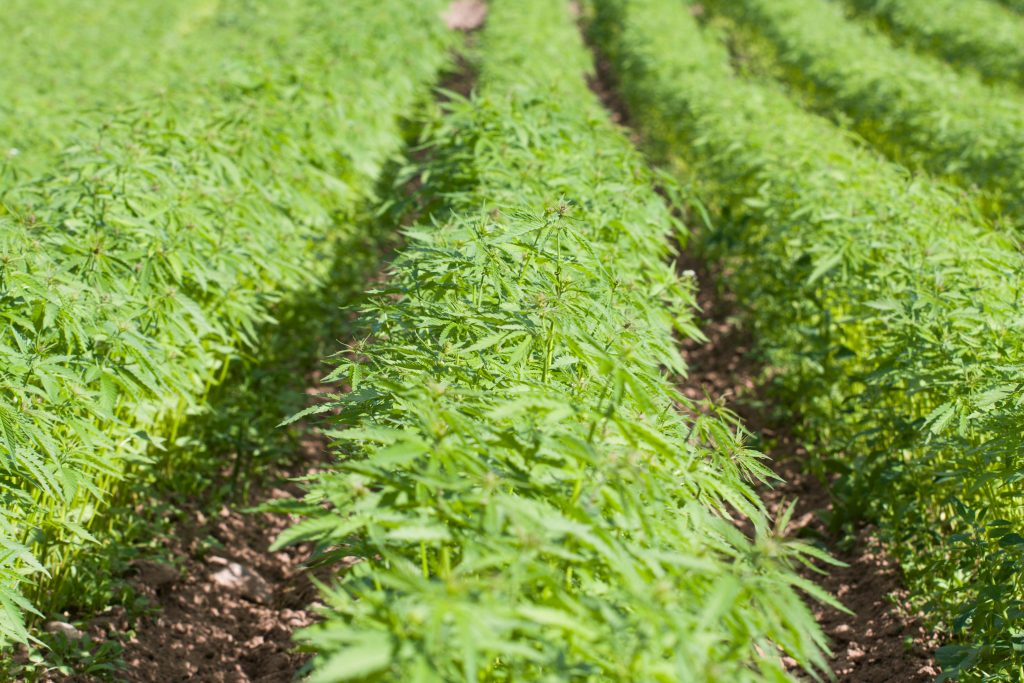
    Photo shows a hemp field.

    By Tory Moore, University of Florida/IFAS

    APOPKA, Fla. — Owners of industrial hemp genetics can now submit their varieties for approval by the University of Florida for legal sale within the state.

    UF/IFAS, in partnership with Roseville Farms, has established a program that provides a science-based evaluation of industrial hemp varieties. As a crop new to Florida, all industrial hemp material must be approved prior to production and sale within the state per state law and Florida Department of Agriculture and Consumer Services (FDACS) rules.

    The approval program is led by Brian Pearson, assistant professor of crop management at the UF/IFAS Mid-Florida Research and Education Center.

    “The ultimate goal with this program is for growers to have knowledge of that plant and its performance when they purchase it,” Pearson said. “What’s unique about the UF/IFAS approval program is that we are growing all of these plants indoors under very closely controlled environmental conditions. We hope growers feel confident in the high standards and rigor that UF/IFAS puts into this program and know that they can rely on our results and efficacy when approving these varieties, or cultivars as they are called per state statute and FDACS rules.”

    Growers interested in having their hemp varieties or cultivars approved by UF/IFAS will visit the Clonally Propagated Hemp Cultivar Approval Program website at https://mrec.ifas.ufl.edu/research/HempApproval/ to access and submit an online application.

    Once approved to participate in the UF/IFAS program, producers will submit rootless cuttings and pay a one-time fee that covers the THC testing portion of the approval process. The cuttings are grown under a controlled environment at Roseville Farms for 12 weeks and evaluated for THC levels to ensure the submitted cultivars test at or below the 0.3% total THC levels required by state statute.

    Cultivars that meet this requirement will be approved by UF/IFAS and the approval will be sent to FDACS. This approval allows the owner of the approved hemp variety or cultivar to legally propagate and sell the vegetative cuttings here in Florida.

    “Transparency with hemp genetics and the potential for the industry to thrive with adapted genetics is extremely important,” said Jerry Fankhauser, lead oversight manager of the UF/IFAS Industrial Hemp Pilot Project. “We don’t have a good handle on what hemp cultivars will grow and develop well here in the state of Florida under our sub-tropical environmental conditions. We are trying to understand that by employing science in a consistent, controlled, 12-week grow process we may better understand which cultivars may be suitable for the Florida market.”

    For more information on the approval process and how to participate, visit the UF/IFAS Industrial Hemp Pilot Program approval process website.

  • Registration Closes Soon for Virtual Georgia Produce Safety Alliance Training

    Registration will close soon for the virtual Georgia Produce Safety Alliance Training, which will be held Feb. 23 and 24 from 8 a.m. to noon. Registration closes Tuesday, Feb. 16 and is limited to 15 participants.

    This two-day online workshop is offered to produce growers. The training will cover the standardized curriculum designed by the Produce Safety Alliance, which meets the regulatory requirements of the Produce Safety Rule under FSMA (Food Safety Modernization Act). The course will provide a foundation of Good Agricultural Practices (GAPs) and co-management information, FSMA Produce Safety Rule requirements and details on how to develop a farm food safety plan. Individuals who participate in this course are expected to gain a basic understanding of:

    • Requirements in the FSMA Produce Safety Rule and how to meet them successfully;
    • Microorganisms relevant to produce safety and where they may be found on the farm;
    • How to identify microbial risks, practices that reduce risks, and how to begin implementing produce safety practices on the farm; and
    • Parts of a farm food safety plan and how to begin writing one.

    Further information is available on www.georgiaproducesafety.com or by viewing this detailed flyer. For questions, please email Maggie Brown or Elizabeth Danforth.