Author: Clint

  • Farmers Need to Beef up Security During Desperate Times

    A tractor and trailer harvesting potatoes in Hastings, Florida. Photo taken 06/03/15.

    By Clint Thompson

    Farmers need to beef up their security amid the coronavirus pandemic, according to Gene McAvoy, Associate Director for Stakeholder Relations for the University of Florida IFAS Southwest Florida Research and Education Center.

    As unemployment continues to skyrocket across the country, this often leads to an increase in theft instances. McAvoy said farmers are vulnerable right now since fewer people and eyes are on the farm.

    “When we were back in the recession era in the middle part of 2008, 2009, we saw a big up-take in unemployment. People are hungry. If you grab a box of chemicals on a farm or grab a couple of boxes of chemicals … that stuff is worth $400, $500 a jug sometimes,” McAvoy said. “You can grab three or four boxes and run. You’ve got some money to earn. Then they’ll turn around and sell it to unscrupulous buyers looking for a deal.”

    He’s already received reports of a couple of animals being slaughtered, 16 head of cows stolen and equipment taken in two other instances.

    McAvoy stresses to producers to take extra precautions during these desperate times.

    “Mark equipment in a place that’s not readily visible. If you lose a tractor or a disc or whatever, you have markings on it. So if the sheriff gets it or you see it, you can identify it,” McAvoy said. “Up your security. Make sure you’re checking your gates. Don’t keep a lot of inventory on hand. As I said, especially chemicals, you grab four gallons of certain products, you’re looking at close to a thousand bucks or more in one box. Just get it on an add-needed basis is a big help.

    “Camera systems are really cheap these days. You can get, for a few hundred dollars, wireless cameras that you can put around your strategic areas, your entrance gates, your spray shed, your office, your equipment barn. Oftentimes, they can be programmed to send alerts to your cell phone.”

  • Here’s Some Tips on Handling COVID-19 on Produce Farms and in Packinghouses

    By Laurel Dunn (UGA CAES News)

    Wash hands with soap and water for at least 20 seconds.

    While there is no evidence that the COVID-19 virus is a food safety concern, it is a worker health concern as it spreads via close person-to-person contact or by contact with contaminated surfaces.

    Food does not appear to be a likely cause of COVID-19 transmission, but many of the same practices used to prevent foodborne illness on foods should be used to reduce the likelihood of COVID-19 contamination on fresh produce and the risk of COVID-19 spreading among workers.

    Producers should educate workers on COVID-19 symptoms, how it spreads and how to reduce the spread of the disease.

    Following are some guidelines from University of Georgia Cooperative Extension to share with employees:

    • Instruct workers to stay home if they are sick (coughing, sore throat, fever, diarrhea, vomiting, etc.).
    • Reassure employees that they will not be punished for missing work due to illness.
    • Have a plan in place and communicate in advance how you will address workers who do not want to miss a paycheck (paid sick leave, etc.).
    • All employees must wash their hands frequently throughout the day with soap and water for at least 20 seconds. This includes when employees arrive to work, before they handle food, after breaks or after using the restroom, etc.

    For more information, see: UGA CAES Newswire.

  • Fruits and Vegetables Next Stop on AFF’s Virtual Field Trip

    By Clint Thompson

    Children quarantined at home because of the coronavirus pandemic have a unique opportunity to learn about fruits and vegetables via social media. Alabama farmers, including Allie Logan and sister Cassie Young, will teach about fruits and vegetables as part of an ongoing virtual field trip offered through the Alabama Farmers Federation Facebook page, on Friday, April 10.

    The sisters are part of Backyard Orchards, an Agritourism attraction in Barbour County, Alabama. They’ll be discussing strawberries, which is part of their U-pick business.

    The Alabama Farmers Federation wants to take children on virtual field trips to help them learn about the different agricultural sectors that comprise the state. It will be offered every Friday morning at 10 (CT) through May 22.

    Last Friday, Jonathan Sanders, a farmer in Coffee County, talked about peanuts and other row crops that are produced in the Wiregrass. The show attracted more than 5.2 thousand views.

    Mary Wilson Johns, Alabama Farmers Federation Director of News Services, said the program offers parents and caretakers a chance to allow farmers to educate children about all things agriculture.

    “I know that this is just uncharted territory for a lot of parents, a lot of students. By Fridays at 10 in the morning, you might be at the end of your rope trying to figure out what you are going to do today to keep the kids engaged,” Wilson said. “Hopefully, these farm tours will fill that need and these links to those other resources will continue that education so that students will learn a whole lot more about where their food, fiber and timber products come from.”

  • Produce Market Sours on Florida, Georgia Farmers

    covid
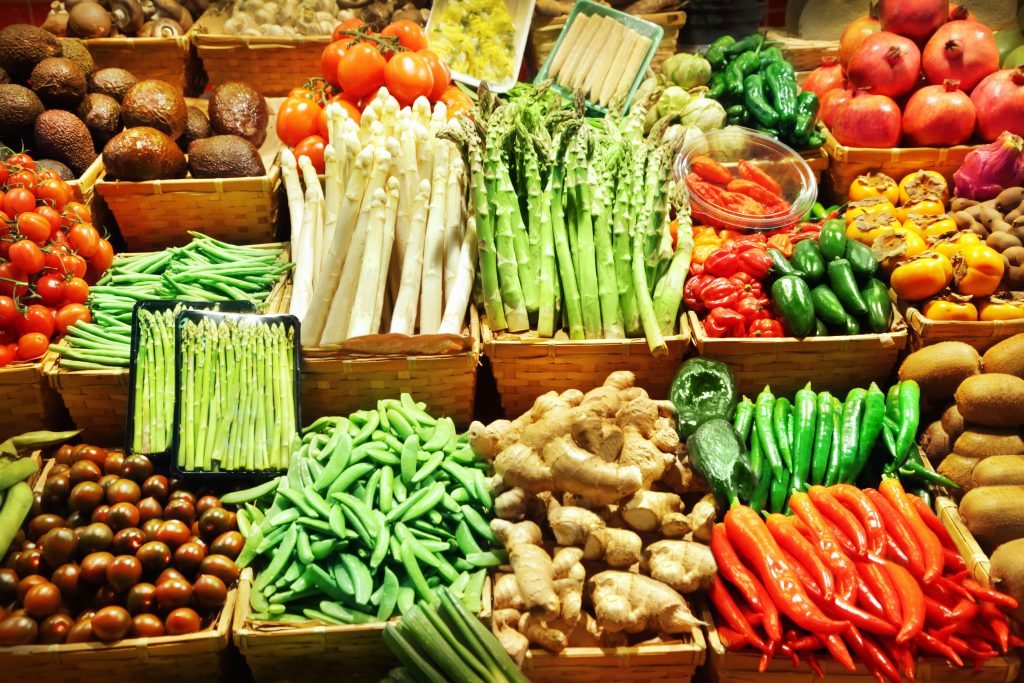
    Vegetables on sale at a market.

    By Clint Thompson

    One of the largest produce farmers in Georgia is nervous about the impact the coronavirus impact is having on produce farmers in the Southeast.

    Bill Brim, part owner of Lewis Taylor Farms in Tifton, Georgia, is in the middle of harvesting some of his fruits and vegetables and has already seen a decrease in demand, amid the virus leading to closures of restaurants nationwide.

    “Our greens and broccoli season, it’s way down. We’ve lost thousands of boxes of orders because of this coronavirus,” Brim said. “We’re not harvesting right now unless we have an order on greens, (otherwise) we’d just have to dump it. We’re just not able to sell it. Food service has just dropped down where, we were doing two or three loads per week for food service, just on kale, and it’s gone to nothing.

    “It’s way down from what it normally is.”

    Brim said his produce is divided 60% food service to 40% retail. Like his brethren in Florida, Brim has been impacted by the orders of self-quarantine.

    “When it first started with the coronavirus down in Florida, prices were real high. Cucumbers went from $42 per box to $10 per box and then to no sales at all down in Florida,” Brim said. “They’re harrowing up cucumber fields and squash fields. Anything that’s on bare ground they’re harrowing it up and getting rid of snap beans and sweet corn. It’s not good.”

    Lewis Taylor Farms grows more than 6,500 acres of produce each year. Brim produces strawberries, turnips, mustard, kale, collards and broccoli as part of his farming operation. A once hopeful outlook for the 2020 season has soured quickly.

    “Crop’s coming on, looks good, I just hope we’ll have a market to send it,” Brim said.

    Brim established himself as an industry leader when he, along with Ed Walker, purchased Lewis Taylor Farms in 1985. Over the next five years, Brim helped transform Lewis Taylor Farms into a diversified transplant and vegetable production farm operation.

    When Brim became a co-owner of Lewis Taylor Farms, it had only 87,000 square feet of greenhouse production space. The farm now boasts 81 greenhouses with more than 649,000 square feet of production space.

  • Fried, Ag Associations Urge USDA to Act Quickly on COVID-19 aid

    commissioner
    Nikki Fried
    Florida Agriculture Commissioner


    The CARES Act, a $2 trillion federal stimulus bill, was signed into law March 27 to aid American businesses and citizens who have been severely affected by COVID-19. A $9.5 billion allocation was set aside for American farmers, and Florida Commissioner of Agriculture Nikki Fried is asking the USDA to act immediately in getting them their distribution.

    Fried sent a letter this week to U.S. Secretary of Agriculture Sonny Perdue urging the USDA to act as quickly as possible, especially on a Section 32 purchase, which gives USDA the authority to buy surplus crops and distribute them to child nutrition programs and food banks.

    “I applaud our farmers and producers who have shown unbelievable resilience as they continue to work day in and day out to feed our communities during this trying time,” Fried said in the letter. “Now, we must make sure our farmers, who are also struggling in the current market even as they continue to provide for others, are not left behind and food is not left to waste.”

    FFVA is working closely with FDACS and other organizations to press USDA to aid growers in three areas:
    •        An expedited Section 32 purchase
    •        Direct payment to growers based on losses  
    •        A request for USDA to cover losses when PACA claims are filed and the buyer is no longer in business

  • Congressman Scott: Apply Today for Paycheck Protection Program

    By Clint Thompson

    The Paycheck Protection Program might be an option for farmers to consider, but Congressman Austin Scott implores those interested to apply today.

    Austin Scott

    The recently passed $2 trillion Coronavirus Aid, Relief, and Economic Security (CARES) Act, which is intended to provide financial relief amid the coronavirus pandemic, includes $350 billion for the Paycheck Protection Program. It is designed to aid small businesses.

    “There are significant questions that remain out there about whether or not farmers can actually apply for and get relief from the Paycheck Protection Act. Here’s the best advice I can give you. You need to be talking with your lender and you need to look at the application. If you can answer those questions honestly, then you need to put an application in,” Scott said. “When I say put it in, I don’t mean you need to put it in tomorrow. I mean you need to put it in today.”

    Scott said that according to the Small Business Administration there is an estimated 30 million small businesses that are eligible for paycheck protection relief, which will provide eight weeks of financial assistance. Scott expects funds to run out quick.

    “My concern has been based on the $350 billion number that if you just divide that by the number of small businesses, my fear is that we’ve over-promised on what we’re going to be able to do on the paycheck protection, simply based on the $350 billion being divided by 30 million businesses. You come up with $11,600 per business. If only half of the people apply that’s $23,000 per business,” Scott said. “You’re talking about two months payroll plus rent and utilities. I think the money goes and I think it goes very quick. In fact, I do not believe there will be money left at the end of the day today.

    “The question comes, when does it get replenished? And not just if, but if it gets replenished and when would it get replenished? I think you’re talking about well over a month before any additional legislative action is taken.”

  • Alabama Extension Specialist Cautiously Optimistic About Peach Crop

    peaches
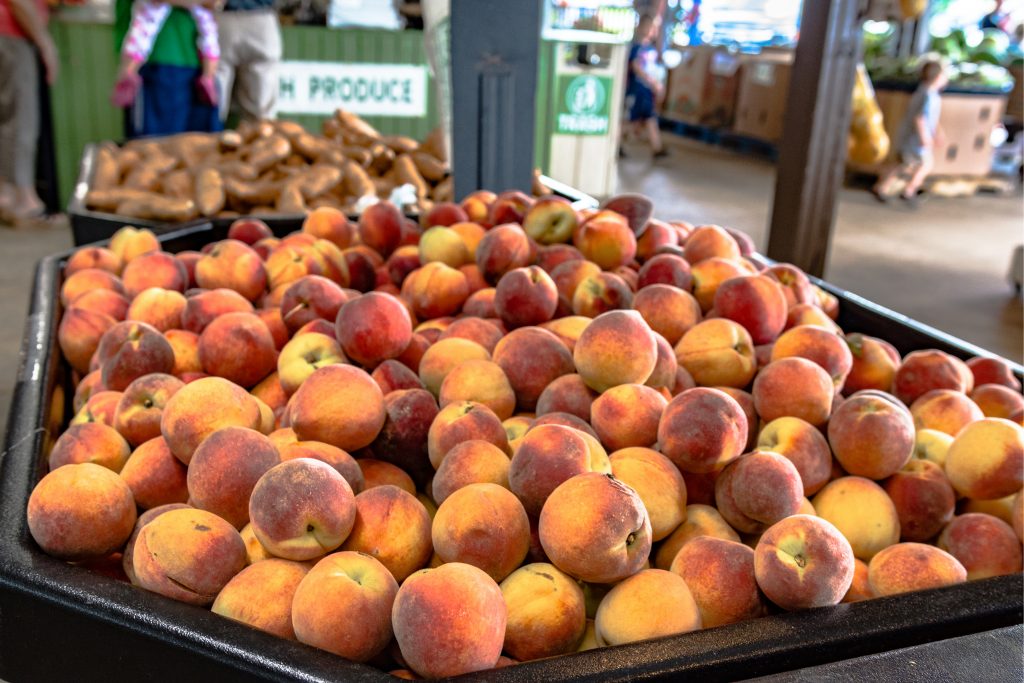
    Peach season in Alabama and Georgia begins in late May.

    By Clint Thompson

    Peach season is less than two months away for Alabama and Georgia growers and Edgar Vinson, assistant research professor and Extension specialist in the Department of Horticulture at Auburn University, is encouraged by this year’s crop despite a very mild winter.

    “I’m cautiously optimistic. I do think we got more chilling than the chill hour models tell us. But my concern now and concern of the growers is potential for frost damage,” Vinson said. “Hopefully, it’s warm for the rest of the season.”

    Vinson said Alabama’s peach season begins in late May and extends to September, which is very comparable to Georgia, and unlike Florida farmers, who are already harvesting their crop amid warm temperatures. Vinson does believe growers are a little concerned with chill hours with respect to the varieties that require a lot.

    “And that’s not to say we’re not going to have any issues with chilling, we’ll probably see some issues with chill accumulation, especially with our high chillers. A number of our growers still have quite a number of peach varieties that require higher chilling; 900 (hours) or above,” Vinson said. “In terms of the early-season to mid-season (varieties), they’re probably not as concerned. They’re more concerned with the varieties that require a high chill. That’s probably where we’ll see any signs or symptoms of a lack of chilling.”

    Lack of chilling hours can affect the overall quality and appearance of the fruit, according to Vinson.

    “There’s an over-pronounced suturing that runs the length of the fruit. Ideally, we want that to be minimal. But when there’s a lack of a chilling, that suturing is very pronounced,” Vinson said. “Also, the tip of the fruit, you don’t want a point there; you want that to be smooth. With fruit that shows lack of chilling, there’s an over-pronounced suture with a very sharp tip at the end of the fruit.”

    Vinson also said there can also be smaller harvests over a longer period.

    “That means your growers are having their crews go out to the orchards for longer periods. That cost more money and each harvest is yielding less. It can affect the growers’ operation that way,” Vinson said.

  • Citrus Farmer: Crop not a Cure-All but Definitely Money-Making Opportunity

    By Clint Thompson

    Pictured is Georgia citrus.

    A farmer in north Florida is excited about the potential of citrus in the South Georgia-North Florida region.

    Kim Jones, who owns a citrus packing facility in Monticello, Florida and is part-owner of a similar facility that will soon open in Tifton, Georgia, believes citrus will be the alternative crop producers are looking for to stabilize their farming operations.

    “Right now, the row crops are in terrible situation, (with) prices of course. Citrus has been on the radar for several years. We’ve had several friends doing it for several years in the panhandle,” said Jones, who also produces 30 acres of citrus. “We studied their program pretty close and sort of followed suit. It looks good. It’s definitely not a cure-all, but it’s definitely an opportunity for us to make additional money for our farms.”

    According to Danielle Sprague, University of Florida/Institute of Food and Agricultural Sciences (IFAS) FAS Extension agent in Jefferson County, Florida, there is approximately 1,000 citrus acres across north Florida. There is also an estimated 1,000 acres in South Georgia, though that number is expected to double by the end of 2020.

    While production has skyrocketed recently, there is a concern of how all of the fruit will be sold once it’s ready to be harvested. Savelle estimates by the end of 2023, there will be 50 million pounds of citrus coming out of Georgia. Jones, who is one of eight part-owners of the Tifton facility, believes the packing houses will be key in getting fruit sent out to consumers.

    “The key is marketing. Our facility, we’ve been fortunate enough to have a lot go into schools out of Monticello. We’ve just this past year developed a retail business through Genuine Georgia out of Fort Valley (Georgia), and they’re helping us get into the retail side; mostly with small packages, two and three-pound packages of satsumas. That will be expanded greatly this year,” Jones said.

    He added that the facility in Monticello is designed to try to pull the fruit from North Florida and extreme South Georgia areas and can accommodate a couple million pounds of production in a year. The Tifton facility will be much bigger and can handle a million pounds per day of certain citrus. Jones estimates Tifton will open this upcoming season with an open house later this summer.

    “It started out with a small, small farmer with a few acres; here, I’ve got five acres I’m not utilizing, what can I do? Look at blueberries, look at blackberries, look at other produce, and all of a sudden it’s zeroed in on the citrus,” Jones said. “Now we’re seeing large-acreage farmers take corners of a pivot or a field here that’s isolated from their normal row cropping operation…acreage numbers are increasing quickly.”

  • UGA Extension Food Safety Specialist Addresses Issues Surrounding COVID-19

    As COVID-19 continues to impact and alter the southeastern produce industry and world, there is an increase in questions from growers, packers, and shippers of fresh produce. Some issues that have surfaced this week include:

    • How can the 6-foot rule apply to harvest and packing crews?
    • What do I do when employee housing meets US DOL guidelines but employees are less than 6 feet apart?
    • What do I do when an employee tests positive for COVID-19?

    University of Georgia Extension food safety specialist Laurel Dunn offers her take on the current pandemic.

    https://www.youtube.com/watch?v=GJeNVZbcwo4&feature=youtu.be

    Visit the GFVGA Covid-19 Webpage for more information.

  • Georgia Pecan Crop Offering Hope for 2020 season

    By Clint Thompson

    It’s early in the pecan production season but University of Georgia Cooperative Extension pecan specialist Lenny Wells is encouraged by what he’s seen in South Georgia orchards.

    “There seems to be a lot of male flowers or catkins on the trees. Usually, that doesn’t guarantee you’re going to have a good crop but if you don’t see a lot of catkins like that, you aren’t going to have a good crop,” Wells said. “So far it looks promising.

    “There are a few varieties that I have seen a good crop of female flowers on already, which is great. It’s what we want to see. I really think we’ll come back with a pretty decent crop this year; I believe.”

    Hurricane Michael devastated Georgia’s pecan crop when it moved through the state in 2018 and left lingering effects on Georgia trees in 2019, which led to a down year of approximately 67 million pounds. The dry weather conditions late also had a negative impact. Wells is hoping to see between 80 and 100 million pounds this year.

    “There’s probably some who would say I’m being a little too optimistic,” Wells said. “I think that’s possible.”

    The warm weather in March has led to early bud break on trees this year.

    “I’d say it’s at least two weeks early, if not more. Everything’s really pushed out pretty far already. With that growers are starting to spray fungicides. A few people started this week. I would say we’re going to see a lot starting next week,” Wells said. “Certainly, by that time, everything will be pushed out pretty far. There will be a lot of foliage growth out there, certainly enough to get fungicide on to protect the leaves from scab.”

    Once foliage starts to appear, it leaves the trees vulnerable to scab disease pressure, especially if additional rains come in April and May.

    “I think from this point forward, the rains are going to be more critical than they were before. (The trees) are at a vulnerable stage where there’s tender foliage growth and scab likes to grow on that young tender growth,” Wells said.

    For additional pecan news, see Southeast AgNet.