Author: Clint

  • Using Control Release Fertilizer in Vidalia Onion Production

    By Ashley Robinson

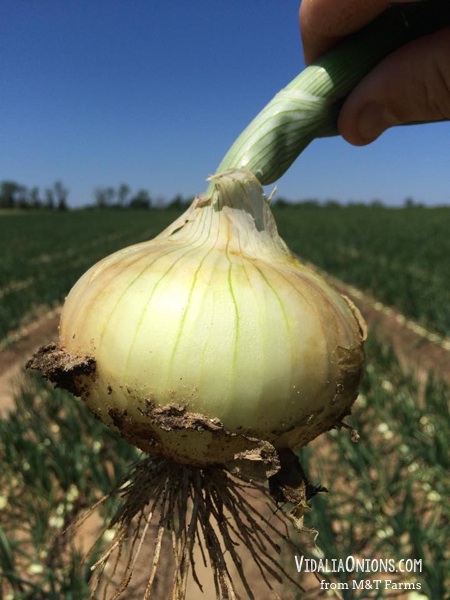
    Photo courtesy of M & T Farms, Lyons, GA, and Vidalia Onions.com

    Appropriated timing of fertilizer application during crop development ensures soil nutrient availability thorough the onion growing season. Typically, fertilizer is applied five times for Vidalia onion production in Georgia. However, researchers have found that control release fertilizer applications can significantly reduce the number of fertilizer applications while maintaining crop yield.

    RESEARCH RECOMMENDATIONS

    During the 2018-19 Vidalia onion growing season, researchers at the University of Georgia (UGA) conducted a field experiment to evaluate different fertilizer strategies, including control release fertilizer for Vidalia onion production.

    According to Andre da Silva, UGA Cooperative Extension vegetable specialist, the field experiment compared grower standard practices with five control release fertilizer strategies. After harvest, statistical analyses were performed comparing total yield and bulb size distribution of the onions among treatments.

    “Based on our findings, all of the control release fertilizer strategies increased yields compared to the standard practice used by growers,” da Silva says.

    On average, control released fertilizer treatments proved to increase total yields by 25% compared to the grower standard practice. While all of the control release fertilizer strategies showed yield increases, applying the fertilizer once or twice throughout the season allowed for less fertilizer applications and nutrient requirements.

    “When applying the fertilizer once or twice during the season, we applied only 96 pounds of nitrogen per acre versus 126 pounds,” da Silva says. He also mentioned that these strategies allowed for additional savings due to a reduction in tractor use and labor.

    In addition to higher yields, the study also proved that control release fertilizer programs had an impact on bulb size, producing more colossal and jumbo bulbs compared to medium bulbs.

    According to da Silva, control release fertilizer applications will be especially helpful to growers during the rainy seasons to ensure nutrient availability during the year and provide high crop yields.

  • UF/IFAS Seeking Partners for Hemp On-Farm Trials

    The University of Florida Institute of Food and Agricultural Sciences (UF/IFAS) hemp program is seeking 20 qualified partners across Florida for on-farm trials.

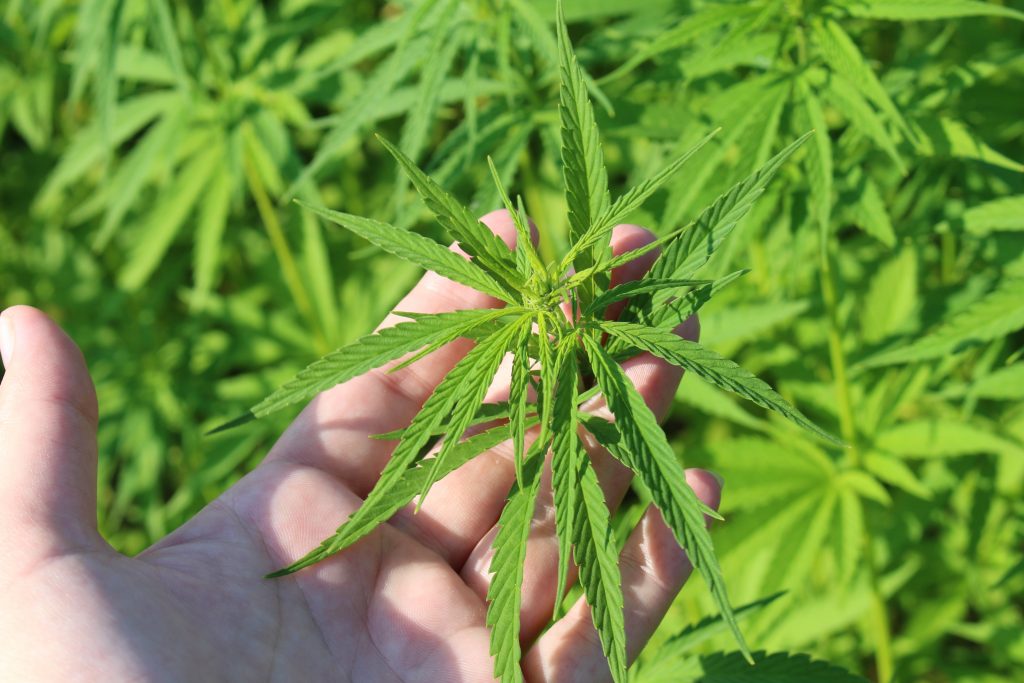
    Pictured is a field of hemp.

    Zack Brym, agronomist at the Tropical Research and Education Center in Homestead and research coordinator of the UF/IFAS Industrial Hemp Pilot Project, says partner farms will conduct a coordinated field planting on 2 acres with variations in land preparation. In addition, partners will have the option to submit a plan for industry development research on an additional 3 acres.

    Applications are due at 11:59 p.m. on April 13, 2020. Growers can apply here.

    “Applications will only be accepted through the online form up to the deadline,” notes Brym. “You must complete the application in one session. You can advance through the form without answering the questions (after answering question 1) to review the application questions before completing submission.”

    For more information, see Citrus Industry News.

  • UGA Specialist not Concerned About Oversupply of Hemp in Georgia

    industrial hemp
    There have been a total of 166 applications sent to the Georgia Department of Agriculture with interest of growing hemp this year.

    By Clint Thompson

    Tim Coolong, associate professor in the UGA College of Agricultural and Environmental Sciences, said oversupply of hemp at the national level remains a concern. He’s not as worried with Georgia, however, due to rules and regulations in place.

    “I think on the bulk wholesale market, I’m still worried about oversupply. In Georgia, I think we’re in a slightly different position. As a grower, you must have some sort of agreement with a processor in order to be approved to have a license to grow,” Coolong said. “I think at least for the growers here who are contracting with a processor in Georgia, I think some of that overproduction should be mitigated. Our processors, ideally, are working closely with growers and are not going to sign growers up for a lot more acreage than they can handle.”

    UGA’s Tim Coolong discussing hemp in Georgia.

    Coolong said that last year, in other states where there’s not a farmer-processor agreement in place, flooding the market was the unfortunate result. Farmers produced hemp with no places to sell.

    “They produced a lot of biomass and then there was no one to buy it. I think on the greater wholesale market, oversupply can still be an issue. I think within Georgia, because of the way the system is set up, I think that will be less of a problem,” Coolong said. “Some people are upset because they think I should be allowed to grow this crop and sell it to whoever I want, and I get that. I understand that. On the other hand, when that happens and it’s not coordinated, it leads to issues of oversupply. I think that even though this may ultimately reduce the amount of acreage and the number of growers in this state, I’m hopeful that those who do grow it are more profitable.”

    According to Mike Evans, director of plant industries who oversees the hemp program at the Georgia Department of Agriculture, they have received 166 applicants from farmers who are interested in growing hemp.

  • Digital Resources Available for Specialty Crop Producers, Gardeners and Consumers

    By Dr. Ayanava Majumdar, Extension Professor, Alabama Cooperative Extension System, Department of Entomology and Plant Pathology, Auburn University

    A tour of the research vineyard at the Clanton Research and Extension Center in Chilton County at the Alabama WIneries and Grape Growers Association meeting in September 2019. Grapes are grown by Elina Coneva and the staff at the CREC. Grape varieties are developed by Dr. Andy Walker, a grape breeder at UC Davis.

    The Alabama Extension Commercial Horticulture Team is comprised of 27 members in the horticulture and food production industry.

    Amid the ongoing coronavirus pandemic, we have to remember that food production or farming doesn’t stop; therefore, we have started some educational activities that anyone can watch from the comfort of their home.

    We have recently started a weekly ‘Virtual Farm Tour’ on Thursdays through the Alabama Farmer Connection page on Facebook; the recordings of the farm tour are posted on the channel and participants can ask questions during this Facebook Live event.

    The horticulture Extension team members are also available to interact on Fridays through the ‘Q&A Friday!’ on Alabama Extension Commercial Horticulture page on Facebook. This is a great way to get your farming or gardening questions answered directly by subject matter experts. You can directly go to the Extension Facebook page from the Farming Basics Mobile App that can be installed freely on Apple and Android devices.

    The app also has a library of popular horticultural crops and pest pictures. You can call your regional Extension agents directly from the app.

    If you are a beginning farmer or thinking of starting a farm-related business, then the four-hour Farming Basics Online Certificate Course is a valuable resource before starting out. This is a free module-based learning system with built-in interactive quizzes that generates a custom certificate at completion.

    The Alabama IPM Communicator E-newsletter is another great resource to receive timely crop production and pest alerts on your phone. The pest alerts are sent twice per month (at a minimum) year-round in the form of weblinks to blog articles and educational events in a mobile-friendly email. You can self-subscribe to the newsletter from the link mentioned before.

    Last but not the least, bookmark Alabama Beginning Farmer as your go-to website for learning about print resources and other resources, like the Beginning Farm Project Video Playlist on YouTube.

    The Farming Basics App also connects to the YouTube playlist so you can watch short videos and webinars on a variety of farming topics like food safety, marketing, integrated pest management (IPM), grafting techniques and much more. Several new food safety and marketing videos related to coronavirus are timely for new and experienced producers, gardeners, educators, and consumers.

    Among the print resources, remember to get the latest copy of the Southeastern Vegetable Crop Production Handbook. the High Tunnel Crop Production Handbook (also a free iBook) and IPM slide charts for reference as you get started.

    Various educational resources mentioned in this article have been developed with numerous grants from the USDA National Institute for Food and Agriculture (USDA-NIFA), Beginning Farmer and Rancher Development (BFRD) Program, Sustainable Agriculture Research and Education (SARE) Program, Alabama Department of Agriculture and Industries (ADAI) Specialty Crops Block Grant, and Crop Protection and Pest Management Program. Contact an Extension office near you to learn about local education initiatives and develop a suitable farm plan. 

  • U-Pick Farms Feeling Impact of Coronavirus Pandemic

    By Clint Thompson

    florida
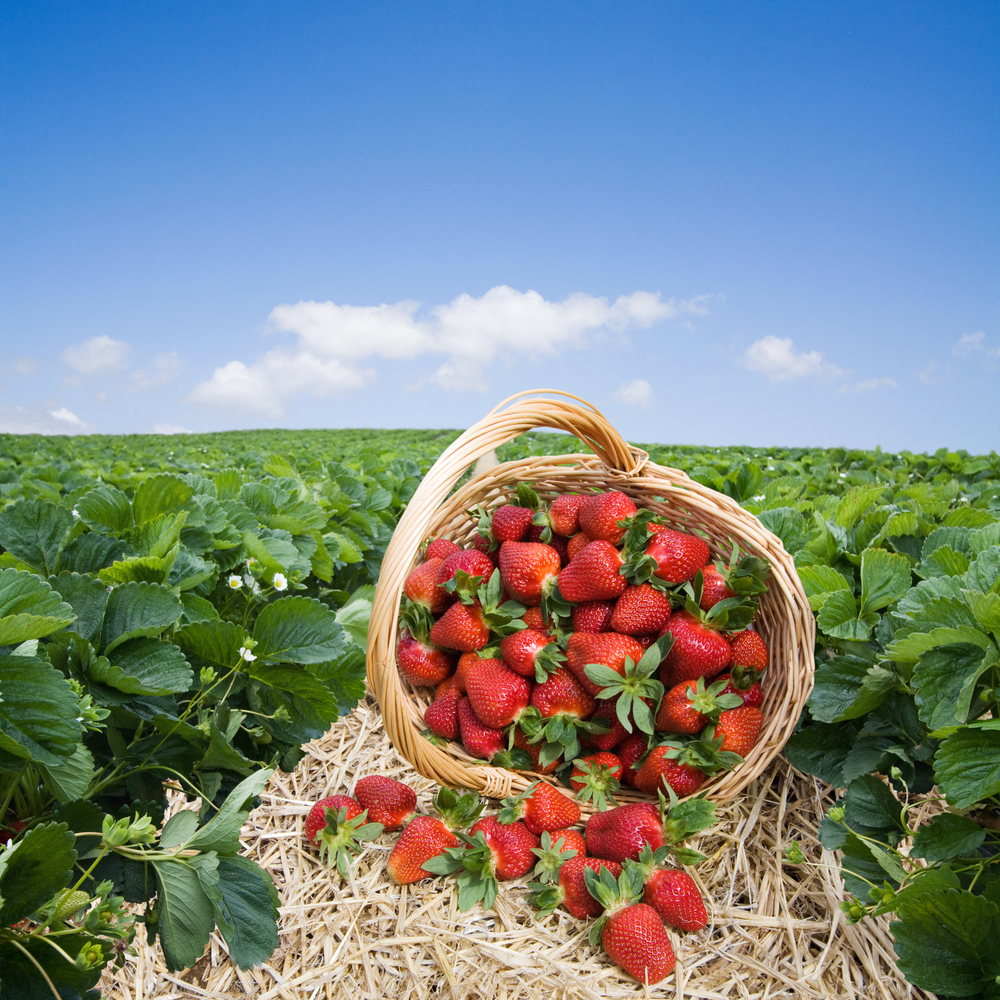
    Strawberries sit in a basket in this 2016 photo. U-pick farms are being impacted by the ongoing coronavirus pandemic.

    Agribusinesses that offer U-pick farms are not immune to the devastating impact of the ongoing coronavirus pandemic.

    Cassie Young and sister Allie Logan own Backyard Orchards in Eufaula, Alabama. Backyard Orchards has closed the U-pick part of its operation but continues to sell strawberries via social media, mainly Facebook. It also has a store with a commercial kitchen that normally sells fudge, ice cream, fried pies and homemade jams and jellies. But since zero customers are allowed in the store, that is another source of revenue that is non-existent right now.

    “That’s what is really hurt is because none of that is going. I have field trips that come in the spring and the fall because we do pumpkins. I’m missing all of that field trip revenue,” Young said.

    Young said she just hopes people in Alabama and other states will continue to support their local farmers during this unprecedented time.

    “We’ve definitely taken a huge hit,” Young said. “Ice cream, other than produce, is our best seller. People would stop just for that as well. We’re definitely hurt. But if I can just keep paying the bills, keep us open, I’ll be happy.”

    She said customers pay ahead of time and pick up the strawberries that are already set out on a table in front of the store. Young also has set up deliveries to customers in Eufaula and the Fort Benning and Fort Mitchell area.

    Backyard Orchards operates on 50 acres of produce, which includes strawberries, peaches, blueberries, watermelons, squash, zucchinis, potatoes, onions.

    But the farming operation could present another challenge once those other crops become ready for harvest.

    “When my potatoes and other vegetables and other things come in, peaches, it’s going to be a nightmare. It’s already very difficult answering messages and keeping up with who’s who and where it goes. That would even be more of a challenge,” Young said.

    Young said in previous years, once Backyard Orchards opened in the spring, there would easily be several hundred people on the weekend. That number would grow to more than a thousand over the course of a week during the summer. If this pandemic drags out, the longer businesses like Backyard Orchards suffer.

     “It’s a difficult scary situation. I know I’m not going to come out making the same amount of money but if we can just keep our doors open so that we can have another year,” Young said.

  • Florida Fruit and Vegetable Association Connecting Farmers With Consumers

    By Clint Thompson

    The Florida Fruit and Vegetable Association (FFVA) wants to help farmers sell their crops while provide consumers with options on where to buy fresh, local produce. In doing so, consumers will support an industry that’s been decimated amid the coronavirus pandemic.

    Farmers and farming operations are asked to email information@ffva.com as soon as possible with the following information: Company name; address of sales location; phone number; facebook page; twitter; produce available for sale and sales hour.

    The FFVA will share on social media and on its website.

    “We’ve been hearing about different growers in south Florida who, for lack of any other options, have begun boxing up their produce and making it available directly to consumers who can just drive up and purchase it,” said Lisa Lochridge, director of the association’s Public Affairs Division. “We kept hearing about different farms doing this and decided to try to gather that information as best we could, put it on our website and also share those opportunities on social media so people who are following us on social media would know that there’s a grower in their area where they can go and get fresh local produce.”

    Florida growers are forced to sell directly to the public to move their produce, as restaurants are closed nationwide. This is a great way to support local farmers who are struggling to sell their usual quantity of fresh fruits and vegetables.

    “It’s certainly not the way they would like to be distributing their product but given the fact that the food service part of the supply chain has literally shut down, this is a good option for growers. It drives home the importance of local produce,” Lochridge said. “I think it also makes it more top of mind for consumers to know that there’s fresh, local, nutritious produce available to them. Hopefully, when all of this is over and people are back in the grocery store and produce aisles, they will look for Florida produce.”

  • Georgia Watermelon Farmer: What’s Worrying me the Most is the Labor

    For one Georgia farmer, the watermelon season lasts from June 10-week of July 4.

    By Clint Thompson

    Terrell Rutland is preparing for the upcoming watermelon season just like other Georgia farmers. And like his fellow producers, Rutland is uncertain as to what to expect from this year’s crop, amid the coronavirus pandemic.

    “Nobody knows. That’s the end of the story, nobody knows,” Rutland said. “We don’t know about labor. We don’t know about price, whether the market’s going to be there. If folks can’t go town, they aren’t going to buy one.”

    Rutland’s biggest concern, though, is having normal workforce on site to harvest the 50 acres he produces in Tift County, Georgia and Cook County, Georgia. Rutland shares the same packing facility and crew with another farmer who also produces 50 acres. But there’s been growing concern among farmers that obtaining labor could be problematic.

    Amid the COVID-19 pandemic that has caused fear across the globe, it was initially announced that the U.S. Embassy in Mexico would stop interviews of seasonal workers, who are essential help in harvesting fruit and vegetable crops, like watermelons, in the U.S.

    According to AgNet West, after hearing concerns from several agricultural groups about how the restrictions would negatively impact the agriculture industry, the State Department and the Department of Homeland Security worked to ensure that labor needs are met by issuing certain waivers for eligible first-time and returning H-2A and H-2B applicants.

    But Rutland remains concerned and will be until he sees his labor force intact when watermelon harvest begins around June 10.

    “The biggest thing that is pushing us right now, that’s worrying me the most is the labor. We got to get them picked,” Rutland said. “It doesn’t matter about anything else. That’s where it starts at, getting them out of the field.

    “Our broker called me, the folks who sell our melons, they called me three weeks ago and told us to try make sure we get our labor tied up.”

    Rutland estimates that he uses approximately 30 workers to harvest his watermelons. Watermelon harvest season typically lasts through the week of July 4.

  • Florida Farmer: We’ve Left About 5 Million Pounds of Cabbage in the Field

    By Clint Thompson

    One of the largest produce farmers in the Southeast has already lost quite a bit of his spring crop and fears what the future might hold amid the ongoing coronavirus pandemic.

    Cabbage growing in a field.

    “We’ve left about 2 million pounds of green beans already (in the field) and about 5 million pounds of cabbage,” said Paul Allen, president of R.C. Hatton Farms in Belle Glade, Florida and chairman of the Florida Fruit and Vegetable Association. “Hopefully the (government is) going to help us some. They’ve done a good job and allocated money to help specialty crops. We’re going to need it. Here we are harvesting in Florida but we’re planting in Georgia. We don’t know what that’s going to look like.”

    R.C. Hatton Farms produces 12,000 acres of vegetables and specialty crops, including sweet corn, green beans, cabbage, sugar cane and corn silage. While most crops are produced throughout Florida, some are grown in Poulan, Georgia, which is in Worth County.

    Like other fruit and vegetable farmers in Florida, Allen’s spring crop was dealt a devastating blow when restaurants closed across the country and took away a substantial amount of business following concerns of the COVID-19 outbreak.

    “The food service sector of our business has really taken a hit. A lot of our crops we grow, especially our beans and cabbage, we grow specifically for food service because it’s about 50% of that market. It’s been shut down,” Allen said. “The supermarkets can’t absorb that much. They can absorb some of it but just not that much.”

    It’s been nearly a month since the country was turned upside down, and agriculture has been one of the sectors impacted the most. Like many other farmers, Allen didn’t see this coming at all.

     “Nobody’s ever dealt with this before so how would you know? We had no idea. Hopefully it’ll get turned around. We’ll see,” Allen said. “We’re dependent on all supermarkets to buy hopefully, 100% US-grown products. If we can get 100% support, that’ll go a long way.”

  • United Fresh Start Foundation Starts COVID-19 Donation Program to Help Kids and Familes

    Lancaster Foods’ President John Gates joined United Fresh’s President & CEO Tom Stenzel delivering 1,000 3-pound bags of apples to the ALIVE community feeding program in Alexandria, Virginia on Saturday, April 4.

    Contact: Mary Coppola mcoppola@unitedfresh.org 202-303-3425

    WASHINGTON, DC (April 6, 2020) – In response to the COVID-19 pandemic, the United Fresh Start Foundation is offering a new grant program — COVID-19 Rapid Response FRESH Grants — to increase access to fresh fruits and vegetables for children and families in need, while also creating opportunities for foodservice distributors who face the loss of markets due to the restaurant and hospitality industry shutdown. 

    “These are two pressing needs facing our country today that are interconnected,” said United Fresh Start Foundation Chair Lisa McNeece, Vice President, Foodservice and Industrial Sales, Grimmway Enterprises, Inc. “Kids are out of school and families are out of work. We need to make sure they have access to fresh produce through remote feeding sites or community programs. And at the same time, our foodservice distributors have been devasted by the immediate shutdown of their markets. This is an attempt to inspire our greater industry to recognize both needs and do what we can to help.”

    The United Fresh Start Foundation will fund (25) $1,000 grants to produce companies and foodservice distributors who can provide fresh fruits and vegetables to schools, community groups, and other emergency feeding sites for those in need. If a distributor can donate at least $1,000 worth of produce, or more, the Foundation will reimburse them $1,000. The goal is to break down the barriers that impact access to fresh produce, and bring community members and the supply chain together during this extraordinary time.

    The first grant was used to support a donation of 1,000 3-pound bags of apples by Lancaster Foods to the ALIVE community feeding program in Alexandria, Virginia on Saturday, April 4. Lancaster Foods’ President John Gates joined United Fresh’s President & CEO Tom Stenzel in delivering the fresh produce to ALIVE for distribution to needy residents in the community. “I thank John and the Lancaster team for going above and beyond to help our community,” Stenzel said. “And, for me personally, this feeds my own neighbors in need.”

    This program is funded through the generosity of those individuals who have agreed to donate their prepaid registration fees for the United Fresh 2020 Convention in San Diego to the United Fresh Start Foundation. “I want to thank each of those individuals for inspiring us with their generosity and making this program possible,” McNeece said.

    “In addition, we encourage individuals to consider making a tax-deductible donation directly to the United Fresh Start Foundation so we can continue to serve kids everywhere as best we can. And, of course, company contributions are welcome! Make your donation here to ensure kids are growing up fresh!”

    Interested produce distributors should complete this simple form to request a grant from the United Fresh Start Foundation. We ask that you immediately implement community feeding programs and we will get back to you on a first-come, first-served basis as long as funds are available.

    Visit www.unitedfreshstart.org for complete details on the COVID-19 Rapid Response FRESH Grants program.


    For more information, contact Mollie Van Lieu, Senior Director of Nutrition Policy at 202-303-3403 or mvanlieu@unitedfresh.org.

  • U.S. Congressman: Additional Funds Will be Ready if Needed for Paycheck Protection Program

    By Clint Thompson

    Buddy Carter

    The Paycheck Protection Program (PPP), an integral part of the $2 trillion Coronavirus Aid, Relief and Economic Security (CARES) Act, that will aid small businesses recover amid the ongoing coronavirus pandemic, may not have sufficient funds to support the $350 billion allocated for the program.

    One United States Congressman insists, though, that additional funds will be ready if needed.

    “There’s going to be a Phase 4 (coronavirus aid package). I am more certain now that there is going to be a phase 4,” said Buddy Carter (R-Ga.), who represents Georgia’s 1st District in the House of Representatives. “The short answer is, if we need more money, we’re going to allocate more money.”

    The program was designed to prevent workers from being laid off and small businesses from going out of business during a global pandemic that has halted the world’s economy. Those farmers or businesses, who qualify for the program, need to apply as soon as possible.

    “We intentionally made it somewhat ‘loose’ if you will, somewhat loose in that we wanted the agencies to be able to get this money out as quickly as possible. Therefore, we left a lot of the rules and regulations up to the agencies. There’s been some bumps in the road and that’s to be expected. But we intentionally did that because the message we sent to the agencies was, you need to get this money out as soon as possible,” Carter said. “We’re not going to burden you with rules and regulations and then ask you to get out as quickly as possible.”

    Carter said small businesses make up 99% of the businesses in America.

    “What we wanted to do was make sure we maintained the employee-employer relationship. That’s very important, particularly for our farmers, particularly for our small businesses. You’ll be able to get up to two and a half times your average monthly payroll,” Carter said. “That is very important because, again, we want you to maintain that relationship with your employee.

    “We don’t want to hear about people being separated from their businesses. That’s vitally important.”

    He emphasized that the applicant can be forgiven, if 75% is used for payroll,

    “Therefore, this PPP loan actually turns into a grant. That is very important because we wanted to make sure we get the relief out there,” Carter said.