Author: Clint

  • N.C. State Economist: Second Quarter Should Be Horrible Amid Coronavirus Pandemic

    Pictured is a farmer in his field.

    By Clint Thompson

    The ongoing coronavirus pandemic has dealt a devastating blow to the U.S. economy and especially the American farmer. North Carolina State Extension Economist Mike Walden believes the country needs to do what it can to help those farmers rebound from the current recession.

    “We do need to worry about keeping our farmers afloat. Fortunately, in the stimulus plan, there was about $50 billion that was allocated for various programs that would help farmers,” Walden said. “We certainly need to watch our farmers.”

    Fruit and vegetable producers are struggling because of the lack of the food service market. Restaurants have either closed or reduced their business traffic to try to limit the spread of COVID-19. However, that has caused a problem for producers, especially in Florida.

    “If you look at where people get their food, we’re almost split 50-50 between people eating their food in their homes in home-prepared meals versus eating them in restaurants,” Walden said. “The restaurant industry is essentially shut down. There is some pick-up and take-home but that’s a small fraction of what they do. The problem for the farmer is that their supply chain is geared towards that 50-50 split. People don’t understand that farmers just can’t take the produce that they were sending to restaurants and just ship them over the grocery stores. There are different regulations and different packaging.

    “That’s creating a real headache for farmers.”

    On Friday night, the United States Department of Agriculture announced the Coronavirus Food Assistance Program (CFAP). According to the USDA press release, President Trump directed USDA to craft this $19 billion immediate relief program to provide critical support to farmers and ranchers, maintain the integrity of our food supply chain and ensure every American continues to receive and have access to the food they need.

    Walden still warns that the economy will likely get worse before it gets better.

    “The second quarter, which is how most economic data are calibrated, is going to be horrible. It’s going to probably be a record in terms of drop of GDP (Gross Domestic Product). But we should start to see growth come back in the third quarter and fourth quarter,” Walden said. “But it’s likely not going to be until, I would say, at the earliest, mid-2021 before we’re back to where we were before this started.”

    Walden said he’s been an economist for more than 40 years. This is his sixth recession but admits this one is much different than the others.

    “Most recessions are caused by imbalances in the economy, particularly over-indulgence in debt. Businesses and consumers taking too much risk,” Walden said. “This is a recession that has actually been mandated by the government. The government has said we have a problem with the coronavirus. It is easily spread. In order to contain it, in order to limit deaths, in order to not overwhelm our hospital system, we have to essentially shut down a large part of the economy.

    “All of the bad numbers we’re getting now should not be surprising because we have to do this in order to control the virus. Apparently we are getting good numbers on that. We will likely see the economy contract by somewhere between 25% and 30% in the second quarter, that is April, May and June. The unemployment rate may very well get over 15%. But the good news is this should be short-lived. We should probably see some return to growth in the third quarter and then forward.”

  • Using Pesticides Wisely Program Offered Online This Year

    By Clint Thompson

    Stanley Culpepper

    The Using Pesticides Wisely (UPW) program will be offered in an online format this year, due to the ongoing coronavirus pandemic. The program has helped Georgia reduce pesticide drift complaints to the University of Georgia Cooperative Extension Service. It will be held this week April 21-23 at various locations.

    “Our Using Pesticides Wisely programs started in 2015. We are proud to say that every person in our state has been trained face to face. We appreciate the opportunity to communicate with our growers in that type of platform,” said University of Georgia Extension weed specialist Stanley Culpepper. He will provide a voiceover from UGA. “Obviously, everybody on planet Earth is influenced by this virus. So we had to adjust. We felt like the best way to adjust was for the Cooperative Extension Service, kudos to our county agents, to take the lead. We made the powerpoint presentations with voiceovers. That’s what will be presented during the trainings that’ll occur (this) week.”

    UGA Extension and the Georgia Department of Agriculture created the UPW trainings in 2015. The Georgia Department of Agriculture will also have a representative as part of the presentations.

    The state program is aimed at teaching farmers and other pesticide applicators how to properly apply pesticides. The number of pesticide drift complaints in Georgia to the Cooperative Extension Service have been reduced by 76% over the past five years, since the UPW trainings were implemented.

    “If you’re going to apply the Dicamba products that are labeled for use in Dicamba in cotton or soybeans or you’re going to apply 2,4-D in their respective tolerant crops, you must have taken this training in 2019 or this year. You have to do that,” Culpepper said.”

    Growers should choose one of the four webinar sessions and register for the date and time that works best for their schedule.

    Session dates, times and registration links are:

    • April 21, 10 a.m. – Host: Bulloch County Extension Coordinator Bill Tyson, 912-871-6130.  Register here.
    • April 22, 10 a.m. – Host:  Laurens County Agriculture and Natural Resources Agent Raymond Joyce, 478-272-2277. Register here.
    • April 23, 10 a.m. – Host: Early County Agriculture and Natural Resources Extension Coordinator Brian Cresswell, 229-723-3072. Register here.  
    • April 23, 6 p.m. – Host: Tift County Agriculture and Natural Resources Agent Justin Hand, 229-646-1413. Register here.
  • USDA Announces Coronavirus Food Assistance Program

    (Washington, D.C.) – U.S. Secretary of Agriculture Sonny Perdue announced the Coronavirus Food Assistance Program (CFAP). This new U.S. Department of Agriculture (USDA) program will take several actions to assist farmers, ranchers and consumers in response to the COVID-19 national emergency.

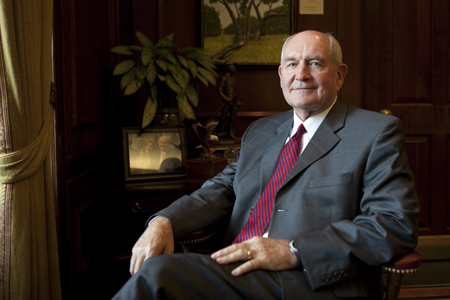
    Sonny Perdue

    President Trump directed USDA to craft this $19 billion immediate relief program to provide critical support to our farmers and ranchers, maintain the integrity of our food supply chain and ensure every American continues to receive and have access to the food they need.

    “During this time of national crisis, President Trump and USDA are standing with our farmers, ranchers and all citizens to make sure they are taken care of,” Secretary Perdue said. “The American food supply chain had to adapt and it remains safe, secure, and strong, and we all know that starts with America’s farmers and ranchers. This program will not only provide immediate relief for our farmers and ranchers, but it will also allow for the purchase and distribution of our agricultural abundance to help our fellow Americans in need.”

    CFAP will use the funding and authorities provided in the Coronavirus Aid, Relief and Economic Security Act (CARES), the Families First Coronavirus Response Act (FFCRA) and other USDA existing authorities. The program includes two major elements to achieve these goals.

    Direct Support to Farmers and Ranchers: The program will provide $16 billion in direct support based on actual losses for agricultural producers where prices and market supply chains have been impacted and will assist producers with additional adjustment and marketing costs resulting from lost demand and short-term oversupply for the 2020 marketing year caused by COVID-19.

    USDA Purchase and Distribution: USDA will partner with regional and local distributors, whose workforce has been significantly impacted by the closure of many restaurants, hotels and other food service entities, to purchase $3 billion in fresh produce, dairy and meat. We will begin with the procurement of an estimated $100 million per month in fresh fruits and vegetables, $100 million per month in a variety of dairy products and $100 million per month in meat products. The distributors and wholesalers will then provide a pre-approved box of fresh produce, dairy and meat products to food banks, community and faith-based organizations and other non-profits serving Americans in need.

    On top of these targeted programs, USDA will utilize other available funding sources to purchase and distribute food to those in need. USDA has up to an additional $873.3 million in available in Section 32 f unding to purchase a variety of agricultural products for distribution to food banks. The use of these funds will be determined by industry requests, USDA agricultural market analysis and food bank needs.

    The FFCRA and CARES Act provided at least $850 million for food bank administrative costs and USDA food purchases, of which a minimum of $600 million will be designated for food purchases. The use of these funds will be determined by food bank need and product availability.

    Further details regarding eligibility, rates and other implementation will be released at a later date.

    For more information, see USDA website.

    Read John Hoeven’s response.

    United States Department of Agriculture

  • UGA, Georgia Department of Agriculture Offer Critical Training for Pest Control Application Online

    By Maria M. Lameiras for UGA CAES News

    University of Georgia: Critical pesticide application training for pest control professionals and producers will go online for 2020.

    The University of Georgia and Georgia Department of Agriculture dicamba training program, Using Pesticides Wisely 2020, will move to online delivery for the remaining sessions.

    Using Pesticides Wisely (UPW) is a state program aimed at teaching farmers and other pesticide applicators how to properly apply pesticides to limit pesticide drift in Georgia. Only farmers and other pesticide applicators who were not trained in 2019 need to complete the 2020 training, according to a decision by the U.S. Environmental Protection Agency.

    Growers should choose one of the four webinar sessions and register for the date and time that works best for their schedule.

    Please note that each online session has its own registration link. It is important to use the link that matches your preferred time. Required registration information includes address, phone number, email and pesticide license number for each registrant. A license is not required for 2,4D application, so those registrants can enter N/A in that field.

    Meeting links will be emailed to registrants prior to the 1.5-hour sessions. Participants will be able to submit questions using a chat box or over the phone. Attendees’ names will be placed on a list posted to the Georgia Department of Agriculture’s Auxin website. Please allow up to 21 days after the training date for names to be posted. This list will serve as the official training record and attendance verification.

    Session dates, times and registration links are:

    • April 21, 10 a.m. – Host: Bulloch County Extension Coordinator Bill Tyson, 912-871-6130.  Register here.
    • April 22, 10 a.m. – Host:  Laurens County Agriculture and Natural Resources Agent Raymond Joyce, 478-272-2277. Register here.
    • April 23, 10 a.m. – Host: Early County Agriculture and Natural Resources Extension Coordinator Brian Cresswell, 229-723-3072. Register here.  
    • April 23, 6 p.m. – Host: Tift County Agriculture and Natural Resources Agent Justin Hand, 229-646-1413. Register here.

  • South Carolina Hemp Production Ready for Year Three

    agriculture
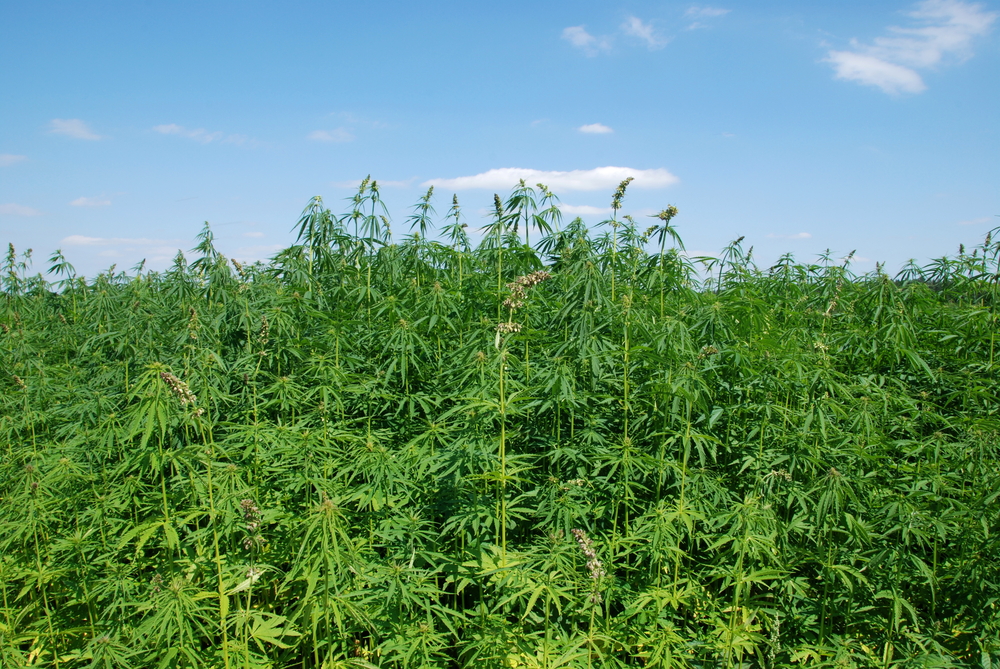
    Pictured is a field of industrial hemp.

    By Clint Thompson

    South Carolina producers interested in growing hemp this season will be issued permits by May 1, according to Eva Moore, communications director for the South Carolina Department of Agriculture.

    South Carolina farmers will be able to produce hemp for the third straight year. Moore said interest has grown each year.

    “We got a lot of support very early on from the South Carolina Legislature to help launch this hemp industry in South Carolina. It was 20 farmers that grew hemp that first year of the program. Last year we ended up with 114, and we’ll have more than that this year. We’ve definitely seen it expand from year to year. Folks get more and more interested,” Moore said. “Obviously, the market for CBD has been what most farmers are growing for so far. We hope to see that diversify a little bit. As the industry grows, maybe some folks will start growing for fiber or potentially like culinary uses, once that all gets worked out.”

    Moore said there are 350 interested applicants this year. Permits are $1,000 each. Farmers also had to pay $100 to apply.

    The state’s focus in increasing its number of processors helped the industry to grow last year.

    “Early on, I don’t think we had enough processors. That was a concern the first year of the program, in particular. Last year we really focused on licensing processors as well so farmers would have a market to sell the hemp to,” Moore said. “We ended last year with 43 licensed processors in the state which was up from one at the beginning of the year. That was a help, I think, to farmers.”

    To learn more, see how the USDA approved South Carolina’s Hemp Farming State Plan.

    “It’s a new industry. It’s a risky one. I think this year we are hoping that the farmers that have some experience can really hit their stride and see it work,” Moore said.

  • Fried: Florida Farm to You Initiative a Tremendous Hit

    commissioner
    Nikki Fried
    Florida Agriculture Commissioner

    By Clint Thompson

    The Florida Department of Agriculture and Consumer Services (FDACS) is connecting the state’s farmers with local consumers. The results so far have been tremendous, according to Nikki Fried, Florida Ag Commissioner.

    Fried highlighted the Florida Farm to You initiative that is designed to aid farmers, who are struggling to sell produce and other commodities during the ongoing coronavirus pandemic, while on a conference call Friday morning. FDACS established a website where producers can post information regarding available commodities that are accessed by the public. Commodities like citrus, strawberries, dairy, blueberries, tomatoes, sweet corn and squash are advertised along with the different counties throughout the state.

    “It has been a tremendous hit. We’re seeing a lot of positive response and a lot of people going online and are very grateful for the connection we’re making with the consumers to the farmers directly. We have seen some very positive responses from the website. Of course, we’re only on week one,” Fried said. “Hopefully, this will not only continue through the pandemic, but I think some of the silver lining that we are seeing is some of this is going to continue after the pandemic.”

    Nikki Fried

    Florida’s produce farmers need local consumers more than ever since COVID-19 has shut down schools and restaurants. These are a huge market sources for the state’s fruit and vegetable growers.

    According to Daren Hanshaw, a produce farmer in Immokalee, Florida, he has a fresh cut contract with two major companies. But just Monday did he receive the first three POs (purchase orders). Normally he should have had 15 loads per week. The demand for watermelons has dropped significantly and it shows in the market price. Hanshaw said the prices are 45% off what they have been the past three years.

    Paul Allen, president of R.C. Hatton Farms in Belle Glade, Florida, said he’s left 2 million pounds of green beans and 5 million pounds of cabbage in the field. The reason is he just can’t sell them.

  • West: Hope to be Stabilizing Influence During Time of Uncertainty

    By Clint Thompson

    Effective July 1, the University of Georgia (UGA) College of Agricultural and Environmental Sciences (CAES) will have a familiar face to serve as interim dean.

    Joe West

    Joe West, who recently retired as assistant dean from the UGA Tifton campus, just hopes he can be a stabilizing influence during a time of uncertainty in the Ag industry in Georgia.

    “People know me. I’m fortunate enough over my career that I’ve been in several different jobs and worked in Athens, so I know a lot of the key folks at the University of Georgia,” West said. “Already having that network of University of Georgia leadership and having their support is important. Talking with the leadership in Ag. We’ve got so much uncertainty in our industry. It’s really, really suffering right now. We as a college need to figure out what’s our role, what we can do to try to help this industry and help our farmers.”

    West will take over for Sam Pardue, who will retire June 30. West has also agreed to work half time in May and June in preparing for his new role.

    Georgia’s state colleges and universities have been impacted by the ongoing coronavirus pandemic. All have moved to online instruction for the rest of the semester. But West said research remains a priority and will continue to be under stricter guidelines.

    “Social distancing and things like that, we’re certainly observing,” West said. “As I understand it, our vice president for research, David Lee, has been, to the extent he can in keeping our people safe, he’s been very helpful in letting our field people get their research plots in. He’s come to understand how important timing is and that if we don’t get a crop in by a certain time, it’s a loss for us from a research standpoint. We’re not totally shut down. We’re getting some research in the fields, and again, ensuring that our people are safe. You can be in a tractor by yourself and be socially isolated.”

    UGA CAES coordinates research on three experiment stations and eight research and education centers throughout the state on various crops, including fruit and vegetables.

    For more information, see UGA CAES Newswire.

  • Drought Still a Problem for Florida

    The latest map from the U.S. Drought Monitor shows how dry conditions are in Florida and in parts of southern Alabama and Georgia.

    By Clint Thompson

    Even with much-needed rainfall this week and more expected this weekend, Florida remains in a drought; severe in some cases. The southern portions of the state and along the peninsula will remain drier than normal for the foreseeable future, according to Pam Knox, University of Georgia Cooperative Extension state climatologist, .

    “I’ve been watching the drought in Florida because we’ve had issues along the south border in Georgia. I know things have been worse in Florida. I heard David Zierden (state climatologist for the Florida State University Center for Ocean-Atmospheric Prediction Studies) give a talk about it this week. He thinks it’s probably going to get worse before it gets better,” Knox said. “I have a friend in Miami, and they’ve been setting records for the number of days in the 90s. I don’t see for most of the peninsula of Florida that they’re going to have big relief soon.”

    Much of the central part of the state, including Polk County and Hillsborough County, is classified in a severe drought or ‘D2’ status, according to the U.S. Drought Monitor, The majority of Florida is in ‘D1’ status or classified in a moderate drought.

    “Eventually the rainy season will come, and they’ll get some relief at that point. But in the meantime, it’s going to be pretty hard on producers, especially those who are growing forage or who need fairly moist conditions,” Knox said. “I don’t think there’s going to be short-term relief from the drought in the Florida peninsula.”

    In the northern part of Florida, as far west as Escambia County, across the state to Nassau County, conditions are a little better but still classified as abnormally dry, which is also the case for the southern part of Georgia.

    “It looks like to me the next couple of weeks are going to be fairly wet, not continuously wet, but I think we’re going to get two or three storms that will go through and bring us some rain,” Knox said. “For those areas, I think there will be some relief. But I think farther south in Florida, the front may not get that far and so they may be stuck in the warm and fairly dry air for at least the next couple of weeks until we switch into more of a summertime pattern.”

    The northern parts of Georgia and Alabama remain fairly wet as vegetable producers, especially those in Alabama, try to get their plants in the ground.

    According to the U.S. Drought Monitor, Mobile County and Baldwin County remain in moderate-to-severe drought status along the Gulf Coast.

  • USDA Approves Florida’s State Hemp Program

    commissioner
    Nikki Fried
    Florida Agriculture Commissioner

    Tallahassee, Fla. – Today, the U.S. Department of Agriculture formally approved Florida’s state hemp program, clearing the way for Florida growers to begin cultivating hemp later this month. Agriculture Commissioner Nicole “Nikki” Fried, who will oversee Florida’s state hemp program through the Florida Department of Agriculture and Consumer Services (FDACS), offered the following statement:

    “After months of incorporating feedback from the public, growers, and industry stakeholders, we are thrilled that Florida’s hemp industry officially begins now. I thank the USDA for their swift review and approval of our state hemp program. By working closely with our farmers, processors, retailers, and consumers, Florida’s state hemp program will become a model for the nation, will set a gold standard for this emerging industry, and will create billions in economic opportunity for Florida. As our economy deals with the impacts of COVID-19, this approval will give our agriculture industry a new alternative crop for many years to come.”

    Growing in Florida: With the state hemp program’s rules now filed for adoption and approved by USDA, FDACS will begin accepting applications to grow industrial hemp on April 27, the first day authorized under the state filing timeframe, online at FDACS.gov/Cannabis. More information about growing hemp in Florida may be found here.

    Commissioner Nikki Fried has been a consistent champion of Florida’s emerging hemp industry, appointing in 2019 the state’s first-ever Cannabis Director, hosting five workshops and public hearings across Florida on hemp state rulemaking, and working ahead of USDA to finalize rule development. Earlier this week, FDACS had submitted the state’s hemp program to USDA for review and final approval.

    Florida Department of Agriculture

  • Vidalia Onion Crop on the Smaller Size

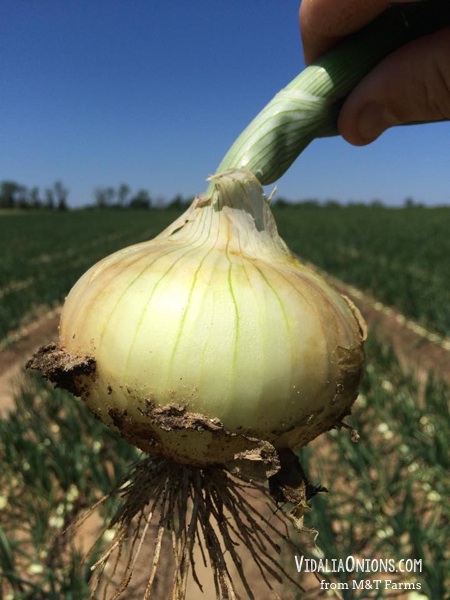
    Photo courtesy of M & T Farms, Lyons, GA, and Vidalia Onions.com

    By Clint Thompson

    Bob Stafford, manager of the Vidalia Onion Committee in Vidalia, Georgia, believes weather during the growing season has impacted this year’s Vidalia onion crop.

    “We planted 9,373 acres and lost some to hail and we lost some to too much water. We had a bad growing season. We’ll have a good promotable supply, but they’ll be a little on the smaller size,” Stafford said. “We’ll have more mediums than normal. The consumers are still going to get a very good product.

    “Our crop is generally over 90% jumbos but this time we’re going to have a lot of large-mediums and small jumbos.”

    Today is the scheduled packing date for this year’s Vidalia crop. Stafford said the packing date is when you can start using the Vidalia Onion trademark, and it ensures the customers that the onions are mature.

    This is the second straight year there has been considerably less Vidalia acreage produced.

     “We started downsizing last year so we’ve planted the 9,300 acres for two years. We ordinarily go up to about 12,000 acres,” Stafford said. “What we decided to do, we wanted the same yield off of less acreage. We wind up every year selling between 5 and 7 billion bushels. We just want to get that many off of 9,000 acres. It’s all about yields per acre is what we’re after; higher yields, less acres.”

    Stafford is not worried about this year’s market for onions compared to how other commodity markets have dropped amid the ongoing coronavirus pandemic.

    “(Florida produce farmers) grew a lot of product for schools and restaurants and so forth. When this pandemic closed them down those products were just left hanging. Our product, there’s been a world shortage of onions because since this pandemic, people are cooking at home and the onion being a staple for the cooking, it’s managed to keep up pretty well with the supply,” Stafford said. “It hasn’t affected us that much. It has affected us some but not as much as some other commodities.”