Author: Clint

  • Specialty-Type Melons Under the Microscope in Alabama

    A honeydew growing in a field in this file photo.

    By Clint Thompson

    Alabama produce farmers may soon have more options to choose from. This is due to ongoing research from Alabama Extension vegetable specialist Joe Kemble.

    Kemble is researching a melon trial this year that encompasses everything but watermelons and cantaloupes. It’s an expansion upon last year’s trial. He hopes to present relevant date at the annual Fruit and Vegetable Conference in November.

    “I’m doing a larger scale this year just to provide a lot more detailed information and provide growers with an option. Cantaloupes are good but we can also do honeydews and crenshaws and some of these other types of melons as well,” Kemble said. “The seed companies over the last dozen years have come up with a lot of improved varieties. In Alabama or in the Southeast in general, they tend to be challenging crops to grow because most of them don’t have a lot of disease resistance. But companies are spending a lot more effort developing varieties that perform better in the Southeast. I’m looking at adaptability and all things associated with fruit quality.”

    Local Markets

    These type of specialty melons should sell well in Alabama as well. The state’s produce farmers market their crops mainly to farmers markets and roadside produce stands.

    “It’s not the type of things you’re going to be growing lots of. Some of them, frankly, their shelf life is not good enough to take them and ship them. It’s going to be for local consumption,” Kemble said. “We’ve got a lot of farmers’ markets in Alabama, roadside markets and (Community Supported Agriculture) CSAs. I think some of these specialty type melons could fit in pretty well with those types of production.”

    Kemble’s second year of research features 20-plus varieties at two locations and will be replicated.

    “I’ll be collecting a lot of very detailed data to use for growers meetings,” Kemble said.

  • UGA Extension, Georgia Department of Agriculture seek to help farmers get produce to public

    University of Georgia/Georgia producers eager to sell fresh produce are being connected with buyers who need their products through UGA Extension partnership with Georgia Grown.

    By Maria M. Lameiras for CAES News

    Georgia farmers and agricultural producers eager to sell fresh produce and other products are being connected with consumers and other buyers who need their products through a new partnership between University of Georgia Cooperative Extension and the Georgia Department of Agriculture’s Georgia Grown program.

    Because of disruptions to the industry triggered by the COVID-19 crisis, many agricultural producers in Georgia — particularly smaller growers and producers — are experiencing difficulties getting their products out to those who can use them.

    Through its Georgia Grown Ag-products Industry Promotion and E-commerce Promotion programs, Georgia Grown — a state membership program designed to help agribusinesses thrive by bringing producers, processors, suppliers, distributors, retailers, agritourism and consumers together — will waive all membership fees for the service until July to help producers affected by the crisis.

    “The first step is facilitating connections between consumers and growers. There are many people who are looking for fresh produce and cannot find it, and we have producers who have produce and cannot sell it,” said Laura Perry Johnson, associate dean for Extension at UGA’s College of Agricultural and Environmental Sciences.

    Types of Products

    Types of agricultural products that qualify for the program include everything from vegetables, fruits and other produce. Also included are seafood, meats, dairy, poultry products and any other agriculture-related products, such as honey and prepared foods.

    “We are getting a lot of interest from many types of buyers, including consumer, wholesale, food banks and some restaurants,” said Matthew Kulinski, deputy marketing director for Georgia Grown. “This is a good way for producers who normally sell to restaurants to have a new outlet for their produce.”

    Georgia farmers who are keeping regular hours, providing curbside pickup, home delivery or e-commerce sales during the COVID-19 crisis can join the programs. They can visit the Georgia Grown Ag-Products Industry Promotion or Georgia Grown E-Commerce Promotion pages and fill out forms that will add their information to a statewide database of producers. It will be shared with consumers and buyers.  

    UGA Extension will support the program through its network of county agents and specialists throughout the state.

    “This is a grassroots effort that starts with all of our Extension agents, specialists and coordinators who have the relationships with these growers, producers and farmers,” said Johnson. “We are working on several different ways to get this information out to producers and consumers, including our Extension website emergency resources page and through traditional and social media. Together we can make this into something that will not only help agriculture in Georgia but the people who need access to fresh food as well.”

    Georgia Grown also provides a Pick your Own list of all producers who offer that option on their farms. This is for consumers who are interested in picking their own produce.

    View the list of farms and markets by county at extension.uga.edu/ag-products-connection

  • Why Some Florida Growers Aren’t Breaking Soil

    By Ashley Robinson

    When you think of Florida agriculture, hydroponic production in greenhouses or high tunnels probably isn’t the first thing that comes to mind. While the majority of the Sunshine State’s vegetable crops are produced outdoors, there is increasing interest in the use of protective structures for producing crops.

    Although the number of protected agriculture operations in Florida remain small in size, interest is increasing among growers who are weighing the benefits of being able to grow vegetables year-round in a variety of structures.

    Growing Hydroponically

    According to Bob Hochmuth, regional specialized Extension agent for vegetable crops at the University of Florida, his state is one of the leading states for hydroponic horticultural crops.

    Bob Hochmuth

    Hydroponic production refers to growing crops without soil. Hydroponic production can be achieved through several methods. These include growing crops in a nutrient solution, in a trough of running water or in soilless media.

    The hydroponic industry began as an industry primarily growing tomatoes, cucumbers and lettuce. However, growers today have the opportunity to grow all kinds of vegetable and specialty crops hydroponically.

    “We have seen a 4 or 5 times increase in acreage in the last 10 or 12 years. Many of which are tucked in near urban centers like Jacksonville, Palm Beach or Tampa,” Hochmuth says.

    Hydroponics production of lettuce

    According to Hochmuth, many of these growers are selling directly to consumers, restaurants and schools to reap the most profitability.

    Advantages of Hydroponic Production

    “The biggest advantage of growing hydroponics would be that growers can eliminate the hard-to-manage problems with our native soil here in Florida,” Hochmuth says. “In a hydroponic system we can eliminate a lot of the problems that come with growing in the soil. Those include insects, diseases, and nematodes that are commonly associated with our soil in Florida.”

    Growers may still see some pests enter the greenhouse, though it will exclude some difficult pests and diseases.

    “You still have pests that could become a problem. However, the structure does give you the ability to exclude some of the most common pests. We’re also able to reduce the amount of

    disease by moving air throughout the structure and having proper ventilation,” Hochmuth says.

    In addition to a reduction in pests and disease, hydroponics gives smaller growers the opportunity to become more cost-efficient. The cost of land has made it difficult for people to start farming operations. The acreage needed for a greenhouse has made this type of operation feasible for small growers. They avoid high start-up costs typically associated with farming.

  • This Week in VSCNews

    Multimedia Journalist Clint Thompson recaps a few stories from this past week in VSCNews.

  • South Carolina Blueberries Impacted by Recent Cold Temps

    house
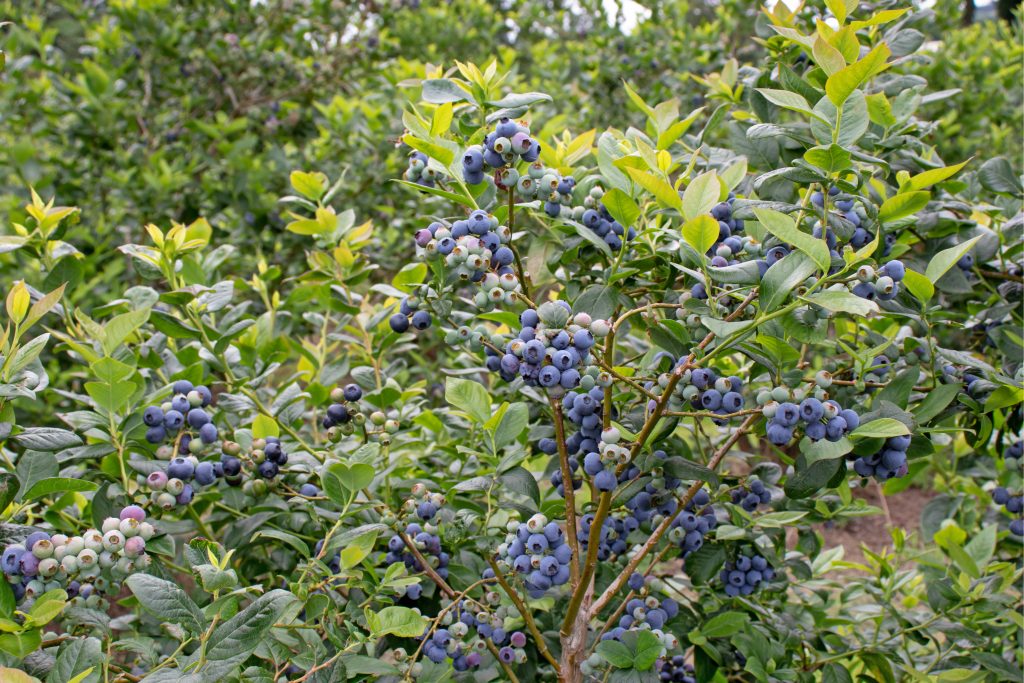
    Highbush blueberries.

    By Clint Thompson

    Recent cold temperatures impacted South Carolina’s blueberry crop, just not to the extent farmers are used to.

    Bruce McLean, Clemson (S.C.) Extension area commercial horticulture agent for Dillon County, Horry County, Marion County and Malboro County, said rabbiteye varieties appear to be the ones most affected.

    “As far as the crop itself, some varieties really look phenomenal. They’re really loaded up, full crop on them. Then there’s some varieties, definitely, the cold has affected,” McLean said. “Surprisingly, seems like what has been affected has really been more rabbiteye blueberries more so than highbush. It’s kind of a weird thing because our normal years tend to be just the opposite. We see a lot of damage to the highbush because they are earlier. Rabbiteyes tend to escape most of any problems. This year it’s been kind of a flip-flop year.”

    McLean thinks where there was an onset of warm weather early in the growing season, it brought a lot of plants into bloom a lot quicker than what it should have.

    “Funny thing is, normally in those years where we come into bloom much earlier, we’ll get a freeze event. It’ll be so severe, it’ll really do some damage to the early blueberries, like highbush. Then rabbiteyes, it’ll do some damage,” McLean said.

    “This year, the onset of warm weather really brought those rabbiteyes, those later varieties, on a little quicker than normal. When it did, they just happen to be at the right stage of bloom when we had a little bit of cold weather.”

    Despite the concerns with the recent cold temperatures, McLean is optimistic about this year’s crop.

    “I’ve been out walking some fields and the crop, for the most part, does look really good overall,” he said.

  • North Carolina Extension Seeks Help With Survey

    town hall

    North Carolina Cooperative Extension seeks help from farmers with a short survey. As producers fill out the survey, it will help Extension assess the impact of the coronavirus pandemic on the specialty crop (fruit and vegetable) and agritourism industry in North Carolina. The survey will help shape Extension’s response.

    N.C. State IRB approved the survey. Also, Extension specialists in the Department of Horticultural Science at N.C. State University conducted the survey. It is done in collaboration with the Center for Environmental Farming Systems and the N.C. State Local Foods Initiative.

    Extension asks that all farmers fill out this voluntary and anonymous survey. It will be open from April 23 through May 7.

    In a previous story ran in VSCNews, Chris Gunter, an N.C. State Extension specialist, reported that the vegetable crop in North Carolina looks “fabulous” so far.

    Mark Hoffmann, North Carolina State small fruits Extension specialist, also reported that he expects a bumper crop this year. Hoffmann is optimistic that his state’s strawberry producers will not have problems selling their crop.

    “With the whole COVID-19 situation, it’s very different right now. It looks like operations that can sell directly to customers, the direct-to-customer sales is something that’s picking up right now,” Hoffmann said. “Right now, I don’t think there’s a problem getting strawberries a home.”

  • Georgia Farmer Thinking Inside the Box

    Workers at Lewis Taylor Farms pack boxes with fresh produce.

    By Clint Thompson

    One South Georgia farmer is thinking inside the box when it comes to moving this year’s fruit and vegetable crop.

    Like his brethren in Florida, Bill Brim’s farming operation has been impacted by the orders of self-quarantine amid the current coronavirus pandemic. The lack of a foodservice market led to a sharp decline in demand for fresh produce including those grown at Lewis Taylor Farms in Tifton, Georgia, where Brim is a co-owner.

    With excess fruit and vegetables, Brim decided to offer boxed fruit to consumers in the South Georgia area. Brim was overwhelmed by the response last week.

    “We just started last week. We did like 350, I think. Next week we’ve already got over 700,” Brim said. “It’s crazy. We could wind up with 1,000 before it’s over with. We’re looking forward to it because we need to move some produce. We’re so far down on greens and stuff like this. Our revenue stream has come to nothing because of the coronavirus.”

    What’s offered?

    Last week, Brim offered collard, kale, zucchini, onion, strawberries and broccoli. People drove to Lewis Taylor Farms on Wednesday and received their produce without getting out of their car.

    Fresh produce in a box ready to be sold in Tifton, Georgia.

    “They lined up out here. We had masks on and gloves on and toted it to the car. They dropped a $20 bill into a box and kept going,” Brim said. “It makes you feel good to know that people in this country are like that. But everybody wants fresh produce, too, and this is a good way for them to get it.

    “We’re just trying to generate some income because we’re so way down.”

    Brim said this marketing outlet is not set up for all farming operations. It is hard to capitalize on unless you are big enough and have got enough product and different kinds of products. This week’s box will feature turnips, broccoli, yellow squash, onion, blueberries and cabbage.

    Brim is not a blueberry farmer, but he is a staunch supporter of other growers like himself. He buys blueberries from another producer in Lakeland, Georgia.

    “We like to use all of our product, but you’ve got to change it up a little bit,” Brim said.

    Watermelon, cantaloupe, eggplant, cucumber and bell pepper could be included as well, once they’re ready for harvest..

    To place an order for this week’s box, fill out an order form. All orders must be placed by Sunday night.

    Lewis Taylor Farms grows more than 6,500 acres of produce each year.

  • N.C. State Extension Specialist: Vegetables Look Fabulous

    By Clint Thompson

    Chris Gunter

    North Carolina vegetables look “fabulous,” according to Chris Gunter, N.C. State Extension vegetable production specialist. In fact, the main concern appears to be having enough workers in place to pick the crop once harvest season begins. And also how to keep their labor force safe amid the ongoing coronavirus pandemic.

    “They’re more concerned about how it’s going to impact their workers. How are they going to get farm workers here? How are the workers going to be impacted? What precautions should they take in order to protect their workers once they’re here?” Gunter said.

    He said that many of the farm workers who report to work every year are having less difficulty getting through the border entry process this season compared to those who are new.

    “Those farms that have had workers and are getting the same workers back, their workers are starting to arrive now,” said Gunter. He emphasized that farming operations are taking all the precautions they can to protect their workers during the coronavirus pandemic.

    “They’re trying to social distance, physically distance each other when they’re working. If that’s not possible, then taking precautions, like wearing a cloth face covering or frequently cleaning and sanitizing their hands or surfaces that they touch.”

    Farmers are mostly harvesting greens right now along with mainly cool-season vegetables.

    Sweet potatoes are the state’s No. 1 vegetable. There are also a significant amount of cucumbers, along with bell peppers, tomatoes, cantaloupes and watermelons.

    “Our crops are just a little bit behind Florida and (Georgia). Our strawberry season looks very strong so far (as well). All we need is to get rid of some of this rain and get people out buying fruits and vegetables,” Gunter said.

  • Georgia Blueberry Growers Work to Overcome Challenges

    Pictured are highbush blueberries.

    By Ashley Robinson

    University of Georgia area Extension blueberry agent Renee Holland is confident about this year’s crop despite a challenging season.

    “This season, we have a beautiful blueberry crop load in Georgia,” Holland siad. “The berry quality is excellent, and thankfully, we’ve had very little disease or pest issues this year.”

    Challenges Facing Growers

    Georgia blueberry growers are no strangers to facing difficult challenges and growing seasons, and this year is no exception. In the midst of COVID-19 growers have had to face additional challenges on top of their typical weather and labor issues. However, Holland believes that growers have mobilized like never before, creating the safest environments possible.

    “The virus has definitely affected the amount of labor coming into the country, but that’s nothing new to us. We’re used to having labor shortages,” Holland says.

    Growers have implemented additional hand-washing stations and have reduced their workforce to do more with less.

    “They’ve really thought about how they’re going to partition the labor force and how to keep people separated and in small groups and to have people living together also be the same people who are working together in the field. They also have plans set in place if someone gets sick. I’ve seen the growers mobilize like never before, they’re checking their employee’s temperatures every day. It’s been amazing to see how quickly they’ve mobilized and put safety measures in place. They’ve really done their homework,” Holland says.

    Considering COVID-19, UGA Extension and blueberry growers encourage consumers to purchase fresh Georgia blueberries. Blueberries are a great source of vitamin C, iron and fiber. In addition, they’re cholesterol-free, sodium-free and possess an important source of potassium. In light of COVID-19, many consumers are looking to become more health conscious and consume fresh produce, which will benefit both consumers and producers.

    UGA Extension specialist Laurel Dunn has published materials for consumers on food safety and sanitation amid COVID-19. According to Dunn, there is no evidence to suggest that COVID-19 is transferred by food. However, consumers should continue to wash and sanitize their fresh produce as normal. Click here for additional information about food safety and COVID-19.

    “It’s good to eat fresh produce. We want consumers to know eating fresh produce will not put them at risk.” Holland says.

  • UGA Researcher: Vegetable Morphology Key in Helping Plant Breeders

    University of Georgia/UGA researcher Esther van der Knaap working in the greenhouse.

    By Clint Thompson

    University of Georgia plant biologist Esther van der Knaap has studied genes in vegetables for more than 20 years. She believes the more information that scientists can obtain about a vegetable’s morphology; referring to its size and shape; the better equipped plant breeders will be in creating new and better cultivars.

    The lack of knowledge on morphological traits often hampers the efforts by plant breeders to create improved types. More information would greatly assist in the development of new cultivars in a variety of crops. That’s where van der Knaap’s work factors in.

    “For breeders, when they develop a new variety, they need to maintain the proper shape and size of the produce, in addition to any novel trait that makes the new variety superior over an older variety. You can create new tomato varieties that are resistant to any disease that we’re facing right now. But if the new variety doesn’t produce a fruit with the proper dimensions, nobody will likely pick it up,” van der Knaap said. “Consumers wouldn’t recognize it and processors can’t process produce that is too large or too small or with unusual shapes. The morphology of produce is incredibly important.”

    University of Georgia

    Gene Knowledge

    The knowledge of the genes has advanced the efficacy in tomato breeding programs because it enables the creation of improved cultivars that feature the appropriate dimensions of the produce. She discovered the different genes that aide in the development of tomato fruit shapes also influence other vegetables. These include potato tuber shapes, as well as the shapes of melons, cucumbers, leaves and grains.

    Size and shape are important components because they are what consumers identify with when purchasing certain vegetables in grocery stores or at the farmer’s markets.

    “In tomatoes, the smaller shapes like grape tomatoes or the cherry tomatoes are used more for salads. If you want to make sauces and soups, you purchase the roma tomatoes. Everybody uses tomato slices on hamburgers, and for those you take the large beefsteak tomatoes. They are nice for slicing. Consumers recognize produce and each type has a specific culinary purpose,” van der Knaap said.

    She communicates her research findings in publications so that breeders can use the knowledge to develop better cultivars.

    “You always have to create better cultivars when it comes to yield and drought or disease resistance. There are always new diseases emerging in plants and we have to stay ahead of them,” van der Knaap said. “Fortunately, in most cases, there’s always a better crop variety around the corner. We need to stay ahead of diseases as diseases emerge very rapidly, as we know now with COVID-19.  Plants are no different from people when it comes to being susceptible to diseases that can be devastating.”