Author: Clint

  • Deadline to Apply for Farmers to Families Food Box Program is Friday

    As part of the USDA Coronavirus Food Assistance Program, the Farmers to Families Food Box Program is accepting requests for proposals to contract American-grown products to fill food boxes and distribute them to those in need.

    Include all parts of the proposal in one single email. Deadline to apply is this Friday, May 1 by 1 p.m. To apply and for questions, email ERacquisition@usda.gov.

    Request for proposal document can be found at https://www.ams.usda.gov/sites/default/files/media/RFP_ERAcquisition.pdf.

    The program falls under the bipartisan Coronavirus Aid, Relief and Economic Securities Act (CARES) passed by Congress in late March to support the overall economy. USDA will purchase $3 billion worth of agricultural products for producers to work with local and regional food distributors to deliver the food to food banks and food pantries, community and faith-based organizations and other feeding organizations.

    Producers must submit a request for proposal of pre-approved commodities for contracted distribution indicating sizes, quantities and specific details. If awarded the contract, the producer is responsible for sourcing the products, preparing the boxes, soliciting and communicating with the nonprofit entity, and distributing the boxes in a mutually agreed upon schedule.

    For more information and for frequently asked questions, go here,
    https://www.ams.usda.gov/selling-food-to-usda/farmers-to-families-food-box.

  • Statement by Commissioner Nikki Fried on USDA’s Country of Origin Labeling Enforcement

    Tallahassee, Fla. – The U.S. Department of Agriculture’s Agricultural Marketing Service (AMS) recently announced it would temporarily suspend enforcement of Country of Origin Labeling (COOL) for fresh fruit and vegetables in response to COVID-19, allowing products sold to foodservice businesses to be redistributed to grocery stores, markets, and other retail businesses.

    commissioner
    Nikki Fried
    Florida Agriculture Commissioner

    COOL food package labeling clearly identifies in what country a covered food product originated, such as the “Product of USA” label. Suspending enforcement of this labeling could seriously disadvantage American agriculture producers, especially Florida’s seasonal produce growers harmed for decades by the dumping of produce by Mexico.

    Florida Agriculture Commissioner Nicole “Nikki” Fried raised industry concerns about unintended consequences of COOL enforcement suspension with USDA Secretary Sonny Perdue and USDA Deputy Secretary Stephen Censky. The USDA AMS has now clarified that this COOL suspension only applies to fruit and vegetable products imported and in inventory before April 20, 2020 and previously packaged and shipped for foodservice industries. The suspension does not apply to food products imported since April 20, 2020, which will be enforced as normal.

    In response to this clarification, Commissioner Fried offered the following statement:

    “I thank the USDA for clarifying their decision on produce Country of Origin Labeling. American agriculture is already facing tremendous challenges, with a devastating influx of foreign competition and plummeting demand from foodservice businesses during COVID-19. Florida’s seasonal produce growers supply 150 million Americans with fresh fruit and vegetables, yet are facing over $522 million in projected losses from COVID-19. Anything that opens the door to more potential foreign competition is a threat to the domestic growers who feed our families. I thank USDA Deputy Secretary Censky for a positive, productive conversation on Country of Origin Labeling and helping Florida’s farmers.”

    To learn more about Country of Origin Labeling requirements, visit the USDA AMS COOL COVID-19 enforcement page.

    Florida Department of Agriculture and Consumer Services

  • Georgia Peanut Commission Adding Own Flavor to Farmer’s Produce Boxes

    By Clint Thompson

    The Georgia Peanut Commission (GPC) is adding its own flavor to produce boxes being sold this week by Lewis Taylor Farms in Tifton, Georgia.

    For the second straight week, Lewis Taylor Farms is selling boxed produce to consumers in South Georgia. The orders of self-quarantine amid the current coronavirus pandemic means there’s a lack of a foodservice market. This has led to a sharp decline in demand for fresh fruits and vegetables. These include those grown at Lewis Taylor Farms.

    Last week’s produce box at Lewis Taylor Farms.

    Don Koehler, GPC executive director, said the commission donated four packs of peanuts and recipes to be included in this week’s box. This allows consumers to cook quesadillas and stir fry as well as blueberry crisps with items they purchased from Lewis Taylor Farms.

    “The things all of those recipes have in common, besides having produce out of that box, was that the fact we had peanuts and peanut butter in them,” Koehler said. “In a stir fry, you think about it, a lot of oriental food has some kind of nuts in it. Peanuts are pretty common in those places. That was about 20 minutes from the refrigerator to the plate to do that whole stir fry.”

    Koehler said the recipes are simple with common ingredients that most everyone will already have in their kitchens.

    “The thing that we know is, the folks that get that box are going to their kitchen to cook. If we can get them to think about using peanuts as an ingredient, then it’s a win for all of us,” Koehler said.

    This Week’s Produce Box

    This week’s box will feature turnips, broccoli, yellow squash, onion, blueberries and cabbage.

    Last week, Lewis Taylor Farms offered collard, kale, zucchini, onion, strawberries and broccoli. People drive to Lewis Taylor Farms on Wednesday and receive their produce without getting out of their car.

    Once they’re ready for harvest, watermelon, cantaloupe, eggplant, cucumber and bell pepper could be included as well.

    Lewis Taylor Farms grows more than 6,500 acres of produce each year.

  • Alabama Farmer: I Think Everybody’s Eyes Have Been Opened

    Fresh market produce for sale.

    By Clint Thompson

    Alabama fruit and vegetable farmer John Aplin has experienced a 500% increase in his strawberry customers this year. He believes it’s due to the ongoing coronavirus pandemic and its effect on people’s buying habits.

    “I know that we all didn’t get a 300, 400 or 500% increase in people who buy fresh fruits and vegetables this year,” said Aplin, who farms in Geneva County. “The virus does not affect our foods, but it is affecting the way people are buying food. I think after all of this is over with, we’re going to see a big difference in the way people are buying food. People are going back to, I don’t know, the 70s and 80s styles of buying food. Folks are beginning to talk about canning and preserving food.”

    Apling has already started harvesting his first variety of peaches, which are three weeks early. Tomatoes are also early this year and expected to be ready in two to three weeks. He’s hoping other crops will soon be ready as well.

    “Folks come to buy one thing. If we don’t have it, they buy something else,” Aplin said.

    “I think everybody’s eyes have been opened. Something could happen and you might need to be storing up for the winter. You might need to be saving a little bit of money instead of spending it all and living paycheck to paycheck. I think when it’s all over with, you’re going to see a huge change in people buying local. You can tell just by talking to customers, that they are even more concerned about where their food comes from. How many hands have touched their food before they put it on their plate?

    “I think that’s everybody’s mindset right now. They’re wanting something close by where they know where it came from.”

  • N.C. Strawberry Association President: Overall, the Crop Looks Good

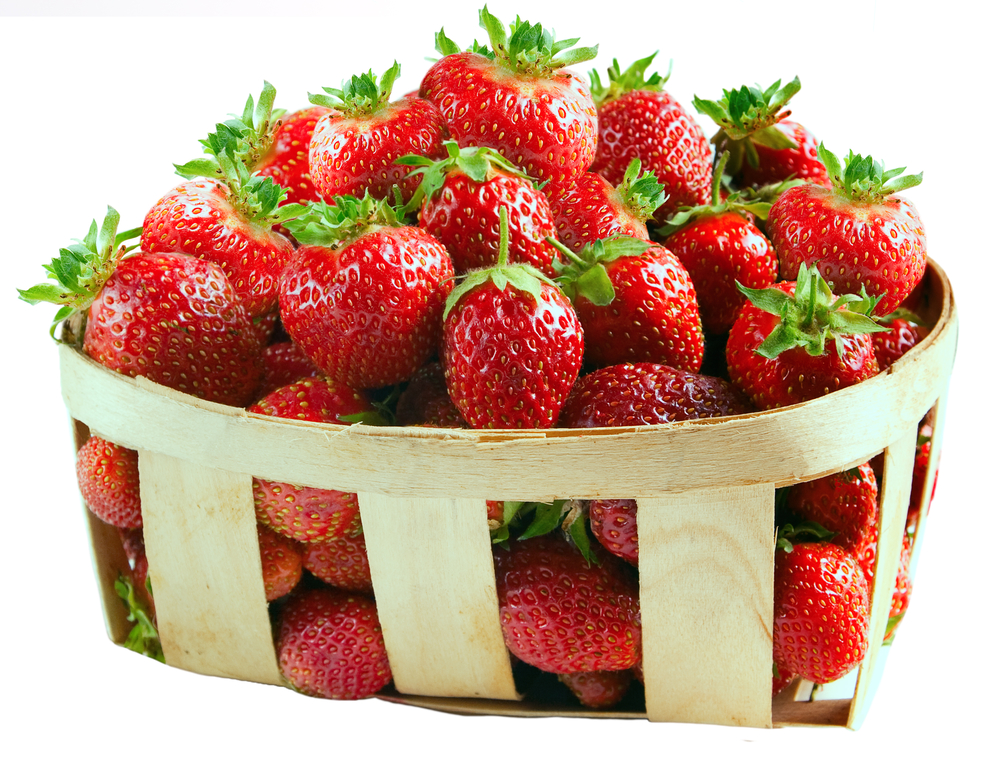
    Basket with fresh strawberries isolated on white background.

    By Clint Thompson

    The president of the North Carolina Strawberry Association is excited about this year’s crop.

    Jim Warenda, who is also the sales representative for Fresh Pick Produce in Kenly, North Carolina, exuded optimism when discussing the prospects of this year’s crop.

    “Everything’s great. We are a hair behind, just due to, it’s been a little bit cooler spring than what we’re normally used to,” Warenda said. “A normal strawberry flower will ripen in about 30 days. They’re ripening at about 37, 38 right now.

    “We’re probably a couple of days behind on some things. Overall, the crop looks good. We really haven’t hit any real big volume yet. We foresee that happening (this) week.”

    He said the normal window for harvesting strawberries is April 20 through June 15.

    Warenda is not alone in having hopes for this year’s strawberry crop in North Carolina. In a previous VSCNews story, Mark Hoffmann, North Carolina State small fruits Extension specialist, said he is expecting a “bumper crop” this year.

    “If the weather holds up, it’s going to be one of the best strawberry years in a long time,” Hoffmann said.

    While the crop appears bountiful, the strawberry market appears in good shape as well. This despite the ongoing coronavirus pandemic.

    “We do some chain store business as well as roadside market stuff in the northeast. There has been a little bit of a decline in market, just because they’ve closed off some of these islands for this month. We haven’t really hit any volume yet, so everything’s been smooth so far. I don’t foresee any hiccups in the next couple of weeks. But this produce business can always change,” Warenda said.

    For more information about strawberry production in North Carolina, see N.C. State strawberry website.

  • Farm Recovery Block Grant Deadline for Georgia Farmers is April 30

    disaster
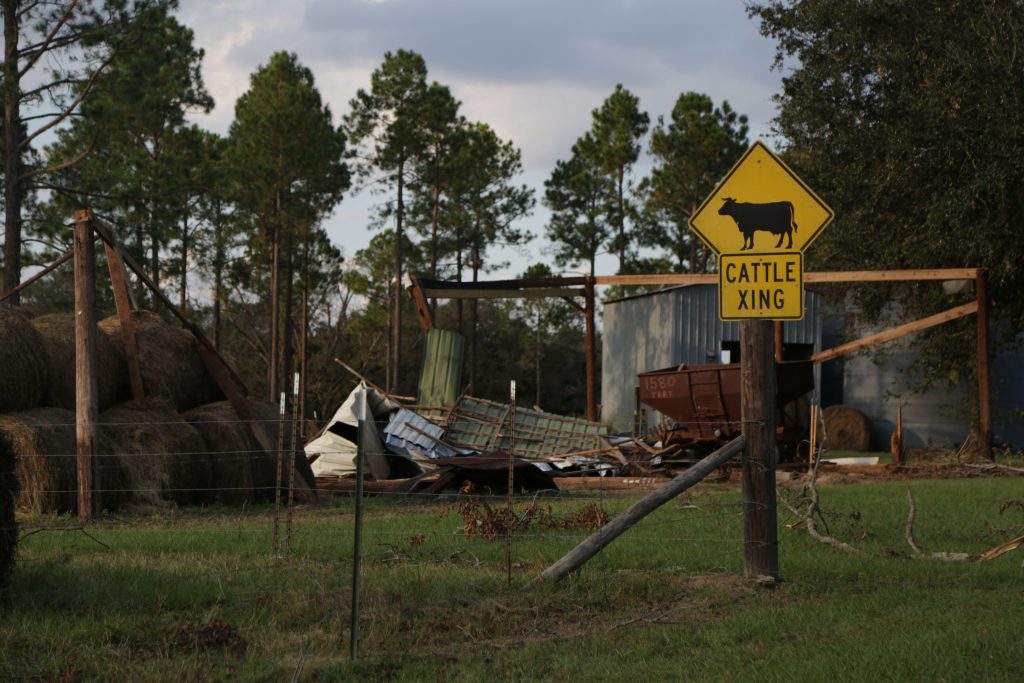
    Impact from Hurricane Michael.

    By Clint Thompson

    The Farm Recovery Block Grant deadline for Georgia farmers who were dealt financial losses by Hurricane Michael is Thursday, April 30.

    The Georgia Department of Agriculture is accepting online applications. The block grant funds include $347 million.

    This block grant program is designed to compensate producers for losses and expenses in seven categories of assistance, according to farm recovery. These include beef, dairy, fruit and vegetable, pecan, poultry, timber, and uninsured infrastructure.

    University of Georgia Cooperative Extension Ag economist Adam Rabinowitz believes all eligible farmers need to take advantage of the program.

    “Those block grants are really important for those who didn’t have any other assistance from USDA programs to recover from Hurricane Michael. It’s not your typical crop producers. It was some of your others in terms of trees and some infrastructure,” Rabinowitz said. “It certainly helps in a time when, just in general, we’re dealing with financial issues, continued recovery from Hurricane Michael and just real unknown. It’s essential to get those applications in by that extended deadline of April 30.”

    Georgia farmers and forest landowners in 95 eligible counties who suffered losses can enroll at farmrecovery.com.

    For more information and a guide to help prepare applicants for enrollment, visit farmrecovery.com.

    Hurricane Michael caused more than $2.5 billion in losses to Georgia’s agricultural sector, the state’s leading industry. This was according to estimates from the UGA Cooperative Extension agents and agricultural economists.

  • FDACS Launches Hemp Permit Application Portal

    Tallahassee, Fla. Today, the Florida Department of Agriculture and Consumer Services (FDACS) launched the state’s online Hemp Cultivation Licensing Portal, allowing interested growers to apply for licenses. The portal’s user-friendly interface provides applicants with a checklist of recommended steps to allow for a quick and easy application process.

    state hemp plan

    “As we continue building our state hemp program into a national leader, our new online application portal will help growers quickly and easily apply for hemp cultivation licenses, as well as manage, renew, and view any current hemp applications,” shared Commissioner Nikki Fried. “We’re working to ensure that applying for a license is streamlined and simple, so Floridians interested in growing hemp can quickly get started.”

    The online Hemp Cultivation Licensing Portal can be accessed at Hemp.FDACS.gov, or on the FDACS hemp webpage. The page also contains a link to an application checklist, so interested growers have the necessary information for a quick, easy application process.

    As part of the hemp cultivation permitting process, applicants are required to complete a background check which includes fingerprint submission along with the ORI number (Originating Agency Identifier) that the Florida Department of Law Enforcement has assigned to FDACS: FL925080Z. The ORI number is currently active and may be used at locations that complete the fingerprinting and submission process (Livescan service providers).

    For a list of Livescan service providers, click here. To locate a Livescan service provider in your area, click here. Some Livescan service provers’ operations may be impacted due to the COVID-19 pandemic. We recommend applicants contact Livescan service provers prior to visiting a location.

    Today’s Hemp Cultivation Licensing Portal launch follows the U.S. Department of Agriculture’s formal approval of Florida’s state hemp program on April 16, 2020. Commissioner Fried and FDACS have been hard at work building the framework for Florida’s state hemp program, announcing new food safety and animal feed rules in January, forming a Hemp Advisory Committee to help guide rulemaking and industry development, and ensuring public input was heard during workshops held around the state to provide information on the draft rules.

    For updates and more information on the state hemp program, visit the FDACS hemp webpage or sign up for the FDACS hemp mailing list.

    Florida Department of Agriculture and Consumer Services

  • Sneak Peek: May 2020 VSCNews Magazine

    Next month’s issue of VSCNews magazine.

    By Ashley Robinson

    The May issue of VSCNews Magazine targets the best pest management practices for growers.

    Researchers from the University of Florida Institute of Food and Agricultural Sciences (UF/IFAS) are already looking ahead and making plans to see what more can be learned about growing hemp in Florida, as they reach the midpoint of their pilot project. Lourdes Rodriguez, a public relations specialist for UF/IFAS Communications, provides a progress update of the UF/IFAS Industrial Hemp Pilot Project and future plans.

    In the Southeast, chemical control is the most predominant approach for managing root-knot nematodes in vegetable production systems. However, multiple cover crops are excellent candidates for managing nematodes. Abolfazl Hajihassani, an assistant professor and Extension specialist at the University of Georgia (UGA), and Josiah Marquez, a UGA plant pathology graduate student, address considerations of selecting the cover crop cultivar best suited to your production.

    Since its first detection in 2008, spotted-wing drosophila (SWD) has emerged as a devastating pest of berry and cherry crops throughout the U.S. Ashfaq Sial, an associate professor in the Department of Entomology at UGA, gives 10 of his best tips to effectively control SWD while protecting your fruit.

    In addition, Hugh Smith, a vegetable entomologist at the UF/IFAS Gulf Coast Research and Education Center in Wimauma, Florida, provides readers with strategies to effectively manage diamondback moth larvae. Diamondback moths, which feed on plants in the crucifer family, develop resistance to insecticides very easily.

    Finally, in the From the Back Forty column, growers can find information on relief efforts in the agriculture industry in light of COVID-19. Organizations such as American Farm Bureau and Florida Department of Agriculture and Consumer Services are working diligently to bring some relief to US farmers.

    To receive future issues of VSCNews magazine, subscribe here.

  • Long Drought Leads to Water Restrictions in One Florida County

    By Clint Thompson

    A water restriction has been placed on one Florida county because of the long drought. Gene McAvoy would not be surprised if more restrictions will follow.

    On Friday, the South Florida Water Management District (SFWMD) and Lee County announced mandatory irrigation restrictions. According to the press release, the restrictions were to address low aquifer levels. They went into place on Saturday.

     “On the coast, they rely a lot more on wells, well fields. Water levels in the aquifer has dropped to extreme levels. That’s why they started with Lee County,” said McAvoy, UF/IFAS Extension agent emeritus. “I haven’t seen anything like this (drought) since 2008.”

    Long Period of Dry Weather

    The most recent map of the U.S. Drought Monitor shows Florida either in abnormally dry, moderately dry or severely dry conditions. Lee County, whose county seat is Fort Myers, is experiencing a moderate drought and severe drought in different parts of its county.

    “We did have a little bit of rain in Southwest Florida (Sunday) night, but it was really (just) enough to settle the dust in most places,” McAvoy said.

    According to the press release, Florida’s southwest coast received only 14.72 inches of rain from September 2019 to March 2020. That’s a deficit of minus-7.64 inches. In March, the southwest coast recorded only 0.27 inches of rain, only 12% of average.

    Due to the extended drought and record heat, Florida agriculture has been negatively impacted.

    “I’m actually in a (citrus) grove right now. Because of drought stress and the record heat we’ve been enduring the past few months, the trees are shedding fruit,” McAvoy said. “Farmers are not able to harvest them quite as fast as the fruit is falling off the tree. (We) probably got two boxes per tree on the ground right now in the grove I’m in right now.”

    The current rainfall deficit, extreme heat and decreasing surface and groundwater levels are expected to continue throughout the remainder of the dry season. It typically ends around the end of May.

    In a previous VSCNews story, climatologists fear that the drought will get worse before it gets better.

  • Florida Department of Agriculture Awarded $850,000 in USDA Research Funding

    Tallahassee, Fla. – On Friday, the U.S. Department of Agriculture (USDA) announced $9.5 million in funding to 11 collaborative, multi-state projects that seek to boost the competitiveness of U.S. specialty crops. The Florida Department of Agriculture and Consumer Services (FDACS) was awarded $850,816 to support research related to improvements in lettuce resistance to Bacterial Leaf Spot (BLS), funded through the Specialty Crop Multi-State Program (SCMP).

    commissioner
    Nikki Fried
    Florida Agriculture Commissioner

    “As the nation’s second-largest producer of specialty crops with a year-round growing season, Florida is an ideal environment for agricultural research and innovation,” said Commissioner Nikki Fried. “This funding is particularly important with Florida-grown lettuce facing losses up to 75 percent due to COVID-19. We look forward to working with state and federal partners to eradicate pathogens and diseases that threaten our valued agriculture commodities.”

    The full list of grant recipients and projects may be viewed here.

    U.S. lettuce production is estimated at nearly $1.9 billion, making lettuce one of the leading vegetable crops in the nation. The funding awarded to FDACS is in partnership with the University of Florida, the Pennsylvania State University, and the USDA Agricultural Research Service. The research will study disease resistance and diversity to improve lettuce cultivars against BLS through breeding, genetics, and study of the BLS-lettuce interaction.

    The USDA Specialty Crop Multi-State Program (SCMP) offers grants to enhance the competitiveness of specialty crops by funding collaborative, multi-state projects that address the following regional or national level specialty crop issues: food safety, plant pests and disease, research, crop-specific projects addressing common issues, and marketing and promotion.