Author: Clint

  • Hydrogen Cyanamide for Uniform Bud Break in Peaches

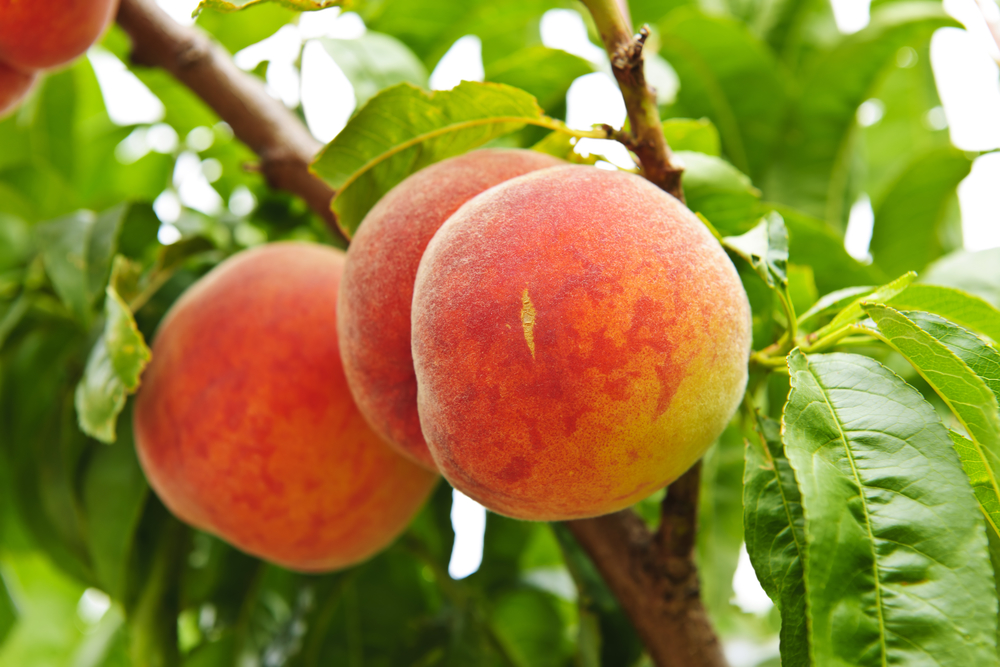
    Ripe peaches ready to be picked on tree branches

    By Ashley Robinson

    Weather conditions are an important factor when it comes to growing peaches in Florida.

    Florida’s mild winters and fluctuating temperatures in the fall continue to be challenges for peach production. Because peach trees are deciduous, they require a certain amount of cold weather to become dormant. Once the cold weather requirement for dormancy is met, the warm spring weather ends the dormancy period, resulting in floral bud break.

    The number of chill hours needed to end dormancy depends on the peach variety. In the past several years, the required chill hour accumulation to achieve uniform bud break was often not achieved until late January.

    “Since our winters are so mild in Florida, we are seeing that the trees are not going into proper dormancy, which means the trees are never sleeping in the winters. You always see some amount of flowering which is a concern because you’re losing those buds and potential fruit, since they won’t be harvested” says Tripti Vashisth, an assistant professor of horticulture at the University of Florida Institute of Food and Agricultural Sciences (UF/IFAS).

    Hydrogen Cyanamide Trials

    Hydrogen cyanamide is a plant growth regulator used worldwide in fruit crops to break dormancy. The chemical is known for promoting uniform flowering, which is beneficial for growers because a uniform fruit set requires fewer passes to plant and harvest the crop. To ensure that hydrogen cyanamide works well for low-chill peach cultivars under Florida conditions, researchers at UF have been testing the effects of hydrogen cyanamide on peach production in Florida over the past three years.

    “We have found that hydrogen cyanamide is very effective in Florida conditions,” Vashisth says.

    According to Vashisth, most growers are applying hydrogen cyanamide at a rate of 1.2 or 1.25 percent. However, research results have proven that hydrogen cyanamide at a rate of .75 to 1 percent is highly effective in inducing bud break and is also more economically beneficial for growers.

    Timing is Key

    When using hydrogen cyanamide as a management tool, it is critical to apply it at the right time.

    According to Vashisth, from the time of application in North Florida, it took about six weeks for uniform bud break to occur. However, it only took about three weeks in Central Florida.

    “Right timing is very critical because if it is applied too late you can lose a lot of crop,” says Vashisth. “It needs to be a very educated decision that growers make.”

  • National Organic Coalition, Organic Farmers Association Ask Congress to Protect Food and Agriculture During Pandemic

    Washington, D.C. – May 8, 2020 —The National Organic Coalition (NOC) and Organic Farmers Association (OFA) called on Congress yesterday to include provisions in the next coronavirus relief package to help organic farmers, farmworkers, retailers, certifiers, and other businesses weather the COVID-19 pandemic. Like all sectors of agriculture, organic operations are in crisis.   

    In a five-page letter, NOC and OFA detailed their recommendations to ensure that organic farms and businesses have the support they need to withstand the challenges they face during this difficult period. Organic farms and businesses are on the front lines and face major disruptions, including loss of critically important markets and labor challenges. These operations are adapting, but in some cases face skyrocketing expenses as they invest in equipment, technology, sanitation, staffing, and transportation to keep employees safe, to access markets, and to provide safe and nutritious food to communities.  

    NOC and OFA are seeking funding and technical assistance to help operations protect the health and safety of all who are involved in organic agriculture, certification and compliance. In addition, NOC and OFA are advocating for actions that will prevent fraud and protect the integrity of the U.S. Department of Agriculture (USDA) organic seal during the crisis.

    “Despite the challenges we face, the USDA must move forward without delay on the Strengthening Organic Enforcement and Origin of Livestock rules to provide a level playing field for organic operations,” said Abby Youngblood, Executive Director of the National Organic Coalition. “NOC is calling on Congress to ensure that USDA moves forward in closing loopholes to prevent fraud and to protect organic dairy operations. These regulations are critical to the economic viability of organic farms and businesses and are needed to ensure consumers are getting what they expect when they purchase organic products.”

    In addition, the letter conveys concerns that the direct payment mechanism announced by USDA to implement the Coronavirus Aid, Relief, and Economic Security (CARES) Act will not reach organic and diversified farms and those serving local markets.

    “We are concerned that the payment formulas used by USDA to distribute payments will shortchange organic farmers, particularly small-and-medium-scale diversified operations that have been economically impacted by the pandemic,” said Kate Mendenhall, Director of the Organic Farmers Association. “We are asking Congress, in the next coronavirus response package, to be more explicit about providing direct assistance to organic and diversified farms and to establish oversight procedures to ensure USDA compliance with the requirements.”

    As an emergency measure, NOC and OFA are requesting that Congress authorize USDA to reimburse certification agencies directly for organic certification costs during the pandemic, rather than requiring organic operations to pay these costs and then seek partial reimbursement through the organic certification cost-share program.

    Farms and food-related businesses have been designated as essential by the Department of Homeland Security and by most states. NOC and OFA agree with that designation, but are seeking federally funded pay bonuses for front line food system and grocery workers and emergency grants to reimburse these businesses for expenses related to personal protection equipment (PPE) and pandemic-related facility, infrastructure, technology, and staffing modifications.

    We urge Congress to increase funding for the Supplemental Nutrition Assistance Program (SNAP), to allow SNAP payments to be made online directly to farms, CSAs, and cooperative and independent grocery stores, and to provide waivers and direction to States to broaden their WIC-approved food lists to allow WIC participants to purchase organic foods.

    Funding for the Small Business Administration (SBA) Paycheck Protection Program (PPP) and Economic Injury Disaster Loan (EIDL) programs has proven critical to organic farms and businesses. This funding should be replenished, and Congress should direct SBA to expand farmers’ access to both the PPP and EIDL program.  

    The full letter from NOC and OFA with detailed recommendations is available online:

    https://app.box.com/s/khg95otgoko01huy63nthfa04pingn4w

  • Expected Temperature Drop in N.C. Leads to Extra Protection for Strawberries

    A file photo shows a strawberry field.

    By Clint Thompson

    Potential freezing temperatures this weekend in North Carolina could impact strawberry production. Unless farmers utilize row covers for protection.

    According to Mark Hoffmann, North Carolina State small fruits Extension specialist, row covers, which help reduce radiation in the field should provide adequate frost protection from temperatures in the 30s on Saturday and Sunday.

    “It looks like in most areas, what’s happening is that if the wind slows down Saturday night to Sunday and we have no cloud cover, that’s probably the most critical time. When it’s Sunday morning and still dark and there’s a lot of radiation, that’s probably the most critical time. With row covers, they will be safe,” Hoffmann said.

    Low Temps

    According to weather.com, temperatures are forecast to drop to as low as 39 degrees on Sunday morning in Raleigh, North Carolina. Temperatures that low are abnormal this late into May for that part of the world.

     “It’s pretty late. I wasn’t expecting it. We were not recommending taking the covers out of the field because we had seen such odd weather patterns this year. It’s very, very late,” Hoffmann said. “Most of the growers had taken their row covers out of the field. They have to put them back in over this weekend.”

    Strawberry production is currently in mid-season. If row covers are not used, the low temperatures could harm the open blossoms that are still on plants, which lead to late-season fruit. Temperatures could also harm the actual fruits in popcorn stage and other green fruits.

    The drop in degrees this weekend could also impact the state’s grape production.

    “This is the third frost event to affect grapes this year already. Usually they grow out of it. This is pretty late in the season again. Unless you have a sprinkler system or wind machine, there’s not a lot you can do, unfortunately,” Hoffmann said.

  • COVID-19 Guidelines for Agricultural Operations

    By Laurel L Dunn for UGA CAES Newswire

    Adam Brannen, a student worker on the UGA Tifton Campus, weighs tomatoes at the Blackshank Farm. Clint Thompson July 16, 2014

    Farmers and food processors take routine steps to reduce the likelihood of foodborne pathogens, like Salmonella and E. coli, contacting our food and causing illness. The procedures that our food industry takes on a daily basis are also effective in reducing the chances that the coronavirus responsible for COVID-19 will come in contact with the food we eat.

    There is currently no evidence that the coronavirus is spread through contaminated food. This is in part because the virus primarily targets cells in the respiratory tract (lungs) rather than organs in the gastrointestinal tract (stomach and intestines), and because acids in the stomach likely inactivate ingested virus before it can cause harm.

    During the current pandemic and other viral outbreaks, there are further considerations that farms and agricultural businesses must take in order to protect their workers and customers despite the usual safety of our food supply.

    Farms, packinghouses and food processors

    Sick workers should never be allowed to come to work, and they should understand that there is no punishment for them if and when they call in sick.

    Encourage distancing of at least 6 feet between workers at all time, including on buses transporting groups of workers to the field and on the packing line when possible. Only one employee should be in the cab of a truck, and frequently touched surfaces like the steering wheel or door handles should be cleaned and disinfected when passengers leave or enter a vehicle.

    Frequently touched surfaces within the farm or facility should be cleaned and disinfected throughout the day and between shift changes. The U.S. Centers for Disease Control recommends a list of U.S. Environmental Protection Agency-approved disinfectants that are effective against coronavirus. A solution of 5 tablespoons of bleach in 1 gallon of water may also be used.

    U-pick operations, farmers markets, farm supply stores and CSAs

    Post signs stating rules to be followed at the entrance. Keep them short and easy to read. Rules should include washing hands (or using hand sanitizer if washing is not possible) upon arrival; wearing a mask, bandana or scarf; maintaining 6 feet of distance between other patrons; and requesting vendor assistance to select items instead of handling items themselves.

    Indoor markets may consider putting vendors or high-demand items outside so that patrons do not have to enter the building. For items inside, consider posting a price list outside and having an employee retrieve items, or set a reasonable limit on the amount of time each customer may stay inside to do business.

    Have one person dedicated to handling payments. Conduct transactions online or over the phone when possible, and require credit or debit cards for in-person transactions, since paper money cannot be sanitized.

    U-pick operations should clean and disinfect all picking baskets and equipment between customers. When in the field, customers must only touch fruit they plan to pick.

    University of Georgia Cooperative Extension has further guidance, in English and Spanish, including materials for farms, packinghouses, community gardens, farmers markets, food banks, agribusinesses and consumers on its emergency resources page at extension.uga.edu/emergencies.

  • Florida Mangoes Soon Will Be Ready for Harvest

    Picture submitted by Alan Chambers/UF: Shows a collection of different mangoes.

    By Clint Thompson

    Florida mango lovers will soon be able to sample this year’s crop, according Alan Chambers, University of Florida Assistant Professor/Genetics and Breeding of Tropical Fruits.

    “The mangoes are just beginning to ripen now,” he said. “Fresh mangoes from Florida will soon be available. We had multiple mango blooms this year in response to multiple cold spells. As a result, we have fruit at multiple maturity levels on the trees at the same time.  This will complicate harvesting.”

    Mangoes are grown commercially in Florida in Dade, Lee, and Palm Beach Counties, according to University of Florida/IFAS Extension. Mangoes are grown in tropical and subtropical lowlands throughout the world.

    As part of his research responsibilities, Chambers focuses on the quality of the mango. He has mature trees established at the station in Homestead, Florida. He samples individual aroma compounds. He determines how sweet the fruit are, the size they are and how much they weigh. Its essential information for local growers who want to produce a desirable fruit for consumers.

    “It really helps our growers who are looking for, ‘Which one should I grow? Which ones are the best that consumers like? Which ones are they willing to pay more for?’” Chambers said. “Most of the domestic mango industry is based on imports. In South Florida, there’s higher costs of production for land, inputs and labor. Our growers make their money based on specialty products, so offering something with a higher quality or that’s safer or that’s different than what you can get in the grocery store.”

    Marketing for mangoes is mostly done locally. Chambers said some of the product does get sold and shipped up the east coast.

    For more information about mango production, see University of Florida/IFAS Extension.

  • Frost and Freeze Protection for Vegetable Crops

    Written By Chris Gunter, N.C. State Extension Vegetable Production Specialist

    Weather predictions for this weekend include clear skies with minimal or calm winds, which are conducive to cold temperatures and could lead to freeze or frost conditions in North Carolina.

    On Sunday morning, May 10,  low temperatures are predicted to drop into the 30s with some temperatures possibly below freezing in low lying rural areas. Record low temperatures for May 10 are in the lower 30s at the Greensboro and Raleigh-Durham locations, and 39 ºF at Fayetteville. Not only are daily low-temperature records threatened, but the latest spring freeze on record is May 10 for Raleigh (31 ºF) and May 8 for Greensboro (32 ºF).

    Frost

    As cold temperatures are threatening, agents and specialists are getting calls from concerned vegetable growers worried about potential damage on their crops. A frost occurs when temperatures dip to 32 ºF and water starts to freeze on low lying surfaces. If water within the plant cell or between the plant cells freeze, this can result in damage to plant tissue. The following vegetable crops can be grouped according to their cold tolerance based on their physiology. It is important to remember that cold damage results from the actual temperature and the duration of that temperature.

    We usually think of frost as occurring at temperatures from 31-33 ºF and this will result in damage or killing the foliage of warm-season plants like beans, corn, cantaloupe, cucumbers, eggplant, okra, southern peas, peppers, potatoes, sweet corn, sweetpotatoes, squash, tomatoes, and watermelon.

    When temperatures dip below 26-31 ºF, this is a hard frost or freeze. There are cool-season crops that will tolerate a temperature dip to these temperatures for a limited period of time. These include broccoli, cabbage, cauliflower, chard, English peas, lettuce, mustard, onion, radishes, and turnips. They will likely show foliage damage due to the cold and this may result in a yield reduction later in the season, but the plant will survive.

    In the event that the temperature drops below 26 ºF during a hard freeze for a longer period of time, there are some vegetables that will survive these temperatures. Cold season crops like Brussels sprouts, beets, collards, kale, parsley, and spinach should survive.

    Charlotte Glen wrote a great article about seeds and seedlings surviving cold temperatures. We encourage you to check it out here:

    Will My Vegetable Seedlings Survive This Weekend’s Cold

    Protecting from these cold temperatures can be a little more difficult to answer. Growers who have solid set irrigation in place and have experience with frost protection using overhead water applications, may be planning to use this method. This requires large volumes of water and continuous applications throughout the cold event. For most vegetable growers however, overhead solid set sprinkler irrigation is less common than drip irrigation or travelling guns and pivot irrigation systems.

    Usually maintaining good soil moisture prior to the event can be helpful, as the water in the soil retains heat longer and releases it slowly during the cold event. For this reason, it is also recommended not to cultivate just prior to a frost or freeze, so that as much water can be retained in the soil as possible. The cultivation can damage plant roots and increase stress on the plants. In addition, cultivation opens additional spaces in the soil, allowing cool air to penetrate deeper into the soil profile.

    Other methods for frost protection include using row covers, which come in various lengths and thicknesses depending upon the level of protection needed. Growers can also use waxed paper cups, to cover the transplants in the field, during an overnight cold period. These are labor-intensive methods, but may be an option if areas are small enough and the farm has sufficient labor to put on and remove the covers as temperatures warm back up. If coverings are used, it is important to monitor temperatures under the covers. Be prepared to remove the covers before temperatures under the cover rise too high and result in heat stress.

    For full story, see freeze protection for vegetable crops.

  • Preliminary Reports in COVID-19 Impact Survey Show Effects Vary by Industry

    town hall

    GAINESVILLE, Fla. — As University of Florida economists cross the halfway point in their surveys of Florida’s agriculture and marine industries related to the impacts of COVID-19, initial reports indicate that impacts vary widely across industry types in terms of business closure rates, operations changes, and impacts to sales revenues and employment.

    In one of the five surveys of the Assessment of COVID-19 Impacts on Florida, 200-plus charter/for-hire marine professionals responded to questions on the effects of the pandemic to their businesses, with 60% reporting business closures. The participants of this survey represent 33 counties around the state, with the largest number of responses so far coming from Monroe County.

    For a separate survey on commercial fishing businesses, nearly two-thirds reported a shutdown of operations. More strikingly, nearly all of the 100 business owners representing 26 counties indicated their commercial fishing businesses had been affected by the pandemic and that the average length of that impact goes back to early March, even before many efforts to mitigate the spread of COVID-19 were in full effect.

    “We’ve only gotten a glimpse at the impacts so far, but the responses have been telling as to which areas of the economy are largely unable to continue their normal operations,” said Christa Court, an assistant professor of food and resource economics and director of the Economic Impact Analysis Program, who is leading the survey effort.

    Court said the survey for agriculture and aquaculture producers, processors, and transporters encompasses a larger variety of commodities and operation types, so it’s harder to give a broad overview at this early stage. Still, nearly one-fifth of the more than 400 respondents, representing all 67 counties, reported no impact to their operations, with only 10% reporting closures.

    “Both positive and negative impacts to sales revenues are being reported by different operations across all commodity groups,” said John Lai, a UF/IFAS assistant professor of food and resource economics who is also part of the data analysis team. “As we gather additional data, we can dig into what characteristics seem to be driving increases versus decreases. For example, whether this is dependent on markets served, commodity type, input supply disruptions, or location – we don’t have all the information yet.”

    Andrew Ropicki, a UF/IFAS assistant professor of food and resource economics who is leading the marine industry analysis portion of the survey, agrees that more participation is key to getting the best overall view of the impacts to these sectors of Florida’s economy.

    “We’ve received a good number of responses overall, but at current response rates, the surveys are not yet able to give us clear insights into each individual segment of the agriculture, aquaculture and marine industries,” Ropicki said. “We encourage business owners involved in any agriculture or marine industry to participate in the survey and help us most accurately illustrate the effects of the pandemic.”

    The surveys opened on April 16 and will close on May 15. The five questionnaires are specific to the type of business and include background information about the business (operations, revenues, employment, and market channels); current status (open or closed, business changes if open, or reasons for closure if closed); impacts (change in revenues, employment, customer base, products/services offered); and willingness to participate in potential follow-up or similar surveys related to COVID-19 or other disasters.

    The surveys can be accessed at these links:

    Court said follow-up surveys will likely be conducted in the coming months, as well, as the COVID-19 situation continues to develop.

    Previous analyses for similar event impacts can be found at the Economic Impact Analysis Program website: fred.ifas.ufl.edu/economicimpactanalysis.

  • Be Careful How You Store Certain Fruits, Vegetables

    Peaches are sensitive to cold temperatures.

    By Clint Thompson

    University of Florida post-harvest plant physiologist Jeff Brecht cautions consumers about putting some fruit and vegetables in their refrigerators. Quality commodities like tomatoes, melons, avocados and peaches are chilling sensitive. Consumers need to be wary that too much cooling can affect the quality of certain produce.

    “I hear complaints about all of those where people say, ‘They’re tasteless. They’re not like I remember in the garden when I grew up.  They don’t have flavor.’ What it really is, those are all chilling sensitive, and they’ve been exposed to low temperatures for too long. They stop producing the aroma,” Brecht said. “The aroma is a super important component of flavor. That’s what it really is when you hear people complain about tasteless tomatoes is because they’ve been chilled. It’s a big problem that we have.”

    Clearing Up a Misunderstanding

    Brecht said there is a misunderstanding on the part of consumers about how best to handle different fruits and vegetables when they have them in their possession. Many of the vegetables can be injured by exposure to temperatures that are too low. Sensitivity is especially a concern for immature produce.

    “You can keep them too long in your refrigerator because you’ll actually start to compromise the quality,” Brecht said. “Even though I preach cooling, cooling, lower the temperature to maintain the quality, there’s a whole lot of fruits where you can’t go too far with that. That limits what you can do to keep them in good shape after harvest. You can’t cool them right down to 32 degrees or something like that, which you can do with a strawberry.”

    He also encourages consumers to buy local as much as possible. They’re not only providing much-needed business for producers amid tough financial times, they’re also getting fresher fruit.

    “Consumers are getting even better quality that way because they’re going to pick it up at the farm, take it home and probably eat it within a day or two. I would encourage people to patronize the direct sales farming operation to whatever extent they can,” Brecht said.

  • Control Options for Cowpea Curculio

    David Riley/UGA: Picture shows cowpea curculio and its damage.

    By Ashley Robinson

    Southerners love cowpeas, also known as southern peas or black-eyed peas. Unfortunately, so do cowpea curculios, a weevil that wreaks havoc on peas grown in the Southeast. University of Georgia (UGA) researchers are working to eliminate the pest.

    History of the Pest

    David Riley, professor of Entomology at UGA, has been researching cowpea curculio for the past 10 years.

    At the turn of the 20th century, Southern peas covered approximately 6 million acres across the Southeast. According to Riley, they were the primary legume grown for livestock feed until World War II, when soybeans took over. 

    “There’s a very interesting history behind the crop,” Riley says. “One hundred years ago, cowpeas used to be a massive crop, more like cotton. They were considered an agronomic crop, grown for legume grain for animal forage and feed as well as a vegetable crop.”

    After the emergence of soybeans, the cowpeas that were used for livestock production disappeared. What was left of the peas was grown for food.

    When Riley began working with UGA as a vegetable entomologist in 1996, he discovered that as cowpea acreage declined, so did cowpea curculio populations. As curculio issues died down, cowpea acreage made a comeback, peaking in 2015 at about 7,600 acres, according to UGA’s 2015 Farm Gate Value Report. As acreage made a comeback, though, so did curculio populations.

    Research Progress and Management Options

    Unfortunately, the cowpea curculio has become tolerant to pyrethroid insecticides which was the primary means of control during the flowering stage of the crop. However, in the 10 years that Riley has studied the pest, a lot of progress has been made.

    “When all of your insecticide options are gone, then you have to start thinking outside the box,” Riley said.

    “The most recent, big discovery that has been made is that cowpea curculio is very similar to the boll weevil in that is diapauses,” Riley says. “Diapause is a state of hibernation. During this process, the female weevils don’t develop eggs. They put on fat to survive the winter instead. This is something tropical weevils do because they don’t have any food to survive on during the winter.”

    Riley recommends growers plant their crop for a late September pod set, to avoid damage.

    New World Beans

    Another recent discovery is that New World beans are not as affected by the weevil.

    Five years ago, Riley came across a professor in Australia who was working on another cowpea project in Africa. The professor, T.J. Higgins, noticed that the New World bean, Phaseolus vulgaris (snap bean or pinto bean), wasn’t affected by this weevil. He tracked the reason down to a gene called alpha-amylase inhibitor. Amylase is the enzyme used to digest starch. An inhibitor stops that normal enzyme from working, so it’s harder to digest.

    Higgins took the alpha-amylase inhibitor gene from the New World bean and put it into the Old World bean (cowpea). His results from this genetically modified pea show reduced weevil damage.

    “The New World Beans have a natural resistance to weevils. They grew up together,” Riley said. “Cowpeas aren’t from the New World, so they don’t have the natural resistance.”

    Although weevil-resistant peas would be ideal, it will be difficult to get them approved as the crop isn’t expensive enough and there isn’t enough acreage to warrant a big company getting involved.

    “There is a practical consequence of just knowing the biology and knowing how these crops are,” Riley says. “If you use traps in the spring to see when the weevils are coming out of their overwintering sites, those weevils are very starved. Although they would prefer a cowpea, they will go after snap beans if that is all that is available.”

    Since snap beans aren’t a good reproductive host for the pest, Riley suggests that growers set up traps for their area. They can determine when the weevils are on the move out of their overwintering sites. Then growers should plant snap beans first as a trap crop. Give it a month or so and force those weevils to try to lay eggs in the snap beans. Since it’s a crop with natural resistance, most of the eggs won’t develop.

  • UF Researchers Find Promising New Treatment in Fight to Beat Citrus Greening

    UF picture/Cut pieces of red grapefruit. Photo taken 11-29-17

    By: Ruth Borger, (517) 803-7631, rborger@ufl.edu

    GAINESVILLE, Fla. — University of Florida researchers have discovered another possible solution to the plague of citrus greening that is impacting Florida’s citrus groves.  This new information adds to the growing portfolio of knowledge that UF scientists are amassing to fight the disease.

    Led by UF Institute of Food and Agricultural Sciences microbiology and cell science professor Claudio Gonzalez, a team of plant pathologists, horticulturists and citrus breeders identified new management practices that slowed the spread of the damaging bacterium and supported increased fruit yield.

    “Our findings present another solid block of information in the foundation of finding solutions to citrus greening,” said Christopher Gardner, a biological scientist who was a member of the research team.

    The three-year project funded by the United States Department of Agriculture’s National Institute of Food and Agriculture division included greenhouse and commercial field trials. Researchers injected solutions of benzbromarone (benz), tolfenamic acid (tolf) and a combination of both benzbromarone and tolfenamic acid into trees of varying ages in both environments. Results showed that the treatment decreased infection in the roots of citrus trees compared to the control trees and increased fruit production (15%) following twelve months of treatment with benzbromarone and tolfenamic acid.

    Two field trials were conducted in Florida, where benz, tolf and the combination of benz and tolf were evaluated for effectiveness against the greening bacterium in sweet orange and white grapefruit trees, ranging from 8 to 12 years old. Treatments were delivered by trunk injections.

    The amount of C. paradise fruit classified in categories of higher marketable value significantly increased after the treatments; the combined benzbromarone and tolfenamic treatment was the most effective.  Trees that received injections formulated with the combined treatment (Benz and Tolf) were found to produce 15% more fruit (by fresh fruit weight), when compared to the control group. C. paradisi trees that received tolfenamic acid trunk injections had seven percent more fruit at the time of harvest, when compared to controls that received buffer only.

    “Considering that treatments were only administered for one season, we found these results to be remarkable, as reduced fruit size is one of the primary adverse effects of citrus greening disease,” said Gardner.

    The treatments did not compromise tree viability or the soil surrounding the trees. Nor did the treatment create any negative long-term effects that would inhibit the safety of the fruit. The chemical treatments included in the project have not been assessed or approved by the FDA or USDA for use in agriculture.  Researchers will continue testing compounds with similarities to those we have already identified (Benz and Tolf), to find chemicals with higher efficacy against Liberibacter asiaticus. While more research is needed, the findings contributed to the growing portfolio of knowledge on fighting citrus greening.

    The research was recently published in Nature Scientific Reports.

    The mission of the University of Florida Institute of Food and Agricultural Sciences (UF/IFAS) is to develop knowledge relevant to agricultural, human and natural resources and to make that knowledge available to sustain and enhance the quality of human life. With more than
    a dozen research facilities, 67 county Extension offices, and award-winning students and faculty in the UF College of Agricultural and Life Sciences, UF/IFAS brings science-based solutions to the state’s agricultural and natural resources industries, and all Florida residents.