Author: Clint

  • Pepper Weevils Out of Control in Florida Vegetable Fields

    Figure 1. The pepper weevil is one of the most serious pests of peppers.

    By Clint Thompson

    Florida produce growers need to be wary of the pepper weevil, which is running rampant in the state’s vegetable fields.

    According to the South Florida Vegetable Pest and Disease Hotline, pepper weevils are out of control on the East Coast in Florida vegetable fields. Growers are also seeing damage increasing in eggplant.

    Damage is so extreme in remaining peppers that growers are having to terminate many of their plantings.

    In addition, South Florida farmers are reporting that the Cuban pepper weevil is a problem.

    University of Georgia entomologist David Riley said that 70% of the winter peppers imported into the U.S. are grown in Mexico, where pepper weevils originate. He stresses that even a small percentage of weevil-infested fruit can lead to an infestation.

    Thresholds are one adult per 400 terminal buds or 1% of the buds infested. Populations are best observed by visual examination and yellow sticky traps.

    Insecticides are commonly applied to the plant foliage at short intervals once budding begins. Chemical suppression is feasible, but insecticides vary in effectiveness. Despite the presence of chemical insecticides some loss is inevitable. Actara, Vydate, diamides and pyrethroids can be used in a program to control the pepper weevil. Consult the University of Florida/Institute of Food and Agricultural Sciences recommendations for currently labeled insecticides for proper control in Florida.

    There are a couple of factors for farmers to consider if they hope to disrupt the weevil’s life cycle. Proper sanitation and a crop-free period, if it’s accompanied by the destruction of alternate hosts can be effective. Sanitation involves any practice that eliminates or reduces the amount of pathogen inoculum, pests, or weed seeds that are still present in the field.

  • Watermelon Shortage by Memorial Day?

    By Clint Thompson

    Watermelons are already in short supply. There soon could be a watermelon shortage, said Carr Hussey, a watermelon farmer in Florida and Alabama and chairman of the board of the Florida Watermelon Association.

    “It’s drying up by the minute. There’s going to be shortage for Memorial Day, I do believe,” Hussey said. “The kicker is, how fast can North Florida come in? Right now, today’s it’s 91 degrees here right now. North Florida can’t be too far behind. A few days like that will bring them ahead a little bit.

    “I can tell you this weekend, South Central Florida is going to be done. When I say done, there will be a few loads come. But they’re going to be done with any volume shipping. I think in my mind the bigger part of next week is going to be a shortage. They won’t be out completely, but there will be a shortage. It’ll drive the price up pretty good.”

    Hussey farms between 500 and 600 acres in the Southeast under Sweet Mama Produce. His Florida crop is done, though he’s helping other farmers in Lake Placid and Wauchula, Florida. Hussey also has about 300 acres in Cottonwood, Alabama. He expects to be shipping the last week of the May.

    Positive Prices for Producers

    He said prices are around 20 cents per pound right now but could improve to 22 or 24 cents around Memorial Day weekend. He said the reason Florida is running out of melons is due to three straight weekends of rain events. Heavy rains on mature vines led to a quick harvest season.

    “It’s going to be short supply next week, I don’t know what it’s going to be like after that. I don’t know how fast they’ll come on (elsewhere) and with what kind of volume,” Hussey said. “I understand that Georgia’s late. That’s what I’m hearing. There’s going to be a small gap next week and it could be another gap going into the fourth of July if Georgia’s late.”

    Another reason there could be a watermelon shortage is due to an extreme low supply in Mexico. They’ve had poor weather conditions in Mexico.

    “Their quality’s all shot to pieces right now,” Hussey said.

  • South Carolina Farmers Ready to Plant Hemp Crop

    hemp program
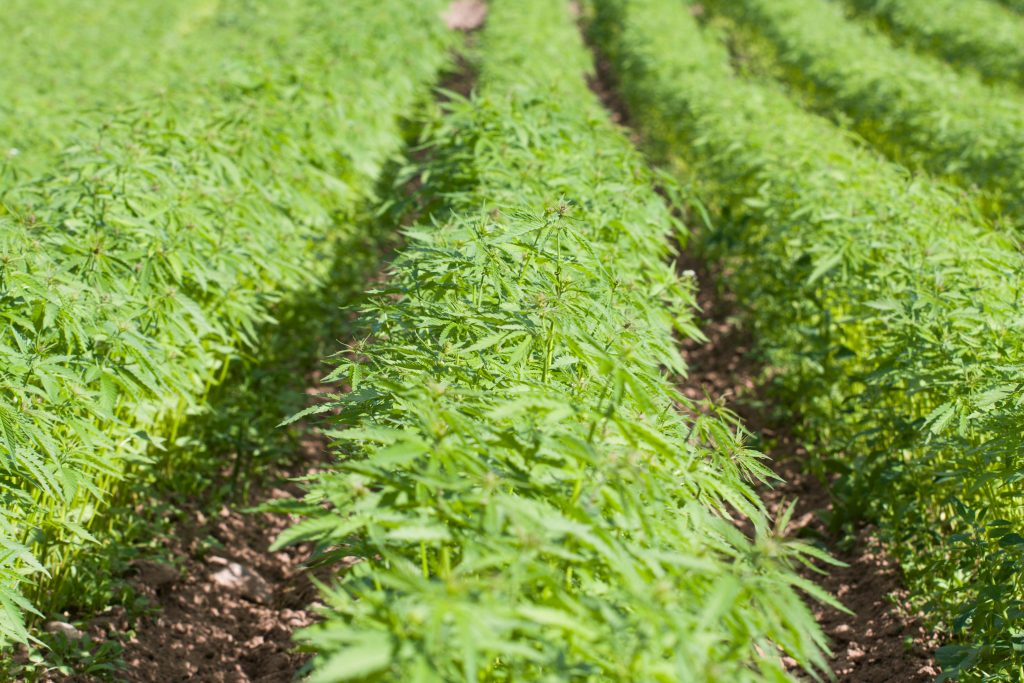
    South Carolina farmers are expected to start planting hemp this week.

    By Clint Thompson

    The first hemp plantings in South Carolina will be conducted this week, according to David DeWitt, Hemp Program Coordinator with Clemson University Extension. He believes there will be more hemp growers this year with smaller acreage compared to previous years.

    “I think we shifted some from last year at this time when we were getting started. Everybody was jazzed up and we had some good-sized farmers that were getting ready to plant larger acres; 30 to 40 acres of hemp,” David DeWitt said. “I think a lot of that has subsided this year. The lack of demand, backlog in farms to the processor is the kind of thing we’re experiencing. Some of that has calmed down.”

    This is the third year that South Carolina farmers will be able to produce hemp. Interest has grown each year the crop has been produced. Eva Moore, communications director for the South Carolina Department of Agriculture, said there were 350 interested applicants this year. The Department of Ag issued the permits during the last week in April.

    DeWitt said the planting window last year was from late-May to mid-June, though he said there were some who planted the first week in May and produced a pretty good crop.

    He’ll also be a part of some hemp research this year. The research is mainly designed to assist growers with hemp management decisions. The research will evaluate weight, CBD content and harvest time, as well as test chemical products on hemp mites.

    To learn more, see how the USDA approved South Carolina’s Hemp Farming State Plan.

  • Watermelon Supply Down; Prices Stay High for Farmers

    By Clint Thompson

    The watermelon supply chain is currently down. As a result, prices are up. It’s a pleasant surprise for Florida growers who are currently harvesting this year’s crop, according to Gene McAvoy, University of Florida/Institute of Food and Agricultural Sciences Extension agent emeritus.

    The watermelon supply line is currently decreased, due in large part to less imports from Mexico.

    “(The farmers) were a little bit apprehensive that with all of this COVID-related decline in demand that there might not be a demand for the (watermelon) product. They’ve had poor weather growing conditions in Mexico, so supplies are down from that side,” McAvoy said. “Even here in Florida, we had a really hot and dry March and April which affected pollination. The fruit set is less than what we would consider to be normal.”

    Other Florida produce farmers have struggled with selling this spring’s crop amid the coronavirus pandemic. The pandemic has shut down the country since the second week in March. The resulting shutdown led to closures of restaurants across the U.S.

    Positive Prices

    But as businesses begin to open up and states begin loosening the restrictions on self-quarantining, demand for fresh fruits and vegetables is improving. The same appears to be true for watermelons.

    “The supply is down a bit, kind of lining up with demand. Prices are good. They’re getting 20 cents, 19 cents per pound, which is decent for starting out the season. Sometimes it’s a little higher. But things are moving,” McAvoy said.

    The bulk of Florida is still harvesting or nearing harvest of watermelons. McAvoy said farmers in the extreme South Florida area, around Immokalee, Florida, are done harvesting this year’s crop. He added that watermelon harvests are continuing in Glades County, Charlotte County, Desoto County and up into Hillsborough.

    Georgia and Alabama should start picking in early-to-mid June.

  • Sanitation Key Following Harvest for Pest, Disease Control

    By Clint Thompson

    File photo shows tomatoes harvested.

    Vegetable farmers are reminded they need to practice proper sanitation once harvest season ends. Doing so will protect against future pests and diseases.

    According to the South Florida Vegetable Pest and Disease Hotline, one of the best tactics that growers can do for themselves and their neighbors is to clean up crop residues promptly after harvest. Sanitation involves any practice that eliminates or reduces the amount of pathogen inoculum, pests, or weed seeds that are still present in the field.

    One of the biggest problems associated with lack of sanitation is with whiteflies. They overwinter and can survive on multiple hosts. This is especially true for those hosts that are not eliminated thoroughly after harvest. They are already a problem for Georgia vegetable farmers.

    If farmers will destroy tomato vines promptly, they will kill off whitefly populations. They’ll also eliminate the transmission of the tomato yellow leaf curl (TYLCV) and other viruses to subsequent crops. It also will eliminate inoculum from late blight and other fungal diseases. This is particularly important in the case of TYLCV and other viruses. Sanitation, a crop-free period, and whitefly/thrips control are the only tools currently available for the management of this disease.

    Downy and powdery mildew on melons can spread via wind from older, diseased plants to plants in surrounding fields that are still maturing. If farmers will plow or disk under infected plant debris, this will help cover up the inoculum and speed up the disintegration of plant tissue. It kills the pathogen.

    Cull Piles

    Cull piles should also not be neglected. Several scouts have reported over the past few years that they have found both insects and diseases such as TYLCV, late blight, whiteflies and others in volunteer plants springing up around cull piles.

    Soil tillage can destroy insects and expose them to birds and other predators. It can also speed the breakdown of plant residues that harbor insects and plant pathogens. By either allowing the organic matter in a field to decompose completely before planting the next crop or allowing a fallow period between crops, you can enhance the control of numerous insects and diseases.

  • Presence of Powdery Mildew a Concern for Southeast Vegetable Growers

    By Clint Thompson

    Powdery mildew disease is present on older squash in various vegetable fields across South Florida. According to the South Florida Vegetable Pest and Disease Hotline, respondents report that the disease has also started to show up on watermelon crops across the region as well.

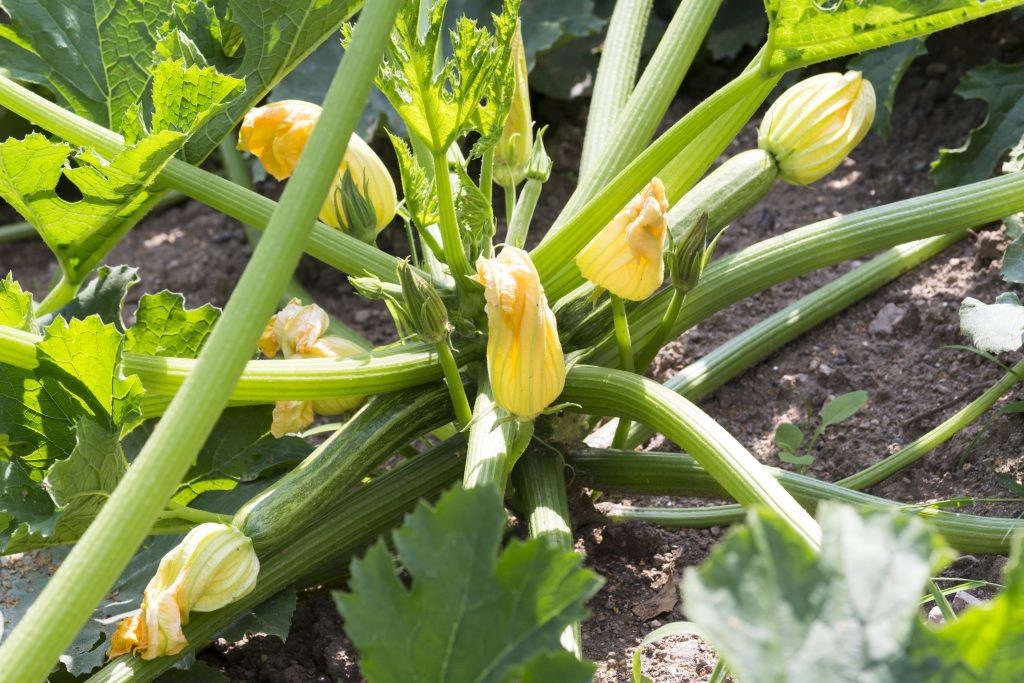
    File photo shows squash growing on a plant. Powdery mildew disease is present on some squash plants in South Florida.

    It’s also reported that powdery mildew is showing up on squash and cantaloupe in the Manatee Ruskin area.

    The disease thrives in high humidity, making the Southeast region a prime target for powdery mildew. Places in Georgia, Florida and Alabama are especially vulnerable the next two weeks. Temperatures in Tifton, Georgia are expected to go back up into the 80s this week and 90s next week. And there’s little to no chance of rainfall. It’s the same forecast for Mobile, Alabama, whose best chance of rain is a 40% chance on Monday, May 18 and Saturday, May 23. Temperatures in Tampa, Florida are going to be in the high 80s the next two weeks.

    The disease can develop rapidly under these favorable conditions.

    Disease Symptoms

    Symptoms on watermelon plants appear as yellow blotches on the oldest leaves first.  If the disease is left untreated, the fungus spreads to the entire leaf. These blotches become bronzed and turn dark brown or purplish as the disease progresses during the season. Eventually the leaf dies and has a crisp texture.

    Powdery mildew normally appears in the middle of the production season. Preventive treatments can help maximize the crop’s yield potential and prevent plant damage. Growers need to scout fields regularly to know if the disease is a factor in their fields.

    There are some vegetables that can tolerate or are resistant to the disease. Most commercial cucumber varieties grown in Florida have acceptable levels of resistance.

    Podosphaera xanthii and Erysiphe cichoracerarum, are the two pathogens that cause powdery mildew disease on cucurbits, particularly cucumbers, year-round. P. xanthii is an aggressive pathogen that attacks during warmer months. E. cichiracearum strikes during cool spring and early summer.

  • N.C. State Farmers Markets Continue to Encourage Social Distancing

    From North Carolina Department of Agriculture and Consumer Services.

    RALEIGH – As North Carolina begins to open up, state officials are reminding shoppers at the four state-operated farmers markets in Asheville, Charlotte, Colfax and Raleigh to continue practicing social distancing and other safety measures while visiting the markets.

    tastier tomato
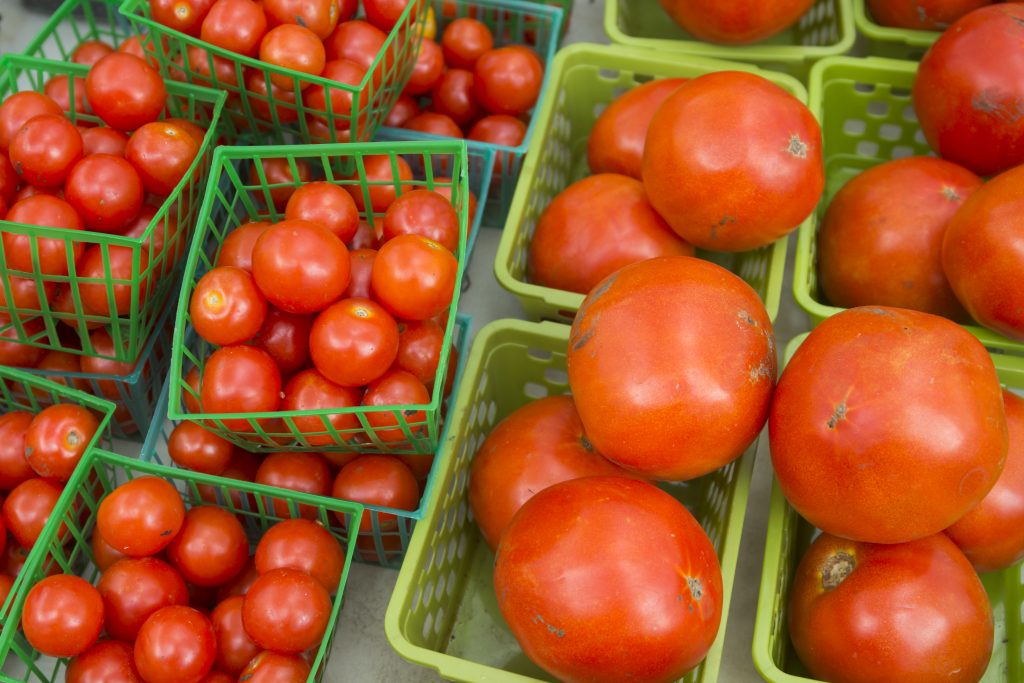
    Tomatoes on sale at a farmers market.
    Photo taken 07-17-17

    “We have taken every precaution to ensure the safety of both farmers and shoppers at the market,” said Agriculture Commissioner Steve Troxler. “Now, we need the public to do their part by practicing social distancing and continuing to follow the recommendations of the CDC and public health officials.”

    Many changes have already been made at farmers markets to ensure the safety of shoppers. These changes include limiting the number of vendors at the market, increasing spacing between vendors, adding additional hand sanitizer stations, and providing masks and gloves for market vendors. In addition, the department is asking families to designate a family shopper and limit their time at the market.

    “We love seeing entire families spend a Saturday morning at the market, but now is not the time for that,” Troxler said. “We encourage people to designate a family shopper, make a shopping list before they come, purchase what they need and go home.”

    About our markets:

    State Farmers Market, 1201 Agriculture St., Raleigh Hours: Monday through Saturday, 5 a.m. to 6 p.m. and Sunday, 8 a.m. to 6 p.m. Special Days for At-Risk Population: Mondays and Tuesdays Note: State Farmers Market Restaurant, N.C. Seafood Restaurant, Market Grill, 321 Coffee are closed.

    WNC Farmers Market, 570 Brevard Road, Asheville Hours: Open seven days a week from 8 a.m. to 5 p.m. Special Days for At-Risk Population: Mondays and Tuesdays Note: The Moose Café is closed.

    Charlotte Regional Farmers Market, 1801 Yorkmont Road, Charlotte Hours: Open Tuesday through Saturday from 8 a.m. to 6 p.m., and Sunday, 12-6 p.m. Special Days for At-Risk Population: Tuesdays-Thursdays

    Robert G. Shaw Piedmont Triad Farmers Market, 2914 Sandy Ridge Road, Colfax Hours: Open seven days a week from 7 a.m. to 6 p.m. Special Days for At-Risk Population: Mondays and Tuesdays Note: The Moose Café is closed. For more information follow the markets on Facebook or visit www.ncagr.gov/markets/facilities/index.htm.

  • Downy Mildew Disease a Problem for Florida Growers

    By Clint Thompson

    Downy mildew disease is present in cucurbits like squash and cucumber around South Florida and is getting worse.

    University of Georgia/Downy mildew disease can destroy plant foliage and cause the leaves to curl and die. Without healthy leaves and vines, a plant is vulnerable to blisters and sunscald during hot days.

    According to the South Florida Vegetable Pest and Disease Hotline, respondents report that the disease is showing up in most watermelons and infections have increased in areas hit hard by rainfall.

    “Around Manatee County, respondents report that downy mildew really kicked into high gear after the last rains and has been quite aggressive in some situations,” the hotline report stated.

    Downy mildew also remains active on cucumber and some squash on the East Coast.

    According to University of Georgia Cooperative Extension plant pathologist Bhabesh Dutta, downy mildew can destroy plant foliage and cause the leaves to curl and die. Without healthy leaves and vines, a plant is vulnerable to blisters and sunscald during hot days. The pathogen thrives in wet, humid conditions and needs moisture on the surface of the plant for successful spore germination and further infection.

    Cucurbit crops — like cucumbers, melons, squashes and pumpkins — are susceptible to the disease. Dutta ranks downy mildew among the top diseases in cucurbit crops, along with Fusarium wilt and Phytophthora fruit rot.

    How to Recognize Downy Mildew

    For those vegetable farmers unfamiliar with what symptoms look like, focus on the leaves themselves. On cucurbits besides watermelon, small yellowish spots appear on the upper leaf surface away from the leaf margin. A yellow coloration later occurs with the internal part of the lesion turning brown. Lesions are usually angular as leaf veins restrict their expansion.

    On watermelons, yellow leaf spots may or may not be angular and will later turn brown to black in color.

    To control downy mildew, fungicide sprays are recommended for all cucurbits. Spray programs for downy mildew are most effective when initiated prior to the first sign of the disease. Once a plant becomes infected, it becomes more and more difficult to control with fungicides.

  • High Whitefly Pressure Reported in Florida Vegetables

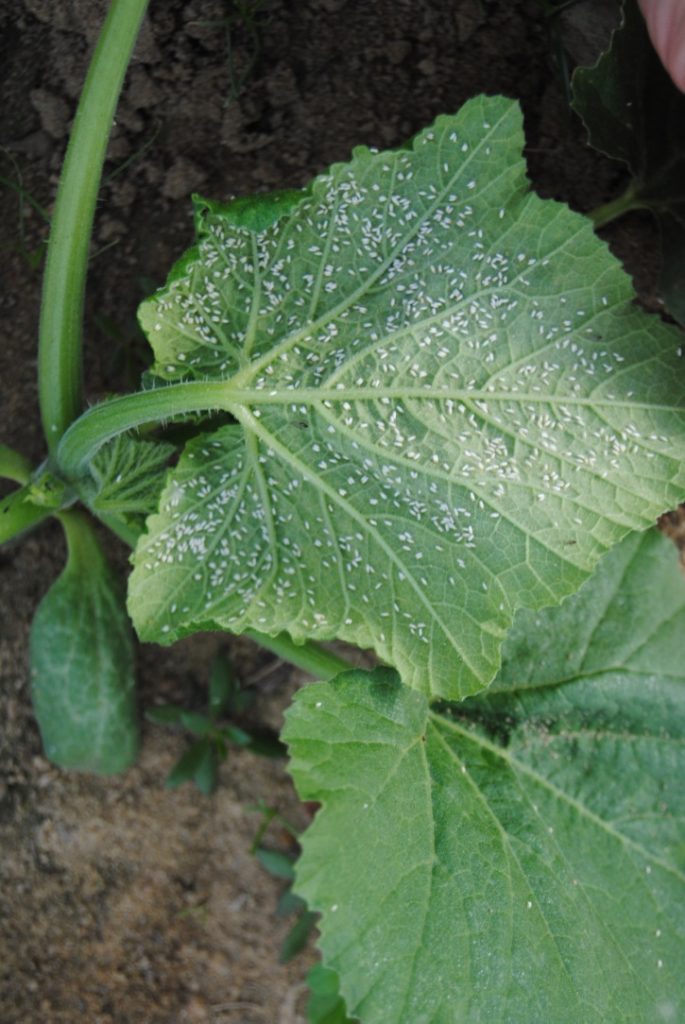
    Whitefly adults feed on a yellow squash seedling.

    By Clint Thompson

    Florida vegetable farmers are struggling to manage high whitefly pressure amid trying to produce this year’s crop. According to the South Florida Vegetable Pest and Disease Hotline, tomato growers in central Florida are really struggling with heavy whitefly pressure.

    It noted, “Some growers have already experienced whitefly and virus issues in spring crops and have pulled up entire first plantings due to very high incidence of Tomato Yellow Leaf Curl Virus. Respondents indicate that whiteflies are also increasing in melons. Whitefly pressure is also high in green beans.”

    Around Southwest Florida, in the Immokalee, Florida area, pressure has been extreme for the acreage that remains to be harvested. These include for watermelons and other cucurbits.

    On the east coast, respondents report that whitefly have become out of control in many tomato and eggplant fields. They’re also high in cucumber and pepper.

    The South Florida Vegetable Pest and Disease Hotline is in its 23rd year and reaches more than 1500 individuals and businesses and covers more than 120,000 acres representing all major South Florida vegetable production areas.

    Already in Georgia

    Whiteflies are already a concern in Georgia. University of Georgia Cooperative Extension vegetable specialist Stormy Sparks confirmed the pest has been observed in vegetables in the South Georgia area.

    The mild winter is a key reason why whiteflies are already a problem. While colder temperatures don’t eliminate whiteflies, they do kill many of their wild hosts. They also slow population development in cultivated hosts. Warmer temperatures this winter allowed for larger whitefly populations to overwinter and become mobile earlier.

    Whiteflies cause feeding injury issues in vegetables and transmit two viruses: cucurbit leaf crumple virus and cucurbit yellow stunting disorder virus. Vegetables like squash, zucchini, cucumber, cantaloupe and snap beans are highly susceptible to these viruses. Commercial cultivars that have resistance or tolerance to these pathogens are not available.

    For additional information about whiteflies, see UGA CAES News.

  • Challenging Seasons for Georgia Blueberry Producers

    By Clint Thompson

    Between natural disasters, a pandemic and unfair trade practices, Georgia blueberry farmers have taken one blow after another the past four years. For some farmers, a hailstorm on April 23 was the ultimate knockout punch.

    File photo shows blueberries ready for harvest.

    Russ Goodman, co-owner of Cogdell Berry Farm with 600 acres in Clinch and Lanier counties, lost between 60% and 70% of the crop following the storm.

    “In 2017, we had Irma and a late freeze. In our 2018, Hurricane Michael and a later freeze. Then we’ve had the deluge of Mexican blueberries that have hit us. Now, we’ve been hit with this coronavirus and now this storm,” Goodman said.

    Phillip Mixon’s farm in Waycross, Georgia has about 850 acres with approximately 600 that would have been harvested. Its entire farm was devastated by the hail. The storm knocked a bunch of blueberries off, but what was left on the bush was bruised really bad. They were left unmarketable.

    Mixon estimated he lost about 5 million pounds.

    “We’ve faced a lot of challenges that are outside of our control. We do everything that we can as far as being good managers. You have no control over a hurricane or storm how trade issues are negatively impacting Southeastern farmers,” Goodman said. “It’s just a lot of things outside of our control.

    “We were going to have a good crop. We’re no different than the cotton farmers when Hurricane Michael came through when they were going to pay down some debt and get ahead a little bit. Hurricane Michael came through and destroyed it.”

    Unfair Trade Practices?

    While farmers can’t do anything about storms and late freeze events, they can continue to raise awareness unfair trade with Mexico.

    “If there’s not something done about trade in this country, we’ll be importing all of our fruits and vegetables before it’s all over with,” Goodman said. “How do you compete against 80 cents per hour labor? From my understanding, their minimum wage is 81 cents per hour. But they average about $1 an hour.

    “We have automatic labelers that put labels on our clam shells. In Mexico, they can’t even sell labels because they label them all by hand. Labor is so cheap, it’s not even a factor in production.”

    In an interview with VSCNews on April 30, Florida farmer Ryan Atwood confirmed that Mexico exported 5 million pounds of blueberries to the U.S. the prior week. The country is still importing produce amid COVID-19 when American farmers are struggling to find buyers.

    For more information on how COVID-19 has devastated the blueberry market, see:

    http://vscnews.com/covid-19-florida-blueberry-farmers/