Author: Clint

  • More Questions Than Answers With Respect to CFAP

    By Clint Thompson

    The Coronavirus Food Assistance Program (CFAP) has brought more questions than answers with respect to financial aid for growers in response to the ongoing coronavirus pandemic.

    The $19 billion program includes $16 billion in direct payments for farmers and ranchers. CFAP has payment restrictions of $125,000 per commodity and a total of $250,000 per applicant for all commodities. Growers and industry leaders hope that cap on payment restrictions gets removed.

    “For specialty crop growers, $125,000 is a drop in the bucket for most of their losses,” said Charles Hall, executive director of the Georgia Fruit and Vegetable Growers Association.

    Florida vegetable farmer Paul Allen, talked about the financial toll the pandemic had on him and his farming brethren.

    “The biggest thing right now is the government allocated per crop a cap of $125,000, which is nothing. We’re really working trying to get the USDA to see and understand the massive hit that Florida is taking and raise the direct payment caps,” Allen said. “What is fair is not always equal.

    “It costs 10 times to grow vegetable crops what it does regular commodity crops.”

    Pandemic Punishes Producers

    In a previous interview in early April, Allen said he left about 2 million pounds of green beans in the field and about 5 million pounds of cabbage. All due to the coronavirus pandemic that shut restaurants down and closed off a major supply chain to foodservice industries.

    Perdue

    According to an AgNet West story, a group of lawmakers, which included 28 members of the U.S. Senate and 126 members of the U.S. House of Representatives, issued a letter to President Donald Trump and USDA Secretary Sonny Perdue. They asked for the removal of payment caps from CFAP before the final program details are announced.  The letter points out that the payment restrictions would limit the effectiveness of the program. This is especially true for livestock, dairy and specialty crop producers.

    Another concern is how payments will be divided between losses sustained before and April 15. An 85% payout will be issued for losses sustained from January 1 to April 15 but only 30% after April 15.

    “Our concern was what’s the difference in a loss after April 15 and before April 15. After April 15, that grower has got the same loss as before April 15. Most of our growers’ losses will come after April 15,” Hall said. “We’ve been told that’s going to be fixed, too. I haven’t seen anything firm from the USDA on that.”

  • Produce Market Ripening With Success for Some Vegetables

    Cabbage is a strong commodity right now, selling for $20 per box, says farmer Bill Brim.

    By Clint Thompson

    The produce market is ripening with success for some commodities. Prices are incredibly high for some vegetables, while others are still struggling to compete with imports from Mexico, says Tift County farmer Bill Brim. The co-owner of Lewis Taylor Farms said watermelons, round tomatoes and cabbage are three commodities really doing well for farmers right now.

    “I think watermelon prices are pretty good. We don’t have any ready yet. It’ll be two or three weeks before we’ll be ready,” Brim said. ““Tomatoes were $33 per box (Wednesday), I think for rounds. Romas are really bad. They’re terrible price because Mexico is pouring them in here. Grapes are bad too. Rounds, they must not have many because they’re like $33 per box. Of course, they won’t last that long or stay there. But if we could stay in the high 18s to the 20s, we’d be tickled to death.”

    Brim expects to start picking his tomato crop in two weeks. Cabbage is also selling well at $20 per box.

    Watermelon Shortage?

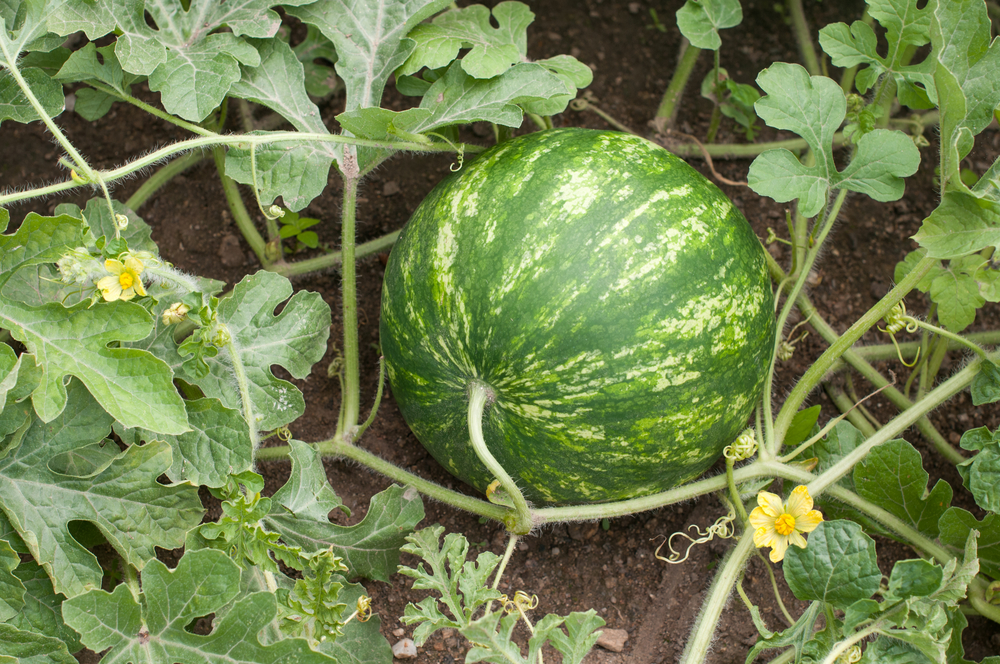
    Watermelons are a hot commodity right now. Carr Hussey, a watermelon farmer in Alabama and Florida and chairman of the board of the Florida Watermelon Association, said the crop is already in short supply and that a watermelon shortage is likely by Memorial Day weekend next week.

    Brim said he’s heard that the crop in Georgia is going to be way down compared to last season.

     “I think it was such a bad deal last year, everybody lost their heinies,” Brim said. “They couldn’t even hardly give a watermelon last year. I got like 7 and 8 cents per pound. You can’t even grow them for that; 12 cents per pound is probably break even. It’s just so bad people said, I can’t lose any more money or I’m going to be out of business. If I do, I’m just going to go with my row crops and forget the watermelons.

    “North Carolina’s going to be late too, because a lot of them got killed out in that last freeze. It might be pretty fair for us, hopefully, anyway.”

    The watermelon market is ripening with success for farmers who have the crop to sell. Hussey said prices are around 20 cents per pound right now but could improve to 22 or 24 cents around Memorial Day weekend.

    Brim also believes watermelon farmers in north Florida are going to be done harvesting earlier than they believed they would.

    “They started pretty early down there; a bunch of them,” Brim said. “In the next two weeks, they should be done at about the time we’ll start.”

  • Alabama Hemp Farmers Begin Planting This Year’s Crop

    hemp program
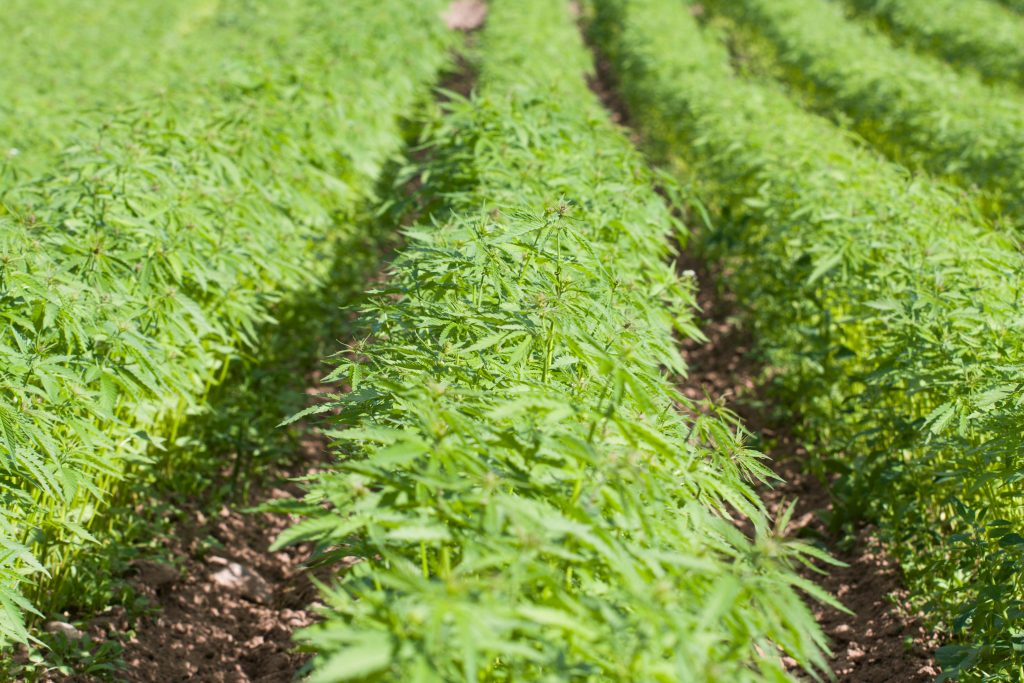
    Field of industrial hemp.

    By Clint Thompson

    Alabama hemp farmers have begun planting this year’s crop, and Extension specialist Katelyn Kesheimer expects it to continue through June.

    “A lot of it depends on, obviously, what part of the state you’re in; southern Alabama, they’re starting now. And how many acres are you planting?” said Kesheimer, who was speaking while returning from a farm last week that had begun planting. “This is a big farm. They have about 300 acres to do. They’re planting four days a week and are probably going to spend the whole month planting.

    “People will be planting for the next two months probably.”

    Increase in Interested Farmers

    Kesheimer said there were 150 licensed growers with 10,000 acres approved, (last year) though only about half were farmed. She estimates that there are approximately 500 official licensed growers in the state this year.

    “We did see a huge increase in the number of licensed folks from last year to this year. Interest is widespread and increasing. I can tell you from the hemp meetings we had last fall and winter, we had almost 200 people come to a meeting in Cullman, northern Alabama,” Kesheimer said. “But we also had several meetings in southern Alabama where growers down there were real excited about the long growing season and maybe planting one variety for most of the season. And then going in with autoflower, which you can get mature and out of the ground in 80 to 90 days. My guess would be there’s widespread interest, but it varies on what you’re interested in.

    “We’re also seeing more farmers that are growing for fiber this year. It’s still majority CBD, but I spoke to a grower the other day in central Alabama that’s growing for fiber. I think that market is expanding as we get the facilities to process the different types of hemp.”

    Drop in Expected Acres

    While the number of Alabama hemp farmers has increased, expected acres are expected to drop from what was previously projected. Kesheimer said it can be attributed to market instability and labor complications.

    “A lot of people don’t realize how much manual labor you need for this crop. If you don’t have the equipment then you’re hand-planting. You’re probably going to be hoeing and pulling weeds all summer. You can expect to spend thousands of dollars per acre just out of weed control alone. But you need people to do that,” Kesheimer said. “Finding good help has been a problem as well.”

  • Soil Moisture Sensors Benefit Florida Farmers

    By Ashley Robinson

    File photo shows soil moisture sensors.

    Florida’s sandy soils mean that water management is a key component of producing crops in the Sunshine State. According to Charles Barrett, University of Florida Institute of Food and Agricultural Sciences (UF/IFAS) regional specialized Extension agent for water resources, irrigation scheduling tools like soil moisture sensors can help producers maximize their water efficiency and crop yields.

    Technology Packed with Benefits

    Soil moisture sensors are key irrigation tools for growers. If used correctly, they can be very beneficial.

    Whether growers have an irrigation schedule in place or not, the soil moisture sensor can be checked for trends to determine the efficacy of current irrigation practices. With the sensors, the grower can see if the soil is drying out or if the soil moisture is increasing over time. The sensor can also monitor the crop’s root zone, which can be helpful in fine-tuning an irrigation schedule.

    “I’d say that the number one benefit of soil moisture sensors is that you are able to manage your water more efficiently by supplying the right amount of water at the right time,” Barrett says. “By managing your water better, you’re also managing your nutrients better since water and nutrients cannot be separated in the state of Florida because of our sandy soils.”

    According to Barrett, the sensors are stationed in different locations in the field to allow growers to view the moisture and nutrients in the crop. This helps to avoid over-irrigation and loss of plant nutrients from leaching.

    “Soil moistures have come a long way. Before, growers used tensiometers, an older form of the technology which is much inferior to the technology we have now. Now, they have a graph, a history in time they can watch trends occur and see when they need to irrigate. Tensiometers required you to drive up to them and take a look. You only got a snapshot in time,” Barrett says. “With this technology we have the ability to watch whole movie versus before when they only had a small snapshot.”

    Funding Available

    To encourage the use of this technology, UF/IFAS Extension Northeast District introduced a pilot program in 2017, installing the sensors free of charge to allow growers to view and understand the data provided before they commit to the investment. Funding from the Florida Department of Agriculture and Consumer Sciences (FDACS) helped launch the program.

    In addition, cost-share programs are also available to growers. Growers who are enrolled in the Best Management Practices program can get cost-share anywhere within the state through FDACS or through their water management district.

    According to Barrett, the adoption of soil moisture sensors has been rapidly expanding. He believes it will continue to grow as more growers get to experience the technology for themselves. He hopes to expand the program statewide so that agents across the state can get their hands on the sensors.

  • Georgia Pecan Growers Voting on One-Cent Assessment

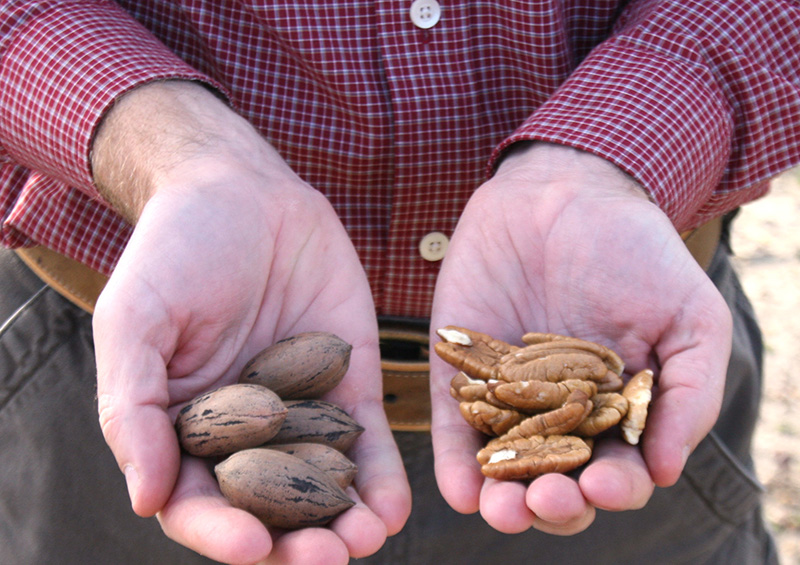
    Photo courtesy of UGA College of Agricultural & Environmental Sciences. Shows UGA pecan breeder Patrick Conner holding pecans.

    By Clint Thompson

    Georgia pecan growers are voting this month to renew a one-cent per pound assessment on pecans for the Georgia Agriculture Commodity Commission for Pecans.

    According to Andy Harrison, commodity commissions manager for the Georgia Department of Agriculture, ballots have been sent to Georgia growers of 30 acres or more. They will vote on the assessment, which is required under Georgia law. Producers are required to vote every three years to renew the assessment.

    “Of the balance that comes in, we need 2/3 voting affirmative on it. We’ve sent out about 700 or 800 ballots to pecan growers,” Harrison said. “It’s one cent per pound on pecans marketed. That money can be used for research, education, promotion for Georgia pecans.”

    All returning ballots must be postmarked by May 30. The back of the return envelope must be completed for the ballot to be valid. The commodity commission utilizes assessment funds for research, education, and promotion of Georgia pecans.

    Harrison emphasized that the Georgia Department of Ag administers the funds. But it is the Georgia Pecan Commission who decides how the money is spent.

    “Members of the commission decide where the money’s going. They vote on behalf of what they feel like is best for the growers’ interest. A lot of it goes to research for the University of Georgia and USDA,” Harrison said.

    Growers of 30 or more acres who have not received a ballot should contact Andy Harrison, at andy.harrison@agr.georgia.gov.

  • Hemp Harvest in Florida

    Hemp harvest in Hamilton County, Florida.

    Green Point Research, a leading research-based cannabis biomass origination and processing company in Florida harvested 30 acres of hemp in Hamilton County this week.

    This is Green Point Research’s first official harvest of 2020 and is one of Hamilton County’s first legal harvests of hemp plants since 1937. It’s a significant milestone for the public and private partners benefitting from the resurgence of hemp in Florida and across the U.S.

    Green Point Research is a member of the Hemp Industries Association of Florida (HIAF). In August, 2019, GPR was in north Florida as part of the HIAF Industrial Hemp Road Tour.

  • Three Joy Peaches Released

    ARS/Rich Joy peaches ripening on the tree in a Byron, GA., orchard.

    ARS News Service

    BYRON, GEORGIA, May 14, 2020 — The Agricultural Research Service (ARS) has released a trio of Joy peaches — Rich Joy, Liberty Joy and Crimson Joy — to enhance the southeastern fresh peach market.

    Rich Joy is named for its fruit’s rich flavor and as a way to honor ARS peach breeder William Richardson Okie, who retired in 2014. Okie is known for having developed the series of “prince” peach varieties, which are still in commercial use.

    Crimson Joy is named for its almost fully red-blushed skin. Liberty Joy is so called because it ripens near the Fourth of July, Independence Day.

    The three Joy peaches are not genetically related. They are all yellow-fleshed, soften slowly to a smooth buttery texture (a trait called melting), with balanced sugar/acid ratios and pleasant eating quality. But they differ in pedigree parentage, ripening time and chilling requirement (the minimum time a fruit-bearing tree must be exposed to temperatures below 45 degrees F before it will blossom).

    Breeders tend to choose a single “base” name for the varieties they develop to make their origins recognizable, explained research horticulturist Chunxian Chen, with the ARS Fruit and Tree Nut Research Unit in Byron, Georgia and developer of the Joy trio of peaches.

    “Joy is a wonderful word that expresses how people feel about enjoying a good peach,” Chen said. “It is one syllable, can be easily phrased with other words for naming of future releases and it fits well with some “unofficial” cultivar naming conventions.”

    Chen explained that new varieties continue to be needed because the southeastern peach industry is facing multiple challenges, including more incidences of warm winters and spring freezes, which can change chilling requirements. Other industry needs include improved fruit quality, competition from other fruits and imports, and demand for varieties with improved resistance to pests/diseases and reduced need for pesticides. There also is a need for varieties to fill certain harvest windows.

    “So we must continue to breed new peach varieties to meet growers’ needs, elevate overall production efficiency and market share and keep the industry sustainable and profitable,” Chen added.

    The value of fresh and processed peaches was estimated at $511 million for 2018, according to the USDA National Agricultural Statistics Service.

    Liberty Joy has the shortest chilling requirement of the three new varieties, about 650 chill hours. It ripens in late June to early July. It will be a good alternative to current commercial varieties in this harvest window such as Fireprince, Blazeprince, Scarletprince and Redglobe, all of which require about 850 chill hours and do not produce well when winter chill has been insufficient for flower bud maturation. Liberty Joy also appears to be less vulnerable to spring freezes, compared to other varieties with the same short chill requirement.

    Crimson Joy, which requires about 700 chill hours, has redder skin color, firmer fruit and improved fruiting reliability, compared to Harvester and Redhaven, which ripen at about the same time. In addition, Crimson Joy appears less vulnerable to some chill inadequacy and spring freeze.

    Rich Joy requires about 850 chill hours and ripens between Julyprince and Flameprince in mid-August. At maturity, about 90 percent of the fruit is bright red with an attractive yellow ground color on the fruit. This makes it preferable to older, less-blushed Cresthaven and Early Augustprince for the similar harvest window. As a late-season variety, Rich Joy fruits reliably with attractive, large, firm, premium fruit that appear to soften slowly on the tree, allowing it to be picked over a relatively longer period compared to other varieties.

    The Agricultural Research Service is the U.S. Department of Agriculture’s chief scientific in-house research agency. Daily, ARS focuses on solutions to agricultural problems affecting America. Each dollar invested in agricultural research results in $20 of economic impact.

  • New UF Researcher Brings Latest Research Techniques for Integrated Pest Management

    Tolulope Morawo working in a lab.

    By: Robin Koestoyo, Koestoyo@ufl.edu  

    FORT PIERCE, Fla. — The first time Tolulope Morawo heard about the ability of beneficial insects to protect food crops from pest insects, he knew he had found his lifelong career.

    In 2009, Morawo learned from a lecture that phorid flies kill fire ants by laying their eggs inside the ants. When the next generation of flies emerge from inside the ants’ heads, the ants die. At the time of the lecture, Morawo was an undergraduate university student in his native Nigeria. The moment was pivotal; it drew Morawo to the multifaceted field of entomology.

    Tolulope Morawo

    In mid-April, Morawo began a new position as an assistant professor of entomology at the University of Florida’s Institute of Food and Agricultural Science’s (UF/IFAS) Indian River Research and Education Center (IRREC) in Fort Pierce. He joins UF’s statewide effort to protect crops and natural environments with integrated pest management (IPM) strategy.

    “Dr. Morawo’s contribution to Florida’s food producers and caretakers of native flora is valuable because he brings the most current research techniques and perspectives to our IFAS team of biological control research scientists,” said Ronald D. Cave, director of IRREC. Morawo succeeds Cave as entomologist and research scientist at UF’s Norman C. Hayslip Biological Control Research and Containment Laboratory. The lab is one of only three facilities in Florida that include both non-quarantine and containment laboratories for the study of exotic insects that may be beneficial to Florida food production and protection of natural resources. 

    Cave said Morawo will lead invasive insect research at the Hayslip laboratory and will introduce the latest IPM research techniques, including chemical ecology. The phorid fly against fire ants is an example of how an insect’s natural enemy controls its negative impact on our environment. Similarly, a wasp imported from Asia is an effective enemy against the Asian citrus psyllid. When scientists import and introduce an invasive insect’s natural enemies into an environment, the practice is called classical biological control. Biological control plays an increasing role in integrated pest management for crop protection. Other elements IPM include natural fungi, cultural practices, and chemical controls when necessary.

    Chemical ecology helps us identify natural compounds that insects use to find plants or other insects. The compounds can be used to modify insect behavior to achieve pest management. In 2017, Morawo completed a Ph.D. in Entomology at Auburn University, where chemical ecology of parasitic wasps was the focus of his doctorate thesis to protect cotton from caterpillar pests.

    “Chemical ecology is one of the many tools that can be used to better understand host selection and ecological interactions of invasive arthropods and biological control agents,” said Morawo. “That makes it a useful tool both in classical biological control and conservation biological control.”

    Morawo earned a Master of Science in Entomology at Auburn University, and a Bachelor of Technology in Biology at the Federal University of Technology, in Akure, Nigeria. His master’s thesis also involved biological control agents. Morawo received several awards, including the Friends of Southern IPM Award in 2017. He comes to UF/IFAS from Auburn University where he was a postdoctoral fellow.

    Morawo’s vision for IPM in Florida is underway. Aspects of his research will focus on the management of citrus pests such as the Asian citrus psyllid and Lebbeck mealybug. Both insects are invasive and impact the state’s citrus industry. The psyllid carries a pathogen to citrus trees that causes citrus greening, a devastating tree crop disease. He joins a team of four scientists at IRREC who are working on the pathogen, its transmission, and the impacts the disease has on trees. Morawo will focus on the interactions among trees, psyllids, and their natural enemies such as parasitoids, predators and fungi. Other research projects will involve biological control of new invasive pests, development of new pest detection tools and statewide monitoring for invasive insects.

    “The recovery of the citrus industry from citrus greening or any other tree stressors will be a multidisciplinary collaborative effort,” Morawo said. “The good news is those efforts are already ongoing and yielding results.”

  • Watermelon Farmer Hopes to Capitalize on High Prices

    Watermelons are in short supply and high demand right now.

    By Clint Thompson

    Watermelons are in short supply and high demand right now. Alabama produce farmer Art Sessions hopes to capitalize when his crop becomes ready the first week in June.

    “We’ve been getting watermelons out of Florida and they are scarce. Everything coming out of Florida is really tight on account of this virus deal,” said Sessions, who also said there’s high demand for tomatoes as well. “It’s really affecting the supply chain pretty bad. A lot of the product are short, like tomatoes. Tomatoes are as high as I’ve ever seen them for this time of year. From what I’ve gathered, a lot of the pickers left on account of this virus.”

    Sessions Farm is in Grand Bay, Alabama. It produces approximately 50 acres of watermelons, starting with a few yellow-meat varieties in the next couple of weeks. He has had to buy watermelons from Florida and can attest to the high costs farmers can sell their crop for.

    “They’re pretty high right now, sure are. They aren’t outlandish. They’re pretty reasonable. We’ve been buying a lot of Florida. They are higher than normally what we would sell ours for,” Sessions said.

    Shortage by Memorial Day?

    Carr Hussey, a watermelon farmer in Florida and Alabama and chairman of the board of the Florida Watermelon Association, confirmed on Tuesday that watermelons are in short supply and there could be a shortage by Memorial Day. He said prices are around 20 cents per pound right now but could improve to 22 or 24 cents around Memorial Day weekend.

    This could lead to continued higher prices for farmers in North Florida, Alabama and Georgia when they start harvesting their crops in June.

    Sessions wonders if the current coronavirus pandemic impacted the supply chain.

    “I think a lot of guys, when this thing hit, they backed out of planting. They didn’t plant as much,” Sessions said. “We had already planted when this thing hit, or we would have backed way off. Just the uncertainty of not knowing if you’re going to be able to sell your crop. A lot of folks we sell to shut down and they are just now opening things back up. That’s one reason the prices on some of this stuff is strong because everybody now is wanting stuff and it’s hard to get.”

  • Sweet Grown Alabama Connects Growers to Consumers

    By Clint Thompson

    Alabama fruit and vegetable farmers have an outlet to market their produce statewide. Thanks to Sweet Grown Alabama, a non-profit foundation that connects farmers in the state to retailers and consumers, growers can market their produce anywhere in the state.

    Thanks to the Sweet Grown Alabama website, vegetables are marketed across the state.

    “This database launch is the culmination of many months of work,” said Ellie Watson, Sweet Grown Alabama director. “We have been focused since September on recruiting farmers and just spreading the word about our program to the folks in the agricultural community, so we can build a database of members and a network of folks that have product available.”

    Consumers can go to the Sweet Grown Alabama website and find local farms in their area. It also lists a harvest calendar so consumers can know when specific fruits and vegetables are ready to be picked. Anything from satsumas and watermelons on the fruit side to bell peppers and kale on the vegetable side are listed.

    Perfect Timing

    It is perfect timing for the website’s release. A push to support American farmers has been made during the coronavirus pandemic. Consumers are wanting to purchase fresh, local produce.

    “Consumers, now more than ever, desire to know whose hands have been handling the product that they’re eating and where it’s been and where it’s been grown and how it’s been grown. COVID-19 has really given folks a heightened sense of awareness about the supply chain,” Watson said. “Sweet Grown Alabama can really meet a need to connect Alabama farmers and families who are looking for high quality, safe, healthy products. This database launch timing was perfect. It was something we wish could have been launched at the beginning of COVID-19. But we’re thrilled it’s at least up and running now.”

    Sweet Grown Alabama is a membership organization. Watson said there are more than 130 completed applications that have been submitted.