Blog

  • Exposure Risk Among Agriculture Workers and Employers

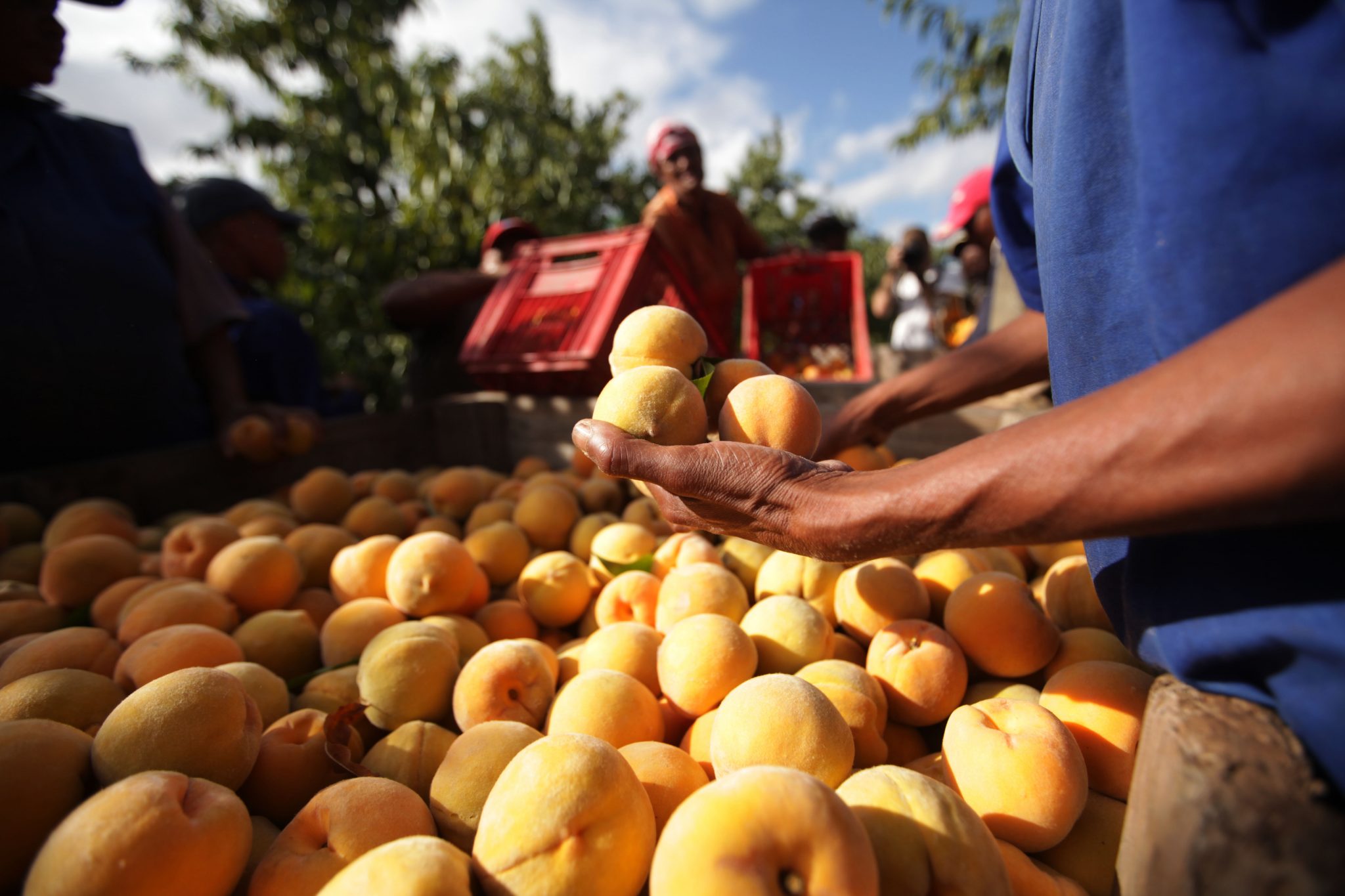
    Picture by Alabama Extension News/Shows workers harvesting produce.

    No evidence indicates that livestock, crops, or products handled by workers involved in production agriculture are sources of COVID-19 infection. However, close contact with coworkers may contribute to spreading the virus.

    The Centers for Disease Control and Prevention (CDC) and the US Department of Labor have provided guidance and recommendations for agriculture owners and operators. Agriculture employers can adapt these same guidelines and recommendations to protect workers at their work sites or in specific work operations.

    Distinctive factors that affect farmworkers’ risk for COVID-19 in production agriculture workplaces include the following:

    • Distance between workers. Farmworkers often have close contact with one another both in fields and indoors. Workers may also be in close contact at other times, such as when clocking in or out, during breaks, when sharing transportation or in shared housing.
    • Duration of contact. Farmworkers often have prolonged close contact with coworkers on the work site, during transportation, and in some housing. Continued contact with potentially infectious people increases the risk of COVID-19 transmission.
    • Type of contact. Farmworkers may be exposed to COVID-19 through respiratory droplets in the air, such as when workers who have the virus cough, sneeze, or talk. Exposure could also occur when workers have contact with contaminated surfaces or objects, such as tools, equipment, tractors, workstations, toilet facilities, or break room tables, and then touch their mouth, nose, or possibly their eyes. Touching your eyes is not considered to be the main way the virus spreads, but more continues to be learned about how this virus spreads.

    Other factors that may increase risk among some workers include the following:

    • Sharing transportation such as ride-share vans or shuttle vehicles, carpools, and public transportation.
    • Living in employer-furnished housing and sharing living quarters, cooking and eating areas, bathrooms, and laundry facilities with fellow workers.
    • Living in crowded and multigenerational housing.
    • Contact within households and families and with fellow workers in community settings in areas with ongoing community transmissions.
    • Mobility of the workforce, including migrant workers, who, in moving from farm to farm, can potentially spread the virus among communities.
    • Poor access to clean water for hygiene purposes throughout the day.

    Farm owners and operators can prevent and slow the spread of COVID-19. Owners and operators should develop a COVID-19 assessment and control plan to protect themselves and farmworkers, in accordance with the CDC Interim Business Guidance for Businesses and Employees. The CDC also provides guidance on how to develop a plan, screen and monitor workers, manage sick workers, and address the return to work of an infected worker.
  • UGA Entomologist: Potential Is There for Whitefly Outbreak

    By Clint Thompson

    It is too early to say if this year’s whitefly impact on vegetables and cotton will rival 2017. But University of Georgia (UGA) Cooperative Extension vegetable entomologist Stormy Sparks insists the potential is there.

    Sparks estimates that the whitefly population is about the same as a month ago. There have been some reports of populations existing primarily in kale. But there’s also low populations in winter crops that are still out there; namely cabbage and collards.

    “The only reports I’ve had of anybody talking about any significant populations have been in kale,” Sparks said. “We haven’t heard of any populations in spring vegetables yet of any significance.”

    Growers should have a better idea of this year’s whitefly effect next month once all the cotton has been planted and starts to grow.

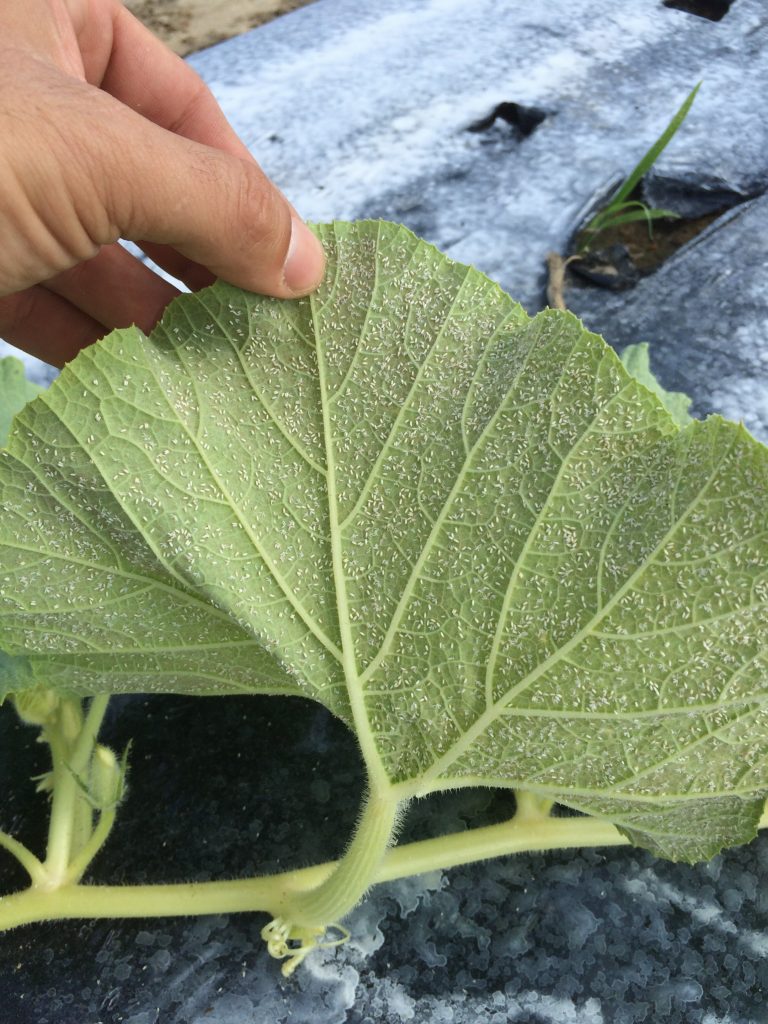
    File photo shows whiteflies on a cucurbit crop.

    “The potential is there. I was on the phone call (the other day) with everybody that does whitefly stuff. Everybody was talking about how it looks like 2017. The truth of the matter is the potential is there, but until you go through the weather conditions to see what happens with weather with management with those crops and management of those crops, you don’t really don’t know what happens,” Sparks said. “(UGA cotton entomologist) Phillip Roberts has for decades been telling me, if he sees whitefly populations in cotton in July, we’re in trouble. You’ll find whiteflies in cotton. But it’s really if you get into populations that are of concern in July, it’s going to be ugly.”

    In 2017, whitefly populations showed up as early as May and June.

    Whitefly Background

    While colder temperatures do not eliminate whiteflies, they do kill many of their wild hosts. They also slow population development in cultivated hosts. Warmer temperatures this winter allowed for larger whitefly populations to overwinter and become mobile earlier.

    Whiteflies cause feeding injury issues in vegetables and transmit two viruses: cucurbit leaf crumple virus and cucurbit yellow stunting disorder virus. Vegetables like squash, zucchini, cucumber, cantaloupe and snap beans are highly susceptible to these viruses. Commercial cultivars that have resistance or tolerance to these pathogens are not available.

    Sparks and other specialists continue to preach sanitation with whitefly management. He said farmers have done better in recent years in getting rid of winter vegetables once they are done harvesting. That needs to continue with the spring crops once they are done.

    “When you’re done with it, get rid of it. And that’s irrespective of what crop it is or the population level,” Sparks said.

  • Florida: Funding and policy progress

    In preparation for the 2020 legislative session, more than 200 Florida Farm Bureau members traveled to Tallahassee in December to advocate on behalf of Farm Bureau’s legislative agenda.

    By Adam Basford

    On March 19, the Florida Legislature wrapped up the 2020 legislative session after a six-day extension caused by a delay in budget negotiations. Clearly, the COVID-19 outbreak has created significant uncertainty about Florida’s economy and there may be a need for the Legislature to meet again to revise the budget based on updated revenue forecasts. However, for now, Farm Bureau has had a successful session both with funding agricultural priorities as well as in the policy arena.

    Over the course of the session, two policy priorities emerged as being vitally important. Because of recent blue-green algae outbreaks and Governor DeSantis’ focus on environmental issues, water quality was a key issue. The governor also sought to fulfill a campaign promise to pass a bill that would ensure that employers were hiring legal workers using the E-Verify system.

    WATER QUALITY

    SB 712 was the comprehensive water quality bill that largely incorporated the recommendations from the governor’s Blue-Green Algae Taskforce. It passed both chambers unanimously and was sponsored by Sen. Debbie Mayfield. The House companion was sponsored by Rep. Bobby Payne and Rep. Blaise Ingoglia.

    The bill transfers the regulation of septic tanks from the Florida Department of Health to the Florida Department of Environmental Protection, creates a water-quality grant program to assist in the transition from septic tanks to central sewer and requires water management districts to update stormwater permit requirements. It also reinforces the Florida Department of Agriculture and Consumer Services’ (FDACS) authority to conduct best management practices (BMPs) implementation verification.

    For Farm Bureau, the most important aspects of the bill add credibility to the agricultural BMP program through the two-year verification process and support additional research by FDACS and the University of Florida Institute of Food and Agricultural Sciences to develop new BMPs.

    SB 712 passed by unanimous votes in both chambers and received broad, bipartisan praise.

    “It is a fantastic beginning and a giant step forward for our state, for our environment, for our water quality,” said Rep. Toby Overdorf, a republican from Palm City.

    “This bill actually advances water quality in Florida in a real, substantive way,” said Rep. Margaret Good, a democrat from Sarasota.

    “This is going to be a piece of legislation that we’re going to talk about decades from now as the starting point where we shifted gears and proved to people that we, as a state, are prepared to take on these big environmental issues,” said Rep. Ingoglia, a republican from Spring Hill. “Make no mistake about it, this is an historic piece of legislation.”

    RIGHTS OF NATURE

    Recently, activist groups around the state have been pushing petitions for so called “rights of nature” county charter amendments. These amendments would grant legal rights to specific rivers, water bodies and other natural features. These amendments would give citizens a broad standing to sue governments or businesses who “interfere or infringe” on those rights. The organization leading this charge is the Community Environmental Legal Defense Fund, which so far has proposals in Alachua, Brevard, Lee, Orange and Osceola counties.

    Rep. Ingoglia and Sen. Ben Albritton sponsored bills that contained language ultimately passed in SB 712 that preempts these types of initiatives. This provision will prevent frivolous lawsuits that could harm businesses and hamper the ability of local governments to issue permits.

    E-VERIFY

    The E-Verify bill (SB 664) sponsored by Sen. Tom Lee passed both chambers and is headed to the governor’s desk. However, the Senate bill was amended during the last days of session by the House and was passed including the provisions in HB 1265 by Rep. Cord Byrd.

    Throughout the session, the chambers took different approaches to the issue. Generally, the Senate’s approach was to mandate the use of E-Verify for both public and private employers with certain exemptions for private employers. The House approach allowed all private employers to verify the employment eligibility of their workers by using E-Verify or by utilizing the federal I-9 verification process.

    Farm Bureau believes that any immigration legislation should be done at the federal level. But during the session, we strongly preferred the House position because it allows employers to continue using the federally authorized system and because it does not create an additional regulatory burden.

    FDACS BUDGET

    The FDACS budget ended up much better than where it started. The Fresh from Florida program will be fully funded at $5.9 million. The initial House proposal included a $3.7 million cut. The Rural and Family Lands Protection Program will receive $8.7 million this year after being zeroed out in 2019. The Office of Agricultural Water Policy also received funding for eight additional staff that will be integral to implementing provisions of SB 712 that call for BMP verifications.

    SUCCESSFUL SESSION

    At the close of the 2020 session, it was clear that it was a successful one for Florida Farm Bureau and its partners in the agricultural community. Successful outcomes for top priorities this year were essential, and Farm Bureau appreciates its members and the Legislature for their hard work.

    Adam Basford is director of state legislative affairs for Florida Farm Bureau Federation.

  • May Frost Sours North Carolina Grape Production

    By Clint Thompson

    A May frost appears to have soured North Carolina’s grape production this year, says Mark Hoffmann, N.C. State small fruits Extension specialist.

    Hoffmann

    “The western part of the Piedmont region, they got hit pretty bad. We have some areas where we have 100% loss,” Hoffmann said. “The Yadkin Valley got hit pretty bad, and everything west of that, really.”

    The devastating impact to the state’s grape production is isolated to vonifera grapes. The area where the frost did the most damage produces about 80% of the state’s production. Fortunately, the state produced a bumper crop last year.

    “We had a very good year last year and the tanks are full. It’s not going to be like as traumatic as it would be if we would have two or three bad years in a row,” Hoffmann said.

    Hoffmann confirmed in an earlier interview this was the third frost event for the state’s grape crop. It was especially vulnerable this time since it happened late in the season.

    Fortunately, he said muscadines that are grown in the Southeast area were spared.

  • Sunbelt Field Day Set For July 23

    By Clint Thompson

    UGA Extension weed scientist Stanley Culpepper speaks at a previous Sunbelt Field Day.

    The Sunbelt Ag Expo’s annual field day on July 23 will have a different look this year. Due to the coronavirus pandemic and the strict rules regarding social distancing, this year’s event will feature a drive-thru component for attendees, said Chip Blalock, executive director of the Sunbelt Ag Expo.

    “Our field day will go on as planned this year on July 23. It’s going to be a little different this year with all of the COVID-19 regulations and protocols in place. We just thought at this point it was best to do a drive-thru field day where the farmers can enjoy the tour from the comforts of their air-conditioned vehicle,” Blalock said. “We have about 30 stops and we’ll have about 30 videos of each of the presenters downloaded on our website, which you will also be able to access through the Sunbelt Ag Expo mobile app and our YouTube channel.”

    The tour will begin at 8 a.m. At each plot, visitors will stop and listen to watch a pre-recorded segment hosted on the Expo website, app and YouTube channel using their cell phone. Researchers and vendors can choose to be at their respective plots for question and answer opportunities from farmers and industry leaders. The tour is scheduled to end at 11:30 p.m.

    “Here we are almost in the middle of June and even though things are loosening up somewhat, we still weren’t sure what the protocols would be in July. We seem to think this was the best decision moving forward. This is no reflection on the Sunbelt Ag Expo in October. We are planning on moving forward with it,” Blalock said.

    Another important rule to consider this year is that breakfast and lunch will not be served at the field day this year.

    The Sunbelt Ag Expo is scheduled for Oct. 20-22.

  • UF/IFAS Remaining Resilient

    The University of Florida Institute of Food and Agricultural Sciences (UF/IFAS) hosted a virtual statewide discussion for stakeholders on June 8 to provide an update on its initiatives. The emphasis was on efforts and issues related to the COVID-19 pandemic.

    Nick Place

    During the webinar, Nick Place, UF/IFAS Extension dean and director, highlighted Extension’s efforts to address the COVID-19 challenges.

    “This has been a very unprecedented time for all of us,” said Place. “I’ve been really impressed to see the pivot that our people have done in relation to the work with their research, their teaching and their Extension programs. It’s been incredible to see what has happened here over the last couple of months.”

    Starting March 23, UF/IFAS moved most of its staff off-site to comply with state orders. However, employees were able to find ways to adapt and overcome restrictions to ensure information was still getting to the public.

    UF/IFAS Extension and Research personnel across the state have rallied with producers, industry groups and the Florida Department of Agriculture and Consumer Services to compile farm-to-consumer resources. Meanwhile, Extension personnel are bringing information to youth and families virtually. Florida 4-H Adventures is offering more than 45 virtual summer programs, with 1,200 youth registered to date.

    In addition, UF/IFAS researchers are adapting to safely maintain research programs and preserve years of current and future work. Critical projects continue to move forward, including citrus, endangered species and disease research. Learn more about how work at the UF/IFAS Citrus Research and Education Center is progressing.

    COVID-19 IMPACTS ANALYSIS
    In the midst of COVID-19, UF/IFAS researchers have also completed a wide-range study examining the impacts of the virus on the state’s agriculture and marine industries.

    The Assessment of COVID-19 Impacts on Florida, conducted April 16–May 15, was developed to gauge industry impacts. The surveys covered agriculture/aquaculture production; processing and transportation; commercial fishing; for-hire/charter fishing operations; seafood wholesale dealers; and marine recreation support businesses. Results show agricultural and marine industries have taken a huge hit from the coronavirus pandemic.

    According to John Lai, UF/IFAS agribusiness assistant professor, seasonality affected the responses within certain agricultural commodities.

    For some of the operations impacted by COVID-19, the pandemic hit exactly when crops came into season. The spring months are particularly busy for South Florida growers as crops are ready to be harvested, so they took a big hit. However, Lai expects that when another round of surveys are sent out, other commodity growers will have been impacted as they enter the peak of their harvest time.

    According to Lai, horticultural crops recorded the biggest impact to sales revenue, with an average sales decrease of 46 percent. The livestock and aquaculture group reported average sales revenue declines of 40 percent. However, there were wide ranges of sales revenues changes reported within each commodity group, with some groups reporting positive results.

    Based on the survey estimates, Florida agriculture is expected to have a total loss of approximately $894 million.

    CONTINUING EFFORTS
    Christa Court, director of the Economic Impact Analysis Program, plans to conduct another survey this summer to capture new and continued impacts from the virus.

    UF/IFAS will also be leading a collaboration with Florida Gulf Coast University and Florida Agricultural and Mechanical University to collect stories from the growers and industries that have been impacted by COVID-19.

    Court’s hope is that Florida agriculture comes out of the pandemic stronger and more knowledgeable so that it can create a food system that is more resilient than ever before.

    This article was written by Ashley Robinson, AgNet Media communications intern.

  • Participation Encouraged in COVID-19 Ag Impact Survey

    Posted by Brittney Kimber

    AUBURN UNIVERSITY, Ala. – COVID-19 impacted the agricultural industry. However, the full extent of the impact is currently unknown. Professionals with the Alabama Cooperative Extension System and Auburn University’s College of Agriculture are working to better understand these impacts. A study is currently underway to assess the effects that COVID-19 is having on Alabama’s agricultural economy using an agriculture impact survey.

    “We have all been affected by the COVID-19 pandemic,” said Max Runge, an Alabama Extension economist. “However, for those involved in production agriculture, the production did not stop. Even with supply chain disruptions, animals had to be cared for and plantings had to move forward despite market prices falling below cost of production.”

    Through this agricultural impact survey, professionals are gathering information from all agriculture-related segments, spanning from row crops to livestock.

    Complete the Assessment of COVID-19 Impacts on Alabama Agriculture survey.

    Survey Participation

    The survey is voluntary and anonymous. Because of the broad-reaching impacts on all phases of agriculture, the survey may be longer than typical surveys. However, Runge says the gathering of as much accurate information as possible is crucial to making the best estimate.

    Those wishing to participate should use the following guidelines:

    • Complete the survey only one time.
    • If a farm has multiple operators involved, one complete survey is sufficient as long as it reports all the impacts.
    • Submit surveys by June 30.

    Professionals will share survey results with industry leaders, commodity groups and legislators in support of any policy and industry response that may be appropriate.

    “The impacts of the pandemic will be felt for a long time,” Runge said. “For now, we would like to assess the impact COVID-19 is having on Alabama’s agriculture and related industries with this survey.”

    More Information

    For more information on this survey contact Max Runge at rungemw@auburn.edu. People can also visit the Alabama Extension website, www.aces.edu, for information on the affects of COVID-19.

  • Perdue Comments on Farmers Competing With Mexican Produce

    Secretary Perdue

    By Clint Thompson

    Today’s talk with U.S. Secretary of Ag Sonny Perdue focuses on imports of Mexican produce. It’s been a concern for farmers who are trying to compete against Mexico.

    It was especially concerning this year as growers, especially in the Southeast, also had to overcome challenges with the coronavirus pandemic.

    For other testimonials of unfair competition with Mexico, click here.

  • NC Industrial Hemp Commission Meeting Set for Friday, June 12

    File photo shows a field of hemp.

    The Industrial Hemp Commission will hold a public meeting via conference call so members can review and approve applications, and hear an update on the North Carolina Farm Act and State plan.

    The meeting will be held on Friday, June 12 at 10 a.m. Access to the conference call can be made at http://go.ncsu.edu/industrialhemp or by calling 1-929-205-6099 (U.S. toll) or 1-699-900-6833 (U.S. toll). The meeting ID is 997-8091-4021. Participants will be prompted to enter their name and email address to enter the meeting via the website or prompted for unique participant ID for the call. They should press # to access the call.

    Read more at: https://hemp.ces.ncsu.edu/2020/06/nc-industrial-hemp-commission-meeting-june-12-2020/?src=rss

    For N.C. Industrial Hemp Commission questions, contact Beth Farrell at 919-707-3014 or beth.farrell@ncagr.gov. For questions about the N.C. Industrial Hemp Program, go to Industrial Hemp Pilot Program in North Carolina.

  • CFAP Payments Already Being Issued

    U.S. Secretary of Agriculture Sonny Perdue speaks at the Citrus Expo in 2017. He spoke with Clint Thompson with AgNet Media about CFAP.

    By Clint Thompson

    Coronavirus Food Assistance Program (CFAP) payments are already starting to be issued across the country to farmers impacted by COVID-19.

    Some specialty crop growers in the Southeast have already started receiving funds.

    As of June 8, in Florida, 95 specialty crop applications have been submitted with $11.5 million in payments issued by the USDA. In Georgia, 91 specialty crop applications have been submitted with $340,938.92 in payments. In Alabama, six specialty crop applications have been submitted with $40,102.30 in payments.

    In North Carolina, 13 specialty crop applications have been submitted with $33,898.82 in payments. In South Carolina, nine specialty crop applications have been submitted with $27,780.48 in payments.

    Specialty crops include: Fruits-apples, avocados, blueberries, cantaloupe, grapefruit, kiwifruit, lemons, oranges, papaya, peaches, pears, raspberries, strawberries, tangerines, tomatoes and watermelons; Vegetables-artichokes, asparagus, broccoli, cabbage, carrots, cauliflower, celery, sweet corn, cucumbers, eggplant, garlic, iceberg lettuce, romaine lettuce, dry onions, green onions, peppers, potatoes, rhubarb, spinach, squash, sweet potatoes, taro; Nuts-almonds, pecans, walnuts; Other-beans, mushrooms.

    The FSA has already processed $1.4 billion in payments to 80,261 producers.

    CFAP applications will be accepted until Aug. 28.

    U.S. Secretary of Ag Sonny Perdue talked about CFAP.