Blog

  • Chill Effect: Cold Temperatures Impact North Alabama Crops

    Cold temperatures provided a scare for vegetable and fruit producers in north Alabama last weekend. They were especially concerning for peach farmers, said Eric Schavey, Alabama Regional Extension agent in Northeast Alabama.

    File photo shows blooming peach trees.

    “We’re probably taking a little bit of a hit. But growers often leave more than they should at times. Maybe it’s just a little natural thinning, because we haven’t done our thinning yet,” Schavey said. “We like to thin them when they’re like grape size. Now it’ll be a little selective there on your thinning. In the past I’ve had these peach growers talk about these freezes and they think, ‘Man, I’m not going to have anything.’ It ends up being one of their best peach production years because it did thin a lot of peaches off their tree. It put all of that energy into the ones that are viable there.”

    Schavey is optimistic largely because the outcome could have been a lot worse. There was plenty of wind during last weekend’s cold snap. Schavey believes the wind held some of the frost back in various places.

    “Frost didn’t start laying until around 5 a.m. We only had a brief window of that frost being on there before we started getting that radiant heat from the sun melting it,” Schavey said.

    North Alabama Temperatures

    Schavey is based in northeast Alabama and is responsible for Blount County, Cherokee County, Cullman County, DeKalb County, Etowah County, Jackson County, Madison County and Marshall County. He said temperatures dropped as low as 26 degrees Fahrenheit in Valley Head, north of Fort Payne.

    Cold temperatures impacted some other crops in north Alabama as well.

    “Strawberries, not as bad, we still had row covers and everything on. Plums took a big hit. A lot of our plums were in full bloom. They’ve taken a big hit on that,” Schavey said. “Some of our high tunnel producers that had some tomatoes out already are seeing a little bit of cold damage. Mainly that’s due from their high tunnels not being as tight, air flow wise, as they did when they closed it down.”

  • Georgia Fruit Crops Impacted by Cold Temperatures

    South Georgia vegetables were not the only crops vulnerable to last weekend’s chilly temperatures. Fruit in middle and north Georgia were subjected to even colder temperatures. University of Georgia Cooperative Extension Fruit Disease Specialist Phil Brannen is concerned about the state’s grape, apple and peach crops.

    Phillip Brannen

    “I think there will be some significant damage on grapes, anything that was advanced. I think most of the grapes are still not that advanced, so I’m hopeful that’s going to help. But it’s pretty cold temperatures,” Brannen said.

    Brannen said Chardonnay grapes are often the variety that comes out the earliest. It was definitely the most vulnerable to any frost damage.

    “Most of the time Chardonnay by this time would have some shoot development. Those shoots would be fried, as far as those young shoots,” Brannen said. “You can have secondary fruit production on buds. There are secondary buds that will produce fruit, but you’re going to have a much reduced crop from those secondary buds. As long as the secondary buds were not damaged, we can still have a crop of grapes even in things that were pretty far advanced.”

    Apple and Peach Crops

    The outcome may be just as significant for Georgia’s apple and peach crops.

    “When you’re looking at north Georgia, a lot of the apple trees were in full bloom. Depending on what stage they were in, they could be damaged pretty severely again this year. We had a lot of damage last year, but I think we’re going to have a good bit this year. We had two nights with really cold temperatures,” Brannen said. “I’m concerned about apples, peaches in north Georgia, same thing. A lot of them were in full bloom or just post bloom, and that kind of temperatures for as long of a period as we had is going to be pretty significant as far as damage.”

    Brannen estimated that temperatures in the north Georgia mountains dipped as low as 25 degrees or 26 degrees Fahrenheit. In Athens, Georgia where Brannen’s located, the temperature dropped to about 30 degrees. He’s concerned about middle Georgia peaches as well, where he heard temperatures dropped below 30 degrees in one orchard.

    “I’m hopeful on peaches in middle Georgia it’s just going to kind of thin them as opposed to causing major issues. But it remains to be seen,” Brannen said.

  • Muscadine Grape: Key to Sustainable Florida Viticulture

    A fully mature cluster of black-skinned muscadine grapes

    By Manjul Dutt and Ali Sarkhosh

    Native to Florida and the southeastern United States, the muscadine grape (Vitis rotundifolia) is a lesser known relative of the European grape (descended from Vitis vinifera) that is popular worldwide for fruit consumption and wine production. A related species (Vitis munsoniana/Vitis rotundifolia var. munsoniana) is commonly present in the central and southern parts of Florida and is sometimes mistaken for muscadine grape.

    In Florida, wild muscadine grapes can be ubiquitous, with the vines growing happily among various oaks and other native trees. Sometimes, a few of them can reach several 100 feet in length, integrating well into the forest landscape.

    A young muscadine vineyard in Central Florida

    Wild muscadines were collected by settlers of the southeastern United States, and all commercial cultivated varieties have been developed from these collections. The first named muscadine variety, Scuppernong, was collected from a wild vine near the Scuppernong River in North Carolina.

    Muscadine grapes are low-maintenance crops that grow well in areas of high humidity and are tolerant to many insect and disease pests. Most commercially grown muscadines are highly resistant to Pierce’s disease. A minimal spray program with an occasional fungicide is required only in exceptionally wet years to control some fungal problems. Wasps can sometimes be a minor issue, building nests within the vines.

    IMPROVEMENT EFFORTS

    Muscadine improvement through selective breeding between good parents took place at the Agricultural Research Center in Leesburg, Florida. From 1959 onwards, several improved muscadine cultivar trials were initiated at Leesburg, and promising selections were subsequently propagated and evaluated at multiple locations (in North Carolina, Georgia and Mississippi) before release.

    Table 1. Muscadine varieties released by the University of Florida

    Since the late 1960s, muscadines have become commercially important in the South following the release of several Pierce’s disease-resistant cultivars with superior eating qualities from the breeding programs in Georgia, North Carolina and other southern states. The varieties released by the University of Florida (UF) are listed in Table 1. The groundwork for an active grapevine improvement program at UF was laid by the late John Mortensen, who joined the Leesburg Agricultural Research Center in 1960 and developed most of the UF-released varieties. Mortensen retired in 1991, and since then, there has been no active conventional breeding effort at UF.

    DESIRABLE TRAITS

    A prerequisite for commercial success in Florida is the resistance to Pierce’s disease. This bacterial disease results in grapevine mortality in susceptible cultivars. Pierce’s disease is spread by small insects called sharpshooters. Sharpshooters are widely present throughout the southern United States and are one of the primary reasons non-native grapes, such as the widely popular European wine grapes, cannot be grown successfully in Florida in the long term. Additionally, varieties must possess other fungal and bacterial disease tolerances to be successful in Florida’s heat and humidity.

    Some consumers who are not accustomed to muscadines do not like the typical muscadine aroma, which can be very different from that of vinifera grapes. Varieties with different aroma profiles could be successful. Varieties that have different flavor and aroma profiles will contribute to a growing niche market and popularize the grape to a wider audience. Furthermore, varieties that can mature over a longer duration from early summer to before the first frost are desirable to extend the harvest and marketing seasons.

    Varieties that produce fruits with a thin edible skin and crisp flesh are desirable and should preferably contain small/shriveled seeds or be seedless. Most commercial varieties are either black or bronze, but varieties with a wider range of colors are commercially desirable. An example of a muscadine that is neither bronze nor black is the newly released RubyCrisp cultivar from the University of Georgia. This cultivar, recommended for homeowners, is dark red in color.

    Muscadines are also highly perishable, which hampers their expansion to non-traditional marketing areas. Newer varieties with an enhanced shelf life can reduce perishability issues. Additionally, fruits should have a dry stem scar to prevent damage during picking and spoilage during storage and shipment.

    Muscadine grapes are notable for their high pigment and polyphenols content, especially those with a thick skin. Polyphenols are considered superfood components. In the human diet, these components can contribute to health and prevent disease.

    MARKETS AND VARIETIES

    As muscadines are tolerant to several common grape fungal and bacterial diseases, both commercial growers and homeowners can successfully grow muscadine grapes with a low input of pesticides. This is one of the main reasons for the popularity of muscadine as a sustainable fruit crop in the southeastern United States. The commercial acreage of muscadines in Florida is estimated to be 1,500 acres.

    In Florida, the most successful commercial plantings comprise large-fruited cultivars, such as Supreme for the fresh market, and high-yield cultivars, such as Carlos and Noble, for juice and wine production. U-pick operations are very common in fresh markets, and many growers market their products directly to consumers using roadside markets, farmers’ markets, local sales and other direct-to-consumer marketing strategies. Commercial muscadine vineyards that are based on juice or wine grapes generally offer on-site wine tasting.

    Manjul Dutt is a research assistant scientist at the University of Florida Institute of Food and Agricultural Sciences (UF/IFAS) Citrus Research and Education Center in Lake Alfred. Ali Sarkhosh is a UF/IFAS assistant professor in Gainesville.

  • South Florida Producers Dealing with Abnormally Dry Conditions

    South Florida is abnormally dry. While it is not uncommon this time of year, vegetable and specialty crop producers are having to adjust with their irrigation management, says Gene McAvoy, University of Florida Regional Vegetable Extension Agent IV Emeritus.

    “It’s pretty characteristic of this time of year in South Florida. We’re in the height of our dry season now. We had a little rain with the last front that went through; anywhere from a few tenths to a half inch, but yeah, it’s dry out there,” McAvoy said.

    According to the U.S. Drought Monitor, the majority of middle Florida to South Florida is classified as ‘D0’ or abnormally dry. With hot and dry conditions being the case for most of this region, it can lead to additional concerns for farmers beyond just water needs.

    “Seasonally, we’re seeing an increase in insect pressure, particularly, things like whiteflies, worms, pepper weevils. Again, it kind of goes with this time of year. We’ve been planting since August, so populations build up,” McAvoy said.

  • South Carolina Farmers Excited for 2021 Growing Season

    COLUMBIA — Who wouldn’t love juicy red strawberries, sweet watermelons, refreshing cucumbers, ripe peaches, fresh butter beans or vibrant basil? It’s that time of year again in South Carolina. Specialty crop farmers are growing and harvesting fresh food to feed their communities across the state.

    Weathers

    “Our farmers worked hard to sustain us through the pandemic, and in 2021, I hope South Carolinians will show them some love,” said Commissioner of Agriculture Hugh Weathers. “You can support local farmers by choosing Certified South Carolina foods at the grocery store and farmers market and seeking out Fresh on the Menu restaurants.”

    “Everybody has a favorite preacher and mechanic, but they need to find their favorite farmer,” said Josh Johnson of Old Tyme Bean Co., an Elloree farmer and chair of the South Carolina Specialty Crop Growers Association.

    “When you support your local agricultural community, you’re not only investing in the future but providing yourself with nutritious food,” said LauraKate McAllister, executive director of the South Carolina Specialty Crop Growers Association.

    Specialty Crops

    Here are some of the specialty crops South Carolina farmers will harvest in the coming months:

    April: Arugula, Asparagus, Beets, Blueberries, Bok Choy, Cabbage, Carrots, Cilantro, Collards, Fennel, Kale, Kohlrabi, Leeks, Lettuces, Microgreens, Mushrooms, Mustard & Turnip Greens, Onions, Parsley, Peas (sugar/snap), Radishes, Rutabagas, Strawberries, Swiss Chard, Turnips

    May: Arugula, Asparagus, Basil, Beans (Snap/Pole), Beets, Blueberries, Bok Choy, Broccoli, Cabbage, Carrots, Cauliflower, Cilantro, Collards, Cucumbers, Fennel, Green Garlic, Kale, Kohlrabi, Leeks, Lettuces, Microgreens, Mushrooms, Mustard & Turnip Greens, Onions, Parsley, Peas (sugar/snap), Potatoes, Radishes, Rutabagas, Strawberries, Summer Squash, Sweet Corn, Swiss Chard, Turnips, Zucchini

    June: Basil, Beans (Snap/Pole), Blackberries, Blueberries, Bok Choy, Broccoli, Butter Beans, Cabbage, Cantaloupe, Carrots, Cilantro, Collards, Cucumbers, Edamame, Eggplant, Fennel, Garlic, Herbs, Kale, Kohlrabi, Microgreens, Mushrooms, Okra, Onions, Peaches, Peas (sugar/snap), Peppers, Plums, Radishes, Strawberries, Summer Squash, Sweet Corn, Swiss Chard, Tomatoes, Watermelon, Zucchini

    For more information on what’s in season, visit certifiedsc.com.

    Farmer Quotes

    Nathan Vanette, Growing Green Family Farms, Anderson: “COVID has hit all of us hard in unexpected ways. Knowing your farmer and the local agriculture community has become vital to nourishing our bodies while supporting the heart of community. There has been a breach in the knowledge of where food comes from. As a farmer, this has made telling our story all the more important as we work to bring you food with more nourishment, flavor and diversity.”

    Tim Rowe, Blue Sky Sunny Day Farm, Walterboro; and a board member of the South Carolina Specialty Crop Growers Association: “When you buy direct from a farmer, you are engaging in a time-honored tradition. Your support of local farmers provides you with seasonal vegetables grown in your area that are picked at the peak of flavor and ensures there will be farms in your community tomorrow.”

    Gregory Brown, Greenleaf Farms, Columbia: “Buying local means buying fresh, rather than worrying about how old it is or where it came from. Your money supports the local economy and not a far-off corporation.”

    Ron Robinson, Ron’s Roots, Summerville; and a board member of the South Carolina Specialty Crop Growers Association: “You can never really understand the meaning of ‘fresh’ until you have the opportunity to enjoy vegetables ripened on the vine. Please take the time to visit your local farmers market as these men and women love what they do and always try to ensure their customers’ satisfaction with the best taste and quality.”

  • GFVGA Briefs Warnock, Bishop on Top Fruit and Vegetable Issues

    By Mary Kendall Dixon

    U.S. Congressman Sanford Bishop hosted U.S. Senator Raphael Warnock for a tour of several South Georgia farms on Wednesday, March 31. The congressman coordinated with the Georgia Fruit and Vegetable Growers Association, GFVGA, to connect the senator with several Georgia fruit and vegetable farmers, tour their operations and learn about the issues they face as an industry.

    Farmer Dick Minor and Charles Hall, GFVGA Executive Director (far right), talk with Senator Raphael Warnock (far left) and Congressman Sanford Bishop.

    The tour began at Minor Produce in Sumter County. Farm co-owner Dick Minor provided an overview of the farm operation and industry issues.

    Several fruit and vegetable growers participated in the round-table discussion with Senator Warnock and Congressman Bishop on trade, labor and agricultural research needs. The growers focused on the impact seasonal dumping of produce in domestic markets from Mexico has had on American growers, issues with current farm worker legislation and the importance of continued funding for whitefly research at the University of Georgia’s College Agricultural and Environmental Sciences and Fort Valley State University.

    “We appreciate the congressman and senator coming and meeting with us,” said Minor, chairman of the Georgia Commodity Commission for Vegetables. “We also appreciate their work to help the Georgia fruit and vegetable industry.”

    Industry Leaders

    Congressman Bishop serves as the chairman of the U.S. House Agriculture Appropriations subcommittee and he serves on the House Agriculture Committee. Senator Warnock joined the U.S. Senate Ag Committee and is chairman of the Senate Ag subcommittee on Commodities, Risk Management and Trade.

    Senator Warnock and Congressman Bishop ended the day with a visit to Dollison Farm in Poulan, Ga. They toured this farm-to-table operation that specializes in swine, vegetables and peanuts and discussed the value-added products Dollison markets. The visit also included a discussion on USDA programming for minority growers and the need for further promotion and communication of new program availability.       

    “As a new member of the Senate Ag Committee it is important that Senator Warnock is aware of the issues that deeply affect our Georgia farmers,” said Charles Hall, GFVGA Executive Director. “We appreciate their support of the Georgia specialty crop industry and look forward to working with them.”

  • Crops Update: Clemson Extension Agents Provide Updates Across State

    Clemson Extension agents provide updates in the The South Carolina Grower this week about the status of various crops being produced throughout the state.

    Weekly Field Update 4-5-21

    Coastal

    Zack Snipes reports, “Temperatures checked in at 28 degrees Fahrenheit at the northern end of Charleston County one night this past week. Strawberries were covered, but some blossoms are showing damage. The weather this week should really push berries and give us our first big flush of the season. Lots of acres of tomatoes are planted, and before the cold were looking pretty good. Time will tell how much the cold will slow them down. It has been very windy in the Lowcountry as well, which I think has slowed down development on some crops. Spring brassicas are looking great with very low worm pressure right now. That does not mean we should stop scouting. Populations can jump very quickly.”

    Tomatoes were looking okay before the cold nights. Photo from Zack Snipes.
    A fall seeded brassica crop beside strawberries is blooming. The thought behind this cover crop is the early blooms will encourage beneficial insects that will prey on the early season thrips which have been causing lots of cosmetic damage on strawberries the past few years. Photo from Zack Snipes.

    Midlands

    Justin Ballew reports, “We had a couple of frosts late last week and the temperature got down to 30 degrees at my house. Growers covered their strawberry fields, so we don’t expect to see any damage there. We’re getting very close to picking on a larger scale. I’ve seen some nutrient deficiencies in a few strawberry fields, so be sure to tissue sample periodically and adjust fertigation accordingly. Now that we’re into April and the forecast looks warm, many growers will begin planting cucurbit crops this week. A few already had seed in the ground before the frost. The first plantings of sweet corn are up and growing well.”

    One of the first plantings of sweet corn is up and looking good. Photo from Justin Ballew.

    Pee Dee

    Tony Melton reports, “Still determining damage from frost. One grower had 40 acres of butterbeans emerging – sprayed with a frost control product. Sweet potatoes slips are up, covered with plastic, and beds are covered with slips (about a month out from planting). Cabbage is beginning to cup, head and touch in the rows. Asparagus was hurt by cold and most harvest is over. Starting to plant pickles, peppers and tomatoes. Picked all ripe fruit and sprayed for disease before frost – this coming weekend will be a good harvest for most growers.”

    Upstate

    Kerrie Roach reports, “With some very cold nights last week in the upstate, the apple and peach crops took a significant hit. With extreme differences in topography, each grower has different severities of loss, but the overall consensus is not great. It will be another week to tell for sure on the apples and a little over a week to tell on the peach crop with certainty. One orchard recorded a low of 25 degrees Fahrenheit on the first night and 26 degrees the following night. Night one was actually less damaging because of a persistent wind, where night two was calm and allowed the cold air to settle in. As we assess damages in the orchards, here is a great explanation of how it is done: https://extension.psu.edu/orchard-frost-assessing-fruit-bud-survival

  • Narrow Escape: North Florida Watermelons Dodge Significant Frost Damage

    File photo shows watermelon field.

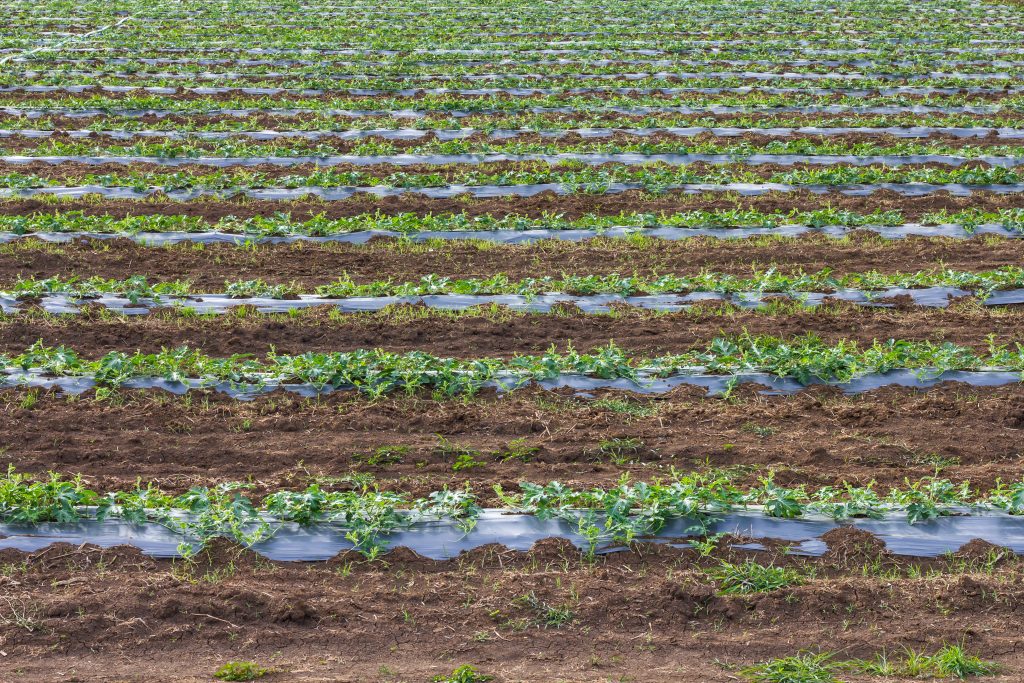
    Watermelon farmers in Northeast Florida escaped significant damage this weekend during frost and prolonged cold temperatures, believes Bob Hochmuth, UF/IFAS Regional Specialized Extension agent in Live Oak, Florida.

    “The way that I characterize it is we escaped narrowly. I think if we had another degree or two colder or if the event had been a couple of hours longer, any one of those, I think we would have had a big mess on our hands in the case of watermelons and other vegetables,” Hochmuth said.

    He believes that though watermelons incurred some frost damage in the Suwanee Valley area, they should make a full recovery.

    “We feel like going into this cold, the root systems were well established and advanced. I think the plant is going to push back pretty rapidly. I think the recovery on those fields is going to be pretty rapid because of the warm soils, big root systems. It’ll already start to push new growth,” Hochmuth said. “In fact, from 8 o’clock to 5 o’clock on Saturday, you could actually see that growth. Maybe two or three inches of new growth just on Saturday at the beginning of that recovery.”

    Just How Cold Was it?

    Hochmuth estimates that temperatures in the Suwanee Valley area – Levy County, Gilchrist County, Alachua County – on up to the Georgia line, the temperature range was 32 degrees Fahrenheit to 37 degrees. Most of the temperatures centered around 33 degrees or 34 degrees. Heavy frost was also constant throughout most of the area.

    Hochmuth

    “We were 95% to 98% planted. A lot of those were 3- or 4-foot-long vines, with the earliest ones planted in late February, those watermelons were setting fruit. It’s a very unusual scenario,” Hochmuth said. “It’s not crazy unusual to get a freeze event in the first few days in April. But I think the thing that made it especially precarious this year is that it was so warm in February, there was a lot of acreage that was planted that normally wouldn’t be planted that early. That put the crop at an advanced state in comparison to normal for the first week in April.”

    He rode around to fields on Saturday and observed that 50% of the fields appeared untouched, while 50% ranged from slight frost damage to pretty severe damage.

    “The temperature over a plastic mulch field of vegetables is much warmer than a bare ground/pasture type of a field. As the air mass moves into the watermelon field, it’s pushing against the warm air mass over top of that field. That means where the cold air wins, you get damage on that first 50, 100, 200 feet,” he added. “That was very commonplace to what we saw around the perimeter of the fields. That’s where we saw the most damage. Where the fields are relatively protected, we didn’t see a whole lot of damage.”

    Protect Against Disease

    Hochmuth cautions watermelon producers that frost damage predisposes the crop to additional disease pressure. Producers need to return to their usual fungicide program and protect the plant from leaf tissue that’s been damaged.

  • Chilly Outcome: Cold Temperatures Damage Some South Georgia Crops

    watermelon
    File photo shows a young watermelon field.

    Cold temperatures and a late-season frost could lead some South Georgia vegetable producers to replant some of their crops, namely watermelons and cantaloupes.

    Bill Brim, part owner of Lewis Taylor Farms in Tifton, Georgia, said his plants survived most of last weekend’s temperature drop, other than some cantaloupe plants in Worth County.

    “Cantaloupes got burnt a little bit in some low areas as well. We’re probably going to have to reset some of those. It was over in Worth County at that real sandy farm that we’ve got. It got a little colder over there I believe than it did over here,” Brim said. “We’re going to have to reset some of those. We’re probably going to go in there and put a little extra fertilizer on them to see if we can get them going.”

    Squash was also not immune to frost damage.

    “Anybody that had any squash planted, it burnt it too. Tender vegetation just can’t take it,” Brim said.

    How Cold was it?

    According to the University of Georgia Weather Network, temperatures dropped as low as 35 degrees Fahrenheit in Tifton, Georgia on Saturday morning; 34 degrees in Valdosta, Georgia on Saturday; and 33 degrees in Moultrie, Georgia on Saturday.

    It was just as bad in other areas.

    “We’ve already had some calls. East Georgia, I think, and north Florida got hurt worse than we did. We had calls from north Florida to save all the plants that we had,” said Brim, whose farming operation also includes LTF Greenhouses that has over 900,000 square feet of production space with the capability of producing more than 350 million transplants every year. “East Georgia was the same way over around Jesup, over that way. They got hurt pretty bad, too, with the plants that they had already set out. It’s mostly watermelons.”

    Especially since South Georgia vegetable plants are still in their infancy stage at this time of year, they are vulnerable to cold temperatures.

    “If it burns that bud out, you might as well go ahead and pull it up. It just won’t ever come back, it doesn’t seem like. It splits off, and it just doesn’t work,” Brim said.

  • Smart Investment: Prosperous Season Leads Farmer to Save, not Expand

    What is it like to be an American farmer in 2021? In an era when success should spark expansion and growth, producers are content with saving money for the next rainy day that is bound to come along.

    That’s the impact imports are having on producers like Matt Parke. The Parkesdale Farms strawberry farmer in Plant City, Florida enjoyed a bumper crop this year. Prices remained steady, and he enjoyed a prosperous season.

    So how does he celebrate? By putting the profits into savings in preparation for those years that are not as prosperous.

    “Over here in Parksdale, we know what the bad looks like. This is awkward for us to have a good year. It’s not like, okay we’ve got some money now, lets go grow,” Parke said. “I plan next year not to have a good year, so I’m not going to go spend any money. I’m going to put it in the bank and wait for that bad one, so I don’t owe the bank any money.

    “But Mexico’s on the other end of that deal. Mexico’s going, ‘Oh we had a good year, lets put in another 5,000 acres.’”

    University of Florida Associate Professor Zhengfei Guan said the Mexican government subsidizes its fruit and vegetable industry. From 2006 to 2016, the average annual budget for subsidies was $4.5 billion. Approximately 95% of Mexico’s protected acreage (those in macro-tunnels, shade houses and greenhouses) is for fruits and vegetables.

    Mexico can expand its acreage, which it has done exponentially over the previous decade. Guan said strawberry imports from Mexico were one-third of the total production in Florida in 2000, while in 2019, Mexican imports were two times higher than the Florida production.

    American farmers don’t have that luxury of expanding, which is why they are advocating to consumers to buy local.

    “I would love to grow. I have dreams of growing, but I don’t want to grow because I know what happens. You get too big, and we have some bad years, and then the bank calls the chickens home. You know what happens after that,” Parke said.