Peach producers need to be mindful of Phony peach disease. According to the UGA Peach Blog, Phil Brannen, University of Georgia Cooperative Extension plant pathologist, cautions growers that if a tree is diagnosed with the disease, they need to destroy the tree immediately. They also need to remove it from the orchard to prevent further spread of the Xylella fastidiosa bacterium by sharpshooter insects, the predominant vector of the pathogen in the Southeast.
Infected trees are initially stunted due to shortened internodes between the leaves and limited growth. Less fruit are produced over time, and the fruit size diminishes as well. Given enough time, the tree will die as a result of the pathogen or indirectly due to stress and other factors.
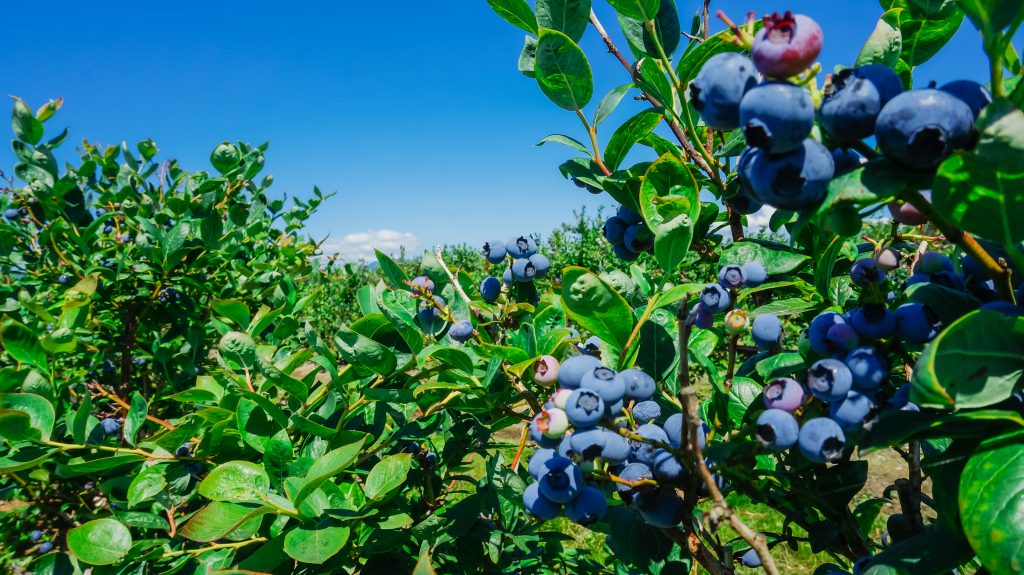
AUBURN UNIVERSITY, Ala. – As blueberries and other summer fruits begin to grow out of season, gardeners may be looking for ways to extend the growing season. While there are many factors that affect the output of fruit crops, there are several things people can do to put their plants in the best situation possible for a long, bountiful growing season.
Proper Growing Conditions
Chip East, an Alabama Extension commercial horticulture regional agent, said a key component that can potentially extend the growing season is making sure the plant is subjected to the proper growing conditions.
“For the success of the plant, ensure that proper planting, weed management, disease management, insect management as well as adequate irrigation is in place,” East said.
The first step to extending the growing season happens before the season even starts. Planting blueberries and other fruits in the proper environments is crucial to overall success. While it is too late to perform this now, East said people can always plan ahead for next year’s fruit crops.
“The best way to help extend the season is by first choosing a planting location that is in full sun and where the soil is well drained,” he said.
During the growing season, management practices, such as proper irrigation and insect and disease management, comes into play. For proper irrigation, most crops require 1 to 1.5 inches of rain per week during the growing season. Drip irrigation is recommended for summer blueberries and many other crops. This method is affordable and can make a huge difference in production for the plant.
When it comes to managing insects, one of the first steps is scouting the crop. Knowing and identifying which insects are common on the particular fruiting plant helps to know how to manage the insects.
“It is much easier to manage insects earlier before they do damage to the plant or fruit,” East said. “This same concept applies to diseases and weeds as well.”
Knowing when to harvest a particular fruit is also an important factor in extending the growing season. Picking a fruit too early can not only affect the taste, but will affect the timeline of the growing season. The longer the fruit hangs on the plant, the sweeter the taste. However, the shelf life of the fruit will be shortened.
Different blueberries ripen at different times, depending on the species. This is the case for peaches, apples, blackberries and other fruits as well. In order to measure the ripeness of the fruit and know when they’re ready to harvest, some farmers invest in a refractometer. This instrument measures the sugar content of the fruit. East said another way to determine if the fruit is ready to harvest is by looking at the color of the fruit as well as eating the fruit to see how it tastes.
Mix it Up
East said by planning ahead, people can make it where as one fruit is going out of season, they have another one coming in season.
“I like the idea of extending the picking season by adding different crops,” East said. “If one fruiting season is about to end, I can look forward to another fruit about to begin.”
As the blueberry season comes to an end, people can begin to transition to harvesting muscadines. Some of the other common fall fruit crops include apples, pears, figs and persimmons. Kiwi and citrus fruits are less common but can also be grown during the fall season.
Insect pressure is high right now throughout Alabama. Ayanava Majumdar, an Auburn Extension Professor in Entomology and Plant Pathology, wants producers to be aware of the difference between squash vine borer larvae and pickleworm larvae. Complaints have increased significantly for both insects.
Squash vine borer larvae are found inside hollow stems at the soil surface. Eventually, they pupate in the ground. Squash vine borer larvae are creamish in color and plump. They spend their entire time in the stem tunnels filling them up with a profuse amount of excreta. Vines that are infested with the squash vine borers will suddenly droop in dry weather conditions, which leads to yield loss.
Pickleworm larvae are found in flowers, fruits and upper stems. Larvae have spots when they are small, and the large ones eventually pupate in leaf fold.
Other IPM observations:
Insects on the rapid rise: Fall Armyworm, Corn earworm, and Soybean Looper, Squash Vine Borer (cucurbit vegetables). Moth numbers have increase 1.5 to 2 times for these species.
This is one of the lightest years for tobacco budworm on row crops in recent years, whereas we have experienced very high levels of corn earworm moth activity and larval numbers in vegetable crops in Alabama.
Winter Springs, Fla. – Watermelon continues to find its place on menus throughout the country despite the rapidly changing foodservice landscape. Partnering with both quick service and full service national chains in the spring and summer months, the National Watermelon Promotion Board (Board) focused on takeaway-and delivery-friendly options to not only include watermelon on the menu, but keep it top of mind with their customers.
Juice and smoothies played a prominent role in all of these promotions, allowing operators to experiment with watermelon’s flavor profile, while understanding that away from home, consumers most enjoy watermelon raw, as a snack or with lunch.
The Board worked with the following foodservice outlets:
•Another Broken Egg – Chain wide usage in 74 outlets included a fruit side and Watermelon Cucumber Cooler. This year, the promotion started earlier in the year (March 17) and, for the first time, the chain tested a savory application, Tacos Verano with Watermelon Salsa.
•First Watch-Running June 1 through the end of August in 380 locations, the Watermelon Wake Up juice scored a 96/100 for frequency of ordering desire on Datassentials SCORES, a monthly report that tracks and ranks new menu items tested with consumers. Promotions included in-store chalkboards, e-blast, blog post and social.
•Nektar -Expanded social media promotional elements including Instagram Live and Stories withNektar founder Alexis Schulzeand Board beverage consultantTony Pereyra, amplified on Board channels. Offeringsin 165 unitsincludeda smoothieand juice, running from June 15 until Labor Day weekend.
•Robeks – Custom graphics on Instagram and Facebook promoting the Wailea Watermelon Smoothie, a customer favorite,in 84 locations.
“Adjusting to operators’and consumers’ needs was a top priority this year,” said Megan McKenna, Senior Director of Marketing and Foodservice. “Additionally, leveraging existing relationships with past partners has made executing programming straight forward and incredibly successful.”
“You know you have a hit when guests ask for more watermelon salsa on an already generous portion or my favorite, when a guests asked how much for a container to take home because they know a dozen other things that the bright, sweet, spicy, crunchy, salty goodness would go with!” said Jason Knoll, Vice President of Culinary, Another Broken Egg of America Franchising, LLC.
Looking forward to fall/winter programming, the Board will continue to monitor foodservice needs and consumer trends. For more information about the Foodservice program, including how NWPB can support watermelon usage in the foodservice sector, visit watermelon.org/foodservice or contact Megan McKenna at mmckenna@watermelon.org.
Tiffany Bailey, owner of Honeyside Farms, with her brother and business partner, Paul Bispham Jr.
By Tiffany Bailey
At Honeyside Farms, we have been growing produce using organic practices for over 10 years. When we needed to move farm locations, we found a piece of farmland that could become certified organic. So, we decided to go for it. These are the top lessons we learned in our first year as a fully certified organic farm.
1: RECORDS ARE YOUR FRIEND
Before deciding to become certified organic, we spoke with many growers about the benefits and challenges of becoming certified. One of the constant negatives we heard about was intense recordkeeping. The recordkeeping has proven to be intense, but the information we have collected has been extremely valuable. We quickly discovered that we needed to plan recordkeeping into every day.
We use a series of Excel spreadsheets on a computer to keep track of all our records. At the end of every day, our farm manager cools off in the air conditioning while updating all the spreadsheets with information from that day. This usually takes about 30 minutes. When the season is wrapping up, it has been well worth the time to sit down and analyze how the information we collected can be used to make future decisions.
2: YOU CAN’T GROW EVERYTHING
While it may seem obvious that different crops have different costs, it is important to evaluate the costs involved with everything from seeds to post-harvest and handling. Especially on a small scale, not all crops can bring in enough revenue to justify growing and handling them.
This can be hard, especially when you have an item that is a customer favorite. But it is important to understand all the different types of costs so you can grow what makes sense financially. If you don’t make the money you need, you won’t be able to sell anything to your customers.
3: NEW GROUND BRINGS NEW CHALLENGES
If you are going to grow something on a new piece of ground, expect to deal with some new challenges. Sometimes there is just no way of knowing how something will grow until you have your first crop there. Consider growing a lower risk type of crop on the first go-around. This will give you an opportunity to assess things like drainage, nutrient retention and soil insects.
On one of our new blocks, we discovered a heavy population of mole crickets that fed on our seedlings. It was an expensive discovery, but we did gain knowledge on how to approach new ground.
4: CAREFULLY SOURCE YOUR LIQUID FERTILIZER
These days, there are so many Organic Materials Review Institute products to choose from. Many liquid fertilizers have good numbers on the label but can come with some challenges related to clogging filters and drip tape. Make sure you know another grower who has used the product successfully before you commit to using it.
You may not get everything you need in one liquid blend. You may have to apply certain nutrients through foliar applications or from a dry mix.
5: THE WORK IS NEVER ALL DONE
Organic farming is more work — period. You can’t just spray something and have 21 days of control. So, the field is always needing some sort of attention. And let’s not forget about the office work and recordkeeping that come along with complying with organic standards.
It is important to make an actual list of your priorities. Manage your time well and try to create routines out of repetitive tasks so you can be as productive as possible. Make sure you are taking time to do important things instead of only doing what is urgent. Sometimes, you have to allow some little fires to burn, and that’s OK.
Georgia Agriculture Commissioner Gary Black testified last week in a hearing with the U.S. Trade Representative’s Office that his state’s fruit and vegetable producers had a decent spring of production amid the coronavirus pandemic. However, one commodity group had its challenges especially when competing against Mexican imports.
“I think one of the vulnerabilities this year was blueberries. We had some good weeks, but then we had an enormous influx of blueberries from Mexico. It was a little disheartening. You go to the middle of the blueberry belt and see in the big box stores, you see blueberries from Mexico right in the middle of our season,” said Black.
Georgia Grown
He also admits, though, more work can be done by his team to promote the value of Georgia Grown.
“We can still do a better job of working with some of the retailers to enhance our brand; a lot of work to do still on consumer demand because consumers are going to drive what happens at the retail level,” Black said.
Marketing was a key part of the Georgia Department of Agriculture’s (GDA) “Buy Georgia Grown, Now More Than Ever” campaign, which was launched during the early months of the initial pandemic. Georgia Grown partners with local governments to connect produce farmers directly to consumers in highly populated areas throughout the state.
Georgia Grown To-Go was a series of pop-up markets, primarily in metro Atlanta, that provided customers an opportunity to purchase fresh produce directly from farmers with limited contact, drive-through service.
Hearings
Georgia producers and agricultural industry leaders testified in a virtual hearing last Thursday, Aug. 20. The hearings provided the U.S. Department of Commerce (DOC) and United States Department of Agriculture an opportunity to hear from growers in Georgia about the urgent need for federal action regarding unfair trade, specifically with Mexican imports.
This was the second of two virtual hearings to be held. The first involved Florida growers and industry leaders on Aug. 13.
Clemson Extension agents provided updates in The South Carolina Grower this week about the status of various crops being produced throughout the state.
Statewide
Dr. Tony Keinath reports, “For the past few years, Orondis Opti on cucumber and cantaloupe and Orondis Ultra on pumpkin and watermelon have been the best fungicides to manage downy mildew. Based on results from a spring 2020 cucumber experiment at Coastal REC, Orondis is no longer the “silver bullet” it was 2 years ago. In my experiment, Orondis Opti rotated with Bravo controlled downy mildew in the early part of the season, but disease increased significantly during the latter part of the season and ended up higher than expected. Part of the shortcoming of the Orondis Opti/Bravo spray program was the Bravo rotation. Bravo sprayed by itself every other week did not control downy mildew at all. So spraying Orondis Opti/Bravo acted like Orondis Opti sprayed every other week, which was not enough. The labels for Orondis Opti and Orondis Ultra say they must be rotated with another fungicide. For the rest of the 2020 season, use Orondis Opti/Ranman + chlorothalonil on cucumber and cantaloupe, and Orondis Ultra rotated with Gavel or Ranman + chlorothalonil on pumpkin and watermelon. Always use the high rate (2.5 pints/acre) of Orondis products. Note that the mancozeb in Gavel or adding chlorothalonil helps to manage other foliar diseases like gummy stem blight and anthracnose. Yield data and input costs from my experiment are being analyzed to see if spraying Orondis leads to a higher net return despite the higher cost of this fungicide. Results will be presented at the virtual Cucurbit meeting in February 2021 to help growers plan downy mildew fungicide programs for the 2021 season.”
Cucurbit downy mildew continues to spread across the state.
Coastal
Rob Last reports, “Fall crops continue to grow well in the area. Given the current weather patterns, pests and disease are active in some crops particularly where there are volunteers remaining from previous crops. Vigilance will be required in scouting and pesticide management programs. If in doubt scout.”
Midlands
Justin Ballew reports, “It’s been cool, cloudy, and kind of pleasant outside this past week, though, that has the vegetable crops growing a little slower. We’ve gotten some decent rains in most areas around the midlands as well. Bacterial spot is really showing up on fall tomatoes as a result of all the recent rain. It could be a bad fall for bacterial spot if the weather stays like this. Caterpillars are already out there on fall brassicas. It doesn’t take long once they’re planted. Start scouting, scout often and rotate insecticides. Remember to contact one of us about screening your farm for insecticide resistance in diamondback moths once you start seeing populations build up.”
Bacterial spot and speck start on the bottom of the plant and can be splashed onto higher leaves and fruit by rain drops. Photo from Justin Ballew.Start scouting for caterpillars as soon as your fall brassicas are planted. Photo from Justin Ballew
Pee Dee
Bruce McLean reports, “Both fruit and vegetable development have slowed a bit due to cloudy conditions. Sunny conditions needed. Sweetpotatoes are sizing well and will be ready for harvest soon. Fall cucumbers and squash should soon be ready to start harvesting. Fall brassicas are being planted now. Muscadine crop is getting close to harvest. Noble is around 90% ripe; Carlos is around 60%; Doreen is still around 25%. Brix (sugar content) is off due to rain and cloudy conditions. Noble and Carlos brix are averaging around 11% with a low of 9.2% and a high of 15.0%. Doreen is averaging less than 10%. Did find a few Doreen that brix was over 19%… candy. Sunny conditions definitely needed.”
Noble muscadines around 90% ripe. Photo from Bruce McLean.
Tony Melton reports, “Beginning to harvest processing sweet potatoes but some have been stunted and delayed by excessive rain. Spraying processing peas for cowpea curculio. Starting to plant processing greens by seed. Even though lots of rain and having to mud through fields, cucumbers for pickles are being harvested and still being planted.”
Upstate
Andy Rollins reports, “Blueberry pruning is best served for the dormant time of year, late January-late February. I met with a commercial grower who was anxious about getting started early partly because he has many plants completely unproductive for the second year in a row. I like to call this revenge pruning as that is the primary motivation. Be careful, you could end up hurting yourself more in the long run. In his case, it was all about light and proper pruning to encourage light down through the canopy. The original spacing of Rabbiteye type varieties was very close so we also considered killing every other plant to get more light into the bushes but this would not replace the need for removing a few of the oldest canes each year, spacing them out so there is better light penetration. For a detailed explanation, please see NCSU Blueberry specialist Bill Cline’s presentation.”
Auburn University Assistant Professor and Extension economist Adam Rabinowitz wants Alabama non-specialty crop and specialty crop producers to be aware of the deadline being extended for the Coronavirus Food Assistance Program (CFAP) and what crops in the state are most impacted.
In the Alabama Extension blog, Rabinowitz reminded producers that CFAP provides financial assistance to growers of selected agricultural products. Initial payments of 80% of eligibility were made to producers who filed claims by the initial sign-up deadline. The USDA has since announced an extension of the deadline to Sept. 11.
The USDA also announced that payments for the additional 20% of eligibility will be processed automatically for those who have already enrolled. Farmers producing eligible crops should visit their FSA office to enroll in this program. More information is available on the USDA website.
Adam Rabinowitz
Alabama Impact
CFAP assistance is available to specialty crop producers, including selected fruits, vegetables, nursery crops, and cut flowers. Those crops that are most relevant to Alabama producers that are harvested before April 15 include but are not limited to:
Broccoli
Cabbage
Greens, collard, kale, mustard, and turnip
Lettuce
Peas
Potatoes, fresh and other
Squash, including zucchini
Strawberries
As of Aug. 17, 33 specialty crop applications in Alabama were approved by the USDA Farm Service Agency, resulting in payments of just over $800,000 to Alabama producers.
LAKE ALFRED, Fla. — While the coronavirus pandemic has changed much of the University of Florida citrus programming, one annual tradition continues, albeit with some changes. The 2020-2021 UF Institute of Food and Agricultural Sciences Citrus Production Guide is now available to growers, just as it has in years past.
The difference is that growers usually would have the first chance to pick up their copy at the annual Citrus Expo held in Fort Myers. With that show going virtual because of the pandemic, distribution plans for the guide have been adjusted.
What is the same is the publication which includes the latest technical advice on citrus greening disease, tree nutrition, grove management and other aspects of Florida citrus cultivation. The 264-page document is a comprehensive reference meant to assist growers in development and management of citrus groves in Florida, said Lauren Diepenbrock, a UF/IFAS entomology assistant professor and a member of the guide’s editorial team.
Topics covered in the guide include planting, irrigation, fertilization, weed control, insect management and disease management, she said. It was previously known as the Florida Citrus Pest Management Guide, but the name was changed a few years ago, after the content was expanded, she said. About 50 UF/IFAS personnel contributed to the latest edition.
“Each year, we update the guide with new information as it becomes available, so that we can continue to meet the needs of our growers as we learn about and/or develop new tools and strategies for citrus production,” Diepenbrock said.
Hard copies of the guide are now available at local UF/IFAS Extension county offices (please see chart)
While Extension offices are open, it is always best to email or call the agent ahead of time to check that the office is open and ensure that they have the guides waiting for you. For a directory of citrus agents, visit http://citrusagents.ifas.ufl.edu/locate/index.shtml.
GAINESVILLE, Fla. — University of Florida researchers have opened the second round of surveys on COVID-19’s impact on the state’s agriculture and marine industries, intended to capture changes in operations for the first half of the year.
The Assessment of COVID-19 Impacts on Florida surveys were first deployed in mid-April and closed in mid-May, offering a glimpse at the changes and uncertainty that came with the early days of the pandemic. In total, more than 1,500 respondents across five sector-specific surveys shed light on how their businesses were faring just as statewide stay-at-home orders were in full effect. Reports on the findings are being finalized now and will soon be made available.
Similar industry groups will be targeted for the second round of surveys, defined as follows:
Agriculture and aquaculture production (broadly defined to include crop production, forestry/timber, nursery and greenhouse operations, agritourism, beekeeping, etc.); survey: tinyurl.com/uflsurvey-round2-agaquaculture
“We were satisfied with the response rate of the first round of surveys, but I know there are experiences and impacts that we weren’t able to capture in the first round, especially when it came to specific commodities or sectors,” said Christa Court, assistant professor of regional economics in the UF/IFAS food and resource economics department. “Together, Florida’s agriculture and marine industries are a significant contributor to the state’s economy, but what makes our state unique is the diversity of activities and products that these industries engage in and produce. The more data we can collect from producers and operations of all types, the more insights we can provide on the variety of ways each of the sectors are being uniquely impacted by and adapting to the COVID-19 pandemic. It’s important that we find as many pieces of this puzzle as possible to understand implications for the broader food system and the economy.”
Survey questions have been refined to make it as easy as possible for respondents to complete the survey while providing the information necessary for a detailed valuation of losses. Some questions might look familiar from the first round; however, in most cases, adjustments were made to account for the more nuanced impacts of the pandemic scenario.
Court acknowledges that hurricane season is also a complicating factor for this second round of surveys. The UF/IFAS Economic Impact Analysis Program, which she directs, also conducts post-hurricane analyses.
“Even though we saw in the first survey that the pandemic affects these sectors quite differently than natural disasters such as hurricanes, there’s a potential for compounding disasters in this next survey period,” she said. “We hope we don’t have to account for that, but we are prepared for the possibility.”
As with the first round of pandemic-related surveys, Court is joined by fellow FRE faculty Andrew Ropicki and John Lai. Ropicki, an assistant professor of marine economics who also has a Florida Sea Grant appointment, will again lead the marine survey analysis. Lai, an assistant professor of agribusiness, focuses on the agriculture portion.
In addition, based on responses from the first round of surveys, there is an ongoing collaboration between UF/IFAS, Florida Gulf Coast University, and Florida A&M University to conduct interviews with industry professionals. This effort spans across all segments of the food system, from input suppliers, to producers and processors, to restaurant owners, and everything in between. Previous survey respondents who expressed interest in sharing more about their experiences during this pandemic have been contacted and additional participation is welcomed. Industry professionals in agriculture or food-related sectors who are interested in sharing their stories and experiences should contact David Outerbridge, County Extension Director in Lee County, at douterbridge@ufl.edu or (239) 533-7512.