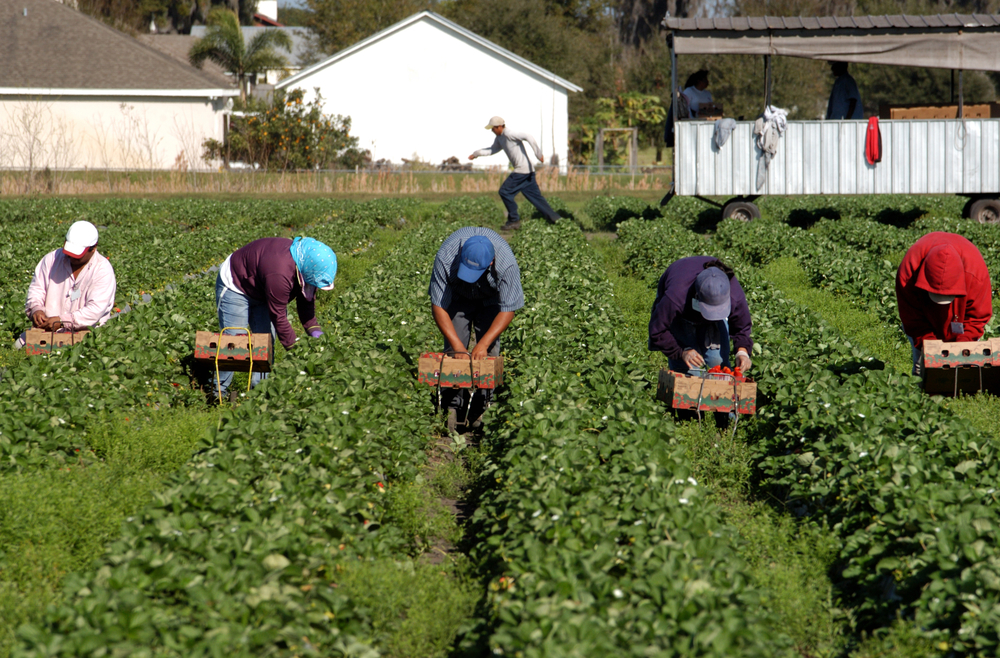
Clemson Extension will host a virtual strawberry production meeting on Wednesday, Sept. 2 at 6 p.m. The Strawberry Grower 101 meeting will be geared towards new or beginning growers.
Topics to be covered included cost and economics, timeline, plant selection and varieties available and fertility.
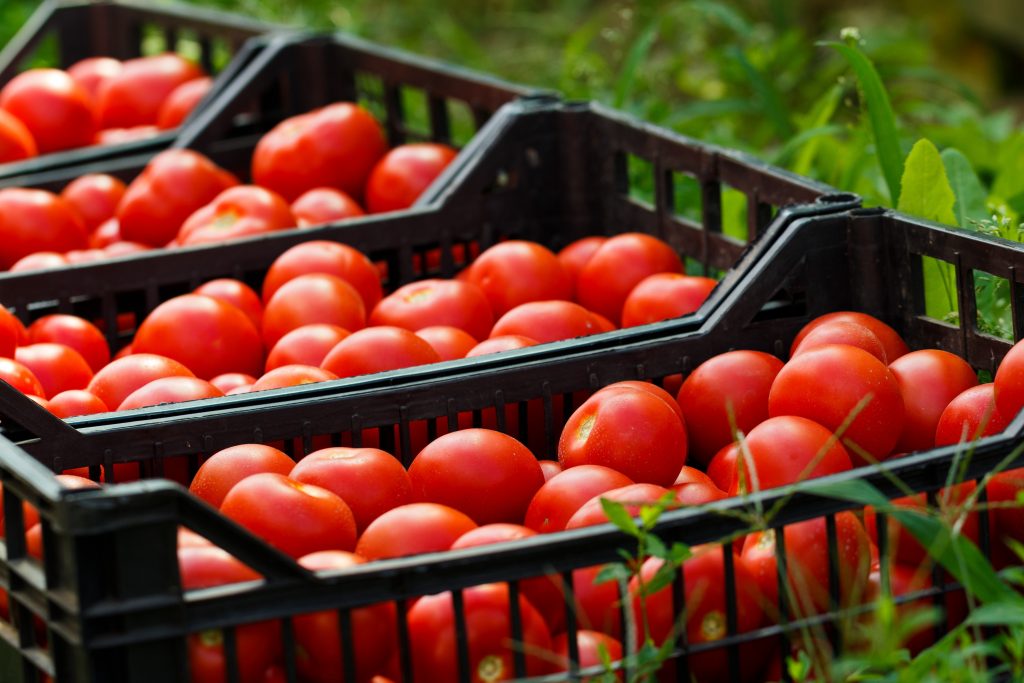
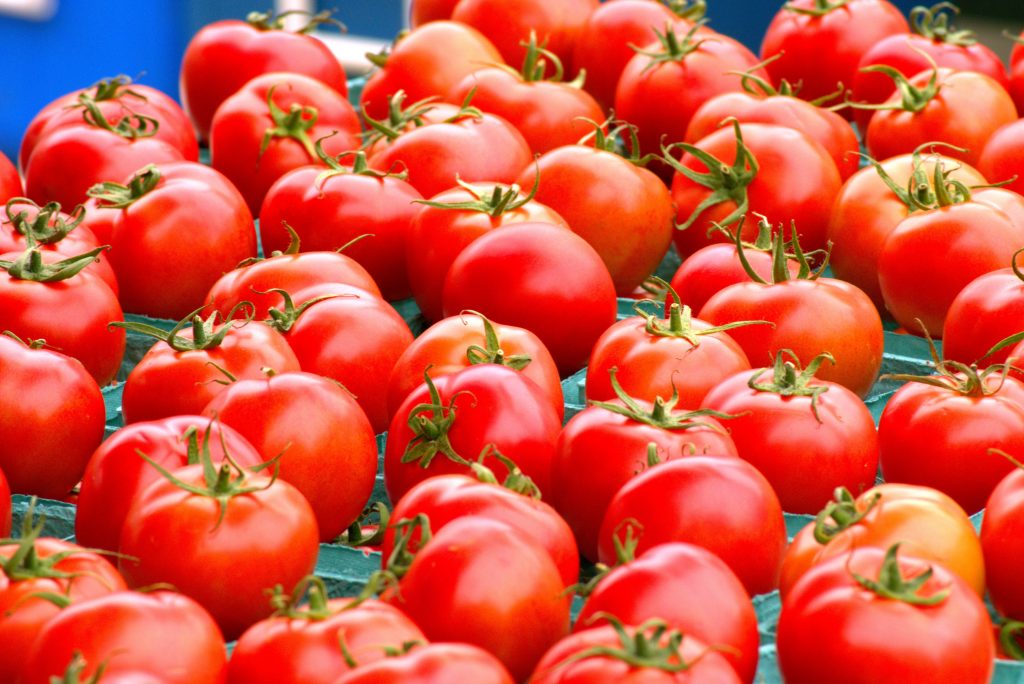
Though Mexican exports of tomatoes have not reached the ‘peak’ season, inspections appear to be running smoothly and efficiently, says Michael Schadler, executive vice president of the Florida Tomato Exchange.
The inspection provision, which was part of the Tomato Suspension Agreement established in September, 2019 between the U.S. Department of Commerce and Mexican tomato exporters, allows for the United States Department of Agriculture to inspect certain kinds of tomatoes being transported from Mexico to the United States. It started in early April but will be tested when higher volumes of tomatoes ramp up during the winter months.
“The heaviest times of the season as far as imports from Mexico are January, February and March. The inspections haven’t been tested with the biggest volumes of the season,” Schadler said. “We’re bringing in Mexican tomatoes year-round. There’s very significant volumes every week of the year, every month of the year. But in those three months, that’s really the peak for the big production out of Mexico. That will be more of a test. By the time it’s January, they will have had a good eight months of practice, I think it’ll be fine.”
Cause for Concern?
Schadler believes there should not be cause for concern that inspections of tomatoes could create a bottleneck of shipments, especially during those months when more of the crop will cross the border.
“Frankly, I don’t think it should be a worry for anyone. First of all, USDA (Agricultural Marketing Service) AMS, that’s what they do; they’re in the business of offering inspections services. They’ve ramped up employment and staff to the level they can handle the situation,” Schadler said. “I think people would have been a little nervous if their start had been Jan. 1 of 2020, right as the big volume was coming in. That would have been a little much.
“I don’t think there is any worry. If you hear about importing companies expressing concern, I personally don’t think that’s justified. But I can understand it if I was an importer, how it’s an adjustment that they have to make. As far as we understand it, the process has been going fairly smoothly. Both sides have been working together well.”
Purpose of Inspections
According to the International Trade Administration, the purpose of the Suspension Agreement inspections is to prevent low-quality and poor-condition tomatoes from entering the U.S. market and injuring the U.S. domestic tomato industry through price suppression or undercutting.
The tomatoes that are being inspected include Round tomatoes, Round meaning fresh tomatoes; Roma tomatoes, Roma meaning Roma or Plum fresh tomatoes; stem on tomatoes, stem meaning any type of fresh tomato, except specialty and tomatoes on the vine; and Grape tomatoes in bulk.
“It’s a quality grade inspection. It makes it so that if you’ve got tomatoes that grade below U.S. No. 2, you can’t bring them into the country. You either have to cull them there on the spot or you have to return the shipment back to Mexico,” Schadler said. “It’s really good for the overall market. It’s good for the downstream market because you’re getting higher quality, but it’s good for the trade as well because you get some of that rough quality out of the system and prices will be helped for everyone.”
Exempt Tomatoes
Those tomatoes that are exempt from inspections include tomatoes on the vine, meaning any type of fresh tomatoes, except specialty, in which there are two or more tomatoes, normally in a cluster, with the vine attached; specialty tomatoes, meaning Grape, Cherry, Heirloom, Cocktail fresh tomatoes or any other tomato varietal, other than Round and Roma tomatoes, with or without the stem; and Grape tomatoes in retail packages of 2 pounds or less.
The September issue of VSCNews magazine is packed with information about breeding updates and new varieties. Readers can see what’s new in strawberries, blueberries, blackberries and cucurbits.
Breeding new varieties is a vital component to push agriculture forward. The University of Florida (UF) is a leader in the breeding industry. Recently, blackberries have emerged as an alternative crop in Florida. Zhanao Deng, a professor at the UF Institute of Food and Agricultural Sciences (UF/IFAS) shares the work that UF has done trialing and developing cultivars for the Sunshine State. According to Deng, UF plans to produce the first blackberry production and spray guide by early 2022.
Seonghee Lee, a research assistant professor and Vance Whitaker, an associate professor, both at the UF/IFAS Gulf Coast Research and Education Center in Wimauma, discuss a new strawberry variety that UF will soon commercialize. These white strawberries, actually found in nature, are expected to be the first white strawberries on the market in the U.S.
Patricio Munoz, an assistant professor and Doug Phillips, UF/IFAS blueberry Extension coordinator, discusses the UF/IFAS blueberry breeding program. Get the latest details on the program in his article.
The September issue also offers something for cucurbit growers. Cucurbit crops are some of the most widely grown vegetable crops in the Southeast. However, the hot and humid climate can present a number of challenges to growers when it comes to pests and diseases. Cecilia McGregor, an associate professor and George Boyhan, a professor and Extension specialist, both at the University of Georgia (UGA), share the work being done by the UGA cucurbit breeding programs, developing cultivars that are well adapted to the Southeast.
Finally, the September issue includes a wrap-up of the recent virtual Vegetable & Specialty Crop (VSC) Expo. Readers can get some of the highlights from the Expo educational program inside the September issue. Also, be sure to mark your calendars for the 2021 VSC Expo, returning Aug. 18-19, 2021, to the Lee Civic Center in North Fort Myers, Florida.
If you would like to receive future issues of VSCNews magazine, click here.
Clemson Extension agents provided updates in The South Carolina Grower this week about the status of various crops being produced throughout the state.
Coastal
Zack Snipes reports, “We had between 4-6 inches of rain last week with daily thunderstorms. Growers are working the fields, getting ready for the fall crops to go in. If it happens to rain on Wednesday night, then you should tune in to our Strawberry 101 class from 6 p.m. to 8 p.m. We will be discussing economics, seasonal timeline, varieties and common mistakes, and fertility. This is an excellent opportunity to learn about growing strawberries. You must register ahead of time to participate.“
Midlands
Justin Ballew reports, “After some rain early in the week, the weather turned dry and the temperatures and humidity reminded us that summer isn’t over yet. Fall crops are continuing to progress well, though we are continuing to see a fair amount of disease like anthracnose, downy mildew, and bacterial spot due to the recent wet conditions. Caterpillar populations are climbing on fall brassicas as well. In scouting a field trial, I observed diamondback moths, cabbage loopers, and armyworms. Keep a close eye out and be sure to rotate chemistries when you start spraying.”
Anthracnose spots on a cantaloupe leaf. Photo from Justin Ballew.Cabbage looper on a collard leaf. Photo from Justin Ballew.
Sarah Scott reports, “Peach season has wrapped up in the Ridge and post- harvest fertilizer applications are being applied. Fall vegetable crops are looking good as we received some decent rain fall over the past week. Hot temperatures have had some effect on lower seed germination of some brassicas.”
Pee Dee
Bruce McLean reports, “Harvest time is finally upon us. Sunshine and warm temperatures are doing the trick for giving growers that final push for ripening the muscadine crop. Crop is looking good, but some bitter rot and ripe rot is starting to show. Brix for Carlos and Noble is averaging around 13.5%. Doreen is still a little ways from being ready to harvest, but it won’t be long.”
Grape harvester picking muscadines. Photo from Bruce McLean.
Tony Melton reports, “So wet in areas it is hard to spray peas for curculio. Some are having to use airplanes. Harvesting sweet potatoes for processing and yield is good. Planting greens for processing. Harvesting pickles but stopped planting this week. Still harvesting processing peppers but harvesters are getting real tired.”
Upstate
Kerrie Roach reports, “Heavy rains, humidity and continued high temperatures over the last week have continued an increased trend in disease incidence across the board in both vegetables and fruits. Growers need to be proactive to stay ahead of diseases (and insects) by scouting often and well. We are finishing out the peach season with late varieties like ‘Big Red’. Apples are gaining steam and early varieties are looking and tasting great. Overall the production seems to be on target for a significant increase over last season.”
By G.E. Vallad, J. Desaeger, J. Noling and N. Boyd
Vegetable and strawberry growers have long relied on soil fumigants to contend with various soilborne pathogen and pest complexes, as part of an integrated management strategy that includes crop resistance, cultural control and pesticides. However, with the loss of methyl bromide (MBr), many growers have struggled to maintain consistent soilborne pathogen and pest control with the available fumigants.
Much of this relates to the inability of available fumigants to disperse throughout the soil in the same manner as MBr. This is due to the physical differences in volatility, as revealed by comparing the vapor pressure and boiling points (see Table 1) of currently available fumigants to MBr and water. Volatility is the tendency of any substance to convert to a gas at a given temperature and is directly related to the substance’s specific vapor pressure, which is inversely related to boiling point.
Figure 1. The Yetter Avenger Coulter system has a pair of coulters straddling the raised bed. Final application depth is greater than 8 inches below the soil.
By comparing vapor pressure and boiling point values of fumigants to water, it is easier to understand why the current fumigants are referred to as volatile liquids. Vapor pressure values for Pic and 1,3-D are on average 70-fold less than MBr at 20° C (68° F), and the ITC generators are even less volatile with physical characteristics more similar to water. MBr, as a true gas, would rapidly volatilize from a liquid once applied to the soil and quickly fill available airspace within the soil profile. In comparison, all the current alternatives remain liquid following application and then slowly volatilize. These physical characteristics limit fumigant movement within the soil of the prepared, raised bed.
Figure 2. Roots are emerging below the plastic tuck from the side of the bed.
Unfortunately, threats from soilborne pathogens and pests are not always limited to the immediate raised bed. For example, research previously demonstrated that supplemental applications of chloropicrin along bed edges below the tuck (Figure 1) protected tomato roots emerging from the fumigated bed into non-fumigated soils (Figure 2), which subsequently reduced the incidence of fusarium wilt (Figure 3). Similarly, research demonstrated that deep-shank soil applications of 1,3-dichloropropene (Telone) (Figure 4) were necessary to manage nematode populations deeper in the soil, below raised beds, that were beyond standard in-bed fumigant applications (Figure 5).
Figure 3. A field trial demonstrates the supplemental application of Pic 100 to bed edges compared to the grower standard of Pic-Clor 60 alone.
FIELD TRIALS Many operations have problematic fields with a complex of soilborne pests and pathogens. Large replicated field trials were recently conducted to address such situations, combining both supplemental approaches in tomato fields affected by root-knot nematodes and fusarium wilt. Combinations of deep-shank Telone II, with in-bed fumigation, supplemental chloropicrin and plastic mulch [virtually impermeable film (VIF) vs. totally impermeable film (TIF)] were evaluated.
Figure 4. A broadcast, deep-shank application of Telone II (inset shows applicator). The tractor at top is making a 16 to 18-inch application at 12 gallons per acre, followed by a disk to disrupt chisel traces (center pass) and then packed with a roller to seal the fumigant (bottom pass).
Two fields received deep-shank applications of Telone II (12 gallons per acre) in 600-foot by 50-foot strips alternated with 50-foot non-fumigated strips across the entire field. A month later, raised beds prepared over the Telone II strips received in-bed applications of either Pic-Clor 60 (300 pounds per acre), Pic-Clor 80 (225 pounds per acre) and Pic 100 (180 pounds per acre) with supplemental application of Pic 100 along the bed edge (150 pounds per acre).
Raised beds prepared over the non-Telone II strips received Pic-Clor 60 (300 pounds per acre) either with or without the supplemental Pic 100 along the bed edge as additional controls. Each of the described combinations were covered with both TIF and VIF plastic mulch (for a total of 10 treatments) and then planted accordingly. Each treatment plot consisted of three beds (approximately ¼ acre) and was replicated five times in each field.
RESEARCH RESULTS Two weeks after deep-shank applications of Telone II, deep soil cores pulled across fumigated and non-fumigated portions of the field found total nematode levels (including parasitic Meloidogyne species) were reduced by 82 percent, from an average of 8.3 nematodes per 100 cubic centimeters of soil to 1.1 nematodes. The reduced nematode counts were further reflected at the end of the season with a 97 percent reduction in root-knot galling between deep-shank Telone II and non-deep-shank fumigated plots.
Figure 5. A demonstration of deep-shank applied Telone II on root-knot nematodes in cucumber. Telone was applied perpendicular to raised-bed preparation. The image shows a strip where the deep-shank applicator was turned off.
Supplemental Pic applications reduced average root gall ratings 24 percent and reduced average fusarium wilt incidence by 47 percent. Unexpectedly, deep-shank Telone II applications had the greatest statistical effect on fusarium wilt, reducing disease incidence by 66 percent, from 19.4 to 7.5 percent average incidence across all treatments. In-bed fumigants also had a significant but minor effect on average root gall ratings and fusarium wilt, with in-bed Pic-Clor 60 and Pic-Clor 80 performing better than Pic 100.
Statistically, mulch had no effect on nematode gall ratings, fusarium wilt or yields. In-bed fumigation had numerical but no statistical effect on tomato yields. A replicated lab study further demonstrated the fungicidal activity of 1,3 dichloropropene (Telone II) against Fusarium oxysporum f. sp. lycopersici. Several other studies have reported similar findings for 1,3 dichloropropene against soilborne pathogens and for chloropicrin against nematodes.
CONCLUSION These findings further support the notion of developing supplemental fumigation strategies that target soilborne pests and pathogens at their source. These supplementary approaches are meant to be prescriptive in nature, based on the specific soilborne pest or pathogen problems observed in fields.
Current and future research will address the frequency of supplemental fumigation and the use of other fumigants, as well as reducing in-bed application rates to help offset the cost of supplemental fumigation. Improvements in available post-plant fungicides and nematicides may also change fumigation strategies, as well as the availability of crop varieties with improved tolerance to soilborne pathogens and pests. Parties interested in participating in such studies are welcome to contact Gary Vallad at gvallad@ufl.edu or 813-419-6577.
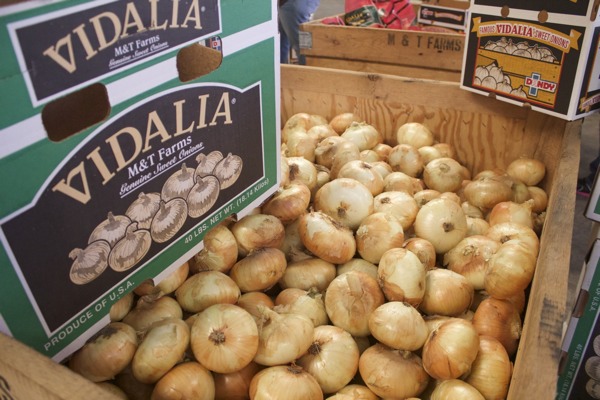
Vidalia onion plants will soon be going in the ground across Southeast Georgia. Chris Tyson, University of Georgia Extension Area Onion Agent at the Vidalia Onion & Vegetable Research Center in Lyons, Georgia, pinpoints the week of Sept. 7 that some growers will start planting this year’s crop with most planting the week after.
“After Labor Day, definitely there will be some going in. Then there will be a lot that will go in around…I’ll just use the (Sept.) 15th as an arbitrary date. A lot of people will plant at the 15th; a big bulk of the onions. But there are some that are planted before then, definitely,” Tyson said.
Vidalia onion acreage the past two years has hovered around 9,300 acres, which is down from what it had been for several years prior. Tyson said this year’s acres could fluctuate some either way, but he doesn’t anticipate any huge changes in acreage.
“The acreage has been about the same the past two seasons. But you never know, it could go up some or it could stay the same,” Tyson said. “A lot of times we really don’t know until after planting, really what everybody does and what it’s going to actually look like.”
Seedbeds will be planted in September through the first of October.
Tomato planting is currently underway across the Southeast. It is never too early to start thinking about insect pests that could hinder fall production in Alabama.
According to the Tomato Insect Pests 101 video, Ayanava Majumdar, Auburn Extension Professor in Entomology and Plant Pathology, cautions growers to scout their tomato fields every week for pests and look for insects over and under the leaves and also at the plant base.
Tomato plants have five growth stages during the production season: seedling, vegetative, flowering, fruit formation and mature fruiting.
“Seedling and fruiting stages are most vulnerable to insect attack,” Majumdar said. “They must be protected.”
What to Watch for?
Early season insect pests include flea beetles, thrips and aphids. Flea beetles’ ability to chew small round holes across the leaves can lead to death for small tomato plants. Thrips have piercing-sucking mouthparts and can transmit viruses when feeding. Aphids suck plant sap and produce honeydew resulting in sooty-mold fungus.
Specific insects, such as the brown stink bug and leaffooted bug, can cause quality losses. Stink bugs have piercing-sucking mouth parts. Its feeding causes extensive fruit discoloration. These are often unmarketable and can rot fast in storage. Leaffooted bugs have leaf-like expansion on their hind legs. They aggregate in large numbers on fruits.
Caterpillars can cause holes on tomatoes. Beet armyworms, fall armyworms, yellowstriped armyworms, southern armyworms, fruitworms, hornworms and loopers are pests to watch out for. Fruitworms make round holes with the head tucked inside the fruit. Hornworms feed on the leaves, stems or entire fruit. Loopers are often late-season pests in Alabama.
Majumdar implores farmers to apply pest management tactics. This includes: plant and harvest your crop in a timely fashion; use pest exclusion fabric or netting early to stop moths and stink bugs; and use conventional or organic insecticides if needed.
WASHINGTON, Aug. 28, 2020–U.S. Department of Agriculture (USDA) Farm Service Agency (FSA) reminds farmers and ranchers that the deadline to apply for the Coronavirus Food Assistance Program (CFAP) is Sept. 11, 2020. This program provides direct relief to producers who faced price declines and additional marketing costs due to COVID-19.
“FSA offers several options for farmers and ranchers to apply for CFAP, including a call center where employees can answer your questions and help you get started on your application,” said Richard Fordyce, Farm Service Agency administrator. “With only two weeks before the deadline, now is the time to check out the resources on our website and contact the call center or your local office for your last-minute questions.”
More than 160 commodities are eligible for CFAP, including certain non-specialty crops, livestock, dairy, wool, specialty crops, eggs, aquaculture, and nursery crops and cut flowers. All eligible commodities, payment rates, and calculations can be found on farmers.gov/cfap.
Customers seeking one-on-one support with the CFAP application process can call 877-508-8364 to speak directly with a USDA employee ready to offer general assistance. This is a recommended first step before a producer engages the team at the FSA county office at their local USDA Service Center.
Producers have several options for applying to the CFAP program by the Sept. 11 deadline:
Using an online portal, accessible at farmers.gov/cfap. This allows producers with secure USDA login credentials, known as eAuthentication, to certify eligible commodities online, digitally sign applications, and submit directly to the local USDA Service Center.
Completing the application form using our CFAP Application Generator and Payment Calculator found at farmers.gov/cfap. This Excel workbook allows customers to input information specific to their operation to determine estimated payments and populate the application form, which can be printed, then signed, and submitted to their local USDA Service Center.
Downloading the AD-3114 application form from farmers.gov/cfap and manually completing the form to submit to the local USDA Service Center by mail, electronically, or by hand delivery to an office drop box. In some limited cases, the office may be open for in-person business by appointment. Visit farmers.gov/coronavirus/service-center-status to check the status of your local office.
USDA Service Centers can also work with producers to complete and securely transmit digitally signed applications through two commercially available tools: Box and OneSpan. Producers who are interested in digitally signing their applications should notify their local service centers when calling to discuss the CFAP application process. You can learn more about these solutions at farmers.gov/mydocs.
All other eligibility forms, such as those related to adjusted gross income and payment information, can be downloaded from farmers.gov/cfap/apply. For existing FSA customers, these documents are likely already on file.
All USDA Service Centers are open for business, including some that are open to visitors to conduct business in person by appointment only. All Service Center visitors wishing to conduct business with FSA, Natural Resources Conservation Service or any other Service Center agency should call ahead and schedule an appointment. Service Centers that are open for appointments will pre-screen visitors based on health concerns or recent travel, and visitors must adhere to social distancing guidelines. Visitors are also required to wear a face covering during their appointment. Our program delivery staff will be in the office, and they will be working with our producers in the office, by phone and using online tools. More information can be found at farmers.gov/coronavirus.
Holly Bell, director of cannabis for the Florida Department of Agriculture and Consumer Services (FDACS), gave an update on Florida’s hemp program as part of the Citrus Expo virtual general session.
“Florida is becoming the leader in the country — if not the world —on how we’re getting our hemp program rolled out and the standards that we’re setting,” she said.
On April 27, FDACS began issuing hemp cultivation permits. As of mid-August, 550 permits were issued and another 400 were being processed. The 550 permits encompass 18,000 acres of indoor- and outdoor-grown hemp. Bell said applying for a permit is a quick and easy process that can be done online. She noted that there is no fee for a hemp cultivation permit in 2020. Questions about the permit process can be sent to DPIhemp@FDACS.gov.
Bell reported that FDACS has been inspecting hemp products for consumer safety and checking to ensure that what is listed on the labels is what is found in the products.
“We found some alarming trends in samples that we pulled,” Bell said. “We have found high levels of lead in a lot of the tinctures that are in bottles (CBD oil) and sold across the state.”
FDACS is working with the Food and Drug Administration to remove tainted CBD oil from Florida shelves and in other states where the products are sold.
“We really are setting the bar in the United States for testing and quality control,” Bell said. “Several people with hemp businesses in other states now want to come to Florida to do business here. Florida is setting an example.” She added that several states have reached out to FDACS to help them get their hemp programs up and running.
For help, questions or concerns regarding Florida’s hemp program, Bell encouraged reaching out to cannabis@FDACS.gov or directly to her at holly.bell@FDACS.gov. “We are eager and here to help you, and we’re looking forward to building this industry up,” she concluded.
Third quarter data from the Department of Labor (DOL) shows H-2A applications were processed effectively and in a timely manner even during the early onset of the coronavirus pandemic, according to Veronica Nigh, economist with American Farm Bureau.
“With as much transition as there was for just the physical staff up here in D.C. and DOL, going from working in person to doing remote work, I think it would have been very much expected to see the percentage of applications fall off on that ‘timeliness’ percentage but it hung right in there,” Nigh said. “I think that certainly reflects the recognition of the importance of the program.”
According to the U.S. Citizenship and Immigration Services, the H-2A program allows U.S. employers who meet specific regulatory requirements to bring foreign nationals to the United States to fill temporary agricultural jobs. Florida is the largest user of the H2A program during the first three quarters of the year. It listed 28,005 certified positions. Georgia, another user of the program, listed a little more than 23,000 certified positions.
“Certainly, the Southeast is a big user of the program,” Nigh said.
‘Timely’ Processing
One of the stats that Nigh was most encouraged with was the percentage of applications that were processed in a “timely” manner, which happens when an application is resolved 30 days before the needed start date. For the period from April 1 through June 30, 96% of applications were processed in a “timely” manner, compared to 86% in the third quarter in 2019 and 90% in 2018.
“I think there was a lot of interest from us and all the other farm groups and certainly our farm members about whether or not some of the delays they saw and some of the concerns we had earlier in the year about H-2A, whether or not folks were actually able to get the workers that their farms needed,” Nigh said. “What that data showed was, my goodness, the demand for H-2A and the processing of applications certainly continued to be high and showed growth from last year. For the number of certified positions, it was up 4% compared to the third quarter of 2019, which is, I think, surprising given all the concerns there were.”
Flexibilities
Nigh said flexibilities were given to the processing of H-2A applications. Normally, an interview was required before a Visa was issued, but that was waived for H-2A workers. Also, if workers were already in the U.S. but had a Visa about to expire, the government allowed them to apply for a different position.
“If you combine all of that, the deeming of them as essential workers; known applicants not having to do an in-person interview; making border travel easier for those folks; extending time in the U.S. for those who were already present; it really had the impact of making sure folks were able to continue to get to the U.S. to work and stay here. Therefore, the H-2A program was able to continue,” Nigh said.
Nigh said more than 90% of H2A workers come from Mexico.