Photo provided by Chris Tyson/Shows onions being planted in 2019.
Georgia Vidalia onion growers will resume planting this year’s crop following rainfall from Hurricane-turned-Tropical Storm Sally this week, says Chris Tyson, University of Georgia Extension Area Onion Agent at the Vidalia Onion & Vegetable Research Center in Lyons, Georgia.
Tyson said the heavy rains that pummeled the Southeast on Wednesday did not impact his area as much in southeast Georgia. This should allow growers to resume planting next week.
“I’m going to plant my seedbeds next week. We had some people that planted some last week and this week, but I think a lot of farmers put the brakes on it this week because of this storm, just trying to see what it’s going to do,” Tyson said. “Looks like it’s going to clear out after this next day or two and then we’ll get back at it.”
Rain Totals
Tyson’s research farm is located between the Toombs County and Tattnall County line. According to the UGA Weather Automated Network, Vidalia, Georgia, which is located next to Lyons in Toombs County, received only 0.23 inches of rain on Wednesday; compared to 5.30 inches in Cordele, 2.55 inches in Tifton and 3.39 inches in Vienna. That lack of excessive moisture should allow plantings to resume.
“As long as it dries off a little bit and we don’t get much more rain, we’re going to plant our seedbeds for our research trials next week. I know the growers will get going back again too with their planting as well, as long as it’s not too wet,” Tyson said.
“We don’t want it to be too wet. We don’t want any extreme conditions, especially plants that are just coming up. Those seedlings are sensitive to rough winds or flooding or stuff like that. It always makes us nervous this time of year with these storms. The wind in itself, wind and sand blasting and blowing hard driving rain can be bad; not to mention flooding and washing out in places.”
Vidalia onion acreage the past two years has hovered around 9,300 acres, which is down from what it had been for several years prior. Tyson said this year’s acres could fluctuate some either way but doesn’t anticipate any huge changes in acreage.
Seedbeds will be planted in September through the first of October.
Farmers and homeowners across parts of Florida, Alabama and Georgia felt the wrath of Hurricane-turned-Tropical Storm Sally this week. High winds and massive floods knocked out electricity for residents and impacted farmers’ crops.
Woods
Kristin Woods, Alabama Regional Extension agent, who specializes in commercial horticulture and food safety, reminds growers about the ramifications of floodwaters that come in contact with edible crops.
“The issue with floodwaters is that they’re generally running off from another area. It’s not the same as having a puddle or pool of water on the farm that’s just the contamination that might be from that spot. When the floodwaters are running off from another area, there’s no telling what could be in it,” Woods said. “It could be chemical contamination. It could be microbial contamination if there’s sewage leaking into the floodwaters. It could be just about anything in there.
“The FDA (Food and Drug Administration) says that any crop that is exposed to floodwaters is adulterated; it can’t be sold.”
What are Floodwaters?
According to the Alabama Extension news article, all standing water in a field is considered floodwater. Flooding is considered the flowing or overflowing of a field from open bodies of water outside the producer’s control. Adulterated means to make something poorer in quality by adding another substance, typically of inferior quality.
“Around here, we have quite a few people that just put in their fall gardens. I guess in a way that’s fortunate because you’re talking about replanting and not ruining a crop that has been there for three months,” Woods said. “We have some pumpkins, too. Usually, those are not eaten, so that’s a good thing. If it’s a crop that’s not going to be sold for food, then it’s fine, if it can be salvaged. If it’s under water for too long then the pumpkins won’t be any good, either.”
Excessive Rains Recorded
According to weather.com, more than 24 inches of rain was recorded at Pensacola Naval Air Station in Pensacola, Fla. In Alabama, most of the 238,000 homes and businesses without power were in Mobile and Baldwin counties. According to weather.com, the flooding continued on Thursday in Georgia and moved to the Carolinas and Virginia.
North Carolina Department of Agriculture and Consumer Services
RALEIGH – Grade A dairy fluid milk producers in North Carolina who suffered losses because of COVID-19 disruptions in the milk supply chain can soon apply for assistance through the COVID-19 Dairy Aid Program 2020. A total of $2 million will be available, with limits on the amount paid to producers.
Troxler
“The application period opens Sept. 28 and closes Oct. 12, which is a fairly quick turnaround time,” said Agriculture Commissioner Steve Troxler. “Grade A dairy fluid milk producers will want to gather their information together now, so they can submit their application easily when the period opens.”
COVID-19 created serious disruptions to the food supply chain, including the state’s dairy industry. Dairy producers and processors across the state and nation lost portions of their market due to COVID-19 mandated shutdowns of K-12 school systems, institutions of higher learning and food service industries. In some cases, milk had to be dumped on farms rather than being sold, which resulted in losses for those farms.
The N.C. General Assembly approved the funding for the assistance, which comes from federal COVID-19 funds earmarked for North Carolina. A dairy study could also be part of the program. The N.C. Department of Agriculture and Consumer Services will manage the program and distribute funds. Eligible producers will be sent a letter next week with further details about the application process.
“The people of North Carolina are grateful that we have a fresh and local supply of dairy products available to consumers and pray that our farmers continue their hard work in safety and good health,” said N.C. Representative Jeff McNeely, one of the advocates for the dairy legislation.
To qualify, fluid milk producers must be inspected by the NCDA&CS Food and Drug Protection Division, qualify for the Grade A dairy program and be subject to the Federal Milk Marketing Order 5. Producers will be eligible based on the pounds of Class I fluid milk produced beginning in April.
UGA photo/Yellow jacket encounters spike this time of year. As we spend more time outdoors, we’ll see yellow jackets and wasps foraging more often.
By Emily Cabrera for CAES News
As the weather cools across the state, several fall insects will begin to take center stage around Georgia homes. Be on the lookout for these nuisance pests and make preparations to deter them from entering your home for the winter.
Asian Needle Ants
University of Georgia entomologist Dan Suiter tells homeowners to be on the lookout for a particularly problematic ant called the Asian needle ant (Brachyponera chinensis). This invasive species was first reported in the U.S. in the 1930s in Decatur, Georgia.
“For decades, this ant hasn’t been considered an issue, but over the past several years population sizes have exploded, and they are now a major pest in Georgia, especially in the northeast and northwest,” explained Suiter.
Unlike the more widely known fire ant or Argentine ant — commonly referred to as the “sugar ant” — the Asian needle ant does not build mounds, so it can be difficult to spot this ant species. They establish colonies of up to a couple thousand ants by nesting under logs, stones and bark. When disturbed, they can deliver a very painful sting, similar to fire ants, but the venom can be quite toxic — even fatal, in some cases, should sting victims suffer from anaphylaxis.
Many pest ant species lay down pheromones to help establish a well-defined foraging trail for other ants of the same colony to locate food sources, but the Asian needle ant does not forage in this manner. They instead exhibit a very unusual behavior called “tandem carrying,” where one female worker ant will carry another worker ant in her mandibles. Once a food source is located, she will put her sister down and they will forage together.
“The other interesting and somewhat alarming thing about this species is its ability to quickly devastate other native ant species by either taking over their nest sites, consuming their food or by directly preying upon them,” Suiter said. “In the spring while temperatures are still cool, the Asian needle ant will become active and begin establishing colonies before other ant species, so they tend to dominate available habitat earlier and are driving local extinctions of other ant species where we’ve seen them colonizing.”
County University of Georgia Cooperative Extension agents and forest service employees have been reporting higher incidences of this species in the last few years, especially in northeast Georgia.
“We’re not exactly sure of their range yet, but they are probably not as common in south Georgia as they are in north Georgia,” said Suiter.
Argentine Ants
A familiar occurrence for anyone who lives in Georgia is the annual migration of Argentine ants into homes during the fall and winter months. “When we start having cold snaps beginning in October, this ant will start to invade homes looking for a warm place to overwinter,” explained Suiter.
Argentine ants don’t go into diapause like other insects, so this migration indoors is a survival mechanism to get through the winter. They will typically find overwintering spots in walls and around electrical devices that put off heat, such as printers or refrigerators.
“Argentine ants are what most of us call ‘sugar ants.’ They don’t really bother us during the summer, as they spend most of their time in trees foraging for honeydew from aphids and scale insects,” said Suiter. “This species can have hundreds of queens within a colony, so they spend all summer building their colonies and this is the time of year that population sizes peak — just before coming indoors — so they quickly become a nuisance of homeowners right about now and into winter.”
Suiter recommends heading off issues now before they become a problem in the upcoming weeks and months. He tells homeowners to clean up outside of structures to help prevent these ants from collecting and moving indoors. “Argentine ants thrive in mulch and leaf litter because they hold moisture, so horticultural mulches and leaf litter should be minimized. Try not to allow leaf litter to collect in gutters and around the base of homes,” instructed Suiter.
If insecticide use becomes necessary, available commercial products that contain fipronil, such as Termidor or Taurus — a liquid insecticide — can be mixed with water and applied directly to ants found outside. Never spray these products indoors!
“It is sometimes advisable to find ant nests in mulch and leaf litter and spray nests directly,” explained Suiter. “Typically, no more than 1 gallon of diluted, finished product is needed to control Argentine ants on the outside.”
Suiter reminds homeowners to always read and follow the product’s label, as the label contains the manufacturer’s directions for use and provides instructions on what can and cannot be done with the product. Many insecticides, for example, are toxic to fish and other aquatic life and should never be used in areas where they can get into water.
Wasps and Yellow Jackets
Lastly, be mindful of wasps and yellow jackets this time of year. As the weather becomes cooler and more tolerable, people tend to spend more time outdoors, where entertainment often includes food and drink. This is also the time of year that wasp and yellow jacket population sizes are at their peak.
“As we know, tailgating and fall barbecues are always a favorite pastime this time of year, but this is also the time that yellow jacket encounters spike,” explained Suiter. “When we see wasps and yellow jackets in these social settings it’s important to understand they are not approaching you in a protective or aggressive manner, as they aren’t trying to guard their nest. They’re interested only in foraging from whatever food you have lying around. So, we recommend that people not swat at them or panic, but just be sure to check your soda can before taking a sip to avoid being inadvertently stung.”
Another week, another challenge for Alabama’s hemp producers.
Kesheimer
The excessive rainfall that some areas in the state experienced because of Hurricane Sally, should impact the hemp crop, according to Katelyn Kesheimer, Auburn University Assistant Professor and Extension Specialist.
“The issue is there’s that 15-day testing window. So, you have to get an Ag inspector to come take a sample of your crop and make sure it’s not hot, not above 0.3% THC,” said Kesheimer. “Then you have within 15 days of that testing, you have to harvest. If you miss it, you have to get tested again after that 15 days; if you miss it. You don’t want to be pulling soaking wet plants out of the field because they have to dry. We’re already struggling this year with diseases primarily in hemp. We’re dealing with issues of corn earworm and stuff but because it’s been so wet and humid, we’re having Ag inspectors go do their inspections and then the growers have a whole host of disease issues.
“It’s probably only going to get worse. It’s not great timing for an already tough year for folks.”
Rude Awakening
Some Alabama hemp producers who were able to plant their seeds by April or May should be ready to begin harvesting their crop. But Kesheimer noted that one issue that farmers have encountered is the cost associated with drying and processing the hemp. The dire reality has even forced some farmers to get rid of their crop.
“It’s going to cost more for some folks to pay for that than they’re going to make (in) a profit. So, they’re just plowing their crop under,” Kesheimer said. “There’s one particular farmer in southern Alabama, it was going to cost him $300,000 to get his plants processed on 15 acres and he was only going to make $90,000. He just plowed it under. That was about a $30,000 investment in terms of seed and inputs.”
Kesheimer said most growers throughout the region didn’t have contracts established before the season – consequently, another problem.
“They’re finding out the harsh reality of cost to process, distance, time and all that stuff. It’s a big learning experience, and if I were a grower, I’d want to get my crop out of the ground as soon as possible, which may be difficult with the rain,” Kesheimer said. “It’s just one more delay that’s going to make an already bad year more tough.”
The U.S. Department of Agriculture’s National Institute of Food and Agriculture just announced funding for a project comprising an interdisciplinary team from the University of Florida. The three-year project, “Quantifying the nitrogen cycling benefits of different cover crops across different Florida organic vegetable production systems,” received a $496,271 grant as part of USDA-NIFA’s Organic Agriculture Research and Extension Initiative.
Principal investigator Gabriel Maltais-Landry, an assistant professor in the UF/IFAS soil and water sciences department, tells us more about the project and what it hopes to accomplish.
What is the Idea Behind This Project?
One of the key practices used in sustainable agriculture is the use of cover crops that replace bare fallow periods when no crops would typically be grown. The objectives vary: originally meant to reduce soil erosion, cover crops are now also used to control weeds and other pests in addition to providing nutrient cycling benefits, which is my main interest.
Explain More About Nutrient Cycling
Crops depend on essential nutrients to grow; one of these is nitrogen. In organic systems, it can be difficult to supply enough nitrogen to crops in an economically viable way because synthetic fertilizers are prohibited. Oftentimes, legume cover crops can help, as they fix nitrogen from the atmosphere. If we can retain that nitrogen within a system and transfer it to a cash crop, that could reduce the need for inputs, whether that’s fertilizers, amendments, etc., and their associated costs.
Nitrogen can also affect natural ecosystems, as excessive nitrogen can have adverse environmental consequences on our springs and other aquatic systems.
Describe the Study Design
This project is specifically focused on vegetables, which we grow here in Florida in the fall, winter and spring. Our cover crops, then, grow during the hottest and wettest part of the year, which is different from most other U.S. systems when cover crops are grown during cooler months.
We’re going to use three cash crops for this study, which are representative of important vegetable types grown in the state: bok choy is a Brassicaceae or cole crop; cucumber is cucurbit; and bell pepper is a Solanaceae. They also have different nitrogen demands and different growth forms. The plantings will all be done at a certified organic field [at the UF/IFAS Plant Science Research and Education Unit] in Citra.
Sunn hemp, a legume, will be our main cover crop, which is an interesting one because farmers like to use it for its nematicide properties – it reduces nematodes in the soil. Grasses are another common type of cover crop, but grasses don’t break down as quickly as legumes and some are even known to tie up nitrogen during their slow decomposition. So, we’ll be looking at Sunn hemp grown alone or in combination with other cover crops to see if mixtures could extend the duration of nitrogen release during cover crop decomposition. We’ll be looking into how much of that nitrogen actually goes to the next crop.
It’s not just about the nitrogen and cover crops, though. We’ll also compare nutrient management approaches: one that’s based on composted manure because that’s often what farmers rely on primarily, just for the sake of cost; as well as a more integrated approach that uses different fertility sources.
Who is Joining You in This Research and What Are Their Roles?
Chris Wilson (assistant professor of agronomy) will provide expertise in the quantification of nitrogen fixation and nitrogen transfer to subsequent crops. Microbes are an important driver of nitrogen cycling, so Sarah Strauss (assistant professor of soil microbiology at the UF/IFAS Southwest Florida Research and Education Center in Immokalee) is going to look at the microbial communities and how they affect nitrogen cycling. Zane Grabau (assistant professor of nematology) will measure the nematode communities, looking at their ecology beyond plant-parasitic nematodes. Xin Zhao (professor of horticultural sciences) is well-versed in organic systems and will evaluate the quality of the cash crops, including potential trade-offs between increasing yield and increasing the nutritive value of these food crops.
Why is This Research Important?
The overall goal of this project is to optimize the management of cover crops in these organic vegetable systems. We hope to provide fertility to the crop and to the soil, without oversupplying nitrogen, which can become an environmental hazard. We also want to be sure that by optimizing the system for nitrogen, we minimize negative trade-offs with other properties, whether that’s crop quality, nematode pressure or soil health.
UGA photo shows damage from Hurricane Michael in Tift County. 10-11-18
Georgia pecan farmers are once again vulnerable to a fall storm as Hurricane Sally slowly moves across the state this week. Its presence reminds growers of Hurricane Michael in 2018.
While Hurricane Sally is not expected to bring similar damage, it still is a subtle reminder of the impact a storm can have on the state’s pecan crop, especially this close to harvest.
“Obviously, everybody gets nervous when you talk about a hurricane after what we saw a couple of years ago. In our forecast right now, we are seeing some 30 mph gusts in some of our pecan belt over in the west and even now in our area around Irwin, Ben Hill and Wilcox (counties) area,” said Phil Croft, manager of the Hudson Pecan Company. “We will lose some limbs, but we shouldn’t lose any trees. We’re hoping that thing will calm down before it gets to us. We’ll lose some limbs for sure, but hopefully, it won’t cause any severe damage.”
Hurricane Michael’s Impact
According to the UGA CAES Newswire, Georgia’s pecan industry suffered a $100 million loss plus $260 million in lost trees after Hurricane Michael moved through the Southeast in early October. Between 30% and 40% of the pecan trees were destroyed in Dougherty, Lee and Mitchell counties, where 30% of Georgia’s pecan crop is produced.
After a disappointing 2019 season, Georgia producers are expecting a bumper crop this season, though there’s still some uncertainty as to what the quantity will be.
“We’re interested to see what our max crop in Georgia’s going to be. We don’t really know. People are saying there’s a 100 million pound crop. I’ve heard 20 million pound crop; I’ve heard 80 million pounds,” Croft said. “The reason you’re seeing so much variance there is nobody knows the true impact that the hurricane had on us. We have a bumper crop this year, but what could Georgia produce? If we don’t have a severe storm from now to harvest, we’ll be able to tell what Georgia can produce now after the hurricane.”
A challenging season for Georgia grape producers is nearing an end as harvest is in full swing across the state. Grapes have been harvested for a month now with others maturing and ripening up.
Phil Brannen, University of Georgia Cooperative Extension Fruit Disease Specialist, said the excess rainfall has not impacted the quantity of the crop but the quality remains a question mark.
“It’s been a challenge because of the rainfall. We still have continued to get a good bit of rain and a good bit of cloud cover. I know that the grapes I have looked at, most of them have done pretty well as far as keeping diseases off. Some are better than others, as far as keeping rots at bay and that kind of stuff,” Brannen said. “The vast majority of them have pretty good production. We’ll have to see what the quality of the grapes are; trying to get the sugars up and the acidity balanced in the grapes before you bring them in is challenging in a year like this.”
Hurricane Sally
The challenge is expected to continue throughout the state this week as Hurricane Sally makes landfall and churns towards the northeast. In Athens, Georgia, where Brannen is located, there are high chances of rain all this week, including 100% on Thursday, according to weather.com.
While most crops like peanuts, cotton and pecans can use additional rainfall this time of year, that’s not the case for grape producers.
“The last two years have been wet, up to a point. It’s been a while since we’ve had a really dry harvest year. I think the last two have been challenging,” Brannen said. “I think it was about four years ago we had a dry harvest. That’s always just welcomed for us in the grape area. We’re always at odds with people that are like peanut producers and cotton producers where they need rainfall through the summer. When you get into August, we like to see everything shut down. It’d be great if it was bone dry for grape production at that point.”
Tough Region to Produce Grapes
When you factor in rain events, it is a lot more difficult to produce grapes in Georgia compared to California.
“It’s a challenge. You compare growing grapes in California where all the water is added through irrigation below the vine. They just don’t have the number of diseases to contend with,” Brannen said. “They really control their water flow. When they get into the harvest phase, they control that water and they can back it down. They can make a grape that has the sugars and the concentration of the acidity and everything that they want. For us, we’re just much more at the mercy of nature.”
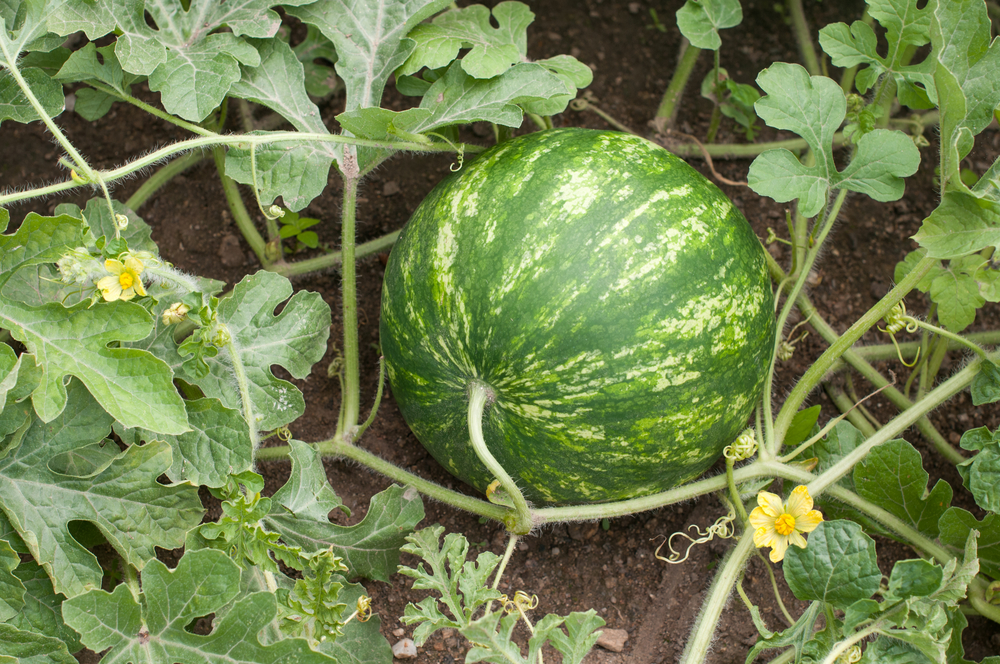
Watermelon season is winding down in Alabama this week. Just like its southern counterparts, north Alabama producers enjoyed a successful season, according Eric Schavey, Alabama Regional Extension agent in Northeast Alabama
“Overall, watermelons in our area, in Northeast Alabama was good,” said Schavey, who serves Blount County, Cherokee County, Cullman County, DeKalb County, Etowah County, Jackson County, Madison County and Marshall County.
“We got a premium price for them. Up until the last 20 days, 15 days, the watermelons, you were getting a premium. The wholesale side of it went down to $3.25, $3.50, depending on what you had. I’m talking about a good marketable, large watermelon; that 20-pound and even getting up in that 30-pound watermelons.”
Crazy Start
Watermelon producers in North Alabama had to overcome challenges throughout the growing season, starting when seed were put in the ground. Schavey said the northern part of the state experienced a frost on May 26. Normally, seed are in the ground way before that. Growers had to wait, and subsequently, the plants were put in the ground late.
It didn’t impact the fruit’s quality, however.
“As far as quality, everything was really good. We didn’t have a lot of stunted melons or odd-shaped melons. We had real good marketable watermelons this year,” Schavey said.
Production in Alabama
Watermelon production is divided between the southern and northern portions of the state. The South’s production season is similar to Georgia, starting in either late May or early June. Growers in north Alabama are about a month to a month and a half behind, says Schavey.
“We have to wait on those soil temperatures. You’re right on the foothills of the Appalachians when you get into my area. It’s very mountainous up in Etowah, Cherokee, DeKalb and even over in Blount County. You get a lot of terrain change. We can get some cool temperatures,” Schavey said.
He estimated that there are at least 600 to 700 acres of watermelons in his region with most being grown in less than 10-acre plots.