COLUMBIA – South Carolina farmers and food processors who want to pursue organic certification may qualify for reimbursement through a grant administered by the South Carolina Department of Agriculture.
Weathers
“Organic certification can help agribusinesses find new customers and expand to new markets, and we’re happy to be able to help,” said Commissioner of Agriculture Hugh Weathers.
The Organic Certification Cost Share Program will reimburse producers and handlers of agricultural products up to 50% of the operation’s total allowable certification costs, up to a maximum of $500 per certification scope: crops, livestock, wild crops, and handling (i.e., processing). The deadline to apply for reimbursement for the current fiscal year is Dec. 18, 2020.
“This program is a big help in offsetting the expenses of becoming a USDA certified organic producer and the yearly inspections required to maintain the organic certification,” said organic beef farmer Leland Gibson of Gibson Organic Farms. “I try to encourage many farmers to get their farms transitioned into organic production, and one common response is that farmers hesitate to get organic certification because of the cost. My response is to mention the Organic Cost Share program.”
SCDA also has three other cost share reimbursement programs available as projects of the USDA Specialty Crop Block Grant Program, including one that offsets the cost of installing an affordable Cool Bot cold storage unit; and two that support businesses through the Good Agricultural Practices (GAP) Audit process.
University of Georgia breeders developed the Orange Bulldog pumpkin.
By Cecilia McGregor and George Boyhan
Cucurbit crops are some of the most widely grown vegetable crops in the Southeast. However, the hot and humid climate is conducive to pest and disease development, which presents a challenge to growers. Cucurbit breeding at the University of Georgia (UGA) is focused on breeding pumpkin, watermelon and squash with excellent fruit quality and enhanced disease resistance.
PUMPKINS
Pumpkins are an important crop in the United States, particularly as decorations during the fall. Unfortunately, pumpkins are difficult to grow in the Southeast because of diseases. There are several diseases (particularly viruses) that affect traditional pumpkins. These diseases are transmitted by aphids in a non-persistent way. This means that as soon as the insect probes the tissue, the virus is transmitted. Control is difficult, because even with 90 to 95 percent insect control, the remaining 5 to 10 percent can effectively infect the crop.
UGA began a breeding program in 1996 with a collection of pumpkin seeds from Brazil. Seed from both elongated and flattened fruit of Cucurbita maxima were obtained and interplanted. Putative hybrids were collected. This began several years of selection for fruit with a round shape, pleasing color and open cavity. These pumpkins have a greater degree of virus resistance compared to traditional pumpkins (C. pepo), so they produce more consistently.
The resulting variety, Orange Bulldog, was released in 2006. Since there was no interest among seed companies, UGA has been handling sales. The primary audience for this variety is pick-your-own and roadside marketers. The vines hold up particularly well into the fall for direct marketers that “reseed” their pumpkin patch with new fruit each day.
Pumpkin research concentrated on developing disease resistance into commercially acceptable pumpkin lines has continued at UGA.
WATERMELON
UGA is also actively breeding for gummy stem blight and fusarium wilt resistance in watermelon. Resistance to gummy stem blight was first described in 1962 when it was discovered in a wild relative of watermelon, Citrullus amarus. This is the same species that was used to breed the fusarium-resistant, non-harvested SP pollinizer cultivars.
Breeding disease resistance into commercial, edible cultivars from this wild germplasm has proven difficult since the wild relative has hard, inedible flesh. This is further complicated by the fact that there are different species of the Stagonosporopsis pathogen that cause gummy stem blight and different races of Fusarium oxysporum var. niveum that cause fusarium wilt. The resistances to these diseases are quantitative, meaning that a single resistance gene does not give field-level resistance to the diseases. All these factors have delayed the development of cultivars resistant to these diseases.
Susceptible (left) and resistant (right) watermelon seedlings infected with gummy stem blight.
The breeding effort at UGA focuses on using modern selection methods to accelerate selection for resistance genes to speed up breeding efforts. Currently, selection is in progress for fusarium race 2 resistance and gummy stem blight resistance.
In addition to these disease-resistance breeding efforts, UGA breeds cultivars specifically for homeowners and farmers’ markets. The focus here is on novel traits like a variety of flesh colors and rind patterns and the egusi seed trait.
Egusi watermelon is very popular as an oilseed crop in many parts of Africa. The seeds are very high in oil (40 to 50 percent) and protein (25 percent) and are eaten as snacks or as a thickener in soups and stews. Egusi seed is large and flat with a unique fleshy outer layer that dries into a very thin seed coat that can easily be shelled. Traditional egusi watermelon has hard inedible flesh, which goes to waste. UGA is breeding egusi watermelon with edible flesh. These plants will produce fruit that pack the health benefits associated with the antioxidants in red- and orange-fleshed watermelon while also being a source of high oil and protein seed.
SUMMER SQUASH
In 2019, UGA started a squash breeding program. This program was launched in response to the severe yield losses experienced by Georgia growers in recent years due to whiteflies and whitefly-transmitted viruses.
The sweetpotato whitefly (Bemisia tabaci) can directly cause yield losses in many different crops due to feeding, but an even bigger cause of yield losses are the viruses it transmits. Sweetpotato whiteflies can transmit more than a hundred different viruses. Cucurbit leaf crumple virus (CuLCrV) and Cucurbit yellow stunting disorder virus (CYSDV) are some of the most important to squash growers.
Commercial squash cultivars have proven to be very susceptible to these viruses, and sources of resistance have not been identified. UGA, in collaboration with the University of Florida, has started large-scale evaluations of squash germplasm from all over the world in search of resistance. Several genotypes with resistance to CuLCrV and CYSDV were identified in 2019 and are now being evaluated further for use in the breeding program.
The UGA cucurbit breeding programs are committed to developing cultivars well adapted to the Southeast, with high disease resistance and exceptional fruit quality for both large- and small-scale growers in the region.
Applications continue to be accepted from fruit and vegetable crop producers looking to participate in the Coronavirus Food Assistance Program 2. Veronica Nigh, economist with American Farm Bureau, encourages producers in Georgia, Florida and Alabama to get signed up sooner rather than later.
“Anytime there’s a limited amount of funds, a lot of folks would be interested in it. You never know how the rules on CFAP 2 are a little bit different. The commodities are a little bit different than the last time. You never know if the changes that have been implemented are enough to bring folks out of the woodwork who weren’t participating in the first program,” Nigh said. “There’s no need to wait. Get on in there and make sure you get applied for the program.”
Fruits, Vegetables, Tree Nuts Included
According to the Coronavirus Food Assistance Program 2 website, more than 230 fruit, vegetable, horticulture and tree nut commodities are eligible for CFAP 2. These includes blueberries, strawberries, pecans, cucumbers and squash.
CFAP 2 follows the first round of CFAP, which had an application period of May 26 through Sept. 11. CFAP 2 has allocated $14 billion to aid producers who continue to face market disruptions and associated costs because of the coronavirus pandemic.
“It never seems to be enough, whatever is allocated. There’s a lot of producers and our industry is one that’s high valued. We hope that it provides the emergency assistance that growers need,” Nigh said. “I think we should look a little bit to the first CFAP program which has yet to reach its full subscription for a variety of different reasons. So far, about $10 billion in support has been provided to cattle, hog, dairy, non-specialty crops, specialty crops and other producers for losses experienced through mid-April. Certainly, the $14 billion would suggest they’re in the ballpark of what makes sense for a limited window of damages, which is what the CFAP programs have to look at.”
Clemson Extension agents provided updates in The South Carolina Grower this week about the status of various crops being produced throughout the state.
Weekly Field Update – 9/28/20
Coastal
Zack Snipes reports, “Cooler temperatures have really helped out the direct seeded fall crops. Carrots, beets, and arugula are looking great around the Lowcountry. We had about two inches of rain so many fields are soggy. I am still seeing high numbers of whiteflies on just about every crop. Whitefly feeding will lower yields so make sure to scout the underside of leaves. I expect to see an increase of disease, particularly downy mildew on cucurbits and black rot on brassicas with the cooler temperatures and abundance of moisture.”
Arugula is looking great in this cooler weather. Photo from Zack Snipes.
Midlands
Justin Ballew reports, “It’s been cooler this week and we got a little rain from the remnants of Beta. Its been several days since we’ve seen the sun, also. Lots of brassicas are being harvested now, and more are being planted. There is a little black rot out there and plenty of caterpillars still. Strawberry plastic has been laid in a number of places and planting is just right around the corner.”
Strawberry plastic being laid in the Midlands. Photo from Justin Ballew.
Pee Dee
Tony Melton reports, “Too wet to plant greens or harvest sweet potatoes & peas. Peas are falling down reducing yield due to the inability to combine harvest. Sweet potatoes are beginning to rot due to the wet soils reducing yields and quality. Farmers are having to mud through fields to harvest pickles. Downy Mildew, Pythium leak, and belly rot are bad!”
Upstate
Kerrie Roach reports, “With the end of September, most all the local farmers markets are finishing up for the season. Online markets and specialty/holiday markets will continue, but many produce growers have finished production until spring. Apples are continuing to be about 2 weeks ahead of schedule with decent crops across the board. Some growers have experienced high rates of fungal pathogens just because of the high rain incidence.”
The October issue of VSCNews magazine covers a variety of topics, including establishing an olive industry in Florida, the potential for hops and a strawberry spotlight.
Currently, Florida has approximately 800 acres of olives under production. Although olives grow well in Florida’s warm climate, little formal research on Florida olive cultivation is available to support industry development. Michael O’Hara Garcia, president of the Florida Olive Council, explains what it will take to establish an olive industry in the Sunshine State.
There is a lot of hype surrounding hops production in Florida. According to Shinsuke Agehara, an assistant professor at the University of Florida Institute of Food and Agricultural Sciences (UF/IFAS) Gulf Coast Research and Education Center (GCREC), Florida hops show potential. The UF/IFAS hops research goal is to develop a viable industry for Florida growers and brewers.
Furthermore, the crop spotlight returns in the October issue of VSCNews magazine, this time focusing on strawberries.
Sriyanka Lahiri, an assistant professor at the UF/IFAS GCREC, shares pests that are problematic to Florida strawberries and effective management strategies.
Also, two new strawberry selections have been approved for release by UF/IFAS and are in the commercialization process. Vance M. Whitaker, an associate professor at UF/IFAS, shares the specifics on the new releases. The first release is an early short-day variety with excellent fruit
shape and quality. The second release is a white-fruited strawberry, it is expected to be the first such variety on the market in the United States.
Severe outbreaks of Pestalotiopsis, a new strawberry disease, has threatened Florida strawberries the last two growing seasons. Natalia Peres, a professor at UF/IFAS, shares control strategies that growers can use to manage the disease.
If you would like to receive future issues of VSCNews magazine, click here.
According to the UGA Extension Viticulture Blog, Pam Knox, UGA Extension climatologist, said the nights of Oct. 2-4 could see temperatures in the 30s across the Southern Appalachians and into northern Georgia and Alabama.
She said while most places won’t have temperatures that get down to freezing, areas that are frost pockets and prone to frost could freeze. A second outbreak could also happen the second week of October.
It’s still a ways off, so the predictions are likely to change somewhat in strength and timing, but something to keep an eye on if you have tender plants that could be impacted by the cold air. You can view these probabilistic threats at https://www.cpc.ncep.noaa.gov/products/predictions/threats/threats.php.
University of Georgia CAES picture/Swelling (galls) produced by the root-knot nematode on the roots of okra grown on an organic farm in Georgia.
By Maria M. Lameiras for CAES News
While weeds and plant parasites are a concern for all agricultural producers, organic farmers are doubly challenged to combat these problems without chemical solutions. Through a grant from the U.S. Department of Agriculture, a University of Georgia researcher is working to discover and integrate biological products and cover crops to control nematodes and weeds in organic vegetable production.
Since joining the UGA College of Agricultural and Environmental Sciences in 2017, assistant professor of plant pathology and UGA Cooperative Extension nematologist Abolfazl Hajihassani’s lab has surveyed more than 400 vegetable fields in 29 Georgia counties for plant-parasitic nematodes and found 10 genera of nematodes. Hajihassani’s group found that root-knot nematode is the most prevalent based on distribution, soil population density and incidence, which is why he has focused his research on this particular pest.
“In certified organic production or on farms transitioning to organic, growers are not allowed to use chemicals. Producers have to use non-chemical procedures, which means that their management approach is very limited,” said Hajihassani, project director for the grant. “In this project we are trying to integrate a couple of techniques that we know have some efficacy as a single technique against nematodes and weeds to see if combining these strategies will result in the best management of nematodes and weeds and a higher crop yield than the growers’ standard practices.”
The three-year, $500,000 grant is part of the National Institute of Food and Agriculture’s (NIFA) Organic Transitions Program (ORG), which is designed to improve the competitiveness of organic livestock and crop producers, as well as those who are adopting organic practices.
Root-knot nematodes can enter a plant’s roots and move through its cells, where they grow, produce eggs and cause the roots to swell. This reduces the plant’s growth and yield potential in a relatively short timeframe and can lead to severe yield losses for organic farmers. South Georgia’s sandy soils allow root-knot nematodes to reproduce frequently because they can move easily through the soil’s loose texture and infect almost all vegetable crops. If the nematodes can’t be controlled in organic production systems, the producer may have to abandon the field and move operations to an uninfected area.
As part of the study, the team will cooperate with Raffi Aroian, a professor of molecular medicine at University of Massachusetts Medical School to identify native strains of Bacillus thuringiensis (Bt) crystal proteins, which have nematicidal tendencies against root-knot nematodes.
“The lab we are working with at the University of Massachusetts Medical School has been working on Bt strains for years, but they have never used these strains against plant-parasitic nematodes. They are going to give us some strains that have had efficacy against nonparasitic nematodes and we will screen those strains in the lab and greenhouse to find out the most effective for root-knot nematode control,” Hajihassani said.
In addition to the Bt strains, the team will research the use of entomopathogenic nematodes (EPNs) — nematodes that can kill other nematodes — and their bacterial metabolites to try to control root-knot nematodes.
“There are two known species of entomopathogenic nematodes that produce bacterial metabolites and we are trying to find out which one of those species or their metabolites have nematicidal efficacy against the root-knot nematode,” Hajihassani said.
Because weed control is another concern for organic production and farmers cannot use chemical herbicides, the team will test several cultivars of summer and winter cover crops in the field for the greatest nematode- and weed-suppressive qualities.
“We know which species and cultivars of winter and summer crops have suppressive effects against different common species of root-knot nematodes, in particular the southern and peanut root-knot nematodes. In field conditions, we need to find out the optimum timing for cover crop termination in our environments to get maximum suppression of weeds and nematodes,” he said. “Understanding the role of all these factors will help us integrate the best practices of cover cropping with the most effective bacterial or microbial combinations and commercial biological products for the control of nematodes and weeds in organic vegetable production systems.”
UGA researchers who are co-project directors on the grant are Ganpati Jagdale, UGA Extension nematologist; Timothy Grey, crop and soil sciences professor and UGA Extension weed specialist; Juan Carlos Diaz-Perez, horticulture professor; and Gregory Colson, agricultural and applied economics associate professor. David Shapiro-Ilan of the USDA Agricultural Research Service is also a co-project director on the grant.
For more information on research being performed by the Hajihassani Nematology Research Group, visit site.caes.uga.edu/nema.
Weather is one of the most important factors affecting crop growth and production.
The Florida Automated Weather Network (FAWN), a University of Florida-operated service, was created to assist growers in making decisions related primarily to irrigation scheduling and cold protection.
Migliaccio
Currently, the FAWN network operates 42 stations located from Jay to Homestead that record and report every 15 minutes on information like air temperature, wind and rainfall. Some stations are even adding data from newer technologies like soil moisture sensors, with plans to expand these offerings to more locations.
During the recent FAWN virtual showcase, growers, industry members, researchers and Extension gathered to learn about the improvements in FAWN data quality and how users can apply the data.
Kati Migliaccio, a professor at the University of Florida Institute of Food and Agricultural Sciences (UF/IFAS), says FAWN is a great resource for general research applications. Using weather data to complement other observations and having the ability to compare historical averages are just a few ways FAWN is used in research.
“Weather data is very core to what we do at IFAS; its core to natural resources, agriculture and urban systems,” Migliaccio said.
Additionally, data from FAWN is used to make irrigation decisions with SmartIrrigation apps. Growers can use these apps to improve irrigation practices using real-time weather data.
Ryan Atwood of Atwood Family Farms was present at the meeting to provide a personal testimony on how he uses FAWN every day to make decisions at his operation.
“A big part of what I think FAWN’s value to growers is, is the fact that you know you have reliable weather data on a system that’s being maintained regularly,” Atwood said.
Earlier this year, FAWN relaunched its website, making it more efficient for users. FAWN is now accessible through mobile platforms, making it even easier for users to access the same information.
Ashley Robinson, AgNet Media communications intern, wrote this article.
Photo courtesy of UGA College of Agricultural & Environmental Sciences.
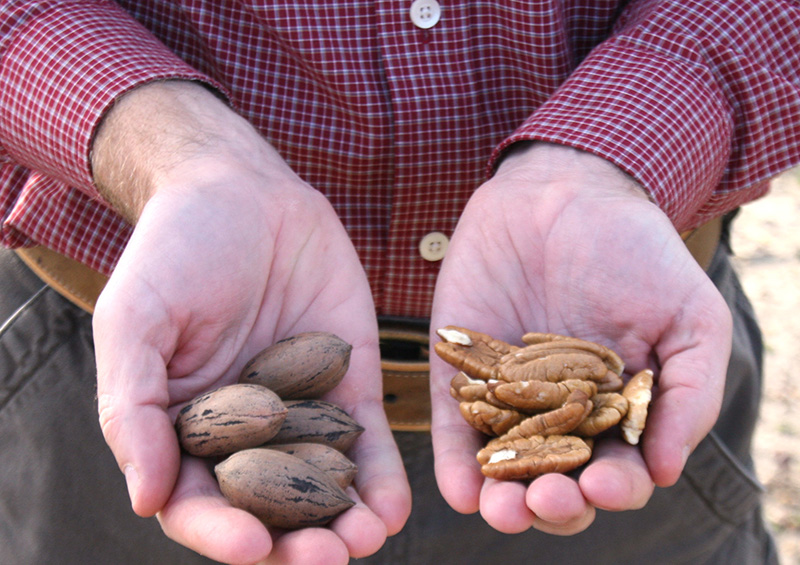
With some certainty, Georgia pecan producers are expecting a bumper crop this year. What remains uncertain is the market price farmers will receive at harvest.
As growers are currently harvesting Pawnees with other varieties expected to be harvested next month, there is still an unpredictability regarding the pecan market, according to Phil Croft, manager of the Hudson Pecan Company.
“Right now, we don’t 100% know this market trend. The only thing we can base it off of is what South Africa on the in-shell market sold into China. Those numbers are somewhere between $4.80 and $4.50 a kilogram, which relates back to $2.05 to $2.25 a pound delivered into China. That’s working it back to the grower level on a premium nut, $1.80, $1.90 a pound for our premium Desirables and qualities of that nature,” Croft said. “If China will come back in this thing and buy strong, I think that may be the bottom of the market, in my opinion. Nobody wants to hear that but at least it’s a starting point, and hopefully, it’s the bottom of it that where we can go up from there.
“I feel like we have an opportunity here for this market to increase pretty quickly if all the ducks line up.”
China
China is the biggest buyer of U.S. pecans. But the relationship between the two countries has been strained recently with the coronavirus pandemic and the trade war that involved tariffs being place on goods by both countries. They established a Phase One Agreement where China would increase its purchases of agricultural products, but it still lags in its pursuit of meeting those purchasing goals.
China’s role as a pecan purchaser cannot be understated.
“They have been some great customers for many years. We hope that will work out. We hope that they will buy Ag products,” Croft said. “We saw a report the other day that the almond market is booming in China and it’s because of lower prices. That’s maybe what it takes to get the market picked back up over there with some cheaper prices initially. Hopefully, it’ll turn around into a positive.”
BOCA RATON, Fla. /PRNewswire/ — Attune Agriculture, the leader in combining agriculture and food science to create products using hydrocolloid technology, announced that its OMRI listed adjuvant, Ampersand®, can reduce the use rate of organic herbicides by 50%, while maintaining the same level of performance as high use rates.
Ampersand is a unique adjuvant formulated with hydrocolloids that provides superior deposition, adhesion, evaporation control and wash off resistance. The result is less drift, more spray to the plant, more product on the plant and more active ingredient in the plant.
Trials with three leading organic herbicides demonstrated that the addition of Ampersand is able to significantly boost the performance of costly active ingredients. Comparison plots were sprayed with tank mixes containing Suppress® at 6% alone and again with a significantly reduced rate of Suppress at 3% plus Ampersand. Both plots showed comparable results in weed control. Trials performed with Homeplate® had remarkable results as well. Homeplate at a high use rate (@ 6%) compared to a low use rate (@ 3%) with the addition of Ampersand had the same level of control. In both trials, Ampersand was able to increase the level of performance of the 3% use rate to match the level of control at the 6% use rate.
Though very different in composition than Suppress and Homeplate, Ampersand’s performance with Weed Slayer® was strong as well. Ampersand with a low use rate of Weed Slayer (@ 1%) showed the same performance as Weed Slayer at a high use rate (@ 2%).
Across the board, the addition of Ampersand allows an organic herbicide use rate reduction of 50%, and can reduce the overall treatment cost by 40% per acre.
“Ampersand allows organic herbicide usage at the lowest labeled rate while achieving performance and cost savings,” says Ed Quattlebaum, Ph.D, Director of Product Development at Attune Agriculture. “Organic growers have limited options, all of which are costly. The addition of Ampersand to these herbicide spray programs just makes economical sense.”
Ampersand is registered for use in all 50 states.
About Attune Agriculture, Inc. Born from over 100 years of hydrocolloid expertise, Attune Agriculture combines deep roots in food science and agriculture to create products dedicated to providing the world with agricultural tools that are both performance-based and safe for the environment and the people who use them. For more information, please visit www.attuneag.com.