Blog

  • Syngenta Insecticide Expert: Growers Need as Many Tools as Possible to Control Whiteflies

    The greatest risk of whiteflies to fall vegetable production are the viruses they can transmit, according to Meade McDonald, Syngenta Insecticide Product Lead. That’s why growers need to utilize every weapon in the arsenal this year to combat a threat that is reaching its highest infestations since 2017.

    “Using multiple modes of action and using as many tools that are available to the grower in his toolbox is really important to prevent tolerance and resistance from manifesting to these pests,” McDonald said.

    Virus Vectors

    Whiteflies can transmit the cucurbit leaf crumple virus and cucurbit yellow stunting disorder virus. According to University of Georgia crop loss estimates for fall 2017, these viruses caused between 30% and 50% of crop loss in squash and cucumbers and nearly 80% of crop loss in snap beans.

    “This is a difficult to manage pest. Growers need as many tools as possible to control this pest. Controlling whiteflies is what I would call, it requires a programmed approach. There’s no one single crop protection product that a grower can use and deploy and have successful whitefly control. It’s going to take multiple modes of actions, multiple sprays,” McDonald said.

    “I think growers in the Southeast are using a soil-applied insecticide; whether it be a neonic or a diamide, it is a great way to start the season strong and keep populations low. That has to be followed by timely in-season foliar applications of products like IGRs or a foliar diamide. Minecto Pro is one of our new products. It’s a great alternative to soil applied neonics.”

    McDonald said a soil application is best followed by multiple foliar applications on 7 to 10-day intervals. That is what it is going to take to keep populations low and prevent viral transmission.

    Environment Conducive to Whiteflies

    Southeast growers can produce a spring and fall crop thanks to an environment that’s conducive to growing crops year-round. However, that makes certain cucurbits like squash especially vulnerable to whitefly pressure.

    When temperatures don’t get cold enough to kill off the wild hosts, as was the case this past winter; then whitefly infestations are primed to be high and out of control earlier than normal.

    “When you think about fall vegetable production in the Southeastern United States, when growers go in and plant fall vegetable crops, they’ve really got to be concerned about whiteflies. They’ve got to be ready to anticipate and be proactive,” McDonald said.

    “The environment, simply in the Southeastern United States for the pest to manifest and for populations to build is just simply ideal. You’ve got ideal host crops almost year-round for whitefly populations not only to survive but thrive. We know these late summer, early fall temperatures enable that life cycle to speed up and populations can really be explosive this time of year, especially.”
  • Water War Arguments to be Held ‘In Due Course’

    arguments
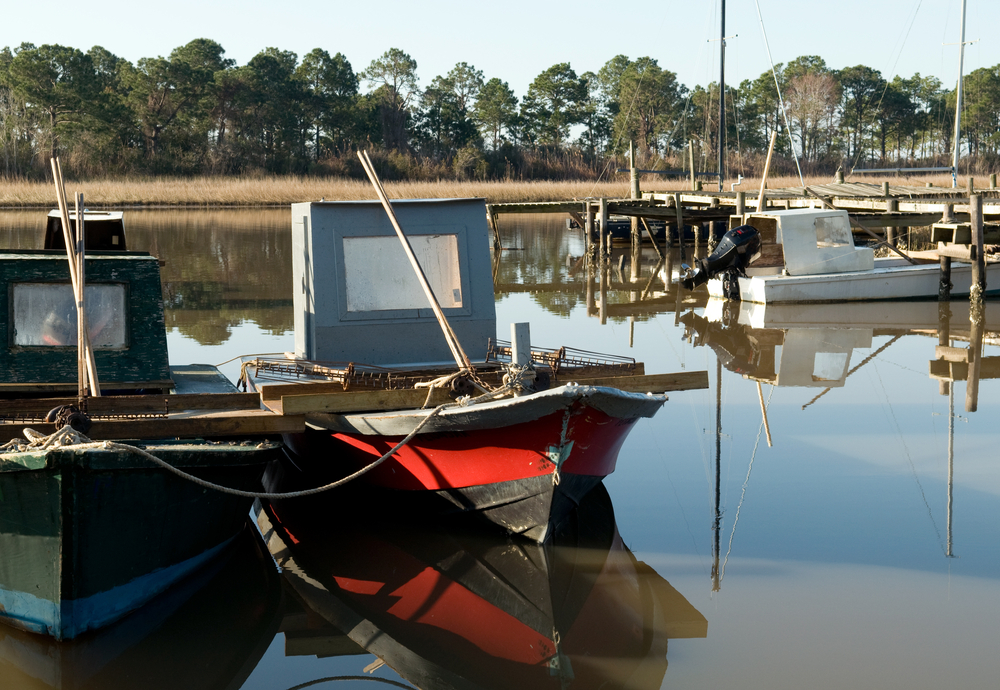
    Apalachicola Bay Oyster Boats

    The U.S. Supreme Court on Monday indicated it will hear oral arguments in the long-running water battle between Florida and Georgia but did not specify when. The court issued an order that said the dispute is “set for oral argument in due course.”

    The case involves divvying up water in the Apalachicola-Chattahoochee-Flint river system, which stretches from northern Georgia to Apalachicola Bay in Franklin County. Florida contends that Georgia uses too much water from the system, in part damaging a critical Apalachicola Bay oyster fishery.

    Florida is seeking an order that could lead to more water flowing south, but Georgia disputes that its water use has caused damage in Florida.

    A special master appointed by the Supreme Court sided with Georgia in December, but justices will have final say. Florida filed the lawsuit in 2013, though the two states have fought for decades about water in the river system.

    Source: News Service of Florida

  • Clemson Extension Agents Provide Crop Updates

    Clemson Extension agents provided updates in The South Carolina Grower this week about the status of various crops being produced throughout the state.

    Weekly Field Update 10-5-20

    Coastal

    Zack Snipes reports, “The cooler weather and lots of rain have brought out the diseases. I saw some watermelon diseases last week including gummy stem blight. We need to protect our foliage just a few more weeks to finish off those melons so keep at the spray programs if you can. Whiteflies continue to hammer us in all crops this fall. Strawberry planting is just about upon us. Rains and wet ground have slowed some farms from laying plastic. Remember that pre-plant fertility and herbicides are critical to spring success. Spartan and Devrinol are the only two pre-plant herbicide options this late in the season. Other products require a 30-day wait period. Let me know if you want me to come check your strawberry plugs before you plant them.”

    Gummy stem blight on watermelon foliage. Photo from Zack Snipes.

    Rob Last reports, “Fall crops are looking good in this area with good development in brassicas and beets. Insect and disease activity remain moderate, however, with cooler weathers and rainfall, scouting will be critical to success for these crops. Adult moths are very active at present, so be on the lookout for eggs and caterpillars. Plastic is down and awaiting strawberry planting in the next week.”

    Growers are ready for strawberry planting. Photo from Rob Last.

    Midlands

    Justin Ballew reports, “The weather has been pretty fall-like and enjoyable over the last week. The cooler temperatures and high amounts of recent moisture have diseases like powdery mildew, downy mildew and anthracnose increasing. Caterpillar activity has increased in the last week as well. Be sure to rotate modes of action when spraying for caterpillars. Strawberry growers are ready to plant and will probably start within the next week.”

    Powdery mildew has been picking up on fall cucurbit crops. Photo from Justin Ballew.

    Sarah Scott reports, “Daytime temperatures have been mild with cooler night temps. Early last week, areas saw anywhere from trace amounts to 2 inches of rain. Low spots in fields may remain wet and this could lead to potential problems.  Peppers are looking good as well as eggplant and late squash. Brassica crops are having some issues with aphids causing leaf curling. Pecans are beginning to fall as well. Scab seems to be particularly bad this year, most likely because of wet weather during critical spray times for fungal management in late June and July. 

    Pecan scab has been rough this season. Photo from Sarah Scott.

    Pee Dee

    Tony Melton reports, “Greens are growing fast with cool temperatures; however, beans, peas, pickles and sweet potatoes have slowed down with these temperatures. Most sweet potatoes need to find a home. We are using a lot of potassium phosphide to keep down root rot especially on greens.  Most growers also use it as a dip for strawberries transplants or put through drip system as soon as they plant. Getting ready to plant strawberries as soon as the transplants get here.”

    Upstate

    Kerrie Roach reports, “Clear skies since Tuesday with cool fall temperatures at night and warm days has consumers looking for all things fall. Growers with pumpkins, gourds, mums, corns stalks, and/or anything fall-related have been busy keeping up with demand. Agritourism demand/opportunities have picked up significantly in the last few weeks. Apples are in peak season with Stayman being one of the current varieties available.”

    Andy Rollins reports, “Upstate peaches are finished up for the year, but muscadines are still being harvested, although slowing some and strawberry planting is in full swing. I was called to examine poorly growing peach trees at an upstate farm. The majority of trees were dying from the most devastating disease of peach ‘Oak Root Rot.’  There was gumming at the base and I was fully expecting a greater peach tree borer problem but closer examination and cutting of the below ground bark revealed the Oak Root Rot fungus growing at the base of the trees. When pushing your older peach trees up be sure to examine the main roots for the sign of this disease which is the white to yellowish fungal growth deep inside of the bark below the soil level. There are a few other fungi that can have a similar symptom but they tend to grow just on dead tissue and don’t grow as deep into the wood of the tree.  There are some things you can do about it, but proper identification comes first.”

    Gumming and yellowish white fungal growth at the base of a peach tree from oak root rot. Photo from Andy Rollins.
    Poor tree growth as the result of oak root rot. Photo from Andy Rollins.
  • First Virtual Georgia Produce Safety Alliance Grower Training

    The Georgia Department of Agriculture Produce Safety Team is offering a virtual two-day Produce Safety Alliance Grower Training via Zoom on Oct. 21 and Oct. 22 from 8 a.m.-noon.

    Any produce grower who grows, packs, harvests and/or holds covered produce, makes more than $25,000 in annual produce sales (on average, based on the past three years of sales), and does not qualify for a Produce Safety Rule exemption is required to attend this training under new federal regulations.

    This PSA Grower Training course satisfies the FSMA Produce Safety Rule requirement outlined in §112.22(c), which requires ‘At least one supervisor or responsible party for your farm must have successfully completed food safety training at least equivalent to that received under standardized curriculum recognized as adequate by the Food and Drug Administration.’

    Further information is available on www.georgiaproducesafety.com. For questions, please email Maggie Brown or Elizabeth Danforth.

  • United Fresh Releases Fresh Facts on Retail Report

    A new report covers the increasing popularity of e-commerce and the unprecedented rise of in-home consumption triggered by COVID-19, including the continued growth of fresh fruit and vegetable sales.

    Pictured is the strawberry cultivar, Keepsake.

    United Fresh Produce Association released its Q2 2020 issue of FreshFacts on Retail this week. The report measures retail price and sales trends for the top 10 fruit and vegetable commodities and other value-added produce categories. The report says growth continues in fruit and vegetables as sales surge across categories driven by consumers seeking versatile cooking and salad staples for home meal preparation, and healthy home snack options.

    Meanwhile, packaged salads are a top-selling organic produce commodity, followed by apples and strawberries. Consumer response to value-added fruit remains muted, while value-added vegetable sales grew. Products typically consumed in group settings declined, while products that are more challenging for consumers to handle and prepare at home drove consumer interest.

    (From the National Association of Farm Broadcasters)

  • UGA awarded $2.7 million grant to fight fungus in broccoli

    UGA photo/Symptoms of Alternaria leaf blight first appear on older leaves as small, dark spots that gradually enlarge with concentric rings. Brassica crops, including broccoli, collard and kale, are all susceptible to this plant disease.

    By Josh Paine for UGA CAES News

    A new multistate project will bring together researchers from the University of Georgia and partner universities to fight Alternaria leaf blight and head rot in broccoli, a plant disease that thrives in warm temperatures and humidity.

    The U.S. Department of Agriculture’s National Institute of Food and Agriculture awarded a $2.7 million Specialty Crop Research Initiative (SCRI) grant to UGA College of Agricultural and Environmental Sciences faculty to study the Alternaria pathogens’ biology, population structure and fungicide resistance.

    Due to developing fungicide resistance, Alternaria blight and head rot have severely impacted brassica production, according to Bhabesh Dutta, an associate professor of plant pathology and UGA Cooperative Extension vegetable disease specialist who is leading the multistate project.

    The team’s research will build on previous surveillance work done in finding fungicide alternatives. Previous efforts to limit losses in fields have not been successful, possibly as a result of recent shifts in pathogen population and increasing resistance against fungicides.

    The disease is a long-term threat that affects all brassica crops, which include cabbage, collards, kale and mustard greens. The fungus causes water-soaked spots on the head of the vegetable and dark, sooty, circular spots whose centers can fall out, leaving a shot-hole appearance.

    The team of research and extension faculty will work to triangulate the disease by characterizing the pathogen or pathogens, host and environment. They will also develop diagnostic tools for identifying Alternaria sp., screen commercial varieties, and evaluate production practices including nitrogen levels and irrigation, which is how the disease spreads. The team will use what it learns to conduct economic assessments.

    “The ultimate goal is to give a practical management option to stakeholders, ultimately limiting losses to this disease,” said Dutta.

    Broccoli is a high-value crop that can be affected by a number of diseases. Head rot has been a particular concern in Georgia since late 2015, but it has been reported up the East Coast since 2013. Economic losses of up to 20% have been reported in some cases.

    “Growers tend to overuse fungicides that are effective and, more often, that leads to the development of resistance,” explained Dutta. “Efforts to limit losses in fields and storage have not been successful, likely due to recent shifts in pathogen population and potential resistance development to ‘Quinone outside inhibitor (QoI)’ fungicides. This project will aid in developing molecular diagnostic tools for detecting QoI resistance in Alternaria, understanding the population structure of the pathogens, and developing management strategies that will reduce losses in broccoli across the production chain, maximizing productivity and profitability.”

    Other UGA faculty members working on the grant are Pingsheng Ji, professor of vegetable diseases and applied microbiology; Andre da Silva, assistant professor of horticulture and Extension vegetable specialist; Tim Coolong, professor of horticulture; and Greg Colson, associate professor of agricultural and applied economics. Researchers from Virginia Tech, Cornell University and University of Nebraska-Lincoln will collaborate with the group.

    An advisory panel of industry professionals, growers and other experts will provide guidance to the project, reinforcing the Eastern U.S. brassica industry as a team.

    The production of brassica crops is a profitable industry for Georgia farmers. According to the UGA Center for Agribusiness and Economic Development, the state farm gate value for cabbage alone was nearly $42 million in 2018. Colquitt County is the largest producer of brassicas in the state, followed by nearby counties including Thomas, Grady, Echols and Tift.

    For more information on the UGA Department of Plant Pathology, visit plantpath.caes.uga.edu.

  • Florida Fruit & Vegetable Association Names New Board Chair, Vice Chair

    MAITLAND, Fla. (Oct. 2, 2020) – The Florida Fruit & Vegetable Association has named Aaron Troyer, president of Troyer Brothers in Fort Myers, as its chair for 2020-22. David Hill, president of Southern Hill Farms in Clermont, was named vice chair.

    In addition, FFVA members voted to appoint three new directors to the board: Jon Esformes of Pacific Tomato Growers, Chris Moore of Alico Inc., and Ron Mahan of Tamiami Citrus. The appointments were made at the association’s board of directors and annual membership meetings on Sept. 29.

    Troyer, who served as the board vice chair for the past two years, said his mission will be to “protect and defend Florida specialty crop agriculture” and to continue work on pandemic-related issues as well as trade relief measures to remedy harm suffered by producers from unfair Mexican trade policies and practices. He praised outgoing Chair Paul Allen of R.C. Hatton in Belle Glade for his service and for presiding during the extreme challenges caused by the coronavirus pandemic.

    FFVA President Mike Joyner said, “Aaron Troyer is an outstanding leader and will do an excellent job guiding FFVA over the next two years as we continue our very important work on trade, workforce, legislation and other issues.”

    The Florida Fruit & Vegetable Association is a full-service organization serving Florida’s grower-shipper community since 1943. FFVA represents a broad range of crops: vegetables, citrus, tropical fruit, berries, sod, sugarcane, tree crops and more. Its mission is to enhance the business and competitive environment for producing and marketing fruits, vegetables and other crops. Follow FFVA on Facebook, Twitter and YouTube.

  • USDA Announces $76.8 Million in Grants to Strengthen Specialty Crop Industry

    The U.S. Department of Agriculture (USDA) Agricultural Marketing Service (AMS) announced on Wednesday it has awarded $72.4 million in grant funding through the Specialty Crop Block Grant Program (SCBGP) and $4.4 million in grant funding through the new Micro-Grants for Food Security Program (MGFSP). Both are authorized by the 2018 Farm Bill and awarded to eligible states and territories through a non-competitive application process.

    SCBGP supports farmers growing specialty crops, including fruits, vegetables, tree nuts and nursery crops. The 56 grant recipients include agricultural agencies and departments in the 50 states, the District of Columbia, and the five U.S. territories. The recipients sub-award projects to increase demand for agricultural goods of value to farmers in their respective state or territory. States are encouraged to award projects pertaining to specialty crop industry issues such as enhancing food safety and improving the capacity of all entities in the specialty crop distribution chain to comply with the requirements of the Food Safety Modernization Act; investing in specialty crop research, including research to focus on conservation and environmental outcomes, developing new and improved seed varieties and specialty crops, pest and disease control; increasing child and adult nutrition knowledge and consumption of specialty crops; and improving efficiency and reducing costs of distribution systems. The grant is awarded for a three-year period beginning Sept. 30, 2020 and sub-awards cannot exceed the award period.

    MGFSP is a new program specifically designed to realize USDA’s commitment to support communities across the U.S. that have significant levels of food insecurity and import significant quantities of food. These grants will assist agricultural agencies or departments in Alaska, American Samoa, the Commonwealth of the Northern Mariana Islands, Guam, Hawaii, and the United States Virgin Islands increase the quantity and quality of locally grown food through small-scale gardening, herding and livestock operations. The recipients competitively distribute sub-awards to eligible entities in communities within their areas that have significant levels of food insecurity and import a significant quantity of food. The grant is awarded for a four-year period beginning September 30, 2020 and sub-awards cannot exceed three years.

    The AMS Grants Division works to improve opportunities for U.S. growers and producers. AMS works with a variety of organizations to support rural America and the nation’s agricultural sector. For additional information, visit the AMS Grants & Opportunities web page.

  • U.S. Sugar Announces 90th Sugarcane Harvest Season

    Clewiston, Fla. – U.S. Sugar announced on Wednesday it will celebrate its 90th sugarcane harvest season, scheduled to start Thursday. In addition, the company released its “State of Our Air” Report to the community describing the safe and successful 2019/2020 sugarcane harvest season. This inaugural report compiles air quality data from the region and confirms the Glades communities’ air is safe, healthy, and clean.

    Buker

    “The Glades communities have some of the best air quality in the state,” said Robert Buker, U.S. Sugar President and CEO. “The health, safety, and well being of our community continues to be a foundational commitment in everything we do. We hope this report will be a helpful resource for the families in our community.”

    The full report, available here, compiles and analyzes publicly available data from two Florida Department of Environmental Protection (FDEP) air monitoring stations in Palm Beach County (one located in Royal Palm Beach and one in Belle Glade) that collect fine particulate matter (otherwise known as PM2.5). The report shows the air quality in the Glades communities was consistently better than suburban and urban neighboring areas.

    • This year, the Florida Department of Environmental Protection (FDEP) announced the “cleanest air on record” and that Florida meets “all ambient air quality standards.”
    • The data show the air quality in the Glades community is categorized as “good,” which is the best air quality classification; the Glades communities’ averages fell well within the required air quality range set by the U.S. Environmental Protection Agency (EPA) and the National Ambient Air Quality Standards (NAAQS).
    • The air in the Glades community is safer, cleaner, and of better quality compared to the West Palm Beach area; average levels of PM2.5 are consistently higher in the West Palm Beach area compared to the Glades communities (Figure 1); the EPA defines particles in the air as particulate matter (PM) and PM2.5 describes fine, inhalable particles, with diameters that are generally 2.5 micrometers and smaller.
    • The Robert Wood Johnson Foundation’s 2020 report continues to show that air quality in the Glades community is better than other areas of the state; particularly more densely populated, Northern communities.
    • Since the start of 2019-2020 Harvest Season, the Florida Department of Agriculture and Consumer Services has introduced two rounds of improvements to pre-harvest sugarcane burns; the most recent round included updated local zones based on community population growth and certification of all burn managers to ensure that sugarcane burning remains a safe, controlled procedure for our workers and our community.

    “At U.S. Sugar, we go above and beyond what is required of us to protect our environment because we live here,” said Michael Ellis, U.S. Sugar’s Vice President of Strategic Environmental Affairs. “Our land, water, air, and natural resources are part of our legacy and promise for the future—something that we are all proud to be part of today.”

    With the 2020/2021 harvest season set to begin – the 90th harvest season for U.S. Sugar – our commitment to sound environmental stewardship remains strong and our commitment to the community remains even stronger.

    U.S. Sugar was founded in 1931 by Charles Stewart Mott, a visionary businessman, entrepreneur and philanthropist.  He combined his interest in agriculture with sound investments in people, science and technology—a strategy that continues to guide the business today.  The heart of the company has always been its family of farmers and its commitment to community. 

  • North Carolina to Continue Under Industrial Hemp Pilot Program

    According to the North Carolina State Extension, the NC Industrial Hemp Pilot Program was set to expire on Oct. 31, 2020. However, Congress passed a law (Wednesday) that allows states to continue their pilot programs until Sept. 20, 2021.

    For the time being the rules for growing hemp, licensing, compliance testing, etc. will remain the same in NC. NCDA&CS has notified all growers who currently hold a hemp license of this update. There is additional detail in the letter NCDA&CS sent to growers, which is posted below:

    “Dear North Carolina Hemp Licensee, Today, the United States Congress passed a continuing budget resolution which included a provision to extend the ability for states to continue operating a hemp pilot program under the provisions of the 2014 Farm Bill until Sept. 20, 2021. This was originally put forward by the North Carolina Department of Agriculture and Consumer Services (NCDA&CS) at the annual meeting of the National Association of State Departments of Agriculture in February of 2020. NCDA&CS and others in NC hemp industry have worked with our NC congressional delegation on this issue since that time and am thankful to them for their attention on this issue. NCDA intends to continue operating our North Carolina Industrial Hemp Pilot Program as we have been until at least Sept. 30, 2021. NCDA&CS does not currently have statutory authority from the General Assembly to submit a state plan to USDA to operate under the Interim Final Rule (IFR) for hemp as issued by United States Department of Agriculture (USDA). Moreover, several provisions in the IFR are problematic for hemp farmers and exceed the resources of NCDA&CS to administer. USDA has reopened the comment period for the IFR and we encourage hemp farmers to submit comments. So, what does that mean for NC hemp licensees? Until at least September 30, 2021, we anticipate operating the NC Industrial Hemp Pilot Program as it has been operated in past years. If your license will expire during that time frame and you want to continue growing hemp, you will need to renew your license with the NCDA&CS Plant Industry Division. If circumstances change, we will provide you with as much notification as possible. NCDA&CS will continue to engage with USDA and other federal agencies on issues surrounding hemp production. We will advocate for reasonable federal guidelines and development of the overall market. Thank you for your continued support of the hemp industry in North Carolina. For new applicants, the Industrial Hemp Commission will resume meeting to approve qualifying individuals for licenses to cultivate industrial hemp.