It’s never too early for Vidalia onion growers to start thinking about bacterial diseases that are problematic this time of year; especially Center Rot.
While Southeast Georgia is the perfect environment for onion production, it also presents different challenges for onion producers. There are many plant diseases that can impact production. According to a UGA Extension publication, during this time of year of seedling and transplant growth, the warmer temperatures favor diseases like Xanthomonas blight and center rot.
Symptoms
Water-soaked lesions that expand and span the length of the leaf blade are foliar symptoms of Center Rot. This leads the leaf to become bleached and blighted. As the disease worsens, there is severe wilting and blighting of the foliage. This can result in death of the plant tissues above ground.
Bacteria move from the foliar tissue into the bulb, causing decay. This has been demonstrated experimentally with Pantoea ananatis, one of four Pantoea species associated with center rot. UGA Extension emphasize the importance of protecting onion leaves, which can reduce bulb rot incidence.
Management
For producers to control Center Rot, they’ll need to apply an integrated approach that targets reducing potential sources of inoculum. This counters the spread of the bacteria, according to a UGA Extension publication. UGA Extension strongly advises onion producers to use certified onion seed to avoid introducing inoculum into the field.
UGA Extension also recommends early-maturing and mid-maturing cultivars. Epidemics are favored by high thrips pressure and hot and humid conditions, which are encountered more with late-maturing cultivars. Early-maturing cultivars are better equipped to avoid conditions that are suitable for bacterial disease development.
Thrips control is also effective in reducing center rot incidence. Disease management options are limited once in season. Weed control can potentially reduce initial inoculum.
When the U.S. government announced its decision to suspend visa processing in Mexico on March 18 to combat the spread of COVID-19, growers around the country immediately expressed concerns that the action could have a major impact on agriculture and the U.S. food supply. The concern, of course, was due to the vital role that foreign workers play in the U.S. agriculture sector, as more than 90% of H-2A workers come from Mexico.
In response to growers’ concerns, the Trump administration provided several flexibilities to the H-2A program, allowing the program to continue without significant disruption.
Updates and initiatives for the H-2A program were discussed during the 46th annual Agricultural Labor Relations Forum presented by the Florida Specialty Crop Foundation. Brian Pasternak, administrator for the Office of Foreign Labor Certification (OFLC) and Shane Barbour, center director of the Chicago National Processing Center, addressed this topic.
According to OFLC, the H-2A program allows agricultural employers who anticipate a shortage of domestic workers to bring non-immigrant foreign workers to the United States to perform agricultural labor or services of a temporary or seasonal nature.
As a result of continued disruptions and uncertainty to the U.S. food agriculture sector amid COVID-19, the Department of Homeland Security (DHS) and U.S. Citizenship and Immigration Services (USCIS) deemed it necessary to temporarily extend the amendments to certain regulations regarding temporary and seasonal agricultural workers, and their U.S. employers, within the H-2A non-immigrant classification.
In the new rule, DHS extended the provision that temporarily allows all H-2A petitioners with a valid temporary labor certification to start employing certain foreign workers who are currently in the U.S. and who possess a valid H-2A status. DHS also extended the provision that allows H-2A workers to change employers and begin work before the new petition is approved by the USCIS.
The final rules are effective through Aug. 19, 2023. However, employers may request the flexibilities under this rule by filing an H-2A petition through Dec 17, 2020.
For more information regarding H-2A program updates, click here.
Ashley Robinson, AgNet Media communications intern, wrote this article.
Fred Gmitter is seen at a research farm at the UF/IFAS Citrus Research and Education Center in Lake Alfred, Florida. He’s looking over a Flying Dragon trifoliate orange, a special trifoliate orange because of its curved stems and thorns. As a rootstock, it behaves a bit differently from other trifoliate oranges because it results in dwarfed trees.
University of Florida scientists achieved a major milestone in their quest to develop a citrus greening-resistant tree by sequencing the genome of a fruit plant that’s a close cousin to citrus trees.
You’d need to print 54,000 pages of copy paper to see the complete genome sequence. But within it, scientists believe they’ve found genes to lay the groundwork to make citrus more tolerant and even resistant to certain diseases, including citrus greening.
UF/IFAS researchers sequenced the genome from trifoliate orange, in collaboration with scientists from the University of California at Berkeley, the U.S. Department of Energy’s Joint Genome Institute and UF’s Interdisciplinary Center for Biotechnology Research. The new genome will help those who breed new citrus trees that will survive under today’s challenging conditions, including invasive pests, viruses and changing climates. Their research provides a powerful new tool to control the deadly consequences of the greening disease, which has severely damaged the state’s multibillion dollar-a-year citrus industry.
“Very importantly, trifoliate orange and its hybrids have genes that can confer high tolerance to citrus greening and resistance to the Asian citrus psyllid, the insect that transmits greening to citrus,” said Zhanao Deng, a senior author on the new UF/IFAS-led study. “This genome can be used as a reference template to sequence widely used trifoliate orange hybrid rootstock varieties.”
“Most people – even citrus growers – rarely see trifoliate orange. This is because they usually are the rootstock part of the tree, mostly underground,” said Fred Gmitter, a UF/IFAS professor of citrus breeding genetics and a co-author on the study.
Trifoliate oranges or their hybrids are grown at nurseries, and farmers use them as rootstock to grow the citrus that’s above ground. Trifoliate orange and its hybrids were used as the rootstock for more than three million citrus trees in Florida alone in 2018-2019, UF/IFAS researchers say.
Trifoliate orange and its hybrid rootstocks accounted for 82% of the top 20 rootstocks used in the 2018-2019 citrus propagation cycle in Florida.
“Our trifoliate orange genome will allow scientists to develop new tools that can more speedily transfer beneficial genes into sweet oranges, grapefruit and breeding of new scion cultivars, which grow above the ground,” Deng said.
“Releasing the first trifoliate orange genome can be valuable for our citrus gene-editing efforts,” Gmitter said. Scientists are using gene editing to produce canker-resistant and greening-tolerant citrus.
“Because of our high-quality genome, re-sequencing of trifoliate orange hybrid rootstock varieties will be much easier, much quicker and much more cost-efficient,” said Deng. “Re-sequencing will enable development of new breeding tools, such as DNA marker-based selection, genomic selection of new rootstock varieties with resistance and tolerance to citrus greening, citrus tristeza virus and citrus nematodes. The new varieties might give higher yield and fruit quality.”
Citrus breeders want to introduce desirable genes from trifoliate orange into sweet orange, grapefruit and other varieties. It took decades to produce the first citrus scion variety (‘Sun Dragon’) from crossing trifoliate orange and transferring some of its genes across multiple generations into sweet orange. With this new information from genome sequencing, that timeline can be dramatically reduced.
This project was funded by two grants from the Citrus Research and Development Foundation (CRDF) and a grant from the USDA/NIFA Citrus Disease Research and Extension (CDRE) program.
Weather has wreaked havoc on one South Georgia farmer’s fall vegetable production.
Sam Watson, managing partner of Chill C Farms in Colquitt County, Georgia, said his crop has not progressed as far along as it should have by this point in the growing season. He’s concerned a potential frost could derail his plans for a productive fall season.
“We’re Oct. 9 and not even halfway with our crop. It’s all going to depend on the weather. If we get an early frost, then we’re all going to be in trouble. It’s not going to matter what the market is because we’re not going to get our crop harvested,” Watson said. “(I’m a) little bit nervous about that. Everybody is just really late.”
Vegetable Production
Watson produces squash, zucchini, bell pepper, cabbage, eggplant and cucumbers in Colquitt County, Georgia, one of the leading vegetable-producing counties in the state. From the first day of planting until now, though, almost a month removed from the remnants of Hurricane Sally, weather challenges have been almost unbearable for producers like Watson.
“Our stuff, it was stressed when we put it out because of the high heat temperatures. Then it got saturated. It wouldn’t quit raining. Then it turned off cold,” Watson said. “When it’s overcast and cloudy, bees don’t pollinate, the stuff doesn’t grow. It’s got to have sunshine. It’s been like the rest of 2020, it’s been crazy.”
The unpredictability of the weather has delayed progress of Watson’s vegetables and has put them at risk if there is an early frost. According to weather.com, the upcoming forecast for Moultrie, Georgia includes low temperatures of 56 degrees F on Friday and 55 degrees on Saturday.
“We should be at the halfway point and blowing and going. We just started (last week) with pepper. I should have been in pepper probably two weeks ago,” Watson said.
“We’ve got some squash that we just started, we’ve got squash that we haven’t even started yet. We’ve got a lot of stuff that we haven’t even touched yet. They’re talking cooler weather (this week). I don’t know, we’re just going to have to see what happens.”
Alabama Department of Agriculture and Industries photo.
MONTGOMERY, Ala.- The Alabama Department of Agriculture and Industries (ADAI) will accept hemp applications from eligible growers and processors/handlers, using a new online application system starting, today, Oct. 13, 2020. Applications are available at agi.alabama.gov/hempapp. The final day to apply for a hemp license is Nov. 30, 2020 by 5:00 pm (CST).
In 2016, the Alabama Legislature passed the Alabama Industrial Hemp Research Program Act, Section 2-8-380 Code of Alabama 1975, tasking ADAI with the development of a licensing and inspection program for the production of industrial hemp. The program launched in 2019, after The Agriculture Improvement Act of 2018 (i.e. Farm Bill) declassified hemp as a schedule I drug and deemed hemp as an agriculture commodity. This legislation defines hemp as all parts of the plant containing less than 0.3% THC, including derivatives, extracts, and cannabinoids.
“As the hemp industry continues to grow in Alabama, critical research data is being collected and evaluated,” said Commissioner of Agriculture and Industries Rick Pate. “This is the department’s third year to administer the hemp program. It has always been our goal to manage the program in a fair and timely manner to benefit Alabama farmers and hemp producers and develop industrial hemp as an alternative crop.”
The 2021 university/college affiliation license application information will be forthcoming before the first week in November 2020.
For more information and updates, please visit agi.alabama.gov/hempapp. ADAI will receive Industrial Hemp applications until 5 pm (CST) on Nov. 30, 2020.
Georgia Fruit and Vegetable Growers Association (GFVGA) board members and staff recently participated in United Fresh’s Virtual Washington Conference.
With travel still limited and much of Washington remaining shut down because of COVID-19, produce industry representatives from across the country gathered virtually on Sept. 21-25 to advocate for fruit and vegetable growers on issues impacting the industry.
Meetings with USDA officials and elected representatives, normally held in person, were conducted via Zoom. While certainly different than face-to-face visits, the format allowed GFVGA members to share concerns on issues ranging from trade concerns, labor and the continuing impact the coronavirus has had on produce production and sales.
GFVGA members thanked the Georgia delegation for their continuing support of initiatives including USDA’s Farmers to Family Food Box Program and CFAP. Georgia growers also urged representatives and officials to bolster their support for fair trade and initiatives aimed at supporting American businesses during these unprecedented times. See the full story in GFVGA’s fall Grower News.
Hops are grown on various sized trellises at the Gulf Coast Research and Education Center in Wimauma, Florida. Photo by Shinsuke Agehara
Craft beer brewed with Florida hops sounds very attractive. But can hops be grown in Florida? Will the crop produce high yields? The most important question is: Will it be profitable?
There are lots of rumors, myths and hype about growing hops in the Sunshine State. That’s probably because hops have never been grown commercially in Florida and other subtropical regions — at least not on a large scale. There simply was not enough information. The profitability of Florida hops is still unknown, but a lot of information is now available from ongoing research conducted at the University of Florida Institute of Food and Agricultural Sciences (UF/IFAS) Gulf Coast Research and Education Center (GCREC).
In 2016, a 1-acre hop yard with a trellis 19 feet high was built. In the first two years, yields were very low. The main reason was premature flowering that limited the vegetative growth. At that time, many plants grew only halfway up the trellis. This happened because the daylength in Florida is not long enough for hops. In general, the critical daylength for hops is 15 to 16 hours. Hops promote vegetative growth when daylength is above this threshold, and plants start flowering when daylength drops below this threshold. The optimal shift from vegetative to reproductive development is key to maximizing hop yields.
UF/IFAS researchers experienced lots of trial and error. In 2018, LED lights were installed in the hop yard. The daylight extension with LED lights was effective in controlling the timing of flowering. In other words, it can trick hop plants into thinking they are in the Pacific Northwest.
All trials were reestablished using tissue-cultured seedlings. Researchers have tested more than 20 varieties and various crop management practices, including fertilization, irrigation, plant spacing and pruning. The hop yard is also being monitored to identify pest issues, including diseases, insects and nematodes.
TRELLIS TRIALS AND HIGH YIELDS
Research continued in 2019, with another 1-acre hop yard built to test different trellis designs and heights. The straight trellis has only one cable per row, which is for installing both LED lights and twines. By contrast, the V-trellis has three cables per row: the middle cable is used to hang LED lights, and the other two are used to install twines. The most notable difference is that the straight trellis can have only two twines per hill, whereas the V-trellis can have four twines per hill.
Supplemental lighting is used to extend daylength hours.
Photo by Shinsuke Agehara
In the spring of 2020, researchers started a new trial to evaluate the two trellis designs with three different heights: 12, 15 and 18 feet. A record high yield was achieved. Cascade hops grown on the 18-foot V-trellis produced 1,130 pounds of dry hops per acre, which is more than 60 percent of the commercial average yield of this variety. Alpha acid of these hops, which is an important quality attribute for bitterness of beer, was at the commercial level or even slightly higher.
It’s important to note that 1,130 pounds per acre is just the first season yield. It normally takes a few years before hop plants can reach the full yield potential, so the yield is expected to go up over time. Furthermore, Florida can produce two crops a year because of the warm climate, whereas other production regions, including the Pacific Northwest, can harvest hops only once a year. Within the next few years, researchers will know if Florida can achieve above-average yields!
In the meantime, the economics of this new crop need to be investigated. The total material cost for the GCREC hop yard establishment was $15,780 per acre for the straight trellis and $18,687 per acre for the V-trellis. Labor and crop management cost information is now being collected. Budget analysis is expected soon and will determine the breakeven price and yield for each trellis design.
DEVELOPING A VIABLE INDUSTRY
In 2019, Florida ranked fourth in the nation for craft beer production, with 329 breweries producing 42.6 million gallons of beer and generating an economic impact of more than $3 billion. The UF/IFAS hops research goal is to develop a viable industry for Florida growers and brewers.
Florida’s hop industry is just forming. There are several growers producing and selling hops to local craft brewers, and the production is expanding. More than 15 craft breweries in Florida have brewed beer using Florida hops.
The viability of this new crop in Florida is still unknown. The hope is that research information can support the development of the new industry and help local brewers make more beer with locally grown hops. The latest hops research updates are available at www.facebook.com/GCREC.Hops.
Recognizing visionary leadership and diversity in educational programming, the U.S. Department of Agriculture’s (USDA) National Institute of Food and Agriculture (NIFA), Cooperative Extension, and the Association of Public and Land-grant Universities (APLU) announced that Jamie Ellis of the University of Florida will receive the 2020 Excellence in Extension Award.
USDA-NIFA and Cooperative Extension have sponsored the awards since 1991. The awards will be presented virtually on Oct. 28.
“Each year, these awards showcase the fundamental, transformative difference Cooperative Extension continues to make in our society,” said NIFA Acting Director Parag Chitnis. “Excellent programs like these are a testament to the true value of Cooperative Extension capacity funds more than a century after the Smith-Lever Act created this unparalleled system of outreach and education that enriches every community across the nation.”
“This year’s National Cooperative Extension Award winners demonstrate educational excellence,” said Mark Latimore, Jr., associate dean and administrator for Extension, Fort Valley State University, and chair of the Extension Committee on Organization and Policy. “They stand as a powerful example of the impact of Cooperative Extension to address real-world problems in communities across the country.”
The Excellence in Extension Award is given annually to one Cooperative Extension professional who excels at programming, provides visionary leadership and makes a positive impact on constituents served.
Jamie Ellis is the director of the UF/IFAS Honey Bee Research and Extension Laboratory, as well as a professor and Extension specialist the UF/IFAS department of entomology and nematology.
The laboratory’s mission is to advance the understanding of honey bees in Florida, the U.S. and globally, with the goal of improving the health and productivity of honey bee colonies everywhere. Ellis advances this mission through basic and applied research with managed and wild honey bees, communicating his findings to assorted clientele groups through diverse Extension programming, and training future generations of bee educators, researchers and conservationists. His work has contributed to a four-fold increase in the number of managed honey bee colonies and a five-fold increase in the number of beekeepers in Florida.
“Dr. Ellis is a model for faculty, not just at our university, but within the land-grant system and across the world,” said Nick Place, dean of UF/IFAS Extension. “He is the go-to person for all things honey bees. Dr. Ellis has gained national and international recognition for his innovative Extension programming, which has allowed beekeepers and other stakeholders to adopt science-based practices that improve the health and productivity of honey bee colonies. Dr. Ellis’ program has also increased the public’s awareness about the importance of honey bees within the food system and how all of us can support pollinators.”
Ellis said he was honored to receive the award.
“Successful Extension programming is always the result of the investment of many people. I am grateful to my UF/IFAS colleagues, my collaborators, and the beekeepers we serve. I am excited that our efforts are making a lasting impact in the communities we support,” Ellis said.
Southeast pecan farmers should be encouraged by market prices as harvest season gets under way across the region. According to Lenny Wells, University of Georgia Cooperative Extension pecan specialist, prices for Pawnee varieties are up from what was originally projected, as are Stuarts.
Plus, there is renewed buying interest from China, which has traditionally been the biggest buyer of U.S. pecans.
“I’m hearing that there definitely is interest from China. They do definitely seem like they’re going to buy and possibly might buy quite a bit, which would help tremendously,” Wells said. “I don’t know that it’s going to help bring prices up all that much. I hope it does. At the very least it should stabilize prices some.
“China wants to buy but they are definitely price sensitive at this point with everything going on. That’s why I say I don’t know that it’s going to make prices go up a lot, but it should stabilize it.”
Pawnee Prices
Wells said that Pawnees, which are typically the first variety to be harvested every year, are selling anywhere from $2.30 to $2.40 per pound, which is quite the improvement from the $2.10 mark that was discussed before the start of harvest season.
“If (producers) have Pawnees, then yeah they probably need to go ahead and sell those. Once the other nuts start coming in, the price of Pawnees usually start to drop some,” Wells said. “So, I would go ahead and start to get rid of those.”
They’re not the only variety selling better than expected, either.
“I’m also hearing a little bit of encouragement on Stuarts. I was told a couple of weeks ago that we may see Stuarts up around $1.50, $1.60, which is a lot better than the $1.20 or $1.30 we were hearing a couple of months ago. So that’s good,” Wells added.
Clemson Extension agents provided updates in The South Carolina Grower this week about the status of various crops being produced throughout the state.
Rob Last reports, “Crops are generally looking very well to press with some welcome rain benefiting fall crops. Whitefly and caterpillar numbers are increasing. With a few foggy mornings happening over the last week be on the lookout for foliar disease pressure to increase given the increase in leaf “wetness”. Plastic and, where applicable, fumigants are applied, ready to begin strawberry planting. Just a reminder to check plants carefully before planting for crown rots and early foliar pest and disease activity.”
Zack Snipes reports, “We had another wet week in the Lowcountry with 2.5 inches of rain collected at the Coastal Research Station in Charleston. Things are looking great for strawberry planting in the next few weeks. Be sure to check your plants and roots before you plant them. Many issues can be solved before plants go into the field. Fall brassicas, squash, lettuce mixes, and root crops are growing and looking great. We still have whiteflies on many farms. On most of these farms, spring fields were not terminated once the crop was done which could have led to the explosion of whiteflies we have been seeing this fall.”
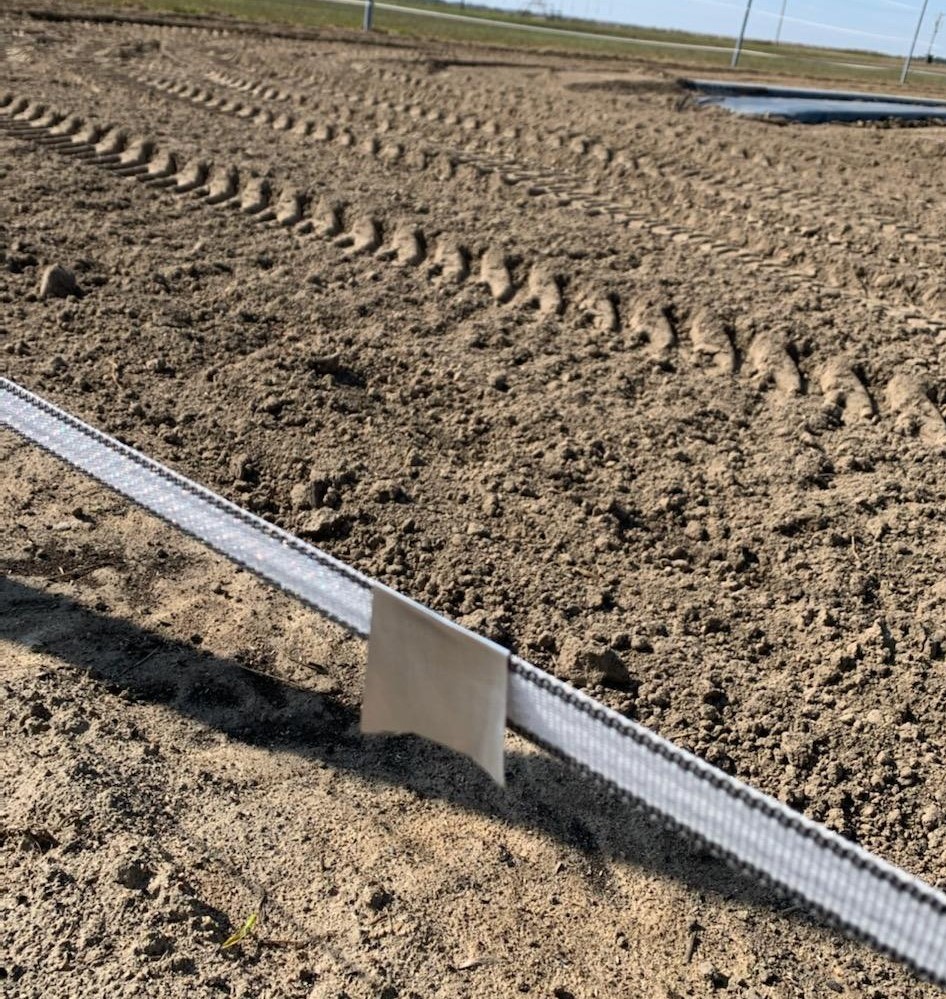
Many strawberry growers are putting up fencing BEFORE they plant which drastically enhances the efficacy of the fencing. This fence is about to be baited with a metal tab and peanut butter. Photo from Zack Snipes.
Midlands
Justin Ballew reports, “Last week was warm and we saw a heavy dew most mornings. We also had some pretty decent rain come through over the weekend. This warm, moist weather has disease increasing fairly aggressively on some crops. Powdery mildew and downy mildew on cucurbits are pretty rough right now. Pecan shucks are opening, and nuts are falling from the earlier varieties like Pawnee and Excel. Strawberry planting should begin this week.”
The shuck has opened on this Excel pecan . Photo from Justin Ballew.
Pee Dee
Tony Melton reports, “Still planting processing greens mostly kale and collards because they are a little more resistant to winter cold. Greens are rapidly growing. I have already seen some Reflex damage from carryover from last year. Personally I think it affects roots and keeps them from taking up nutrients and the damage is very similar to magnesium and boron deficiency – so I always recommend applying Epsom salts and boron to combat the problem and it usually works. Strawberries are going into the beds. Since many are using vapam or k-pam, make sure that enough time is allowed for the fumigate to escape before planting. Many do not fumigate anymore so don’t forget velum, nimitiz, and majestine are available for nematode control.”