RALEIGH – National Forest Products Week is celebrated the third week in October every year, and in celebration, the North Carolina Forestry Association and the N.C Forest Service recognizes the $33.6 billion contribution of the forest products industry to our state’s economy.
Troxler
NCFA Executive Director John Hatcher says, “Forestry is a significant economic driver for our state, ensuring jobs and tax dollars necessary to the livelihoods of the many people who depend on this industry.”
According to economic contribution data from Rajan Parajuli and Robert Bardon with N.C. State University, in 2018 the forest products industry in North Carolina — including forestry and logging operations, sawmills, furniture mills, and pulp and paper industries — was the top employer among manufacturing sectors in the state, supporting more than 150,400 jobs.
The N.C. Forest Service protects, manages and promotes forest resources for the citizens of North Carolina.
“The partnership between the NCFS and landowners is an integral part of keeping forests and our forest products industry productive, vibrant and healthy, ensuring our greatest natural resources are around to benefit our children, grandchildren and great grandchildren,” said Agriculture Commissioner Steve Troxler.
For more information about the economic contribution of the forest sector in North Carolina, visit https://forestry.ces.ncsu.edu/economic-impact-data/. Media interested in learning more about National Forest Products Week should contact Amanda Murphy at amurphy@ncforestry.org.
According to Pam Knox, University of Georgia agricultural climatologist, in her UGA Extension blog, the forecasts are starting to show a strong cold front passing through the Southeast at the end of October.
This will usher in a period of much colder air which could include frost across northern Alabama and Georgia as well as western parts of the Carolinas and Virginia.
Some of the mountainous areas have already experienced frost conditions, but this looks like it could be a much more widespread event. The latest models put the front through the region on Wednesday, Oct. 28, with lingering cold conditions in the mornings for the next few days after the front passes.
It is important to be mindful that this is still 10 days out. Changes in the timing and strength of the cold air are likely, but it is something to watch out for, especially if you have plants that are sensitive to freezing conditions.
Pruning of southern highbush blueberries is required to open the middles of the plants for machine harvesting from the top.
Pruning fruit trees is an important management tactic that producers and homeowners need to implement every year. Industry experts emphasize, though, the importance of growers waiting until the winter dormancy period before beginning the pruning process.
Gray
In doing so, producers will avoid damage from colder temperatures.
“Years ago, we used to prune our peach orchards, for example, in the fall. A lot of our growers did that to get it done. They had a lot of pruning to do. We learned over the years, (though), that makes the fruit trees bloom earlier,” said Gary Gray, Alabama Regional Extension agent.
More Susceptible to Colder Temps
According to a University of Georgia Extension blog, pruning stimulates the growth of the trees. That’s why industry experts insist growers wait until later in the dormant season to prune. If trees bloom early, they’re more susceptible to damage from a potential freeze.
“When we prune, that sets them up to bloom a little earlier and it causes them to be more cold sensitive as a result. The one aspect of that would be, for example, whenever you go in and prune and lets say we’re pruning … after Jan. 1 up until bloom, basically is a good time to get it done…a commercial grower who has a lot of trees, he can’t wait too late to get it done,” Gray said. “There’s a risk that if we had a freeze immediately following or really cold weather immediately following pruning that we might get increased damage on those trees.”
If growers wait until later in the dormancy period, it reduces the risk of being impacted by freezing temperatures since the weather starts to warm with the impending arrival of spring.
Why Prune?
UGA Extension says pruning is one of the most important cultural practices for maintaining woody plants. For fruiting plants, like peach trees, pruning plays an important role in improving overall fruit quality, primarily by increasing light penetration into the tree. But proper pruning requires understanding of how plants respond to the different pruning cuts.
That’s why it is essential that growers wait as long as possible before implementing the pruning process.
“If a grower or a home (owner) can wait, the later those trees are going to bloom. You’re not promoting the dormancy breaking process that happens when you prune. For example, if the buds are still dormant, we’d like for them to stay that way to reduce our risk of freeze damage in the spring,” Gray said.
WASHINGTON, DC – Rep. Doug Collins (R-Ga.) joined Rep. Austin Scott (R-Ga.) and 31 of their colleagues in sending a letter with bipartisan support to U.S. Trade Representative Robert Lighthizer encouraging the Administration to prioritize reducing India’s tariffs on American pecans as trade negotiations continue.
“As you may know, American pecan producers have faced many challenges due to rising imports from Mexico, Chinese tariffs, natural disasters like Hurricane Michael, and the COVID-19 pandemic,” they wrote. “Gaining access to new markets for pecans will help ease the pain while orchards are replanted and a trade deal is negotiated with China.”
India’s current tariff rate for U.S. pecans is 36%, much higher than its 10% rate for pistachios and almonds. Lowering these high tariffs will allow American pecan farmers to compete in this important market.
“Lowering the tariff on pecans would provide the Indian people with more economical access to tree nut varieties, while providing a much-needed economic boost to rural America,” they continued.
UGA CAES photo/A trio of winged fire ants perched on a branch.
By Sean Montgomery for UGA CAES News
A unique study conducted by University of Georgia entomologists led to the discovery of a distinctive supergene in fire ant colonies that determines whether young queen ants will leave their birth colony to start their own new colony or if they will join one with multiple queens. Researchers also found that ants were more aggressive toward queens who don’t possess the supergene, causing colony workers to kill them. This critical finding opens the door to new pest control methods that may be more efficient in eradicating problematic fire ant colonies.
“Learning about the way fire ants behave is very important baseline information,” said Ken Ross, a longtime professor of entomology at the university. “This information is key to helping us manage pest populations and predict what dissimilarities can happen in their environment.”
What is a supergene?
A supergene is a collection of neighboring genes located on a chromosome that are inherited together due to close genetic linkage. Studying these unique genes is important to understanding the potential causes for differences among the social structure of fire ants, specifically for controlling the species and building upon the existing knowledge base.
Researchers focused on young queen fire ants embarking on nuptial flights. They compared the supergene’s impact on the fire ants’ two primary types of social structures: monogyne, which is reproduction from queens that form a new nest, and pologyne, reproduction from queens that join an existing nest.
Ross initially worked alongside colleagues in his lab to discover a remarkable example of genetically encoded differences in social organization within the fire ant species Solenopsis invicta. The next step was to understand how these genetic differences result in complex behavioral and physiological variations among ants from single queen colonies versus colonies with multiple queens. Compounding this knowledge helps scientists further understand patterns of development in the species, increasing alternatives to combat invasive populations.
Led by a pair of UGA entomology graduate alumni, Joanie King, who earned her master’s degree in 2017, and Samuel Arsenault, who earned his doctoral degree in 2020, the team developed an experimental design that utilized a collection of samples from two fire ant organs — brain and ovarian tissues — and the complete range of social chromosome genotypes and social forms within this fire ant species.
Scientific Methods
The innovative study incorporated various scientific methods, leading to a collaboration of tools and resources throughout many different areas of the institution.
“UGA was a very supportive environment to conduct this research,” said Brendan Hunt, associate professor of entomology. “We received help preparing samples for RNA-sequencing from Dr. Bob Schmitz’s lab in the Genetics department, performed the sequencing at the Georgia Genomics and Bioinformatics Core, and utilized computational resources from the Georgia Advanced Computing Resource Center to analyze the data.”
These types of student-led projects give young researchers the chance to grow in a hands-on environment with mentorship and guidance from scientists with proven track records in the field.
“The graduate students gained experience that helped them transition to the next stages of their careers,” said Hunt. “Both have gone on to continue their studies of ant genetics.”
After earning their degrees and completing the research at UGA, King began pursuing a doctorate at Texas A&M University to study alongside Edward Vargo, and Arsenault works as a postdoctoral researcher with Harvard University’s Buck Trible Lab.
To read the full published research, check out the Wiley Online Library digital archive. For more information on the UGA department of entomology, visit ent.uga.edu.
University of Georgia photo compares Pawnee varieties to Desirables and Stuarts.
Pecan producers will soon be planting trees throughout the Southeast. But first, growers must decide what variety they’re going to plant.
Scab susceptibility is the No. 1 factor that should influence what variety producers plant this year, according to Shane Curry, University of Georgia Appling County Extension Agriculture and Natural Resources agent.
If growers are going to plant a variety like Cape Fear, it is going to require a high input of spray applications to protect against scab disease. If producers want low input varieties, they can choose Avalon, Excel or Lakota. Those varieties don’t require as much spray applications.
Producer’s Preference
It’s just a matter of how much time a grower wants to devote to taking care of their trees and whether they possess the spray equipment to make the necessary applications.
“They definitely have a lot they have to consider. Or I guess really, one thing in particular, and that’s are they going to be able to spray as far as what we would say a high input of sprays from a fungicide standpoint or are they not going to be able to do that?” Curry said.
“Obviously, if somebody is planting 50 trees, they’re probably not going to go buy a $20,000 or $30,000 sprayer, and some of those even cost more than that. Money’s just not going to work out on the end in small acres. A lower input variety would be more of the way to go. If someone is set up to spray, meaning they already have them or they’re going to put in enough to justify the equipment, they’ve got a few more options.”
Early Varieties
Lakota and Pawnee are the two varieties that produce a crop the earliest, which might generate a higher market price. However, Pawnee is very susceptible to scab disease, so it will require a high input spray program.
“If pecan prices are high and quality is great, we can offset those costs. Every year (though) that’s not the case,” Curry said.
Curry said planting is normally done during December and January when the trees are dormant.
RALEIGH – The N.C. Department of Agriculture and Consumer Services announced the recipients of more than $1.25 million in funding from the USDA Specialty Crop Block Grant Program. The funding will be used for projects that enhance the quality of specialty crops grown in North Carolina.
Troxler
“North Carolina is one of the most agriculturally diverse states in the nation, and much of that has to do with the variety of specialty crops we are able to grow,” said Agriculture Commissioner Steve Troxler. “This year, 12 projects were selected that focus on pest and disease control, improved breeding and branding initiatives. These projects seek to improve specialty crops and strengthen our agricultural economy.”
Grant proposals were submitted by nonprofit organizations, commodity groups, government agencies and universities. The following organizations and projects received funding:
N.C. A&T State University – Bianchetto Truffle Production by Small Farmers; Micropropagation of Disease-Free Hazelnut for Truffle Production;
N.C. Department of Agriculture and Consumer Services – Spotted Lanternfly: A Threat to North Carolina Agriculture;
N.C. Potato Association – Continuing Expansion of N.C. Potato Markets;
N.C. Sod Producers Association – N.C. Sod Brand Awareness Campaign;
N.C. State University – Breeding Tomatoes for Spotted Wilt Resistance; Drone Use to Improve N.C. Pumpkin Production; Genome Editing for Superior Christmas Trees; Improved Management of Primocane-Fruiting Blackberry; Management of Grape Trunk Diseases; Managing European Pepper Moth in Nurseries;
N.C. SweetPotato Commission – Controlling Root-Knot Nematode in Sweet Potatoes.
The Specialty Crop Block Grant Program is administered by the department and funded by the U.S. Department of Agriculture under the 2018 farm bill. More information about the program is available at www.NCSpecialtyCropGrant.org.
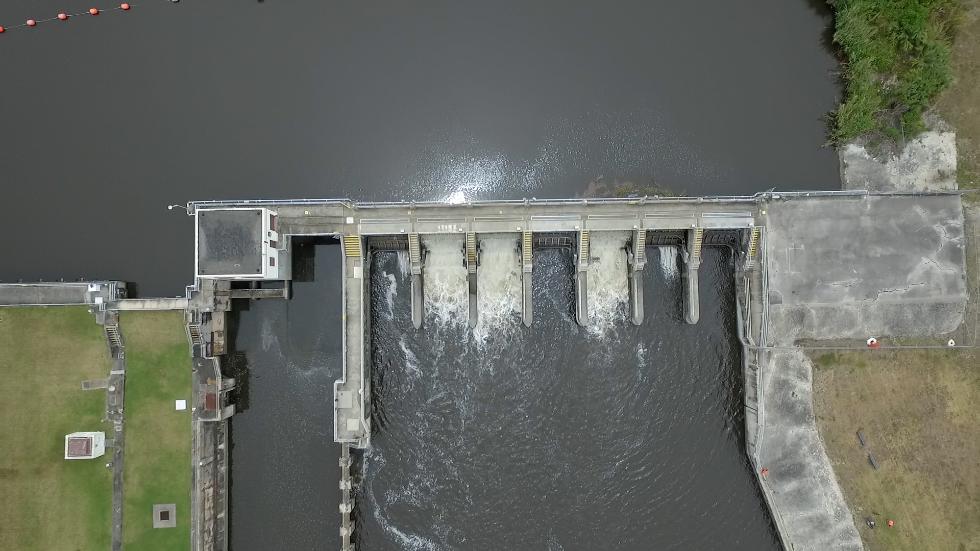
(NSF) — Measures are in place to offset potential blue-green algae blooms after the U.S. Army Corps of Engineers started Wednesday to schedule water releases from lower Lake Okeechobee, according to the state Department of Environmental Protection.
A news release late Wednesday said the department and the South Florida Water Management District are prepared to use “innovative technology” if needed and noted that algae bloom conditions on the lake have improved in recent weeks. “Harmful algal blooms have a debilitating effect on our ecosystems and our communities,” Gov. Ron DeSantis said in a prepared statement. “That is why, for the first time, I made it a priority to secure dedicated funding to deploy innovative technology to mitigate blue-green algae blooms.”
On Wednesday, the U.S. Army Corps of Engineers Jacksonville District announced it would start releasing water from the lake as heavy inflows from Central Florida and rains across South Florida have caused the lake to reach 16.21 feet, a 1.33 foot increase over the past 30 days, while six weeks remain in hurricane season. The water releases will go through the Moore Haven Lock and Dam on the southwest part of the lake, and the St. Lucie Lock near Stuart. Such releases are closely watched because of harmful algae blooms that have occurred in the past in waterways to the east and west of the lake.
The releases will be evaluated weekly and adjusted as conditions evolve, the Army Corps said. “We haven’t made large volume releases from Lake Okeechobee since March 2019, but the rapid rise in the lake level combined with an already active hurricane season that lasts until Nov. 30 has left us with no options in ensuring the safety of those living and working around the Herbert Hoover Dike,” Col. Andrew Kelly, Jacksonville District commander, said in a statement.
The state allocated $10 million in both the current budget and in the 2019-2020 budget to invest in technologies to detect and combat algae blooms.
According to Georgia Farm Bureau, Georgia pecan corn, hay, peanut, oat and wheat producers are set to harvest significantly larger crops in 2020 than they did in 2019, according to the October Crop Production Report from the USDA’s National Agricultural Statistics Service.
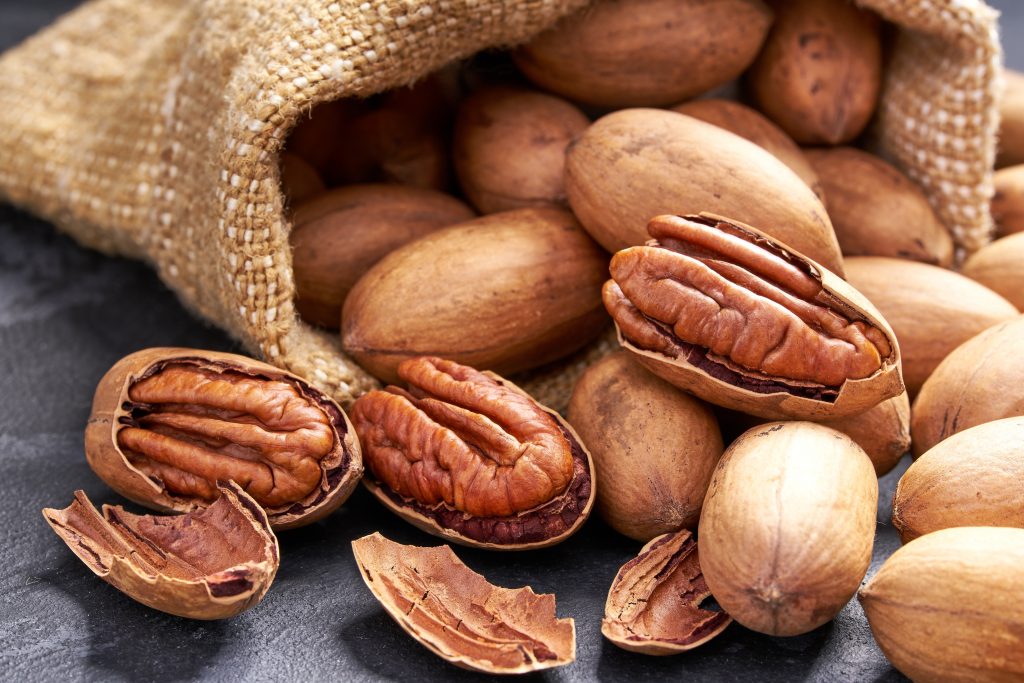
NASS forecast Georgia pecan production in 2020 at 125 million pounds, an increase of 71% from 2019. If realized, this would be the state’s largest crop since 2007.
Georgia corn growers are forecast to yield a record-high 182 bushels per acre. Corn for grain production in 2020 is forecast at 69.2 million bushels, up 24% from 2019.
Hay producers in Georgia are expected to produce 1.8 million tons in 2020, up 19% from 2019.
Alabama farmers interested in producing blueberries or any other containerized plant are encouraged to plant now, says Gary Gray. The Alabama Regional Extension Agent emphasizes the importance of keeping them watered, however.
Gray
“I do prefer now. If you’ve got containerized plants, plant them now and they’ll have a head start on spring. They’ll be ahead of the game, as opposed to, lets say you’re planting them in February or March,” said Gray, who also emphasizes the importance of plants being watered consistently, especially if there are prolonged dry conditions.
“In October, if we’re dry and we are right now, you’re going to need to keep them watered because we’re still hot and dry. Hopefully, it won’t be long and that’ll be a different situation.”
Current Weather Situation
According to the US Drought Monitor, parts of Alabama are classified as “D0” or abnormally dry, including Choctaw County, Sumter County and Pickens County in the western part of the state; and Tuscaloosa County, Jefferson County and Walker County in the central part.
Gray said if growers wait until the spring to plant, they risk the plant succumbing to the hot temperatures when the young plants are in the early stage of production. He estimates that growers have a little more than a month left to plant this fall.
“Our soil temperatures are still warm. We’re not in the heat of summer, although we’ve got some pretty warm days right now. But getting into November for example, we’re usually past all that heat, but we still have warm soil temperatures,” Gray said.
“So, over the next six weeks, we will have some good planting time. Now, if I was planting blueberries, whether you plant them in the fall or spring for example, you definitely want to irrigate those especially in the first year, because they will die on you. A blueberry plant will dry out and die pretty quick. It’s very important to make sure you’ve got those irrigated, especially in that year of establishment.”