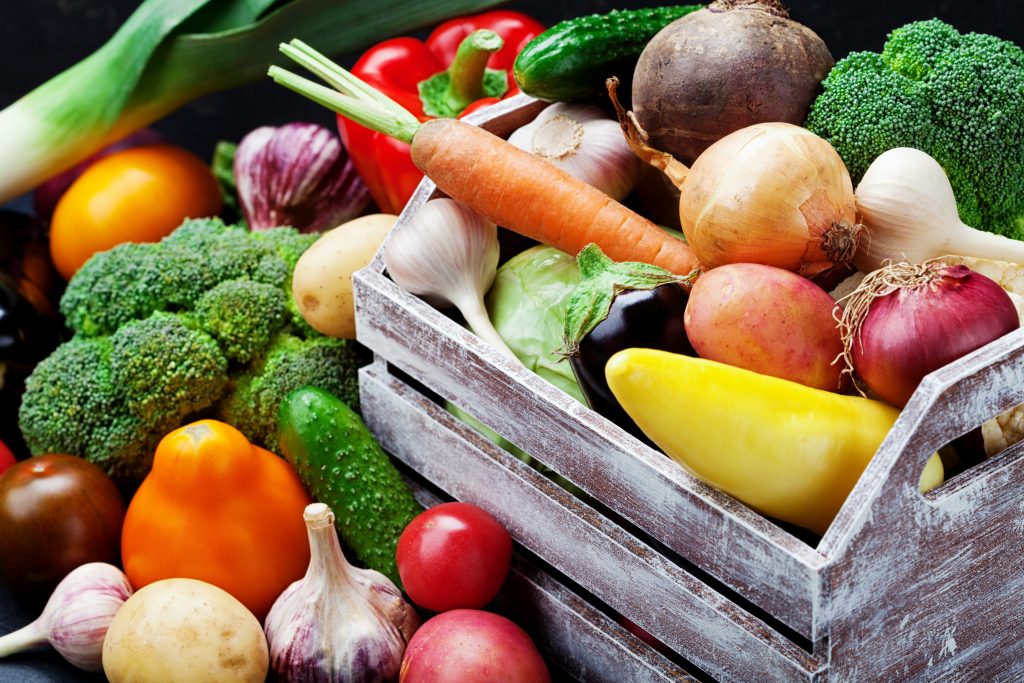
Alabama producers who get certified organic between Oct. 1 and Dec. 15 are eligible for reimbursement from the Alabama Department of Agriculture and Industries.
Farmers would be eligible to receive 50% of certification costs, up to $500. Those growers interested in recouping some of those expenses need to apply by Dec. 31.
“That’s what makes it a little different than other cost-sharing programs is instead of them giving you the money beforehand, the farmer goes through basically the whole process; they have to go get certified and have people come look at their area and get certified organic, pay that fee. Then they reimburse you up to $500 on that fee,” said Jessie Boswell, Alabama Regional Extension agent, who specializes in commercial horticulture and farm and agribusiness management.
“I do think (organic production has) become more popular. I know a lot of farmers that grow organic, they’re just not certified organic. It does cost so much to get certified organic. I think this program is just to make it easier to become certified. It’s kind of taken away that little bit of a barrier for the producer,” Boswell said.
“They want people to become certified because that’s better branding for everyone and helps keep track of it. People have a little bit more faith, I believe, in certified organic, something that’s done through an organization that’s officially federally checked.”
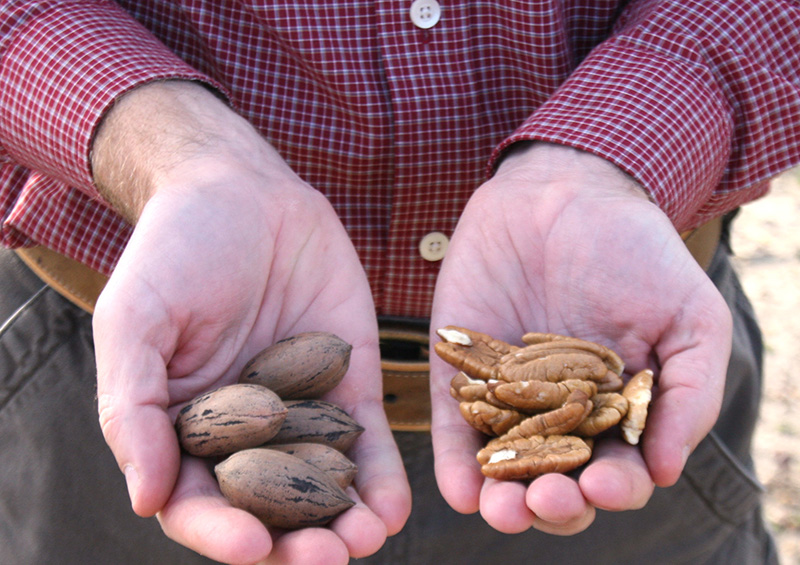
Alabama Extension Photo shows pecan emerging out of its shell.
Pecan prices are devastatingly low for Georgia producers. But how low are they compared to what farmers are used to this time of year? South Georgia pecan farmer Randy Hudson puts it in perspective.
“We’re seeing prices anywhere from 30% to 50% less than what they’ve been the last three years,” Hudson said. “It makes a big difference. Of course, the expense of growing pecans is a very critical issue here. The expense of growing pecans has not been any cheaper, although, we have seen prices on the fuel side and there have been some prices that have gone down in other areas.
“The production costs are still pretty high. Fixed and variable costs are running over $2,000 an acre. You’ve got a lot of expense in pecans. These low prices make it very difficult to be able to pay your bills.”
USDA Pecan Report
Following the release of the USDA Pecan Report that was released last Tuesday, prices ranged anywhere from 70 cents to 75 cents per pound for Stuart varieties to Sumners that were selling for $1.30 to $1.41 per pound (nut count 50-60) with meat yield 52% to 54%. Even Desirable varieties that did not have to overcome heavy scab disease pressure this season were selling for just $1.35 to $1.40 per pound.
“The reality is Georgia has a really big crop. The demand over the last few years has been reduced by the fact that the China tariffs increased to a point that China consumption has gone well down on pecans. We’re in a cycle where we may see reduced prices until we get consumption back up to a point that it would support higher prices,” Hudson said.
“I personally think that after this election settles out, we may see a little firmness move into the market, I hope so. I think a lot of the bigger growers are counting on it. For the most part, there’s not a lot of nuts moving right now other than yard crop and maybe some small growers that don’t have the input costs of the bigger growers. There’s not a large volume of pecans that’s actually being traded right now. There’s a lot of pecans being held.”
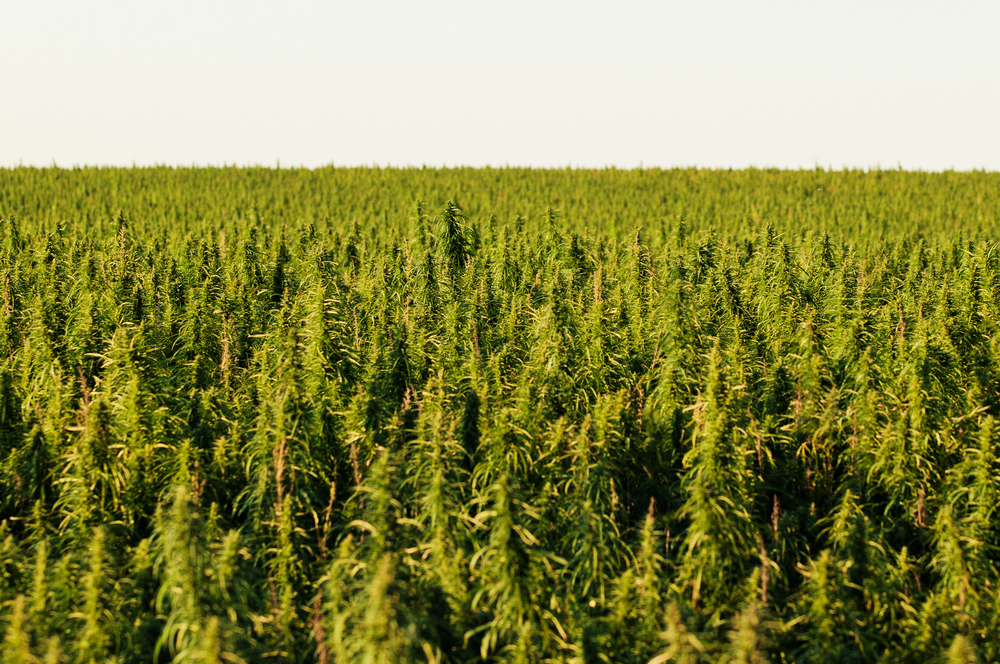
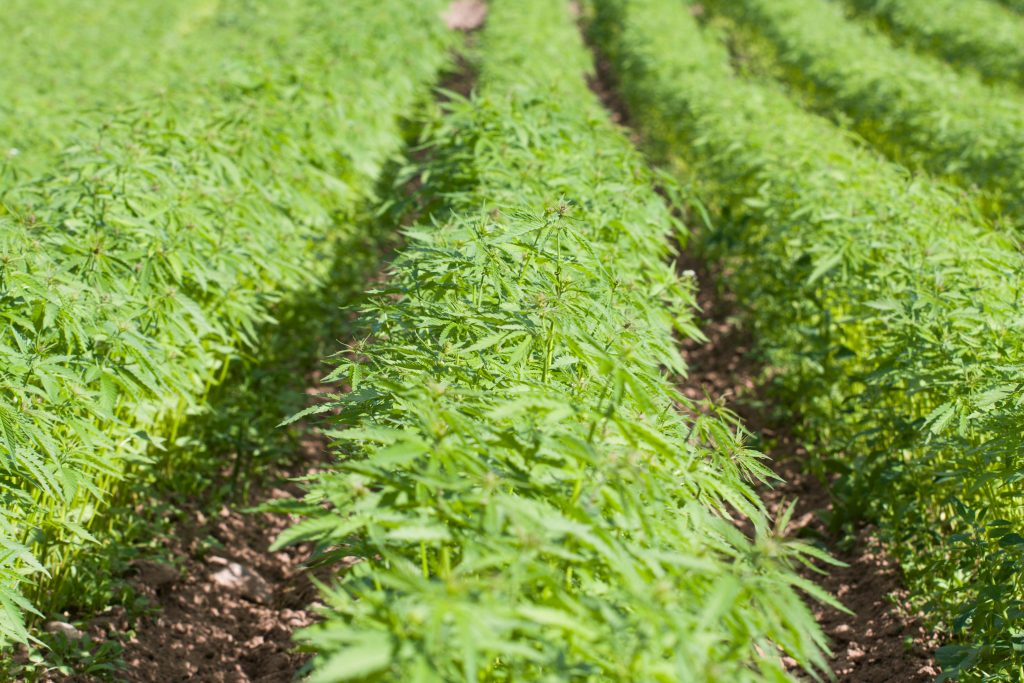
As the University of Florida Institute of Food and Agricultural Sciences (UF/IFAS) Industrial Hemp Pilot Project research continues, growers around the state have begun growing hemp on their own farms. Researchers from the UF/IFAS Mid-Florida Research and Education Center (MREC) in Apopka have important considerations for Florida growers contemplating or currently growing hemp. Research lessons learned and new findings are the focus of this article.
FLOWERING REQUIREMENTS
Understanding hemp genetics, specifically flowering requirements, before you plant is vitally important.
Hemp is predominantly a short-day, photoperiod-sensitive plant. In controlled environments like greenhouses, hemp is commonly grown under 18 hours of light to keep plants in a vegetative phase and then transitioned to 12 hours of light to initiate flowering. Supplemental lighting is necessary to maintain plants in a vegetative state when natural daylength is below the daylength that initiates flowering. Photoperiod requirements vary among hemp varieties and cultivars.
Genetics determine whether flowering in a particular variety or cultivar is daylength dependent or daylength neutral (known as autoflowering).
Daylength-dependent varieties and cultivars flower when daylength shortens to a critical threshold and triggers flowering. This is somewhere between 12 to 15 hours of daylight, depending on the variety or cultivar. Florida has between 13 to 14 hours of daylight on the longest day of the year, the summer solstice on June 21, which limits optimal planting time to within a few weeks of the solstice. Beyond optimal planting dates, plants can reach a desirable size if grown vegetatively under lights for three to six weeks prior to transplanting or removal from supplemental lighting. However, this is dependent upon the growth rate and plant architecture of the variety or cultivar.
Daylength-neutral or autoflowering varieties and cultivars will flower after a specific maturity time, commonly 30 to 50 days after sowing. Autoflowering hemp plants are generally smaller and can be planted at higher densities, with some reports of seeding rates of up to 26,000 plants per acre.
Take time to learn what the early stages of flowering look like so you can accurately track flower development. Flower bulking is noticeable starting around two to three weeks.
Weekly or twice weekly, sampling of upper plant flowers and other plant tissue should be conducted after flowering has begun. Sample to ensure the crop does not exceed the 0.3 percent limit for total Delta-9 THC, commonly known as “going hot.” High floral density can be achieved by six to eight weeks after floral initiation.
This illustration is representative of one cultivar’s flowering process. The transition can appear different across cultivars.
Source: UF/IFAS Industrial Hemp Pilot Program
Most high-cannabinoid hemp cultivars are dioecious, meaning plants are either male or female. Only female hemp plants produce desirable flowers and high-cannabinoid extract. When fertilized by male pollen, female plants produce seeds and produce less oil. It is critical to determine plant sex when cultivating essential oil-type hemp to prevent accidental production and pollination by male plants, which would reduce high-cannabinoid production ideal for CBD and CBG products.
PEST MANAGEMENT
Consider pest management early and evaluate pest pressure in your hemp crop often.
You will encounter pests within your hemp crop. Commonly found pests include aphids, mites, arthropods (grasshoppers) and worms (tobacco budworm, corn earworm and beet armyworm).
Weekly scouting for pests is recommended with special attention being made during flowering. Worm pressure is most noticeable during flowering and can devastate a hemp crop. If you identify your plants transitioning, be prepared for worm pressure.
Pesticides available for use in hemp are limited. UF/IFAS recommends testing approved pesticides on a few plants to see if the products cause harm before treating the entire crop. Growers will want to be prepared to spray as soon as they see a need, so conducting this testing before a problem arises is critical. Since there are a lack of conventional pesticides available for use in hemp, be sure to know what pest control products are approved by the Florida Department of Agriculture and Consumer Services.
Fungal issues in hemp have been observed both in greenhouse and field trials.
IRRIGATION AND FERILIZATION
Hemp needs adequate water for optimal growth but does not like “wet feet.” Hemp sitting in water for just a day or two can promote virulent fungi and kill plants.
Selection of appropriate growth media or field space is critical to keep plants healthy. Keep in mind that hemp cultivars have varying water demands and tolerance. Dialing in your irrigation will be critically important for success.
Preliminary findings for greenhouse-grown hemp suggest that plants can be grown in a wide variety of substrates. Hemp in container production seems to favor substrates with greater porosity (air space). Plants perform poorly in substrates that stay too wet, as root rot has been observed in other substrates.
If fertigating, low fertigation on a consistent basis is advised to reduce leaching through the soil.
In potted studies, significant losses were seen at soil electrical conductivity of 1.9 or greater. If fertigation is not possible, consistent results can be achieved with appropriate amounts of granular fertilizer.
ADDITIONAL ADVICE
If taking vegetative cuttings of the crop, the selection of proper rooting media is critical. Always use a rooting hormone to increase rooting success. Hormone concentrations that are too high can reduce rooting success; 1,000 parts per million indole-3-butyric acid tends to work well.
Florida has unique growing conditions and pressures that make producing any new crop a challenge. Along with UF/IFAS Industrial Hemp Pilot Project information, rely on those successfully growing hemp in your area to provide data-driven and specific production advice. If you have not yet begun to grow hemp, consider the rules and regulations as well as the inherent risks of growing any new crop.
Hemp production lacks a body of knowledge validated by years of scientific research and data, much of which the UF/IFAS Industrial Hemp Pilot Program actively seeks to develop. UF/IFAS researchers recommend growers make hemp cultivation and management decisions and choose genetics based on information appropriate to their region and backed by science.
UF/IFAS Extension agents across the state are available for support and to answer questions tailored to your region and farm. The UF/IFAS Industrial Hemp Pilot Project website (programs.ifas.ufl.edu/hemp) is updated regularly with the latest research results and ways to learn more about growing hemp in Florida.
Acknowledgments: Steven Anderson, Brandon White, Brian Pearson and Roger Kjelgren contributed to this article.
Farm Share, a nonprofit organization that distributes food to those in need, is looking for Florida farms with bulk produce available for purchase immediately. The organization received funding from the CARES Act to use for food purchases for distribution to families affected by the pandemic.
If you have bulk produce available for purchase, contact John Delgado, Farm Share’s inventory operations manager, at 786-261-7907 or by email at John@farmshare.org.
FLORIDA. – The fall crop season is underway in Florida and over the next few months, an increase in the farmworker population will help plant, maintain, and harvest our crops in the Sunshine State. Agriculture is an essential industry where farmworker safety is paramount to the successes underlying timely and efficient crop production activities.
For the first time, free online resources along with a required certification course are also available in Spanish, putting safety in the hands of non-English-speaking agricultural workers and pesticide handlers through a statewide program led by the University of Florida Institute of Food and Agricultural Sciences (UF/IFAS) Extension.
The program, UF/IFAS Extension Farm Labor Education, is part of UF/IFAS Extension Online Learning, is a central source for online training and professional development opportunities related to agriculture, natural resources, youth and families, and communities. These continuing education and non-credit courses and educational modules are developed by UF/IFAS experts in a variety of fields throughout the year. New research-based courses and modules are continually added to the catalog of offerings.
For the first time, the Worker Protection Standard Train the Trainer (WPS TTT) certification course is available online in both English and Spanish as part of the Farm Labor Education program. This course provides the WPS TTT Certificate that is required by the Environmental Protection Agency (EPA) to train agricultural workers and pesticide handlers. The program also provides a free, self-paced, online review option that allows one to download the “How to Comply” WPS documents.
The Farm Labor Education Program also offers farm safety videos. These training videos are designed to comply with safety standards and enhance agricultural worker learning experiences. Videos promoting safety with tractors, ladders, citrus harvesting, tomato production, field sanitation, food safety, and sugarcane harvesting are also available in Spanish.
“This is the first-ever online and EPA-approved Worker Protection Standard Train the Trainer certificate for Florida, which we have developed in partnership with the Florida Department of Agriculture and Consumer Services (FDACS),” said Cesar Asuaje, a UF/IFAS regional specialized extension agent in farm and pesticide safety based at UF/IFAS Extension Palm Beach County.
“Given COVID restrictions that prevented traditional in-person group trainings over the past seven months, the opportunity to earn the FDACS-approved WPS Train the Trainer Certificate through the on-line platform is timely,” added Asuaje. “With the crop season up and running, it is also the time when the agricultural community is challenged with getting their workforce trained up for the upcoming growing season, which makes the timing of this on-line WPS training opportunity particularly relevant.”
Georgia’s 2020 hemp season is nearing an end as harvests wind down across the state. It’s never too early, though, to start thinking about next year’s production season.
According to the Georgia Department of Agriculture (GDA), applications for new Georgia hemp grower licenses and hemp processor permits will be accepted beginning in January, 2021.
Growers licensed by the GDA are authorized to grow and handle hemp in Georgia.
For More Information
Current Georgia hemp grower licensees and hemp processor permittees can contact hemp@agr.georgia.gov for renewal information.
Under the authority of the Georgia Hemp Farming Act, the Georgia Department of Agriculture is authorized to regulate the cultivation and processing of hemp in the state of Georgia.
Mike Evans, the director of plant industries who oversees the hemp program at the GDA, said they had received 166 applicants from farmers who were interested in growing hemp in early April.
Within Legal Limits
According to Tim Coolong, associate professor in the University of Georgia College of Agricultural and Environmental Sciences, the state’s hemp producers stayed within the legal parameters of hemp production.
What distinguishes hemp from marijuana is the amount of THC or tetrahydrocannabinol present in the plant. It is the main compound in cannabis that produces the “high” sensation.
Legal hemp must contain no more than 0.3 percent of THC. Otherwise, the THC is at an unacceptable level, and the crop must be destroyed. That doesn’t appear to have been the case this year, though.
Hemp research is still in its infancy across the Southeast. But as more data is developed and information is processed, an already growing market could continue to explode in popularity.
“If you look around the country, there’s now a Professor of Cannabis position open in Illinois. There’s one in Tennessee. There is money and energy going to research,” said Katelyn Kesheimer, Auburn University Assistant Professor and Extension Specialist.
More Years of Research Needed
More years of data are needed to provide growers the information they need to be successful long term.
“In Alabama, we’ve had one year. It’s going to be a long road,” Kesheimer said. “Once we start working with fiber or grain, I think that’s going to be a whole another set of questions and information we can get out.”
Kesheimer’s Research Focus
Kesheimer said some of the research studies she has been a part of this year include a focus on fertility, plant spacing trials, phytotoxicity and insecticide efficacy research in the greenhouse; and weed control and ant control.
It’s been a difficult growing season for Alabama hemp farmers. Fire ant swarms were a problem throughout the summer and into early fall. Low hemp quality has also been a concern with farmers, who just concluded harvesting their crop.
Kesheimer said between disease, insects and late plantings, they contributed to the crop being less-than-stellar quality.
She expects producers to be more aware and cautious moving forward.
“I think instead of just diving in head first they’re just waiting through and seeing. We don’t have all the answers yet, but I think people realize there are resources and to be more cautiously optimistic than anything, which is good. I hate for people to lose money,” Kesheimer said.
File photo shows downy mildew disease on melon leaf.
Weather conditions in Alabama this year were conducive to plant diseases impacting the state’s vegetable crops. One disease, downy mildew, has been especially prevalent in fields across the state, according Ed Sikora, Alabama Extension Specialist and Professor in Entomology and Plant Pathology at Auburn University.
“I put out about eight cucurbit downy mildew sentinel plots around the state. Most of these are at research stations, but I will monitor commercial fields occasionally. We were seeing it all year, from June up until, I was just in a field in the Dothan area and downy mildew was just hammering those crops. That disease probably pushed back yield on unprotected crops quite a bit,” Sikora said.
He added that the mild and wet year, starting in the spring and continuing through the summer, contributed to a rise in downy mildew, as well as other diseases.
“We’ve had adequate amounts of rainfall right throughout. We’ve seen a lot of disease pressure on a number of different crops; if it’s soybeans or corn or diseases of vegetables. About 85% of all plant diseases are caused by fungi, and about 99% of those like it warm and like it wet,” Sikora said. “Downy has just been a problem all year.”
What is Downy Mildew?
Cucurbit crops — like cucumbers, melons, squashes and pumpkins — are susceptible to downy mildew disease. It can destroy plant foliage and cause the leaves to curl and die. Without healthy leaves and vines, a plant is vulnerable to blisters and sunscald during hot days.
“In the fall, we saw it mainly on pumpkins, probably winter gourds like butternut squash, it was very effective on. That disease will defoliate the plants and cut down on the photosynthetic area that helps build up those fruit,” Sikora said. “You lose foliage, too. You get sunscald on those fruit as well, which doesn’t help the marketability.”
Alabama growers need to be aware of what downy mildew symptoms look like and the damage it can inflict on vegetable crops. The pathogen thrives in wet, humid conditions. It needs moisture on the surface of the plant for successful spore germination and further infection.
The latest hurricane activity to threaten the United States could impact South Florida vegetable production early next week.
According to weather.com, Hurricane Eta is threatening to approach South Florida this weekend and bring rain, high winds or a combination of both as early as Monday morning.
Vegetable producers are feeling anxious right now, says Gene McAvoy, University of Florida Regional Vegetable Extension Agent IV Emeritus, especially since they’re at the height of the fall season.
“We’re watching it anxiously. No matter what happens, I’m sure we’re going to get a bag of rain out of it,” McAvoy said. “Even if it doesn’t directly hit Florida and we don’t have any wind; right now it looks like it will remain a tropical storm and not a hurricane; but there’s one model that has it coming into Southeast Florida as a Category 3 (hurricane) or more.
“We’re anxious about it because we’re at the stage now where our crops are pretty far along.”
What’s Being Harvested?
McAvoy said farmers are harvesting eggplants, peppers, squash, cucumbers, herbs and specialty vegetables. They’ll begin harvesting tomatoes next week.
“It’s a little different than if they’re baby plants and you can replant rather quickly. Even if (Eta) misses Florida completely, I’m sure it’s going to result in a lot of rain, and we don’t really need any. The past several tropical systems that went through the Gulf, while they didn’t directly impact us, they’ve pumped a lot of moisture into Florida and we’ve had a lot of heavy rains and flooding,” McAvoy said.
“We’re approaching the height of the fall season. Our big market in the fall is Thanksgiving. The next couple of weeks are critical in Florida.”
The state’s citrus crop could also be impacted.
“Citrus, we’re not harvesting yet, but the fruit is big enough that if you do get a lot of wind, the fruit is big enough it could start swinging around on the trees and you’ll have a lot of fruit dropping on the ground,” he added.
Photo courtesy of UGA College of Agricultural & Environmental Sciences.
It’s a disheartening feeling to know you have your best pecan crop in years only to face the worst market prices in at least the last 20 years. But that’s what pecan growers in Georgia are facing this fall, according to Lenny Wells, University of Georgia Cooperative Extension pecan specialist.
As states like Georgia are currently harvesting a bumper crop, they’re encountering prices that have been a shock to farmers this fall.
According to the latest USDA Pecan Report that was released on Tuesday, prices ranged anywhere from 70 cents to 75 cents per pound for Stuart varieties to Sumners that were selling for $1.30 to $1.41 per pound (nut count 50-60) with meat yield 52% to 54%. Even Desirable varieties that did not have to overcome heavy scab disease pressure this season are selling for just $1.35 to $1.40 per pound.
Totally Unexpected
“We knew (prices) would be lower, but I don’t think anybody expected it to go this low. I don’t know that it’s finished going down (either). I hope it is, and I hope we see some turnaround. There’s no way to know,” Wells said.
How much farther can prices drop? There could potentially reach a point where pecans are not selling at all.
“I think that’s probably the next step. I hope we don’t get to that point. It’s a scary situation for growers out there,” Wells said. “I think most all of them know about it now. But even as harvests were first starting, I think there were a lot of growers that didn’t realize that this was coming. Some did but most that did didn’t think it was going to get this bad.”
Especially Frustrating for Growers Recovering from Michael
It’s especially troublesome for producers considering the quantity of pecans there is this year. Some growers had pegged this season as a rebound year just two years removed from Hurricane Michael.
“It’s especially frustrating for those guys down in Albany, Mitchell County, Bainbridge and that southwest corner who took such a hit from Michael. They dealt with that for two years; had their crop wiped out that year and not having much of any crop last year,” Wells said.
Losing Scenario for Farmers?
If you consider the input costs it takes to produce pecans every year, growers are going to lose money this year. It’s just a question of how much.
“I did some crunching of some numbers the other day, just looking at the UGA pecan budget. It looked like to me that if you factored in your variable costs, your harvest costs, all of that added in together, the break-even price on pecans based on the UGA budget at around $1,800 per acre to grow pecans, was $1.53,” Wells added.
“Last week, the average price (of pecans) was $1.44. I ran the numbers (Wednesday) morning with the new report that just came out (Tuesday) and it’s at $1.17 across all varieties. That includes Moneymakers and Seedlings and stuff like that.”
“(Farmers) are hurting right now. They’re losing a lot of money right now.”