Blog

  • UF Still Calculating Damages Following Eta

    The University of Florida Food and Resource Economics Department estimates between $85 million and $320 million in agricultural losses and damages stemming from Tropical Storm Eta.

    Court

    Christa Court, assistant professor of regional economics, said the storm’s timing was significant since it impacted Florida’s vegetable crops two weeks before Thanksgiving.

    “I know that we grow a lot of the vegetables and things like sweet potatoes that do go into a Thanksgiving meal here in Florida. We grow those fresh market vegetables. The timing is not good, especially for those producers that do rely on that market this time of the year,” Court said.

    Additional Information Needed

    Court said her department will be able to narrow the scope of the damage as additional information comes in from farmers and county agents.

    Farmer’s Perspective

    Florida farmer Sam Accursio reported that Eta devastated his squash crop. He farms in Homestead, Florida. He estimated an extra 10 inches of rain from the storm, which followed an already wet couple of months. Squash melted on the plant.

    “The further north we went, the more likely it was that we were hearing everything is okay. But in that south Florida area we were hearing some significant losses from the sugar cane and vegetable fields,” Court said. “We spent some time on the team mapping things out a little bit. In one of our maps, we do what we typically do and overlaid the storm path with the agricultural lands to determine what was impacted. It was a large part of the peninsula impacted by tropical storm force winds. But we started to hear from a lot of those counties; all good, not too much more than what a Florida producer is used to dealing with from a strong rain storm.

    “But there were several parts of the state that already had saturated soil and took a much higher precipitation amount during the storm event. When we overlaid the precipitation with information we had on agricultural lands, it was clear that the areas that were experiencing higher wind speeds were not the same as the areas that were experiencing high precipitation amounts. The really high precipitation was in that South Florida, Palm Beach, Broward, Miami-Dade County (areas). There was some locally heavy precipitation around the Tampa Bay and Sarasota areas as well.”
  • Alabama Extension Offers Planting Tips for Fruit Trees

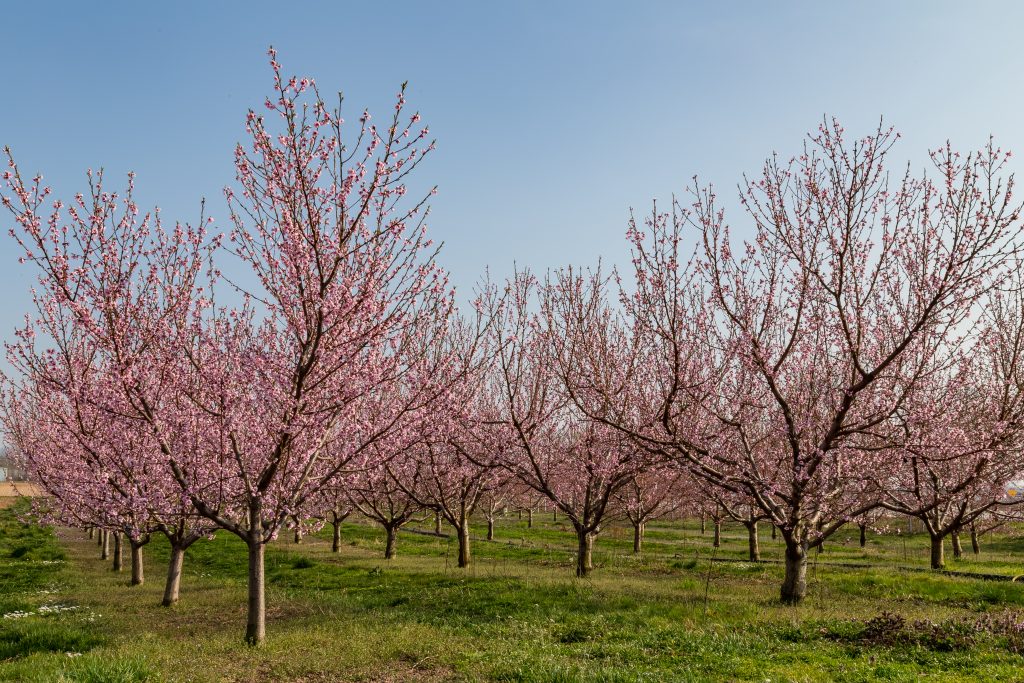
    File photo shows peach orchard.

    Soon it will be time to plant fruit trees in Alabama. Edgar Vinson, assistant research professor and Extension specialist in the Department of Horticulture at Auburn University, reminds growers about basic planting tips they need to be mindful of when planting trees this winter.

    Variety Selection

    Variety selection is the most important and practical way to manage diseases and other environmental constraints, no matter what crop you’re planting, according to Vinson.

    “(For example) If you’re planting in a region that’s really high in summertime temperatures and a region that’s prone to drought, you’ll want plant crops that can withstand those high temperatures, and you’ll also want crops that are drought tolerant if possible,” Vinson said.

    Full Sun

    It’s also important to remember that fruit crops require full sun to produce at maximum efficiency.

    “Once your shade starts to diminish then your productivity diminishes. It’s really important to get them as much sunlight as possible, maybe a minimum of 12 hours or so or around 12 hours of sunlight,” Vinson said. “Also, the placement of trees on a particular site, you want to avoid frost pockets. In cases of like fruit trees like peach or plum or apple, in low lying areas where cold areas tend to collect, it’s really important to avoid those.

    “Cold air flows downhill. It’s heavier than warm air and flows downhill. Often times it collects in frost pockets in low lying areas. You’ll also want to avoid any structures like a fence row that has vegetation on it. Something as simple as that could be enough to block the flow of air away from these crops and cause frost damage.”

    Chill Hour Requirements

    Chill hour requirements is also an important factor to consider. Vinson said that in order to alleviate dormancy in the spring, trees have to be exposed to a certain amount of cool temperatures during the winter.

    “If they don’t get the recommended requirements for their particular type or variety, they have long protracted flowering periods with small frequent harvests in the spring and summer and that really hits the farmer’s bottom line. The harvests are frequent but they’re small,” Vinson said. “They’re not really getting the return from the harvests that they otherwise would with the larger more concentrated harvests. Each time you harvest you have to send a crew out to the field and that costs money.”

    It’s important to remember that fruit trees need to be planted during the winter time when the trees are dormant. Vinson said you can plant an actively growing tree but it really adds a lot of stress to it.

  • Dry Conditions Helpful for Georgia Vidalia Onion Growers

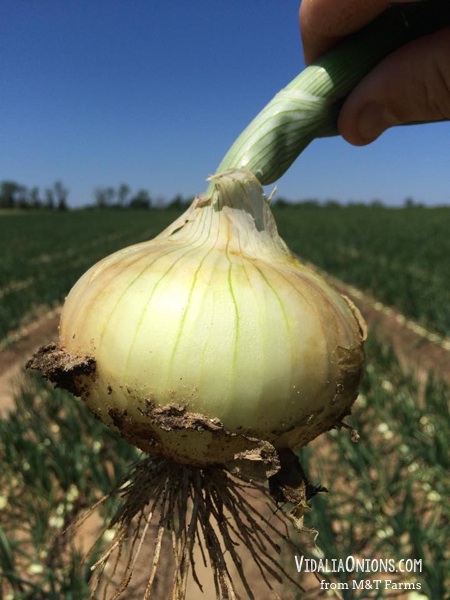
    Photo courtesy of M & T Farms, Lyons, GA, and Vidalia Onions.com

    Abnormally dry conditions in Southeast Georgia are only helping Vidalia onion farmers who are transplanting this year’s crop.

    Chris Tyson, University of Georgia Extension Area Onion Agent at the Vidalia Onion & Vegetable Research Center in Lyons, Georgia, said onion producers don’t need a lot of water right now anyway. The lack of rainfall is not a detriment at this stage in the growing season.

    “During the planting season we need the dry weather. We don’t need rain, because every time we have a rain event it causes delays. You have a week or two of rainy weather, and even though that’s good for putting water back in the sub-soil and the aquifer and replenishing all of that; for us, two weeks of bad delays and we might want to be finished planting by the week of Christmas or week before Christmas and we’re having to plant into January,” Tyson said.

    US Drought Monitor

    According to the US Drought Monitor, more than 25 counties in the southeast part of the state, are classified as “D0” or abnormally dry. These include Georgia’s top two onion-producing counties Tattnall and Toombs.  

    “Obviously we need water for our onions and most onions are under a pivot anyway to give them what they need, but the same thing is true for harvest,” Tyson said. “Rain is sort of the enemy during harvest time because it creates delays and causes disease. At planting, it’s not so much disease as it’s more the delays it causes.

    “Onions can get by with relatively low amount of water up until the spring time when they start bulbing and getting closer to harvest when they really have a high water demand. For the first half of the season, they have relatively low requirements for water. Usually we can give them what they need with our irrigation systems if we have to give them any water during the winter time.”

  • Senstar Insecticide a Viable Option for Southeast Vegetable Growers

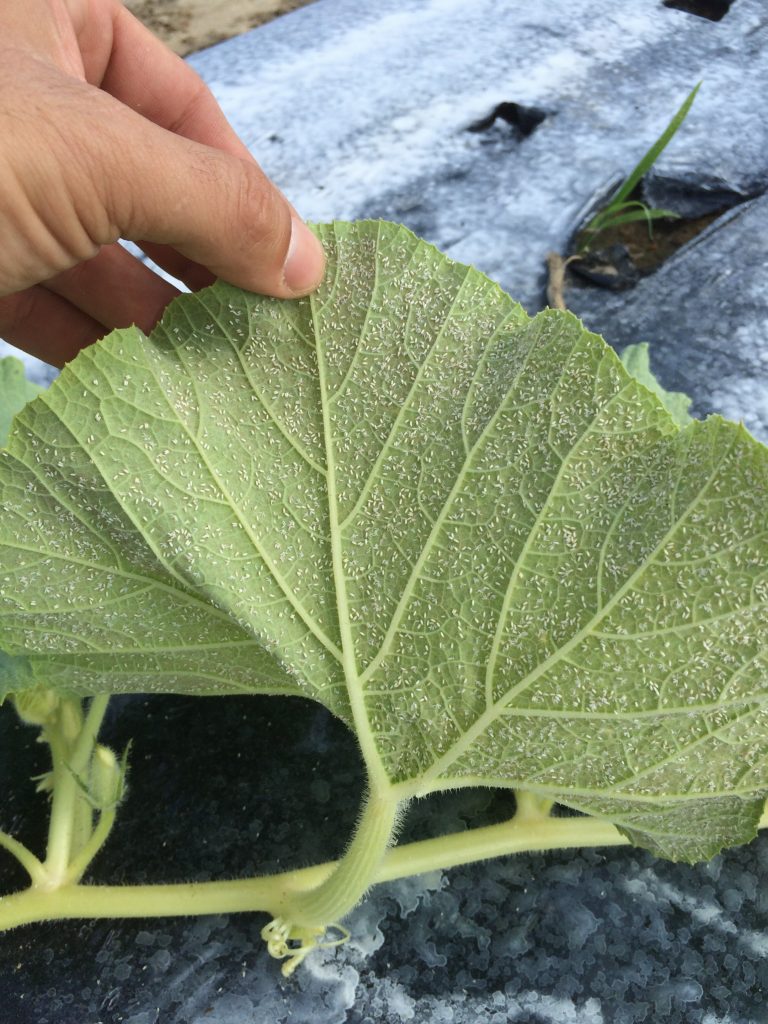
    Whiteflies infest fall cucurbits.

    Valent U.S.A. continues to tout Senstar Insecticide as another effective tool in the toolbox for vegetable growers trying to manage whiteflies.

    It offers fast and long-lasting control of soft-bodied insects of vegetable and citrus crops. These pests include whiteflies, aphids, thrips and pysillids.

    Whiteflies were widespread this year and led to the worst outbreak for Southeast growers since 2017. They continue to pose risks for fall producers, according to Craig Campbell, regional Valent Field Market Development Specialist.

    “With these fall crops and brassicas coming in and tomatoes and peppers, (whiteflies are) bad again and getting worse,” Campbell said. “Growers are talking about it and using sprays to try to manage them. They’re bringing in viruses again as well. They’re a real problem again this year.”

    Why is Senstar so Effective?

    Senstar has two modes of action and provides both translaminar and systemic activity in the plant. This allows Senstar Insecticide to control all stages of the insect’s life cycle.

    It is very effective at reaching pests on the underside of the leaves, which are hard to reach with a spray. Its translaminar action means it can move up and down the leaves and manage those pests that feed on the underside.

    Craig Campbell talks about how Senstar is another option for growers.

    “Growers need options and they can’t make mistakes. They’ve got to be on their management program, they’ve got to be spot on,” Campbell said. “When Valent released Senstar for Southeast growers this year, vegetable growers and citrus growers, we gave them a new option.

    Craig Campbell talks about why Senstar is so effective.

    “What we’ve done is we’ve taken two state-of-the-art products and used a very special formulation technology that allows them to be put in the bottle together. When a grower uses them with a good adjuvant for penetration, the products get in the plant; they move up and down the plant through the leaves. They provide consistent control. That’s super important and long lasting control, what a grower really needs.”

    Availability Important in 2021

    Senstar’s availability all of next season is crucial since whiteflies’ impact in 2021 could be sooner and even more widespread. According to Pam Knox, University of Georgia Extension Agricultural Climatologist, a La Nina weather pattern is expected to last through the winter and early spring. The lack of colder temperatures this winter could allow whiteflies to overwinter on host plants.

    Whiteflies can also transmit cucurbit leaf crumple virus and cucurbit yellow stunting disorder virus. According to UGA crop loss estimates for fall 2017, these viruses caused between 30% and 50% of crop loss in squash and cucumbers and nearly 80% of crop loss in snap beans. 

    Campbell talked about why Senstar is a great tool to use in a rotation.

    Rotations are important.
  • Gwinnett to Host Georgia Grown To Go

    Gwinnett County is excited to host the final Georgia Grown To Go of the season at Coolray Field, 2500 Buford Drive, Lawrenceville, from 10 a.m. to 2 p.m. on Saturday, Nov. 21.

    “Our Georgia Grown To Go pop-up markets were a huge hit this spring and summer, bringing a safe and convenient shopping experience to those who craved local products,” said Georgia Agriculture Commissioner Gary W. Black. “We are excited to replicate that opportunity for consumers looking to fill their Thanksgiving table with Georgia Grown produce and for shoppers looking to get an easy head start on their Christmas shopping.”

    The $20 produce box includes squash, zucchini, cucumbers, corn, apples, sweet potato, citrus and green tomatoes. In addition to produce and protein, gift items will also be offered for purchase. For more information on available items and to pre-order visit www.GeorgiaGrownToGo.com.

    Customers can abide by CDC social distancing guidelines while purchasing fresh produce and other Georgia Grown products thanks to the drive-through approach with produce boxes placed directly in their trunks and contactless payment options of cash or credit. Customers can also support their community this Thanksgiving season by donating a produce box. Gwinnett County will work with community partners of Gwinnett Cares to provide items to local nonprofits, co-ops, and faith-based facilities.

    Georgia Grown To Go is part of the Georgia Department of Agriculture’s “Buy Georgia Grown, Now More Than Ever” campaign encouraging consumers to ask for Georgia Grown products. With foodservice channels still limited, the pop-up markets are designed to give customers an opportunity to purchase fresh produce directly from farmers with limited contact, drive-through service. For more information on produce offerings, pricing and upcoming events, please visit www.GeorgiaGrownToGo.com.

  • Georgia Pecan Grower: Industry on Brink of Collapse

    georgia pecans
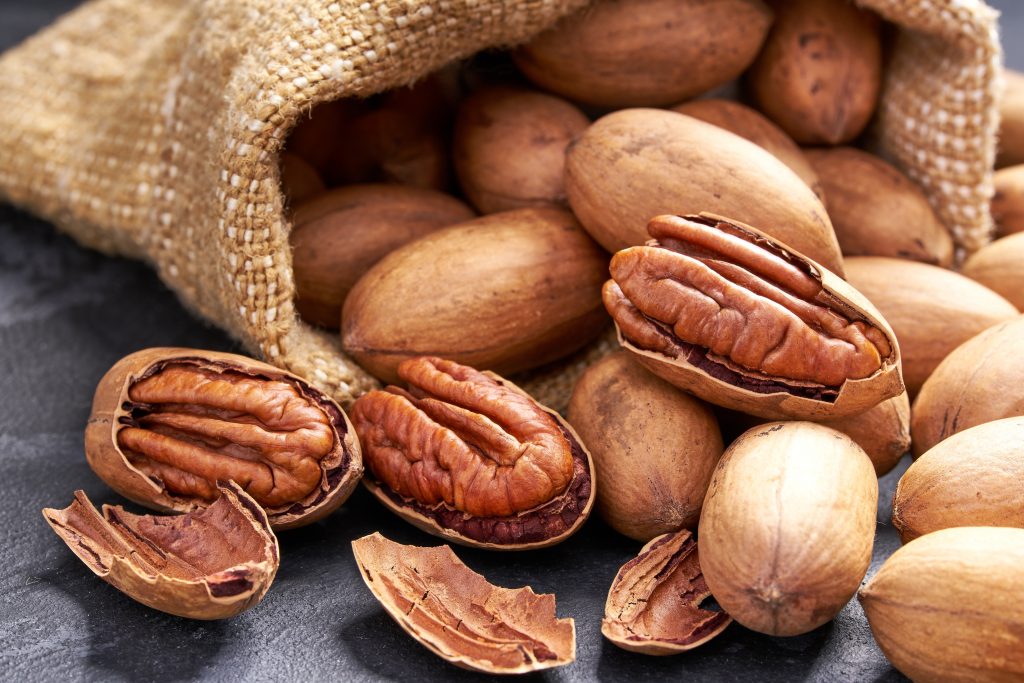
    File photo of pecans.

    One of the largest pecan producers in the Southeast believes the industry could be on the verge of collapse amid tariffs, a strong hurricane season and devastatingly low prices this year.

    Eric Cohen, who along with brother, Rob, operates Pecan Ridge Plantation in Bainbridge, Georgia, said they are still recovering from Hurricane Michael’s impact in 2018. It wiped out 800 acres and more than 20,000 trees. What he’s concerned with the most now are tariffs that prevent the largest buyer of U.S. pecans, China, from buying this year. It’s also allowed Mexico to become an even bigger player on the world’s pecan stage than it was before.

    A Pecan Producer’s Comments

    “I think our industry, honestly, is on the brink of collapse if something doesn’t actually change,” Cohen said. “We’ve got all these pecans coming in from Mexico. The tariff situation is absolutely killing us because they don’t have a tariff on their pecans. China can buy all of their pecans from them.

    “Mexico, their labor is so much different than ours. We’re getting drilled on everything; labor, their inputs are so much cheaper. We just can’t grow them as cheap as they can, and they’re just flooding our market. It’s an extremely dark time in the pecan industry in Georgia after Hurricane Michael. Now we have extremely low prices.”

    Low Prices Continue

    The USDA Pecan Report was released on Tuesday and continues to show prices dropping for all pecan varieties.

    The report states, “Growers are still putting pecans into cold storage while prices for export quality and retail gift shop purchases are low as many are purchasing pecans from other sources. Domestic shellers are busy this week and growers are sending in their B grade pecans to make room for their better quality nuts to be stored. Talk of export buyers coming in as they have in the past is still ongoing but they are not as active as was expected.”

    Prices for Desirable varieties remain between $0.80 and $1 per pound, while Sumner varieties are selling between $0.70 and $0.80 cents per pound. It’s depressing news as growers are storing pecans in hopes of prices rebounding in the future.

    “I never dreamed it would be this bad,” Cohen said. “If China would buy. If they would just come in the market and take some of this off, they would create some competition. China being out of our market is what’s going on.

    “If we could get the tariff situation settled, whatever administration is in there that would be an absolute benefit to growers. I firmly believe that China wants to buy American Georgia pecans. The economics are just not there the way they are now.”

    Alabama Farmers Suffer Through Storms

    While Georgia producers have dodged storms this season, their Alabama counterparts were not so lucky. Alabama producer Adam Bertolla lost three-quarters of this year’s crop and 250 trees, or one-third of his pecan operation after Hurricane Sally struck in mid-September.

    “We’re losing money. Growers out here, we’re absolutely losing money on the farm this year. You’ve got to make up your mind, ‘Are you willing to hang on and stick it out?’ If we were Louisiana, I know Alabama got destroyed this year. But look at Louisiana, I think they’ve had five storms. You take those five storms and run them through Georgia, we’re done.”

  • Caterpillar Pressure Varies Across State

    Graphic from South Florida Pest and Disease Hotline.

    According to the South Florida Pest and Disease Hotline, worm pressure has been high in some parts of the EAA (Everglades Agricultural Area). Producers and scouts report finding loopers, bean leaf rollers and armyworms in beans. Loopers and armyworms are very common in lettuce plantings.

    Across Southwest Florida, worm pressure has been low to moderate. Scouts are finding mostly southern armyworms with some loopers, fall and beet armyworms and few fruitworms. Melonworms have been common in cucumber and squash.

    In the Manatee/Hillsborough area, worm pressure has subsided, but growers are still finding mostly low levels of hornworms along with southern and beet armyworms.

    Reports from Homestead indicate that melonworms are present in some specialty cucurbits and squash.

    On the East Coast, respondents report that worms are around, and pressure remains low to moderate depending on the location.

  • Facts of the Flow: Lake Okeechobee, 2020 Year-to-Date

    (SFWMD) — Here is the latest update on inflows into Lake Okeechobee for the calendar year to date. This data is provided by SFWMD’s DBHYDRO database.

    lake okeechobee

    There has been no back-pumping into Lake Okeechobee from the Everglades Agricultural Area this year.

    Source: South Florida Water Management District

  • Safe Food Production Training to be Available to Florida’s Small and Beginning Farmers

    Michelle Danyluk in her lab at the Citrus Research and Education Center (CREC) in Lake Alfred, Florida. Photo taken 11-29-17

    November 19, 2020

    By: Ruth Borger, 517-803-7631, rborger@ufl.edu

    LAKE ALFRED, Fla. — A new opportunity for Florida’s small and medium-sized produce farmers will become a reality with the support of a U.S. Department of Agriculture Food Safety Outreach Program (FSOP) grant designed to produce and provide easy-to-access training in safe food production methods to underserved farmers.

    Faculty from the University of Florida Institute of Food and Agricultural Sciences and Florida A&M are partnering to serve this audience with online programming that will support them being viable and competitive in the marketplace.

    Florida ranks second in the nation for vegetable production, behind California, and produces 63% of the nation’s total citrus according to the Florida Agricultural Statistics Service. From 2012 to 2017, Florida continued to increase its number of small farms by 20% to 14,072 small farms, which represents 29.6% of all commercial operations per the USDA National Agricultural Statistics Service (NASS).

    Florida remains fifth in the nation in the number of beginning farmers (31%; USDA NASS, 2019). Yet, this audience struggles to participate in educational workshops that can support their success and provide needed information on how to implement safe food production best practices into their operations.

    It’s not for a lack of interest, said Michelle Danyluk, UF/IFAS professor of food science and human nutrition and one of the grant’s leaders. 

    “Many small and beginning farmers often work off-farm to support their families and simply cannot afford the time to attend traditional day-long workshops,” said Danyluk.

    According to 2019 figures from the USDA National Agricultural Statistics Service, beginning farm operators in Florida are more likely (67%) to work off the farm in addition to managing their farm than their established counterparts (45%). The need to provide workshops remotely is further heightened during the Covid-19 pandemic.

    The successful completion of this community outreach project is anticipated to generate more than 20 remote learning modules and eight instructor-led webinar workshops. These materials will target underserved operators of small and medium-sized farms, beginning farmers and socially disadvantaged farmers.

    These remote learning experiences will give participants a new portal to access food safety training information important for their own understanding and for use in training employees and other farm workers. They will also have an improved understanding of basic food safety principles and practices that support the production of safe food, as well as Food Safety Modernization Act compliance, through the visualization of key food safety issues discovered through video demonstrations and other presentations captured in online content and live streamed.

    Specific topics include:

    • Providing food safety training to employees
    • Food safety recordkeeping
    • Practicing Food Safety During Harvesting
    • Evaluating Surface Water and Distribution Systems
    • Sanitation Monitoring and Verification

    The $319,273 grant is part of the USDA National Institute of Food and Agriculture’s Food Safety Outreach Program (FSOP) for food safety education, training, and technical assistance projects that addresses the needs of owners and operators of small to mid-sized farms, beginning farmers, socially-disadvantaged farmers, small processors, small fresh fruit and vegetable merchant wholesalers, food hubs, farmers’ markets, and others. FSOP helps the development of new food safety education and outreach programs in local communities and expand upon existing food safety education and outreach programs that address the needs of small, specialized audiences whose education needs have not previously been adequately addressed. FSOP helps all types of farmers and businesses that have the education and tools they need to be successful and comply with the Food Safety Modernization Act.

  • La Nina a Concern for Fruit, Vegetable Producers

    Graphic from UGA Extension Blog.

    A La Nina weather pattern is expected to last through early spring and bring warm and dry conditions to the Southeast.

    According to the Climate and Agriculture in the Southeast blog, Pam Knox, University of Georgia Extension Agricultural Climatologist, said that the NOAA’s Climate Prediction Center predicts a 100% chance of a La Nina through the winter and better than 90% chance through early spring.

    This scenario could be gloomy news for vegetable fruit farmers, especially peach growers in Alabama, Florida and Georgia who need chill hours to make a crop for the following year. It also means pests could linger longer than desired since the lack of cold temperatures will alive them to survive longer.

    Pam Knox Comments

    Knox

    “In La Nina years, they’re much less likely to get the chill hours that they need. That’s going to be a problem for fruit producers,” Knox said.

    “Another thing is when you have warm temperatures, it’s not cold enough to kill the bugs very effectively. So you have more overwintering of bugs like whiteflies and other things that will bring disease to the plants next year. They could get an earlier start, but they’re also going to be more numerous because they’ve been able to survive the winter because of the warmer temperatures.”

    The lack of sufficient chill hours does not mean there will be zero cold weather. That’s still expected but will be overshadowed by the warmer temperatures to follow.

    “Even in La Nina years, we have some outbreaks of cold weather. It’s still winter, so we’re still going to see some of those cold outbreaks. There’s a lot of variability over time. I would definitely expect to see some colder weather. We could have some pretty big outbreaks,” Knox said.

    “It’s just that over the course of the whole winter, we’re likely to see those outbreaks punctuated by warmer spells. That’s not at all surprising. Winter is like that any way. It’s just that the whole average is a little higher. Those outbreaks come less frequently because the storm track is pushed to the north. The storm track is what controls whether we’re in the warmer air, because the warmer air is usually south of the storm track and also whether or not we’re getting rainfall because the rainfall usually happens along the storm track.”

    Prolonged Dry Spell?

    Winter is also a time when the soil moisture gets recharged due to rainfall. That’s not expected to happen this year amid La Nina, but it does appear the Southeast is in decent shape to withstand prolonged dry conditions.

    “Temperatures are lower and evaporation is lower, and plants are dormant so they’re not using a lot of water. I think from a water standpoint, at least right now, it doesn’t look too bad,” Knox said.

    According to the US Drought Monitor, southeastern counties in Georgia, as far south as Pierce and Ware, stretching as far north as Burke and Jefferson are classified as abnormally dry. The rest of Georgia, Alabama and Florida have sufficient moisture.