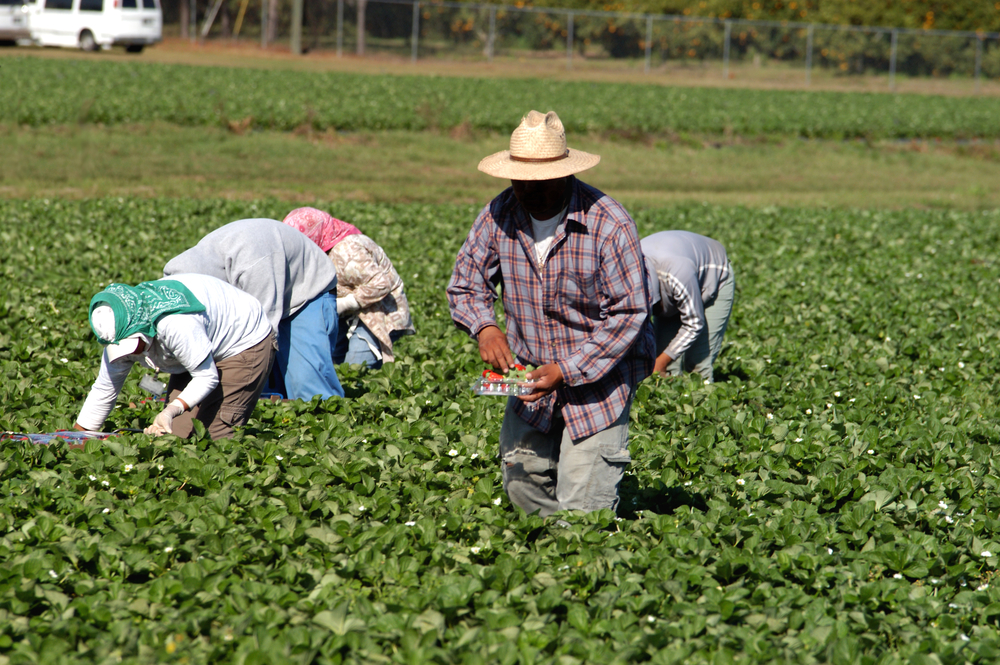
One of the focal points of the U.S. International Trade Commission hearing on the impact imports of cucumbers and squash have on the domestic industry is labor; how much it costs and the availability of it.
Lance Jungmeyer, president of the Fresh Produce Association of Americas, insists the lack of workers has led to a quality issue with produce grown in the Southeast.
“Without adequate labor, Southeast growers are at a severe disadvantage for how they grow and pack. Their products result in a distinct quality disadvantage that U.S. retail customers clearly recognize,” Jungmeyer said.
Not So Fast
But farmers and industry leaders in Georgia and Florida scoff at the notion that there is a problem with worker availability.
“I would dispute that,” said Florida farmer Marie Bedner. “We have the same people that return year after year. We invested in our farming future and built a state-of-the-art 400-bed facility for these employees.”
Mike Joyner, president of the Florida Fruit and Vegetable Association (FFVA), said Florida brought in 39,000 H-2A workers last year.
“To the labor issue, I’m concerned that there’s a theme that we have a problem and I’m just not seeing it,” Joyner said.
Same for Georgia
The same is true in Georgia as well.
“Those growers that are using H-2A, we do not have a labor shortage. Generally, workers are using some domestic help, or they’re using H-2A workers. Labor shortage is not a problem,” said Charles Hall, executive director of the Georgia Fruit and Vegetable Growers Association.
Last August, Veronica Nigh, an economist with American Farm Bureau Federation, said H-2A applications were processed effectively and in a timely manner even during the early onset of COVID-19. She noted that Florida was the largest user of the H-2A program during the year’s first three quarters. It listed 28,005 certified positions. Georgia listed a little more than 23,000 certified positions.
What Southeast producers may be most concerned with is Mexico dumping produce, or exporting a product at a price below the price charged in the country of origin.
“Our growers are paying well above minimum wage by the time you add in all the travel, housing. That labor is costing $15, $16 an hour,” said Gene McAvoy, University of Florida/IFAS Regional Vegetable Extension Agent IV Emeritus. “If you look at the cost of labor being about 30% of our cost of production and the break-even price on squash is $8.50 a box, take $3 off of it, and that’s $5.50. It’s still hard to see how Mexico could put squash into the U.S. market in recent weeks at $3.98 a box. There’s just no way it could be done.
“Tractors (there) cost as much as they do in the United States. Boxes cost as much as they do in the United States. Chemicals cost as much as they do in the United States. Even if you subtract labor, there’s no way that product is coming into the market without dumping occurring.”
RALEIGH – The North Carolina (N.C.) Department of Agriculture and Consumer Services is offering financial assistance to employers who have farmworkers with valid H-2A visas that must quarantine during the 2021 growing season due to COVID-19.
Steve Troxler
Two million dollars will be available through the N.C. Department of Agriculture and Consumer Services COVID-19 Farmworker Quarantine Reimbursement program. The N.C. General Assembly approved the funding for this aid program.
“Farmworkers have always been critical to agriculture, but the pandemic has shown how essential a healthy workforce is to agriculture and our food supply,” said Agriculture Commissioner Steve Troxler. “While it is a priority for all farmworkers to get vaccinated, this program will enable employers to safely quarantine workers who test positive for COVID-19 and hopefully minimize spread to their coworkers and others.”
Employers that have farmworkers will be eligible for reimbursement of the cost of meals and lodging for the duration of the quarantine period, not to exceed the per diem rates for federal employees. The employer on record for the farmworker with a valid H-2A visa, may submit a reimbursement request on behalf of any farmworker requiring to be quarantined following a positive test for COVID-19, provided the employer covered the initial eligible expenses out-of-pocket on behalf of the farmworker. The program will be for expenses incurred from March 11, 2021 through the duration of this year’s growing season.
The application period opens today and will continue through Dec. 15, 2021 or until program funds are exhausted. These funds are provided through CARES Act funding and subject to any changes to the federal legislation.
WASHINGTON — The U.S. Department of Agriculture (USDA) continues to help agricultural producers impacted by the COVID-19 pandemic.
The U.S. Department of Agriculture (USDA) announced on Tuesday the availability of more than $330 million to help farmers and organizations in the food supply chain recover from the financial impacts of the pandemic. The funding is part of USDA’s Pandemic Assistance for Producers initiative launched in March.
It includes $169.9 million for the Specialty Crop Block Grant Program (SCBGP) and the availability of $75 million for Gus Schumacher Nutrition Incentive Program [GusNIP; formerly known as Food Insecurity Nutrition Incentive (FINI)] grantees. This funding will aid in developing new markets for U.S. agricultural products and expand the specialty crop food sector.
“We launched USDA Pandemic Assistance for Producers to respond in a broader, fairer way to the pandemic’s impact across food and agriculture, and we are following through on our promise,” said Agriculture Secretary Tom Vilsack. “The COVID-19 pandemic resulted in wide-ranging impacts that were felt throughout the agricultural sector. The Biden-Harris Administration is focused on ensuring that the entire agricultural sector successfully rebuilds following the pandemic, and the funding we’re announcing today will reach a broader set of producers and businesses than previous COVID-19 aid programs.”
Specialty Crops
USDA’s Agricultural Marketing Service (AMS) announced $169.9 million for the Specialty Crop Block Grant Program (SCBGP) to fund innovative projects designed to support the expanding specialty crop food sector and explore new market opportunities for U.S. food and agricultural products. The total includes:
$72.9 million available as part of the annual Farm Bill funding for the program; and
An additional $97 million available as emergency funding for applications under this solicitation. Congress provided this funding in the Consolidated Appropriations Act, 2021, due to COVID-19 impacts to the food system.
Grant project funding awarded as part of pandemic assistance can also go to organizations to assist farmworkers (e.g., for PPE and vaccination costs), projects to fund farmers, food businesses and other relevant entities to respond to risks and supply chain disruption.
The SCBGP funds are allocated to U.S. states and territories based on a formula that considers both specialty crop acreage and production value. Interested applicants should apply directly through their state departments of agriculture. A listing of state contacts is available on the USDA website.
Applications must be submitted electronically through www.grants.gov by 11:59 p.m. Eastern Time on June 11, 2021. Any grant application submitted after the due date will not be considered unless the applicant provides documentation of an extenuating circumstance that prevented their timely submission of the grant application. For more information about grant eligibility, visit the SCBGP website.
Fruits and Vegetables
USDA’s National Institute of Food and Agriculture will invest $75 million as directed by the Consolidated Appropriations Act, 2021. Active Gus Schumacher Nutrition Incentive Program (GusNIP) and Food Insecurity Nutrition Incentive (FINI) grantees may request funding to allow them to address critical food and nutrition security needs of low-income communities, enhance the resilience of food and healthcare systems impacted by the pandemic and maximize funds reaching participants in communities in need. The GusNIP COVID Relief and Response grants program (GusCRR) helps low-income communities improve the affordability and consumption of fruits and vegetables by vulnerable participants in communities in need. GusCRR grants will support expanded scope of work started under previous awards to address pandemic relief and respond to community needs in an impactful, timely, and authentic way. NIFA will reach out directly to GusCRR eligible applicants with additional details and a copy of the Request for Applications (RFA).
Eligibility to receive a GusCRR grant is limited to organizations with a current active GusNIP nutrition incentive grant, GusNIP produce prescription grant, or FINI grant that began prior to Dec. 27, 2020. An eligible organization may submit only one GusCRR nutrition incentive grant application and one produce prescription application.
USDA encourages applications that benefit smaller farms and ranches, new and beginning farmers and ranchers, socially disadvantaged producers, veteran producers, and/or underserved communities. For grants intending to serve these audiences, applicants should engage and involve those beneficiaries when developing projects and applications.
USDA is also updating the currently open FY21 GusNIP RFA to more closely align with the law and extend that opportunity by two weeks to provide potential applicants additional time to consider the full range of available funding.
The calendar may say it’s time for pecan producers to spray for scab but the weather conditions, combined with the current market season, say otherwise.
Lenny Wells, University of Georgia Cooperative Extension pecan specialist, says it still early to start spraying for scab disease this week. Next week should present a more optimal timeframe. It would also coincide with growers’ plans of reducing input costs.
“One of the goals that most growers had going into this season was to try to save some money because they saw what the prices were this year. They know that with the kind of crop we had last year, we’re not likely to have a heavy crop this year, overall,” Wells said. “With the potential for low prices out there, saving money is on everybody’s mind. Fungicide sprays make up 12% of the budget of growing pecans; 12% of the variable costs of production. That’s one big area you could potentially save some money in.”
Slower Progression
Pecan trees are also progressing later than normal; about a week to 10 days later. The up-and-down weather conditions that consist of cold temperatures during Easter weekend and the current warmer temperatures have slowed the progression of the trees’ foliage. Some varieties like Elliott and Cape Fear have budded out. Others like Stuarts and Desirables are just now starting to come out.
“By the calendar, growers are used to spraying by this time. There are some areas where there are some varieties where we’ve had heavy scab pressure or the site has heavy scab pressure because of the lay of the land; and you’ve got varieties that scab. Those situations, I can see an argument being made for going ahead and starting,” Wells said. “For the most part, I think it would be a little premature to start this week. Maybe next week, I think would be more like it.”
Spraying too early will also have repercussions later in the growing season.
“If you go ahead and jump out there and start spraying now when you don’t really have that much foliage to cover and the foliage development is later, that means that the crop development is going to be later and then our crop maturity and harvest is going to be later. If you start now and there’s not a whole lot out there to spray, that’s just extra spraying you’re going to have to do,” Wells said. “There’s soon going to be a point in the season where you’re going to have to spray. If you start now, you’re just extending that period of time out to where you’re going to have to keep spraying possibly more than you normally do.”
Ali Sarkhosh is pictured looking over peaches. The photo is courtesy of Ali Sarkhosh, UF/IFAS.
Flooding can be problematic for Florida peach producers. It can cause permanent damage to peach trees and lead to tree death. Ali Sarkhost, a UF/IFAS Assistant Professor of Horticultural Sciences, said floods will increase as climate change continues to challenge growers across the world.
“If peach farmers experience flooding, the fruit size and quality can be adversely affected, and the tree may prematurely drop fruit yield,” Sarkhosh said. “We’re searching for flooding tolerance for peaches before a storm wipes out any farms.”
A few hundred acres of Florida peaches were lost due to flooding due to Hurricane Irma in 2017.
New research from Sarkhosh and one of his doctoral students shows three peach rootstocks that can survive flooding.
Peaches are often produced using a scion-rootstock system, in which growers can select the best compatible scions, which are the above-ground portion of the tree, with rootstocks, the below-ground portions of the tree to fit their operation. Scientists and nurseries join scions and rootstocks by grafting them together.
Peach Research
Sarkhosh leads a lab of graduate students. They study issues faced by the state’s stone fruit and grape growers, including those who produce peaches. One of his students, Trequan McGee, led recently published research to try to find peach rootstocks with increased resistance to flooding.
In the UF/IFAS-led study conducted in Gainesville, researchers tested six peach rootstocks to see whether they would survive flooding. Researchers measured variables like photosynthesis, nutrient content and activity of the rootstock’s antioxidant system.
Scientists found three rootstocks worked better than ‘Flordaguard,’ the one that is used mostly in Florida. The rootstocks are known as ‘MP-29’, ‘P-22’ and ‘R5064-5’.
“In Florida, peach growers have relied on ‘Flordaguard’ rootstocks, because for years, this was the only rootstock available that is resistant to the Florida peach root-knot nematode,” Sarkhosh said.
Damage from flooding translates into visible symptoms like leaf yellowing, leaf drop and eventual death of the scion portion of the crop, Sarkhosh said.
South Florida was thirsting for rainfall prior to last weekend. The abnormally dry conditions were alleviated a little bit with steady moisture that soaked the region, says Gene McAvoy, University of Florida/IFAS Regional Vegetable Extension Agent IV Emeritus.
US Drought Monitor graphic shows how dry Florida was last week prior to the rainfall last weekend.
“We got about an inch and a half down around Immokalee (Florida). Some places were a little better,” McAvoy said. “It was a nice soaking rain, exactly what the doctor ordered.”
The dry weather created dire conditions for vegetable and specialty crop producers in the middle of their production season. According to the US Drought Monitor, most of the South Florida and Central Florida regions were abnormally dry last week. Some counties, like Collier County where McAvoy is located, and Monroe County, Palm Beach County and small parts of Broward County and Hendry County were classified in a moderate drought.
“We were starting to get awful dry around here. I’ve been hearing problems with things like blossom end rot and some of those issues that you see when it does get dry and it’s hard to keep the soil moisture constant,” McAvoy said.
Imports of fresh fruits and vegetables continue to flood the U.S. markets and it is only increasing. According to the USDA Economic Research Service, Mexico was the top importer of fresh or frozen fruits as well as fresh or frozen vegetables.
Its fruit imports tallied $3.21 billion from October 2020 to February 2021. Its an increase from the $3.03 billion it recorded the prior year. February’s data indicates $746 million compared to $693 million in February 2020.
In fresh or frozen vegetables, Mexico’s three-month output from October 2020 to February 2020 was $3.8 billion, compared to $3.58 billion the prior year.
The top 10 importers of fresh and frozen fruits include: Mexico, Peru, Chile, Guatemala, Costa Rica, Ecuador, Canada, Honduras, Colombia and Brazil. The world total for the October to February timeframe was $6.82 billion, an increase from the $6.5 billion the prior year.
The top 10 importers of fresh and frozen vegetables include: Mexico, Canada, European Union-27, Peru, Guatemala, China, Costa Rica, Ecuador, Honduras and the Dominican Republic. The world total for the October to February timeframe was $5.73 billion, compared to $5.44 billion.
The sweetpotato whitefly (Bemisia tabaci) is one of the most problematic pests in vegetable production in the world and it is a key pest in squash. Most significant damage caused by this pest is due to the transmission of viral diseases and its ability to rapidly develop resistance to pesticides.
Sweetpotato whiteflies can develop from egg to adult in two to three weeks under optimal environmental conditions (77 to 91°F, 50-70% relative humidity). Adult whiteflies are ~0.03- inch-long, yellow insects with two pairs of iridescent white wings.
Females can live up to 24 days and lay up to 300 eggs. Eggs are oval, pearly white to yellow, and darken as they mature.
Whitefly nymphs disperse briefly within the same leaf and then attach permanently to the leaf while continuously feeding on its contents. Before turning into adults, nymphs are less flattened and have big red eyes.
THE DAMAGE DONE
Sweetpotato whiteflies are usually found living and feeding on the lower side of squash leaves. Nymphs excrete honeydew that accumulates on leaves, flowers and fruit when populations reach high numbers. This results in sooty mold (fungus) development, reduction in photosynthesis and fruit losses.
A) Silvered squash leaves. B) Healthy fruit (top) and fruit with discoloration due to viral infection (bottom)
Feeding of nymphs is also associated with the development of squash silverleaf disorder in pumpkins, winter and summer squash, and some types of butternut squash. Squash silverleaf causes the newly developing leaves to turn silver due to proteins in the nymph’s saliva. Decreased photosynthesis and yield reductions result from high silvering of the squash leaves.
Additionally, sweetpotato whiteflies transmit multiple viral diseases to squash. These include cucurbit leaf crumple virus, cucurbit yellow stunting disorder virus and squash vein yellowing virus. Common symptoms of viral diseases in squash include plant stunting, leaf and fruit malformation, yellowing and discoloration.
In Florida, squash is grown mostly during the fall from mid-September to mid-November. Some growers may also plant squash in the spring from mid-March to mid-April. It is common to have higher whitefly pressure during the fall compared to the spring season. The combination of whitefly-transmitted diseases with high pest infestations can cause up to 50% reduction in marketable yield during the fall compared with the spring season when fewer viral diseases and low whitefly infestation levels are observed.
WHAT TO DO
The management of plant viruses is best achieved when resistant varieties are available. However, there are no squash varieties resistant to whitefly-transmitted viruses yet. Therefore, squash plant viruses are mainly managed by suppressing the vector.
Sweetpotato whitefly populations are usually managed using insecticides that are applied on a weekly basis. However, the development of resistance against these insecticides is always a major concern. Entrust (spinosad) is a low-risk pesticide commonly used in vegetable crops, but it is not effective against whiteflies. Other low-risk pesticides such as M-Pede® (soap concentrate) or Azera® (azadirachtin + pyrethrins) are effective against whitefly populations and can be used together with biological control agents like predatory mites.
A) Adult predatory mite (Amblyseius swirskii) females guarding eggs. B) Larvae (left) and nymph (right) of A. swirskii
The predatory mite Amblyseius swirskii is an effective predator of major pests found in Florida squash including sweetpotato whitefly and thrips. A. swirskii feeds mostly on whitefly eggs and small whitefly nymphs. Data from University of Florida biological control field studies showed that the predatory mites released onto squash leaves can rapidly disperse to other plants and suppressed whitefly populations as early as four weeks after planting. Additionally, squash silvering can be significantly reduced when this predatory mite is released.
Data from field trials also indicate A. swirskii can disperse regardless of the squash cultivar. Moreover, squash cultivars exhibit different levels of sweetpotato whitefly attraction and susceptibility to silvering. Gold Rush is a sturdy squash cultivar that showed fewer silvered leaves compared to high-yielding squash cultivars such as Zephyr and Cash Flow. Additionally, Zephyr and Cash Flow seemed more susceptible to squash silverleaf.
Zephyr squash is very attractive to farmers and consumers due to its green-yellow tone, but it was observed to be highly attractive to whiteflies as well. This is probably due to the light green color of the leaves that make the plants easily detected by whiteflies.
No significant reductions in yield were observed despite high levels of silvering. However, plants were observed to be stunted and deformed when infested with high numbers of whiteflies and in the presence of whitefly-transmitted viruses. Thus, early management of sweetpotato whiteflies is recommended to avoid risking fruit quality.
It is important to combine the use of predatory mites with other practices such as intercropping flowering plants in row middles or at the edges of the squash crop to attract other predators and parasitoids that can complement the release of predatory mites. Additionally, low-risk pesticides can be used to lessen severe whitefly infestations three to five days before the release of the predatory mites. It is best to release the predatory mites early in the morning or late in the afternoon to avoid the hottest hours of the day, during days with low winds and when there is no forecast for rain.
Lorena Lopezis a postdoctoral research associate and Oscar E. Liburdis a professor at the University of Florida in Gainesville.
What does the technological future look like for vegetable and specialty crop producers? In an era where they compete in a global marketplace against rising imports, producers can no longer rely on cheap land or labor; they must compete on the basis of technology and innovation.
What does that future look like? Come find out at the Ag Tech Expo, hosted by the UF/IFAS Southwest Florida Research and Education Center on May 10-11. It is a virtual event, but farmers can click here to register.
Conference Registration is $100. Student Registration is $25. The price for trade show vendors is $250.
Agenda
DAY 1 – Monday, May 10, 2021
Opening Remarks – J. SCOTT ANGLE, PH.D. , Vice President for Agriculture and Natural Resources , University of Florida Institute of Food and Agricultural Sciences (UF/IFAS)
Keynote Speaker – DR. RANVEER CHANDRA , Microsoft – Data-driven agriculture: How the Cloud and AI can help reimagine food from seed to plate.
10:00 am Scott Berden /Miquel Clavijo, US Sugar – Leveraging IoT and Remote Sensing Technology at US Sugar.
10:30 am Louis DeMaso, Lipman Family Farms – Sustainability Case Study: Precision Agriculture for Maximum Resource-Use Efficiency.
11:00 am Dr. Sanjay Shukla, UF IFAS SWFREC – Streamlining growing environment for fresh produce with compact bed geometry system.
11:30 am Tony Mucciardi, Tree Radar – TRU GPR and IR imagery for root morphology maps.
UAV Session (Monday a.m.)
10:00 am Nathan Stein, pix4d – A good map is the first step in digitizing your field.
10:30 am Dr. Spyros Fountas, AUA, Greece – The role of UAVs for crop yield estimation.
11:00 am Dr. Yiannis Ampatzidis, UF IFAS SWFREC – Agroview: AI-based technology for precision agriculture.
11:30 am Drew Baustian, Micasense – Image Classification, Irrigation Monitoring & More Using Multispectral & Thermal Imaging.
Genomics Session (Monday a.m.)
10:00 am Dr. Tong Geon Lee, UF IFAS GCREC – CRISPR: A technical breakthrough for crop research.
10:30 am Dr. Samuel Hutton, UF IFAS GCREC – Applications of Marker Assisted Selection in the UF/IFAS Tomato Breeding Program.
11:00 am Dr. Vance Whitaker, UF IFAS GCREC -Genomic Prediction in Strawberry Breeding.
11:30 am Dr. Marcio Resende, UF IFAS Department of Horticulture – Genomics and phenomics applied to sweet corn breeding.
12:00 PM – 2:00 PM – Break and Technology Show – Virtual Trade Show
2:00 PM – 4:00 pm – Afternoon Sessions
Robotics Session (Monday p.m.)
2:00 pm Dr. Pal Johan From, Saga Robotics – Thorvald – and autonomous multipurpose platform for agriculture.
2:30 pm Bob Pitzer, HCR – Robotic strawberry harvesting.
3:00 pm Dr. Stavros Vougioukas, UCDavis – Human and ag-robot collaboration for fruit harvesting.
3:30 pm Dr. Manoj Karkee, WSU – Tree fruit harvesting: Accomplishments and challenges.
Protected Ag Session (Monday p.m.)
2:00 pm Dr. Kevin Folta, UF IFAS Department of Horticulture – Closed Controlled Environment.
2:30 pm Jennifer Waxman, Executive Director, The Villages Grown™ – Bridging Agriculture and Wellness — How CEA may be the next movement towards the Food-as Medicine approach.
3:00 pm Bob Hochmuth – Protected Ag- Technology Under Cover
3:30 pm Federico Boscolo, Cultiva Farms – TBA
Jonathan Way, Colusa Farms – TBA
Innovations in Water and Nutrient Management (Monday p.m.)
2:00 pm Doug Crawford, BMP Logic – Real-time irrigation management with wireless soil moisture sensor – adoptions in North America and lessons learned.
2:30 pm Grower’s perspective on technology adoption in managing water and nutrient over three decades, Lipman Family Farms.
3:00 pm Dr. Sanjay Shukla and TBA – Circular nitrogen and phosphorus economy.
3:30 pm Dr. Sandra Guzman, UF IFAS IRREC – New technologies for efficient irrigation.
4:00 PM – 5:00 PM – Technology Show – Virtual Trade Show
5:00 PM – 6:00 PM – Virtual Party (Happy Hour)
DAY 2 – Tuesday, May 11, 2021
Keynote Speaker TBA
10:00 AM – 12:00 PM Morning Sessions
Automation Artificial Intelligence, and Precision Spraying (Tuesday a.m.)
10:00 am Dr. Lynn M Sosnoskie, Cornell University, – Review of weed management technology.
10:30 am Dr. Nathan Boyd, UF IFAS GCREC – Weed Management for the Future.
11:00 am Dr. Thanos Balafoutis, IBO, Greece – Variable rate technologies for precision spraying.
11:30 am Keith Hollingsworth, CC and/or Dr. Yiannis Ampatzidis, UF IFAS SWFREC – Smart tree crop sprayer utilizing sensor fusion and AI.
Environmental Services (Tuesday a.m.)
10:00 am Benita Whelan, Florida Cattlemen’s Association – Dispersed Water Management System.
10:20 am Dr. Sanjay Shukla, UF IFAS, SWFREC, and Linda McCarthy, Lykes Bros Inc. Payment for water storage and treatment services program in the Everglades Basin– From pilot to large-scale implementation.
11:00 am Ernie Shea, Solutions from the Land – Florida Climate Smart Agriculture Working Group Overview.
11:30 am David M. (Max) Williamson, Williamson Law + Policy PLLC – High-level Overview of Carbon Markets.
12:00 PM – 2:00 PM – Break and Technology Show – Virtual Trade Show
2:00 PM – 4:00 pm – Afternoon Sessions
Automation and Pest/Disease Management (Tuesday p.m.)
2:00 pm Dr. Natalia Peres, UF IFAS GCREC – Ultraviolet Robot for control of Powdery mildew in Strawberry.
2:30 pm Dr. Ozgur Batuman, UF IFAS SWFREC – Development of a novel automated delivery system for citrus trees.
3:00 pm Michael Otte, Rantizo – Drone Spraying, the Future Present of Agriculture.
3:30 pm Liron Brish, Farm Dog – Easily digitizing your in-field workforce – the foundation for efficiency and effectiveness.
Water Management I Mixed session I (Tuesday p.m.)
2:00 pm Dr. George Vellidis, UGA – SmartIrrigation – a Pathway to Sustainable Intensification.
2:30 pm Dan Urban, Analytics Lead, CERESIMAGING – Managing the variability in transpiration and vigor with aerial imagery.
3:00 pm Grant Allen, C&M North America (Checchi & Magli) – Vegetable/Melon Transplanting – Speed, Precision, Automation, etc.
3:30 pm TBA
Traceability/Blockchain (Tuesday p.m.)
2:00 pm TBA, AgTools – Using data to improve market access and profit margins.
2:30 pm Bristol Wells, Highlands Agriculture – Virtualizing the Business of Ag with Highland Ag Solutions.
3:00 pm Creg Fielding, Fusionware – Vertically Integrated Supply Chain – Get out of spreadsheet hell!
Population is expanding around the world. Farmers will need to produce more food in the next 50 years but with fewer resources and less environmental impact.
The developments in agricultural robotics, machine vision, ultra-precision farming; autonomous farming; artificial intelligence (AI); and genomics will transform the way farming is conducted. These technologies coupled with AI are enabling a revolution which will eventually upend the familiar way of conducting daily farming practices.
The vegetable and specialty crop sector is vulnerable to market manipulation. That makes what Mexico is accomplishing through its increased imports of cucumbers and squash dangerous for the future of the American farmer, claims Georgia farmer Dick Minor.
“In 2018, the combined acres planted into fresh market cucumbers of the top five producing states was less than 30,000 acres,” Minor said. “A simple 10% increase in production is enough to totally devastate the marketing window and eliminate any chance of profitability.
“Mexico, over the last 10 years has dramatically increased production of cucumbers and squash. They have expanded production with no regard for other production areas or without regard for probability of making a profit.”
Competitive Disadvantage
Minor produces eight different vegetable crops, which include cucumbers and zucchini squash. It is very common to produce both crops. But it’s also becoming increasing challenging to produce both crops when compared to unfair competition against Mexico.
“The last 34 years have presented many challenges to our vegetable farming operations. However, none has presented a threat near the scale of the dramatic increase in low-cost Mexican vegetable imports,” Minor said.
Many factors led to this unfair competitive advantage, as claimed by Minor and other Florida and Georgia farmers during Thursday’s U.S. International Trade Commission hearing. Labor tops the list. Mexico can pay its workers a small fraction of what farmers like Minor pay theirs.
“Mexico is able to offset its disadvantage in location with some of the most abundant and cheapest labor costs anywhere in the world,” Minor said.
Government subsidies also contribute to Mexico’s workforce growing more and more produce under protected acreage. Mexico can import its produce 12 months out of the year, which directly impacts marketing windows for Southeastern farmers.
“Florida growers understand that when Georgia starts they need to be finished harvesting and they plant accordingly. Georgia growers understand that North Carolina will start harvesting in late June, and when we plant, we also plant accordingly. Each growing area understands its window,” Minor said.. The factors that influence when and how much product they can produce and still maintain the probablilty of still maintaining a profit.”
Supply is the main factor that affects daily prices. Fresh produce needs to be sold and sent to markets as soon as it is harvested. Markets are volatile. They can surge quickly or drop instantly, as they are sensitive to change and planted acres.
“Today, low costs Mexican production is threatening every grower in the United States,” Minor said.