Blog

  • Abnormally Dry Conditions Benefit Georgia Onion Producers Finishing Planting

    Abnormally dry weather conditions for Southeast Georgia have benefited Vidalia onion farmers who are trying to plant this year’s crop, says Chris Tyson, University of Georgia Extension Area Onion Agent at the Vidalia Onion & Vegetable Research Center in Lyons, Georgia.

    “Most growers are completely finished or they’re finishing up within this week or shortly thereafter. That’s a good thing that we’re not dragging on into January like we do some years when we have weather delays,” Tyson said.

    “We’re not always done by this time every year. Some years if it’s wet or we’re getting rains, it just delays us and goes on into Christmas or past Christmas and even into January on some years.”

    Benefit to Planting Being Done

    Since producers did not experience weather delays during planting and able to finish on time or earlier in some instances, they now can focus on applying fertilizer and fungicide sprays.

    This also benefits them with regards to their H-2A labor.

    “If they use H-2A labor, they have a contract with them to finish by a certain time, so they have all of that arranged before they ever come as far as their dates of when they’re going to work. If they have to work them longer, they have to do some renegotiation there with H-2A contract. They want them to get finished by that time so everything will work out with their H-2A labor,” Tyson said.

    Drought Monitor

    According to the U.S. Drought Monitor, much of central and southeast Georgia are classified as ‘D0’ or abnormally dry. While the dry conditions were favorable for planting, they are not ideal for production. Much of the state received rainfall on Wednesday. But more is needed to produce a substantial crop.

    “For the most part we’ve had pretty good weather as far as planting onions. Now that we’re getting a little bit of rain, most people need it and want it at this point,” Tyson said.

  • Alabama Producers Watch Out for Alternaria Disease

    Alternaria disease is alive and well in Alabama vegetables and needs to be monitored, especially as temperatures remain unseasonably mild this winter.

    Photo submitted by Joe Kemble/Shows Alternaria disease on a vegetable.

    Joe Kemble, Alabama Extension vegetable specialist, said growers need to be vigilant in monitoring their crops.

    “Despite the temperature, disease is still an issue right now. Last week I saw some pretty impressive Alternaria on several brassicas,” Kemble said.

    “Unfortunately, temperature range wise, Alternaria is still going to be active with our fairly mild winters. It’s the kind of thing that can take off surprisingly quickly. I encourage growers to especially look on the edge of fields, row ends and things like that. It’s pretty characteristic and the nice thing is, there are very good controls out there for conventional producers.”

    What is Alternaria?

    Alternaria is a fungal disease that can cause a leaf spot. This will make impacted vegetables unmarketable. Greens like cabbage, broccoli and cauliflower are especially vulnerable.

    This winter is expected to be especially mild since a La Nina weather pattern is predicted to move through. Warm temperatures are a characteristic of a La Nina, which means disease pressure could remain high.

    “Unfortunately, the weather we’ve got, it’s still pretty conducive to development in Alabama. We never have prolonged freezing temperatures. That means that, unfortunately, diseases can be problematic especially when we have a mild winter like we’re supposed to have,” Kemble said.

    “Unless we’re going to have weeks of temperatures below 30 degrees, 35, below 40 degrees basically, it’s always going to be an issue.”

  • Heat Brings Out Antioxidants, Increases Red in Tomatoes

    Photo is “courtesy, UF/IFAS photography.” It’s a generic shot of tomatoes.

    December 17, 2020

    By: Brad Buck, bradbuck@ufl.edu, 352-875-2641 (cell)

    Turn up the heat, and get more nutrition from your tomato, University of Florida researchers say. Furthermore, when you buy a tomato, it will be about as red as it can be, thanks to the UF/IFAS methods deployed for the study.

    The findings are crucial to an industry in which Florida ranks second to California in tomato production in the United States.

    In new research led by horticultural sciences Professor Jeffrey Brecht, UF/IFAS scientists put tomatoes in hot water and found it increased the red ripe look we love in tomatoes. By doing this, they also increased phenolics and carotenoids. To be clear, packinghouses in many states already  treat tomatoes with hot water before shipping them to supermarkets – to clean them and prevent possible diseases — but the heat treatment for this study was a bit more extreme.

    “The idea is that tomatoes have a certain genetic potential for antioxidant production that isn’t always realized,” said Brecht, a postharvest biologist. “That’s because tomatoes — all plants actually — produce antioxidants to deal with stress, and they produce more antioxidants the more stress they experience. Because we basically coddle tomatoes, the fruit doesn’t always realize its genetic potential for antioxidant production.”

    “You could say that we found a way to make tomatoes get as red as they are able to get,” he said. “But the overall increase in antioxidants and the accompanying improvement in nutritional value is more important. Both the improved color and the improved nutritional value are benefits for consumers.”

    For the study, researchers with UF/IFAS and the Agricultural Research Service (part of the USDA) applied increased heat to stimulate tomatoes. The major types of antioxidants in tomatoes are carotenoids and phenolics, Brecht said. Carotenoids include pigments, one of which is the red pigment, lycopene, which makes tomatoes red. 

    “So, in encouraging the tomatoes to make more antioxidants, we gave them a more red pigment,” he said. “But the major response to the heat stress was the production of phenolics, which are powerful antioxidants, but they are usually colorless.”

    Researchers used an assay (test) that measures antioxidant capacity, but they also measured different types of antioxidant compounds to reach their conclusions.

    Brecht describes the concept as “basic tomato physiology,” so the study’s methods apply to tomatoes, not just in Florida, but across the United States. 

    Tomatoes in Florida are most commonly harvested at the mature green stage and ripened after packing. Here’s how tomato packinghouses in Florida treat tomatoes before they go to your supermarket. They heat the dump tank water into which the tomatoes are transferred from field bins or gondolas to about 10 degrees above the tomato pulp temperature.

    Packers use a water dump because it is the gentlest way to transfer fruit onto a packing line, and they use warm water because it reduces the chances of decay. Tomatoes are typically in the dump tank for a couple of minutes, Brecht said.

    “We think that process could be modified to duplicate our hot-water treatment and improve the tomato quality,” he said.

  • Georgia Pecan Producers Nearing End to Harvest Season

    According to the USDA Market News Service, Georgia pecan producers are about 90% finished with harvesting this year’s crop, while prices have improved some since last week.

    Amid the lack of export opportunities, many growers are continuing to store their top quality and larger sized pecans in hopes of selling for better prices at a later date. Holiday retail and domestic sales have improved as buyers from other areas have actively pursued Georgia pecans.

    Prices paid to growers (late afternoon Tuesday, December 8, 2020 through late afternoon

    Tuesday, December 15, 2020) at buyers’ delivery point or F.O.B. the orchard including direct sales to end users, cents per pound in-shell of generally good quality in lots of 20,000 pounds or less unless otherwise stated.

    Cape Fear (deliveries light) meat yield 52-53%, 129-140

    Creek (deliveries very light) meat yield 53-54%, 121-129

    Desirables (deliveries light) (nut count 47-52) meat yield, 47-51% 113-138, yard tree lots 80-100

    Elliott (deliveries very light) meat yield 51% 133, yard tree lots 90-100

    Excel (deliveries very light) meat yield 53-54%, 139-140

    Farley (deliveries very light) yard tree lots 70-80

    Moneymakers (deliveries very light) yard tree lots 40 occasional higher

    Native/Seedlings (deliveries light) yard tree lots 40-50 occasional lower

    Schley (deliveries light) yard tree lots 70-85

    Stuarts (deliveries light) (nut count 51-57) meat yield 48-49%, 119-128, yard tree lots 50-75, mostly 70-75 few high as 90

    Lots over 20,000 pounds including truckloads

    Cape Fear (deliveries light) meat yield, 52% 140

    Desirables (deliveries light) (nut count 47-50) meat yield, 49-52% 123-140

    Sumner (deliveries insufficient to establish market)

  • Alabama Pecan Industry Forever Changed

    Picture from Adam Bertolla/Shows massive pecan tree uprooted by Hurricane Sally.

    Alabama pecan producers in Baldwin and Mobile Counties are still cleaning up debris left behind from Hurricane Sally more than three months ago. What many are not going to be doing, though, is replanting trees that were destroyed on Sept. 16, says Bryan Wilkins, Alabama Extension Research Associate.

     “The older guys, they told me they’re done. Some of them, they’re in their early-to-mid-60s, they told me, ‘I’ll be 70 or 75-years-old before they start bearing, these new ones.’ I don’t know that they’re going to replant but they’re going to keep working what’s up. They’re going to keep working their orchards and what survived,” Wilkins said.

    “I don’t know how much replanting is going to go on, to be honest. I know some of the younger ones are replanting and trying to get back up to speed that had some smaller orchards. But a lot of the older orchards, like those 90-year-old orchards, those guys are not going to replant that I know of.”

    Farmer Testimonials

    Pecan producers like Gary Underwood were hammered by the Category 2 storm. Underwood, who is based between Mobile, Ala. and Pensacola, Fla., lost a substantial amount of his pecan crop. He estimated he lost 600 trees.

    Adam Bertolla lost 250 trees or a third of his pecan operation. He verified that he wasn’t going to replant.

    “People say, ‘You going to replant?’ I say, ‘Hell no, I’m not going to replant,’” said Bertolla, referring to Hurricane Sally that made landfall in Alabama on Sept. 16. “No. 1, there’s going to be some more storms come; No. 2, I’m too old, even though I’m in my early 50s. There’s just not any use in doing it.”

    Growers have another reason to be pessimistic about replanting their crop. Prices are devastatingly low this year.

    “Right now, prices are low. That’s another thing that some of them are looking at and it doesn’t look like it’s going to change in the near future,” Wilkins said. “(But) they’re saying mostly it has to do with age. They’re aging out and they don’t have anybody coming on that wants to replace them.”

  • U.S. Blueberry Growers Form New Alliance to Seek Import Remedies

    File photo shows blueberries.

    WASHINGTON, December 16, 2020 – Blueberry growers across America today established a new coalition, the American Blueberry Growers Alliance, to seek relief from rising imports that are harming their businesses. The Alliance will provide information and support to an ongoing U.S. International Trade Commission (ITC) investigation into the serious injury caused by increased imports of fresh, chilled and frozen blueberries under Section 201 of the Trade Act of 1974.

    Blueberry imports are sourced from several countries in the Western Hemisphere. Imports rose by more than 60% between 2015 and 2019. Imports from Peru and Mexico have increased by 1,258 and 268% during that same period, respectively, driving blueberry prices down by double digits, which has had a devastating impact on the domestic blueberry industry.

    Alliance members are asking for bipartisan support from the U.S. government and Congress to use existing trade laws to remedy the injury to U.S. growers, support hard-working blueberry farmers, and preserve and enhance a U.S.-grown blueberry supply. The Alliance is also warning that in addition to injuring domestic businesses and livelihoods, rising imports expose American consumers to products from countries with poor food safety protocols.

    “We have been telling Washington about unfair trade practices for years,” said Jerome Crosby, CEO of Pineneedle Farms in Georgia and head of the Alliance’s steering committee. “Our family farms continue to be harmed by a flood of blueberry imports. We need relief and for our leaders to stand with American growers.”

    “Many family farms have become a casualty of rising imports and are being forced out of commercial production as other countries increase production to deliberately target the U.S. market,” said Brittany Lee, executive director of the Florida Blueberry Growers Association. “If something is not done, we will lose the blueberry industry in the United States.” 

    The Alliance includes blueberry growers in Georgia, Florida, Michigan and California.

    The Alliance recently received support from a coalition of 32 members of the U.S. House of Representatives. In a letter to the U.S. International Trade Commission, the congressional members said: “The significant surge of imports of blueberries in recent years, the timing of such imports during U.S. harvest periods, the extremely low pricing of the imports, and the targeting of the U.S. blueberry market by foreign exporters has had a devastating impact on the blueberry industry…As the Commission develops the evidentiary record in this case, it will be clear that imports are a substantial cause of serious injury to farmers. We urge the Commission to promptly make an affirmative determination in this regard.”

    The ITC plans to hold hearings in early 2021 and then deliver a report on blueberry injury and remedies to the White House. Under Section 203, the President then determines what action to take. To support this investigation, Alliance members are providing data and evidence on how blueberry imports are impacting their production, pricing and marketing activities, especially during the critical U.S. spring and summer harvesting seasons.

    For more information, please visit americanblueberrygrowers.com.

  • ACRE Entrepreneurs Bring Innovation to Agriculture

    COLUMBIA — The South Carolina Department of Agriculture’s Agribusiness Center for Research and Entrepreneurship (ACRE), in partnership with Clemson Cooperative Extension, has awarded seven beginning entrepreneurs a share of $30,000 to help propel their agriculture businesses forward.

    Weathers

    Sixteen individuals or pairs participated in this year’s ACRE Curriculum, which guides beginning entrepreneurs through developing a business plan, marketing, finance, operational planning, pitching and other business skills. This year’s curriculum was conducted entirely online due to COVID-19, including the virtual Pitch Day.

    The awardees, as selected by a panel of judges:

    1. Sweetgrass Roots is a learning farm in Colleton County dedicated to preserving folk art crafts like sweetgrass basketry. “Seed to basket” entrepreneur Kisha Kinard plans to use ACRE funding for a storage structure.
    2. Through Queen & Comb, property owners pay a monthly fee to have Tom Knaust place honeybee hives on their property, sharing 50-50 in the honey harvest and learning about pollinators. He plans to use ACRE funding to begin marketing his Charleston County business.
    3. Elise Ashby’s Farmers Market Flavors sells vegetable ice cream in flavors like blueberry-okra and cauliflower-butter pecan. She plans to use ACRE funding to help pay disadvantaged youth to work in her commercial kitchen in Union County.
    4. Ginger Nichols grows aquaponic lettuces at Spartanburg County’s Naturally Fresh Farms. She plans to add additional cold storage to expand her market.
    5. At the seven-acre Lover Farms in Pickens County, Brittany Arsiniega and Brit Hessler offer an escape to the farm, hosting events, teaching classes in foraging, and selling merchandise and produce. They’ll use ACRE funding for seed.
    6. At Spartanburg County’s Paulownia Vineyards, Elaine Ryan is planting Bordeaux-style wine grapes – unusual in South Carolina – and pecans. She plans to use ACRE funding to hire a vineyard consultant.
    7. Greg Brown plans to begin growing ginger and turmeric for the restaurant market at his Hopkins-area Greenleaf Farms in Richland County, where he currently grows asparagus and other produce.

    “The future of agribusiness in South Carolina depends on new ideas,” said Commissioner of Agriculture Hugh Weathers. “These entrepreneurs will use what they’ve learned in the ACRE Curriculum program to build successful businesses and develop new markets in food and agriculture.”

    SCDA founded ACRE in 2018 to help identify and nurture new ideas and businesses in the Palmetto State’s agribusiness sector.

    In spring 2021, advanced agribusiness entrepreneurs will have the chance to compete for their share of $125,000 in funding. Information is available at acre-sc.com.

  • Foundation Applications Open For Hurricane Zeta Assistance

    The Alabama Farmers Agriculture Foundation (AFAF) is accepting applications through Jan. 15 from farmers who suffered losses related to Hurricane Zeta. 

    The application for Hurricane Zeta assistance and a link for contributions are available at AlabamaFarmersFoundation.org.

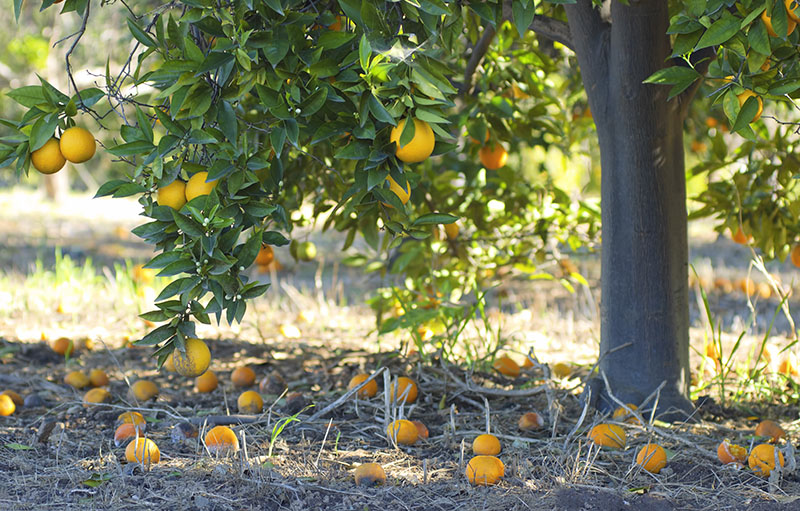
  • Fruit Drop Weighs Heavily on Florida Growers

    fruit drop

    Numerous Florida citrus growers are experiencing heavy fruit drop this fall. “For some growers, it’s the worst fruit drop they have experienced; 50%-plus,” says grower Lee Jones with Cross Covered Caretaking.

    Grower Jim Snively, with Southern Gardens Citrus, said he is hearing talk of around 30 to 50%-plus fruit drop. “I’m hearing pick-outs that are 20% to 70% below last year; the drop is the culprit in the areas with the greatest reduction,” says Snively.

    According to Snively, the drop in South Florida started in late August and has been continuing. “In other areas of the state, Polk County and the west side of the state, it seems that the drop has just started and is not as intense.”

    Jones reported seeing fruit drop across the state. “However, it appears that areas that had less rain and (groves that are) on a good root-health program are doing better,” he says.

    “Hamlin and Midsweet are the varieties that are experiencing the drop at this time,” says Snively. “We are starting to see some early drop in Valencia.”

    “Unfortunately, not only is the drop a concern, but the fruit quality is well below what we as an industry would like to see,” Snively, president of the Highlands County Citrus Growers Association, wrote in the recent association newsletter. “There are many areas that continue to have blocks that are not meeting the USDA minimum standards.”

    “The minimum Brix requirement for processed oranges is 8.00,” Snively explains. “We are seeing field tests that are showing Brix levels below 8.00. In most cases, you have to wait to let the Brix build before you harvest. But in the meantime, fruit continues to drop and it starts to lose juice weight, which equates to a loss in pounds solids per box.”

    Jones also weighs in on the failure of some fruit to meet USDA standards. “If the Brix/acid minimums are not met, then harvest is delayed,” he says. “However, the longer they (growers) wait, the worse the fruit drop.”

    “At this point, all a grower can do is get his or her fruit harvested as quickly as possible,” Snively adds.

    “But we all know we can’t send it all in at one time. I do feel that part of the reason for this phenomenon this year and last year is the multiple bloom that we experienced the last two years. Last year, we had bloom from November 2019 through March 2020. The warm weather that followed the moisture brought in by the cold fronts causes the tree to prematurely flush and bloom. This is even intensified on HLB-infected trees. There are researchers working on this issue, and I hope they figure it out soon. We know that HLB has a lot to do with this drop, but what is HLB doing that causes the tree to react in this way, and if we figure out what that is, is there anything we can do to prevent or offset this manifestation?”

    “Anything a grower can do to increase root health will help,” Jones adds. “Also, getting the bloom synchronized; the late/early bloom increases the fruit drop percentage and decreases fruit maturity.”

    Learn about University of Florida Institute of Food and Agricultural Sciences researchers’ efforts to reduce fruit drop here.

  • Georgia Fruit and Vegetable Growers Announces COVID-19 Handbook for Georgia Ag Laborers

    The Georgia Fruit and Vegetable Growers Association (GFVGA), in collaboration with the Georgia Department of Public Health, Georgia Department of Agriculture and the University of Georgia Extension, has developed a practical and comprehensive COVID-19 handbook for growers and farm labor contractors in the specialty crop industry. 

    Written specifically for Georgia growers, Protecting Yourself Against the Coronavirus, focuses on maintaining a safe and healthy workspace on the farm. This resource, available in both English and Spanish, contains science-based information to help growers maintain a safe and healthy environment for their workforce.

    “As employers, we come to value our employees and see them as members of our own extended family,” said Aries Haygood, GFVGA president. “Protecting them and their families during this ongoing pandemic is our number one priority and this handbook will help employers find answers to their questions.” 

    All the information in the handbook is based on CDC and Georgia Department of Public Health guidance. 

    “We are always excited to work together with our industry partners to better serve the specialty crop industry,” said Charles Hall, GFVGA Executive Director. “We think this handbook provides valuable information to help growers and their employees during the ongoing pandemic.”

    To download this free resource, visit www.gfvga.org/store