GAINESVILLE, Fla. — The University of Florida Institute of Food and Agricultural Sciences (UF/IFAS) will soon have a new chair of the Horticultural Sciences Department.
Christopher Gunter will join UF/IFAS, with an official start date of June 7.
Chris Gunter
Gunter will lead experts and programs specialize in research, plant breeding and genetics, fruit and vegetable production and related disciplines that continue to shape the future of food in Florida and globally.
“I’m excited to be part of one of the best – if not the best – horticultural science departments in the country,” Gunter said. “This department is a crown jewel of our profession, and I feel privileged to be joining this group.”
Gunter comes to UF/IFAS from North Carolina State University, where he was a faculty member for 14 years. His previous role as the director of graduate programs also involved sharing his vegetable production expertise through education and Extension.
Scott Angle, UF vice president for agriculture and natural resources and leader of UF/IFAS, said Gunter’s background makes him a natural fit to lead the department.
“A world-class leader has been hired to support a world-class department,” Angle said. “Dr. Gunter will assure that the department is there for the fruit and vegetable industry as an essential part of the economy of Florida. I know that our teaching, research and Extension programs will flourish under his leadership.”
Florida is on track to receive heavy rainfall thunderstorm activity through this weekend, says Gary England, UF/IFAS Extension Agent Emeritus.
In his email, England alerted producers that the main precipitation accumulation is expected Saturday through early next week, mainly Monday and Tuesday. Most of north and north central Florida could receive at least two inches of rainfall with some locations receiving between four and five inches during the period.
According to the most recent update from the U.S. Drought Monitor, much of central and south Florida is abnormally dry.
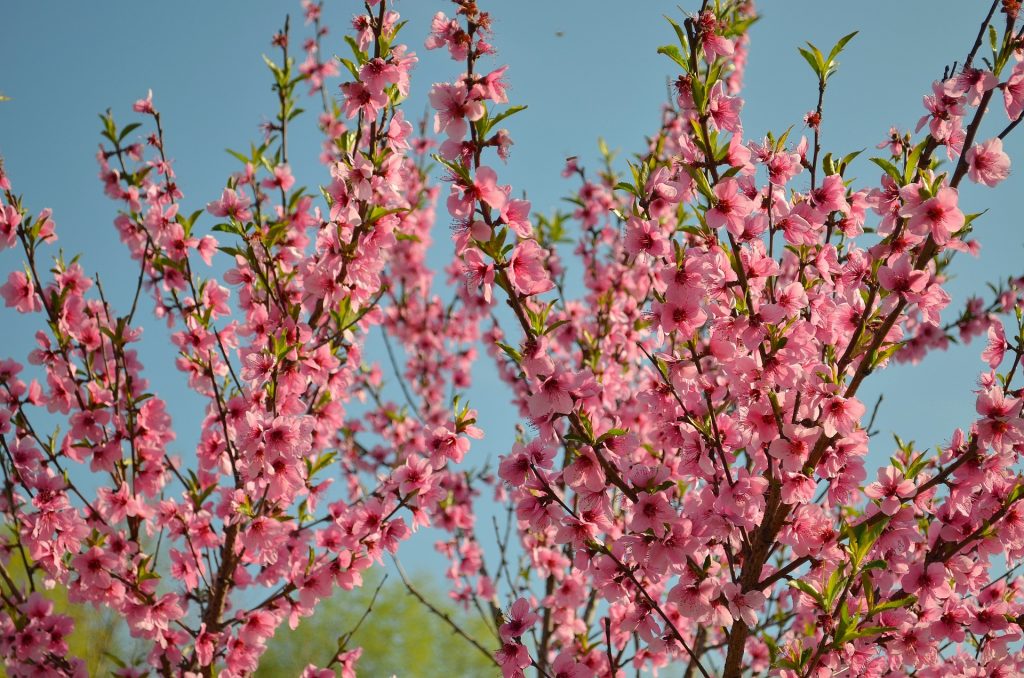
An Alabama freeze event has left its mark on the state’s peach crop. But it’s not the Alabama freeze event you might be thinking of.
Edgar Vinson, assistant research professor and Extension specialist in the Department of Horticulture at Auburn University, believes the freezing temperatures experienced in February when the trees were dormant did more damage than the late-season freeze during Easter weekend when the trees were blooming.
“It’s not the crop they were expecting initially. We did get sufficient chill for most varieties. But the February freeze did do some damage. It did do some fairly significant damage, but we’re expecting a pretty decent crop,” Vinson said. “It didn’t get as cold (Easter weekend) as we had thought initially. I think it got just above freezing. The ambient temperatures got just above freezing. It did do some damage, but I don’t think it did the damage that it did back in February; the freeze that we had in February.
“If some growers had some wind machines to help protect, they would use them. The wind machines would help in those situations, whereas during the last freeze that occurred in February, it was windy, really cold temperatures; wind machines are not very useful in those cases. A lot of growers would not have even thought to use them because the crop was still so dormant. It was just unexpected that it would do the damage that it did.”
Vinson expects peach growers to begin harvesting this year’s crop at the end of May, first part of June.
Neopestalotiopsis Fruit Rot is not just impacting Florida strawberry producers. It has quickly made its way north. Just ask Georgia strawberry farmer Bill Brim.
Photo by Natalia Peres/UF: Shows the effect of Neopestalotiopsis Fruit Rot on strawberries.
“It just wiped (my strawberries) out. As a matter of fact, we sprayed it with roundup (Wednesday),” Brim said.
Brim’s strawberry production equated to 12 acres.
“It’s a pile of money, too, the plants; about $60,000 worth of plants,” said Brim, who is in his fifth season growing strawberries at Lewis Taylor Farms, in Tifton, Georgia. “We didn’t have it last year. If we had it, we didn’t know it. It wasn’t noticeable. There might have been a few plants.”
But that wasn’t the case for this year’s crop.
Symptoms
Neopestalotiopsis causes leaf spots on strawberry plants. It develops quickly and produces spores on the leaves. It can cause severe leaf spotting and fruit rot under favorable weather conditions. The disease was first discovered during the 2018-19 season in five farms and was attributed to one nursery source in North Carolina.
“We’re going to have to change vendors is what I think we’re going to have to do; get them out of California, Canada, somewhere. Can’t grow them in Florida, send them over and plug them out in North Carolina and get a clean plant, don’t look like,” said Brim, who is not the only Georgia strawberry farmer impacted. “It’s not just us, there’s several other growers that have got it, too.”
Disease instances have increased over the past three seasons. The disease was also discovered in fields that had it the prior season.
One Florida producer even called it the “Greening of Strawberries.”
UGA CAES photo/County agents Shane Curry, Ross Greene and Zack Williams planting pecan trees at the Vidalia Onion and Vegetable Research Center with Andrew Sawyer, SE District Area Pecan Agent and coordinator of the grant project which includes short-term demonstration plots and long-term research trials.
University of Georgia Cooperative Extension is conducting pecan research at the UGA Vidalia Onion and Vegetable Research Center (VOVRC) in Toombs County.
Pecan trees were planted earlier this year and will be the basis for long-term research plots and short-term demonstration plots.
Research will focus on low-input pecan varieties that can successfully grow in Georgia without incidence of pecan scab. Plots will also serve as hosts for field days for Extension agents and producers.
Andrew Sawyer, Southeast District Area Pecan Agent, initiated the project last year with a grant from the Georgia Pecan Commission.
Sawyer compiled a team of specialists, county Extension agents, local growers and growers association representatives to make sure everyone had a hand in the process.
“This is the essence of true Extension work,” he said of the team effort that helped get more than 140 pecan trees planted in February this year.
The team planted various low-input cultivars including McMillan, Lakota, Avalon, Excel, Eclipse and Kanza. Sumner, an older variety, was also planted to be used in comparison, due to its susceptibility to pecan scab fungus and popularity among growers in Southeast Georgia. Many seedling trees were also planted which will be grafted with newer varieties in a few years.
Sawyer and his team will highlight differing management tactics, including fertilizer, pruning, irrigation and spacing regiments and their potential impact on growth and yield.
“Pruning is a very important cultural practice that is easier to demonstrate than discuss,” explained Sawyer, “so this site will be good for demonstrating the right way to prune pecans within their first four years.”
This pepper weevil grub was found inside a jalapeno pepper.
According to the South Florida Pest and Disease Hotline, pepper weevil pressure is high in Palm Beach County. Pepper weevil numbers are also increasing around the Homestead, Florida area.
Respondents report that weevil pressure continues to increase around southwest Florida. Older fields are hosting high populations, while adults are now showing up in most younger pepper plantings.
Weevil numbers remain mostly low in the Manatee Ruskin area.
Click here for management options of pepper weevil.
South Florida received a substantial amount of rainfall last weekend, but it still remains dry across the region. According to the Thursday’s release of the US Drought Monitor the majority of south Florida and parts of central Florida are abnormally dry. Even counties like Monroe, Collier and Palm Beach are classified ‘D1’ or in a moderate drought.
The abnormally dry conditions extend as far north as Citrus County, Marion County, Putnam County and Flagler County.
South Georgia still has enough moisture from the excessive rains it received in February. There are about 20 counties in north Georgia that are abnormally dry. They start in Henry County and Clayton County and extend as far east as Elbert County and Hart County.
There is also a few counties that abnormally dry along the Georgia-Alabama line. They include Haralson County, Carroll County and Heard County.
In Alabama, the abnormally dry counties are Cleburne County, Randolph County and Chambers County along the Georgia-Alabama state line. There is a small portion that is abnormally dry in Monrore County and Wilcox County.
Nematodes as seen from under a microscope. Photo courtesy, Peter DiGennaro, UF/IFAS.
Artificial intelligence (AI) may help Florida producers combat one of the most destructive pests farmers encounter every year.
University of Florida (UF) scientists are using AI to identify parasitic nematodes more rapidly. Some nematodes live in the ground and harm plants, while others are beneficial. It is important to distinguish which ones are which, said Peter DiGennaro, a UF/IFAS assistant professor of entomology and nematology.
DiGennaro and Alina Zare lead the research, which was among 20 projects to receive $50,000 last year through the UF Artificial Intelligence Research Catalyst Fund.
“We have the AI algorithms already developed but not for this issue,” Zare said. “We will need to apply them to the nematode imagery and further develop and validate the algorithm for this issue.”
Quicker Management Option
Growers need a quicker alternative in identifying nematodes in their soil to decide on the most efficient management treatment, DiGennaro said. Artificial intelligence could assist with this initial diagnosis of the nematode, making it quicker and cheaper to know what types of nematodes are in farmers’ fields.
DiGennaro’s colleagues at the UF/IFAS Nematode Assay Lab receive about 7,000 samples each year from commercial growers, residents and golf courses in Florida. Lab specialists plan to view each sample with a digital microscope, which would capture about 15,000 images per sample, DiGennaro said. This can generate hundreds of thousands of images each year.
Time Consuming
This manual process is extremely time consuming. When the lab receives a soil sample, specialists extract the nematodes from the soil and view them under a microscope. They identify each kind of harmful nematode, count how many there are and assess the potential for plant damage.
With AI, the technology has the power to automate some of the processes, Zare said. DiGennaro and Zare are creating a machine-learning algorithm.
“Essentially, we pair each training image with a label,” said Zare, whose lab specializes in developing machine-learning algorithms that can learn from imprecise image-level labels, which are usually much easier, faster and cheaper to create than precise training labels. “Machine learning algorithms generally learn by repeatedly updating parameters until the output of the algorithm matches the desired outputs provided in the training labels.”
The algorithm will speed up the identification process of the nematodes. If the project succeeds, scientists could also tell growers which management practices would be most suitable to use to protect their crops.
“If artificial intelligence helps make nematode identification accurate and practical, it might reduce the lab’s labor costs and decrease turnaround time for nematode diagnosis,” said Billy Crow, UF/IFAS professor of nematology and director of the UF/IFAS Nematology Assay Lab. “The quicker we can tell a grower what is going on, the quicker they can do something about it.”
Almost two weeks after a cold Easter weekend, North Florida watermelon producers are still counting their blessings. They understand the minimal damage their crop sustained during a chilly Easter weekend could have been a whole lot worse.
Bob Hochmuth
“It was really, really close,” said Bob Hochmuth, UF/IFAS Regional Specialized Extension agent in Live Oak, Florida. “Because a lot of those plants were very well established; in other words, they had a big root system and the dark plastic gives you an opportunity for a lot of warming in that root system, so they have the capacity, physiologically, to come back in a hurry. That’s basically what happened. The younger plants that were more recently transplanted are probably in a little different situation.
“Because a lot of our crop had been planted for basically a month, the rebound was a result of the fact that we had large, well-established root systems that were able to push the crop back.”
How Cold Was it?
Hochmuth estimated that temperatures in the Suwanee Valley area – Levy County, Gilchrist County, Alachua County – on up to the Georgia line, the temperature range was 32 degrees Fahrenheit to 37 degrees. Most temperatures centered around 33 degrees or 34 degrees. Heavy frost was also constant throughout most throughout the area.
Hochmuth also believes farmers will continue to see damage from the frost that didn’t show up in the first day or two. But don’t be alarmed.
“As the crop gets older and older, we’re going to continue to see probably the remnants of damage tissue that dries out over the course of the season. We just need to have the anticipation that’s going to be the case,” he added. “It doesn’t mean that some new disease necessarily has moved in on the crop or anything like that.”
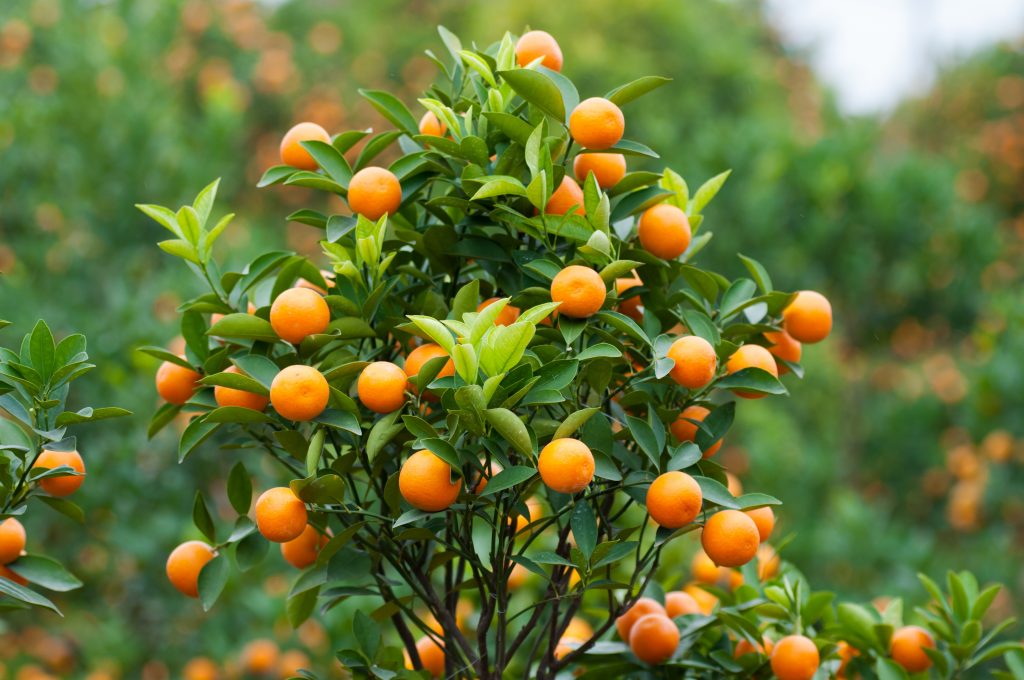
One Georgia farmer sees citrus as an emerging industry in Georgia with huge potential. Justin Corbett even compares it to another popular crop that’s dominated the state’s fruit landscape.
“I think it has the potential to be a big industry. I compare it to blueberries 10 or 15 years ago, I just hope we don’t follow the same path they followed with imports affecting them now,” Corbett said.
Corbett is one of many farmers in Georgia who are trying their hand in the citrus sector with satsumas. Satsumas are the most grown citrus in Georgia. Between 80% and 90% of Georgia citrus is satsuma oranges, according to Lindy Savelle, President of the Georgia Citrus Association.
They are a cold-tolerant citrus, and once established, can withstand temperatures as low as 15 degrees. This makes them an effective crop for Georgia producers. They’re also seedless and easy to peel.
“It’s definitely an emerging industry. We’re trying to build a brand with it and trying to get consumers aware of what a satsuma is. Once the consumer tries it, they love it,” said Corbett, whose trees have produced fruit for almost six years. “It’s a challenge to get them in to retail locations and different places just to get them out there. Where we’ve got them in, they’ve been real pleased with how they’ve turned out.”
Along with marketing, another challenge that Corbett and other Georgia citrus producers face are late-season freeze events.
“We have been hit in the past where we would get a mid-March freeze and wind up with losing some bloom, losing some yields,” Corbett said.