Blog

  • Blueberry Imports Devastating to Florida Industry

    Florida’s agricultural and political leaders had their say Tuesday in describing the negative impact blueberry imports have had on the state’s farmers.

    “Agriculture is essential to Florida’s economy. Our No. 1 economy is tourism, obviously, but our No. 2, and it’s very close behind tourism is in fact agriculture. It means so much to Florida that it’s a $131 billion economic impact, providing nearly 1.4 million jobs,” said John Rutherford (FL-04), who testified during a virtual hearing with the U.S. International Trade Commission that blueberry imports are devastating to the state’s economy.

    “For years Florida has been impacted by countries taking advantage of our domestic market for produce. Growers in my district and around the state have voiced their concerns by providing data which details the harm caused by these imports. Unfortunately, as a result of these issues, many producers have had to shut down their farms through no fault of their own.”

    Statistically Speaking

    Nikki Fried, Florida Ag Commissioner, said that the state’s blueberry industry is valued at $62.3 million, but its market share has declined by 38% since 2015. Mexico’s market share has increased by 2,100% since 2009.

    Brittany Lee, Executive Director of the Florida Blueberry Growers Association and Vice President and Farm Manager of Florida Blue Farms in northeast Florida, spoke personally of how imports have impacted her family’s farm.

    “In 2010, the year we planted blueberries on my farm here, there was only 1.8 million pounds of Mexican blueberries in the Florida window which we consider March, April and May. Last year there was 51.68 million pounds in that window,” said Lee.

    “Mexico has concentrated their production in the mid-March to early April season which is directly on top of Florida. I can tell you that the impact has been absolutely devastating to the Florida industry.”

  • COVID Forces Farmers to Consider Alternate Marketing Opportunities

    Photo by Clint Thompson/Shows boxed produce being sold direct to consumers.

    COVID-19 altered the marketing plans of Southeast vegetable and specialty crop producers in 2020. Restaurants closed, which crippled certain sectors of the fruit and vegetable industry.  

    Farmers must continue to adjust as a new season approaches while the pandemic continues. Jessie Boswell, Alabama Regional Extension agent, who specializes in commercial horticulture and farm and agribusiness management, believes the pandemic’s impact has forced farmers to realize their marketing options needed to expand and could expand in 2021.

    “I think it made a lot of farmers realize how flexible they have to be and actually noticing these other marketing channels that they have, they may not have even noticed it before,” Boswell said.

    “A lot of them may not even have realized how to do those different channels. Maybe they’ve been meaning to look into it later, and this just kind of made them realize they’d have to be more flexible in kind of looking ahead more so than they were in the past.”

    Boxed Produce/CSA

    Farmers like Bill Brim in Georgia boxed their produce and sold direct to consumers to offset decreased demand. Community Supported Agriculture (CSA) was another option that paid off for some producers.

    “I know of a farm and they were planning on transitioning to a CSA last spring, spring of 2020, and they were already planning that before the pandemic even happened. They had a way better year than they even could have imagined,” Boswell added. “They had already started setting up for direct to consumer or a CSA box. They sold an astronomical amount. They sold out, actually.

    “That’s probably what I have seen most people do is switch to more of an online (option) or CSA. Even some of the ones that aren’t technology savvy started selling stuff on Facebook, trying to sell their greens or whatever they had because their other marketing channels were not open.”

    Of course, encouraging some farmers to consider alternate marketing strategies is easier said than done.

    “I know a lot of farmers that like to do things the way they’ve been doing it for the past decade. They’re not always the biggest fans of change,” Boswell said.

  • Georgia Vegetable Growers to Vote to Continue Assessment

    Georgia vegetable growers will vote Feb. 1 through March 2, 2021 to determine the continuation of the Georgia Vegetable Commission marketing order which allows assessment of one cent per marketing unit of vegetables as described in the current marketing order.

    Photo submitted by UGA’s Stormy Sparks/Shows whiteflies on a vegetable plant.

    The marketing order applies to growers with 50 acres or more of total annual production of the following crops – beans, bell pepper, specialty pepper, broccoli, beets, cabbage, cantaloupe, carrots, cucumbers, eggplant, greens (including collards, turnip greens, mustard and kale), squash (including yellow, zucchini and winter squash), sweet potato and tomato. 

    Funds collected by the Georgia Vegetable Commission are used for research, education and promotion of the crops mentioned above. It is the policy that the commission allocates at least 75% of money collected toward research projects by the University of Georgia and other research institutions that best serve Georgia growers. Some of the areas previously funded have focused on whiteflies, fungal disease diagnoses and control, viral diseases, variety development, fumigation, and weed control. 

    The Georgia Vegetable Commission was established by the Georgia General Assembly in 2006 at the request of the Georgia vegetable growers. The marketing order must be reapproved by vote of the eligible vegetable growers every three years by a two-thirds affirmative vote. 

    If you are a qualified grower and have not received a ballot in the mail by Feb. 10, please contact Andy Harrison:

    Andy Harrison

    Manager, Commodity Commissions

    Georgia Department of Agriculture

    Andy.harrison@agr.georgia.gov

    (404) 710-1196

  • PPP an Option Again for Business Owners Amid Ongoing Pandemic

    The second round of the Paycheck Protection Program (PPP) offers financial relief to business owners continuing to struggle amid the ongoing coronavirus pandemic.

    Bob Redding, who works for the Redding Firm and serves as a lobbyist for agricultural groups in Washington, D.C., encourages vegetable and specialty crop producers to consider enrolling in the program.

    Redding

    “We also have a second round of the Paycheck Protection Program. If you participated the first round, you ought to consider it again. If you didn’t participate in the first round of PPP, you can still participate in the second round. There are no prohibitions there. It’s a little broader than before, a little more restrictive in some areas. But the criteria used for the forgiveness portion of the loan include more items,” Redding said.

    Paycheck Protection Program Information

    According to the U.S. Department of Treasury, the U.S. Small Business Administration (SBA), along with the Treasury Department will re-open the PPP loan portal to PPP-eligible lenders with $1 billion or less in assets for First and Second Draw applications on Friday, Jan. 15 at 9 a.m. The portal will open to all participating PPP lenders on Tuesday, Jan. 19 to submit First and Second Draw loan applications to the SBA.

    According to the U.S. Department of Treasury press release, First Draw PPP Loans are for borrowers who have not received a PPP loan before August 8, 2020. The first round of PPP ran from March to August 2020. Second Draw PPP Loans are for eligible small businesses with 300 employees or less, that previously received a First Draw PPP Loan, will use or have used the full amount only for authorized uses, and that can demonstrate at least a 25% reduction in gross receipts between comparable quarters in 2019 and 2020. The maximum amount of a Second Draw PPP loan is $2 million.

  • Georgia Blueberry Producer: In the World I Live in, It’s a Problem

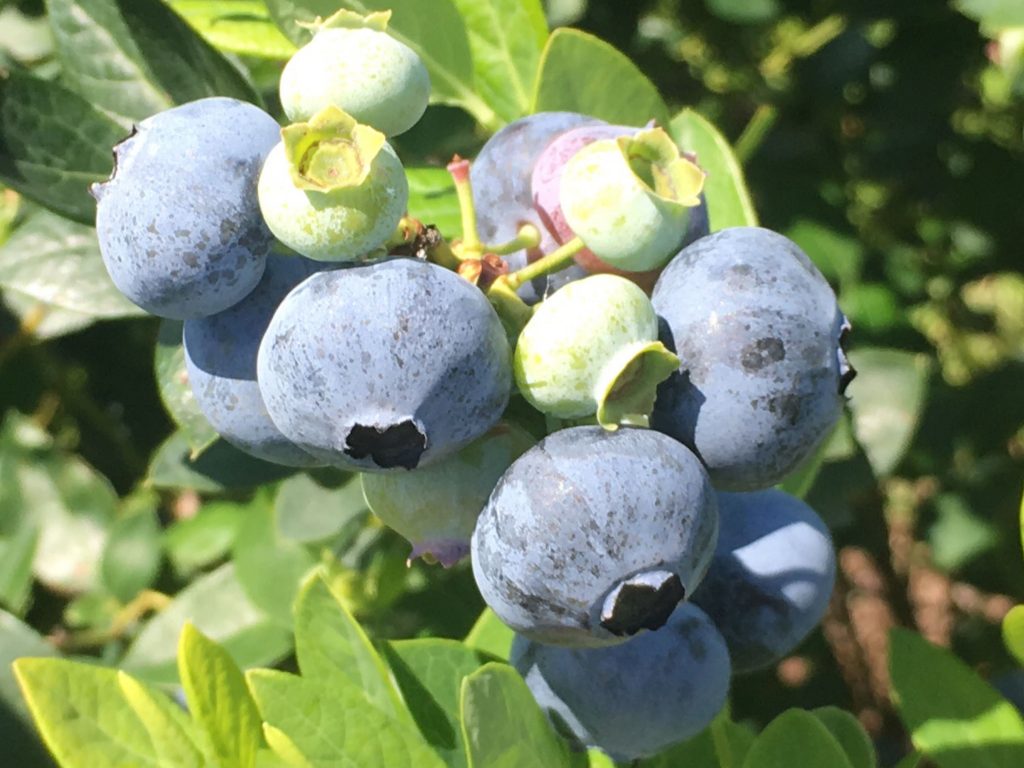
    blueberry

    Foreign imports of blueberries do not complement the U.S. domestic crop. Farmers and industry leaders in the Southeast sounded insulted about the notion that imports do not actually compete with their crop. They were asked about it during Tuesday’s virtual hearing with the U.S. International Trade Commission (ITC).

    “I find the comment that imports don’t affect us, it’s confusing to me, and I wonder if they’re trying to be comical,” said Jerome Crosby, Georgia blueberry grower and chairman of the American Blueberry Growers Alliance. “My farm operates both in the frozen world as well as the fresh world.

    “On the frozen side, I have watched my sales, net margin drop from about 80 to 90 cents per pound for grade A. To this year, I received 38 to 40 cents per pound to pay off my farm expenses with. In the world I live in, it’s a problem.”

  • Auburn Extension Specialist Encouraged by Chill Hours Accumulation

    Cooler temperatures so far in 2021 should be an encouraging sign for Alabama fruit producers who need chilling hours to make a crop this year.

    “I’m a little more encouraged,” said Edgar Vinson, assistant research professor and Extension specialist in the Department of Horticulture at Auburn University. “We did accumulate more and more than we originally thought by the end of December. It was still a little bit short. It could be made up in January or later this month and into February. It’s not the problem it was shaping up to be.”

    Vinson said in mid-December that chill hour accumulation was a concern. He added that peach producers needed to have between 450 and 500 chill hours by the end of 2020. Vinson said last week that chill hours in Central Alabama were around 400. While he is encouraged, Vinson believes there is still more to catch up before producers don’t have to worry about chill hour accumulation.

    “We’re still a little concerned. We’d like to see a little more towards the end,” Vinson said. “What we’re looking for are warming trends. We didn’t see very many of those, so that’s good. Especially those warming trends of short duration, those tend to be a little more costly when it comes to chill accumulation, like those 24-hour warming cycles.”

    Peaches need chill hours to mature. The required chill hours depend on the peach variety, but most growers hope to get around 1,000 chill hours before spring.

    Temperatures do not need to reach below freezing for chill accumulation to occur. Optimal chilling is at 42 degrees Fahrenheit.

  • Weed Management a Key Factor in Vegetable Production

    Photo by Stanley Culpepper/Shows nutsedge.

    Weed management remains a vital strategy all vegetable producers need to implement in order to have a successful season.

    University of Georgia Cooperative Extension weed scientist Stanley Culpepper implores farmers to stay vigilant in keeping weeds out of their fields.

    “What you want to do is you want to remove weeds from the field because they compete with the crop. They compete for water. They compete for sunlight. They compete for your nutrients,” Culpepper said. “In most situations when you talk about a vegetable crop, not all, in most situations the weed is a better competitor than the crop. If you’re in corn, corn’s a really good competitor. A lot of weeds can’t compete with corn.

    “But in most of our produce crops, because we start off very small and it takes a long time to get going, those weeds will basically take advantage of the lower competitiveness of the crop and then win out.”

    Weeds are problematic no matter what time of the year and no matter what crop is being produced. Whether you are talking about wild radish or primrose this time of year or nutsedge in a fumigated plasticulture production system during the spring, weeds are a top priority that need to be considered before planting ever begins.

    “Before you ever start a conversation, you say look vegetable weed control is really challenging. There can’t be any weed emerge at planting. It’s very likely that if we’re going to implement a herbicide program we’ve got to start it before we ever plant,” Culpepper said.

    “It’s not like cotton. It’s not like corn. It’s not like soybeans where okay I made a little mistake, I’ll catch up. That does not exist in the world of weed control in southeastern vegetable production.”

  • What Next in ITC Blueberry Investigation?

    The long-awaited hearing with the International Trade Commission (ITC) for blueberry farmers has come and gone. The case against blueberry imports from foreign competitors has been made.

    Now what happens?

    Bob Redding, who works for the Redding Firm and serves as a lobbyist for agricultural groups in Washington, D.C., outlines the potential outcomes that will occur following Tuesday’s hearing. It all depends on the recommendations the ITC makes to President-Elect Joe Biden and what path he chooses to take after assumes office.

    Potential Outcomes

    “The president can ignore it, change it or accept it. This will be quickly, after the ITC action, a political issue again with the administration. Having said that, we do not know the position of the president yet, on this issue. It’s too early,” Redding said.

    “We need to get a U.S. Trade Rep in place first and we will start working with them, our congressional delegations start working with them to hopefully get a good position on that issue.”

    The case was made tougher considering the American Blueberry Growers Alliance’s opposition.

    “We have a lot of groups against us. A lot of the countries that are pushing product at a bad time of the year have hired up lawyers, economists, lobbyists and consultants to fight the American Blueberry Growers Alliance position in trying to get relief from seasonal imports at the ITC,” Redding said.

  • States See Changes in U.S. Citrus Forecast

    UF Glow variety of citrus. Photo taken 11-17-17

    The U.S. Department of Agriculture’s (USDA) National Agricultural Statistics Service (NASS) dropped another 2 million boxes from the January forecast for Florida’s orange crop but added 200,000 boxes to the state’s grapefruit projection.

    ORANGES
    Florida’s total orange crop is now forecast at 54 million boxes, down 4 percent from 56 million boxes in December. The orange reduction was in the non-Valencia crop, down from 22 million boxes to 20 million boxes. NASS reported that final droppage of non-Valencia oranges (excluding navels) at 43 percent is above the maximum and the highest in a series dating back to the 1960-61 season. The Valencia projection was unchanged at 34 million boxes.

    The projection of California’s orange crop increased 500,000 boxes to 51 million boxes. The Texas orange projection was unchanged at 1.5 million boxes.

    GRAPEFRUIT
    Florida’s total grapefruit crop is now expected to be 4.6 million boxes, up 5 percent from December. The additional 200,000 boxes in January were in red grapefruit, now at 3.9 million boxes. White grapefruit is unchanged at 700,000 boxes. Projected fruit size at harvest and droppage of both reds and whites are projected to be above average.  

    California’s grapefruit crop forecast climbed 400,000 boxes to 4.2 million boxes. The Texas grapefruit projection rose 100,000 boxes to 5 million boxes.

    TANGERINES AND TANGELOS
    The Florida tangerine and tangelo forecast was unchanged at 1.1 million boxes. California’s tangerine and tangelo projection was also unchanged at 23 million boxes.

    LEMONS
    Lemon forecasts rose for both Arizona and California. The Arizona projection climbed 600,000 boxes to 1.9 million boxes. The California forecast jumped 2 million boxes to 24 million boxes.

    See the full January forecast here.

    Listen to the forecast report from Mark Hudson with NASS:

    The next citrus crop forecast is scheduled for Feb. 9. You can listen to it here.

    Thank you to the 2020-21 citrus crop forecast sponsors: Aerobotics, Farm Credit of Florida, Labor Solutions, OrangeRX and TradeMark Nitrogen Corp.

    Source: USDA’s National Agricultural Statistics Service

  • Troxler Promotes Two to Leadership Roles with NCDA&CS

    RALEIGH – Agriculture Commissioner Steve Troxler announced on Monday the promotion of Kaleb Rathbone of Waynesville to assistant commissioner for Western NC Agricultural Programs and Small Farms and Teresa Lambert of Laurel Springs as the director of the Research Stations Division.

    Troxler

    Lambert fills the role created by Rathbone’s promotion. Rathbone replaces Bill Yarborough who retired as special assistant to the Commissioner, and he will also assume additional duties and oversight as an assistant commissioner.

    “I am always pleased to have well-qualified and dedicated staff members step into new leadership roles at the department,” Troxler said.

    “Both Kaleb and Teresa started working with the department in temporary positions at research stations during college, eventually returning to full-time positions and rising through the ranks. Their long-term commitment to agricultural advancement and innovation speaks to their drive to move North Carolina agriculture forward, help improve the bottom line for farmers and ensure we meet growing global food demands. I know Kaleb and Teresa will continue to serve our farmers well in these new roles.”

    Rathbone graduated from the University of Tennessee with a bachelor’s degree in soil science and a master’s degree in Agriculture and Natural Resources management.

    He most recently served as the director of the Research Stations Division, providing leadership, direction and oversight for the state’s 18 research stations from the mountains to the coast. Prior to that, he was the superintendent of the Mountain Research Station in Waynesville for nearly eight years and was also a research specialist there for over five years.

    Rathbone is active in the community, serving in advisory and leadership roles with Carolina Farm Credit, Haywood Community College and state and local Farm Bureaus and Cattleman’s Associations.

    Lambert graduated from N.C. State University with both a bachelor’s degree in animal science and a master’s degree in poultry science.

    She brings over 26 years of state service to her new role, having most recently served as the superintendent of the Piedmont Research Station in Salisbury for nearly five years. Prior to that she worked for over six years with the N.C. Cooperative Extension Service in Statesville and Sparta as an extension agent specializing in row crops and livestock. Lambert was a meat and poultry relief inspector for nearly five years covering processing facilities in 16 northwestern counties. In that role, she also provided on-site training to new employees.

    She has also worked as a research technician at the Upper Mountain Research Station in Laurel Springs and a livestock extension agent in Winston-Salem.

    Brad Graham, the crop unit supervisor and long-time employee of the Piedmont Research Station, will serve as the interim station superintendent.

    Rathbone and Lambert have already assumed their duties.