Alabama peach trees continue to receive high chill hours to help make a crop this upcoming spring.
File photo shows peaches growing.
According to the Alabama Extension, chill hours remain high at various locations throughout Alabama.
As of early Friday morning, there were 678 standard chill hours at the Auburn University Turf Unit in Auburn, Alabama, compared to 617 last year. There were 860 chill hours at the Chilton County REC in Thorsby, Alabama, compared to 778 last season. There was 781 chill hours at the EV Smith Research Center HQ in Shorter, Alabama, compared to 645 last year. There was 1,182 chill hours at the Upper Coastal Plain Substation in Winfield, Alabama, compared to 1,084 last year.
Cool temperatures are expected to continue through next week. According to weather.com, temperatures are expected to drop in the 20s next Friday (Feb. 12) through Sunday (Feb. 14).
Peaches need chill hours to mature. The required chill hours depend on the peach variety.
Recent work by researchers at the University of Georgia (UGA) has targeted developing more robust smart irrigation scheduling methods for blueberries. Two main methods have been the development of a smart irrigation scheduling app and utilizing an unmanned aerial system (UAS).
File photo shows blueberries growing.
Wesley Porter, associate professor and Extension precision agriculture and irrigation specialist at UGA, discussed these new methods during the 2021 virtual Southeast Regional Fruit and Vegetable Conference.
Irrigation Scheduling App
According to Porter, Georgia blueberry growers now have access to the Blueberry app, a smartphone application to supplement their practical knowledge with technical data on when to irrigate crops.
The Blueberry app runs a model that uses reference evapotranspiration (ET) data and the Penman-Monteith equation to calculate the irrigation needs of blueberries and predicts the crop ET data for the next seven days.
According to Porter, by knowing the total ET for the next seven days and the crop coefficient values of the blueberries, the crop ET of blueberries can be calculated, and irrigation events adjusted accordingly.
Furthermore, the app also eliminates the use of soil moisture sensors, reducing overall expenses.
To download the app, search for ‘SmartIrrigation Blueberry’ in the app store.
UAS Irrigation Research
UGA is also conducting UAS irrigation research. The research trial, taking place in Alma, Georgia, is using UAS to record canopy properties in a field, containing 16 soil moisture sensors and receiving two different irrigation treatments.
According to Porter, the thermal images obtained from the UAS are a valuable tool to quickly detect irrigation related issues. The technology has the ability to present the vigor of the blueberries and compare the effect of different irrigation treatments on the blueberries.
Operating and learning how to use the software on an UAS can come with a learning curve, so knowing how to use them accurately will produce the most accurate results, Porter says.
Less than ideal weather conditions this week severely impacted vegetables grown in the South Florida area. Sam Accursio, who’s harvesting green beans and yellow and green squash in Homestead, Florida area, confirmed damage to his crops following this week’s extreme wind speeds.
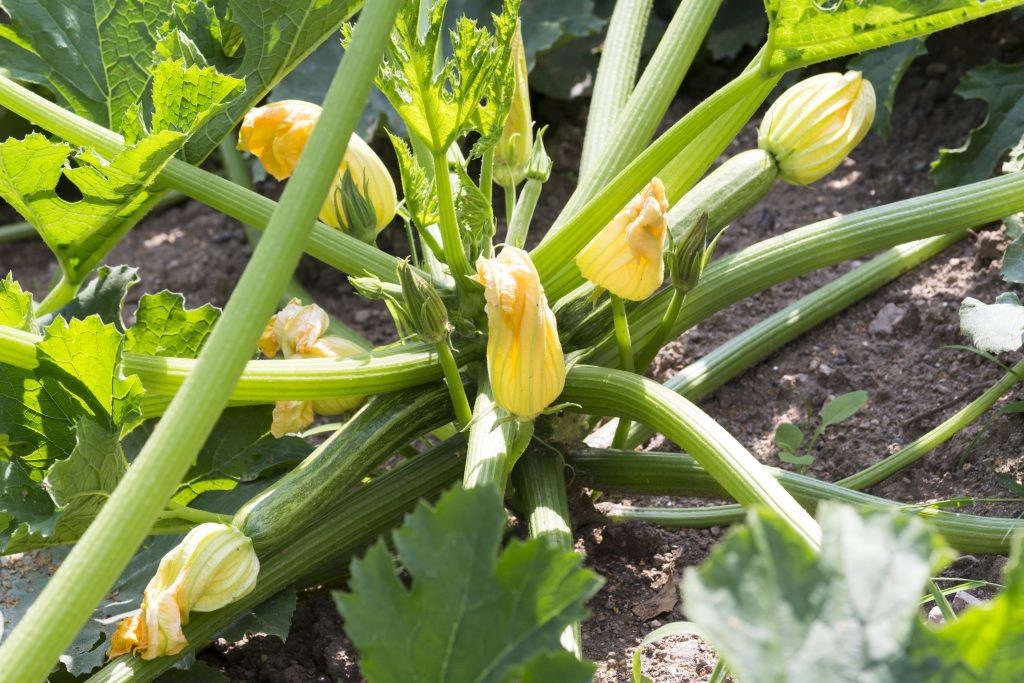
File photo shows squash. Squash, a crop produced in South Florida, was one of numerous crops impacted by high wind speeds this week.
“What we’ve had the last three days is 30 mile per hour winds,” said Accursio on Wednesday. “That’s what has really hurt us. It has burned the west side of the bean plant. The squash took it a little better, but the beans, the plant is burned.
“It’s just like me and you standing outside, and our faces will just get burned if we stand there long enough.”
Challenging Winter Weather
It continued a pattern of difficult weather conditions for South Floridians trying to produce a crop. Cooler than normal temperatures significantly slowed volumes of produce headed to the market, according to South Florida Pest and Disease Hotline.
The challenging weather conditions started in the fall with extreme rain events, including Hurricane Eta in early November.
“We’ve been behind on everything maturing,” Accursio added. “We have been unseasonably cool. This is the coolest we’ve been in 10 years for the last 45 days. It’s been crazy, because prior to that, the rain devastated us. We grew our crops in October, November and December with 30 inches of rain. When that finally stopped, we had beautiful weather in January, a little bit too cold but it was beautiful; not a drop of water.
“We have some outstanding crops, but now, this three days of wind, it has just devastated the actual squash; not the plant. The plant took it better. But with the beans, the plants took it worse and the beans still look pretty. It’s kind of opposite.”
Accursio said they still harvested the damaged fruit but either had to throw it away or package as a No. 3 for food service.
South Florida producers can take solace in knowing calmer and sunnier days are ahead.
“We are going to see 80 degrees by the weekend here. We’ll get things growing again pretty quick,” he added.
JASPER, Fla. — Green Point Research, an international phytocannabinoid-rich biomass originator and processor, celebrated the official opening of its Hamilton County headquarters and 32-acre Cannabis Center of Excellence (CCoE) with a ribbon-cutting event held in partnership with Hamilton County Board of Commissioners and Hamilton County Economic Development Authority (EDA), and North Florida Economic Development Partnership.
The event came just several weeks after the company announced its purchase of the property, located in an Opportunity Zone in an economic development agreement with the county.
David Hasenauer welcomed attendees and shared his vision for the future of the campus location that he expects will be a Southeast hub for innovation, sustainable agriculture and economic prosperity. Guest speakers included Deborah Tannenbaum, Florida’s Deputy Commissioner of Agriculture; Holly Bell, Florida Department of Agriculture and Consumer Services (FDACS) Director of Cannabis; Randy Ogburn, Hamilton County Board of Commissioners Chairman; and Chadd Mathis, Hamilton County Economic Development Authority Executive Director.
The campus is already serving as a logistics and drying hub for the company. In December 2020, more than 150,000 pounds of hemp biomass were shipped out of the facility to customers across the Southeast, primarily in Florida. The company’s hemp dryer has also been installed at the facility and provides unique large-scale capacity with its ability to dry greater than four input tons of hemp her hour. Extraction and laboratory equipment is being installed this week that will allow the company to extract and process cannabidiol (CBD), and other refined cannabinoid products.
“Our goal has always been to serve farmers by providing them with the hemp services they need to be successful,” said David Hasenauer, Green Point CEO. “The newly-installed dryer and infrastructure additions will help provide farmers with the scale, accessibility, and expertise needed to more productively and profitably farm hemp. We could not be more pleased to be Cultivating A Better Future in Hamilton County, one of the top producing agriculture counties in the country.”
“Florida’s reputation as an agricultural and economic powerhouse is driven by its superior environmental conditions such as abundant sunlight and rich soil, and a culture of growth and innovation, as demonstrated by this facility,” said Deborah Tannenbaum, Florida Deputy Commissioner of Agriculture. “Congratulations to Green Point Research and Hamilton County on the significant progress with this facility and for the agriculture industry.”
Florida’s Director of Cannabis, Holly Bell, provided context on the growth of the hemp industry and the opportunity that exists for the county.
“Florida has over 23,000 acres approved for cultivation, yet in 2020, only 293 acres were planted,” Bell stated. “Over a third of the acres successfully planted in the state in 2020 were in Hamilton County with Green Point Research and local farms. Hamilton County has demonstrated its capacity for agriculture excellence, and we look forward to continued progress with Green Point’s newly expanded capabilities.”
“Hamilton County’s friendly business climate and superior environmental conditions make it an ideal location for agriculture activity,” said Randy Ogburn, Hamilton County Board of Commissions Chair. “We are very excited to see the progress Green Point Research has already made in its infrastructure and facility build out.”
“We continue to be impressed with David Hasenauer’s vision for Green Point Research and the impact the company will bring to our region,” said Chadd Mathis, Hamilton County Economic Development Authority Executive Director. “As a result of this investment, we expect the agriculture and manufacturing interest in this area will continue for decades to come.”
The company successfully yielded two hemp harvests last year, including one that was deemed the largest legal hemp harvest in the state’s history. Green Point is gearing up for a busy hemp planting season this spring as many farmers will be looking for expertise and services as they prepare to expand current hemp farming acreage or add hemp to their existing crop rotations.
Green Point Research (GPR) is a vertically integrated hemp phytocannabinoid-rich biomass originator and processor founded in 2016. GPR controls its supply chain from seed to processing bulk cannabinoids for business-to-business sale. Satividol, a cannabidiol (CBD) softgel, is among the products the company produces. Contact Green Point Research at 954-500-HEMP to learn more about the Green Point Method® and how to purchase seeds, seed starts, and clones. For more information, please visit www.greenpointresearch.com.
Additional coverage provided by Riverbend News and others.
About Green Point Research
Green Point Research (GPR) is a vertically integrated hemp phytocannabinoid-rich biomass originator and processor founded in 2016. GPR controls its supply chain from seed to processing bulk cannabinoids for business to business sale. Satividol, a cannabidiol (CBD) softgel, is among the products the company produces. Contact Green Point Research at 954-500-HEMP to learn more about the Green Point Method and how to purchase seeds, seed starts, and clones. For more information, please visit www.greenpointresearch.com.
Photo by Chris Tyson/UGA; Shows pecan plantings being done at the Vidalia Onion and Vegetable Research Center.
The University of Georgia (UGA) broke ground on Wednesday at the UGA Vidalia Onion and Vegetable Research Center for a new 5-acre pecan research and demonstration plot.
Photo by Chris Tyson/UGA: Shows a hole for a pecan tree to be planted.
The planted trees will highlight research that focuses on new and current varieties and be used as a location for producer demonstrations as well as other research projects.
Virtual Production Meeting
The University of Georgia will host virtual production meetings on Feb. 9 at 9 a.m. and March 9 at 6 p.m. Pecan team members including Lenny Wells (Horticulture), Angelita Acebes (Entomology), Jason Brock (Plant Pathology) and Andrew Sawyer (SE Area Pecan Agent) will provide presentations.
Commercial hemp production has taken off in the Southeast. A key takeaway from the different production sites in Georgia and Alabama in 2020 was the alarming number of ant problems reported on production.
“A lot of times it was fire ants, but it wasn’t exclusively fire ants. There were some other types of ants as well,” said Tim Coolong, associate professor in the University of Georgia College of Agricultural and Environmental Sciences.
“It was actually a significant issue. It was somewhat sporadic because some people didn’t have any problems with it. But in other fields, people were losing 10% to 15% of their plants, if not more.”
Problem in Alabama As Well
It was a similar problem that was reported in Alabama hemp. Katelyn Kesheimer, Auburn University Assistant Professor and Extension Specialist, said last June, “What I’m seeing now is they’ll kill a plant and just move to the next one pretty quickly. You can see this pattern as they move their mounds. They make these mounds around the base of the plant as they’re feeding.”
The ants were especially detrimental to plants that were young and vulnerable.
Ant Feeding
“They actually feed on the plant. I don’t know if they’re actually consuming that or chewing part of the stem off to use for material in the anthill or ant colony, rather,” Coolong said. “They’ll actually chew into the stem and girdle it and actually put little holes into the stem.
“Because there’s many insecticides labeled for hemp, when we are growing other crops that may have received insecticide applications at planting or prior to planting, ants aren’t an issue in many cases. Either that plant or the land around it is treated already. But in hemp that’s not an option in many cases. Therefore, it’s certainly more noteworthy.”
Baits may be the best source of management for producers gearing up for the 2021 season.
“While the baits themselves are not labeled for hemp production, if those baits are placed outside your production area and then therefore that crop is not coming in contact with them, that would not be an off-labeled use,” Coolong said. “That’s probably the best bet for growers.”
Citrus greening remains a focal point of research at the University of Florida/IFAS. Florida’s citrus producers are counting on research to help sustain what’s left of an industry decimated by Huanglongbing (also known as HLB or citrus greening).
Photo taken by UF/IFAS shows the small size-effect HLB can have on citrus.
Scott Angle, Vice President for Agriculture and Natural Resources at the UF/IFAS, understands the ramifications if improved management options aren’t available soon.
“Citrus greening has obviously devastated the industry in this state. We’re down to less than half of production. That’s despite having spent almost a billion dollars on this disease. To me, it’s hard to imagine, we spend a billion dollars, and we can’t solve a problem,” Angle said.
“It is so complex that it’s just been hard to find those tools that will allow us to manage the disease better. At this point, I don’t even know that we’re looking for a cure. We’re just looking to try to manage the citrus trees in a way that they can hang on longer. So when we do find that cure, that silver bullet that’s not obvious to us at this point; then we can keep those farmers in business.”
Disease Background
Click here for more information about the disease that is transmitted by the Asian citrus psyllid. Symptoms include asymmetrical yellowing of leaves and leaf veins. Later symptoms include twig dieback and decreased fruit production. What fruit a tree produces is often small, lopsided and unmarketable. Fruit will also drop prematurely from infected trees.
Examining the Problem at All Angles
UF/IFAS is examining the problem from multiple angles.
Led by Claudio Gonzalez, a UF/IFAS microbiology and cell science professor, a team of plant pathologists, horticulturists and citrus breeders have identified new management tactics that have slowed the spread of the bacterium.
Ute Albrecht, Ramdas Kanissery and Sarah Strauss, assistant professors at the UF/IFAS Southwest Florida Research and Education Center, are collaborating with University of California-Riverside on a $10 million grant to examine root decline associated with trees infected with citrus greening.
In another research focused on HLB, Lorenzo Rossi, an assistant professor at the UF/IFAS Indian River Research and Education Center (IRREC), and Jawwad Quershi, an assistant professor at UF/IFAS SWFREC, will collaborate with the U.S. Department of Agriculture Agricultural Research Service on a grant to examine different ways to deliver therapeutic growing methods to citrus growers.
“We’re going to continue to help citrus farmers stay in business until we can find longer term cures for this. We’ve got all kinds of things we’re looking at; proteins we might spray in the tree that might interact with the psyllid that can spread the organism. We’ve got other people looking at breeding efforts to try to find rootstocks that might be a little more resistant to it,” Angle said. “Then we’re especially looking at nutrition and irrigation as ways to help keep these plants alive for just a little longer, hoping for that day when the cure is here.”
Cool temperatures and wet conditions are impacting South Florida’s vegetable production. According to the South Florida Pest and Disease Hotline, yields are way below normal. As a result, prices have been good for various crops.
The most recent U.S. Drought Monitor shows South Florida is in good shape with having sufficient rainfall this winter.
“Volumes have been light with yields of many items 30% to 50% of normal or less,” the hotline reported.
South Florida vegetable production has numerous crops coming to market. These include celery, cucumbers, green beans, peppers, squash, sweet corn, tomatoes and watermelons.
According to weather.com, warmer temperatures and drier conditions are expected later this week, with high temperatures in Belle Glade, Florida expected at 82 degrees Fahrenheit on Friday.
South Florida has received sufficient rainfall this winter. According to the US Drought Monitor, the only areas of the state listed as abnormally dry include a portion of north-central Florida. It extends as far south as Orange County, Florida to as far north as Columbia County; along with areas in the Panhandle and on the Georgia-Florida line.
AUBURN UNIVERSITY, Ala. – Whether you’re an amateur gardener or seasoned agriculturalist, there is no denying that pests can sometimes sneak in and ruin a crop. These pests may appear in the form of insects, weeds or plant diseases — and all can be detrimental. Current and former Alabama Cooperative Extension System entomologists, weed scientists, plant pathologists and a pesticide education specialist have compiled an updated list of 2021 integrated pest management guides to keep these pests out of your crop.
Sikora
What Are IPM Guides?
IPM guides, or integrated pest management guides, are updated annually with information usually pertaining to herbicides, insecticides and fungicides that can be used to manage pests on plants.
“They may also include other pest management techniques such as cultural practices and disease resistant varieties that may be appropriate for certain insect pests and plant diseases,” said Alabama Extension plant pathologist and alumni professor Ed Sikora.
The 2021 IPM guides are available for access and download on the Alabama Extension website. The guides include recommendations for commercial horticultural crops; commercial turfgrass; homeowners’ lawns and ornamental and garden crops; houses, buildings and grounds; major row crops; noncropland, commercial trees and ornamental crops; pastures and forage crops and small and stored grains.
Why Are They Important?
The availability of pesticides, as well as application recommendations, are constantly changing, ensuring the need for these annual IPM guides and their up-to-date information. Each guide contains information about the selection, rates, application and proper use.
The 2021 IPM guides allow for the best management decisions to be made for crops or gardens. They are there to help avoid what Sikora warns are “unnecessary and sometimes expensive mistakes.”
“These guides are an excellent resource, and anybody that uses pesticides should have a copy in their truck or have the website easily accessible on their phone or computer,” Sikora said.
Anyone applying these pesticides should make sure to read the manufacturer’s label for directions on proper use and product restrictions. Reading labels ensures the safest application of the product in combination with recommendations included in the IPM guides.
More Information
For more information and access to the integrated pest management guides, visit the IPM page on the Alabama Extension website.
A difficult pecan season was challenging for all and painful for a few. Some farmers compensated for the extremely low prices that lingered all season with bountiful harvests.
However, some producers were not as fortunate. They either had a short crop or marginal crop that were amplified by some of the lowest prices producers haven’t experienced in decades.
Georgia pecan farmer Randy Hudson, who also works with the American Pecan Council, serves on the Pecan Export Trade Committee and is a member of the Georgia Pecan Growers Association, said producers who had a short crop are hurting.
“Not a lot of (the short crop), but there’s some of it. Then we had some growers with some marginal crops that would have paid for themselves had prices been 50 to 75 cents a pound higher or 50 (cents) to a dollar a pound higher. They would have been okay. They would have covered,” Hudson said. “But with the prices that we had and continue to have on marginal crops or short crops or young trees that are just coming into production, they did not cover their experiences.”