University of Georgia Cooperative Extensions will host a virtual Grape IPM meeting on Feb. 25 from 9 a.m. to 11:30 a.m. Specialists will update farmers and industry leaders on new information you will need for the control of diseases, insects and weeds in 2021
Clark MacAllister and other county agents will be hosting a virtual Grape IPM Meeting on 25 February from 9:00 till 11:30. Specialists will update you on new information you will need for the control of diseases, insects and weeds in 2021. You will need to register for this event in order to participate, so pre-register through the link listed below:
The new Florida Medallion strawberry requires a different management strategy than the other varieties currently on the market. But the rewards are potentially great for Florida growers who choose to produce the latest variety release from the University of Florida/IFAS.
Vance Whitaker
Vance Whitaker, strawberry breeder at the University of Florida Gulf Coast Research and Education Center, has a couple of recommendations based on the compact nature of the plant.
“I suggest targeting planting dates earlier in the planting period from Oct. 1 to 10. Because of the compact plant, you can plant this variety fairly early without overgrowing the plant,” Whitaker said. “This variety (also) needs more nitrogen fertilization and maybe more fertilization for all nutrients than Brilliance and Sensation.”
Whitaker also suggests that growers target Medallion to fields that have heavier or wetter soils. Because the plant needs to be pushed a little bit more, that maybe a little bit more difficult to achieve on dry, non-organic soils.
Photo by Vance Whitaker shows Medallion strawberries in a field.
Due to Medallion’s susceptibility to Charcoal Rot disease, growers need to avoid planting in fields with Macophomina infestations.
Stock availability of Medallion is limited. Whitaker estimates between 150 and 200 fruiting acres in 2021-22. But that should increase up to 2,000 acres in 2022-23.
“Florida Medallion is a variety with really great fruit quality and flavor. It is a compact plant that has fewer runners in the fruiting field but is also going to need to be managed a little bit differently than the other varieties,” Whitaker said.
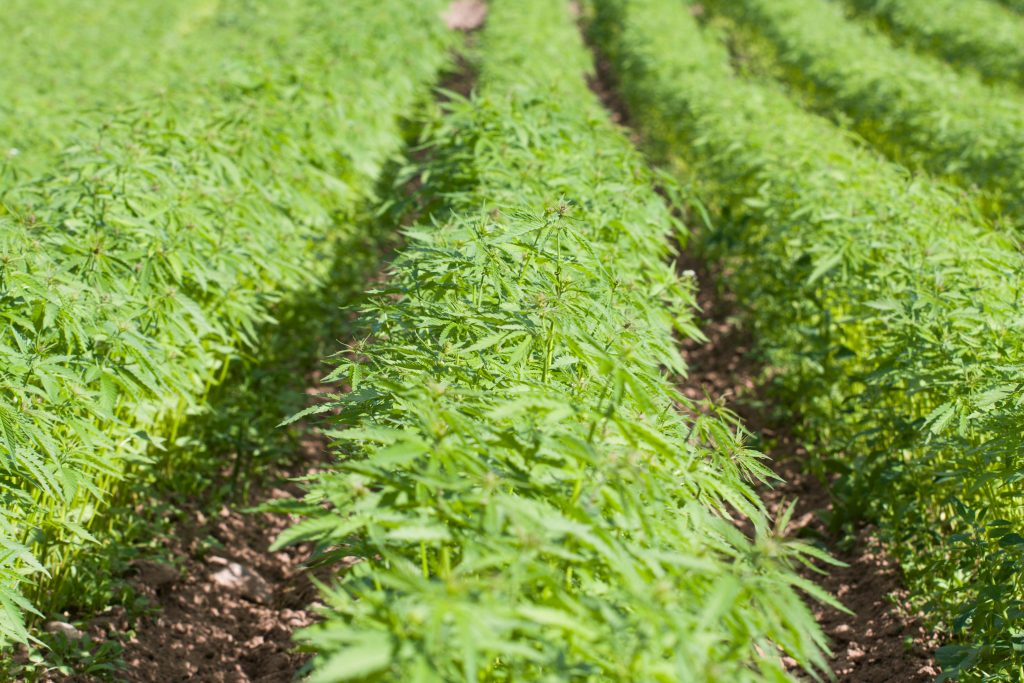
UF/IFAS, in partnership with Roseville Farms, has established a program that provides a science-based evaluation of industrial hemp varieties. As a crop new to Florida, all industrial hemp material must be approved prior to production and sale within the state per state law and Florida Department of Agriculture and Consumer Services (FDACS) rules.
The approval program is led by Brian Pearson, assistant professor of crop management at the UF/IFAS Mid-Florida Research and Education Center.
“The ultimate goal with this program is for growers to have knowledge of that plant and its performance when they purchase it,” Pearson said. “What’s unique about the UF/IFAS approval program is that we are growing all of these plants indoors under very closely controlled environmental conditions. We hope growers feel confident in the high standards and rigor that UF/IFAS puts into this program and know that they can rely on our results and efficacy when approving these varieties, or cultivars as they are called per state statute and FDACS rules.”
Growers interested in having their hemp varieties or cultivars approved by UF/IFAS will visit the Clonally Propagated Hemp Cultivar Approval Program website at https://mrec.ifas.ufl.edu/research/HempApproval/ to access and submit an online application.
Once approved to participate in the UF/IFAS program, producers will submit rootless cuttings and pay a one-time fee that covers the THC testing portion of the approval process. The cuttings are grown under a controlled environment at Roseville Farms for 12 weeks and evaluated for THC levels to ensure the submitted cultivars test at or below the 0.3% total THC levels required by state statute.
Cultivars that meet this requirement will be approved by UF/IFAS and the approval will be sent to FDACS. This approval allows the owner of the approved hemp variety or cultivar to legally propagate and sell the vegetative cuttings here in Florida.
“Transparency with hemp genetics and the potential for the industry to thrive with adapted genetics is extremely important,” said Jerry Fankhauser, lead oversight manager of the UF/IFAS Industrial Hemp Pilot Project. “We don’t have a good handle on what hemp cultivars will grow and develop well here in the state of Florida under our sub-tropical environmental conditions. We are trying to understand that by employing science in a consistent, controlled, 12-week grow process we may better understand which cultivars may be suitable for the Florida market.”
Registration will close soon for the virtual Georgia Produce Safety Alliance Training, which will be held Feb. 23 and 24 from 8 a.m. to noon. Registration closes Tuesday, Feb. 16 and is limited to 15 participants.
This two-day online workshop is offered to produce growers. The training will cover the standardized curriculum designed by the Produce Safety Alliance, which meets the regulatory requirements of the Produce Safety Rule under FSMA (Food Safety Modernization Act). The course will provide a foundation of Good Agricultural Practices (GAPs) and co-management information, FSMA Produce Safety Rule requirements and details on how to develop a farm food safety plan. Individuals who participate in this course are expected to gain a basic understanding of:
Requirements in the FSMA Produce Safety Rule and how to meet them successfully;
Microorganisms relevant to produce safety and where they may be found on the farm;
How to identify microbial risks, practices that reduce risks, and how to begin implementing produce safety practices on the farm; and
Parts of a farm food safety plan and how to begin writing one.
Hemp industry stakeholders announced this week survey results regarding industry attitudes towards a hemp checkoff program.
The results, announced by the National Industrial Hemp Council and the Hemp Industries Association, show that nearly eight out of every 10 farmers and processors support the checkoff program for research, promotion and consumer education. More than six out of 10 farmers and processors support being assessed to fund a program.
NIHC Chair Patrick Atagi says, “This is exciting news for our industry and exciting that there is such wide consensus in our industry to support such a program.”
Funded through assessments on the produced commodity at the first point of sale, checkoff programs allow producers of commodities to pool resources for research, education and promotion efforts to expand sales and improve production efficiencies.
The survey received 270 responses and was conducted online via Nov. 30, 2020, until Dec. 31, 2020.
(From the National Association of Farm Broadcasters)
The American Blueberry Growers Alliance’s (ABGA) stance on imports has not changed over the years: serious injury has been inflicted on American farmers, especially those in Florida and Georgia.
But where does President Biden stand on this issue? That’s the stance that will ultimately decide the Section 201 investigation regarding blueberry imports. Even if the International Trade Commission (ITC) decides in the ABGA’s favor with its vote on Thursday, the final decision rests with Biden and his administration.
“When people asked me about this from the get-go, I felt like we’re going to win in the ITC, but does the president sign it or not? That’s a 50-50 coin flip maybe, I don’t know. People smarter than me can figure that out,” said Ryan Atwood, who lives in Mount Dora, Florida and farms 56 acres of blueberries, manages another 350 acres and is part-owner of the largest packing house in the Southeast United States.
Virtual Hearing with ITC
The ITC’s decision on Thursday comes a month after ABGA members and industry and congressional leaders testified in a virtual hearing before the ITC about the negative impact blueberry imports from Mexico, Peru, Chile, Argentina and Canada have had on the domestic market.
If serious injury is found, the ITC will formulate a recommendation. But the president will make the final decision.
“The ultimate decision will come from the desk of the president. Regardless of what side of the aisle you sit on, we all like to eat. We all like to eat blueberries,” said Jerome Crosby, Georgia blueberry grower and chairman of the American Blueberry Growers Alliance. “Food is probably the most partisan issue in America when it comes down to it. No matter what walk of life you come from, you like to eat something. That makes the farmer a friend to every human being. I think anyone who fits that category of consuming food is going to have an interest in the American farmer staying in place.”
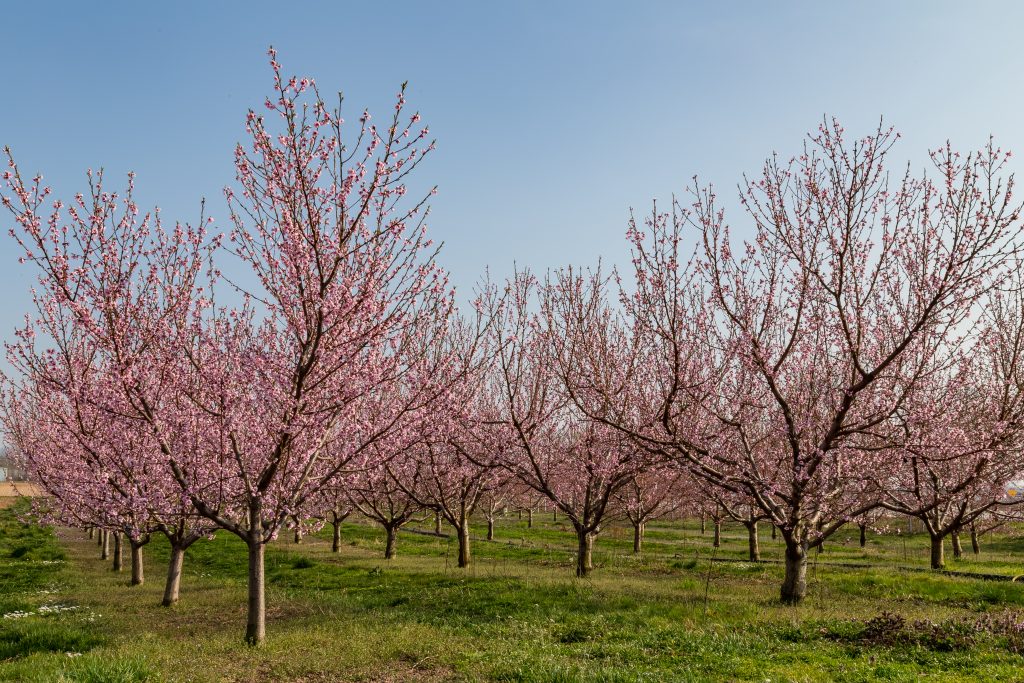
Chill hours are no longer a concern for one Alabama peach farmer. The biggest worry that Jeremy Calvert has is that his trees will bloom early and be impacted by a late freeze.
“We get a week of 60, 70-degree weather and then go back down in the 20s, that’s just not what you want to see,” said Calvert, whose J Calvert Farms is in Cullman, an hour north of Birmingham, Ala. “Everything we’ve got in north Alabama, we’ve got a good amount of chilling in. Everything looks good. I think we have a good bud set on most everything. They definitely have got all of their chilling in. It’s been good quality chilling. When we do get a warm streak, they’re going to take off like a racehorse. That’s my opinion.”
According to Alabama Extension, chill hours are up across the state. As of Tuesday morning, the Auburn University Turf Unit had received 716 standard chill hours, compared to 617 last year. There was 919 hours recorded at the Chilton County REC in Thorsby, Ala., compared to 778 a year ago. At the EV Smith Research Center HQ in Shorter, Ala., there were 824 chill hours compared to 645 last season.
“Chilling is not going to be an issue for us this year. I think South Alabama could still have a little bit of a deficiency but still probably not going to be a big issue for them,” Calvert said.
Calvert said cold temperatures started around mid-December and have not let up. He is hopeful warm temperatures will hold off as long as possible.
“I would love it if we don’t have any bloom until the first of March, but that doesn’t always happen,” Calvert said.
Photo submitted by Vance Whitaker/Shows Florida Medallion strawberries growing in a field.
The newest University of Florida-bred strawberry could become another option for growers looking to diversify their crop.
Vance Whitaker, strawberry breeder at the University of Florida Gulf Coast Research and Education Center, said the Florida Medallion is performing well and expects a substantial increase acreage next year.
“If it continues to perform well, we’ll see where it finds its niche with the current varieties; whether it’s a third of the industry, what proportion is really hard to say at this point,” Whitaker said. “It’s safe to say it’s performing well. We’ll definitely have a place for a couple of hundred acres of it next year.”
More Varieties the Better
The more strawberry varieties available for Florida producers the better. In just a couple of years, the industry moved from a Radiance-dominant industry to a Brilliance-dominant industry. Growers are quick to switch allegiances, depending on how successful the variety is on a commercial scale. Medallion provides producers another tool in the toolbox.
“It can move very fast. They need the best tools. If they find one that’s better than what they have, they’re going to replace it,” Whitaker said. “Ideally, they’d like to have at least three, hopefully four varieties that complement each other. Right now, we have two good varieties in Sensation and Brilliance that complement each other really well. I think the Medallion will slide in and hopefully become a good third option for them. They really want to diversify and spread their risks.”
Strawberry Traits
Finding the perfect strawberry is not an exact science. But there are qualities that make certain varieties stand out above the rest. Whitaker explains that early yield and flavor are the two most prominent traits farmers are looking to capitalize on.
“Early yield is obvious because of the timing of the market. It’s just critical. Then the flavor, it’s becoming more and more important in a competitive market,” Whitaker said. “Consumer’s expectations are going up for what their berries should taste like. I think that growers recognize that quality is the way that they can compete in a highly competitive international situation. If they can provide fresher, better tasting strawberries than Mexico can, then they can continue to compete well.
“People have to want to eat them, but you also have to have them at the right time.”
Sugarcane production forecasts are up 1% from last month and 13% from last year, according to the USDA National Agricultural Statistics Service. Production is projected at 36.0 million tons. Producers intend to harvest 948,800 acres for sugar and seed during the 2020 crop year, which is a 1% increase from the previous forecast and a 4% jump from last year. Yields for sugar and seed are expected to average 37.9 tons per acre, up 0.2 ton from last month and up 2.9 tons from 2019.
In Florida, expected production of sugarcane for sugar and seed is forecasted at 18.8 million tons, an increase of 3% from last month and a 6% jump from last year.
Root samples of the rootstock Solanum sisymbriifolium (left) and Roadster tomato (right) are from a field infested with southern root-knot nematode M. incognita. Galls produced by the nematode are visible on the tomato root, while the rootstock root is free from nematode damage.
By Abolfazl Hajihassani
Tomato is the most economically important vegetable crop in the United States and has a history of heavy dependence on pesticides.
PATHOGEN PAIR
Root-knot nematodes and southern blight disease are among the most damaging pathogens of tomato. Pre-plant soil fumigation is often, but not always, effective at minimizing yield losses due to soilborne nematode and fungal pathogens. The fumigant 1,3-dichloropropene is only effective against nematodes and is not effective against soilborne fungal diseases. In contrast, the nematicidal efficacy of the fumigant chloropicrin is not the primary reason for its application against nematodes, as it mainly has fungicidal activity.
Fumigants for control of these pathogens are diminishing due to environmental concerns and increasing regulations and restrictions on the use of these chemical treatments. Therefore, alternative control strategies have been extensively investigated over the past decade. Grafting tomato onto rootstocks with resistance to multiple root-knot nematode species combined with application of non-fumigant nematicides could offereffective management strategies that would provide growers with additional tools for managing root-knot nematodes. Moreover, using resistant rootstocks is one of the most effective methods to manage southern blight disease.
Using a three-year award funded in 2019 by the U.S. Department of Agriculture National Institute of Food and Agriculture Methyl Bromide Transitions program, the University of Georgia (UGA) is investigating the effectiveness of a rootstock (Solanum sisymbriifolium) in managing root-knot nematodes and southern blight disease of tomato. Replicated field trials under experimental and commercial production conditions in Georgia are underway.
Root-knot nematodes (Meloidogyne spp.) are tiny parasites that feed inside roots, induce galls (which contain nematode eggs) and disturb water and nutrient uptake from the soil into the plant, thus reducing crop yields. Root-knot nematodes cause approximately $15 million in damage annually to U.S. tomato production.
In Georgia, five species of root-knot nematode are among the most important problems in tomato production. Tomato varieties with resistance to the most common species of root-knot nematodes (M. incognita, M. arenaria and M. javanica) have been released in the past, but these cultivars often lack resistance to other nematode species like M. enterolobii and M. haplanaria and to southern blight disease. Heirloom cultivars are particularly sensitive.
Southern blight, caused by the fungus Athelia rolfsii, is a necrotrophic pathogen commonly found in many areas of the southeastern United States. Tomato plants infected with A. rolfsii wilt permanently in soil with a high level of pathogen inoculum, resulting in significant economic losses to growers.
Roadster tomato grafted onto the rootstock Solanum sisymbriifolium (left) and non-grafted tomato (right) in the field are infested with southern blight. More than 80 percent of the non-grafted plants were dead by the end of the growing season.
ROOTSTOCK TO THE RESCUE
Grafting onto rootstocks resistant to southern blight can reduce the disease incidence and increase yield. Currently, the Maxifort rootstock, which carries resistance to southern blight, is commercially available. It also contains the Mi-1 gene that confers moderate resistance to species of M. incognita, M. arenaria and M. javanica.
In UGA greenhouse studies, S. sisymbriifolium was challenged with M. incognita, M. arenaria, M. haplanaria and M. enterolobii. Results showed that it confers a high level of resistance to all four root-knot species. These results were also confirmed in microplot and field experiments using M. incognita species. The data suggest the importance of using S. sisymbriifolium as a resistant rootstock for effective management of these devastating nematodes in infested tomato fields.
However, since grafted tomatoes are more expensive than non-grafted ones, growers will probably want to use rootstocks with resistance to multiple pathogens to minimize the production costs associated with application of multiple pesticides. Using a field study conducted in the summer of 2020, S. sisymbriifolium rootstock was found to be resistant to A. rolfsii. Field plots grown with tomato grafted on therootstock had significantly fewer dead plants compared to plots transplanted with non-grafted tomatoes.
The next step in the research studies will be to evaluate the combined use of grafting and nematicides and/or fungicides to manage effectively both root-knot nematode and southern blight in tomato. Efforts will also include a cost-return analysis of the control practices developed in this project to compare with growers’ practices for disease management.