Blog

  • Pruning Practices: Blueberry Growers Reminded of Important Management Tactic

    Pruning of southern highbush blueberries is required to open the middles of the plants for machine harvesting from the top.

    The time is now for some blueberry producers to prune their crop. Pruning is the process by which farmers selectively cut parts of their plant. This will sustain the overall health of the plant while enhancing its fruit quality.

    In a webinar on the Alabama Extension Commercial Horticulture Facebook page on Monday, Eric Schavey, Regional Extension agent in Northeast Alabama, said pruning limits the height of the plants. Shorter plants are easier to harvest. New vigorous shoots also produce larger fruit.

    “We want to develop a good plant structure. This is going to help you in production,” Schavey said. “We’re going to help you control that plant size. We don’t want to pick anything off of a ladder. If you’re a home-owner, small, U-pick, you don’t want all of your production eight or nine foot off the ground. We’re going to control the fruit number and size by pruning.”

    Schavey said pruning now will aid in disease and insect control. An open canopy will allow more air to move through. If growers need to apply pesticides, they can also get good coverage.

    Growers can also prune during the summer right after harvest to achieve height control. Schavey emphasizes that research indicates producers only do this every other year, however.

    For producers who refuse to prune, they are likely to meet significant challenges come harvest season. The blueberries are a lot smaller and out of reach. There is more interior shedding, increased pest issues and water needs go up because of the increased size of the plant.

  • Clemson Extension Agents Provide Crop Updates

    Clemson Extension agents provide updates in the The South Carolina Grower this week about the status of various crops being produced throughout the state.

    Weekly Field Update

    Coastal

    Zack Snipes reports, “Another rainy, wet and cold week last week. Some sunshine and warmer temperatures coming this week. All of our fruit crops have received their chill hours and are just waiting to burst out for spring. I expect to really see fruit crops take off this week. Make sure that you have a fertility plan for the spring crop. Don’t let your crop be without fertility at the critical moments. For more information on fruit fertility, visit https://smallfruits.org/ipm-production-guides/. For smaller farms, Clemson’s Home Garden and Information Center is a wonderful resource as well.”

    Early varieties of highbush blueberries are in bloom right now. Photo from Zack Snipes.

    Midlands

    Justin Ballew reports, “To say last week was wet would be an understatement. We received about 4 inches of rain at my house last week, and the ground was already saturated before it started. I’ve seen water standing even in sandy fields. On the bright side, irrigation ponds are looking full. Most strawberry growers have covered their fields to protect the blooms now. This means we should start seeing our first ripe fruit around mid-March. Don’t forget to start tissue sampling so we can make sure the plants are getting everything they need as they are beginning to produce fruit.”

    Row covers on a strawberry field protect the blooms from late winter/early spring cold. Photo from Justin Ballew.

    Pee Dee

    Bruce McLean reports, “Wet, wet, wet… Last week’s rain has caused some significant ponding and flooding throughout the Pee Dee. Last week, I had a number of conversations with growers concerning application of fumigants for early crops – timing, too wet, how effective? Not a lot of good options with soil moisture being so high, right now. We really need some sunshine and a steady breeze to help dry fields out. Wet fields are preventing spraying, hindering application of row covers and hindering pruning of perennial crops (blueberries, muscadines, and blackberries). Some crops are starting to “back up” due to the wet soils. An application of mefenoxam (Ridomil) or phosphorous acid (K-phite), in locations where root rot is suspected, would be beneficial.”

    Upstate

    Kerrie Roach reports, “A beautiful weekend of weather was much needed for fruit tree growers getting in orchards and finishing up dormant pruning for the year. Pruning out dead, diseased, and damaged limbs, opening the canopy, and reducing overall vegetative growth is extremely important for tree fruit integrated pest management (IPM). Pruning increases light penetration and air movement, reducing disease potential, and also allows for better spray coverage during application. More rain today and even more projected toward the end of the week will continue to delay any kind of field work, as the ground is oversaturated. Don’t forget, this Thursday is the SC Apple Grower Meeting via Zoom from 2 p.m.- 4 p.m.! Check it out on the upcoming events page!

    Andy Rollins reports, “Found major scale problem on large scale muscadine producer’s farm. Scale was identified on the main scaffolds and also on last year’s wood. Mineral oil (Damoil) is labeled but is recommended at much lower rate than other fruits. Only 1% by volume or 1 gallon per 100 gallons of water, but needs 200 gallons of total solution applied per acre to get sufficient coverage. This is because the oil needs to get into very tight areas where the scale can reside. We also recommended the use of a labeled insecticide with the oil to increase efficacy. Once the plants come out of dormancy, other products are available but determination will be made at that time if necessary. Peach and strawberry production had no major issues to address. One strawberry farm began picking the last week of January this year in high tunnel production and picked 30 flats of fruit and is still producing.

    Scale on the main scaffolds of muscadines. Photo from Andy Rollins.
  • Seed Facility: Bayer Opens Distribution Center in South Georgia

    Photo by Bayer/Shows the new fruit and vegetable seed distribution center in Valdosta, Georgia.

    A new fruit and vegetable seed distribution center will provide seed to Southeast produce farmers in a timely and efficient fashion.

    Bayer Vegetable Seeds announced the opening of its new distribution center in Valdosta, Georgia, located about 10 minutes from the Georgia-Florida state line. It will provide access to its Seminis branded large seed portfolio.

    Currently, the distribution center is offering large seed varieties for sweet corn and beans, says Logan Burkhart, U.S. and Canada Customer Operations and Distribution Manager.

    “I think for our customers down in the Southeast, it’s a direct to grower market. Having this physical location in the region just shows our commitment to those customers, and having that local supply available to them really helps put their mind at ease,” Burkhart said. “I would say in our Southeast region, it’s interesting because with the large seed portfolio difficult to move around, but having that delivery available locally is something that our customers really need. They’re not able to store it themselves so we’re able to have that distribution center to really be able to get it to them when they need it.”

    Facility Size and Location

    The facility has a physical cooler space of 3,000 square feet where the seed is stored. It is situated in the heart of the Southeast region. Valdosta is also not far from Alabama.

    “This is actually our second distribution center in the region. We do have one in South Florida. We noticed that we really wanted to get a physical location to service the more local Georgia area,” Burkhart said.

    He added that seed can continued to be ordered through the company’s sales representatives, who work closely with the growers.

    The facility is located at 615 James P Rodgers Drive, Valdosta, Georgia 31601.

    To learn more about the new distribution center or place an order, growers can call Oxnard Customer Service at 1-866-334-1056. The distribution center is open for appointment only Monday – Friday.

    If you’d like to learn more about Seminis, visit the website at Seminis-us.com.

    Seminis is the Vegetable Seeds business of Bayer’s Crop Science division.

  • Less Efficacy: UGA Onion Trials Show Reduced Impact on Botrytis Leaf Blight

    Photo by Chris Tyson/UGA: Here is a large botrytis leaf blight lesion that has sporulated and the “cloudy halo” appears around the initial spot on the leaf. The development of these symptoms increases during periods when leaves stay wet for several hours at a time.

    University of Georgia research trials show that two fungicides may be losing their efficacy in the control of Botrytis Leaf Blight of Vidalia onions.

    Chris Tyson, University of Georgia Extension Area Onion Agent at the Vidalia Onion & Vegetable Research Center in Lyons, Georgia, informed onion producers and industry leaders during a webinar last week that Scala and Luna Tranquility have shown reduced efficacy in controlling Botrytis, a disease onion producers contend with every year.

    “Most of this information has not changed but (Bhabesh Dutta) did stress and wanted me to mention to you about Scala and Luna. Within the last year or so, he says they have started to slip a little bit in how well they worked for Botrytis,” Tyson said. “Don’t misunderstand us. He’s not saying not to use these products. But we just want to make you aware we may take them off this list. We may rearrange them in the future to reflect that. They’re still good products. We still want you to use them.”

    Disease Symptoms

    Botrytis Leaf Blight infects onion foliage. Initial symptoms include white, necrotic spots surrounded by pale halos. Leaves with severe symptoms may lead to reduced bulb size.

    The most updated list of effective fungicides includes Omega 500 and Miravis Prime, both of which provide high-to-moderate control. Scala provides high-to-moderate control as well, and Luna provides moderate control. But if the trend continues, UGA may adjust their recommendations to reflect the diminished efficacy of those two options.

    “Keep in mind the only change in Botrytis control from last year is that those (two treatments) haven’t looked quite as good. They’re still providing control, just not at the level we thought they might be,” Tyson said.

    Omega 500 is a valuable option since it controls Downy Mildew as well.

  • Snowball Effect: Wet Weather Could Impact Fall Plantings

    Weather forecasts call for sunshine every day but Monday this week in South Georgia. It’s not a moment too soon for vegetable farmers itching to get in the field.

    Picture by Chris Tyson/UGA: Shows an onion field flooded.

    Unfortunately, the excessive winter rains have delayed work for producers. It could have a snowball effect heading into next fall, says Sam Watson, managing partner of Chill C Farms in Colquitt County, Georgia.

    “We’re still not through planting cabbage, so we’re going to kind of have a mess there with that. We’re behind on planting cabbage,” said Watson, who hopes to plant the rest of his cabbage during the middle of this week. There are still plants in the greenhouse that should have been planted Feb. 1.

    “Of course, we haven’t laid any plastic yet. We usually start planting about the second week in March. We’ve got a lot of decisions to make when we get to the point where we can lay plastic.”

    Key Decision Forthcoming

    Watson and other producers face a key decision moving forward. Normally a fumigant like Telone is applied before plastic is laid. The fumigant is trapped under the plastic, and farmers normally wait three to four weeks before planting.

    However, that may not be ideal with growers who want to stick to their planting schedule – which for Watson is around March 15. If it stays sunny most of this week , it won’t be until next weekend before Watson can start the process. If he utilizes a fumigant at pre-plant, it wouldn’t be until the end of March before plants get put in the ground.

    “Timing is pretty critical because you’ve got certain things that need to happen before you can even put the plant in the ground. Not being able to lay plastic is going to cause a lot of delays,” said Watson who has about 100 acres that need plastic applied. “If you plant two weeks late in March, that means it’s going to come off two weeks late, which means you’ll go two weeks later in July. It just starts snowballing on you. Timing is critical with these vegetables. If you’re late in the summer with your vegetable crop, then you feel like you’ve got to pick it later but then that gets you behind on your fall crop.”

    Telone’s Importance

    Telone provides control of nematodes. If growers bypass applying it in their first vegetable plantings, there are other management options they can use during the growing season, but none are ideal, Watson said. But that may be the route he has to use if he wants to stay on schedule.

    “We need to be harrowing. We’ve got to get everything harrowed and get the dirt ready and then you’ve got to get fertilizer spread and be locked, loaded and ready to go laying plastic,” Watson said. “Of course, everybody’s going to be doing it at the same time, so you’ve got to get your fertilizer man there. There’s going to be more equipment go to running here next weekend and the week after than you can shake a stick at.”

    According to the UGA Weather Network, Moultrie, Georgia received 15.75 inches of rain from Jan. 1 to Feb. 18; compared to 6.51 in 2020 and 6.61 in 2019.

  • Need to Know: Alabama Hemp Production Facts

    hemp program
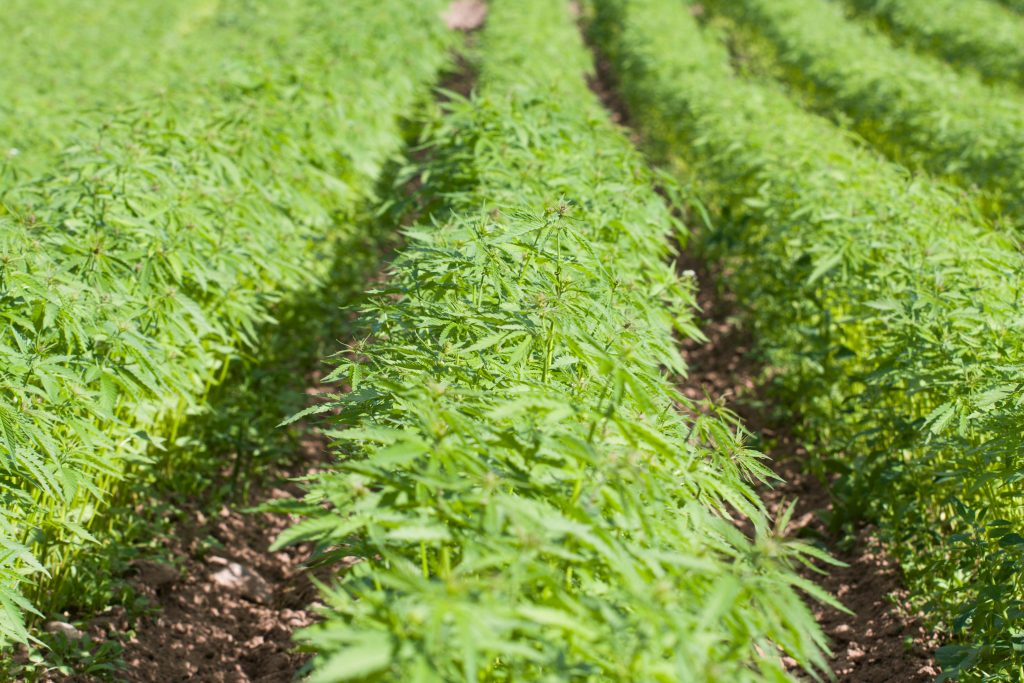
    File photo of a hemp field.

    Alabama producers who plan to produce hemp in the future need to have a clue about what their production is intended for, says Gail Ellis, hemp program manager at the Alabama Department of Agriculture and Industries (ADAI).

    “What I’ve tried to tell everybody that gets in hemp, the more you know about what you want to do in hemp is better known before you put in a license application. A lot of people get in here and just want to grow hemp. They don’t even know if they want to grow for any of the oils or fiber, grain; they have no idea,” Ellis said. “They’re at a disadvantage immediately upon getting their application approved.”

    She said that growers should have already researched a seed source or a plant source, whether they’re from Alabama or out-of-state, before applying for a license.

    “That’s not something that we tell you. We don’t give you a list of seed dealers or plant nursery growers. That’s stuff you guys, unfortunately, have to find out from yourself, other growers or maybe Katelyn (Kesheimer) with the Extension Service; maybe they know of people in those counties that they deal with,” Ellis said. “That’s just information that you guys have to glean yourself.”

    ADAI Approval

    Each grower must also wait until they receive an ADAI approval email for the sources and varieties they intend to purchase.

    “The reason we do this is we first make sure that source is a licensed hemp person in whatever state they’re operating in. They also have to have a seed dealer permit in Alabama if they’re selling seeds,” Ellis said.

    Growers are also required to submit an online seed acquisition form for each source they intend to purchase from. A new source and/or variety requires submission of another form.

  • Defeating Disease: What Can be Done About Neopestalotiopsis Fruit Rot?

    Photo by Natalia Peres/UF: Shows the effect of Neopestalotiopsis Fruit Rot on strawberries.

    Neopestalotiopsis Fruit Rot has emerged as a significant disease of Florida strawberry production. Instances have increased over the last three years, to the point this year the disease was discovered in fields that had it the prior season.

    But what can producers do to manage this destructive disease? Natalia Peres, a Professor of Plant Pathology at the University of Florida/IFAS Gulf Coast Research and Education Center, offered a few suggestions during the Gulf Coast Research and Education Center Field Day, to growers who are struggling with the disease year after year.

    “Avoid harvesting and moving equipment through the fields when the plants are wet. That’s one of the ways the pathogen can move in the fields. I realize it is much easier to do early in the season when you don’t have a lot of fruit than once we get into the peak, which is coming soon,” Peres said.

    Other Suggestions

    Peres also advises producers to rotate fungicides that are found to be effective during periods of favorable conditions. Farmers also need to start planning strategies for crop inoculum termination and removal.

    “I do suspect that a lot of the inoculum is surviving in the crop residue that we are incorporating in our fields,” Peres said.

    Producers also have a better chance to manage the disease if they start with clean transplants.

    “We do need to continue to work with our nurseries so the ones that don’t have it can stay clean,” Peres said.

    Disease Instances Increasing

    The disease was first discovered during the 2018-19 season in five farms and was attributed to one nursery source in North Carolina. More than 20 farms experienced the disease during the 2019-20 season, and the disease was attributed to two nursery sources early in the season in North Carolina and Canada. More than 20 farms had the disease this year.

    Disease Symptoms

    Neopestalotiopsis causes leaf spots on strawberry plants. It develops quickly and produces spores on the leaves. It can cause severe leaf spotting and fruit rot under favorable weather conditions.

    Unfortunately, it can be hard to detect because of other similar leaf spot diseases that growers must contend with like leaf scorch, leaf blotch and Cercospora leaf spot.

  • National Watermelon Association to Hold Annual Membership Meeting

    Watermelons on display at a farm on the UGA Tifton campus. 6-14-19

    The annual membership meeting of the National Watermelon Association is scheduled to be held via conference call on Thursday, March 25, 2021 at 11 a.m. (eastern).

    The agenda will focus solely on the election of officers and executive committee members for 2021.

    Stay tuned to future updates, including the conference call information.

  • Frozen: Peach Producers Have Limited Options Against Late Freeze

    Some things are inevitable every year for Southeast peach producers. That late-season frost event that could damage peach production for the upcoming season unfortunately tops the list.

    Pictured are peach blossoms.

    Even though chill hours are no longer a concern, peach farmers are worried that if temperatures warm up in the next several weeks their crop would be vulnerable to a late freeze.

    “Unfortunately, that’s exactly what happens every year to a different extent. How bad it’s going to be is going to depend on two major factors. What exact temperatures we’re going to experience and what is going to be the phenological stage of flower and development at this point of time,” said Elina Coneva, an Extension specialist in the Horticulture Department at Auburn University.

    Management Options

    Producers have limited options if they encounter a late-season freeze. Coneva said the best protection against high wind speeds is to establish barriers. When establishing orchards, try to plant near wooded species like pine trees. These serve as wind breaks against high winds.

    If a freeze event occurs and temperatures are higher during the day and diminish during the evening, heaters can be used. Producers can also utilize wind machines that provide air inversion, taking warm air from higher elevations and pushing it down to the trees.

    Growers can also protect against future frost events by planting orchards near water sources, like a pond or lake. Water retains higher temperatures longer. During such events, it can radiate some of those temperatures, added Coneva.

    “If the trees are dormant, we can expect some damage, if it’s 5 to 20 degrees Fahrenheit. But if they’re in the next stage of calyx green or calyx red, temperatures of 21 to 23 degrees Fahrenheit can cause some damage,” she said. “If the trees have already experienced some temperature fluctuation, like cold temperatures followed by warming periods of time and then experiencing some cold again and then warm-up events, this is pre-disposing the trees to advancing their development… we can expect more damage to occur.”

  • Be Prepared: Vidalia Onion Producers Need to be Ready for Downy Mildew Disease

    Visible Sporulation of Downy Mildew on Vidalia Onion Leaf. Photo Credit: Chris Tyson

    It was March 23 in 2020. In the prior season it was Feb. 28. In 2018 it was March 19. All were dates that Downy Mildew disease was initially discovered in Georgia Vidalia onions. If past seasons are any indication, the disease could soon be ripe for a problem for Vidalia onion producers.

    “Downy is always on our minds this time of year and going to the end of the season,” said Chris Tyson, University of Georgia Extension Area Onion Agent at the Vidalia Onion & Vegetable Research Center in Lyons, Georgia. “It can be bad, and I want you to be prepared for it and make sure you’ve got the tools you need to fight it. As growers you know this is a tough disease. Sometimes when the weather conditions are right, sometimes it seems like there’s nothing we can do to stop this.”

    Effective Products?

    The most effective products available for protection are only moderately successful. Omega 500 and Orondis Ultra provide moderate control. Bravo and Zampro provide moderate-to-low efficacy. Growers are encouraged to incorporate Bravo and Phosphites into their spray program now for added protection.

    “We’re recommending that everybody, if they haven’t already, start including products like Bravo and Phosphites … these are good protective products and they’re economical to use. We just need to be putting those in spray program as much as we can,” Tyson said.

    Disease Impact

    According to the UGA Extension Vegetable Blog, Downy Mildew can be a devastating disease to onion producers. It can cause losses in yield and bulb quality. Though the disease does not survive year-round in the Southeast Georgia region where Vidalia onions are produced, it moves into the area from wind currents from warmer areas.

    In a prior VSCNews article, UGA Extension Plant Pathologist Bhabesh Dutta said the disease’s first symptoms occur on older leaves as light green to pale yellow, which turn to tan or brown as the lesion ages. Lesions may girdle the entire leaf. In severe cases, 100% yield losses have been reported.

    “We’re already watching the weather conditions to look for conditions that are favorable for disease development,” Tyson said. “It’s time to be watching out for it. I would urge you to go ahead and consider stocking up on some Omega or Orondis or calling your retailer and seeing if they have some on hand or whatever you need to do.

    “If we find Downy, there’s no time to go around and hunt for chemicals if you need one. Just be ready.”