Blog

  • COVID Pandemic Forces Farmers to Diversify

    The COVID-19 pandemic forever changed how businesses are conducted across the country. Just as much as any other industry, agriculture suffered from the pandemic’s impact.

    As restaurants closed their doors and schools’ closures kept children at home, farmers lost a significant portion of their clientele. A year later, they have had to adjust to stay afloat.

    They will have to continue to diversify their operations moving forward, believes Robert Guenther, Senior Vice President, Public Policy, United Fresh Produce Association.

    “You need to be looking at, not just being focused on food service, not being focused on just a few commodities, you need to make sure you’re looking at a wide range of your customers’ needs,” Guenther said. “That could be food service, that could be retail, that could be grab and go. You see a lot of the food service side that, maybe you never thought about this, they’re doing more of the boxed pick up for customers. A lot of that was probably in the mindset or business model to think about five to 10 years from now. But I think you’re seeing that accelerated in terms of adapting to this model moving forward.”

    What Worked?

    Growers have had to think of alternate ways to market their produce during the COVID pandemic. Boxed produce was a success for some growers looking to offload some of their excess produce. Stories of long lines of cars waiting for their produce were not uncommon.

    For some producers, thinking outside the box was the only way they survived this pandemic. But hopefully it has provided them ideas on how to pivot their farming operation if they need to do so again.

    “I still think there’s lessons to be learned. We’re still in this pandemic,” Guenther said. “Schools are just starting to open back up. So we’re starting to see a movement back to some type of normalcy. Hopefully, that will continue the remainder of this year and into 2022.”

  • Rural Broadband AFBF President Zippy Duvall Advocates for Reliable Service

    Zippy Duvall

    Internet broadband access continues to be a major concern for rural communities. It is a major point of focus for American Farm Bureau Federation President Zippy Duvall.

    “Everything that we’re going to move forward to in agriculture is going to be based off the new technology that comes down the pipe to us. It’s going to be run by the broadband system, everything that’s coming down, we’re going to require the use of that,” said Duvall during the annual USDA Ag Outlook Forum.

    “I have traveled this country. I’ve been in all 50 states, Puerto Rico, out on the farms in rural communities. You see rural communities struggling in several different ways. One, they can’t bring their young people back home. We see the average age of a farmer right now being 59, 60 years old. How do we expect that to get any lower if we don’t bring broadband to the rural communities? Children go off to college. They get their education in agriculture and they’ve got access to broadband. Who wants to go back to the rural community where they can’t stay connected to the world and use the technology? It’s just not going to happen.”

    According to the American Farm Bureau, a USDA report in 2017 showed that 29% of U.S. farms have zero access to the internet. And according to the Federal Communications Commission, 39% of rural Americans lack access to 25Mbps/3Mbps service.

    “This is not a luxury, it’s a necessity to be able to live in this day, be able to take care of you and your family, grow our communities and make them stronger, repopulate them and let the business come back to rural America,” Duvall said.

    The main source of funding for broadband deployment is the Universal Service Fund. It was created by the Federal Communications Commission in 1997. In 2014, universal service disbursements totaled $7.8 billion.

  • Ant Control: Alabama Extension Encourages Farmers to Protect Crop

    Alabama Extension photo/Shows fire ants on okra.

    Vegetable crops are vulnerable to ant pressure this time of year. Alabama Extension encourages vegetable producers to implement management tactics as they begin planting this year’s crops.

    According to Alabama Extension, fire ants can protect aphids and other honeydew producers on vegetables, which makes their effects worse on the plants. Fire ants can also interfere with natural enemies. Ultimately, though, fire ants can damage crops like okra, potatoes, sunflowers and hemp.

    Cultural Controls

    It is important to control fire ant mounds around or outside the production area to prevent them from moving into the garden. It is also essential to manage excessive plant residue on the soil. This will aid in the detection of foraging ants. It provides ants fewer places to stay out of sight and makes it easier to apply bait insecticides on open ground.

    Insecticide Options

    The best time to apply baits is from April 15 to Oct. 15. Mound treatments can be done any time of the year on warm, sunny days above 65 degrees Fahrenheit when fire ants are active. Apply products close or on the mound after checking for foraging ants.

    For more information on fire ant control, read Managing Fire Ants with Baits located on the Alabama Extension website. More information is available in Fire Ant Control: The Two-Step Method and Other Approaches on the eXtension Foundation website.

  • Feeling Peachy: Florida Crop Nearing Harvest

    Domestic options will soon be available for consumers yearning for that sweet, delicious peach. The first of Florida’s peach crop will be ready in late March, according to Jose Chaparro, UF/IFAS Associate Professor in the Horticultural Sciences Department.

    He said the peach trees have produced their strongest bloom in the last five years. It is due in large part to colder winter temperatures, something the peach trees have missed out on in recent years.

    “We’ve been really taking it on the chin the last four years, and the same thing happened in central Georgia last year. Everybody’s suffering from the lack of chill symptoms, so crops have been light. Fruit sizes have been small. Fruit shape has suffered significantly,” Chaparro said. “This is more like what we would like in terms of chilling. In central Florida along the I-4 corridor, we were very near, if not equal to, historical averages.”

    Hopefully for Florida growers, a strong peach bloom will translate into a productive season. Florida peaches are the first to hit the market every year. Producers hope they can take full advantage.

    “We cannot compete toe-to-toe with Georgia because we don’t have the volume. And because of our temperatures and soil, we’re going to always be slightly smaller in size,” Chaparro said. “For us, our competitiveness is based on earliness.”

  • Vegetable Assessment: Georgia Growers Approve

    citrus expo

    Georgia vegetable growers have made their voices known: The Georgia Vegetable Commission marketing order has been extended for an additional three years.

    Producers overwhelmingly voted to extend the assessment of one cent per marketing unit by producers with more than 50 acres crops that include green beans, bell pepper, specialty pepper, carrots, broccoli, beets, eggplant, cabbage, sweet potatoes, cantaloupes, cucumbers, greens, squash and tomato.

    The balloting period for the market order was conducted from Feb. 1 through March 2, 2021, and 87.67 % of the eligible ballots returned voted yes.

  • Sweet Delivery: GDA Announces Vidalia Onions Will Ship April 19

    2021 is the 35th Anniversary of the Passage of the Vidalia Onion Act by the State’s Legislature 

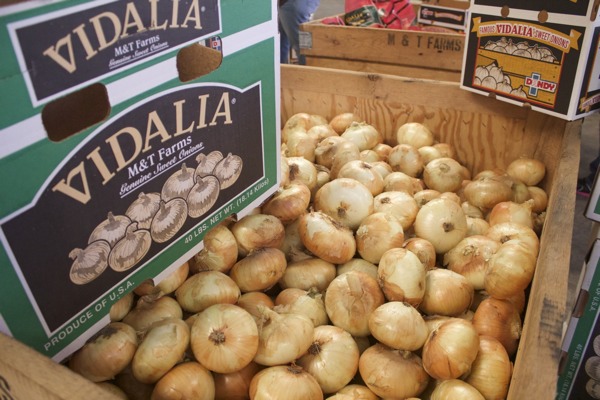
    ATLANTA, Ga. – The pack date for Georgia’s Vidalia onions will be April 19. The Georgia Department of Agriculture (GDA) and the Vidalia Onion Committee (VOC) made the announcement. The organizations are also celebrating the 35th anniversary of legislation that helped make Vidalia onions as popular as they are across the country.

    The announcement means shoppers will soon be able to purchase Vidalia onions, which are only available for a limited time every season.

    An advisory panel comprised of Vidalia industry members, state agriculture scientists and the Department of Agriculture determine the date each year. Soil and weather conditions are considered when selecting a date. This ensures only the highest-quality onions find their way to consumers.

    “It is a special moment every year when we announce the Vidalia onions pack date, but this year we will mark the passage of the 1986 Vidalia Onion Act by our state legislature that played a defining role in making our state’s official vegetable an iconic brand recognized around the world,” said Georgia Agriculture Commissioner Gary Black. “I am pleased to announce April 19 as the 2021 pack date for Vidalia onions.”

    Vidalia’s Popularity

    Vidalia onions have grown in popularity since they were first discovered in the 1930s. The Vidalia Onion Act established that only sweet onions grown in 20 South Georgia counties and produced from a specific Granex seed and packed and sold on or after the official pack date each year could be called Vidalia onions.

    For the 2021 season, approximately 10,000 acres of Vidalia onions were planted, according to VOC Chairman Aries Haygood. “We are anticipating a good harvest, and consumers across the country should have ample supply throughout the season,” said Haygood.

    The vegetable is hand-cultivated by 60 registered growers. They represent about 40% of the sweet onion market. The onions are sold in every state.

    For more information on Vidalia onions, please visit vidaliaonion.org. Follow the season’s news on Facebook, Twitter, Instagram, Pinterest and YouTube.

  • Protecting Your Investment: Trap Cropping a Unique Insect Management Strategy

    Trap cropping is an insect management strategy that saves farmers time and money and protects the ecosystem, specifically beneficial insects, from overuse of pesticides.

    UGA CAES/Leaf Footed bug on vine ripe tomatoes Photo by Sharon Dowdy

    For example, using sorghum in a field alongside tomatoes protects the tomato crop from leaf-footed bugs. It’s a unique tactic of sacrificing one crop for the safety and protection of the money-making crop, says Ayanava Majumdar, Extension Professor in Entomology and Plant Pathology at Auburn University.

    “Just like we make choices every day. For example, if you’re hungry, you make the choice to go to either Cracker Barrel or you want to go to McDonald’s. You know what you’re getting. Just like you make choices, insects make choices on the go,” said Majumdar during a recent webinar. “It’s a very clever way of manipulating their behavior. That’s essentially what you’re doing. We are using their weakness against them.”

    Just as some might struggle to resist certain foods, insects struggle to resist certain plants. It is important to plant a trap crop a couple of weeks before the main crop so it can provide a perimeter around an entire field.

    What Works in Alabama?

    Majumdar said the trap crops evaluated in Alabama include sorghum and sunflower for leaffooted bugs; sunflower, browntop millet and pearl millet for stink bugs; okra, bell peppers and ornamentals for aphids; New England Hubbard squash for squash insects.

    Trap cropping also provides alternate benefits that could appeal to some producers.

    “I have seen sorghum, because of the height, it actually protects the plants from wind. Wind reduction is a benefit,” he said. “Weed control; if you have a lot of weeds around, you put that sorghum in there, the sorghum takes over. It grows like crazy on a good year.

    “Then the beneficial insects. That ecosystem has less pesticides, a lot of beneficial insects are in there, including spiders that you never see in a typical field or garden. It’s incredible to see some of the side benefits from trap crops.”

  • Georgia Blueberries: Crop Not Projected to be Early This Year

    Georgia blueberries are progressing this season but don’t expect them to be ready for an early harvest, says Renee Holland, University of Georgia area Extension blueberry agent in Alma, Georgia.

    “It depends on the weather between now and then. It’s quite warm right now, so things are progressing very quickly, Holland said. “I don’t think we’re going to be two weeks early like we sometimes are. I think we won’t really start picking until May. There may be a little bit in late March for the earlier varieties. But overall, I’d say most of our picking is going to come on in May.”

    Colder temperatures this winter slowed the growth of Georgia blueberries. Weather will still play a role in how quickly the blueberries mature between now and May. Cold and warm temperatures could “push” and “stop” the growth of the plants, Holland said.

    “We’ve had some years where we’re like two weeks early. But I think we’re going to be right on time, as they say, this year,” Holland said. “We’re not running behind, but we’re not early, so more kind of a moderate year.”

    As far as the what the crop looks like now, Georgia producers couldn’t ask for much a better crop status.

    “It looks like we have a nice, large crop load. Most everything’s in full bloom by now, depending on the variety of the plant and the species of the plant. A lot of things are in bloom. We have the blooms out. Some of our mid-season stuff is still in the earlier bloom stages,” Holland said. “We’re in a good place right now. Of course, we’re just waiting to see if we get any freezes.”

  • Florida Farmer: Stuff is Selling and There’s Somebody to Sell it to

    File photo of cabbage.

    What a difference a year makes for one Florida farmer.

    At a time of the season that should be the most profitable for Hank Scott, the 2020 spring was a disaster. It wasn’t due to disease issues, or increased pest pressures or adverse environmental conditions that affected crop yields. It was due to a global pandemic that nobody was prepared for.

    “That’s our best season of the year, that spring pickle deal. (Last year) was devastating for us. It took a big hit,” said Scott, president of Long & Scott Farms in Mount Dora, Florida. “But we’re working our way out of it. Hopefully, we’ll have a good spring season this season. Maybe we’ll rebound and be back to somewhat normal, if that’s possible.”

    Long & Scott Farms produces Kirby Cucumbers, also known as pickling cucumbers, as well as approximately 450 acres of cabbage through the winter.

    COVID-19 Pandemic

    It was this time last year that the pandemic impacted the country, shutting down restaurants and schools. Scott was left with a surplus of produce with no one to sell to. That’s not the case this season which makes this season somewhat of a success already.

    “Stuff is selling and there’s somebody to sell it to this year which makes it nice. That’s pretty much the whole deal right there. Prices are a little bit better thank God. Of course, there was no price at all last year because there was little to no movement,” Scott said. “It hit us at the end of cabbage season and at the beginning of pickle season. Pickles were pretty much a disaster. Out of the six sizes that we grow, one size and maybe a few or two other sizes were selling fresh market. But processing was just dead. This fall was a little better. Prices weren’t great but we had a decent crop and sold for the most part everything.”

    Weather has also been great for Scott’s cabbage production. No freeze, above average temperatures and the rain was just about perfect. But it also appears the winter freeze in Texas that devastated the state’s crops has also impacted sales for this Florida farmer.

    “We had a beautiful cabbage crop. Sales were not great early in the year. We didn’t sell as much as we’d hoped or needed to sell early on. But we’re doing really good now, mainly because Texas got whacked so bad, which is sad that somebody’s got to get hurt for you to get a good market,” Scott said.

  • What to Expect? How Watermelons Fare This Year is Anyone’s Guess

    South Florida’s watermelon crop is a couple of weeks away from harvest. Producers in that region are looking to rebound after COVID-19 decimated last year’s season.

    How will producers fare in 2021? Bob Stewart, owner of GID Farms in Immokalee, Florida, says, “You never know.”

    “You go plant them, grow them and make the best crop you can and let the market do what the market’s going to do, because you just don’t ever know,” Stewart said. “Like last year, when we started loading watermelons last year, it was about the time they shut the country down. That was a big issue with getting loaded and getting gone. The movement was just slow, slow, slow, trying to get them moved.”

    While it was a bountiful harvest and profitable market for producers in north Florida and Georgia, producers in south Florida suffered. Just as harvests ramped up across the south Florida region, the pandemic hit. Everybody stayed home and didn’t venture out to grocery stores like they used to.

    Stewart believes acreage this year will be about average.

    “I don’t think there’s going to be anybody that jumps into it real big and plant a whole lot more than just normal,” Stewart said.

    Stewart’s first plantings, which was around Dec. 20, are nearing harvest time.

    “Hopefully, we’ll be loading some by April 1. That’s the gameplan to get it kicked off in the United States,” Stewart said. “You’re trying to let the imports get done and roll into our window as that April market.”