Blog

  • Heroes in our Food System COVID-19 Pandemic

    By Kristin Woods, Alabama Extension
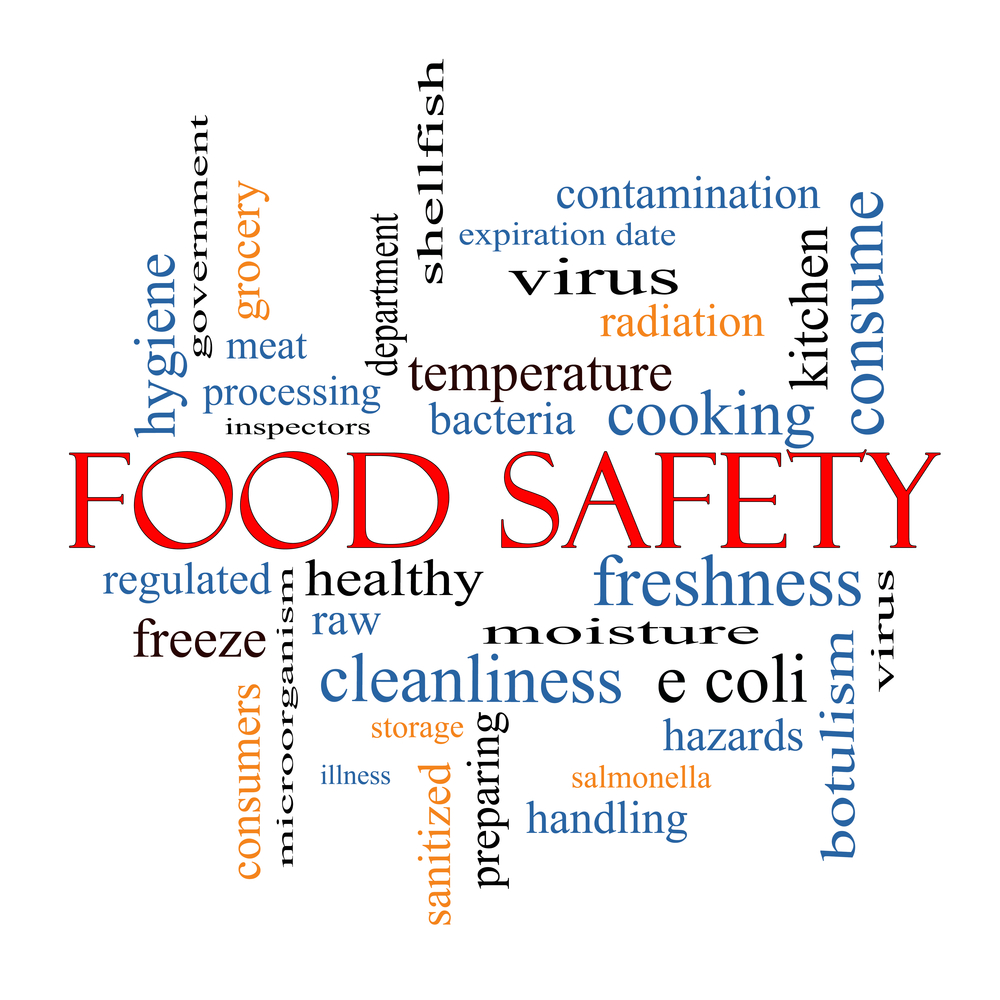
    Food Safety Word Cloud Concept with great terms such as hazards, e coli, cooking and more.

    With Alabama’s production season getting into full swing, it is important to know that our growers and industry leaders are making sure that safety is not affected by the COVID-19 pandemic. Because COVID-19 is a respiratory disease, there is no indication that it is infectious through food or food packaging.

    The highly trained food system workers (harvesters, packers, processing line workers, retailers, grocers, and even trainers like me) are critical to ensuring a safe and consistent food supply in the U.S. In fact, the Department of Homeland Security has issued guidance that states agricultural production, food processing, distribution, retail and food service and allied industries workers are essential critical infrastructure workers.

    The health of these workers is extremely important to all of us. Our farms already have food safety protocols in place to preserve the safety of freshly harvested products, but now they have enhanced procedures in place to help protect employees from the spread of the virus during harvest or in a packinghouse so that we can keep food flowing from farm to fork.

    Some things we should all know about the produce industry:

    • Food system workers are highly skilled and trained to prevent the hazards that cause foodborne illness.  They know how to assess risks on the farm, during processing, at retail, and in the kitchen; and they know how to prevent hazards from causing foodborne illness when they see them. Food system workers truly are our heroes daily, but especially now. However, there is no evidence that COVID-19 can spread in food.
    • If a worker tests positive for COVID-19, they go home to rest and recover fully. If they have been in contact with others at work, then those individuals are advised to self-quarantine. The diagnosed person must test negative before returning to work or be symptom free for several days.
    • Processing facilities have enhanced procedures in place to frequently clean and sanitize surfaces that workers touch. Like all viruses, they need a host (human or animal) to survive and multiply.  This virus, as well as others, can survive on surfaces for limited amounts of time, so cleaning and sanitizing is always important.
    • Overall, there is no food shortage in the U.S., however, you may see some empty grocery store shelves in the short term. Many packinghouses are in the middle of shifting gears from serving food service accounts to retail accounts.
    • Of course, we want you to support our local farmers here in Alabama, but you should know that because this virus does not appear to be foodborne, produce imported from abroad remains as safe as ever. This is especially good news for those of us that are fond of tropical fruits like pineapples, bananas, and papayas that are not grown in Alabama.

    The next time you venture away from home for supplies, notice all the hard-working people out there who keep the food supply going: farmers tending row crops; ranchers tending cattle; poultry producers tending their chickens; fruit and vegetable growers prepping, planting, and harvesting crops; farm store workers keeping their stores open to support our farmers; truck drivers hauling livestock, commodities, and finished food products; grocery store workers, farmers market vendors; and restaurants staying open for takeout service. It truly is amazing to think about all that is necessary to keep food on our tables these days. We might be able to do without a new pair of earbuds, but we must have these critical industries, these heroes, for our daily existence.

    For more information on food safety, contact any member of the Alabama Extension Food Safety and Quality Team.

  • Florida Governor Issues Stay-At-Home order

    Florida Gov. Ron DeSantis issued a statewide “Safer at Home” Executive Order (EO), which will begin at 12:01 a.m. on April 3 and, unless extended, will expire on April 30.

    DeSantis

    This “Safer at Home” declaration orders all people in Florida to limit their movements and personal interactions to only those necessary to obtain or provide essential services or conduct essential activities.

    Gov. DeSantis’ order states “Essential Services” includes the list detailed by the US Department of Homeland Security in its Guidance on the Essential Critical Infrastructure Workforce, which includes a FOOD AND AGRICULTURE section. This includes farmers, farm workers, support service workers, and their supplier employees to include those engaged in producing and harvesting field crops.

    For more information, see the State of Florida release.

  • COVID-19 Response: One Person Plants Food Gardens; Floridians Get Useful data From UF/IFAS, FAMU Extension

    University of Florida’s Ed Jennings talks with homeowners.

    By: Brad Buck, 813-757-2224 (office); 352-875-2641 (cell); bradbuck@ufl.edu

    COVID-19 may take jobs away from people, but it can’t take away Tanya Murillo’s resilient spirit and her desire to grow vegetables in her yard.

    Murillo’s employer closed March 13 because of the coronavirus. She went home where eight people live. No self-pity for Murillo. Everyone in her household needed something to fill vacant time.

    “I’m going to do something positive and productive,” said Murillo. “My husband is really good at planting. I don’t know much about growing. So, I was trying to get some ideas on how to grow some food.”

    The week after she lost her job, Murillo called University of Florida/IFAS Extension Levy County and talked to program assistant Barbara Edmonds about what to try to grow in sandy soils. Murillo wants to start planting vegetables at her home in Bronson. She’s got multiple allergies and can’t tolerate gluten, so fresh food is the order of the day.

    Her project stems partly from trying to find activities to get her through the days, from needing to grow fresh food and to keep the four children in her home busy.

    “This is a challenging point in my life,” Murillo said. “I figure it’s better to get my children involved.”

    Edmonds, the UF/IFAS Extension Levy County horticulture program assistant, said she’s seen an increase in gardening and landscape calls since the coronavirus started.

    “She (Murillo) has time to grow plants now,” Edmonds said.

    Edmonds sent Murillo the UF/IFAS vegetable gardening guide, which provides an overview of site selection, preparing the soil, growing season, plant spacing, row spacing and much more.

    UF/IFAS Extension works with its statewide partner, Florida A&M University, to deliver science-based information to residents and businesses across Florida.

    “As we get used to our ‘new normal’ with the coronavirus and its ramifications, UF/IFAS Extension faculty and staff work tirelessly to continue providing the best science-based information and other services to the people of Florida,” said Nick Place, dean of UF/IFAS Extension and director of the Florida Cooperative Extension Service. “Whether we get questions about gardening, farming, nutrition, natural resources, family or consumer issues, UF/IFAS Extension will continue to collaborate with FAMU Cooperative Extension to answer questions and educate Floridians, using all means available.”

    FAMU Cooperative Extension is maintaining connections with Florida residents, utilizing non-face-to-face venues, said Vonda Richardson, director of Extension programs at FAMU. Agents and educators are connecting via email, phone and social media. Educational programming will be delivered via Zoom and Facebook Live.

    “We are encouraging the public to connect to us on Facebook, Twitter and Instagram @FAMUEXT for information and resources,” Richardson said.

  • Farmers and Other Essential Food Production Workers will Carry Permission Letters during COVID-19 Shutdown

    essential

    (U.S. Sugar) — All U.S. Sugar employees and suppliers who have been deemed essential to the nation’s food supply and national security will begin carrying authorization letters to inform authorities that they are approved to be out of their homes and working.

    “Our farmers, workers and other essential food production vendors will continue working around the clock to keep safe, locally grown food on America’s grocery store shelves and American families’ tables,” said Judy Sanchez, Senior Director, Corporate Communications and Public Affairs.

    U.S. Sugar’s farms in South Florida provide a significant amount of the sugar, citrus, sweet corn, green bean and other fresh fruits and vegetables that keep grocery stores and food markets supplied around the state and the country.

    According to the U.S. Department of Homeland Security, farming and processing is considered “critical infrastructure” to continue the American food supply chain. As more and more shutdowns of entire counties continue, our family of farmers has not stopped working in the fields and factories to produce food for families.

    In addition, residents of South Florida, including Palm Beach County where many of our people reside, have been ordered to stay at home unless they work for an essential business like ours.

    U.S. Sugar employees, our farmers, contractors, suppliers, drivers and business partners which are essential to the American food supply chain all will carry letters stating this information so they can show it to local and State law enforcement if they are questioned or stopped while traveling in areas that have implemented a stay at home order from the Governor.

    The Company also owns and operates an independent short-line railroad, the South Central Florida Express, which serves essential food and other agricultural producers that must remain in operation as part of the nation’s critical transportation infrastructure.

    These essential services also follow all directives by Florida Governor Ron DeSantis, the Centers for Disease Control and the federal government to keep our workers and our food supply as safe as possible during this pandemic.  What’s even more important is that these measures enable all of our people to continue working and earning a paycheck at a time when many other workers have been furloughed or laid off as a result of COVID-19.

    Authorization Letters:

    Source: U.S. Sugar

  • Late Blight Disease Discovered at UF Research Farm

    potato
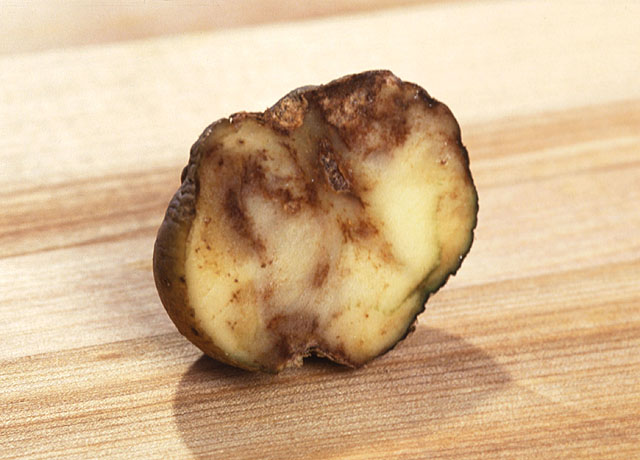
    Potato infected with late blight.
    Photo by Scott Bauer

    By Clint Thompson

    Potato and tomato producers in Florida need to be wary of the discovery of Phytophthroa infestans, the causual agent for potato and tomato late blight. Gary England, RSA/Director for the Hastings Ag Extension Center in Hastings, Florida, confirmed that samples collected from the Extension Center site tested positive.

    He scouted the rest of the affected portion of the farm on Saturday but did not see further spread of the disease. Still, England wants to make other farmers aware to be on the lookout.

    “It’s nothing bad right now, but anytime it gets in the area, we always let everybody know. With the weather we had with rain and cooler temperatures (this week) it is more capable for late blight. Hot and dry (temperatures), it’s not all that favorable for development,” England said. “The growers definitely need to be looking for late blight.”

    He said farmers in the Live Oak, Florida area need to be made aware since a bulk of potatoes are produced there. Producers need to be proactive in preparing for and managing this disease, considering the destruction it can have on a potato field.

    “It’ll totally destroy the potato vines before potatoes mature. That disease, you’ve heard of the Great Irish Potato Famine, it’s the same disease,” England said. “Back in those days, they didn’t have any fungicides to put on them.

    “Hopefully, it doesn’t show up on any of the local farms but if we see it in the area, we definitely get the word out so everybody can step up their scouting.”

    According to University of Florida, symptoms of late blight may begin as dark green water soaking that may be associated with chlorosis or necrosis, depending upon the age of the lesion and the weather conditions. Under relative humidity in excess of 80%, lesions may appear purple to black with white sporangial growth. Under hotter and drier conditions, the lesions turn brown, dry out, and appear papery.

    To learn more about the disease, see Late Blight’s Impact on Potatoes and Tomatoes.

  • Georgia Vegetable Growers Should Plan Ahead to Prepare for Harvest in Light of COVID-19 Pandemic

    By Andre Luiz Biscaia Ribeiro da Silva/UGA CAES News

    Eggplant is a vegetable grown in Georgia.

    Most vegetable crops in Georgia — such as bell pepper, specialty peppers, tomato, eggplant, cucumber, yellow squash, and zucchini — are currently being planted and will continue to be into early April. These crops should be harvested in May and June. However, in light of the current coronavirus (COVID-19) situation, Georgia growers, who rely on seasonal workers, need to plan ahead to be prepared for the harvest.

    The indefinite closure of U.S. consulates and borders may cause a delay in the processing of agricultural workers’ visas (H-2A) or prevent them from entering the U.S.

    According to the Bureau of Consular Affairs, the number of agricultural workers entering the country on H-2A visas has increased dramatically since 2000. In 2019, 204,801 of all U.S. agricultural workers were workers on H-2A visas, and a significant portion of those workers help to keep the Georgia vegetable industry viable. In 2018, Georgia’s vegetable industry generated $1.13 billion in farm gate value and 13,900 jobs (Wolfe and Stubbs, 2018).

    As of March 26, there is an authorization to grant interview waivers for H-2 applicants whose visa expired within the last 48 hours, who have not previously received an H-2 visa or whose visa expired more than 48 months ago. This will speed the process for growers to get labor, however, planning ahead is still vital for timely harvest of spring crops.

    Estimating the number of workers required to harvest the planted acreage is the first step to ensure vegetables and fruits are out of the field in a timely manner. Furthermore, it is important to highlight that harvested products must be packed before reaching the consumer. Labor in the packing line is also a key point in this process.

    Overall, farms have different activities and crop management practices and, consequently, labor requirements vary widely. Producers should identify activities and periods of intense labor demand in their operations and try to stagger these periods, rather than coinciding labor peak needs.

    For more information, see UGA CAES Newswire.

  • Farmers, Other Essential Food Production Workers Will Carry Permission Letters During COVID-19 Shutdown

    Contact: Judy Clayton Sanchez

    863-902-2210

    Clewiston, FL – Today, all U.S. Sugar employees and suppliers who have been deemed essential to the nation’s food supply and national security will begin carrying authorization letters to inform authorities that they are approved to be out of their homes and working.

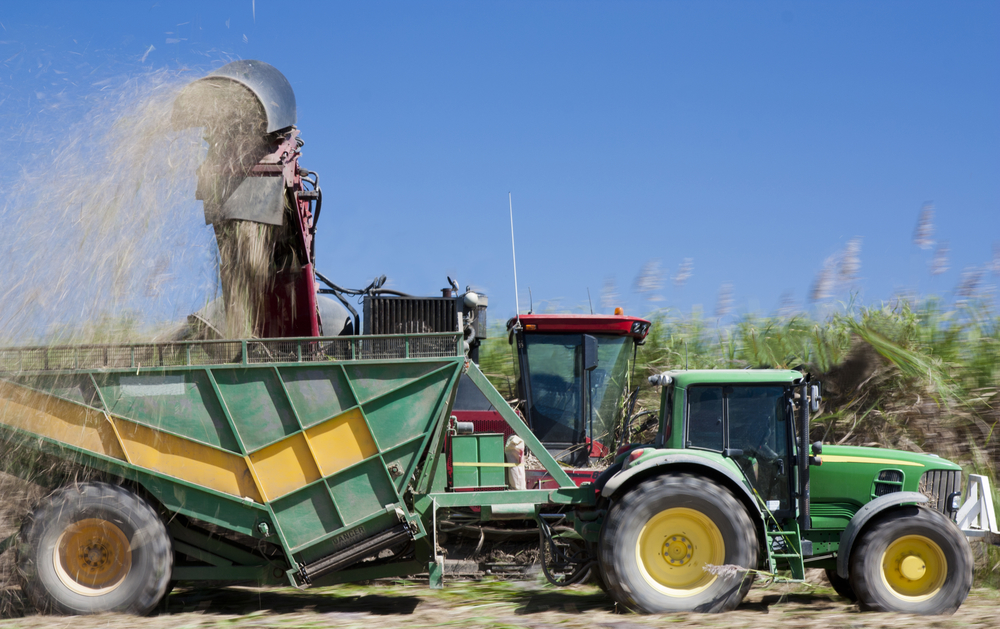
    Aerial picture of sugarcane/beet fields in Florida.

    “Our farmers, workers and other essential food production vendors will continue working around the clock to keep safe, locally grown food on America’s grocery store shelves and American families’ tables,” said Judy Sanchez, Senior Director, Corporate Communications and Public Affairs.

    U.S. Sugar’s farms in South Florida provide a significant amount of the sugar, citrus, sweet corn, green bean and other fresh fruits and vegetables that keep grocery stores and food markets supplied around the state and the country.

    According to the U.S. Department of Homeland Security, farming and processing is considered “critical infrastructure” to continue the American food supply chain. As more and more shutdowns of entire counties continue, our family of farmers has not stopped working in the fields and factories to produce food for families.

    In addition, residents of South Florida, including Palm Beach County where many of our people reside, have been ordered to stay at home unless they work for an essential business like ours.

    U.S. Sugar employees, our farmers, contractors, suppliers, drivers and business partners which are essential to the American food supply chain all will carry letters stating this information so they can show it to local and State law enforcement if they are questioned or stopped while traveling in areas that have implemented a stay at home order from the Governor.

    The Company also owns and operates an independent short-line railroad, the South Central Florida Express, which serves essential food and other agricultural producers that must remain in operation as part of the nation’s critical transportation infrastructure.

    These essential services also follow all directives by Florida Governor Ron DeSantis, the Centers for Disease Control and the federal government to keep our workers and our food supply as safe as possible during this pandemic.  What’s even more important is that these measures enable all of our people to continue working and earning a paycheck at a time when many other workers have been furloughed or laid off as a result of COVID-19.

    About U.S. Sugar

    U.S. Sugar is a farming company that grows and processes sugarcane, citrus, green beans, sweet corn and other vegetables. The company was founded in 1931 by Charles Stewart Mott, a visionary leader who hailed from a long line of farmers. Since the beginning, our company’s success has been rooted in traditional farming values and respect for the land.

  • Florida’s Tomato Industry Crippled by Pandemic

    tomato
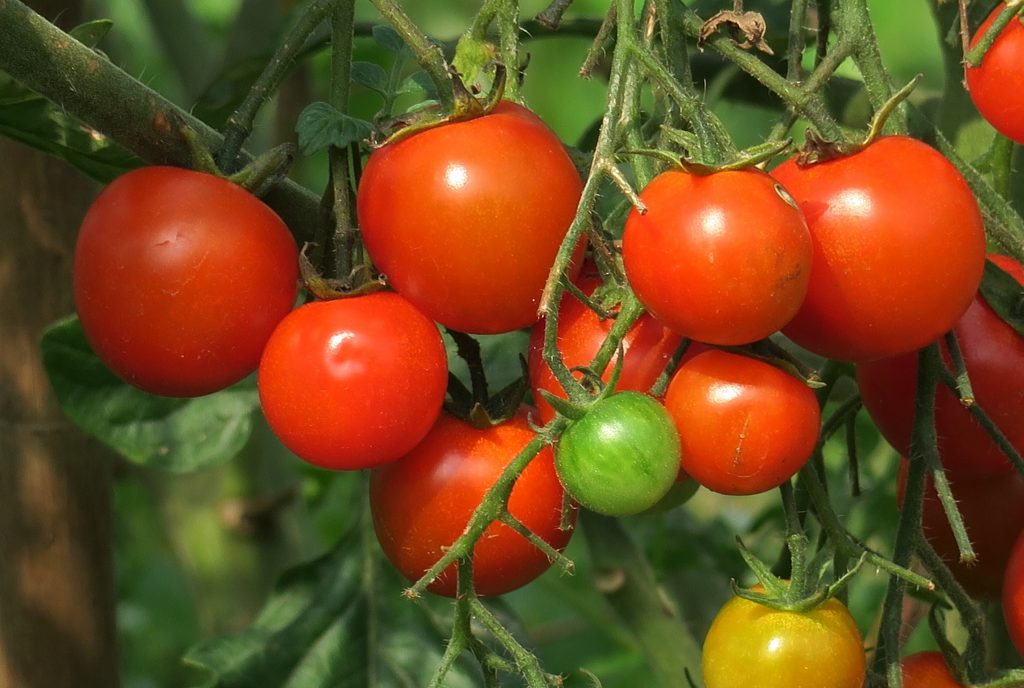
    Florida’s tomato industry is being crippled right now because of the coronavirus pandemic.

    By Clint Thompson

    With restaurants closed across the country due to coronavirus pandemic, little, if any, of Florida’s tomato crop is being harvested right now.

    Bob Spencer, President of West Coast Tomato in Palmetto, Florida, said his company farms between 3,500 and 4,000 acres every year but estimates that he’s losing 90% of his business right now. Since about 70% to 75% of the state’s tomato crop is designated for the food service market, many of his farming colleagues are dealing with the same grim outlook.

    “All of us are having to cut back and leave tomatoes in the field right now that we normally would have picked just because we’ve got to get through these stay-at-home orders across the country that have shut down the restaurants,” Spencer said. “We’ll make it through, and hopefully in the next two or three weeks, everybody will get through this situation safely. The safety of the public is our primary concern. When that gets taken care of, we’ll get back to harvesting, restaurants will get back open and business will get a lot better.”

    West Coast Tomato staggers its plantings from the end of October through June every year to be able to harvest tomatoes every week. Unfortunately, Spencer’s business has dried up the last two weeks and he forecasts that’ll be the case for the next two to four weeks.

    However, Spencer remains optimistic about the future of the industry.

    “Eventually that will turn around. We’ve had a good year so far. This is a little bump in the road, but we’ll get through it,” Spencer said. “Successful businesses, you don’t get yourself in debt so when bad times come you can survive, you don’t have to worry about debt. No. 2, you always realize that anything can crop up and farming that’s the case. You’re prudent in what you do, and you try to manage it as best as you can.

    “Once it re-opens, there’s not going to be a lot of the product in the supply chain. They’re going to be looking for product.”

    This is not uncharted territory for Spencer and the tomato industry, who went through something similar not too long ago.

     “We went through something similar 15 years ago at the end of the season. There was an outbreak of salmonella that was from Mexican tomatoes that was being imported into the U.S. When that happened, everybody in the country just stopped eating all tomatoes,” Spencer said. “We had a little bit of a similar situation back then. This is probably going to go on for a little bit longer, it’s in the middle of the harvest season.”

  • Hoop Houses Benefit Organic Vegetable Production

    Hoop houses help organic vegetable farmers.

    By Clint Thompson

    Hoop houses help protect vegetables from rain-induced diseases while providing organic growers the opportunity to produce a crop throughout the year, according to Elizabeth Little, University of Georgia associate professor and Extension plant pathologist.

    BETTER QUALITY, LESS SPACE
    Hoop houses, also known as high tunnels, are types of greenhouses that help organic growers produce high-quality crops if managed appropriately.

    “These growers are producing all winter in tunnels and selling direct to customers and restaurants,” Little said. “The houses are also useful in the summer to avoid foliar diseases, which are very difficult to control in the field when conditions are wet. Hoop houses give you a controlled environment so you can grow a better-quality crop.”

    Hoop houses are used extensively in the Georgia Piedmont and further north. A variety of vegetables and flowers are produced, including lettuce and other greens during the winter months, and tomatoes and peppers in the warm season. Hoop houses are a valuable production tool, but the growing space is often the limiting factor.

    Hoop houses vary in size but typically average 40 feet wide and 100 feet in length. They are unheated plastic-covered houses with roll-up sides that allow for ventilation to control temperature and humidity.

    “There’s more demand for local organic produce than there is supply. The local organic produce is high quality … The problem is we have a challenging hot and humid climate which leads to more disease and pests,” Little said.

    BEWARE OF ROOT-KNOT NEMATODES
    Little stresses that root-knot nematodes are a potential problem for both home and organic vegetable growers across the state. Root-knot nematodes are tiny parasitic worms that feed on roots of many plants and cause a loss in productivity. Most vegetables are highly susceptible to nematode damage.

    A University of Georgia Cooperative Extension Survey of 431 vegetable fields found that more than 60 percent contained root-knot nematodes. These pests enter plant roots and feed on nutrients. They quickly produce eggs and eventually, as more nematodes infect, the roots swell into characteristic galls. The damaged roots result in reduced plant growth and lower yield potential.

    Root-knot nematodes can increase to high numbers in hoop houses due to warm temperatures, loose soils and intensive production of susceptible crops year-round. Cover crops are usually grown in fields part of each year, which can keep root-knot nematode numbers low, but hoop houses are often kept in production longer due to economics.  

    “Root-knot nematode damage in organic high tunnels is becoming more of a problem in Georgia,” Little said. “We’re approaching the problem with the mindset that you’ve got to balance the use of organic best management practices to keep numbers low with the economics. After a highly susceptible summer crop, such as tomato, you try to grow a fall crop like carrots and end up with damage on the root crop from the nematodes.

    “We’re looking at ways to break that cycle. I have been working with growers on optimizing the length of time for summer cover cropping and solarization, as well as incorporating different rotations and organic amendments to lower nematode numbers. The goal is to get root-knot nematode numbers low enough so you can successfully produce the next crop, which is the same goal in both conventional and organic soils when managing nematodes. The nematodes never disappear entirely.”

    (For an outlook of organic farming, see Future of Organics.)