Blog

  • Fried, Ag Associations Urge USDA to Act Quickly on COVID-19 aid

    commissioner
    Nikki Fried
    Florida Agriculture Commissioner


    The CARES Act, a $2 trillion federal stimulus bill, was signed into law March 27 to aid American businesses and citizens who have been severely affected by COVID-19. A $9.5 billion allocation was set aside for American farmers, and Florida Commissioner of Agriculture Nikki Fried is asking the USDA to act immediately in getting them their distribution.

    Fried sent a letter this week to U.S. Secretary of Agriculture Sonny Perdue urging the USDA to act as quickly as possible, especially on a Section 32 purchase, which gives USDA the authority to buy surplus crops and distribute them to child nutrition programs and food banks.

    “I applaud our farmers and producers who have shown unbelievable resilience as they continue to work day in and day out to feed our communities during this trying time,” Fried said in the letter. “Now, we must make sure our farmers, who are also struggling in the current market even as they continue to provide for others, are not left behind and food is not left to waste.”

    FFVA is working closely with FDACS and other organizations to press USDA to aid growers in three areas:
    •        An expedited Section 32 purchase
    •        Direct payment to growers based on losses  
    •        A request for USDA to cover losses when PACA claims are filed and the buyer is no longer in business

  • Congressman Scott: Apply Today for Paycheck Protection Program

    By Clint Thompson

    The Paycheck Protection Program might be an option for farmers to consider, but Congressman Austin Scott implores those interested to apply today.

    Austin Scott

    The recently passed $2 trillion Coronavirus Aid, Relief, and Economic Security (CARES) Act, which is intended to provide financial relief amid the coronavirus pandemic, includes $350 billion for the Paycheck Protection Program. It is designed to aid small businesses.

    “There are significant questions that remain out there about whether or not farmers can actually apply for and get relief from the Paycheck Protection Act. Here’s the best advice I can give you. You need to be talking with your lender and you need to look at the application. If you can answer those questions honestly, then you need to put an application in,” Scott said. “When I say put it in, I don’t mean you need to put it in tomorrow. I mean you need to put it in today.”

    Scott said that according to the Small Business Administration there is an estimated 30 million small businesses that are eligible for paycheck protection relief, which will provide eight weeks of financial assistance. Scott expects funds to run out quick.

    “My concern has been based on the $350 billion number that if you just divide that by the number of small businesses, my fear is that we’ve over-promised on what we’re going to be able to do on the paycheck protection, simply based on the $350 billion being divided by 30 million businesses. You come up with $11,600 per business. If only half of the people apply that’s $23,000 per business,” Scott said. “You’re talking about two months payroll plus rent and utilities. I think the money goes and I think it goes very quick. In fact, I do not believe there will be money left at the end of the day today.

    “The question comes, when does it get replenished? And not just if, but if it gets replenished and when would it get replenished? I think you’re talking about well over a month before any additional legislative action is taken.”

  • Alabama Extension Specialist Cautiously Optimistic About Peach Crop

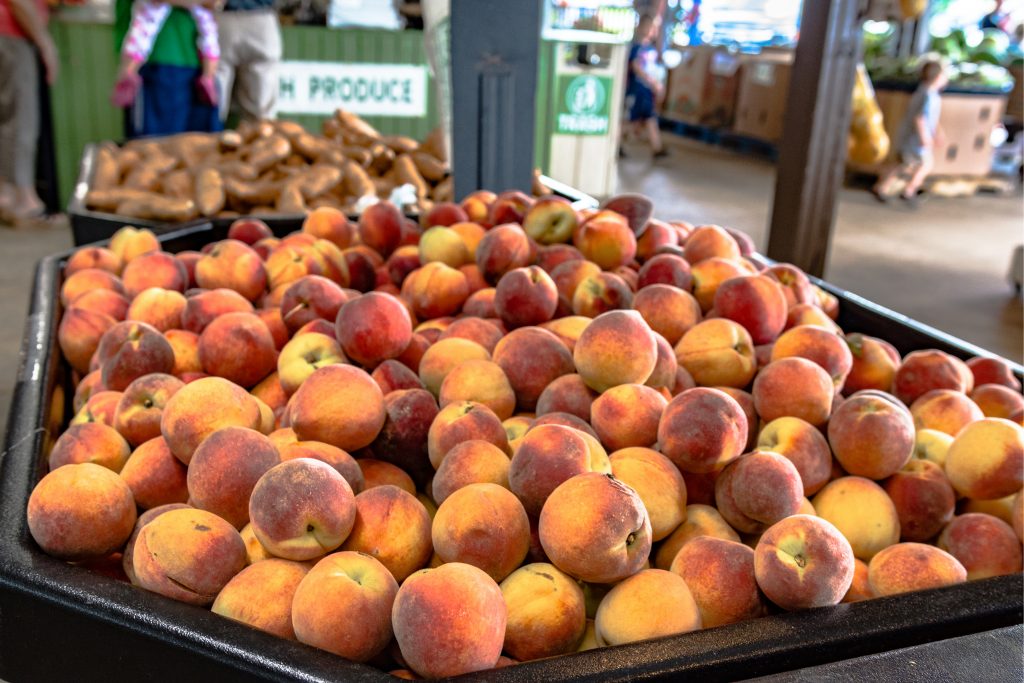
    peaches
    Peach season in Alabama and Georgia begins in late May.

    By Clint Thompson

    Peach season is less than two months away for Alabama and Georgia growers and Edgar Vinson, assistant research professor and Extension specialist in the Department of Horticulture at Auburn University, is encouraged by this year’s crop despite a very mild winter.

    “I’m cautiously optimistic. I do think we got more chilling than the chill hour models tell us. But my concern now and concern of the growers is potential for frost damage,” Vinson said. “Hopefully, it’s warm for the rest of the season.”

    Vinson said Alabama’s peach season begins in late May and extends to September, which is very comparable to Georgia, and unlike Florida farmers, who are already harvesting their crop amid warm temperatures. Vinson does believe growers are a little concerned with chill hours with respect to the varieties that require a lot.

    “And that’s not to say we’re not going to have any issues with chilling, we’ll probably see some issues with chill accumulation, especially with our high chillers. A number of our growers still have quite a number of peach varieties that require higher chilling; 900 (hours) or above,” Vinson said. “In terms of the early-season to mid-season (varieties), they’re probably not as concerned. They’re more concerned with the varieties that require a high chill. That’s probably where we’ll see any signs or symptoms of a lack of chilling.”

    Lack of chilling hours can affect the overall quality and appearance of the fruit, according to Vinson.

    “There’s an over-pronounced suturing that runs the length of the fruit. Ideally, we want that to be minimal. But when there’s a lack of a chilling, that suturing is very pronounced,” Vinson said. “Also, the tip of the fruit, you don’t want a point there; you want that to be smooth. With fruit that shows lack of chilling, there’s an over-pronounced suture with a very sharp tip at the end of the fruit.”

    Vinson also said there can also be smaller harvests over a longer period.

    “That means your growers are having their crews go out to the orchards for longer periods. That cost more money and each harvest is yielding less. It can affect the growers’ operation that way,” Vinson said.

  • Citrus Farmer: Crop not a Cure-All but Definitely Money-Making Opportunity

    By Clint Thompson

    Pictured is Georgia citrus.

    A farmer in north Florida is excited about the potential of citrus in the South Georgia-North Florida region.

    Kim Jones, who owns a citrus packing facility in Monticello, Florida and is part-owner of a similar facility that will soon open in Tifton, Georgia, believes citrus will be the alternative crop producers are looking for to stabilize their farming operations.

    “Right now, the row crops are in terrible situation, (with) prices of course. Citrus has been on the radar for several years. We’ve had several friends doing it for several years in the panhandle,” said Jones, who also produces 30 acres of citrus. “We studied their program pretty close and sort of followed suit. It looks good. It’s definitely not a cure-all, but it’s definitely an opportunity for us to make additional money for our farms.”

    According to Danielle Sprague, University of Florida/Institute of Food and Agricultural Sciences (IFAS) FAS Extension agent in Jefferson County, Florida, there is approximately 1,000 citrus acres across north Florida. There is also an estimated 1,000 acres in South Georgia, though that number is expected to double by the end of 2020.

    While production has skyrocketed recently, there is a concern of how all of the fruit will be sold once it’s ready to be harvested. Savelle estimates by the end of 2023, there will be 50 million pounds of citrus coming out of Georgia. Jones, who is one of eight part-owners of the Tifton facility, believes the packing houses will be key in getting fruit sent out to consumers.

    “The key is marketing. Our facility, we’ve been fortunate enough to have a lot go into schools out of Monticello. We’ve just this past year developed a retail business through Genuine Georgia out of Fort Valley (Georgia), and they’re helping us get into the retail side; mostly with small packages, two and three-pound packages of satsumas. That will be expanded greatly this year,” Jones said.

    He added that the facility in Monticello is designed to try to pull the fruit from North Florida and extreme South Georgia areas and can accommodate a couple million pounds of production in a year. The Tifton facility will be much bigger and can handle a million pounds per day of certain citrus. Jones estimates Tifton will open this upcoming season with an open house later this summer.

    “It started out with a small, small farmer with a few acres; here, I’ve got five acres I’m not utilizing, what can I do? Look at blueberries, look at blackberries, look at other produce, and all of a sudden it’s zeroed in on the citrus,” Jones said. “Now we’re seeing large-acreage farmers take corners of a pivot or a field here that’s isolated from their normal row cropping operation…acreage numbers are increasing quickly.”

  • FFBF and FDACS Host Town Hall on COVID-19 & Florida Agriculture

    florida

    Florida Agriculture Commissioner Nikki Fried and Florida Farm Bureau President John L. Hoblick held a town hall meeting on Thursday with the state’s agriculture community on pressing issues. Some of the topics of discussion included:

    • Ensuring agriculture and all related industries are essential at the federal, state and local levels.
    • Promoting the continued and efficient processing of H-2A worker visas.
    • Inter- and intra-state weight waivers for farm commodities.
    • Buybacks for Florida commodities (federal, school districts and grocery chains).
    • Risk Management Agency waivers and flexibility for producers.
    • Florida Department of Agriculture and Consumer Services (FDACS) emergency rules and marketing efforts.
    • Food-supply chain worker-safety protocols.

    Hoblick’s opening comments:

    Fried’s opening comments:

    Hoblick has participation questions for Fried:

    Closing comments from Hoblick and Fried:

    FDACS is working closely with the Florida Farm Bureau to provide crucial information to producers and coordinate with the U.S. Department of Agriculture (USDA) to ensure Florida’s agricultural industry is supported in keeping the state’s food supply strong.

    Commissioner Fried recently sent a letter to U.S. Secretary of Agriculture Sonny Perdue requesting flexibility to help move Florida’s perishable crops quickly to food banks, school meal programs and other federal food purchase programs. Commissioner Fried also sent a letter to congressional leadership requesting that additional federal stimulus packages include support for ag, including direct USDA assistance for farmers.

  • UGA Extension Food Safety Specialist Addresses Issues Surrounding COVID-19

    As COVID-19 continues to impact and alter the southeastern produce industry and world, there is an increase in questions from growers, packers, and shippers of fresh produce. Some issues that have surfaced this week include:

    • How can the 6-foot rule apply to harvest and packing crews?
    • What do I do when employee housing meets US DOL guidelines but employees are less than 6 feet apart?
    • What do I do when an employee tests positive for COVID-19?

    University of Georgia Extension food safety specialist Laurel Dunn offers her take on the current pandemic.

    https://www.youtube.com/watch?v=GJeNVZbcwo4&feature=youtu.be

    Visit the GFVGA Covid-19 Webpage for more information.

  • Georgia Pecan Crop Offering Hope for 2020 season

    By Clint Thompson

    It’s early in the pecan production season but University of Georgia Cooperative Extension pecan specialist Lenny Wells is encouraged by what he’s seen in South Georgia orchards.

    “There seems to be a lot of male flowers or catkins on the trees. Usually, that doesn’t guarantee you’re going to have a good crop but if you don’t see a lot of catkins like that, you aren’t going to have a good crop,” Wells said. “So far it looks promising.

    “There are a few varieties that I have seen a good crop of female flowers on already, which is great. It’s what we want to see. I really think we’ll come back with a pretty decent crop this year; I believe.”

    Hurricane Michael devastated Georgia’s pecan crop when it moved through the state in 2018 and left lingering effects on Georgia trees in 2019, which led to a down year of approximately 67 million pounds. The dry weather conditions late also had a negative impact. Wells is hoping to see between 80 and 100 million pounds this year.

    “There’s probably some who would say I’m being a little too optimistic,” Wells said. “I think that’s possible.”

    The warm weather in March has led to early bud break on trees this year.

    “I’d say it’s at least two weeks early, if not more. Everything’s really pushed out pretty far already. With that growers are starting to spray fungicides. A few people started this week. I would say we’re going to see a lot starting next week,” Wells said. “Certainly, by that time, everything will be pushed out pretty far. There will be a lot of foliage growth out there, certainly enough to get fungicide on to protect the leaves from scab.”

    Once foliage starts to appear, it leaves the trees vulnerable to scab disease pressure, especially if additional rains come in April and May.

    “I think from this point forward, the rains are going to be more critical than they were before. (The trees) are at a vulnerable stage where there’s tender foliage growth and scab likes to grow on that young tender growth,” Wells said.

    For additional pecan news, see Southeast AgNet.

  • Crop Insurance Hurricane Endorsement Offered

    The U.S. Department of Agriculture’s Risk Management Agency (RMA) has announced a new crop insurance endorsement, Hurricane Insurance Protection – Wind Index (HIP-WI). HIP-WI covers a portion of the deductible of the underlying crop insurance policy when a county, or adjacent county, is within the area of sustained hurricane-force winds.

    HIP-WI provides coverage for 70 different crops, including all citrus, insured under the Common Crop Insurance Policy, Basic Provisions for both Catastrophic and additional coverage policies.

    April 30 is the deadline to purchase HIP-WI coverage for the 2020 crop year. Crop insurance is sold and delivered solely through private crop insurance agents.  

    “This new hurricane endorsement provides some added protection for producers along the Gulf and east coasts as well as Hawaii,” said RMA Administrator Martin Barbre. All of Florida and Louisiana are on a map of available counties, along with parts of other states bordering the Gulf of Mexico. Parts or all of the states along the east coast are also on the map.

    To be eligible for the HIP-WI Endorsement, growers must have an insurance policy under the Basic Provisions with the same insurance provider and elect a HIP-WI coverage percentage.

    In the initial year HIP-WI is elected, coverage will not begin until 14 days after the sales closing date. If the underlying crop policy also requires a waiting period, the wait periods will run concurrently.

    Growers are not required to submit acreage reports for HIP-WI, because HIP-WI uses the underlying policy’s acreage report.

    “The full value of the HIP-WI Endorsement is paid if a county, or adjacent county, is within the area of sustained hurricane-force winds from a named hurricane based on data published by the National Hurricane Center,” a notice from RMA stated. “It is possible that your individual farm may experience reduced revenue or reduced yield due to hurricane-related causes and you do not receive an indemnity under HIP-WI.”

    Crops include: Wheat, Blueberries, Onions, Canola, Oats, Rice, Avocados, Pecans, Cotton, Cotton Ex Long Staple, Macadamia Nuts, Macadamia Trees, Forage Seeding, Forage Production, Peaches, Sugarcane, Corn, Sweet Corn, Fresh Market Sweet Corn, Processing Beans, Grain Sorghum, Grapes, Apples, Cranberries, Hybrid Corn Seed, Green Peas, Cabbage, Nursery (FG&C), Nursery Value Select (NVS), Peanuts, Sunflowers, Clary Sage, Hybrid Seed Rice, Soybeans, Peppers, Potatoes, Fresh Market Tomatoes, Tomatoes, Barley, Rye, Fresh Market Beans, Clams, Cucumbers, Sweet Potatoes, Tangerine Trees, Grapefruit, Lemons, Tangelos, Orange Trees, Grapefruit Trees, Lemon Trees, Lime Trees, All Other Citrus Trees, Avocado Trees, Carambola Trees, Mango Trees, Oranges, Flue Cured Tobacco, Fire Cured Tobacco, Burley Tobacco, Maryland Tobacco, Dark Air Tobacco, Cigar Filler Tobacco, Cigar Binder Tobacco, Cigar Wrapper Tobacco, Banana, Coffee, Papaya, Banana Tree, Coffee Tree, Papaya Tree, Pecan Tree, Mandarins/Tangerines, Sesame, Tangors, Limes, Hemp

  • Florida Farmer: It’s a Very Tough Situation

    By Clint Thompson

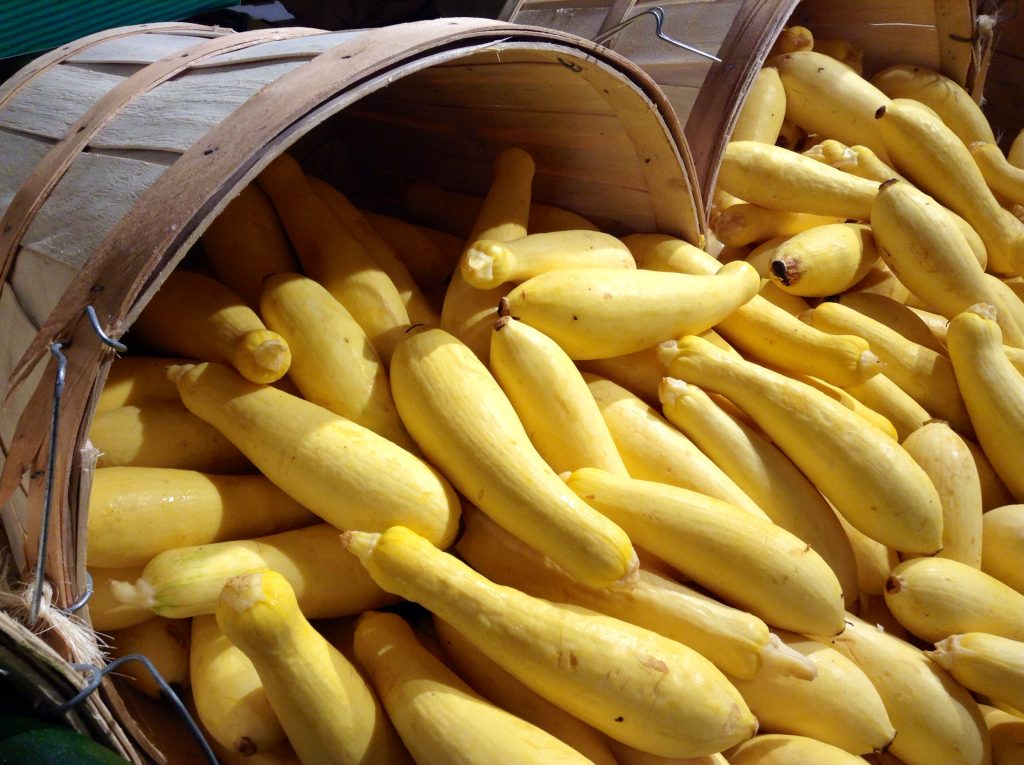
    Yellow squash

    Every day the coronavirus lingers in the United States means more business that is not coming the way of Florida farmers, including Sam Accursio.

    Restaurants remain closed. So many citizens are unemployed. Fruit and vegetables are not being consumed as much like they were.

    Accursio produces pickle and cucumber, green beans and yellow and green squash on 4,400 acres in the Homestead, Florida area. Up until approximately 11 or 12 days ago, business was peaking. That’s not the case anymore, however.

    “They just stopped buying. Monday, Tuesday and Wednesday of last week, we had orders on the books from the previous week, and we came into work Monday and they gave them all back to us. They didn’t take what they had ordered,” Accursio said. “It’s a very tough situation, and to top it all off, the cherry on top of the whipped cream, you look at the USDA Market Report; while I’m dumping squash down here in the field and stopping harvest, Mexico shipped 3 million pounds of squash per day across the border into Texas to ship into the United States. Why does our federal government allow this?”

    It’s similar frustration to what Florida farmer Kim Jamerson voiced to VSC News as she recalled how she reached out to the office of U.S. Senator Marco Rubio (Fla.) and spoke to one of his aides about the government helping out its farmers by purchasing their crops and distributing the food to its citizens since many are unemployed. It would help the American farmer stay in business, while keeping its citizens fed.

    To make matters worse for Accursio, he said this season has been a bumper crop due to the warm, summertime conditions Florida has experienced this year. Crops that are normally ready for harvest around April 15 are currently being picked. Accursio estimates that he has already picked 50% of April’s crop but is losing about 75%. It’s been like this for almost two weeks.

    Cucumbers

    “I think what happened, everybody who was out of work ran out of money and the chain stores never lowered their price to help the situation out. Right here in Homestead, beans are selling for $3 per pound in Publix and the growers are only getting 30 cents,” Accursio said. “It’s pathetic that the chain stores won’t help the situation with the consumer, help the growers and things will get back to normal again. We’re in a real funk right now.”

    Accursio said he likes to pick, pack and load his crops on trucks. He noted that consumers can buy squash and store in their refrigerator, and it’s still edible for 21 days. But he sees it from a different vantage point, in that if his crops have to be stored in coolers before being sold, he starts getting “nervous” at the four-day mark.

    “When you take a squash that’s been in the cooler for a week, you take it out, load it on a tractor trailer, bounce it around to New Hampshire for two and a half days, take it out of the truck and put it on a grocery shelf. Being handled and bounced around, it just doesn’t last as long.”

  • Managing Mite Populations in Blueberries

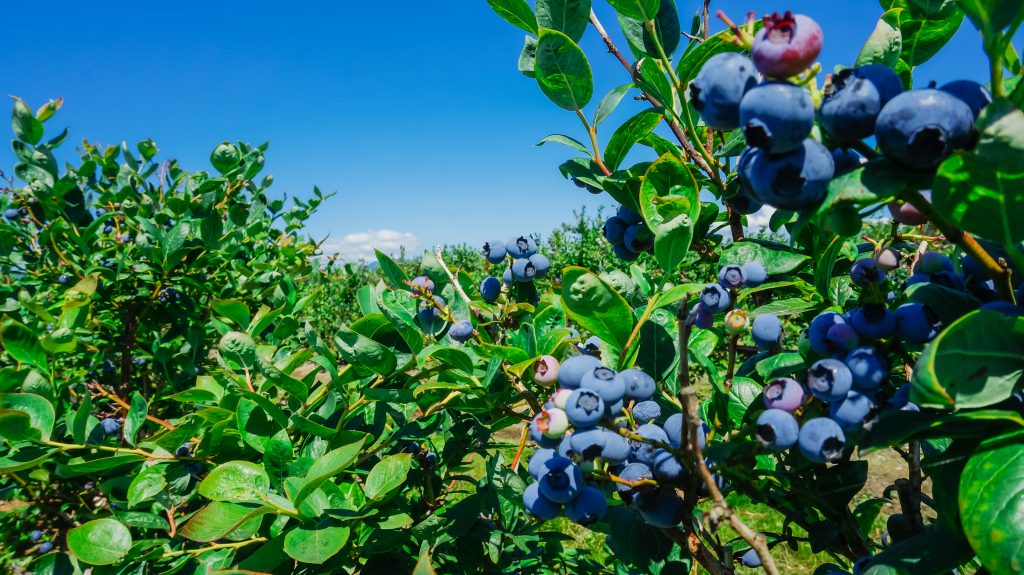
    blueberry
    Mite management in blueberries is essential.
    File photo of blueberry production.

    By Ashley Robinson

    Several mite species have been reported as pests of Florida blueberries. According to Oscar Liburd, professor of entomology at the University of Florida (UF), southern red mites and false spider mites are especially high on growers’ radars this year.  

    SOUTHERN RED MITES

    Currently, there is little known about the management of southern red mites in southern highbush blueberries.

    “Five years ago, mites weren’t a pest seen in blueberries. However, within the last few years, they’ve shown up quite regularly,” Liburd says.

    Southern red mites have caused 80% to 100% losses in some blueberry plantings and have caused some growers to abandon their plantings due to major losses. The mites insert their chelicerae into the plant, preventing the plant from developing normally and impacting crop yields.

    According to Liburd, the first step growers should take to manage mites is to monitor their fields and properly identify the pest. Southern red mites are easy to identify due to their larger size and reddish-brown coloring.

    FALSE SPIDER MITES

    The False spider mite, or flat mite, is known to be an economically important plant-feeding mite in citrus. However, recently this mite was found to feed on southern highbush blueberries.

    False spider mites are much smaller in size compared to southern red mites and can’t be clearly seen without a microscope. These mites harbor underneath the leaf along the mid-vein and are brick-red to yellow in color.

    MANAGEMENT OPTIONS

    Two miticides have recently been labeled for use in southern highbush blueberries – Magister and Portal.

    Liburd has several recommendations for organic producers.

    “Organic growers have the option to use sulfur or they can remove weeds from nearby host plants to reduce the number of mites. Also, water management to reduce plant stress is highly recommended as well as periodically releasing predatory mites can reduce populations,” Liburd said.

    According to Liburd, farmers can also expect to see some new miticides soon, as well as some new and promising products for organic growers. In addition, Liburd expects to see new blueberry cultivars being developed that are resistant to these mite populations.