Nutsedge can puncture the plastic and fight for the same resources as the pepper plants.
By Clint Thompson
The University of Florida (UF)/IFAS vegetable growers meeting scheduled for April 23 will meet via online beginning at 10 a.m. Those interested in learning about weed management can join via https://ufl.zoom.us/j/831234086. The Meeting ID is 831 234 086.
Those interested can also join via mobile: +16465588656, 831234086# US (New York); +16699006833, 831234086# US (San Jose).
Due to the ongoing coronavirus pandemic, the UF/IFAS Administration determined that all group research and Extension meetings through the end of April must be postponed.
The meeting’s contents will include a presentation from UF/IFAS weed scientist Ramdas Kanissery. He will discuss the aspects of effective, long-term and crop-safe weed suppression in vegetable production, specific to tomatoes and peppers. Initial results from an ongoing experiment for nutsedge suppression in vegetable plasticulture beds will also be highlighted.
Nathan Boyd, UF/IFAS weed scientist, will talk about the effects of soil fumigants in managing weeds. His talk will highlight the efficacy of different fumigants on weeds, fumigant movement in the soil, broadleaf and grass management with fumigants and techniques to enhance fumigant efficacy.
Peter Dittmar, UF/IFAS weed scientist, will talk about fallow weed management selection to improve nutsedge control in vegetable crops. Nutsedge is the most problematic weed in vegetable crop production. The summer months are ideal for its control because they provide growers a chance to use broad-spectrum herbicides, mechanical methods and cover crops. The key for better weed control is to reduce underground tubers.
These fallow management practices are most important during the summer fallow when nutsedge is actively growing. It is not effective to wait until the fall.
The zoom meeting will wrap up with a question-and-answer session with the presenters, beginning at 11:30 a.m.
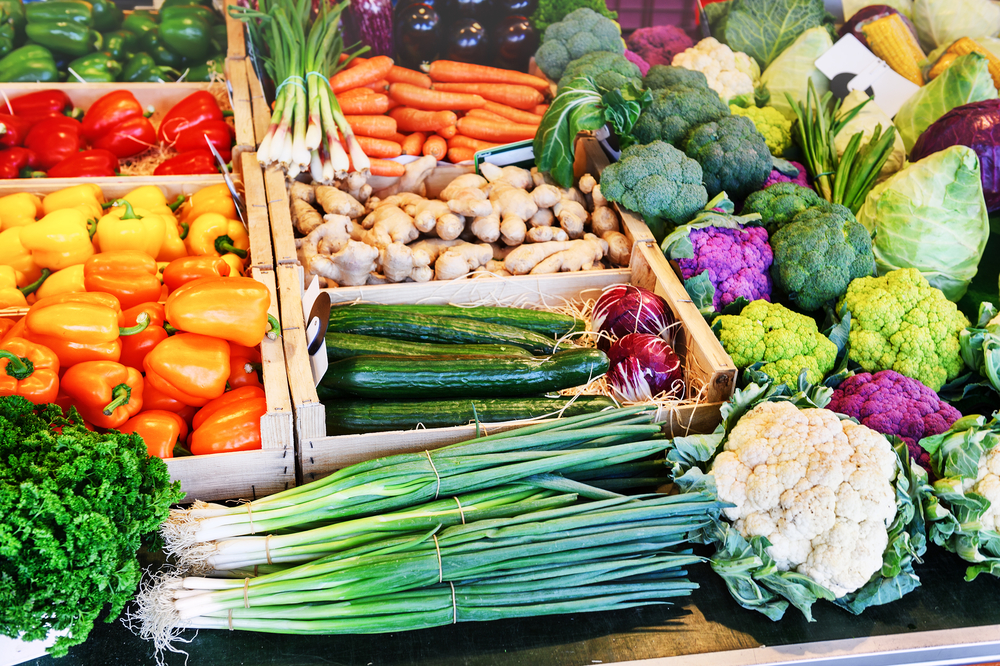
Fresh produce on sale at a farmers market in this file photo.
By Clint Thompson
Produce farmers in the Southeast are struggling with markets that have disappeared because of the loss of restaurants and closure of schools amid the ongoing coronavirus pandemic. But Max Runge, Extension specialist in agricultural economics and rural sociology at Auburn University, believes farmers markets remain a viable option for fruit and vegetable growers, especially those who operate on a lower scale.
“We’ve had pretty good farmers’ markets across Alabama. A number of producers sold through those. I think those are still going to be strong,” Runge said. “I think the market that we have lost is the farm-to-table where the farmers are selling directly to restaurants. We’ve lost that market, at least for now. But I think the smaller production to farmers market that are selling locally, I think those will be okay.”
Florida fruits and vegetables farmers have struggled over the past month with their food service market drying up, amid restaurants across the U.S. being forced to closed. Many had to leave perfectly good produce in the field just because they didn’t have a buyer to sell to.
Runge believes, though, that his state’s smaller produce farmers could still reap the benefits at area farmers markets.
“We don’t nearly have the large commercial operation that there is in Southwest Georgia. We’ve got some. But the majority of them are smaller producers and I think those will hold on,” Runge said. “A lot of those have customers that they’ve sold to for years at these farmers’ markets, and they come back year after year. I think that’ll continue. I think there may be some more interest from people that maybe haven’t purchased from them in the past. And they’re certainly taking advantage of the farmers’ markets.”
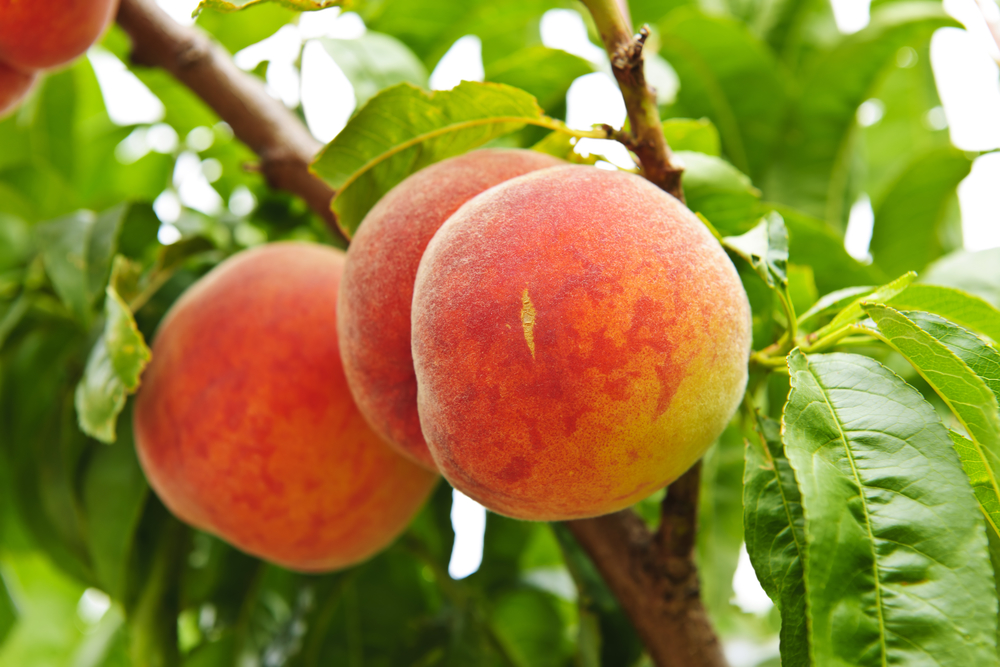
The country’s No. 2 state in peach production appears ripe for a productive season, pending how the market spirals over the next few months, according to Andy Rollins, Clemson Extension agent in Spartanburg, South Carolina.
“It’s looking really good overall as far as the amount of crop and how clean the crop actually is right now,” Rollins said. “(There’s) a lot of uncertainty, just like everybody, as far as what the market is going to bring. We’re still keeping on. The growers are taking care of everything, spray-wise. It looks to be one of the cleanest crops I’ve ever seen.
“I’ve spoken with some of the Georgia guys and on the ridge of South Carolina as well, and things look pretty good down there as well.”
Rollins assists farmers in the upstate or northern part of South Carolina. It amounts to about a third of the state’s crop.
Farmers across the country are feeling the pinch of an economic downturn amid the ongoing coronavirus pandemic. However, Rollins is encouraged about how early sales are going for his strawberry farmers. He believes a similar fate could await his peach producers when harvests of Flavor Rich varieties begin around May 25.
“We just started in strawberries and indications are good right now as far as movement of the product with strawberries. Even in this current situation, our wholesale market and several of our U-pick growers are actually doing fairly well,” Rollins said. “But yeah there is still that uncertainty of not sure what’s going to happen later. But really, based on the current situation, things are going pretty well.”
“It looks like we’re in the clear here at this point in the year. There’s been plenty of years where I’ve said that and that we’ve had events that changed. It seems like I’m saying that every year, but it really is a solid crop. We don’t see any major issues right now with anything,” Rollins said.
Picture taken by Tyler Jones,UF/IFAS. A UF/IFAS-wrapped vehicle is loaded with several stops’ worth of food deliveries in the Alachua County Farm Share event on April 8, 2020.
By Clint Thompson
The University of Florida/IFAS participated in a Farm Share event on Wednesday that led to more than 40,000 pounds of food being distributed to 802 households in Alachua County, Florida.
Picture taken by Tyler Jones,UF/IFAS. Jeanna Mastrodicasa, UF associate vice president for agriculture and natural resources, unloads a delivery for an Alachua County home during a Farm Share event on April 8, 2020.
UF Associate Vice President for Agriculture and Natural Resources Jeanna Mastrodicasa said UF deployed 19 vehicles, including Elaine Turner, dean of the UF/IFAS College of Agricultural and Life Sciences.
“I think for everybody that works at IFAS, every day our work is helping people in some capacity. But in this particular case, what I think it really gave everybody an opportunity to do was formally partner with our local government and our local community on a specific mission and to go out and support this project,” said Mastrodicasa. “For many of the folks who participated, some are typically in the office all day and never really get to interact with citizens. I think for them it was a bit of a treat to get out on the front lines. I also know for pretty much everybody involved, they were just happy to be out doing something that they felt was contributing positively. With all of our folks pretty much working from home right now, I think people were just happy to have a change to do something productive.”
Mastrodicasa said the Farm Share event encompassed 130 volunteers. They drove to different homes in Alachua County. She said the food, which included potatoes and orange juice, was donated by Farm Share and other entities.
“What we did was went out to the Alachua County Fairgrounds and picked up food. They put in our car with no contact,” Mastrodicasa said. “We drove to people’s houses, no contact, and left it at their porch. It was very well organized. We helped a lot of people.”
She added that there are approximately 250,000 people in Alachua County.
Florida Farmers Team with State Leaders to Launch Farm to Inmate Program
Harvested produce crops feed Florida Department of Corrections’ (FDC) more than 87,000 inmates; action saves food costs while reducing COVID-19 related supply chain impacts.
(FFA) — Florida farmers are uncovering new solutions to address supply chain disruptions during the COVID-19 pandemic. With Florida’s emergency order to shutter businesses who routinely have a need for fresh produce, a pilot team of South Florida producers will supply and distribute more than 380,000 pounds of locally-grown squash, green beans, cucumbers, and lettuces directly to 35 correctional facilities across the state.
Produce from Accursio & Sons Farm of Homestead and TKM Bengard Farms of Belle Glade will be handled and distributed by 5 Brothers Produce Company of Florida City to FDC directly. This collaborative effort will serve as a future model as more producers work together in efforts to maximize capabilities and drive-down pricing for locally-grown foods.
Due to pandemic impacts, Florida agriculture will continue to suffer grave economic and environmental impacts as harvesting continues across the state. Florida producers estimate that at least 10 million tomatoes will go unpicked this year while hundreds of thousands have already gone unused or plowed back into Florida soil. In addition to produce growers, many ranchers are also unable to break even on their livestock and are looking for alternative markets.
Tyra Phillips, Executive Director of Dade County Farm Bureau, expects that more public-private partnerships will emerge as producers seek opportunities to update their supply chains for resiliency: “It is imperative for state leadership to maintain inclusion of local producers in state procurement,” she said. “Working with the FDC would not be possible without State Senator Jeff Brandes and the Florida Department of Agriculture and Consumer Services whose commitment raised the awareness and the focus needed for the team to execute quickly.”
Although local producers tend to be more competitive on pricing than their imported counterparts, some farmers are concerned that pipelines to new markets, such as the inmate population, could decrease once the pandemic subsides, leaving producers’ supply chains vulnerable to the next disaster. Commissioner Nikki Fried has advised that all producers interested in competing for public contracts register with the State’s eProcurement platform “MyFloridaMarketPlace.”
“Whether it’s hurricanes or viruses, we must have access to serve our own communities with goods from our respective regions and be more resilient to change, working together locally,” said Steve Mathis CEO of Mathis Farms. Although Mathis has yet to participate in any public bids, he is following suit of many other producers and has registered his business in the State’s online marketplace in preparation for future opportunities.
Hemp trial by the University of Florida. Photo by Luis A. Monserrate
By Clint Thompson
When the hemp cultivation application process officially becomes available for farmers in Florida around April 25, expect a huge amount of interested applicants, according to Jeff Greene, director of business development at the Florida Hemp Council.
“The (Florida Department of Agriculture) put out on their website, to put in your name and email address if you are interested in growing it. There were over 1,500 farmers that put their information in. I know that we’ve got in the Florida Hemp Council over 800 that have expressed interest,” Greene said. “The first year of any hemp program is going to be predominantly around low acreage, experimentation. Then as we’ve seen with Kentucky and a lot of the other states, it ramps up. It’s just like any other crop. You’ve got to get used to how to grow it.”
Greene thinks hemp’s footprint will not be restricted to just one area of the state but expects interest from all producers and sectors from different regions across Florida.
“I think we’re looking at it from all different levels. We’ve got tomato farmers in Homestead, Florida. The sugar industry is looking at it. The citrus industry is looking at it. The tree farmers up in the Panhandle are looking at it. Everybody’s looking at it,” Greene said.
However, if there is a concern is that interest in hemp is so great and that it’s open to anybody in Florida, if they have not been convicted of a drug-related crime in the past 10 years, Greene said.
“My fear is that we’re going to have a supply and demand issue here like we’ve had everywhere else,” Greene said.
There is also not a licensing fee for producing hemp in Florida.
Practice good hygiene by washing your hands with soap and water.
LAKE ALFRED, Fla. — Consumers are being bombarded with tips for what to do with their groceries during the coronavirus crisis. Leave them in the garage for three days? Wash the produce with soapy water? Wipe all packaging down with disinfectant wipes?
Listen to the science, say University of Florida Institute of Food and Agricultural Sciences Food Science and Human Nutrition faculty. Food production safety measures secure the food supply.
“There is consistent agreement among the Centers for Disease Control, the Food and Drug Administration and the U.S. Department of Agriculture that there is no evidence of food or food packaging being associated with transmission of COVID-19,” explained Michelle Danyluk, UF/IFAS professor of food microbiology. “The FDA has also issued guidance that if an employee tests positive for COVID-19 they do not anticipate that food products would need to be recalled or be withdrawn from the market.”
Michelle Danyluk and colleague Travis Chapin, a state specialized UF/IFAS Extension agent for food safety, work at the UF/IFAS Citrus Research and Education Center. They advise that produce growers, harvesters, packers, and coolers should continue to follow the good hygiene practices they already have in place (e.g., washing hands and cleaning and sanitizing surface that may contact food or hands, often) as part of their food safety programs when handling produce.
Danyluk and colleague Travis Chapin, a state specialized UF/IFAS Extension agent for food safety, work at the UF/IFAS Citrus Research and Education Center. They advise that produce growers, harvesters, packers, and coolers should continue to follow the good hygiene practices they already have in place (e.g., washing hands and cleaning and sanitizing surface that may contact food or hands, often) as part of their food safety programs when handling produce.
They acknowledge that there has been some confusion about sanitation practices. FDA and CDC do not recommend any additional “disinfection” in food facilities beyond routine cleaning at this time due to concerns around COVID-19. The primary way to control Coronavirus infection is to prevent spread between people, including workers. Farms, harvesters, and coolers should continue their vigilance around general hygiene and food safety practices.
“Coronaviruses need a living host (human or animal) to grow in and cannot multiply on produce or on common touch or food contact surfaces,” explained Michelle Danyluk, professor of food microbiology.
The People of U.S. Sugar Provide More than 120,000 Servings of Fresh, Locally-Grown Green Beans to Employees, South Florida Churches, Healthcare Providers and Food Banks
Clewiston, FL – As part of its ongoing local response to the global COVID-19 pandemic, U.S. Sugar announced on Wednesday it is contributing nearly 1,000 crates, or the equivalent of 120,000 servings of fresh, locally and American-grown green beans to employees, churches, healthcare providers, and food banks across South Florida.
“We are neighbors helping neighbors and trying to share the bounty of our farms with local families when they need it most,” said Judy Sanchez, U.S. Sugar Senior Director for Corporate Communications and Public Affairs. “These communities, where we have lived and raised our families for generations, hold a special place in our hearts. Local families can have faith in knowing the people of U.S. Sugar will always be there for them.”
This week, the people of U.S. Sugar began distributing crates of green beans to area community organizations. Here are a list of our partners receiving fresh green beans that were grown on U.S. Sugar’s farms:
Christ Central Church (LaBelle, Florida)
Friendship Baptist Church (Harlem, Florida)
Florida Community Health Center (Clewiston, Florida)
Hendry Regional Medical Center (Clewiston, Florida)
St. Margaret Parish (Clewiston, Florida)
First United Methodist Church (Clewiston, Florida)
The Glades Initiative (Belle Glade, Florida)
Palm Beach County Food Bank (Lantana, Florida)
Holy Cross Catholic Church (Indiantown, Florida)
Community Cooperative (Ft. Myers, Florida)
What South Florida Leaders Are Saying about U.S. Sugar’s Green Bean Donation
“Thank you to U.S. Sugar, which we can always count on to be a good corporate citizen, especially in times of crisis. We appreciate their support in providing fresh food to our LaBelle community.”
Mitchell Wills, Pastor of LaBelle Christ Central Church
“We appreciate the generous food donation from U.S. Sugar, which will help to feed hundreds of families in our Harlem community. In this crisis and many others, farmers always have our backs and we are grateful for their hard work growing food for Americans during this ongoing epidemic.”
Pastor Gary McNealy, Harlem Greater Friendship Baptist Church
“Thanks to the people of U.S. Sugar, many of our community’s nurses and doctors will be eating and jucing fresh and healthy green beans grown locally by farmers. We offer our sincere appreciation for U.S. Sugar’s donation of crates of green beans as we continue to tackle COVID-19 in our local community.”
Nardina Johnson, Administrator of Florida Community Health Centers in Clewiston
“When ‘God Made a Farmer,’ he also made a selfless and humble servant that provides food for those in need. During this Holy Week, we appreciate the kindness and generosity U.S. Sugar and its employees are showing during this difficult time.”
Pastor Jeff Smith, First United Methodist Church in Clewiston
“With U.S. Sugar’s generous support, we have enough fresh green beans to help feed thousands of families in the Glades communities. We cannot thank them enough for donating crates of green beans so we can distribute them locally.”
Jose Jesus Zaragoza, Director of Communications and Advancement for The Glades Initiative
“During the COVID-19 crisis, thousands of South Florida families are in need of food, so we appreciate U.S. Sugar’s generous donation during this critical time. Thanks to U.S. Sugar, thousands of local families will have access to fresh green beans grown locally by farmers.”
Karen Erren, Executive Director of the Palm Beach County Food Bank
“We are incredibly appreciative of U.S. Sugar’s generous donation during these uncertain times. With this contribution, we will be able to feed hundreds of people throughout the Village of Indiantown including the members of our congregation and schools across the community.”
– Indiantown Vice Mayor and Holy Cross Catholic Church Office Coordinator Janet Hernandez
“We are grateful to U.S. Sugar for the 50+ bushels of green beans they donated. They will be served to thousands of families over the Easter weekend and comes as a blessing during these trying times. US Sugar has been a strong partner through the years and we are very appreciative of their continued support of the Community Cooperative.”
Stefanie Edwards, Chief Development & Operating Officer of the Community Cooperative
The Florida Fruit and Vegetable Association (FFVA) is trying to help consumers who are still interested in buying fresh, nutritious produce. The FFVA has compiled information about farms in Florida that have opened to selling their produce directly to consumers.
Support for farmers and farming operations is essential during a time when the agricultural industry has been devastated amid the coronavirus pandemic.
Farmers and farming operations are asked to email information@ffva.com as soon as possible with the following information: Company name; address of sales location; phone number; facebook page; twitter; produce available for sale and sales hour.
The FFVA will share on social media and on its website.
Florida growers are forced to sell directly to the public to move their produce, as restaurants are closed nationwide. This is a great way to support local farmers who are struggling to sell their usual quantity of fresh fruits and vegetables.
During the Florida Farm Bureau Federation (FFBF) and Florida Department of Agriculture and Consumer Services (FDACS) Town Hall last week concerning COVID-19 and its effects on Florida agriculture, one issued discussed was how fresh produce growers were having difficultly moving their products. But foreign produce continues to be prevalent in stores. Florida Agriculture Commissioner Nikki Fried said this is something they work on every day.
For more information go to the FDACS website . To hear more comments made during the Town Hall event, click here.