Blog

  • N.C. State Specialist: Bumper Crop in Strawberries This Year

    By Clint Thompson

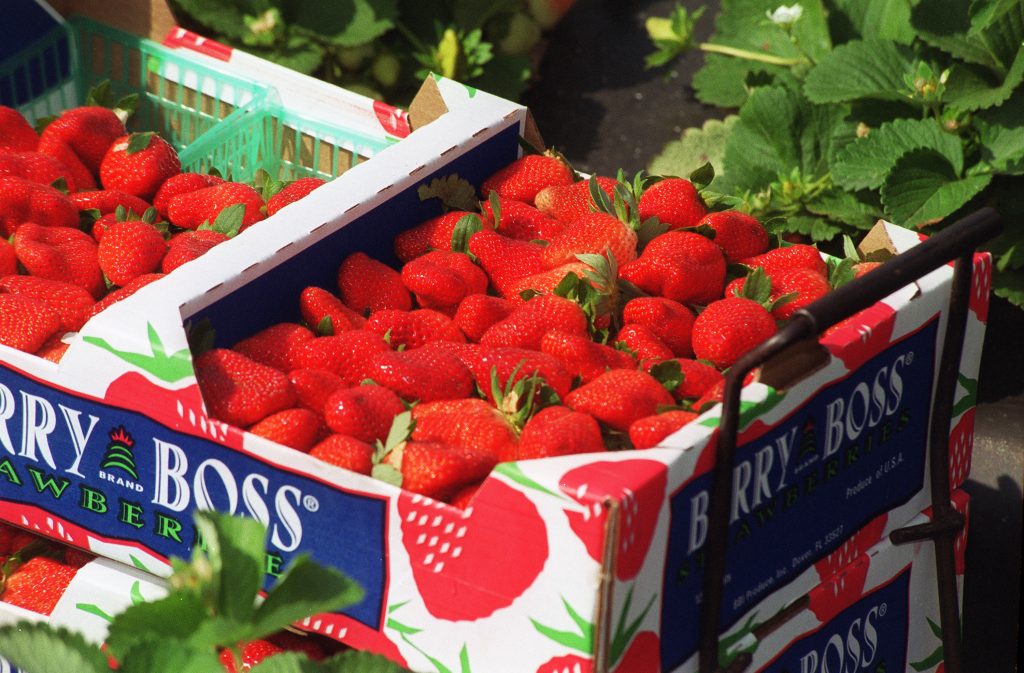
    The country’s No. 3 state in strawberry production is expecting a “bumper crop” this year, according to Mark Hoffmann, North Carolina State small fruits Extension specialist.
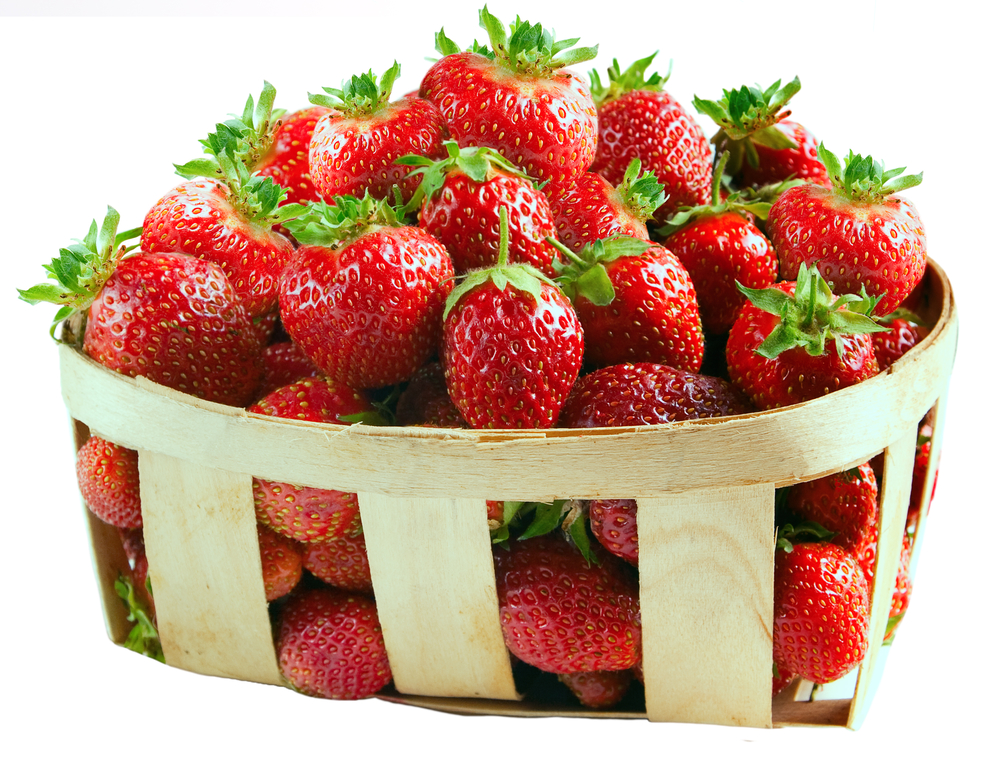
    Basket with fresh strawberries isolated on white background.

    “If the weather holds up, it’s going to be one of the best strawberry years in a long time,” Hoffmann said. “It’s a bumper crop right now.”

    Hoffmann made the comments before Thursday when a cold front moved through the area. Up until this week, though, the weather had been ideal for strawberry production.

    “We had good weather. We had a relatively mild winter. We didn’t have a lot of frost going on, just a few events where we had to cover. We’ve had a pretty good year so far, for strawberries,” Hoffmann said.

    While the crop appears to be bountiful, there is some uncertainty regarding sale of fruits and vegetables amid the ongoing coronavirus pandemic. Hoffmann appears confident his state’s strawberry producers will not have problems selling their crop.

    “With the whole COVID-19 situation, it’s very different right now. It looks like operations that can sell directly to customers, the direct-to-customer sales is something that’s picking up right now,” Hoffmann said. “Right now, I don’t think there’s a problem getting strawberries a home.”

    Hoffmann estimates that strawberries in North Carolina generates $26 million per year, which makes it the third largest in the country behind California and Florida.

    “It’s a great industry. I would say in the Southeast, it has a very good infrastructure. We have wholesalers and shippers. We have growers that have more than 100 acres. One has 150 acres of strawberries,” Hoffmann said. “I would estimate we have 300 to 400 growers in the state.”

    For more information about strawberry production in North Carolina, see N.C. State strawberry website.

  • DHS, USDA Move to Protect American Farmers and Ensure Continued Flow of Food Supply

    Department to Temporarily Amend Certain H-2A Requirements During COVID-19 National Emergency

    WASHINGTON, D.C. – The Department of Homeland Security, with the support of the U.S. Department of Agriculture (USDA), has announced a temporary final rule to change certain H-2A requirements to help U.S. agricultural employers avoid disruptions in lawful agricultural-related employment, protect the nation’s food supply chain and lessen impacts from the coronavirus pandemic.

    These temporary flexibilities will not weaken or eliminate protection for U.S. workers. Under this temporary final rule, an H-2A petitioner with a valid temporary labor certification who is concerned that workers will be unable to enter the country due to travel restrictions can start employing certain foreign workers who are currently in H-2A status in the U.S. immediately after United States Citizenship and Immigration Services (USCIS) receives the H-2A petition but no earlier than the start date of employment listed on the petition.

    To take advantage of this time-limited change in regulatory requirements, the H-2A worker seeking to change employers must already be in the United States and in valid H-2A status.

    Additionally, USCIS is temporarily amending its regulations to protect the country’s food supply chain by allowing H-2A workers stay beyond the three-year maximum allowable period of stay in the U.S. These temporary changes will encourage and facilitate the continued lawful employment of foreign temporary and seasonal agricultural workers during the COVID-19 national emergency.

    Agricultural employers should utilize this streamlined process if they are concerned with their ability to bring in the temporary workers who were previously authorized to work for the employer in H-2A classification.

    At no point is it acceptable for employers to hire illegal aliens.

    This administration has determined that continued agricultural employment, currently threatened by the COVID-19 pandemic, is vital to maintaining and securing the country’s critical food supply chain. The temporary changes announced by USCIS provide the needed stability during this unprecedented crisis,” said Chad F. Wolf, Acting Secretary of Homeland Security.

    For more information, see the USDA website.

  • UF Surveys to Identify Impact of Pandemic on Florida’s Agriculture Industry

    By Kirsten Romaguera, kromaguera@ufl.edu

    Florida Strawberry
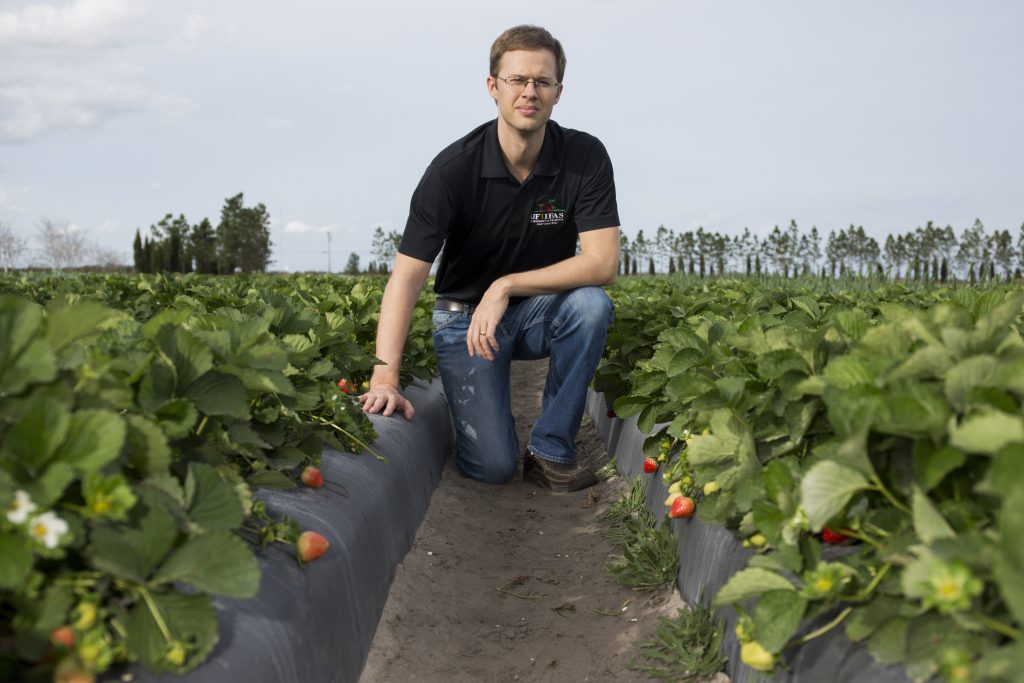
    Vance Whitaker in a strawberry grove at the Gulf Coast Research and Education Center.
    Photo taken on 01-17-17.

    GAINESVILLE, Fla. — With agriculture and marine industries occupying a large portion of Florida’s economy, the University of Florida Institute of Food and Agricultural Sciences (UF/IFAS) wants to better understand how measures to mitigate the spread of COVID-19 are impacting these sectors.

    Starting today, faculty from the UF/IFAS Food and Resource Economics (FRE) department are deploying surveys to UF/IFAS Extension agents and industry professionals to capture this important information.

    “We strongly encourage all businesses in the agriculture and marine sectors to complete the survey,” said Christa Court, director of the Economic Impact Analysis Program, who is leading the effort along with fellow FRE assistant professors John Lai and Andrew Ropicki. “Broad participation from operations throughout the state involved in agricultural production, processing and transportation, as well as marine industries, will result in the most accurate picture of how this crisis is affecting these parts of the state economy.” 

    The Assessment of COVID-19 Impacts on Florida surveys are designed to encompass agricultural production, processing and transportation as well as several marine sectors. The five surveys cover:

    1. Agriculture and aquaculture production, processing and transportation (includes crop production, forestry/timber, nursery and greenhouse operations, agritourism, beekeeping, etc.)
    2. Commercial fishing
    3. Charter/For-hire operations
    4. Seafood wholesale dealers
    5. Marine recreation support businesses

    UF/IFAS faculty are familiar with the challenge of conducting such broad surveys. Similar surveys are typically deployed after weather-related events like hurricanes or winter freezes. In those cases, UF/IFAS Extension agents collect data to report back the situation in their respective areas.

    To capture the wide range of unique and far-reaching impacts caused by COVID-19, faculty have updated the survey instruments, further harmonizing that data collection process.

    The Assessment of COVID-19 Impacts on Florida surveys include background information about the business (operations, revenues, employment, and market channels); current status (open or closed, business changes if open, or reasons for closure if closed); impacts (change in revenues, employment, customer base, products/services offered); willingness to participate in potential follow up or similar surveys related to COVID-19 or other disasters. 

    The first round of surveys is scheduled to close May 15, although Court said there will likely be follow-up surveys conducted as the COVID-19 situation continues to develop.

    The surveys can be accessed at these links:

    Previous analyses for similar event impacts can be found at the Economic Impact Analysis Program website: fred.ifas.ufl.edu/economicimpactanalysis/

  • Georgia Peach Crop Primed for Success

    Pictured is a file photo of peaches that were harvested.

    By Clint Thompson

    Georgia’s peach crop is primed for a productive season. Hopefully, the market will oblige, says Dario Chavez, University of Georgia Cooperative Extension peach specialist.

    “We think, in general, the majority of the varieties did have enough chill (hours). The ones that we think may have some issues with chill are the later varieties, the higher-chill varieties. We really didn’t get a freeze this year for peaches. That’s different from previous years,” Chavez said. “Overall, I have been looking at the plants and I see good fruit growing from the early varieties. The late varieties are still a little too early because the fruit is just starting to swell”.

    “A variety for example like Julyprince that is a popular variety in Georgia and South Carolina, it’s looking very nice. We have a block of Flavorich, one of the first varieties that come in May, it has a nice crop, too.”

    Georgia is one of the top peach-producing states in the country. According to UGA Extension, Georgia produces more than 130 million pounds of peaches every year. There are two commercial peach-growing regions in Georgia. The central region is the largest with about 1.6 million peach trees, which comprises 75% of the state’s production. The southern region produces about 30 million pounds of peaches annually.

    While this year’s crop provides peach growers a sense of optimism with a little more than a month away from harvest, there is uncertainty regarding how the peaches will fare in the current market. Many fruit and vegetable markets are struggling right now amid the coronavirus pandemic. Chavez is hopeful that won’t be the case for his peach producers.

    “Sadly, with all of this situation with the virus, we hope the market doesn’t get spooked or anything like that because we’re seeing a good crop right now,” Chavez said.

    Chavez said in his blog in mid-February that if growers expect to have a potentially good crop, varieties must meet certain chill portions at a minimum by Feb. 15. He said middle Georgia was close to 50 chill portions. This means that, overall, conditions are like last season.

    • 650 chill hours need ~ 30-35 Chill portions
    • 750 chill hours need ~ 35-40 Chill portions
    • 800 chill hours need ~ 40-45 Chill portions
    • 850 chill hours need ~ 45-50 Chill portions
    • 950 chill hours need ~ 50-55 Chill portions

    Chavez emphasized in his blog that if a specific variety from last season had issues during bloom (either delayed or extended), because of weather conditions, then it’s more than likely going to be a similar situation this year.

  • UF/IFAS Extension Agent Emeritus Defends Florida Farmers

    By Clint Thompson

    Gene McAvoy

    Already a difficult production season for Florida’s fruit and vegetable producers, some are unjustly being criticized for trying to manipulate the market and get government handouts, says Gene McAvoy, UF/IFAS Extension agent emeritus.

    He defended growers and their farming operations amid scrutiny about criticism for not being more gracious with their crop.

    “It is a very complex and tragic situation.  It is easy to make suggestions without a thorough understanding of the matter,” McAvoy said. “What many people fail to realize is that picking, packing, cooling, storing and transporting vegetables costs money, and growers who have already lost millions of dollars are understandably reluctant to throw good money after bad.”

    Many farmers have had to disk their produce in the field because markets have dried up due to the ongoing coronavirus pandemic. McAvoy said the collapse of the food service sector affects 60% to 80% of fresh vegetables produced in Florida.

    “Not only can’t they afford to harvest the crop, they can’t afford to maintain it irrigate, fertilize, and spray for pest and diseases. Without these inputs, crops rapidly deteriorate and become a breeding ground for insects and diseases and threaten the small percentage of nearby crops for which a market remains,” McAvoy said. “Destruction of the crop prevents this from happening and protects the remaining fields.

    McAvoy pointed out that many farmers have donated to local food banks and Meals on Wheels programs. They have been overwhelmed with demand due to a rise in unemployment. Here are a few examples:

    • Over the past few weeks, Wish Farms in Hillsborough County, Florida has donated 220,000 pounds of fresh strawberries — equivalent to 241 pallets/nine semi-trailer loads — to feeding Tampa Bay and the United Food Bank in Plant City, Florida.
    • Growers in Immokalee, Florida donated more than 3 million pounds of vegetables to the Harry Chapin Food Bank of Southwest Florida, “overwhelming their ability to store, transport and distribute the produce,” McAvoy said.
    • Farm Share, a food-distribution non-profit organization, works with more than 2,000 food pantries, churches, schools and other nonprofits throughout Florida. The agency is running at maximum capacity, despite having 25 refrigerated trucks, six warehouses between 10,000 and 35,000 square feet and nearly 50 drop-sites from Jacksonville to Florida City, Florida.
    • Pacific Tomato Growers recently donated 42,000 pounds of tomatoes to Meals on Wheels PLUS of Manatee, helping supply 100 food pantries and agencies,
    • DiMare Farms donated 400,000 pounds of tomatoes to Florida food banks
    • U.S. Sugar provided more than 120,000 servings of fresh, locally-grown green beans to South Florida churches, healthcare providers and food banks. 
    • RC Hatton has been a generous donor of green beans, sweet corn, and other crops to Feeding South Florida

    “Very few people comprehend the quantities of food we are dealing with, this time of year at the peak of harvest. Growers in South Florida collectively ship 50 to 60 million pounds of vegetables across the country,” McAvoy said. “With the closure of hotels, restaurants, schools and cruise ships, sales have declined as much as 80%.”

    Vegetables like tomatoes, cucumbers and squash are highly perishable with a shelf life of only 7 to 10 days under ideal conditions. Heading into the fourth week of this crisis, much of what was in the field is ruined.

    “Farmers work hard to grow this food, putting in a lot of time, money and sweat equity. Nothing breaks their hearts more than to see their efforts go to waste,” McAvoy said. “If people really want to help, they can help in the recovery effort through cash donations to food banks so that they can finance efforts to recover this food before it spoils.”

  • Two More Days of Potential Frost in North Carolina

    By Clint Thompson

    Pictured are ripe strawberries.

    Mark Hoffmann, small fruits Extension specialist at N.C. State University cautions strawberry growers about upcoming cooler temperatures that could impact fruit production.

    Hoffmann issued the caution earlier today as potential frost events could occur Thursday and Friday.

    “We are not out of the woods. Conditions are calling for one or two more potential frost nights in North Carolina,” Hoffmann said. “Additionally, rain last night and this morning might have made your row covers wet and heavy. However, tonight and tomorrow call for potential frost damage again and you might require frost protection! If you can, dry your row -covers before using them tonight.”

    According to AWIS Weather Services, temperatures are expected to drop to as low as 36 degrees on Thursday and Friday mornings in Raleigh, North Carolina where N.C. State is located.

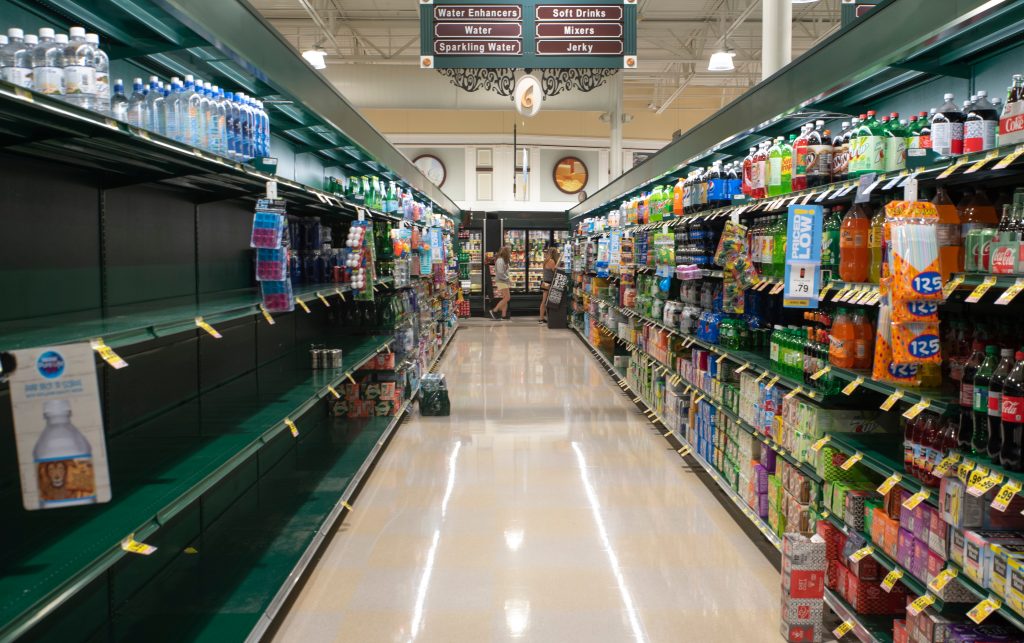
  • Why Are the Grocery Store Shelves Empty?

    coronavirus
    Courtesy: Sharkshock/Sutterstock.com

    By Gopinath (Gopi) Munisamy for UGA CAES News

    While all industries have been seriously affected by the COVID-19 pandemic, food and agriculture have been among the hardest hit segments of the U.S. economy. The primary reason lies in the composition of household food expenditures.

    The impacts of the pandemic appear to vary by commodity based on two critical issues: perishability and labor use. Perishables like fruits, vegetables and milk are among the hardest hit. Many of these industries also depend on labor for growing and harvesting.

    There is no immediate shortage of food in the U.S., according to the U.S. Department of Agriculture (USDA). However, the current demand for items such as grocery-size products and on-demand delivery is greater than what is in abundant supply – bulk, large-sized products and processed shipments to restaurants that remain open.

    This demand-supply mismatch appears to mimic anecdotal evidence of price spikes and empty store shelves on the consumer side and the collapse of demand and dumping of food on the farm side, with a range of linked effects in the middle.

    Wholesale food demand reduced, supply chain shifts

    Households spent $1.7 trillion on food in 2018, 54% of which was spent on food away from the home at restaurants, bars, sports venues and other establishments, according to the USDA Economic Research Service. A dramatic drop in foot traffic at all types of restaurants began in the second week of March.

    Supermarkets and grocery outlets have also experienced a significant reduction in foot traffic. But delivery and on-demand services have been strained by the sudden surge in demand from people under stay-at-home orders and social distancing guidelines, which includes nearly 90% of the U.S. population.

    With the drastic fall in food demand away from home, multiple forces were unleashed rapidly, causing ripples that stretched farther into every food and agricultural commodity.

    First, the supply chain serving food service industries did not have many buyers. A case in point is cheese, where the major supplier, Wisconsin, found two-thirds of its demand fall to near zero within a week or two.

    Second, social distancing guidelines and shuttered non-essential businesses affected supply chains serving both food services and retail grocers.

    The results include a significant slowdown in the operations of processing and distribution, shortage of workers at farm, processing and distribution (trucking) facilities, and a shortage of cleaning and sanitizing supplies. Compounding these effects are the resources spent in contact tracing and quarantine if and when a worker tested positive for COVID-19.

    Third, is the urgent need to transition products run through food services into those that consumers need at the grocery store. For example, restaurants usually buy diced vegetables, like onions, in 60-pound bags, but consumers at grocery stores usually buy 3- to 5-pound bags of unpeeled onions. Also, large cheese blocks sold to food services, which generally have sizable storage space, cannot be chopped overnight into packs of ounces and pounds to sell at grocery stores.

    (The author is a professor of agricultural and applied economics in the University of Georgia’s College of Agricultural and Environmental Sciences. Chen Zhen, associate professor in the department of agricultural and applied economics, contributed to this story.)

    To read the rest of the story, see UGA CAES Newswire.

  • South Carolina Strawberries Looking Good Despite Rainy Winter

    By Clint Thompson

    florida
    Pictured is a file photo of fresh strawberries.

    A wet winter in South Carolina has presented challenges to the state’s strawberry producers. But South Carolina’s strawberry production is looking good this year despite the rainy winter, according to Bruce McLean, Jr., Clemson (S.C.) Extension area commercial horticulture agent for Dillon County, Horry County, Marion County and Malboro County.

    He said production this season is starting to pick up despite some disease issues associated with excessive moisture.

    “The quality looks really good,” McLean said. “Because of the wet weather that we’ve had; we’ve had some (disease) issues with botrytis (gray mold); angular leaf spot, we’ve seen in a couple of different areas; and also some anthracnose. For the most part, it seems like we were able to control it pretty well.”

    McLean said in his four-county area located in the northeastern part of the state, strawberry acreage is limited to smaller scale operations. He said there are approximately 10 to 12 strawberry farmers who tailor their crop to the retail market. All have had to deal with weather-related issues with this year’s crop. McLean said the rainfall totals have been “above normal.”

    “We’ve just had an excess of water and it’s really flared up the gray mold and anthracnose and angular leaf spot,” said McLean. He pointed out his area in South Carolina is not alone with production challenges.

     “Seems like everybody’s had very similar problems. The only other problem that we’ve really seen to any degree has been spider mites. It’s always kind of a perennial issue with strawberry production. It’s something that we are scouting for. Every time it seems like we have a hot spot, we identify it and make some recommendations and it quells it down a little bit,” McLean said.

  • Facts of the Flow: Lake Okeechobee, 2020 Year-to-Date

    (SFWMD) — Here is the latest update on inflows into Lake Okeechobee for the calendar year to date. This data is provided by SFWMD’s DBHYDRO database.

    lake okeechobee

    There has been no back-pumping into Lake Okeechobee from the Everglades Agricultural Area this year.

    Source: South Florida Water Management District

  • Peach Crew Safety a Concern for Farmers During COVID-19

    By Clint Thompson

    Pictured is a file photo of peaches on a tree.

    Jeff Cook, University of Georgia Cooperative Extension Agriculture and Natural Resources agent for Peach and Taylor counties, says the ongoing coronavirus pandemic has forced peach producers and farming operations to take extra precautions when protecting their crews from becoming sick.

    “They have separate crews so they’re trying to keep the crews a little more separated this year. But the biggest thing that they’ve all said to me is they’re trying to keep the crews away from the outside world,” Cook said.

    Farmers limit the workers to the amount of time they’re exposed to other people that are not part of their specific crew.

    “They’re trying to help reduce the amount of time they’re having to spend at the store or at the bank. Once a week they carry them to the bank and once a week they carry them to the grocery store,” Cook said. “To the farmer, if their crews get sick and they can’t pick peaches, then we’re in big trouble.”

    Cook said some peach workers have been in place since February when farms started the peach pruning peach process. The second crews are now in place to help thin the peaches since a lot more people and hands are required. These peach crews also include those who’ll work in the packing sheds and help harvest once trees are ready.

    Cook estimates that there are 10 to 12 workers in one crew, though, multiple crews may ride the same bus to a particular orchard. The workers are not close together out in the fields. Each one has a specific tree they work on, and trees are normally spaced 16 feet apart.

     “When they are thinning, the ride there is as close as they are going to get to each other. When they’re out in the field, they’re not really near each other,” Cook said.