Blog

  • USDA’s Buy Fresh program has tight deadlines

    The newly announced $100-million-per-month USDA Buy Fresh program offers produce companies a way to sell products for government feeding programs.

    And the application process starts right away.

    The United Fresh Produce Association BB #:145458 said USDA told them the requests for proposals will open April 24; proposals are due back to USDA May 1; awards will be announced May 8; and deliveries will begin May 15.

    The Buy Fresh program is part of the CARES Act stimulus program from the federal government to help companies struggling due to the government shutdowns during the COVID-19 pandemic.

    In a webinar on April 21, David Tuckwiller of USDA’s Agricultural Marketing Service, said AMS is getting out of its comfort zone with this program and moving very quickly to help food companies and U.S. citizens struggling for food during the economic downturn.

    “Our goal is to support American farmers and feeding people,” he said.

    Tuckwiller said Buy Fresh is only for sellers of fresh produce (no canned or dried) that is grown in the U.S. Ideally, fruits and vegetables would be packed in consumer-sized packages so that they could go “from the truck to the trunk,” he said.

    That will put some pressure on suppliers to work together with partners to fulfill the government requirements, many of which are not used to working with USDA for food assistance, Tuckwiller acknowledges.

    Mollie Van Lieu, senior director nutrition policy for United Fresh, said USDA knows feeding programs are under pressure because they don’t have many of their volunteers during the pandemic. Yet the demand for food is higher than ever.

    Buy Fresh has similar programs for the dairy, pork and chicken industries, but within the fresh product program, certain commodities will have priority due to meeting foodbank needs and helping growers who have been hit the hardest, Van Lieu said.

    These include berries, apples, oranges, pears, cucumbers, tomatoes, potatoes and onions.

    Robert Guenther, senior vice president public policy for United Fresh, said he hasn’t heard what USDA’s pricing model will be, but he doesn’t think it will be based on the lowest bid.

    USDA gives more details about the Buy Fresh program and a link to its solicitation page here.

    Produce Blue Book

  • COVID-19 Devastates Blueberry Market for Florida Farmers

    Blueberries ready to be picked in this file picture.

    By Clint Thompson

    It normally pays to have an early blueberry crop if you’re a Florida farmer. But as Ryan Atwood will attest, this has not been your normal year. Blueberry producers are not immune to the impact of COVID-19.

    “Being early is a good thing. For a Florida blueberry grower, you’re trying to be early. Everything you do is to be early. The bad part of the deal was the coronavirus and just the timing of it. You couldn’t have timed it any worse for a Florida blueberry grower,” said Atwood, who lives in Mount Dora, Florida and farms 56 acres of blueberries, manages another 350 acres and is part-owner of the largest packing house in the Southeast United States.

    Atwood’s blueberry crop was early this year due to a mild winter and high temperatures over the past couple of months accelerated growth. However, when Atwood started picking high volumes of blueberries, which was around March 18, is when the pandemic shut down the country.

    “It just crashed literally within days. Right when Florida’s peaking or right about when it’s about to enter its peak, it was bad timing,” Atwood said. “Everybody was talking like we were going to have a 1 in 20 kind of year. Chile was done early. Their fruit wasn’t in the market. Normally they come in late. They kind of crowd into our market on the front end. But they were already out. Everybody was thinking it was ready to set up nice. But then out of left field… agriculture’s tough.”

    Market prices reflect the pandemic’s impact.

    “It’s 50% of the historical average price is what we were getting, so half of the money of what you would typically get because of the coronavirus,” Atwood said.

    Atwood estimates he’ll finish harvesting this year’s crop in about a week.

  • Georgia Peach Industry Expert ‘Optimistic’ About Crop, Market Outlook

    Georgia peaches should be ready for harvest in May.

    By Clint Thompson

    A Georgia peach industry expert is confident about his state’s marketing outlook amid the ongoing coronavirus pandemic.

    Duke Lane III’s company, Genuine Georgia, manages sales and marketing for the Georgia peach industry. He believes the market will be there for the Georgia peach farmers despite the presence of COVID-19 that has closed restaurants and shut down schools.

    “When you look at retail sales, produce and grocery, they’re up significantly. I think (the pandemic) will undoubtedly have an effect on foodservice. But our business has been built around grocery markets, retailers,” said Lane, who is also president of the Georgia Peach Council.

    “We feel like when you start thinking about summertime and feeling good, we feel like those are kind of thoughts that are synonymous with Georgia peaches. We’re pretty optimistic,” Lane said. “I feel like quality, flavor; absolutely. We’re going to kick off about the 18th of May and are just anticipating some big things.”

    Georgia is one of the top peach-producing states in the country. According to UGA Extension, Georgia produces more than 130 million pounds of peaches every year. There are two commercial peach-growing regions in Georgia. The central region is the largest with about 1.6 million peach trees, which comprises 75% of the state’s production. The southern region produces about 30 million pounds of peaches annually.

  • Tips for Two Troublesome Watermelon Diseases

    Phytophthora symptoms on watermelon fruit
    1: Photo by David B. Langston, University of Georgia, Bugwood.org
    2: Photo by Jason Brock, University of Georgia, Bugwood.org

    By Bhabesh Dutta

    Phytophthora fruit rot has been a concern for watermelon growers not only in Georgia but also in other states that grow watermelon. No single measure has been shown to suppress the disease consistently and effectively, especially when environmental conditions are favorable for disease development.

    Compared to other watermelon diseases, this disease is difficult to manage and strictly requires an integrated management program. Unlike on other cucurbit hosts (squash and cucumber, for example), phytophthora symptoms often appear on fruit and not on foliage. However, research indicates that all growth stages and plant parts are susceptible to infection.

    In watermelon, fruit symptoms are quite common. Some of the common symptoms that can be observed on fruits are irregular to round, water-soaked lesions that become brown. As the disease progresses, concentric rings of pathogen sporulation may appear within a lesion.

    Lesions can appear on the upper and/or lower surfaces (contact with the soil) of fruit. As the pathogen is soilborne, symptoms on the lower surface are quite common. Symptoms on the upper surface are presumed to be related to the dispersal/spread of the pathogen from contaminated soil. Under favorable conditions, complete rotting of fruit is common.

    Phytophthora capsici can survive in soil or in host plant debris by means of thick-walled spores (oospores). Researchers have associated irrigation from contaminated pond water with P. capsici outbreaks in watermelon and other vegetable crops in Georgia.

    The pathogen has two mating types (A1 and A2). Both mating types are necessary for oospore production. Presence of both mating types in vegetable fields is not uncommon in Georgia, which makes management more difficult. Spread of the pathogen is aided by zoospores, which are asexual spores that can swim in free moisture in the soil or on the plant surface and can infect the host. Zoospores are formed in specialized saclike structures called “sporangia” that can also spread by wind-blown rain and be carried through water.

    Resistant watermelon varieties are not available. As a cultural control, it is recommended not to use retention pond water for irrigating watermelon crops. It is also advised to have good drainage in watermelon fields, which is sometimes difficult to achieve.

    A preventive fungicide program is the key to get ahead with this disease. A fungicide program comprised of Presidio, Orondis Gold, Revus and Elumin may help.

    Downy mildew symptoms on watermelon leaves
    Photos by Jason Brock, University of Georgia, Bugwood.org

    Downy mildew has been a sporadic issue in watermelon as its incidence varies from year to year in Georgia. Unlike classical angular leaf spot symptoms that are observed in cucumber, symptoms on watermelon can be difficult to diagnose. Symptoms may start as irregular yellowish to brown spots that gradually become necrotic and often appear on upper surfaces of leaves. Lesions are often visible near the crown. As the disease progresses, necrotic lesions may appear on both sides of the leaf.

    This disease can spread rapidly, aided by high humidity and wind-driven rain. Severe defoliation can be seen if timely management practices are not employed. Fruit rot due to sun scalding soon follows.

    Resistant varieties are not commercially available. Crop rotation is impractical as the inoculum doesn’t survive locally in Georgia and arrives from Florida via wind current or any kind of weather events.

    A preventative fungicide program is the key to get ahead with this disease. A fungicide program comprised of Ranman, Orondis Ultra, Revus and Elumin may help. Chlorothalonil (Bravo) can be used as a protectant until fruit set.

  • Alabama Farmer: If I Had 10 Acres of Strawberries Today, I Wouldn’t Have Enough

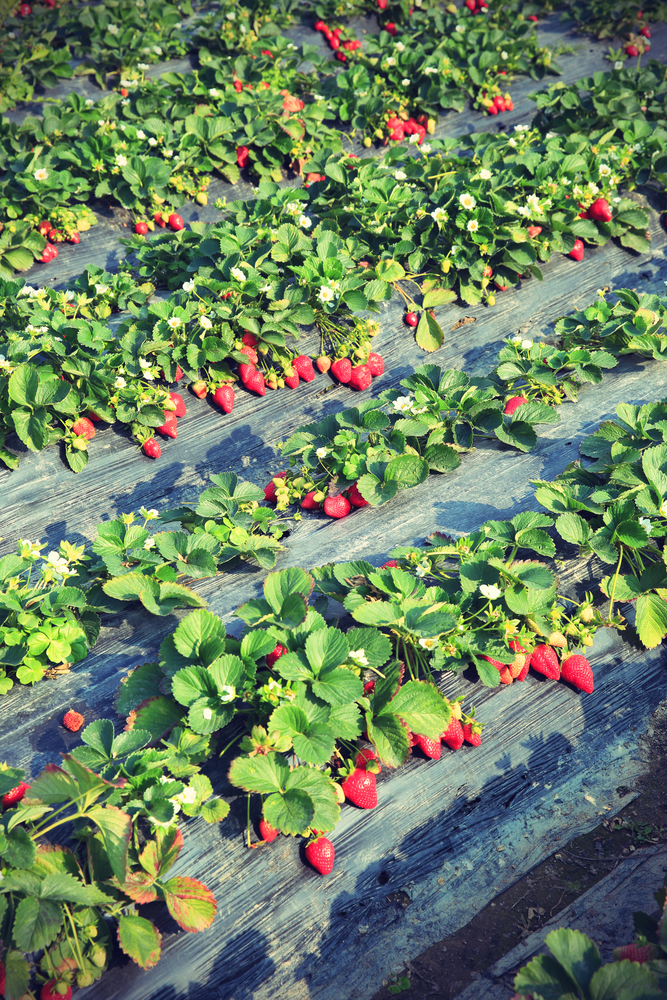
    There appears to be not enough strawberries to satisfy local demand in Alabama.

    Strong demand for locally-owned strawberries

    By Clint Thompson

    Strawberry season is in full swing in Alabama. Unfortunately, for farmers, they don’t have enough product to satisfy local demand.

    “If I had 10 acres of strawberries today, I wouldn’t have enough. Saturday morning, about 10 o’clock, I had 82 phone calls and I just unplugged my telephone,” said Bobby Ray Holmes, part-owner of Holmestead Farm in Talladega, Alabama.

    Holmes usually doesn’t have any problem selling strawberries. But this year the demand has been overwhelming. This is due to the coronavirus pandemic. U-pick strawberry operations provide families an outlet to escape the new norm of social isolation.

    “All of the strawberry farmers have run out of product because all of these people are home and can’t go anywhere. So, they go and pick strawberries,” said Holmes. “(Families) say, we can go to the farm. People are pinned in. They want somewhere to go. The kids are all out of school. They want somewhere to take the kids.”

    John Aplin, owner of Aplin Farms in Slocomb, Alabama, echoes Holmes’ sentiments.

    “I’ve never seen anything like it. It’s been crazy. Every year we increase our strawberries to meet demand,” said. “We doubled our strawberries this past year. When I opened the U-pick strawberries, we can’t stay open over four hours. Then we have to close for three days and let them ripen back up.”

    Holmes estimates that he has 1.5 acres of strawberries or approximately 30,000 plants. He said the three or four other farmers are facing the same scenario this year; they don’t have enough strawberries.  “They’ve got the same problem,” Holmes admits.

    “Anytime it’s a problem if you’ve got folks that want to spend money with you, and you don’t have something to sell them. You’ve got a problem,” Holmes said.

  • Clemson Extension Agent Optimistic About Muscadine Crop

    Pictured are muscadines hanging off a vine.

    By Clint Thompson

    South Carolina’s muscadine harvest season is still five months away, but the crop looks ripe for a productive season. That optimistic outlook comes from Bruce McLean, Jr., a Clemson (S.C.) Extension area commercial horticulture agent for Dillon County, Horry County, Marion County and Malboro County.

    “I’ve been out a few times, walking vineyards and really looking at them. A lot of the muscadines in my area are more juice and wine type of muscadines, the Carlos or Noble type of varieties or Doreen. Those are looking really, really good,” McLean said. “They’re really just budding out now, just producing floral buds. They’ve been leafed down for a couple of weeks now. So far, they look really nice.”

    McLean said this time of year is designed to help farmers capitalize on their fertility programs. He works with a lot of them 1-on-1 to see what tweaks can be made to their spray programs as well.

    He estimates that there are approximately 100 acres of muscadine vineyards that are produced in South Carolina. These vineyards are mostly 15 to 20-acre vineyards.

    “It’s definitely something that a lot of growers are wanting to be expand out on,” he added. “We’re also trying to help find them markets. And maybe looking at fresh markets to complement as far as the juice and wine market as well.”

    Muscadine harvest in South Carolina is generally reserved for September.

    “It’s still mighty early. Anything can happen. Right now, we’re just looking at spray programs to really protect the crop as much as possible and maximize yields,” McLean said.

  • Non-Traditional Marketing Outlets Still Options for Small-Scale Producers

    desantis
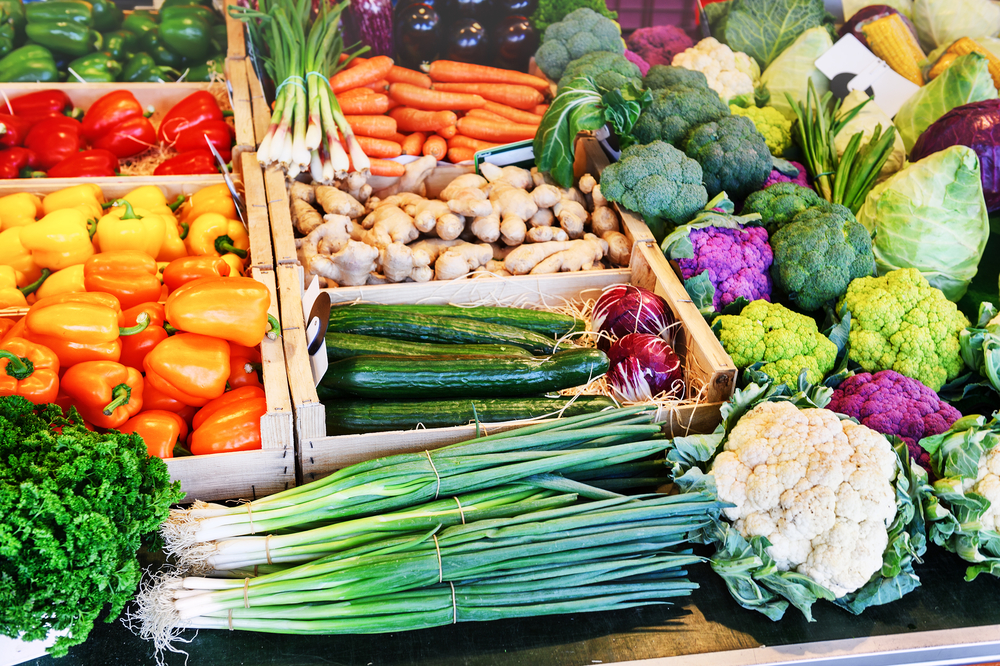
    Fresh fruit and vegetables on sale at a farmers market in this file photo.

    By Clint Thompson

    N.C. State Extension Vegetable Production Specialist Chris Gunter believes non-traditional marketing outlets are still viable options. They provide opportunities for small-scale fruit and vegetable farmers to capitalize on amid the ongoing coronavirus pandemic.

    Outlets like farm-to-customer delivery and farmers markets are still available for those producers. Gunter believes the demand is still high.

    “People aren’t as able to get to traditional retail outlets like grocery stores and the normal supply line is backing up. There’s excess produce because demand is down,” Gunter said. “But if you are innovative and you have outlets that are non-traditional or can shift from traditional outlets to new outlets, the demand is high. These non-traditional markets are seeing an increase in demand because people still want that fresh produce. It’s just less available at their traditional retail outlets.”

    Many people avoid traveling to retail grocery stores for concern over their own health. If they buy directly from farmers or have the grower deliver directly to their door, it is more convenient. And it is now a more popular option. Individually boxed fruit is a growing alternative for consumers.

    “Places like the Produce Box here in Raleigh, (North Carolina) which has a way to aggregate produce from growers all over and make its own custom boxes for those customers, they’re seeing lots and lots of increase in demand,” Gunter said.

    This option is not suited for all growers. Because of restaurants and schools closing for fear of spreading the disease, large-scale farmers have been most impacted the most, especially in Florida. Gunter said a large-scale grower would overwhelm these non-traditional outlets with produce. Also, consumers don’t want just one type of fruit or vegetable.

    “For the large, wholesale growers, they’re not tapping into that market usually because their volume is so high,” Gunter said. “They’re used to delivering to distribution centers or direct to a retail outlet.

    “(Also) customers still want a mix of fruits and vegetables. Having (just) a box full of squash doesn’t really work for the consumer.”

    However, traditional outlets will need to be restored. Non-traditional outlets are not sustainable.

    “Supply lines are going to have to become re-established in order to supply people once these immediate lockdown precautions are lifted. I think you’ll see people start to go back to traditional retail markets,” Gunter said.

  • UGA Specialist: Pecan Crop Fine Following Cold Snaps

    Pecan trees will not be impacted by recent cold snaps.

    By Clint Thompson

    Recent cold temperatures will not have any impact on the development of this year’s pecan crop, says Lenny Wells, University of Georgia Cooperative Extension pecan specialist.

    Wells estimates that pecan farmers saw budbreak at least two weeks early this year. With that early budbreak back in March, temperatures were still warm. Pecan trees put their foliage on from the bottom of the tree up. All that early foliage that came out on the bottom part of the tree and started growing well. Then rains and cold fronts came soon after.

    “We had some cooler temperatures and some nights down in the low 40s, which is nowhere near anything that would hurt us. But it did slow this growth down, especially the buds that were breaking in the top of the tree. That has slowed the growth in the top of the trees a little bit,” Wells said. “When you look at some trees from a distance, it looks like the bottom leafed out good, but the top is real thin. That’s just because those little cool snaps we had slowed things down. I don’t think it’s going to be an issue.”

    He reassured pecan producers in his blog that as temperatures and the soil warm up, the problem will correct itself.  

    However, cool soil temperatures can lead to Zinc and Boron deficiencies. The trees can’t take these nutrients up from the soil as easily when soil temperatures drop. So, Wells advises growers to stay up to date with their foliar sprays.

    “Every spring, your soil temperatures warm up a little slower than the air temps do. Spring is the critical time for the tree to get that zinc and boron. When those soil temperatures are cool, they’re not able to take it up there well from the soil,” Wells said. “That’s why we usually will put on Zinc and Boron foliar sprays early in the season. Regardless of what your soil levels are, we do it for that reason because they can’t pick it up from the soil early in the season when they need it the most.”

    Symptoms of such temporary deficiencies include bare limbs, small, yellow leaves, rosette and mouse ear.

    To see how Wells is confident in this year’s pecan crop, see vscnews.com.

  • Sulfur Applications Help Protect Grapes Against Powdery Mildew

    A tour of the research vineyard at the Clanton Research and Extension Center in Chilton County at the Alabama WIneries and Grape Growers Association meeting in September 2019. Grapes are grown by Elina Coneva and the staff at the CREC. Grape varieties are developed by Dr. Andy Walker, a grape breeder at UC Davis.

    By Clint Thompson

    University of Georgia Cooperative Extension Fruit Disease Specialist Phil Brannen believes grape producers can better protect their crop against powdery mildew disease and preserve essential fungicides with sulfur applications.

    Brannen believes sulfur is a viable alternative that growers need to utilize, especially since resistance has developed in two different classes of chemicals. Those classes are the quinone outside inhibitor (QoI) class and the demethylation inhibitor (DMI) class. Growers risk disease resistance developing in the succinate dehydrogenase inhibitors (SDHI) class of fungicides as well.

    “That’s one reason I’m encouraging people to incorporate more sulfur in their programs. It’s just to try to take less pressure off this one remaining chemical that works really well. We can save it for the more critical time we need a really active powdery mildew material,” Brannen said.

    He said growers need to be smart when applying sulfur and be mindful of its ability to burn the plants.

    “The main issue we have with it is not to humans or the environment, it’s actually to the plant itself,” Brannen said. “If you put out sulfur on a really hot day, especially if there’s a lot of high humidity or the foliage is wet, it will burn the grapes severely. It can actually cause significant damage to the plant itself. That’s one reason people have avoided using it on vinifora grapes.”

    Brannen recommends that producers apply sulfur either later in the evening or at night when temperatures are lower. That’s when there’s little risk to the plant.

    But growers should also be mindful of sulfur’s harmful potential to themselves.

    “It’s not dangerous in the sense that it won’t kill you. You do have to realize it will burn your eyes. You go into a vineyard and if you’re doing tying operations and things like that, and if you spray sulfur and rub your eyes, your eyes are going to burn,” Brannen said. “It’s not going to put your eye out. But it’s going to be something that you have to be aware of. It’s not as user friendly as some of these other materials.”

    Powdery mildew’s impact

    Powdery mildew disease is problematic for grape producers because of its ability to infect almost any part of the plant. It can cause leaves to desiccate, become dry and fall off.

    The major concern is when powdery mildew infects the fruit itself. A limited amount on fruit will not allow sugars to come up to the fruit. If there’s no sugars in the berries, it leads to an inability to make good wine.

    “It essentially renders the fruit into something you can not use. You can’t allow powdery mildew on the fruit at all,” Brannen said.

  • Growing Matters: Labels Protect Producers and Beneficials During Foliar Applications

    growing matters

    The BeSure! program, brought to you by the Growing Matters Coalition, is reminding growers about the importance of following product usage directions. Syngenta’s Garrett Gilcrease said labels are living documents that can be updated regularly. As producers and applicators plan for spring foliar applications, he reminds the industry to check product labels and adhere to the guidelines for all-around safety and good stewardship.

    Listen to Gilcrease’s interview.

    The BeSure! program by the Growing Matters Coalition is an initiative reminding farmers and applicators to follow stewardship best practices to protect pollinators and other wildlife. Visit growingmatters.org for more information.

    Preview(opens in a new tab)