Multimedia Journalist Clint Thompson recaps a few stories from this past week in VSCNews.
Blog
-
South Carolina Blueberries Impacted by Recent Cold Temps
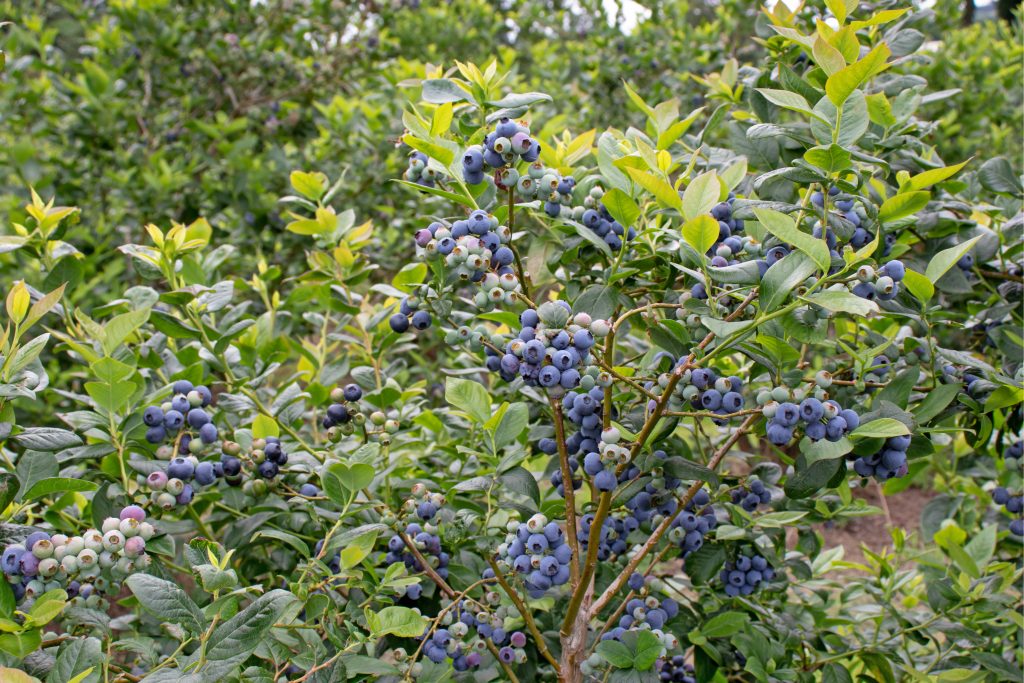
Highbush blueberries. By Clint Thompson
Recent cold temperatures impacted South Carolina’s blueberry crop, just not to the extent farmers are used to.
Bruce McLean, Clemson (S.C.) Extension area commercial horticulture agent for Dillon County, Horry County, Marion County and Malboro County, said rabbiteye varieties appear to be the ones most affected.
“As far as the crop itself, some varieties really look phenomenal. They’re really loaded up, full crop on them. Then there’s some varieties, definitely, the cold has affected,” McLean said. “Surprisingly, seems like what has been affected has really been more rabbiteye blueberries more so than highbush. It’s kind of a weird thing because our normal years tend to be just the opposite. We see a lot of damage to the highbush because they are earlier. Rabbiteyes tend to escape most of any problems. This year it’s been kind of a flip-flop year.”
McLean thinks where there was an onset of warm weather early in the growing season, it brought a lot of plants into bloom a lot quicker than what it should have.
“Funny thing is, normally in those years where we come into bloom much earlier, we’ll get a freeze event. It’ll be so severe, it’ll really do some damage to the early blueberries, like highbush. Then rabbiteyes, it’ll do some damage,” McLean said.
“This year, the onset of warm weather really brought those rabbiteyes, those later varieties, on a little quicker than normal. When it did, they just happen to be at the right stage of bloom when we had a little bit of cold weather.”
Despite the concerns with the recent cold temperatures, McLean is optimistic about this year’s crop.
“I’ve been out walking some fields and the crop, for the most part, does look really good overall,” he said.
-
North Carolina Extension Seeks Help With Survey

North Carolina Cooperative Extension seeks help from farmers with a short survey. As producers fill out the survey, it will help Extension assess the impact of the coronavirus pandemic on the specialty crop (fruit and vegetable) and agritourism industry in North Carolina. The survey will help shape Extension’s response.
N.C. State IRB approved the survey. Also, Extension specialists in the Department of Horticultural Science at N.C. State University conducted the survey. It is done in collaboration with the Center for Environmental Farming Systems and the N.C. State Local Foods Initiative.
Extension asks that all farmers fill out this voluntary and anonymous survey. It will be open from April 23 through May 7.
In a previous story ran in VSCNews, Chris Gunter, an N.C. State Extension specialist, reported that the vegetable crop in North Carolina looks “fabulous” so far.
Mark Hoffmann, North Carolina State small fruits Extension specialist, also reported that he expects a bumper crop this year. Hoffmann is optimistic that his state’s strawberry producers will not have problems selling their crop.
“With the whole COVID-19 situation, it’s very different right now. It looks like operations that can sell directly to customers, the direct-to-customer sales is something that’s picking up right now,” Hoffmann said. “Right now, I don’t think there’s a problem getting strawberries a home.”
-
Georgia Farmer Thinking Inside the Box

Workers at Lewis Taylor Farms pack boxes with fresh produce. By Clint Thompson
One South Georgia farmer is thinking inside the box when it comes to moving this year’s fruit and vegetable crop.
Like his brethren in Florida, Bill Brim’s farming operation has been impacted by the orders of self-quarantine amid the current coronavirus pandemic. The lack of a foodservice market led to a sharp decline in demand for fresh produce including those grown at Lewis Taylor Farms in Tifton, Georgia, where Brim is a co-owner.
With excess fruit and vegetables, Brim decided to offer boxed fruit to consumers in the South Georgia area. Brim was overwhelmed by the response last week.
“We just started last week. We did like 350, I think. Next week we’ve already got over 700,” Brim said. “It’s crazy. We could wind up with 1,000 before it’s over with. We’re looking forward to it because we need to move some produce. We’re so far down on greens and stuff like this. Our revenue stream has come to nothing because of the coronavirus.”
What’s offered?
Last week, Brim offered collard, kale, zucchini, onion, strawberries and broccoli. People drove to Lewis Taylor Farms on Wednesday and received their produce without getting out of their car.

Fresh produce in a box ready to be sold in Tifton, Georgia. “They lined up out here. We had masks on and gloves on and toted it to the car. They dropped a $20 bill into a box and kept going,” Brim said. “It makes you feel good to know that people in this country are like that. But everybody wants fresh produce, too, and this is a good way for them to get it.
“We’re just trying to generate some income because we’re so way down.”
Brim said this marketing outlet is not set up for all farming operations. It is hard to capitalize on unless you are big enough and have got enough product and different kinds of products. This week’s box will feature turnips, broccoli, yellow squash, onion, blueberries and cabbage.
Brim is not a blueberry farmer, but he is a staunch supporter of other growers like himself. He buys blueberries from another producer in Lakeland, Georgia.
“We like to use all of our product, but you’ve got to change it up a little bit,” Brim said.
Watermelon, cantaloupe, eggplant, cucumber and bell pepper could be included as well, once they’re ready for harvest..
To place an order for this week’s box, fill out an order form. All orders must be placed by Sunday night.
Lewis Taylor Farms grows more than 6,500 acres of produce each year.
-
N.C. State Extension Specialist: Vegetables Look Fabulous
By Clint Thompson

Chris Gunter North Carolina vegetables look “fabulous,” according to Chris Gunter, N.C. State Extension vegetable production specialist. In fact, the main concern appears to be having enough workers in place to pick the crop once harvest season begins. And also how to keep their labor force safe amid the ongoing coronavirus pandemic.
“They’re more concerned about how it’s going to impact their workers. How are they going to get farm workers here? How are the workers going to be impacted? What precautions should they take in order to protect their workers once they’re here?” Gunter said.
He said that many of the farm workers who report to work every year are having less difficulty getting through the border entry process this season compared to those who are new.
“Those farms that have had workers and are getting the same workers back, their workers are starting to arrive now,” said Gunter. He emphasized that farming operations are taking all the precautions they can to protect their workers during the coronavirus pandemic.
“They’re trying to social distance, physically distance each other when they’re working. If that’s not possible, then taking precautions, like wearing a cloth face covering or frequently cleaning and sanitizing their hands or surfaces that they touch.”
Farmers are mostly harvesting greens right now along with mainly cool-season vegetables.
Sweet potatoes are the state’s No. 1 vegetable. There are also a significant amount of cucumbers, along with bell peppers, tomatoes, cantaloupes and watermelons.
“Our crops are just a little bit behind Florida and (Georgia). Our strawberry season looks very strong so far (as well). All we need is to get rid of some of this rain and get people out buying fruits and vegetables,” Gunter said.
-
Georgia Blueberry Growers Work to Overcome Challenges

Pictured are highbush blueberries. By Ashley Robinson
University of Georgia area Extension blueberry agent Renee Holland is confident about this year’s crop despite a challenging season.
“This season, we have a beautiful blueberry crop load in Georgia,” Holland siad. “The berry quality is excellent, and thankfully, we’ve had very little disease or pest issues this year.”
Challenges Facing Growers
Georgia blueberry growers are no strangers to facing difficult challenges and growing seasons, and this year is no exception. In the midst of COVID-19 growers have had to face additional challenges on top of their typical weather and labor issues. However, Holland believes that growers have mobilized like never before, creating the safest environments possible.
“The virus has definitely affected the amount of labor coming into the country, but that’s nothing new to us. We’re used to having labor shortages,” Holland says.
Growers have implemented additional hand-washing stations and have reduced their workforce to do more with less.
“They’ve really thought about how they’re going to partition the labor force and how to keep people separated and in small groups and to have people living together also be the same people who are working together in the field. They also have plans set in place if someone gets sick. I’ve seen the growers mobilize like never before, they’re checking their employee’s temperatures every day. It’s been amazing to see how quickly they’ve mobilized and put safety measures in place. They’ve really done their homework,” Holland says.
Considering COVID-19, UGA Extension and blueberry growers encourage consumers to purchase fresh Georgia blueberries. Blueberries are a great source of vitamin C, iron and fiber. In addition, they’re cholesterol-free, sodium-free and possess an important source of potassium. In light of COVID-19, many consumers are looking to become more health conscious and consume fresh produce, which will benefit both consumers and producers.
UGA Extension specialist Laurel Dunn has published materials for consumers on food safety and sanitation amid COVID-19. According to Dunn, there is no evidence to suggest that COVID-19 is transferred by food. However, consumers should continue to wash and sanitize their fresh produce as normal. Click here for additional information about food safety and COVID-19.
“It’s good to eat fresh produce. We want consumers to know eating fresh produce will not put them at risk.” Holland says.
-
UGA Researcher: Vegetable Morphology Key in Helping Plant Breeders

University of Georgia/UGA researcher Esther van der Knaap working in the greenhouse. By Clint Thompson
University of Georgia plant biologist Esther van der Knaap has studied genes in vegetables for more than 20 years. She believes the more information that scientists can obtain about a vegetable’s morphology; referring to its size and shape; the better equipped plant breeders will be in creating new and better cultivars.
The lack of knowledge on morphological traits often hampers the efforts by plant breeders to create improved types. More information would greatly assist in the development of new cultivars in a variety of crops. That’s where van der Knaap’s work factors in.
“For breeders, when they develop a new variety, they need to maintain the proper shape and size of the produce, in addition to any novel trait that makes the new variety superior over an older variety. You can create new tomato varieties that are resistant to any disease that we’re facing right now. But if the new variety doesn’t produce a fruit with the proper dimensions, nobody will likely pick it up,” van der Knaap said. “Consumers wouldn’t recognize it and processors can’t process produce that is too large or too small or with unusual shapes. The morphology of produce is incredibly important.”

University of Georgia Gene Knowledge
The knowledge of the genes has advanced the efficacy in tomato breeding programs because it enables the creation of improved cultivars that feature the appropriate dimensions of the produce. She discovered the different genes that aide in the development of tomato fruit shapes also influence other vegetables. These include potato tuber shapes, as well as the shapes of melons, cucumbers, leaves and grains.
Size and shape are important components because they are what consumers identify with when purchasing certain vegetables in grocery stores or at the farmer’s markets.
“In tomatoes, the smaller shapes like grape tomatoes or the cherry tomatoes are used more for salads. If you want to make sauces and soups, you purchase the roma tomatoes. Everybody uses tomato slices on hamburgers, and for those you take the large beefsteak tomatoes. They are nice for slicing. Consumers recognize produce and each type has a specific culinary purpose,” van der Knaap said.
She communicates her research findings in publications so that breeders can use the knowledge to develop better cultivars.
“You always have to create better cultivars when it comes to yield and drought or disease resistance. There are always new diseases emerging in plants and we have to stay ahead of them,” van der Knaap said. “Fortunately, in most cases, there’s always a better crop variety around the corner. We need to stay ahead of diseases as diseases emerge very rapidly, as we know now with COVID-19. Plants are no different from people when it comes to being susceptible to diseases that can be devastating.”
-
UF Weather Alert Website for Farms now Mobile-Friendly, Among Other Updates
By: Kirsten Romaguera, 352-294-3313, kromaguera@ufl.edu
GAINESVILLE, Fla. — The Florida Automated Weather Network (FAWN) just relaunched its website with a new look and additional user-focused features. It is a University of Florida-operated service aiding agricultural decision-makers statewide since 1997.

Larry Treadaway, coordinator of the Florida Automated Weather Network, adjusts equipment at a new monitoring station in Bronson, Fla. in 2017. The network includes 33 monitoring stations operated by UF’s Institute of Food and Agricultural Sciences, transmits real-time weather data to computers in Gainesville. Growers and others can access the data via phone or the FAWN Web site: http://fawn.ifas.ufl.edu. “Our main goal in revamping the site was to make it more efficient for users,” said Rick Lusher, UF/IFAS project manager for FAWN. “One of the most important changes is the now-seamless integration to mobile platforms, meaning users can access the same information straight from their phones.”
The FAWN network includes 42 stations located from Jay to Homestead that record and report every 15 minutes. This includes information like air temperature, winds and rainfall. Some stations are even adding data from newer technologies like soil moisture sensors. Plans are being made to expand these offerings to more locations. Producers can use their nearest stations’ localized information to assist with critical decisions. These include crop and landscape irrigation, freeze protection, and chemical application.
New Features
Upon entering the new website, another new feature prompts users to allow location services to pinpoint the data to their nearest station. The website has always had a map feature. But Lusher explained that the site now utilizes interactive technologies that allow the user to filter for current conditions.
Lusher consulted on ideas for the site with UF/IFAS faculty like Charles Barrett. Barrett is a regional specialized water resources agent based in Live Oak, Florida. He regularly advises growers on best practices given the information provided by the website.
“The new look to the FAWN website makes it easier to access the data growers have come to rely on,” Barrett said. He advocated for the updates to create minimal disruption for regular users. “The changes streamline the use of the website. So it should be a better user experience. But with the same feel as the previous website.”
-
Watch out for Invasive Species
By Clint Thompson
The United States Department of Agriculture (USDA) wants help in identifying invasive species that threaten our food supply and cause plant diseases. Especially since April is designated “Invasive Plant Pest and Disease Awareness Month”

Citrus greening is a result of damage from Asian citrus psyllids, which are invasive species. Samantha Simon, USDA’s Executive Director of Emergency and Domestic Programs, says invasive species can threaten agriculture and many farming operations, especially in the Southeast.
“In the Southeast, there are many that like to call the Southeast home. That includes the Asian citrus psyllids, which is this little bug that likes to attack citrus plants. It can also spread citrus greening. There’s also the emerald ash borer beetle. It attacks our ash trees, resulting in the destruction of tens of millions of ash trees in 35 states throughout the United States. There’s also the imported fire ant,” Simon said. “It travels in the soil, can travel in hay and can travel on equipment.”
Time is now to be on the lookout
Simon emphasizes that since it’s springtime, invasive species or “hungry pests,” are on the move and looking for sources of food. These can range from a wide variety of trees to various food crops. These pests need to be reported to the USDA if they’re spotted.
“Hungry pests are emerging and they’re going to be out there moving around. We’re out there moving around as well. It’s a great time for us to look around for unusual signs of the pest or disease in the trees, in our plants, in our own backyard,” Simon said. “The hungry pests can, they can hurt from citrus growers to wine producers.
“There’s always a risk for exotic fruit flies, which of course, will impact fruits and vegetables and nuts as well. Thankfully, at the moment, we do not have any of those. We’re actively working to keep those out of the southeast. It’s important to know, the things we move, whether it’s bean plants, or fruits or vegetables or untreated firewood, may include these hungry pests.”
To learn more about Asian citrus psyllids, see psyllid management.
“It’s devastated millions of acres of citrus in Florida as well as Texas and California. We are working actively with the citrus industries to help prevent the spread of citrus greening,” Simon said.
The United Nations (U.N.) designated 2020 as the International Year of Plant Health. The goal was to raise awareness about the devastating impact invasive pests have on the environment, food security and global economy. The U.N. estimates that each year, invasive pests destroy up to 40% of food crops. They can also cause $220 billion in trade losses worldwide. This trade, worth nearly $1.7 trillion annually, is crucial for human survival and economic growth in rural areas.
-
Food Safety a Top Priority in Alabama Produce Industry
By Katie Nichols, Communications Specialist/Alabama Cooperative Extension System

Food safety is an important component in the Alabama produce industry. AUBURN University, Ala. – With Alabama’s growing season in full swing, produce growers are working to ensure continuing food safety during the COVID-19 pandemic. The CDC, USDA and FDA agree that there is no indication the virus can infect consumers through food or food packaging.
Good Agricultural Practices
Alabama Extension food safety regional extension agent Kristin Woods said the produce industry uses Good Agricultural Practices (GAP) and Good Manufacturing Practices (GMP) to help protect against foodborne illness.
Woods said that many growers go through voluntary audits to verify that fruits and vegetables are produced, packed, handled and stored as safely as possible to minimize risks of microbial food safety hazards.
“Food system workers — including harvesters, packers, processing line workers and others — are critical to a safe and consistent food supply in the U.S.,” Woods said. “In fact, a Department of Homeland Security issued guidance recognized agricultural production, food processing, distribution, retail and food service as well as allied industries workers as essential workers.”
Health of Agricultural Workers
Woods said worker health is crucial to a stable supply.
“Farms already have food safety protocols in place to preserve the safety of freshly harvested products, but now there are also enhanced procedures to protect employees from the virus,” she said. “These procedures protect workers during harvest and in packinghouses so that producers can keep food flowing from farm to table.”
Woods said consumers should know some key facts about the produce industry.
- Food system workers are highly trained. These workers undergo extensive training to prevent the hazards that cause foodborne illness. They have the knowledge to assess risks on the farm, during processing, at retail and in the kitchen.
- If a worker tests positive for COVID-19, they go home. Individuals who come in contact with an infected person should self-quarantine.
- Processing facilities have enhanced procedures to frequently clean and sanitize high-traffic surfaces. This virus, like others, can survive on surfaces for an extended time making cleaning and sanitizing vital.
- There is no food shortage in the U.S. Shoppers may see empty grocery store shelves in the short-term. However, many packinghouses are shifting gears from food service accounts to retail accounts. This switch takes time to see on the grocery store shelf.
Woods encourages shoppers to exercise patience instead of stockpiling.
“Shifting our food supply from foodservice to retail in a short amount of time is not an easy job,” she said.
To read the whole story, see food safety.